
How Much Does Toilet Repair Cost in San Jose?
Table of Contents
- What Is the Average Toilet Repair Cost?
- Toilet Repair Cost by Problem
- Toilet Repair Cost by Part
- What Factors Affect Toilet Repair Cost?
- Can You Repair a Toilet Yourself or Should You Hire a Professional?
- Is It Cheaper to Repair or Replace a Toilet?
- How Can You Save Money on Toilet Repair?
- Toilet Repairs in San Jose Homes
- Frequently Asked Questions
Toilet repair in San Jose typically costs $150 to $600 with a plumber. A new flapper, fill valve or handle is at the low end. Leaks at the base, a wobbly toilet or a broken flange mean pulling and resetting the toilet, which costs more, and a stubborn clog deeper in the line may need drain cleaning.
Many repairs are quoted as a flat price once the plumber has seen the problem. What you pay depends on the problem, the part, how complex the job is, and whether there’s water damage, tight access or a drain problem behind it. In most cases repairing a toilet costs less than replacing it, especially when only one part has failed. An old toilet with recurring problems or a cracked tank or bowl is often better replaced.
For every job in one place, see our dated San Jose plumbing and HVAC price table.
What Is the Average Toilet Repair Cost?
In San Jose and the South Bay, most toilet repairs fall between $150 and $600. Replacing a flapper, fill valve or handle sits near the bottom of that range. Jobs that mean pulling the toilet, such as a new wax ring, a flange repair or a hidden leak at the base, sit toward the top. A clog that turns out to be in the drain line is priced as drain cleaning instead.
As national context, HomeAdvisor (updated June 2026, read 2026-10-26) reports that most U.S. homeowners pay $150 to $391 for a toilet repair, about $271 on average. Bay Area labor costs more than the national average, so San Jose repairs that need the toilet removed often land above that national range.
Toilet Repair Cost by Problem
| Problem | Typical fix | Where it falls |
|---|---|---|
| Running toilet | New flapper, fill valve or flush valve | Low end |
| Weak or incomplete flush | Adjust or replace flush parts; clear the rim jets | Low end |
| Handle, chain or lever | Replace the part | Low end |
| Clog near the toilet | Toilet auger | Low to middle |
| Leak between tank and bowl | New tank-to-bowl gasket and bolts | Low to middle |
| Leak at the base or wobbly toilet | Remove, replace the wax ring, reset; repair the flange if needed | Middle to high |
| Broken flange | Flange repair or replacement plus reset | High |
| Cracked tank or bowl | Usually replacement | Replacement cost |
| Clog beyond the toilet | Drain or main line cleaning | See drain cleaning |
Clogged Toilet Repair Cost
A clog in the bowl or trap can usually be cleared with a toilet auger, which keeps the repair near the low end. The price rises when the toilet has to come off to reach the blockage (which also means a new wax ring), or when the clog is past the toilet in the drain line. Clogs that keep coming back, or several slow drains at once, usually point to the drain or sewer line; in San Jose, drain cleaning typically costs $250 to $600, and a camera inspection $300 to $600.
Running Toilet Repair Cost
A running toilet is leaking water from the tank into the bowl. Sometimes it’s only a tangled lift chain or a float set too high. More often the flapper, fill valve or flush valve has worn out and needs replacing. Either way, it’s one of the less expensive repairs.
Leaking Toilet Repair Cost
The price depends on where the leak is. A leak between the tank and bowl, or at the tank bolts, usually needs a new gasket and bolts and stays in the low to middle of the range. A leak at the base is more work: the plumber removes the toilet, replaces the wax ring, checks the flange and resets the toilet. A corroded flange, tight access or water damage under the flooring adds to the cost.
Weak or Incomplete Flush Repair Cost
A weak flush can be as simple as a slack chain or rim jets clogged with mineral scale, which a homeowner can often fix. If a fill valve, flapper or flush valve is failing, the plumber replaces it and resets the tank’s water level, which keeps the job at the low end.
Cracked Tank or Bowl Repair Cost
A hairline crack above the water line can sometimes be sealed for a while with a waterproof epoxy kit, but that’s a temporary fix. A crack below the water line, a structural crack or one that leaks means replacing the tank or the whole toilet. A professional replacement covers removing and disposing of the old toilet, a new wax ring, reconnecting the supply line, and setting and testing the new one. If only the tank is cracked and the bowl is sound, a matching replacement tank can cost less than a new toilet.
Loose or Wobbly Toilet Repair Cost
If the toilet only rocks slightly, tightening the bolts or adding shims may be enough. If it has been rocking for a while, the wax seal has usually failed, and the flange may be broken; the toilet has to come off so the plumber can replace the seal, repair the flange and reset it firmly. Don’t wait: a rocking toilet breaks the seal and lets water leak onto the subfloor.
Handle, Chain or Lever Repair Cost
These are the easiest parts to reach. A universal handle or chain is inexpensive at a hardware store, and many homeowners install one themselves. If a plumber does it, most of the bill is the visit and lining the new lever up with the flapper.
Toilet Repair Cost by Part
| Part | What it does | Toilet comes off? | Where it falls |
|---|---|---|---|
| Flapper | Seals the tank until you flush | No | Low end |
| Handle | Lifts the chain and flapper | No | Low end |
| Fill valve | Refills the tank after a flush | No | Low end |
| Supply line | Carries water from the shutoff to the tank | No | Low end |
| Flush valve | Releases water into the bowl | Usually the tank | Low to middle |
| Several tank parts | Rebuild of the tank’s internals | No | Low to middle |
| Wax ring | Seals the toilet to the drain | Yes | Middle |
| Flange | Anchors the toilet to the floor and drain | Yes | Middle to high |
Toilet Fill Valve Repair Cost
The fill valve refills the tank after each flush. Replacing a standard one is a quick, low-end repair; specialty valves and older toilets that need a specific part cost more.
Toilet Flush Valve Repair Cost
The flush valve is the opening at the bottom of the tank that the flapper seals. Replacing it usually means taking the tank off the bowl, so it takes longer than a flapper. Dual-flush and specialty models cost more than standard ones.
Toilet Flapper Repair Cost
A flapper is one of the cheapest repairs: the part is inexpensive, so most of the cost is labor. The EPA recommends checking the flapper periodically and replacing it at least every five years (EPA WaterSense).
Toilet Handle Repair Cost
Standard handles are inexpensive; decorative or manufacturer-specific ones cost more, as does replacing the chain or lever arm too.
Toilet Wax Ring Repair Cost
The wax ring seals the base of the toilet to the drain. Replacing it means removing the toilet, so it costs more than any tank repair. The price rises if the flange needs work or if water damage turns up under the toilet once it’s off.
Toilet Flange Repair Cost
The flange anchors the toilet to the floor and connects it to the drain. A cracked anchor point can often be fixed with a repair ring or bracket, which stays in the middle of the range. Cutting out and replacing a cracked cast-iron or PVC flange takes much more labor and pushes the price to the high end.
Toilet Supply Line Repair Cost
A braided supply line is a quick, low-cost replacement. The price rises when the old shutoff valve also needs replacing or access is tight.
Toilet Tank Parts Repair Cost
Replacing one part costs less than rebuilding the whole tank, and manufacturer-specific parts cost more. When several tank parts are worn, replacing them together in one visit is usually cheaper than separate repairs.
What Factors Affect Toilet Repair Cost?
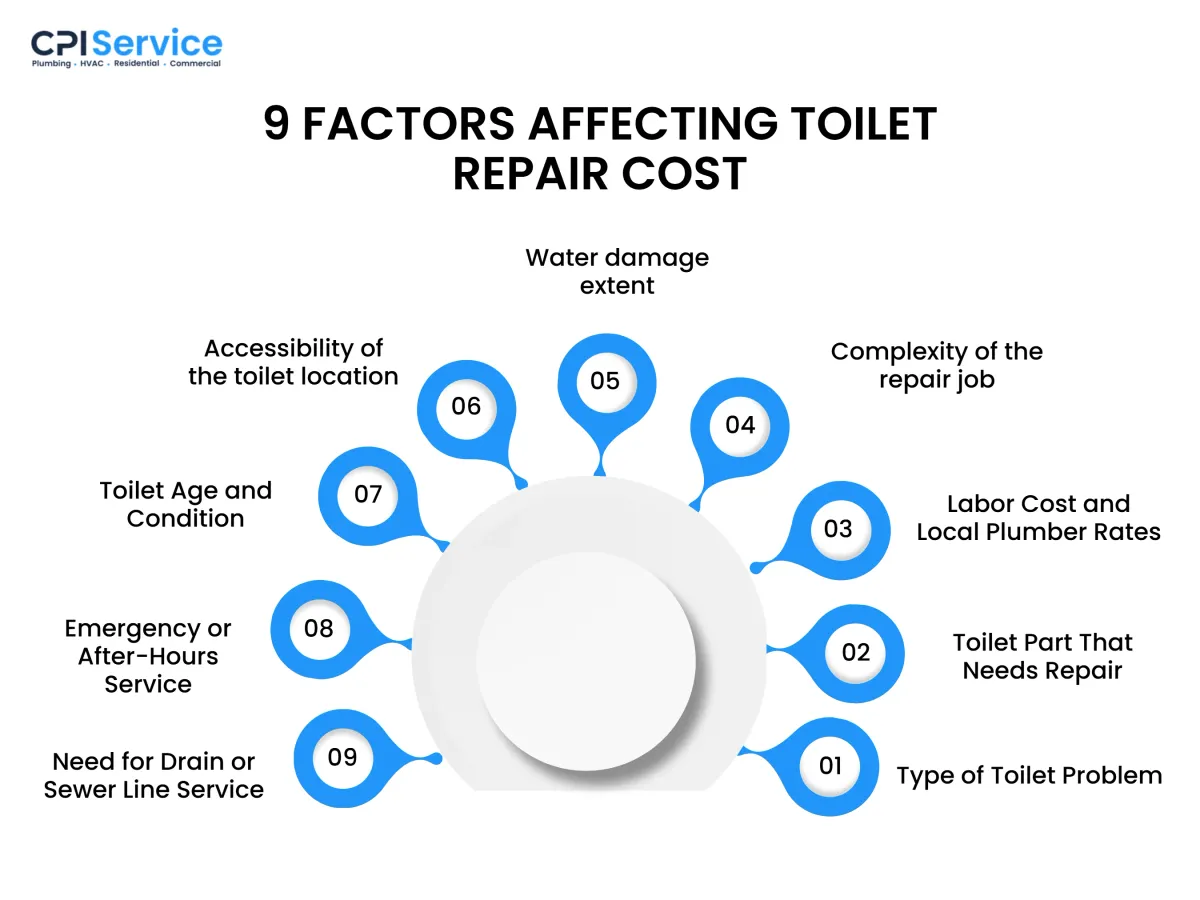
Type of Toilet Problem
The problem has the biggest effect on the price because it decides the labor: a worn flapper takes minutes, while a severe clog or a leak under the toilet needs more diagnosis, parts and time.
Toilet Part That Needs Repair
Tank parts are inexpensive and easy to reach; a wax ring or flange means removing and reinstalling the toilet.
Labor Cost and Local Plumber Rates
Labor is most of a toilet repair bill: HomeAdvisor puts it at 60% to 75% nationally, and notes it costs more where the cost of living is higher. That includes the Bay Area.
Many plumbers bill by the hour. CPI quotes most jobs as a fixed price before work starts, typically based on $150–$250 per hour plus parts and drive time ($200–$300 after hours, with a minimum charge), so you know the cost of the repair before you approve it.
Complexity of the Repair Job
Standard two-piece toilets are easy to work on. One-piece, wall-hung and pressure-assisted toilets often take longer to diagnose and repair, and some need specific parts.
Extent of Water Damage
A leak that has run for months can damage the flooring, subfloor and drywall around the toilet. Once drying equipment, subfloor repair, mold cleanup or new flooring is needed, the project costs much more than the toilet repair, which is the best reason to fix base leaks early.
Accessibility of the Toilet
Small powder rooms and older bathroom layouts leave little room to work. Sometimes nearby fixtures have to be partly removed, or the toilet pulled, just to reach the shutoff valve or connections.
Toilet Age and Condition
Older toilets often have corroded bolts, mineral buildup and discontinued parts, which add time and cost. Toilets made before the federal 1.6-gallon-per-flush standard can use as much as 6 gallons per flush (EPA WaterSense), so for a very old toilet the cost of finding compatible parts can approach the cost of a new, more efficient one.
Emergency or After-Hours Service
Nights, weekends and holidays cost more with almost every plumbing company. CPI’s after-hours pricing is typically based on $200–$300 per hour plus parts and drive time, with a minimum charge. If you have a second toilet, shut off the water to the broken one at the valve behind it and schedule the repair during regular hours; see emergency plumber cost.
Need for Drain or Sewer Line Service
If the clog or backup is in the drain or sewer line, the toilet isn’t really the problem, and the fix is priced as drain or sewer work. Typical San Jose ranges:
| Service | Typical San Jose price |
|---|---|
| Drain cleaning (snaking) | $250–$600 |
| Sewer camera inspection | $300–$600 |
| Hydro jetting, main sewer line | $1,500–$2,500 |
| Sewer spot repair | $2,000–$5,000 |
Roots, a collapsed pipe or a damaged sewer lateral turn a toilet call into a larger sewer project; see drain and sewer cleaning.
Can You Repair a Toilet Yourself or Should You Hire a Professional?
Simple repairs to parts you can reach are reasonable DIY jobs and save the labor cost. Anything that needs the toilet removed, special tools or a diagnosis of the drain is better left to a professional toilet plumber in San Jose, because a bad seal or a cracked flange can cause hidden water damage.
Repair it yourself if:
- The flapper is worn and needs replacing.
- The fill valve needs a simple adjustment or replacement.
- The handle, chain or lever is broken or disconnected.
- The clog is minor and clears with a plunger or a toilet auger.
Hire a plumber if:
- The toilet leaks at the base or around the flange.
- The wax ring needs replacing.
- The toilet is loose or wobbly and has to come off.
- Clogs keep coming back, which points to the drain or sewer line.
- The tank or bowl is cracked.
Before any DIY repair, close the shutoff valve behind the toilet and flush to empty the tank. Skip chemical drain cleaners in a toilet: they rarely clear a toilet clog, and the heat some of them give off can crack porcelain.
Is It Cheaper to Repair or Replace a Toilet?
Repairing is almost always cheaper up front. A useful guideline is the 50% rule: if the repair would cost more than half the price of a new toilet installed, replacement usually gives better long-term value.
Repair is usually the better choice if:
- It costs less than half of a replacement.
- The problem is a flapper, fill valve, handle, chain or another inexpensive part.
- The toilet is relatively new and in good condition.
- It’s a one-time problem, not a recurring one.
- Replacement parts are easy to find.
Replacement is usually the better choice if:
- The repair would cost more than half of a replacement.
- The toilet has needed several repairs in a short time.
- The bowl or tank is cracked.
- The toilet is old, uses far more water than a modern one, or needs discontinued parts.
- It needs flange, wax ring or floor repairs on top of the original problem.
A new WaterSense labeled toilet uses 1.28 gallons per flush or less, 20% less than the federal standard, and replacing old toilets with them can cut a family’s toilet water use by 20 to 60% (EPA WaterSense). See toilet repair and installation.
How Can You Save Money on Toilet Repair?
- Fix running toilets early. A worn flapper can silently leak thousands of gallons a year, and you pay for every one on your water bill.
- Don’t ignore leaks at the base. Water that seeps under the toilet rots the subfloor, which costs far more to fix than a new wax ring.
- Replace small tank parts before they fail. A new flapper or fill valve is cheap; an overflowing tank isn’t.
- Avoid chemical drain cleaners. Use a plunger or toilet auger instead; chemicals can damage porcelain and pipes.
- Ask for up-front pricing. Get a fixed quote before work starts so there are no hourly surprises.
- Compare repair and replacement costs. Use the 50% rule so you don’t keep paying to repair an old, failing toilet.
CPI’s current $50 off any plumbing service special applies to toilet repairs; see all current offers.
Toilet Repairs in San Jose Homes
- Older flanges and drains. In many 1950s to 1970s South Bay homes, a toilet that rocks or leaks at the base has a corroded flange or cast-iron drain underneath.
- Clogs that come back. If several drains are slow or a toilet gurgles, the main sewer line may be the problem; see drain cleaning.
- Water use. A running toilet can waste a lot of water, which matters with local water rates; fix it promptly.
CPI Service repairs and installs toilets throughout San Jose and the South Bay. Request a free estimate or call (408) 978-3093.
Frequently Asked Questions
Is it cheaper to repair or replace a toilet?
Repairing is usually cheaper for running toilets, worn flappers, fill valves and leaks at the base. Replacing makes more sense if the bowl or tank is cracked, the toilet is old and keeps needing repairs, or you want a more efficient model.
Can I fix a running toilet myself?
Often, yes. A worn flapper or fill valve is an inexpensive part and a common DIY repair. Leaks at the base, a loose toilet or a broken flange usually need the toilet removed and reset, which is better left to a plumber.
Why does my toilet keep clogging?
Repeated clogs in one toilet can be a low-flow model or something stuck in the trap; clogs in several drains, or gurgling, point to a main line problem that needs drain cleaning.
Prompt response, polite, knowledgeable. Good at explaining options and following through until solved.
Pauline M., Google review
Read more reviews →Serving San Jose and the South Bay
CPI Service is based at 2880 Aiello Dr in San Jose and serves homes and businesses across the South Bay and the Peninsula. See all the areas we serve.