
 Emergency Plumbing
 Plumbing Repairs
 Water Heaters
 Drain Cleaning
 Sewer Service
 Faucets & Fixtures
 Repiping
 Toilet Plumbing
 Trenchless
 Plumbing Leaks
 Air Conditioning
 Heating
 Minisplit Systems
 Heat Pumps
 HVAC Components
 HVAC Rebates
What is a Plumbing Inspection Checklist?
A plumbing inspection checklist is a comprehensive guide that outlines the key components of a plumbing system that must be evaluated for any potential problems. It ensures that all critical areas of the plumbing system, such as pipes, faucets, drainage systems, water heaters, and gas lines, are thoroughly checked for potential issues like leaks, corrosion, or blockages.
Effective plumbing inspections rely on a plumbing inspection checklist to evaluate the condition of the plumbing system, detect hidden problems, and verify that all components meet required standards. Each element of the plumbing inspection checklist is connected to a clear criterion, allowing both homeowners and professional plumbers to identify plumbing issues, ensuring the system is operating efficiently.
Using a plumbing inspection checklist framework, individuals and professionals can maintain a reliable plumbing system, avoid unexpected plumbing failures, and improve the overall health of a home’s infrastructure.

Why Is the Plumbing Inspection Checklist Important?
A plumbing inspection checklist is important to identify potential issues early, prevent costly emergency plumbing repairs, ensure the overall safety and health of the home, and save money on utility bills through improved efficiency. By offering a systematic approach to evaluating a plumbing system, the plumbing inspection checklist also helps prevent significant water damage and safety risks such as gas leaks or contamination, simplifying the process for both professionals and homeowners.
Here are some key points on why a plumbing inspection checklist is important:
- Early Detection of Problems: Helps identify issues early, such as leaks or blockages, to prevent them from worsening.
- Prevent Costly Repairs: Makes it easy to catch plumbing problems before they become emergencies, helping avoid high repair costs in the future.
- Save Money on Utility Bills: Helps identify plumbing system inefficiencies, such as hidden leaks or improper water pressure, thereby reducing water waste and lowering utility costs.
- Ensure Home Safety: Ensures every part of the plumbing system is inspected to avoid hazards such as gas leaks or faulty water heaters, thereby safeguarding the household.
- Extend System Lifespan: Prevents component damage and avoids premature plumbing system replacements, helping extend lifespan.
- Maintain Code Compliance: Adheres to local building plumbing regulations, preventing fines and validating your property’s status.
- Protect Home Value: Safeguards the home’s value, boosting buyer confidence and ensuring peace of mind for homeowners.
What Do Plumbing Inspection Checklists Include?
A plumbing inspection checklist includes a comprehensive review of every critical plumbing component, from the water supply system and drainage to water heater performance and gas lines. Each category ensures that essential plumbing systems are functioning efficiently and safely, helping to avoid costly repairs or damage.
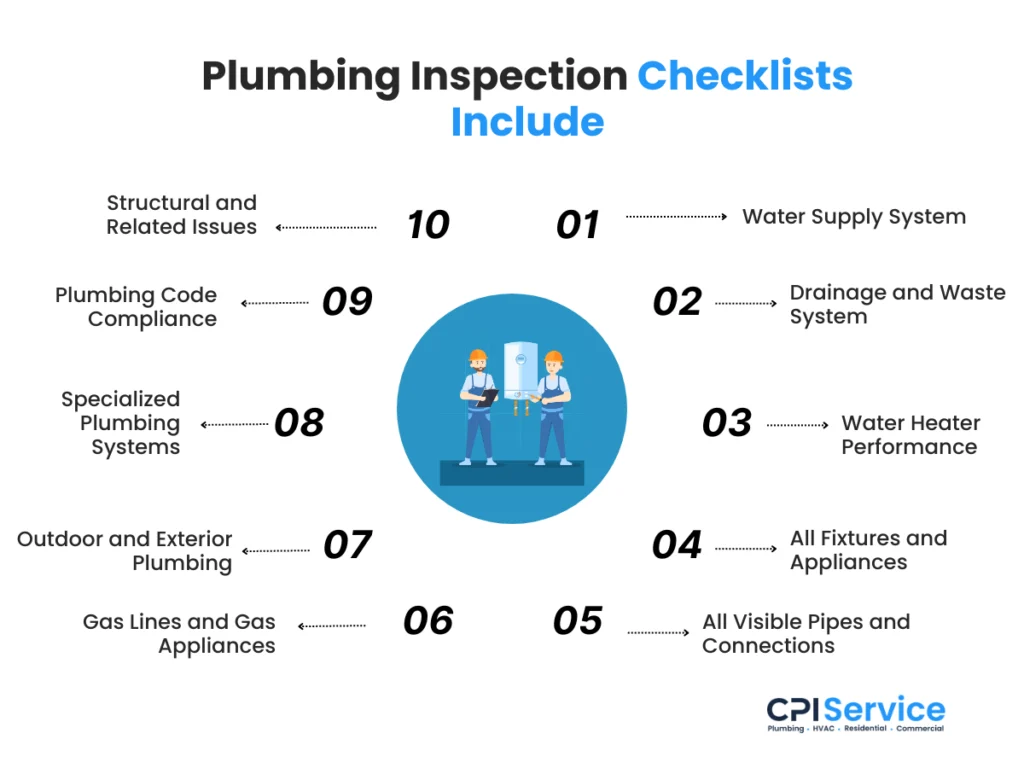
Water Supply System
The water supply inspection ensures proper water flow and pressure throughout the home, preventing unwanted leaks and damage. It includes measuring water pressure of all fixtures, checking for leaks or corrosion in the main water line, and ensuring that the shutoff valve operates correctly.
- Measure water pressure at multiple fixtures to ensure proper function.
- Examine the main water line for leaks, corrosion, or damage.
- Check the main shutoff valve for proper operation and accessibility.
- Inspect backflow prevention devices to avoid contamination.
- Verify the condition of pipes and connections to prevent leaks.
How it helps: Ensures a steady, safe water supply, prevents unnecessary water damage, and helps optimize water pressure and flow.
Drainage and Waste System
Efficient drainage and waste systems are critical for preventing blockages, water damage, and sewage backups in the home. A thorough plumbing inspection checklist helps identify potential drainage and waste system issues early, ensuring that the system functions smoothly and preventing costly repairs or health hazards.
- Test drains for proper flow and efficiency.
- Inspect pipes for clogs, blockages, or slow drainage.
- Check vent pipes for obstructions and proper sizing.
- Examine the condition of the sewer line, using a camera if necessary.
- Assess the septic system and its components, including the drain field.
How it helps: Prevents clogs and backups, ensuring smooth waste removal and avoiding potential flooding or water damage.
Water Heater Performance
Regular checks of the water heater ensure consistent hot water and energy efficiency, while preventing potential failures. By identifying water heater issues early, a routine inspection checklist helps extend the water heater’s lifespan and maintain optimal performance.
- Check the unit’s age, manufacturer date, and expected lifespan.
- Inspect the tank for rust, corrosion, or leaks.
- Test the temperature and pressure relief valve for safety.
- Examine venting and burner assemblies (for gas models).
- Review energy efficiency ratings and maintenance needs.
How it helps: Ensures reliable hot water and energy efficiency, reducing the risk of sudden failures or high energy bills.
All Fixtures and Appliances
Proper inspection of plumbing fixtures and appliances ensures they are functioning efficiently and prevents costly repairs. Regularly following the items of plumbing inspection checklists help detect minor fixture and appliance issues like leaks, drips, or slow drainage before they become major problems, saving on repair costs and improving overall efficiency.
- Check toilets for leaks, wobbling, and proper flushing.
- Test faucets and showerheads for drips, leaks, and flow rate.
- Inspect sink and tub drainage for blockages or slow drainage.
- Review connections and drainage of dishwashers and washing machines.
- Test the garbage disposal and refrigerator water dispenser for proper operation.
How it helps: Prevents leaks, water damage, and malfunctions, ensuring all fixtures and appliances work efficiently.
All Visible Pipes and Connections
Regularly following the plumbing inspection checklist for visible pipes and connections helps identify potential issues early, ensuring they remain secure and in good condition. This proactive approach reduces the risk of leaks or water damage in all visible pipes and connections, preventing costly repairs.
- Inspect pipes for signs of corrosion, rust, or leaks.
- Check pipe insulation in crawl spaces, attics, and basements.
- Ensure proper pipe support and hanging.
- Look for DIY repairs or modifications that may be unsafe.
- Verify pipe joint integrity and the condition of exposed pipes.
How it helps: Detects potential issues early, preventing leaks and water damage from escalating into expensive repairs.
Gas Lines and Gas Appliances
Gas line and appliance inspections are vital for safety, ensuring the system is leak-free and compliant with safety standards. Regular checks help identify potential hazards like gas leaks, improper ventilation, or faulty shutoff valves early, ensuring all gas appliances operate safely and efficiently.
- Inspect gas line connections and fittings for leaks.
- Test for gas leaks using professional detection equipment.
- Ensure proper ventilation for all gas appliances.
- Verify the operation of gas shutoff valves.
- Assess carbon monoxide detectors for proper placement and functionality.
How it helps: Prevents gas leaks and carbon monoxide buildup, ensuring safety and compliance with gas codes.
Outdoor and Exterior Plumbing
Following a plumbing inspection checklist for outdoor and exterior plumbing systems helps detect issues like leaks or blockages early, enabling timely repairs and preventing costly damage. This prevents water damage to the foundation and ensures the continued efficiency of outdoor plumbing systems.
- Inspect outdoor faucets, hose bibs, and spigots for leaks.
- Check irrigation systems for proper coverage and blockages.
- Examine yard drainage to ensure proper grading away from the foundation.
- Review sump pump operation and backup systems.
- Inspect downspouts and their extensions to direct water away from the foundation.
How it helps: Protects the foundation from water damage and ensures outdoor systems are functioning efficiently.
Specialized Plumbing Systems
Certain plumbing systems, like water softeners and sump pumps, require specialized attention to ensure they work properly and efficiently. This includes checking water softeners and filtration systems, inspecting sump pumps and backup power, and testing systems like radiant heating and tankless water heaters.
- Check the operation of water softeners and filtration systems.
- Inspect sump pumps and backup power systems.
- Examine recirculation pumps for hot water systems.
- Test the function of radiant heating systems.
- Verify the operation of tankless water heaters.
How it helps: Ensures specialized systems are running efficiently and prevents failure, protecting home infrastructure.
Plumbing Code Compliance
Compliance with local plumbing codes ensures safety, legal adherence, and proper plumbing system installation. This plumbing inspection checklist includes verifying that the plumber’s background, required permits, and venting systems are in order.
- Verify plumbing work meets local codes and regulations.
- Ensure necessary permits are obtained for past plumbing work.
- Inspect venting systems for all fixtures.
- Confirm proper trap installation for plumbing fixtures.
- Check for required clearances and accessibility standards.
How it helps: Ensures your plumbing system complies with local laws, minimizing safety risks and preventing costly fines.
Structural and Related Issues
Identifying structural issues related to plumbing prevents long-term damage to the home and ensures the integrity of the foundation. Identifying structural issues related to plumbing prevents long-term damage to the home and ensures the integrity of the foundation. Addressing potential concerns, such as water damage, mold growth, and foundation cracks, helps maintain a safe and stable living environment.
- Inspect walls, ceilings, and floors for signs of water damage.
- Check for mold or mildew around plumbing fixtures.
- Examine foundation cracks potentially caused by plumbing leaks.
- Ensure proper insulation around plumbing pipes.
- Assess moisture levels in crawl spaces and pest intrusion risks.
How it helps: Detects plumbing-related damage early, protecting the structural integrity of the home and preventing costly repairs.
What Happens After the Plumbing Inspection is Complete?
After a plumbing inspection is complete, homeowners or property managers must review the plumbing inspection report, obtain repair estimates, and prioritize repairs based on urgency to address any issues discovered during the assessment.
Here are the 4 key actions to take after the inspection:
- Review the Plumbing Inspection Report: The first step is to carefully review the plumbing inspection report, which will outline the issues discovered, their severity, and any areas requiring immediate attention.
- Prioritize Repairs: Based on the findings, it is essential to prioritize repairs. Focus on urgent issues such as leaks, backflow, or drainage problems that could lead to water damage. Less critical problems, like replacing outdated fixtures, can be scheduled for a later time.
- Get Repair Estimates: Next, contact licensed plumbers to get cost estimates for the repairs. This will help you determine the financial impact and decide which repairs are feasible within your budget.
- Set a Timeline for Repairs: Develop a clear timeline for addressing the repairs, with a focus on urgent issues. Prompt action prevents further damage and helps ensure that repairs are completed before problems worsen.
Following these steps ensures that necessary plumbing repairs are prioritized and completed promptly, preventing further plumbing issues or structural damage. Having a clear action plan after the inspection helps avoid unexpected issues, saves money, and keeps the plumbing system in optimal condition.
Why Choose a Professional Plumber for Plumbing Inspection?
Hiring a professional plumber for a plumbing inspection is essential for detecting hidden issues early, ensuring safety, and maintaining code compliance. While DIY inspections may work for minor plumbing concerns, certified plumbers bring specialized expertise and advanced tools, such as pipe cameras and leak detectors, to identify even the most complex plumbing problems that may not be visible to the naked eye. They also ensure the plumbing inspection meets local codes, which is crucial for insurance or home sales.
Professional plumbers provide detailed reports, helping homeowners plan repairs and future maintenance. By addressing problems early, you prevent costly emergency repairs and extend the lifespan of the plumbing system. The peace of mind from hiring a professional plumber ensures an accurate inspection, minimizing the chances of missing issues that could lead to expensive repairs in the future.


Alex Hamilton is the owner of CPI Service, a trusted provider of plumbing and HVAC solutions. With over 35+ years of hands-on experience in the industry, He brings deep technical expertise and a proven track record in delivering reliable installation, maintenance, and repair services. His leadership ensures that CPI Service consistently upholds the highest standards of quality, safety, and customer satisfaction.
