

 Emergency Plumbing
 Plumbing Repairs
 Water Heaters
 Drain Cleaning
 Sewer Service
 Faucets & Fixtures
 Repiping
 Toilet Plumbing
 Trenchless
 Plumbing Leaks
 Air Conditioning
 Heating
 Minisplit Systems
 Heat Pumps
 HVAC Components
 HVAC Rebates
Drain cleaning costs range from $75 to $1,000+, with simple bathroom sink and AC drain line clogs falling at the lower end and complex sewer line blockages, emergency calls, and severe root intrusion pushing costs significantly higher. Within this price range, bathroom sink drain cleaning costs $75-$250, kitchen drain cleaning $100-$350, toilet unclogging $100-$300, main drain cleaning $150-$600+, and sewer line cleaning $200-$800. Pricing also varies by cleaning method, with chemical drain cleaning costing $5-$200, drain snaking costing $100-$500, manual clog removal costing $85-$600, and hydro jetting costing $250- $2,500+.
While these benchmarks establish the general cost of drain cleaning, the final price depends on the drain type, blockage severity, cleaning method, pipe condition, accessibility, and whether additional services such as camera inspections or emergency response are required. As the scope expands from clearing a minor clog to resolving a major sewer line issue, the overall cost of drain cleaning increases accordingly.
What Is the Average Drain Cleaning Cost?
The average drain cleaning cost ranges from $100 to $600, with pricing influenced by the type of drain, the severity of the blockage, the service area, and the required cleaning method. Minor clogs in kitchen sinks, bathroom sinks, and shower drains often fall at the lower end of the range, while main sewer line blockages, heavy buildup, and tree root intrusion can push the price higher.
As the scope of work expands from clearing a simple clog to resolving a more complex drain line or sewer issue, the overall price of drain cleaning increases accordingly. Location also plays a role in pricing, for example, in higher-cost markets such as San Jose, homeowners can expect drain cleaning costs to range from $250 to $600 due to demand for licensed plumbers, job complexity, and the level of service required.
How Much Does Drain Cleaning Cost by Drain Type?
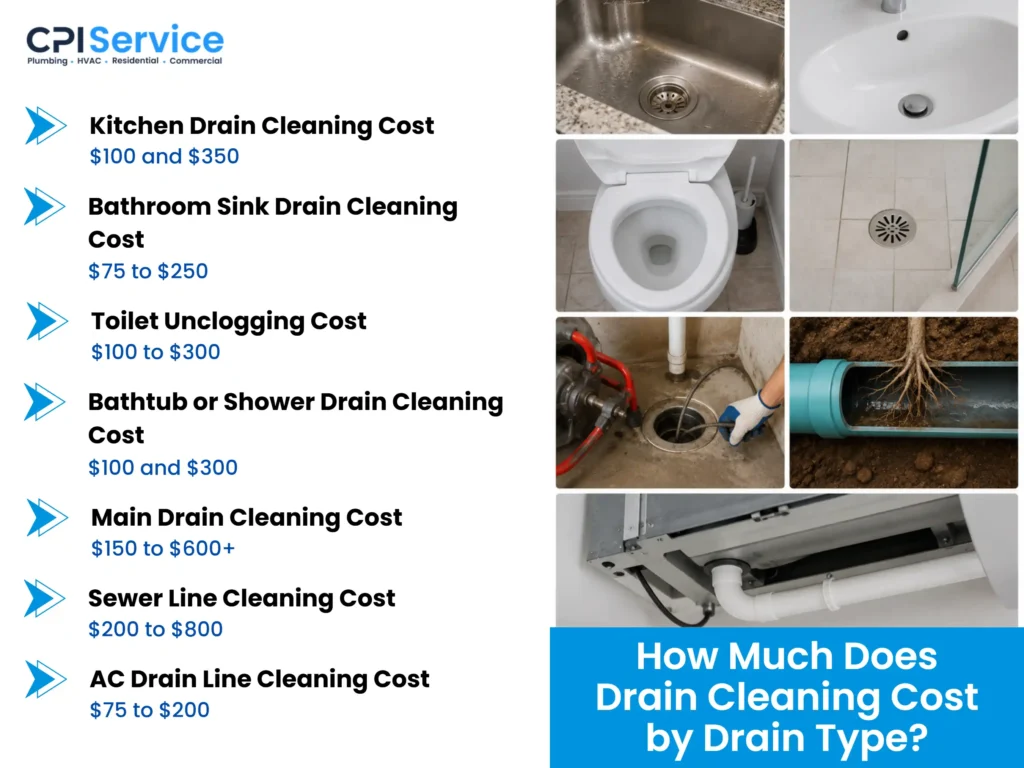
Kitchen Drain Cleaning Cost
Kitchen drain cleaning costs between $100 and $350, depending on the severity of the clog, accessibility, and the specific type of drain-cleaning service required (basic mechanical snaking or high-pressure hydro-jetting). Because kitchen lines are uniquely prone to heavy fats, oils, and organic food debris that cake onto the pipe walls, severe blockages may require advanced clearing methods, pushing prices toward the higher end of this range. Taking early preventive measures when you notice water pooling can help keep kitchen drain-cleaning costs manageable before grease completely seals the line.
Bathroom Sink Drain Cleaning Cost
Bathroom sink drain cleaning costs range from $75 to $250. This price point is among the lowest in residential drain cleaning because these drains are easily accessible through the P-trap beneath the vanity and often clogged by shallow, manageable obstructions such as hair, soap scum, and toothpaste residue. While recurring slow drainage may indicate a deeper issue, standard mechanical tools like hand augers, drain snakes, or plunger devices can quickly clear the blockage, restoring smooth flow with minimal labor and keeping the overall cost lower than for more complex drains.
Toilet Unclogging Cost
Toilet unclogging services cost $100 to $300, where minor blockages handled during a standard service call fall on the lower end, while deeper obstructions or emergency after-hours visits can push costs to $400+. The final price of toilet unclogging is heavily influenced by the severity of the clog, the need for specialized equipment like a heavy-duty closet auger, and the potential hazard of a raw sewage backup if the fixture overflows. If the blockage cannot be cleared through standard plunging or auger methods, the final costs will increase significantly.
Bathtub or Shower Drain Cleaning Cost
Bathtub or shower drain cleaning costs between $100 and $300, a fee that covers the specialized extraction tools needed to completely clear out deeply embedded hair mats. These prices for bathtub or shower drain cleaning are driven by the extent of the hair and soap scum blockage, line accessibility through the overflow plate or drain strainer, and whether a camera inspection is needed to locate a deeper problem. Shower drains often accumulate deep, dense hair mats that knot tightly in the pipes, requiring specialized snakes or extra time to fully untangle and extract.
Main Drain Cleaning Cost
Main drain cleaning costs range from $150 to $600+, depending on factors such as the length of the drain line, severity of the blockage, and accessibility. Larger clogs, tree root intrusions, or grease buildup may require specialized equipment such as hydro jetting or motorized drain snakes, which can increase the overall price. Additionally, main drains often pose a higher risk because blockages can affect multiple fixtures or cause water damage, so thorough cleaning and inspection are essential, which further increases the total price.
Sewer Line Cleaning Cost
Sewer line cleaning costs range from $200 to $800 and involve a critical subsurface service that protects your property’s main connection to the municipal system. The price is influenced by the extent of the blockage, the need for heavy-duty professional equipment, and whether a comprehensive camera inspection is required to evaluate pipe integrity. Because a blocked sewer line disrupts your home’s connection to the municipal system and creates a significant risk of property contamination, it requires specialized, high-powered clearing techniques. These factors justify the higher price while ensuring the sewer line is fully cleared and functional.
AC Drain Line Cleaning Cost
AC drain line cleaning costs range from $75 to $200, depending on the severity of the clog and the line’s accessibility. These drains often accumulate debris, algae, and moisture over time, which can lead to water backup and potential damage to the AC system. Cleaning may involve flushing the line with water, using a small drain snake, or applying mild chemical cleaners to remove buildup. Regular maintenance of the AC drain lines by a licensed AC technician helps prevent costly blockages, ensures efficient system operation, and keeps overall cleaning costs lower than emergency interventions.
How Much Does Drain Cleaning Cost by Method?
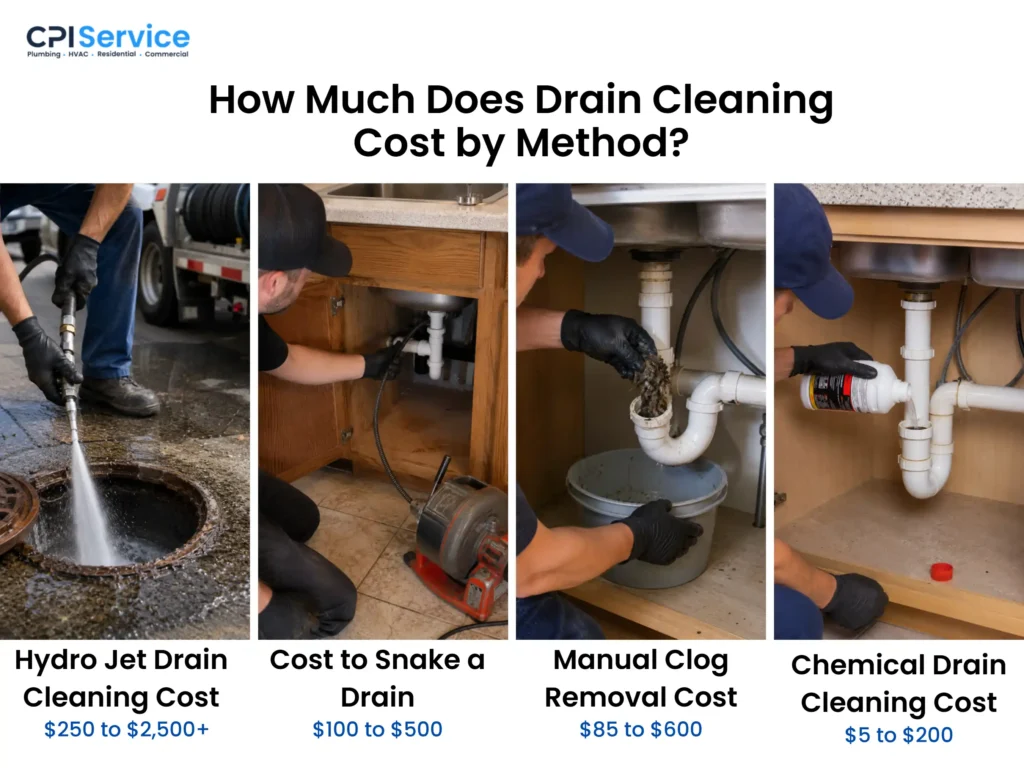
Depending on the method, drain cleaning costs $5 to $2,500 or more. Lower-cost solutions include chemical drain cleaners, which range from $5 to $200 and are often used for minor clogs and slow drains. For more persistent blockages, plumbers use drain snaking, which costs $100 to $500, while manual clog removal ranges from $85 to $600 when direct access to the obstruction is required. For severe buildup, recurring backups, or tree root intrusion, hydro jetting provides the most comprehensive cleaning solution, with costs ranging from $250 to $2,500+, depending on the system’s size and complexity.
Hydro Jet Drain Cleaning Cost
Hydro jet drain cleaning costs range from $250 to $2,500+ and use high-pressure water to remove grease, scale, sludge, and tree roots from drain lines. Residential hydro jetting services cost $250 to $800, with pricing influenced by pipe length, accessibility, and blockage severity. Commercial systems and severe whole-house sewer line blockages can increase the price to $1,000 to $2,500+ due to larger pipe diameters and the need for industrial-grade equipment. Unlike drain snaking, hydro jetting is a drawing cleaning method that cleans the full interior surface of the pipe, making it a preferred solution for recurring clogs and heavy buildup.
Cost to Snake a Drain
The cost to snake a drain ranges from $100 to $500, making it one of the most common and cost-effective professional drain cleaning methods. In this drain cleaning method, a licensed plumber uses a mechanical drain snake or auger to break up or retrieve blockages in drain lines, restoring normal flow without the need for pipe excavation. The final price depends on the type of drain being serviced, the depth and severity of the clog, and whether specialized equipment is required to reach the obstruction. Simple sink, shower, and bathtub clogs fall toward the lower end of the range, while main drain and sewer line blockages can increase the price.
Manual Clog Removal Cost
Manual clog removal costs range from $85 to $600, depending on the blockage’s location and the amount of physical labor required. Simple jobs, such as removing a sink trap to retrieve an object or clear a shallow obstruction, fall between $85 and $200. The overall price for manual clog removal increases when a plumber must remove a toilet, disassemble a drain assembly, or manually clear a blockage in an area that cannot be safely reached with standard drain-cleaning equipment. This drain-cleaning method is often necessary when mechanical tools or hydro-jetting could damage delicate or aging pipes.
Chemical Drain Cleaning Cost
Chemical drain cleaning costs range from $5 to $200, with DIY products costing $5 to $30 and professional plumber-applied treatments ranging from $75 to $200. This drain cleaning method uses chemical solutions to break down minor blockages caused by grease, soap scum, hair, and organic buildup. The final price depends on the type of treatment and the severity of the clog. While chemical cleaners offer a low-cost solution for minor drain issues, recurring clogs or slow drains often indicate a deeper blockage that may require drain snaking or hydro jetting.
How Much Does Emergency Drain Cleaning Cost?
Emergency drain cleaning services cost between $200 and $900 for a standard residential blockage, representing a notable premium compared to scheduled daytime service. When a severe clog threatens flooding, water damage, or exposure to wastewater, waiting until regular business hours is often impractical. The higher price reflects not only the work required to clear the blockage but also the operational costs of maintaining fully equipped service vehicles and an on-call plumber ready to respond at any time.
- After-Hours Service
Requesting a plumber on weekday evenings or overnight can increase emergency drain-cleaning costs by $200-$800 or more, or by 25%- 100% above the standard service price. For calls placed outside normal business hours, many plumbing companies charge an upfront emergency dispatch or diagnostic fee in addition to the drain cleaning service itself. Higher labor rates, immediate response requirements, and limited technician availability all contribute to the increased price. The exact cost depends on the time of service, severity of the blockage, and complexity of the work required.
- Weekend or Holiday Service
Drain cleaning service requested on a weekend or major holiday can cost $300-$900+, representing a 50%-150% premium over standard rates. These higher charges reflect limited technician availability, priority dispatch, and overtime labor costs. For serious issues such as a main sewer line backup or a non-functioning toilet during holidays like Thanksgiving or New Year’s Eve, emergency service pricing often starts at $400 and can exceed $800 before any additional cleaning or repair work is performed.
What Factors Affect Drain Cleaning Cost?
Factors affecting drain cleaning cost include the type and location of the clogged drain, the severity of the blockage, the drain cleaning method used, the involvement of a camera inspection, the condition and age of the pipes, labor rates, and service demand. Each of these variables influences the amount of labor, equipment, and expertise required to clear the drain, which is why the price for drain cleaning can range from a simple service call to a more extensive and costly project.
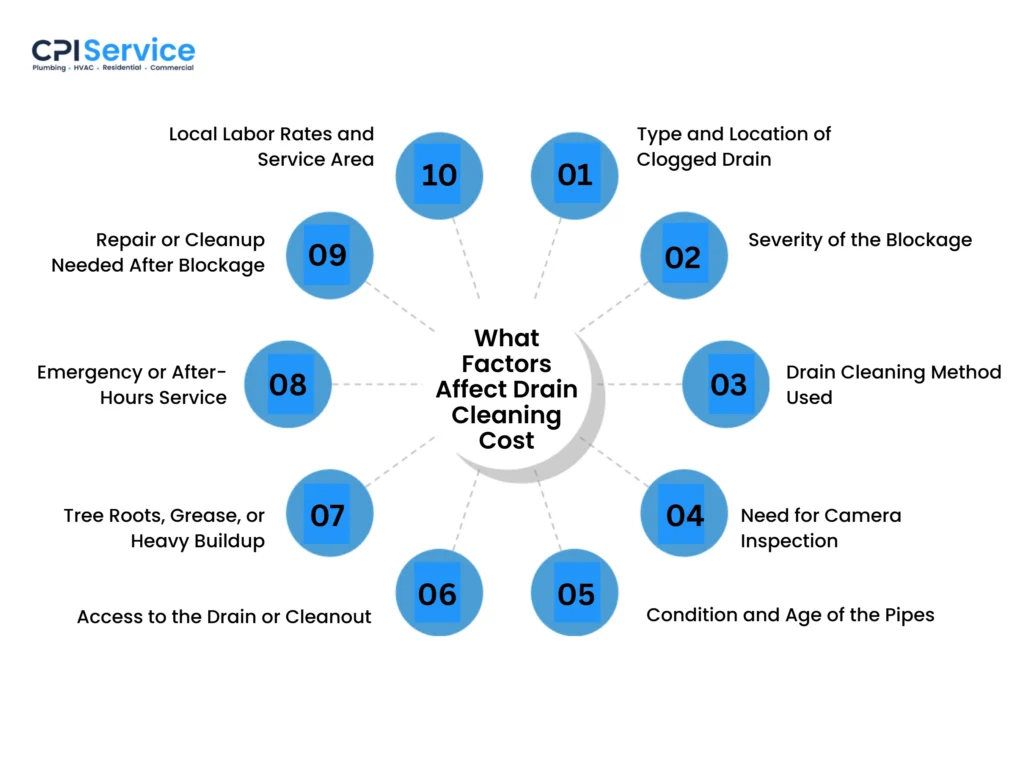
Factors affecting drain cleaning cost are:
- Type and Location of Clogged Drain
- Severity of the Blockage
- Drain Cleaning Method Used
- Need for Camera Inspection
- Condition and Age of the Pipes
- Access to the Drain or Cleanout
- Tree Roots, Grease, or Heavy Buildup
- Emergency or After-Hours Service
- Repair or Cleanup Needed After Blockage
- Local Labor Rates and Service Area
Type and Location of Clogged Drain
The type and location of a clogged drain directly influence the cost of drain cleaning by $50 to $500 or more, as different drains require varying levels of labor, equipment, and expertise. For example, cleaning a kitchen sink drain costs less because they are easier to access and clear. In contrast, main sewer line blockages frequently require advanced methods such as hydro-jetting or camera inspection, which increases the overall cost. Drains located beneath concrete slabs, behind walls, or in other difficult-to-reach areas can also raise costs due to additional labor and specialized access requirements.
Severity of the Blockage
The severity of the blockage affects the cost of drain cleaning by $100 to $400+, as it directly impacts the time, labor, and equipment required to clear the clog. Minor blockages caused by soap scum, hair, or fresh toilet paper can often be removed quickly with a basic drain snake, keeping costs lower. As the blockage becomes more compacted or completely obstructs the line, plumbers may need motorized equipment, hydro jetting, or multiple cleaning passes to restore proper flow. The additional labor and specialized cleaning methods required for stubborn clogs can increase the final price.
Drain Cleaning Method Used
Drain cleaning method can affect pricing by $100 to $2,500+, making it one of the largest cost drivers in a drain cleaning project. Basic drain snaking falls on the lower end of the price range because it requires less equipment and works well for common clogs. More advanced methods, such as hydro jetting, carry a higher price due to the specialized machinery needed to remove heavy grease buildup, scale, and tree roots. As the cleaning process becomes more equipment- and labor-intensive, the overall drain-cleaning price rises accordingly.
Need for Camera Inspection
A camera inspection can increase drain cleaning costs by $100 to $500, depending on line accessibility and the complexity of the diagnosis. Plumbers often recommend this service when a blockage cannot be located easily, recurring clogs indicate a deeper issue, or pipe damage is suspected. A standard sewer camera inspection with an existing cleanout adds $100 to $300 to the bill. If additional access work is required, such as removing a toilet, the inspection cost may increase to $185-$500 due to the added labor.
Condition and Age of the Pipes
The condition and age of the pipes can increase drain cleaning costs by $100 to $ 500 or more because older drain systems often require more careful cleaning methods and additional diagnostic work. Cast iron pipes, common in homes built before 1975, can last 75 to 100 years but often develop interior rust and flaking that restricts flow. Galvanized steel pipes are prone to mineral buildup, while older clay sewer lines frequently suffer from cracks and tree root intrusion. Although modern PVC and PEX pipes resist corrosion, improper cleaning techniques can still cause damage. As the pipe condition worsens, additional labor, inspections, and specialized equipment can increase the final price.
Access to the Drain or Cleanout
Access to the drain or cleanout can increase drain cleaning costs by $50 to $400+, as it directly affects the labor, time, and equipment required to reach the blockage. When a drain is easily accessible, plumbers can complete the work more efficiently and keep costs lower. Limited access, such as drains located in crawl spaces, behind walls, or beneath concrete slabs, often requires additional labor and specialized equipment, increasing the overall price. Difficult access may also affect the cleaning method used and the amount of work needed to safely clear the line without damaging surrounding property.
Tree Roots, Grease, or Heavy Buildup
Tree roots, grease, and heavy buildup can increase drain cleaning costs by $200 to $700 or more because they require more labor, specialized equipment, and advanced cleaning methods. Root intrusion into sewer lines often requires hydro jetting or mechanical root-cutting equipment to fully restore flow. Grease buildup, common in kitchen drains, hardens inside pipes and frequently demands chemical treatments or high-pressure cleaning. Heavy buildup from hair, soap scum, and mineral deposits may require multiple cleaning passes to completely clear the line. As these obstructions become more severe, the overall price of drain cleaning increases accordingly.
Emergency or After-Hours Service
Emergency or after-hours service can increase drain cleaning costs by $200 to $900+ because plumbers must respond outside standard business hours, including nights, weekends, and holidays. These drain cleaning services carry higher labor rates due to the urgency of the situation, priority dispatch requirements, and limited plumber availability. As a result, homeowners often pay a premium compared to scheduled daytime appointments. The final price depends on the severity of the blockage, the drain affected, and how quickly service is required.
Repair or Cleanup Needed After Blockage
Repair or cleanup after a blockage can affect total drain cleaning costs by $200 to $4,000+, depending on the extent of the damage. When a clog causes water damage, pipe failure, or exposure to raw sewage, additional work is often required beyond clearing the drain. Common services include water damage restoration, pipe repair or replacement, and sewage cleanup. These prices can rise quickly because they require specialized labor, materials, and, in some cases, multiple service visits. Larger affected areas or contamination inside living spaces can further increase the final price.
Local Labor Rates and Service Area
Local labor rates and the service area affect drain cleaning costs by 20% to 50% or more, as they influence baseline labor, travel, and business operating costs. Areas with higher living costs, such as major metropolitan regions, often have higher plumbing rates than smaller towns or rural locations. Service calls in remote areas may also carry additional travel charges. The complexity and size of the affected area can further increase labor requirements, especially when additional diagnostic work, such as a camera inspection, is needed to assess the blockage and determine the scope of the job.
When Does Drain Cleaning Become Drain Repair or Cleanup?
Drain cleaning becomes drain repair if there is a broken or collapsed drain pipe, tree root damage, drain line replacement, or pipe descaling, whereas it becomes cleanup if there is a severe sewer backup, raw sewage contamination, or related health hazards. In these situations, the problem extends beyond a removable blockage and involves pipe damage, contamination, restricted pipe capacity, or system accessibility issues.
When drain cleaning becomes drain repair:
- Broken or Collapsed Drain Pipe: Cleaning cannot restore flow through a pipe that has cracked, shifted, or collapsed. Repair or replacement is required to restore proper drainage.
- Tree Root Damage: While drain cleaning can temporarily remove roots, recurring root intrusion often indicates pipe damage that requires repair or replacement.
- Drain Line Replacement: Extensive corrosion, structural failure, or repeated blockages may make full drain line replacement a more effective long-term solution than repeated cleaning.
- Sewer Cleanout Installation: If no accessible cleanout exists, installing one may be necessary to allow proper inspection, maintenance, and future drain cleaning.
- Pipe Descaling: Heavy rust, mineral deposits, and scale buildup inside aging pipes may require descaling to restore the pipe’s internal diameter and improve long-term flow.
When drain cleaning becomes cleanup:
- Severe Sewer Backup: Wastewater backing up into sinks, tubs, toilets, or living areas requires both blockage removal and professional cleanup to address contamination.
- Raw Sewage Cleanup: Raw sewage contains bacteria, viruses, and other contaminants that require specialized cleaning, sanitization, and disposal procedures.
- Health Hazards: Standing wastewater, exposure to sewage, mold growth, and contaminated surfaces can pose health risks that require remediation beyond standard drain cleaning services.
Is DIY Drain Cleaning Cheaper Than Hiring a Plumber?
Yes, DIY drain cleaning is cheaper than hiring a plumber upfront, but professional drain cleaning often delivers better long-term value and a lower overall risk of costly mistakes. DIY methods may resolve minor clogs using plungers, drain snakes, or chemical cleaners, but they often require significant time and effort and may fail to address deeper blockages.
Professional plumbers use specialized equipment such as motorized drain snakes, sewer cameras, hydro jetting systems, and root-cutting tools to locate and remove blockages more effectively. They can also identify underlying issues such as pipe damage, root intrusion, or heavy buildup before they develop into expensive repairs. For recurring clogs, sewer line problems, or stubborn blockages, hiring a plumber is often the more cost-effective solution despite the higher initial price.
How Can You Save Money on Drain Cleaning?
You can save money on drain cleaning by fixing slow drains early, avoiding overuse of chemicals, getting a price upfront, scheduling routine maintenance, and hiring only licensed plumbers. These proactive steps help prevent minor drain issues from turning into expensive blockages, emergency service calls, or pipe repairs.
Here are some ways you can save money on drain cleaning:
- Fix Slow Drains Early: Addressing a slow drain at the first sign of trouble can prevent a minor blockage from becoming a major clog that requires hydro jetting, a camera inspection, or emergency service. Early action often results in a lower service cost and helps prevent future drain problems.
- Avoid Chemical Drain Cleaner Overuse: Repeated use of chemical drain cleaners can corrode pipes, particularly older cast iron and galvanized systems, leading to costly repairs. If a clog keeps recurring, professional drain cleaning is often a more effective and economical solution.
- Ask About Upfront Pricing: Requesting upfront pricing before scheduling service helps you understand exactly what the quote includes. Clarifying potential charges for camera inspections, emergency dispatch, or severe blockages can help you avoid unexpected costs.
- Compare Cleaning Methods: Different drain cleaning methods carry different price points, so comparing options such as drain snaking, hydro jetting, and manual clog removal helps ensure you are paying for the most appropriate solution rather than a more expensive service than necessary.
- Schedule Routine Drain Maintenance: Schedule professional drain maintenance every 18 to 24 months to remove buildup before it develops into a costly blockage. Preventive cleaning helps reduce emergency service calls and extend the lifespan of your drain system.
- Look for Drain Cleaning Specials Only From Licensed Plumbers: Sourcing seasonal coupons exclusively from licensed shops secures lower rates while ensuring the work is backed by a binding warranty and proper insurance.
When Should You Call a Professional Drain Cleaning Service?
You should call a professional drain cleaning service if you have multiple clogged drains, water or sewage backups, recurring clogs, sewer odors, or a main sewer line blockage. In these situations, the problem is often deep within your plumbing system, beyond the reach of consumer-grade tools. Calling a professional drain cleaning service in San Jose gives you access to the expertise and advanced equipment needed to diagnose and resolve the issue efficiently.
Call a professional drain cleaning service if:
- Multiple Drains Are Clogged: Signals a systemic issue deep within your main waste line rather than a single fixture problem. It requires commercial diagnostics to locate the central blockage before it completely shuts down your drainage system.
- Water or Sewage Backs Up: Indicates a critical line failure where wastewater cannot exit your property and reverses course into your fixtures. This poses an immediate risk of property damage and requires urgent professional extraction.
- The Clog Keeps Coming Back: This implies that DIY clearing methods merely punch a temporary hole through the debris rather than clearing it. A professional clear is needed to scrub the pipe walls clean.
- You Smell Sewer Odors: Warns that sewer gases are escaping past your structural plumbing traps due to localized pressure or a broken line. This poses a risk to indoor air quality and requires expert detection.
- DIY Tools Do Not Work: Confirms the obstruction is either too dense or located too deep within the plumbing system for consumer hand augers, requiring heavy-duty motorized plumbing equipment.
- The Main Sewer Line May Be Blocked: Cuts off your home’s entire waste connection to the municipal grid, creating a major backup hazard across all fixtures that requires high-powered machinery to resolve.
- You Need Emergency Drain Cleaning: Demands immediate technical dispatch to stop active flooding or hazardous sewage overflows, protecting your property from severe sub-surface damage.

