
How to Unclog a Bathtub Drain

Table of Contents
- 1. Remove Visible Debris
- 2. Clean the Drain Stopper
- 3. Hot Water Method
- 4. Using a Plunger
- 5. Baking Soda and Vinegar Solution
- 6. Using a Drain Snake
- 7. Chemical Drain Cleaners
- What Causes a Clogged Bathtub Drain?
- How to Prevent Clogs in Your Bathtub
- DIY vs. Professional Plumbing Services: Comparison Table
- What Not to Do
- When to Call a Professional Plumber?
- Tub Clogs in San Jose Homes
- Frequently Asked Questions
A slow or clogged bathtub drain is almost always hair and soap scum caught at the stopper or just below it, and you can usually clear it in 15 minutes without chemicals. In San Jose and South Bay homes, hard water adds mineral scale that helps hair and soap stick.
Here’s how to get the stopper out, remove the clog, and keep it from coming back; a little regular cleaning goes a long way.
Don’t ignore a tub that drains slowly. Water that pools around your ankles in the shower is an early warning: a small clog keeps collecting hair and soap until the tub backs up, starts to smell, or overflows. Work through the methods below in order, starting with the simplest, and call a plumber if the clog won’t clear or comes back.
The seven methods for a bathtub drain:
- Remove visible debris: hair, soap scum and small objects at the drain opening.
- Clean the drain stopper: the most common spot for a clog.
- Hot water: loosens soap film (hot tap water, not boiling).
- A plunger: dislodges a hair or soap clog a short way down.
- Baking soda and vinegar: freshens the drain and loosens light buildup.
- A drain snake: reaches clogs farther down the line.
- Chemical drain cleaners: a method we advise against, and why.
For sinks, see how to unclog a clogged sink drain; for showers, toilets and every other drain in the house, see how to unclog a drain.
1. Remove Visible Debris
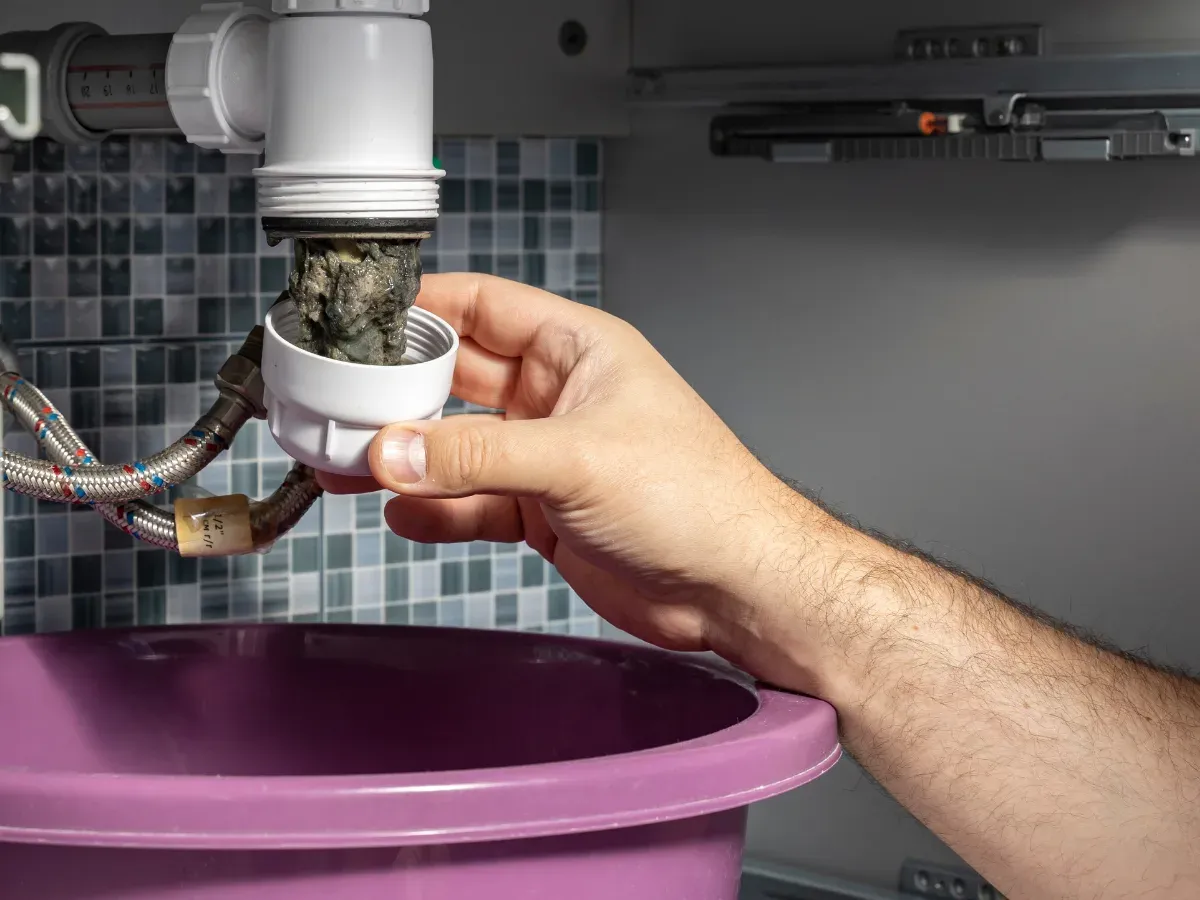
Start with what you can see. With gloves on, pull hair and gunk off the drain cover and out of the opening by hand or with needle-nose pliers. Hair wrapped around the cover or crossbars is a leading cause of tub clogs. A plastic barbed drain tool reaches a few inches down and pulls out most of what’s left. Wipe the soap scum off the drain area with a cloth or sponge.
Doing this regularly stops small clogs from turning into slow drainage or an overflowing tub, and saves calls for bigger repairs.
2. Clean the Drain Stopper
The stopper is where hair and soap collect most, so take it out and clean it. Most tubs have one of these:
- Lift-and-turn or push-pull: unscrew the knob or the whole stopper counterclockwise (some have a small setscrew).
- Toe-touch: unscrew the cap, then the shaft underneath.
- Trip lever: unscrew the overflow plate and pull the linkage out; hair often collects on the plunger at its end.
Once it’s out, check both the stopper and the drain opening for buildup. Scrub them with an old toothbrush. For heavy grime, soak the stopper in warm water with dish soap for a few minutes, then scrub it clean. Skipping this step lets debris build up around the stopper again, so make it part of regular cleaning.
3. Hot Water Method
Hot water softens soap scum, body oils and other soft buildup in the pipe and helps flush it out. Run the hottest tap water into the tub, or pour a kettle of hot (not boiling) water down the drain in stages, and let it work through the drain. Repeat once or twice if it’s helping.
It won’t clear a hair clog or a solid object, so combine it with plunging or a snake for anything tougher. Don’t use boiling water: many tub drains are PVC, which pipe maker Charlotte Pipe rates for water no hotter than 140°F (PVC DWV specification), and boiling water can soften it.
4. Using a Plunger
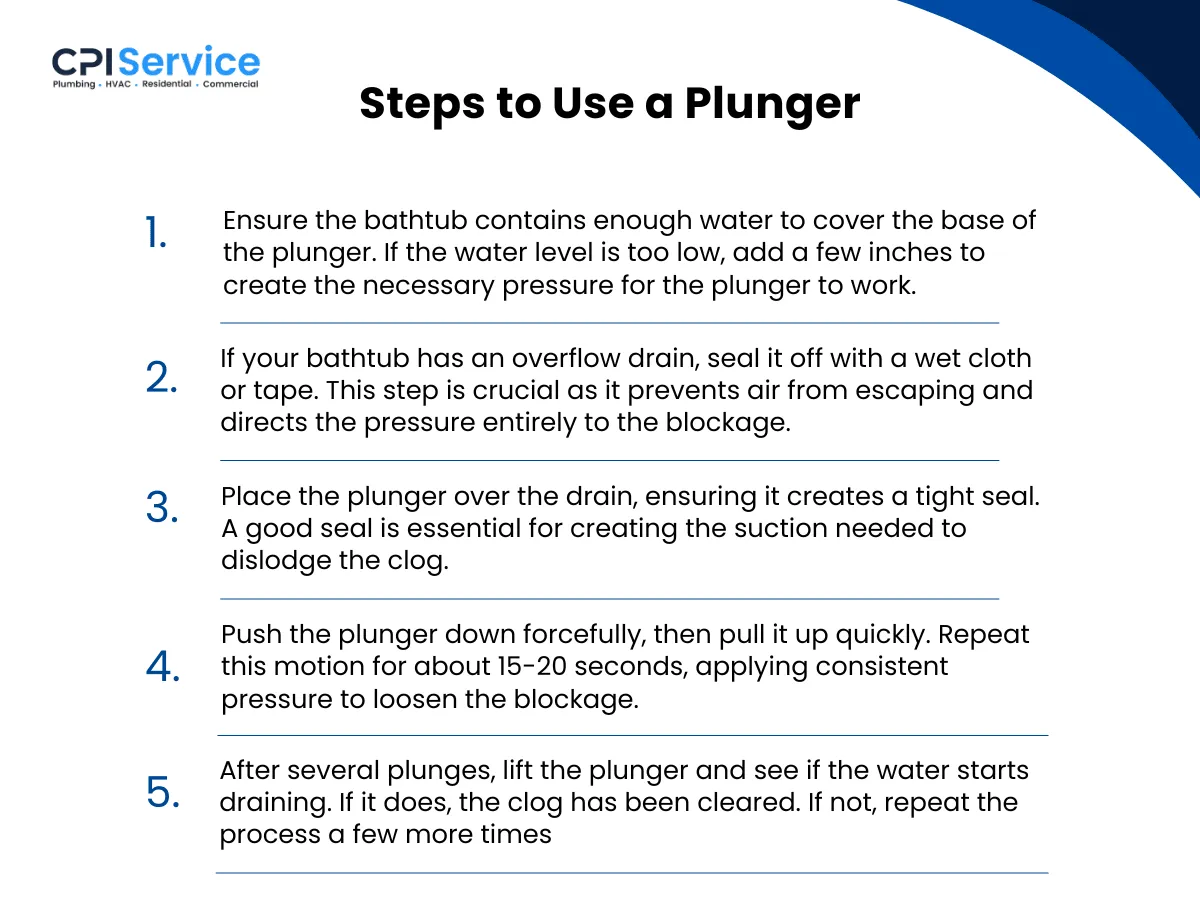
A cup plunger loosens hair and soap clogs a short way down the drain. A tub has a second opening, the overflow under the faucet, which has to be sealed or the pressure escapes through it.
- Remove the stopper (and the trip-lever linkage, if your tub has one).
- Leave a couple of inches of water in the tub, enough to cover the plunger cup.
- Seal the overflow plate with a wet rag or tape.
- Center the plunger over the drain and press to form a tight seal.
- Plunge firmly for about 15 to 20 seconds, pushing down hard and pulling up quickly.
- Lift the plunger and watch the water. If it drains, the clog is clear; if not, repeat a few more times, then move to a snake.
5. Baking Soda and Vinegar Solution
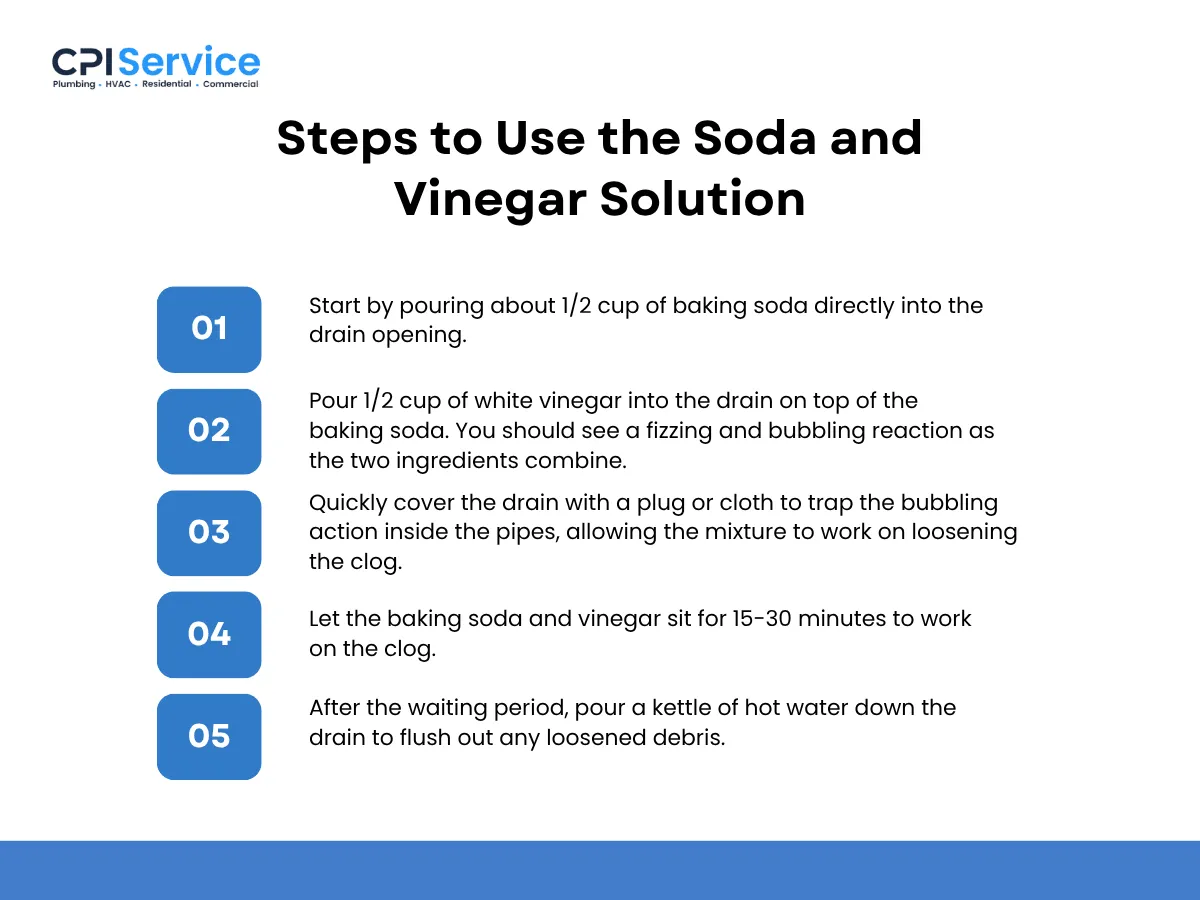
Baking soda is alkaline and vinegar is acidic; together they make carbon dioxide gas, and the fizzing loosens soap film and light organic buildup. It’s a good freshening step after the hair is out, but it won’t clear a solid clog on its own.
- Pour about half a cup of baking soda into the drain.
- Add half a cup of white vinegar; it will fizz.
- Cover the drain with the stopper or a cloth to keep the reaction in the pipe.
- Wait 15 to 30 minutes.
- Flush with a kettle of hot (not boiling) water or the hottest tap water.
If the tub is still slow, go back to the plunger or use a snake.
6. Using a Drain Snake
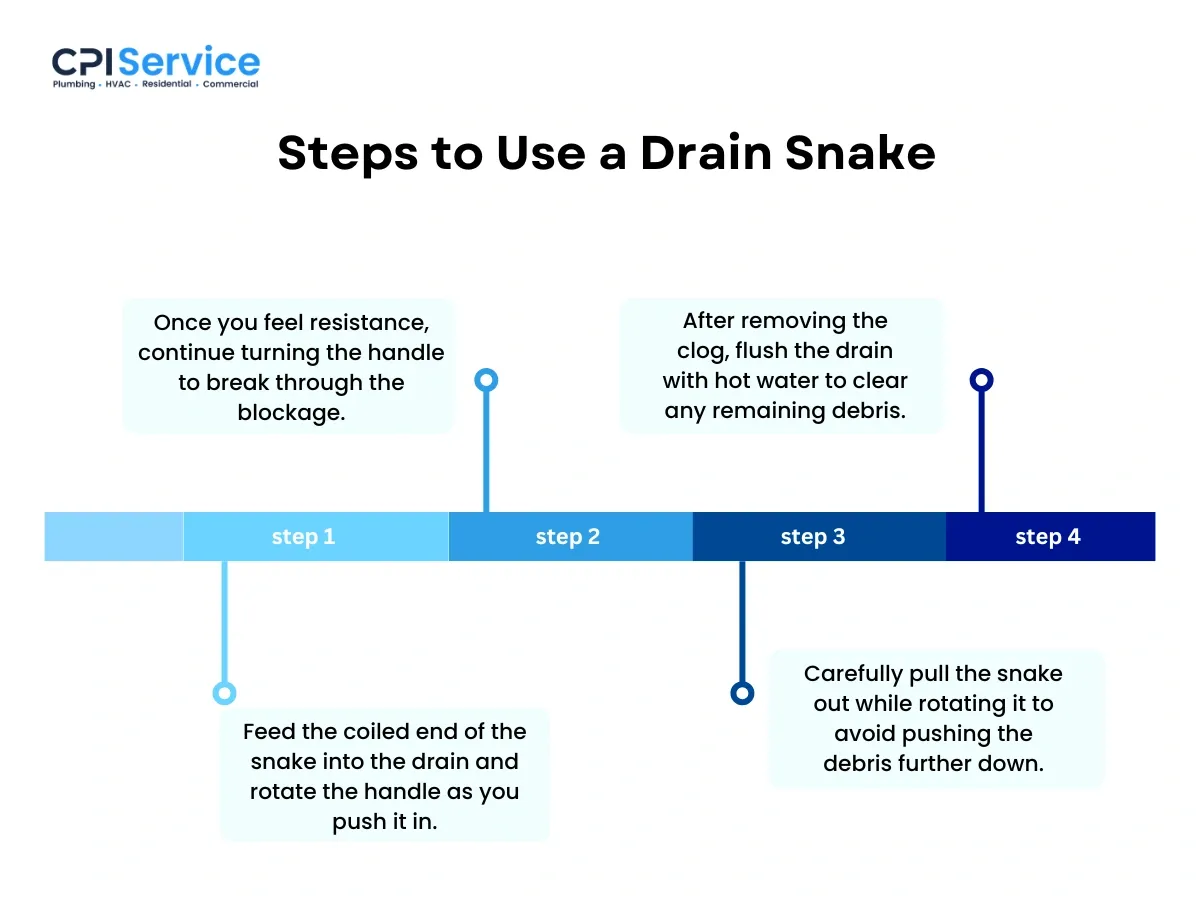
A small hand drain snake reaches hairballs and hardened soap that plunging can’t move, including clogs in the tub’s trap below the floor. In many tubs the overflow opening gives a straighter path than the drain: remove the overflow plate and feed the cable in there.
- Feed the end of the cable into the drain or overflow, turning the handle as you push.
- When you feel resistance, keep turning to break through or hook the clog. Don’t force it.
- Pull the snake back out while turning, so the debris comes with it instead of being pushed farther in.
- Flush the drain with hot tap water to clear what’s left.
If the snake won’t get through, or the tub clogs again soon after, the clog is farther down the line. See how to use a drain snake for more.
7. Chemical Drain Cleaners
Chemical drain cleaners use strong chemicals such as sodium hydroxide (lye), sulfuric acid or hydrochloric acid. Lye forms a strong alkaline solution that breaks down fats and oils; sulfuric acid releases heat as it breaks down organic matter. They can eat through hair and soap, but we don’t recommend them for a tub:
- They often don’t work on a dense hair clog, which leaves a tub full of caustic water.
- Repeated use can corrode pipes, especially older metal drains, and splashes can damage some tub finishes.
- They can cause chemical burns, and they’re harmful to the environment.
If you use one anyway, follow the manufacturer’s directions exactly, use only the stated amount and time, wear gloves and eye protection, ventilate the bathroom, and never mix products. Don’t plunge or snake afterward while the cleaner may still be in the drain, and tell your plumber what you used. See how drain cleaner works.
What Causes a Clogged Bathtub Drain?
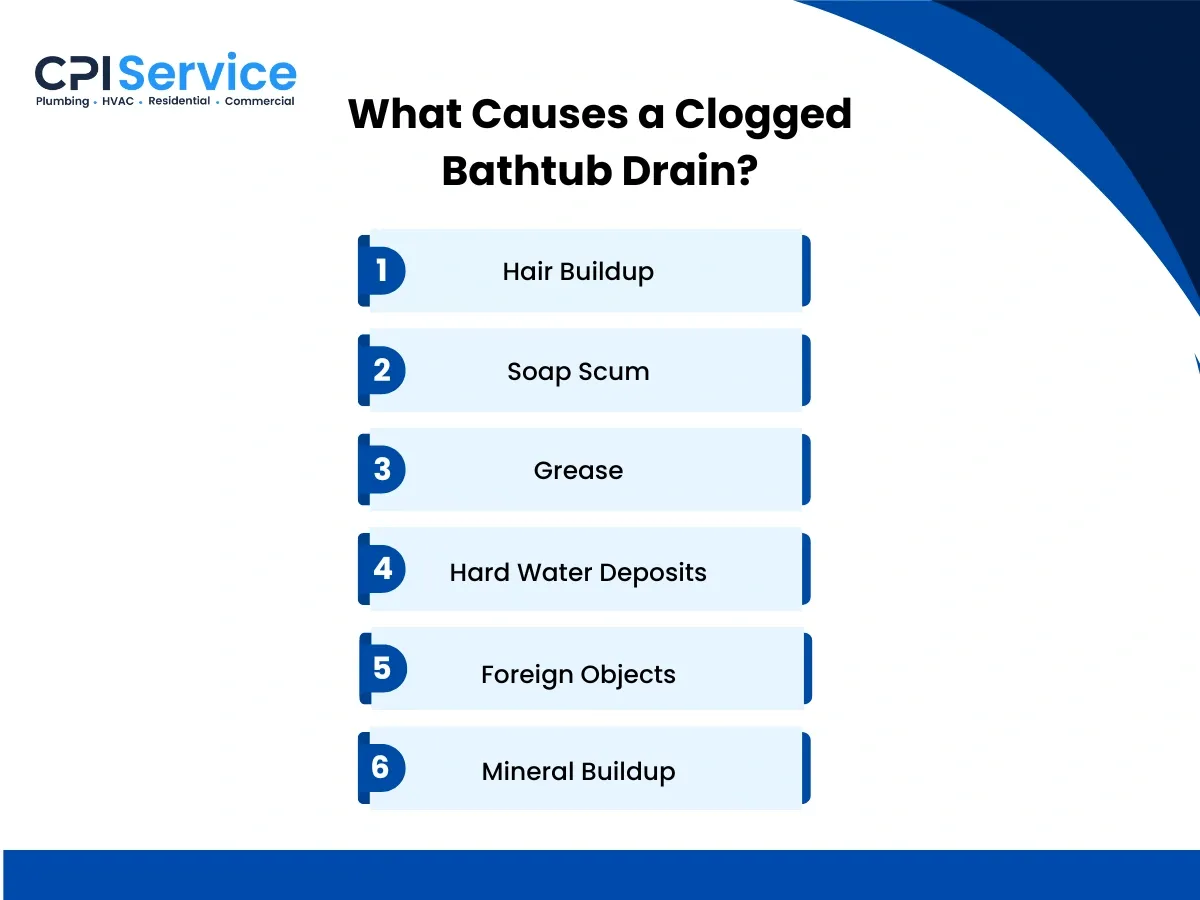
Tub clogs build up from a mix of hair, soap scum, oils and minerals that collect around the stopper and inside the pipe:
- Hair: the number one cause. Strands that fall into the drain clump together at the stopper.
- Soap scum: soap combines with minerals in the water into a sticky residue that clings to the pipe and traps debris. Bar soap is the worst.
- Grease and oils: body oils, lotions and bath products coat the pipe and bind with hair and soap.
- Hard water deposits: calcium and magnesium build up inside the pipe and narrow it.
- Foreign objects: caps, toys, razor covers and rings that fall in.
- Mineral buildup: in hard water areas, scale forms a rough layer that catches hair and slows the flow.
If you’re not sure the tub is really clogged, see signs of a clogged bathtub drain.
How to Prevent Clogs in Your Bathtub
A few small habits keep a tub draining freely:
- Use a hair catcher (mesh or silicone) and empty it after each shower.
- Brush long hair before showering.
- Clean the stopper every month or two.
- Rinse with hot tap water after baths with oils, salts or other products.
- Choose soaps that leave less residue, such as liquid body wash instead of bar soap.
- Freshen the drain with baking soda and vinegar now and then to clear early buildup.
DIY vs. Professional Plumbing Services: Comparison Table
DIY methods clear most minor tub clogs. Deep, recurring or whole-house clogs need a plumber’s equipment.
| Factor | DIY methods | Professional drain cleaning (CPI Service) |
|---|---|---|
| Effectiveness | Good for minor clogs of hair, soap scum or oils near the drain; often not enough for deep or recurring clogs | Clears deep, stubborn and recurring clogs, and finds the cause |
| Cost | Low: a plunger, a hand snake or a plastic drain tool | Typically $250–$600 at CPI in San Jose to clear a clogged drain |
| Time | Usually under half an hour | Usually one visit; longer for a main line or camera inspection |
| Risk | Low, but a forced snake, aggressive plunging or chemicals can damage pipes and finishes | Lower: the right tools and experience for the pipe |
| Skill needed | Minimal for plunging and hair removal; some for a snake | Licensed plumbers who diagnose and clear drains every day |
| Best for | A slow tub with hair and soap at the stopper | Persistent, severe or deep clogs that DIY didn’t clear |
| Tools | Plunger, hand snake, drain tool, baking soda, vinegar, hot water | Powered cable machines, hydro jetting, sewer cameras |
See drain cleaning cost for prices by drain and method, or CPI’s drain cleaning in San Jose for what a service visit includes.
What Not to Do
- Don’t use chemical drain cleaners; they often don’t work on hair and can damage older pipes and tub finishes
- Don’t pour boiling water into a tub drain with PVC pipe
- Don’t force a large auger through an old drain
When to Call a Professional Plumber?
Call a plumber when the tub stays clogged after you’ve cleaned the stopper, plunged and snaked it, or when the signs point beyond the tub. A clog that lasts for days, water backing up into other drains, slow drainage with odors: these can mean roots, damaged pipe or a clog farther down the system that needs professional equipment.
- Persistent clogs: the tub won’t clear after several DIY attempts.
- Slow drainage: water drains slowly or backs up even after the stopper and visible hair are clean.
- Foul odors: a smell from the drain that cleaning doesn’t fix.
- Water backups: water comes up in the tub when you flush a toilet (a main line clog), or into other drains.
- Several drains slow at once.
- Frequent clogging: the tub keeps clogging even with a hair catcher.
- Leaks: the tub drain leaks into the ceiling below.
A plumber can find the cause, whether it’s hair, scale or a deeper pipe problem, and clear the line. See signs of a clogged main sewer line.
Tub Clogs in San Jose Homes
- Hard water. San Jose Water’s 2025 water quality report lists average hardness of about 6 to 17 grains per gallon, depending on the source, and the scale it leaves catches hair.
- Older drains. Cast-iron and galvanized tub drains in older South Bay homes narrow over time.
- Main line warning. In older homes, the tub is often the first place a main sewer clog shows up.
CPI Service clears tub, shower and main line clogs throughout San Jose and the South Bay. See drain and sewer cleaning, request a free estimate or call (408) 978-3093.
Frequently Asked Questions
What's the most common cause of a clogged tub drain?
Hair tangled with soap scum, usually within a few inches of the drain at the stopper or strainer.
Can I use a plunger on a bathtub?
Yes. Remove the stopper, cover the overflow plate with a wet rag so the plunger can build pressure, leave a couple of inches of water in the tub, and plunge firmly.
Why does my tub fill with water when I flush the toilet?
That's a sign of a main sewer line clog, not a tub clog. Stop using water and call a plumber.
We are so happy with our experience with CPI. Our toilets were frequently backing up and we were concerned that there was a drain line blockage. Luis arrived on schedule and did a thorough inspection of our pipes with camera equipment. He found the source of the problem, cleared the pipes, and provided useful information going forward. Luis was very professional, easy to work with, and knowledgeable. We highly recommend CPI to anyone looking for plumbing solutions!
Nancy W., Yelp review
Read more reviews →Serving San Jose and the South Bay
CPI Service is based at 2880 Aiello Dr in San Jose and serves homes and businesses across the South Bay and the Peninsula. See all the areas we serve.