
Earthquake Gas Shutoff Valve Installation in San Jose, CA
A seismic gas shutoff valve closes your gas supply on its own when strong shaking hits, so a broken pipe or a loose appliance connector can't keep feeding gas into the house. Our licensed San Jose plumbers install state-certified earthquake and excess-flow valves on your side of the PG&E meter, leak-test the system and relight your pilots.
- Google 4.9130+ reviews
- Licensed C-36 · C-20 · ACSLB License #1101278
- 1-year labor warranty24/7 service since 1986
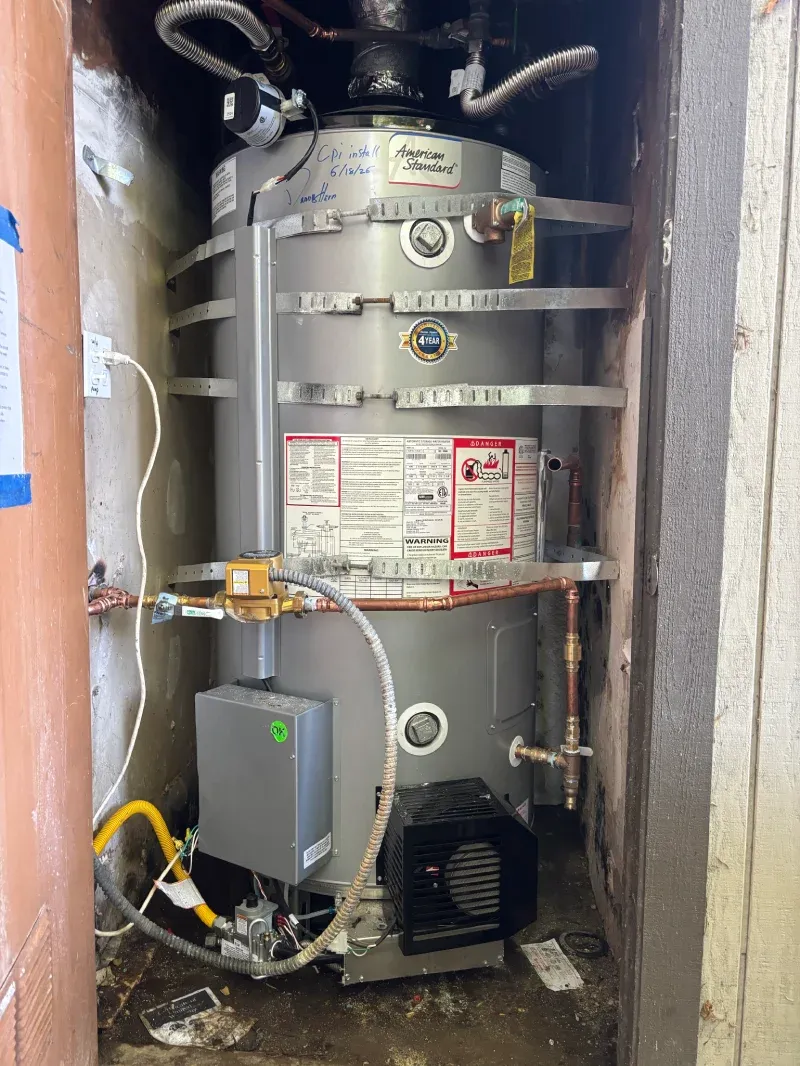
Earthquake Valve Services in San Jose
Automatic gas shutoff devices on the customer side of the meter, for homes and small buildings.
Seismic shutoff valve installation
A motion-sensitive valve at the meter that closes when an earthquake shakes it, mounted rigidly to the building as the maker and the city require.
Excess-flow valve installation
Valves that close when gas flow jumps suddenly, as it does when a pipe or connector breaks: at the meter or at an appliance's gas outlet.
Valve replacement
Old, damaged or uncertified valves replaced with a certified one, and the piping at the meter checked while we're there.
Reset, leak check and relight
After a valve trips, we check the piping for leaks, reset the valve and relight pilot lights. Call PG&E or 911 first if you smell gas.
When an Earthquake Valve Makes Sense
Any home with gas service can have one. These are the times owners most often add or replace one.
Get a free estimate- You're adding or replacing a gas appliance
Some cities, including Milpitas, require an excess-flow device when a gas appliance is installed or replaced.
- You're changing your gas piping
A new line, a remodel or a meter-area repair is the easiest time to add a valve at the meter.
- Nobody would be home to shut off the gas
An automatic valve closes without anyone at the meter with a wrench.
- Your old valve is damaged or uncertified
California certifies these valves, and some cities require a certified, listed valve with a 30-year warranty.
- You're selling or remodeling
Some California cities require automatic shutoff devices at sale or remodel. Ask your building department, or ask us.
An earthquake gas shutoff valve is an automatic valve on your gas line, just past the PG&E meter, that closes when strong shaking hits. California certifies these valves through the Division of the State Architect, and PG&E doesn’t install them, so a licensed plumber does. CPI Service installs seismic and excess-flow valves for homes in San Jose and the South Bay, quoted as a fixed price before we start. Call (408) 978-3093.
Why Add an Earthquake Valve?
Shaking can break gas piping and pull appliances off their connectors, and leaking gas after a quake can lead to fires. The City of Milpitas building handout says natural gas contributes to one of every four fires after an earthquake. A seismic valve shuts the gas off at the meter automatically, whether or not anyone is home to do it with a wrench.
Seismic vs Excess-Flow Valves at a Glance (October 2026)
| Device | What makes it close | Where it goes | Who installs it |
|---|---|---|---|
| Seismic (earthquake-actuated) valve | Ground shaking | Your side of the meter, mounted rigidly to the building | A licensed contractor |
| Excess-flow valve, customer side | A sudden jump in gas flow, as from a broken pipe | At the meter, or at an appliance’s gas outlet | A licensed contractor |
| Excess-flow valve on PG&E’s service line | A service line severed by digging | PG&E’s pipe, before the meter | PG&E, on request and at the customer’s cost |
California certifies earthquake-actuated valves to the ANSI/ASCE/SEI 25-16 standard and excess-flow valves to their own standards; the certification covers residential structures. Manual shutoff valves aren’t part of it.
Does San Jose Require an Earthquake Gas Shutoff Valve?
We haven’t found a City of San José rule that requires one on a typical home (checked October 2026). The State leaves installation rules to local building departments, so ask the San José Building Division about your project, or ask us when we quote it.
Some nearby cities do require them. Milpitas’s building handout (January 2026) requires:
- an excess-flow device at the appliance’s gas outlet whenever a gas appliance is installed or replaced
- a seismic or excess-flow device after the PG&E meter whenever gas piping is altered or added to
- installation by a licensed contractor, with a City permit
- a valve certified by the State Architect, listed by an approved agency, and warranted for 30 years
If you live outside San José, the same question goes to your own city. PG&E notes that some city and county regulations require automatic gas shutoff devices.
What Happens After the Valve Closes?
A closed valve stops gas to the whole house: the furnace, water heater, range and dryer. Before it’s reset:
- If you smell gas or hear it escaping, leave the house and call PG&E or 911 from outside.
- Don’t turn the gas back on yourself. PG&E advises having PG&E or another qualified professional check for leaks, restore service and relight the pilots, even when no earthquake caused the closure.
- Expect delays after a big quake. PG&E says a closed valve can delay its restoration, and after a widespread outage it can take a long time to reach everyone. A licensed plumber can check your piping, reset your valve and relight your appliances.
We do all three, and our emergency line answers 24/7.
Why Homeowners Choose CPI Service
- Licensed gas work: CSLB License #1101278 (C-36 Plumbing, C-20 HVAC)
- BBB A+ Accredited Business
- Fixed price before we start, and a 1-year labor warranty on our work
- Same-day service when the schedule allows, and 24/7 emergency service
- Serving San Jose since 1986
Make the Rest of Your Gas System Earthquake-Ready
- Strap the water heater. Seismic straps keep a tank from tipping and breaking its gas and water lines.
- Use flexible appliance connectors in good condition, and replace old ones. See our gas line services.
- Know where your meter shutoff is and keep a wrench that fits it near the meter.
- Keep working carbon monoxide alarms in the home if you have gas appliances.
We install earthquake valves throughout San Jose and the South Bay.
Sources
- Division of the State Architect: Gas Shutoff Valve Certification for Residential Structures
- PG&E: Understanding Gas Outages
- PG&E: Natural Disaster Safety
- PG&E: Safety: Excess Flow Valves (PDF)
- City of Milpitas: Natural Gas Safety and Shut-off Valves (PDF, January 2026)
Checked October 2026.
How Much Does an Earthquake Gas Shutoff Valve Cost in San Jose?
Earthquake valve installation is quoted as a fixed price before we start, once we've seen your meter, the pipe size and where the valve can be mounted. The leak test and relighting your pilots are part of the job, and we pull a permit where your city requires one.
| Service | Typical San Jose price (USD) |
|---|---|
| Earthquake or excess-flow valve, installed | $300–$1,200 |
| Inspection feeWaived for service plan members | $59 |
What affects the price
- Valve type and size. Seismic or excess-flow, sized to your gas line and the appliances on it.
- Mounting. Seismic valves must be mounted rigidly to the building; some meter sets need a bracket or piping changes first.
- Piping at the meter. Old or corroded pipe at the meter may need replacing to install the valve properly.
- Appliance valves. Excess-flow devices at each appliance are priced per appliance.
- Permit and inspection. Where the city requires a permit, we pull it.
Most repairs are quoted as a fixed price before we start. Ranges are typical for San Jose and the South Bay and don't include current specials.
How Our Earthquake Valve Installation Works
Look at the meter and piping
We check the meter set, the pipe size, the appliances on the line and where a valve can be mounted.
Choose a certified valve
A seismic or excess-flow valve certified by the Division of the State Architect and sized for your gas load.
Written fixed price
You get the price before any work, and we pull a permit where your city requires one.
Install
Gas off at the meter, valve installed on your side of the PG&E meter and mounted as the maker requires.
Leak test and relight
We test the piping for leaks, restore gas and relight every pilot.
Show you the reset
We show you how to tell if the valve has closed, and what to do (and not do) after an earthquake.
Earthquake Valves in San Jose and the South Bay
What to know before adding a valve in a South Bay home.
PG&E doesn't install them
PG&E owns the gas service up to the meter and doesn't install or service seismic or excess-flow shutoff valves. They go on your side of the meter, installed by a licensed contractor.
Rules vary by city
We haven't found a San José rule requiring a valve on a typical home (checked October 2026); the City's Building Division has the final word. Milpitas requires them in several cases.
State-certified valves
California's Division of the State Architect certifies earthquake-actuated and excess-flow valves for homes. We install certified valves only.
Strap the water heater too
A gas water heater that tips over in a quake can break its gas connection. Seismic straps are part of every water heater we install.
Neighborhoods we serve: Downtown San Jose · Willow Glen · East San Jose · South San Jose · Evergreen · Cambrian Park · West San Jose · Berryessa · North San Jose · Blossom Valley
Current Specials
Save on your visit. Mention the offer when you book.
- Any Plumbing Service$50 OFFGet Offer: Any Plumbing ServiceLimit 1 per household. Cannot be combined with other offers. Expires January 15, 2028. See details for Any Plumbing Service
- Sewer Line InspectionFREECamera inspectionGet Offer: Sewer Line InspectionLimit 1 per household. Cannot be combined with other offers. Expires January 15, 2028. See details for Sewer Line Inspection
- Water Heater Installation$250 OFFGet Offer: Water Heater InstallationLimit 1 per household. Cannot be combined with other offers. Expires January 15, 2028. See details for Water Heater Installation
- Second OpinionFREEAlready have a quote from another licensed plumber?Get Offer: Second OpinionFor customers with a quote from another licensed plumber. Expires January 15, 2028. See details for Second Opinion
- 12-Month Financing0%Interest for 12 monthsGet Offer: 12-Month FinancingThrough Synchrony, subject to financing approval. Expires January 15, 2028. See details for 12-Month Financing
- Seniors, Teachers & Healthcare Workers5% OFFSeniors 65+, teachers and healthcare workersGet Offer: Seniors, Teachers & Healthcare WorkersFor seniors 65+, teachers and healthcare workers. Expires January 15, 2028. See details for Seniors, Teachers & Healthcare Workers
Consolidated Plumbing has great plumbers, good pricing, and are always there when you need a plumber. All of their plumbers are professional and friendly. I would definitely recommend CPI for any of your plumbing needs.
Diana Q.Yelp review
CPI did a great job on some minor plumbing work that I needed done. Their price was fair and scheduling was easy.
Megan S.Yelp review
Prompt response, polite, knowledgeable. Good at explaining options and following through until solved.
Pauline M.Google review
Earthquake Gas Shutoff Valves FAQs
What is an earthquake gas shutoff valve?
An automatic valve on your gas line, just past the PG&E meter, that closes when strong shaking hits. It stops gas from flowing to a broken pipe or appliance connector after an earthquake. In California these valves are certified by the Division of the State Architect.
What's the difference between a seismic valve and an excess-flow valve?
A seismic valve reacts to motion: it closes when the ground shakes hard enough. An excess-flow valve reacts to flow: it closes when gas flow jumps suddenly, as it does when a pipe breaks. Both are installed on your side of the meter.
Does PG&E install earthquake shutoff valves?
No. PG&E says it doesn't install or service seismic-actuated or excess-flow shutoff valves on customer piping. A licensed plumber installs them on your side of the meter.
Does San Jose require an earthquake gas shutoff valve?
We haven't found a San José requirement for a typical home (checked October 2026); ask the City's Building Division for your project. Some nearby cities do require them, for example Milpitas when a gas appliance is replaced or gas piping is altered.
How much does an earthquake shutoff valve cost?
We quote it as a fixed price before we start, after we've seen the meter, the pipe size and the mounting spot. The leak test and relighting your pilots are included.
What should I do after the valve closes?
If you smell gas or hear it escaping, leave the house and call PG&E or 911 from outside. PG&E's advice is not to turn the gas back on yourself: have PG&E or another qualified professional check for leaks, restore service and relight the pilots. We do this, and our emergency line answers 24/7.
Will an excess-flow valve on PG&E's service line protect me in an earthquake?
Not reliably. PG&E's service-line excess-flow valves are meant for lines severed by digging, and PG&E says they don't protect against earthquake damage. A seismic valve on your side of the meter is the device made for earthquakes.
Serving San Jose and the South Bay
Our shop is at 2880 Aiello Dr in San Jose. We provide earthquake gas shutoff valves across the city and nearby South Bay and Peninsula communities. See our full service area.
- San Jose
- Santa Clara
- Sunnyvale
- Mountain View
- Cupertino
- Campbell
- Saratoga
- Los Gatos
- Milpitas
- Morgan Hill
- Gilroy
- Fremont
- Palo Alto
- Los Altos
- Los Altos Hills
- Menlo Park
- Atherton
- Stanford
- Portola Valley
- Woodside
Content and prices reviewed October 2026.
Need earthquake gas shutoff valves in San Jose? We're here 24/7.
- CSLB License #1101278 (opens CSLB in a new tab): C-36 Plumbing · C-20 HVAC · A General Engineering
- 1-year labor warranty on our work
- BBB A+ Accredited Business (opens BBB in a new tab)
- Technicians trained and certified: NASSCO PACP, MACP and LACP · Rheem heat pump · Noritz Level 3 tankless · OSHA safety
- Member of IAPMO, NASSCO, BOMA, IFMA · Se habla español