

 Emergency Plumbing
 Plumbing Repairs
 Water Heaters
 Drain Cleaning
 Sewer Service
 Faucets & Fixtures
 Repiping
 Toilet Plumbing
 Trenchless
 Plumbing Leaks
 Air Conditioning
 Heating
 Minisplit Systems
 Heat Pumps
 HVAC Components
 HVAC Rebates
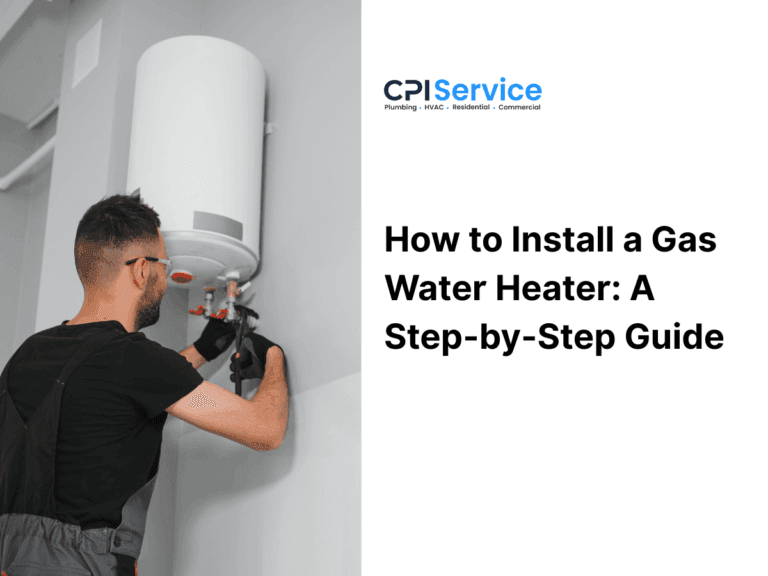
How to Install a Gas Water Heater: A Step-by-Step Guide
Correct gas water heater installation follows a predictable path, including removing the old unit, preparing the area, positioning the new heater, connecting the water and gas lines, installing the venting system, and performing testing to verify safe operation. All these gas water heater installation steps require careful attention to protect the home, ensure gas safety, and guarantee the system delivers reliable hot water without leaks, pressure issues, or combustion hazards.
Before beginning the gas water heater installation, choose the right heater size and gather the necessary tools, such as pipe wrenches, screwdrivers, a drill, and protective gear (gloves and safety glasses). Shut off the gas supply, water supply, and any connected electrical components, then review the manufacturer’s instructions for the specific gas heater model you are installing. The core stages include disconnecting the old unit, positioning the new tank, attaching the water lines, installing the TPR valve, completing gas line connections with approved fittings, and setting up the venting system for proper exhaust flow.
This guide outlines each gas water heater installation step in detail so you can follow a safe, structured installation sequence and avoid common errors that affect performance and safety.
Things to Consider Before Gas Hot Water Heater Installation
Before installing a gas hot water heater, you must evaluate size, gas line capacity, venting requirements, safety conditions, and local code rules to avoid performance issues or hazards. Proper consideration of these factors is crucial to executing gas hot water heater installation correctly, safely, and efficiently while avoiding serious risks such as gas leaks, backdrafting, carbon monoxide exposure, and pressure-related failures. Understanding these considerations before starting any mechanical work is key to how to install a gas hot water heater.
Choose the Right Size and Capacity
To choose the right size for your gas water heater, consider the number of people in your household and the general capacity needed: 40-50 gallons for 2-3 people, 50-60 gallons for 3-4 people, and 50+ gallons for 5 or more people if using a gas storage tank. A gas hot water heater that is too small for your household’s needs will struggle to provide enough hot water, while one that is too large will waste energy by constantly heating excess water.
To determine the appropriate gas hot water heater size for your needs, consider:
- Household Demand: The number of people in your household and the frequency of hot water use. For example, a family of two to three typically requires a 40 gallon gas hot water heater tank, while for family of four or more may need a 50 gallon gas hot water heater tank.
- First Hour Rating (FHR): The FHR indicates how much hot water the heater can deliver in the first hour of use, starting with a full tank of hot water. Ensure the gas water heater’s FHR meets or exceeds your peak hour demand to avoid running out of hot water during high-use periods.
- Recovery Rate: This refers to how quickly the gas water heater can heat up a full tank of water. If your home uses hot water in multiple areas simultaneously, like running a shower while doing laundry, you will need a unit with a higher recovery rate.
Plumbing Tools and Materials Requirements
Gathering the correct plumbing tools and materials before installing a gas water heater ensures a steady workflow, safe handling, and proper sealing of all water and gas connections. Core tools and materials for gas water heater installation include adjustable wrenches, pipe wrenches, channel locks, a shutoff valve, Teflon tape or gas-rated thread sealant, and water line fittings, vent sections. Below is the breakdown of the essential plumbing tools and materials required for gas water heater installation in detail:
Tools for Gas Water Heater Installation:
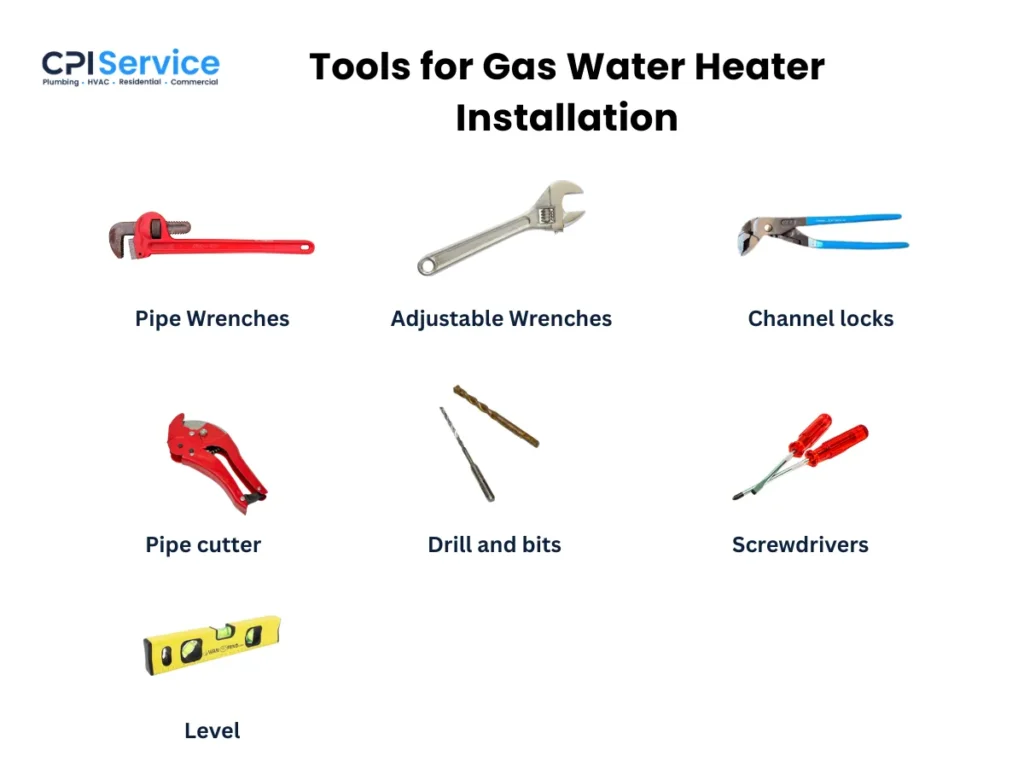
- Pipe wrenches: To tighten or loosen gas fittings and rigid water lines.
- Adjustable wrenches: For handling flexible connectors and compression fittings.
- Channel locks: For better grip and to stabilize fittings during threading or tightening.
- Pipe cutter: To prepare copper or PEX water lines to the proper length.
- Drill and bits: Used to secure straps, vent supports, or brackets.
- Screwdrivers: To remove vent screws and access panel fasteners
- Level: For ensuring the heater sits evenly for proper drainage and TPR valve performance.
Materials for Gas Water Heater Installation:
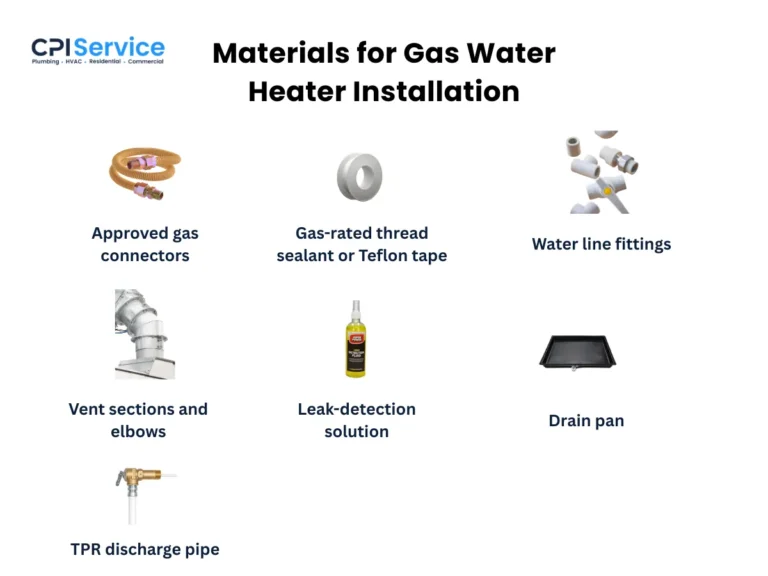
- Approved gas connectors: To supply gas from the shutoff valve to the heater.
- Gas-rated thread sealant or Teflon tape: For sealing threaded gas and water joints.
- Water line fittings: To connect the cold inlet and hot outlet lines.
- Vent sections and elbows: To form the exhaust path for combustion gases.
- Leak-detection solution: For identifying gas or water leaks during testing.
- Drain pan: To catch minor leaks and meet code requirements where necessary.
- TPR discharge pipe: To safely route relief valve discharge to an approved point.
Safety Precautions and Gas Safety
Safety is crucial when installing a gas water heater because the process involves fuel lines, combustion, and venting systems that must be handled with precision. Before working on any fittings, ensure the gas supply is fully shut off, the workspace is ventilated, and all ignition sources are removed. A controlled approach protects the home from gas leaks, ignition hazards, and backdrafting.
Key safety precautions for gas water heater installation:
- Shut off the Gas Supply: Before touching any gas line, make sure the gas supply is turned off at the main valve to prevent any leaks.
- Ventilation: Ensure the area is well-ventilated, particularly if you are working in a confined space, to avoid gas accumulation. Open windows or use fans if necessary.
- Test for Leaks: After installation, always check all gas connections using a leak detection solution or soapy water. If bubbles appear, there is a leak, and it must be fixed before proceeding.
- Protective Gear: Wear appropriate personal protective equipment (PPE), such as gloves and safety glasses, when handling tools and gas lines.
Code Compliance Requirements
Code compliance for a gas water heater installation requires following local rules for permits, venting, gas line specifications, placement clearances, and safety devices. These rules ensure the gas water heater operates safely, prevents backdrafting, and meets inspection standards. Before starting the installation, verify all jurisdiction-specific requirements for the gas water heater, as cities and counties may have different mandates for vent configurations, seismic restraints, discharge pipe routing, and approved gas fittings.
For example, if you are installing or replacing a gas water heater in San Jose, you must obtain a Building Permit from the City of San Jose’s Planning, Building, and Code Enforcement Department. The city also requires a formal inspection to verify that the gas line connections, venting setup, TPR discharge piping, and placement clearances meet current building and safety codes. To determine whether a permit is required for your project, contact your local building department or review their published guidelines on permit applications and inspection scheduling for a gas water heater.
Step-by-Step Gas Water Heater Installation Process
Gas water heater installation follows a structured step-by-step process, beginning with removing the old heater, preparing the installation area, and connecting the gas line. It continues with installing the venting system to ensure safe gas exhaust, positioning the new gas unit with the correct clearances, and making the necessary water connections. The process ends with filling the tank, pressure testing, leak checks, ignition, and a final safety review. These steps ensure the gas water heater is positioned correctly, connected safely, and tested for proper operation, with proper ventilation in place to ensure safe exhaust.
Step 1: Remove the Old Water Heater
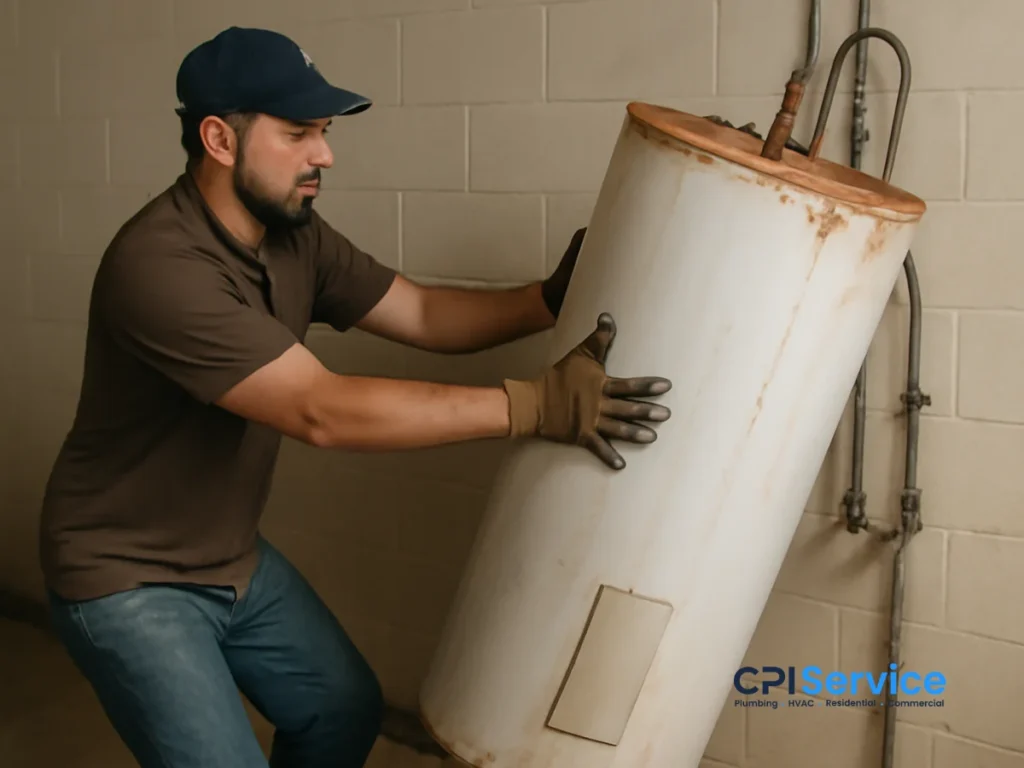
Before installing the new gas water heater, the old one must be removed safely. This includes isolating all utilities, releasing pressure, and disconnecting each connection in a controlled order to prevent gas leaks, water spills, or damage to surrounding components. This stage creates a safe workspace for positioning the new unit and ensures all lines are cleared, depressurized, and ready for inspection.
- Turn off gas, water, and electricity: The first and most important task is to turn off all power sources to the old water heater. Start by shutting off the gas supply by turning the gas valve to the “off” position, which stops the flow of gas. Next, close the water supply valve to prevent any incoming water from reaching the heater. To do this, locate the cold water supply valve connected to the water inlet pipe, usually found near the top of the heater. This valve may have a lever or a round handle; simply turn it clockwise to close it completely. If the unit has electrical components, such as a hybrid or electronic ignition system, be sure to switch off the electricity at the breaker panel. Taking these precautions ensures safety by preventing gas or electrical hazards during disconnection.
- Drain the old tank completely: After shutting off all utilities, drain the tank to prevent spills and lighten the unit. Attach a garden hose to the drain valve located at the bottom of the tank, and route it to a floor drain or outdoor location. Open a hot-water faucet inside the home to allow air into the system, which speeds draining and prevents vacuum lock. Let the tank empty fully before moving to the next step
- Disconnect gas line, water lines, and vent pipe: Once the tank is drained, carefully begin disconnecting the utility lines. Start with the gas line by loosening the gas union carefully to avoid twisting the pipe. Then, disconnect the cold and hot water supply lines. Depending on the type of connection (flexible or rigid), different tools may be needed to disconnect the pipes. Finally, remove the vent pipe from the draft hood by taking out screws or releasing slip-joint connections, ensuring you do not bend or damage the vent sections.
- Safe removal and disposal options: Once all the lines are disconnected, carefully remove the old gas water heater. Use a dolly or have someone assist if the tank is heavy or located in a tight area. Follow your local disposal regulations when discarding the old unit. Many cities, like California and Colorado, offer appliance recycling programs, and some areas provide rebates for turning in old heaters through approved recycling centers.
Step 2: New Gas Water Heater Installation
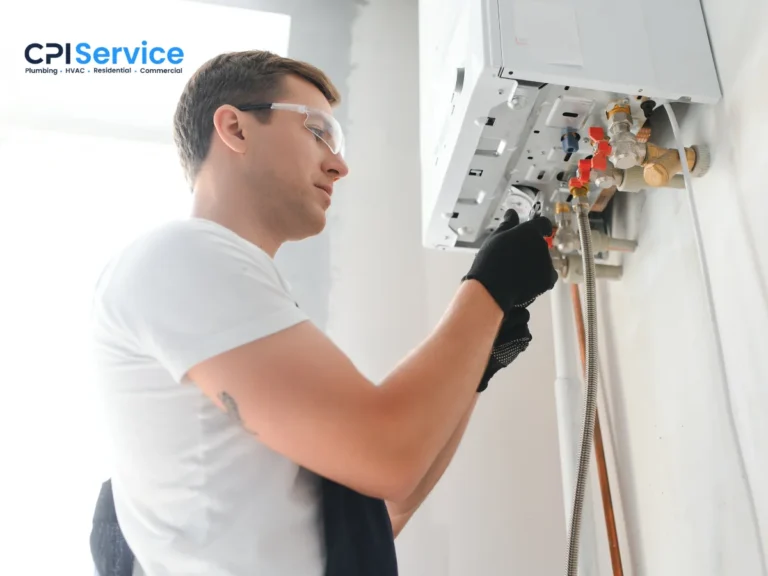
After removing the old unit, the next step is to install the new gas water heater begins with preparing the installation area, checking the condition of existing gas lines, and ensuring all components meet current safety and code requirements. This stage focuses on confirming that the space, drain system, and gas connections are ready before the heater is positioned and leveled.
- Inspect and upgrade gas lines if needed: Before connecting the new gas water heater, inspect the existing gas line for corrosion, worn threads, outdated connectors, or damaged fittings. If the shutoff valve sticks or leaks, replace it before continuing. Older installations may require an upgraded flexible connector or drip leg to meet current standards. Completing these upgrades ensures a reliable gas connection once the heater is in place.
- Install drain pan and drain line: A drain pan is necessary to catch any water that may leak from the new heater. The pan should be installed under the unit, especially if it is located in a finished space or area where water damage is a concern. The pan should be level to ensure proper water flow and prevent any uneven drainage that could lead to water pooling or damage. Additionally, the drain line should be routed to an approved drainage location, such as a floor drain, to ensure any leaks or overflow are directed safely away from the heater and the surrounding area.
- Position and level the new unit: Once the space is prepared, position the new heater in place. Ensure there is adequate clearance around the unit for ventilation and service access. It is important to level the unit to avoid issues with the pressure relief valve and ensure proper drainage. Use shims or other leveling tools to make sure the unit sits evenly, as an improperly positioned gas water heater can cause operational issues down the line.
Step 3: Connect Water Lines and Gas Connections
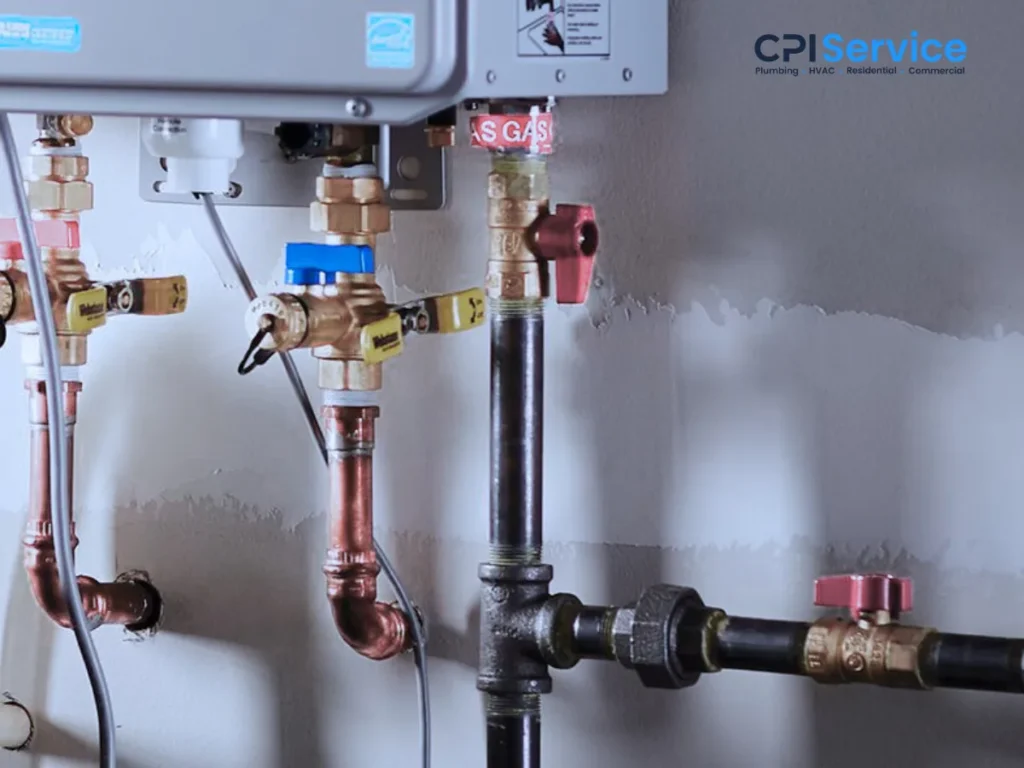
Once the new gas water heater is in place, the next step is to connect the cold and hot water lines, the gas line, and the necessary safety components. This step establishes the functional link between the heater and the home’s utility system. Each connection must be aligned, tightened, and sealed correctly to prevent leaks, pressure issues, or ignition hazards. Completing these tasks carefully sets the foundation for safe operation once the tank is filled and the system is pressurized.
- Installing temperature and pressure relief (TPR) valve: Start by installing the TPR valve, which protects the tank from excessive temperature or pressure. Apply approved thread sealant to the threads and tighten the valve securely into the designated port. Attach the discharge pipe so it points downward and terminates at an approved drain point. The pipe must remain unobstructed to release pressure safely if needed.
- Connecting cold water inlet with shutoff valve: The cold water inlet supplies water to be heated by the unit. Attach the cold water inlet pipe to the unit and ensure that a shutoff valve is installed along the cold water line. This valve allows you to isolate the heater without affecting the rest of the home’s water supply, which is important during maintenance. After securing the connection, verify that the shutoff valve operates smoothly.
- Connecting hot water outlet: The hot water outlet directs heated water from the tank to the home’s plumbing system. Attach the hot water outlet line using the same connector type as the cold inlet. Create a secure, watertight joint using thread sealant or the correct gasket. Support the piping with brackets or hangers so its weight does not rest on the tank. A properly supported connection prevents stress and early joint failure.
- Installing gas line with approved connectors and drip leg: The gas line must be connected securely to the heater’s gas control valve. Use approved gas connectors to ensure a proper seal. A drip leg should be installed on the gas line to catch moisture and sediment before they reach the burner assembly, which can help avoid damage. Ensure that the gas line is supported properly to prevent strain on the connections.
Step 4: Install the Venting System
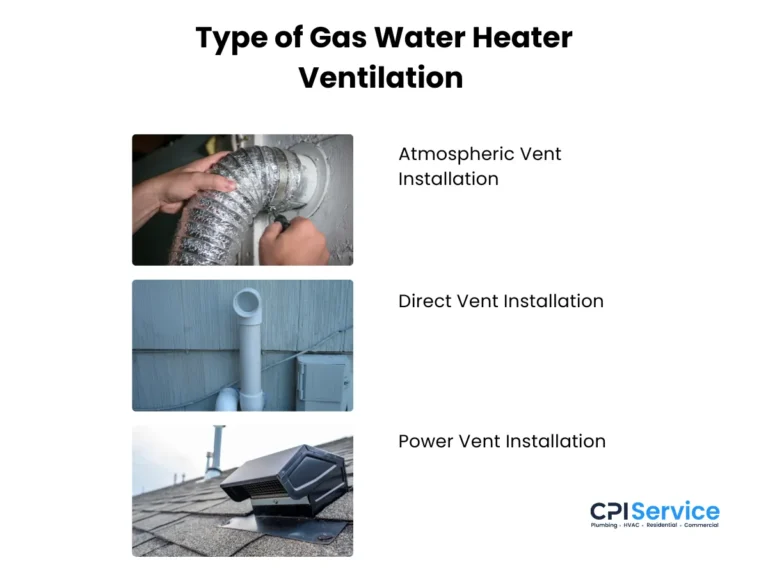
For installing the vent system, there are three different options which are atmospheric vent, direct vent, or power vent, depending on the heater type and local code requirements for draft, materials, clearances, and termination points. This venting system removes combustion gases safely from the home, making this stage essential for proper gas water heater operation.
Atmospheric Vent Installation
Begin the atmospheric vent installation by securely attaching the vent pipe to the draft hood using screws or clamps. Ensure the vent runs vertically with a continuous upward rise, with no downward dips that could trap exhaust. Support the vent properly and maintain clearance from combustibles to prevent overheating. Atmospheric vent installation is used for traditional tank-style gas water heaters that rely on natural convection for airflow. The primary safety purpose of this venting installation is to allow combustion gases, especially carbon monoxide, to escape safely from the home, preventing backdrafting and indoor exposure.
Direct Vent Installation
To install a direct vent installation, start by connecting the intake and exhaust pipes to their designated ports on the gas water heater, ensuring each connection locks securely. Route both pipes to an approved exterior termination point, keeping them level or slightly sloped, and follow required clearances from windows, doors, and air intakes. The direct vent system installation method is used for sealed combustion gas water heaters, where air for combustion is pulled from outside rather than the indoor room. The main safety reason for direct vent installation is to ensure that combustion gases are vented outdoors while preventing indoor air pressure issues that could pull fumes back into the home.
Power Vent Installation
Begin the power vent installation by attaching the vent pipe firmly to the blower assembly and verifying a tight, sealed fit. Route the vent horizontally or vertically to an approved exterior termination point, ensuring there are no obstructions and maintaining required clearances from entry points and air intakes. Confirm that the blower has proper electrical power and that the vent path is fully supported. Power vent installation applies to gas water heaters located in areas where vertical venting is not possible, relying on a fan to force exhaust gases out. The primary safety purpose of power vent installation is to ensure combustion gases are mechanically expelled from the home, preventing buildup or backdrafting in spaces with limited natural airflow.
Step 5: Testing and Startup After installing a Gas Water Heater
To make sure your gas water heater is installed properly and ready for use, each connection, valve, and safety component must be tested carefully. This stage confirms that the tank is filled correctly, water and gas lines hold pressure, the ignition system works, and all fittings remain leak-free. Completing these checks ensures the heater operates safely and performs as expected under normal conditions.
- Fill the tank and checking for water leaks: Open the cold water supply valve slowly to begin filling the tank. As the tank fills, inspect every water connection, including the TPR valve, cold inlet, and hot outlet. Look for seepage or dripping and tighten any fittings that show signs of leakage. Confirm that water flows freely from a hot water faucet, which indicates the tank is full and the air has been purged.
- Pressure testing all connections: Use a pressure gauge to verify that the water system reaches the recommended pressure without dropping. For gas lines, apply a gas safe leak detection solution to all threaded joints, unions, and connectors. Bubbles indicate a leak and require immediate tightening or resealing. The system should hold pressure without fluctuation before moving to ignition.
- Gas leak detection on all gas connections: After pressure checks, apply a leak detection solution to every gas fitting, including the shutoff valve, drip leg connections, and the heater’s gas control valve inlet. Watch for any bubble formation, which signals a leak. Correct any issues, retest the connection, and confirm that the entire gas line remains leak-free before ignition.
- Light pilot or powering on electronic ignition: For heaters with a standing pilot, turn the gas control knob to the pilot setting, press the igniter, and hold it until the flame stabilizes. For electronic ignition models, restore electrical power and follow the manufacturer’s start-up instructions. Confirm that the flame is steady and that the burner activates properly once the thermostat calls for heat.
- Set temperature (120°F recommended): Adjust the thermostat on the gas control valve or digital display to 120°F. This setting provides safe, energy-efficient water heating and helps prevent scalding. Allow the heater to run for several minutes and confirm that the burner cycles normally at the selected temperature.
- Final safety inspection checklist: Perform a full inspection of the installation area. Verify that the vent is properly connected, unobstructed, and drafting correctly. Confirm that all water and gas connections remain leak-free under operating conditions. Check that the TPR valve is installed correctly and that the discharge pipe is routed to an approved location. Ensure that clearances around the heater remain open for combustion air and service access.
Which Gas Water Heater Suits Your Home: Tankless or Gas Tank Water Heater?
If you are looking for better long-term energy savings, space-saving benefits, and unlimited hot water without worrying about the budget, a tankless gas water heater is the better option. On the other hand, if you want a more economical upfront cost, simpler installation, and reliable performance for larger households with high simultaneous hot water demands, a traditional gas tank water heater may be the better choice. The right selection ultimately depends on budget, available space, installation requirements, and daily hot water usage needs.
To help you make a better decision to choose a gas water heater, here is a table highlighting the key differences.
Feature | Tankless Gas Water Heater | Gas Tank Water Heater |
Energy Bills | Lower monthly bills | Higher monthly bills |
Lifespan | 18 to 20 years | 8 to 12 years |
Hot Water Supply | Continuous hot water within the unit capacity | Limited to tank size. Hot water can run out |
Installation Cost | Higher upfront cost | Lower upfront cost with simpler installation |
Space Requirements | Wall mounted and compact | Requires floor space and is bulkier |
Maintenance Needs | Requires descaling in hard water areas | Needs tank flushing and anode rod checks |
Best For | Homes needing long-term savings, small spaces, and continuous hot water | Homes needing lower upfront cost and strong performance for large families |
What are the Common Gas Water Heater Installation Mistakes to Avoid?
Many installation issues with gas water heaters occur when venting, gas fittings, water connections, or code requirements are overlooked. These mistakes can lead to safety risks, poor performance, or failed inspections. Understanding the most common mistakes associated with gas water heater installation helps ensure a safe and reliable installation.
- Venting and Ventilation Errors: Incorrect venting during gas water heater installation is one of the most serious mistakes because it affects how exhaust gases leave the home. Using the wrong vent size, allowing downward slopes, or placing the vent too close to windows or air intakes can cause backdrafting. A vent must have a proper slope, correct material, and adequate clearances. Poor ventilation prevents safe exhaust flow and increases the risk of carbon monoxide entering the home.
- Gas Line Connection Mistakes: Improper gas line connections can create leaks, ignition hazards, or unstable gas pressure. Common errors include using the wrong thread sealant, over-tightening fittings, or failing to install a drip leg. Every joint should be tightened with the correct tools and checked with a leak detection solution. A secure, code-approved connector and a smooth operating shutoff valve are essential for safe fuel delivery.
- Water Connection and Pressure Issues: Wrong water line connections or improper pressure settings can cause leaks, reduced flow, or strain on the heater. Cross-threading, loose joints, or using incompatible fittings often leads to water seepage. Pressure that exceeds manufacturer limits can damage the tank or trigger the relief valve unnecessarily. Checking each joint, supporting the piping, and confirming stable pressure prevents early failures.
- Code Compliance Oversights: Ignoring local code requirements is another major mistake that leads to unsafe installation or failed inspections of a gas water heater. Missing permits, incorrect venting clearances, improper discharge pipe routing, or a lack of seismic strapping (where required) can all result in violations. Reviewing local rules before installation ensures that gas line sizes, vent materials, placement clearances, and safety components meet current standards.
How Much Does it Cost for Gas Water Heater Installation?
The cost to install a gas water heater typically ranges from $1,000 to $6,000+, depending on the system you choose and the complexity of the installation. The average price for a standard gas tank installation is around $1,500, while tankless systems can range from $2,000 to $6,000. These prices cover the cost of both the unit and professional installation, with labor accounting for about half of the total price. Additionally, factors like the type of gas water heater, its size, energy efficiency, and whether upgrades are needed for gas lines or venting will influence the final price.
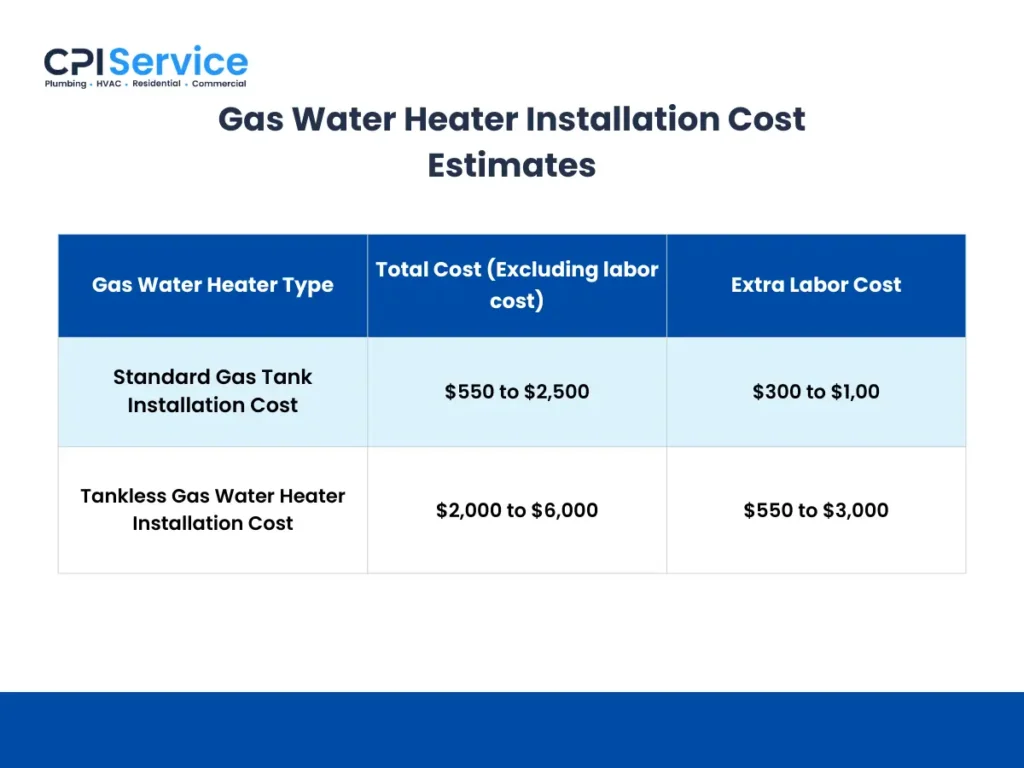
Estimated Cost Depending on Gas Water Heater Type
- Standard Gas Tank Installation Cost: Standard gas water heaters are generally more affordable upfront, with labor costs ranging from $300 to $1,000. The total price will depend on the unit size and efficiency.
- Total Cost (Excluding labor cost): $550 to $2,500
- Extra Labor Cost: $300 to $1,000
- Tankless Gas Water Heater Installation Cost: Tankless models tend to be more expensive due to their advanced technology, longer lifespan, and greater energy efficiency. Labor costs for tankless gas water heaters can also be higher due to the complexity of installation and potential upgrades required.
- Total Cost (Excluding labor cost): $2,000 to $6,000
- Extra Labor Cost: $550 to $3,000
How Can You Effectively Maintain and Troubleshoot Your Gas Water Heater?
To maintain your gas water heater’s efficiency and extend its lifespan, regularly set the correct temperature, flush the tank, inspect the venting system, and check the anode rod. Troubleshooting common issues, such as insufficient hot water or unusual noises, allows you to address problems early, helping prevent costly gas water heater repairs and ensuring optimal performance.
Regular Gas Water Heater Maintenance Tips
- Check the temperature setting: Ensure the thermostat is set to 120°F to maximize efficiency and prevent scalding.
- Flush the tank: Drain the tank annually to remove sediment buildup that can reduce efficiency and cause overheating.
- Inspect the venting system: Confirm that the vent is clear of blockages and securely connected to avoid backdrafts or safety hazards.
- Check the anode rod: Inspect the anode rod annually, replacing it if corroded to protect the tank from rust.
- Test the TPR valve: Make sure the temperature and pressure relief valve is functioning properly by testing it once a year.
When Should You Choose DIY Over Water Heater Installation Service Providers for Gas Water Heater Installation?
Choose DIY instead of water heater installation service providers only when you have proven experience with plumbing and gas lines, the installation is a direct replacement, and local codes allow homeowner installation. The distinction between DIY and water heater installation service providers for a gas water heater depends on your skill level, the complexity of the job, and regulatory requirements.
If you are comfortable working with plumbing systems and gas connections, a DIY approach may reduce costs, but a clear understanding of safety risks remains essential. For more involved installations, such as projects that require new gas lines, venting changes, or strict adherence to local regulations, working with licensed water heater service providers ensure safe, code-compliant, and correct execution.
Choose DIY Gas Water Installation If:
- You have prior experience with plumbing or gas work.
- You are replacing an existing unit with minimal modifications to gas lines or venting.
- The installation area is simple, with enough space and access for the new unit.
- Local codes allow it (check for permits or restrictions).
Choose Professional Gas Water Installation Services if:
- The job involves modifying gas lines or requires new gas line installations.
- The venting system needs upgrading or rerouting for safety and efficiency.
- You are unsure about local code requirements or the permit process.
- The installation site is hard to access or involves a more complex setup.
Frequently Asked Questions for Gas Water Heater Installation
Can I install a gas water heater myself legally?
Yes, in many areas, DIY gas water heater installation is allowed, but it may require meeting specific building codes and obtaining a permit. However, working with gas lines, venting, and pressure systems can be dangerous, so it is essential to understand local regulations. If you are unsure, it is safer to hire a licensed professional for gas water heater installation to ensure compliance and safety.
Do I need a permit to replace a gas water heater?
Yes, most regions require a permit for replacing a gas water heater, especially if new gas lines, venting, or electrical components are involved. Permits ensure the replacement of a gas water heater meets safety codes and can prevent issues during property inspections. Always check with your local building department before starting the project.
How long does a gas water heater last?
A gas water heater typically lasts between 8 to 12 years for a tank model and up to 20 years for a tankless model, depending on usage and maintenance. Tankless gas water heaters generally have a longer lifespan compared to traditional gas tank heaters. Regular maintenance, such as flushing the tank to remove sediment buildup and inspecting the anode rod, can help extend the lifespan and maintain optimal performance.
What’s the difference between natural gas and propane water heaters?
The main difference between natural gas and propane water heaters is the fuel type. Natural gas is supplied through pipelines, while propane is stored in tanks. Propane can provide slightly more heating power per cubic foot than natural gas, but requires larger tanks and regular refilling. Both types are efficient, but the choice depends on your local fuel availability and home setup.
What should I do if I smell gas during or after installation?
If you smell gas during or after installation, immediately evacuate the area and avoid using any electrical switches, open flames, or sparks. Turn off the gas supply at the main valve, ventilate the area, and contact your gas utility provider or a licensed professional to inspect and fix the issue before re-entering.
Will my homeowner’s insurance cover DIY installation?
Coverage for DIY installation varies by insurance policy. Some insurers may exclude coverage for damages caused by unprofessional installations, particularly if they involve gas lines or create safety risks. It is advisable to review your homeowner’s insurance policy or consult your insurer before attempting DIY installation.

Alex Hamilton is the owner of CPI Service, a trusted provider of plumbing and HVAC solutions. With over 35+ years of hands-on experience in the industry, He brings deep technical expertise and a proven track record in delivering reliable installation, maintenance, and repair services. His leadership ensures that CPI Service consistently upholds the highest standards of quality, safety, and customer satisfaction.
