10 Common Signs of a Clogged Bathtub Drain
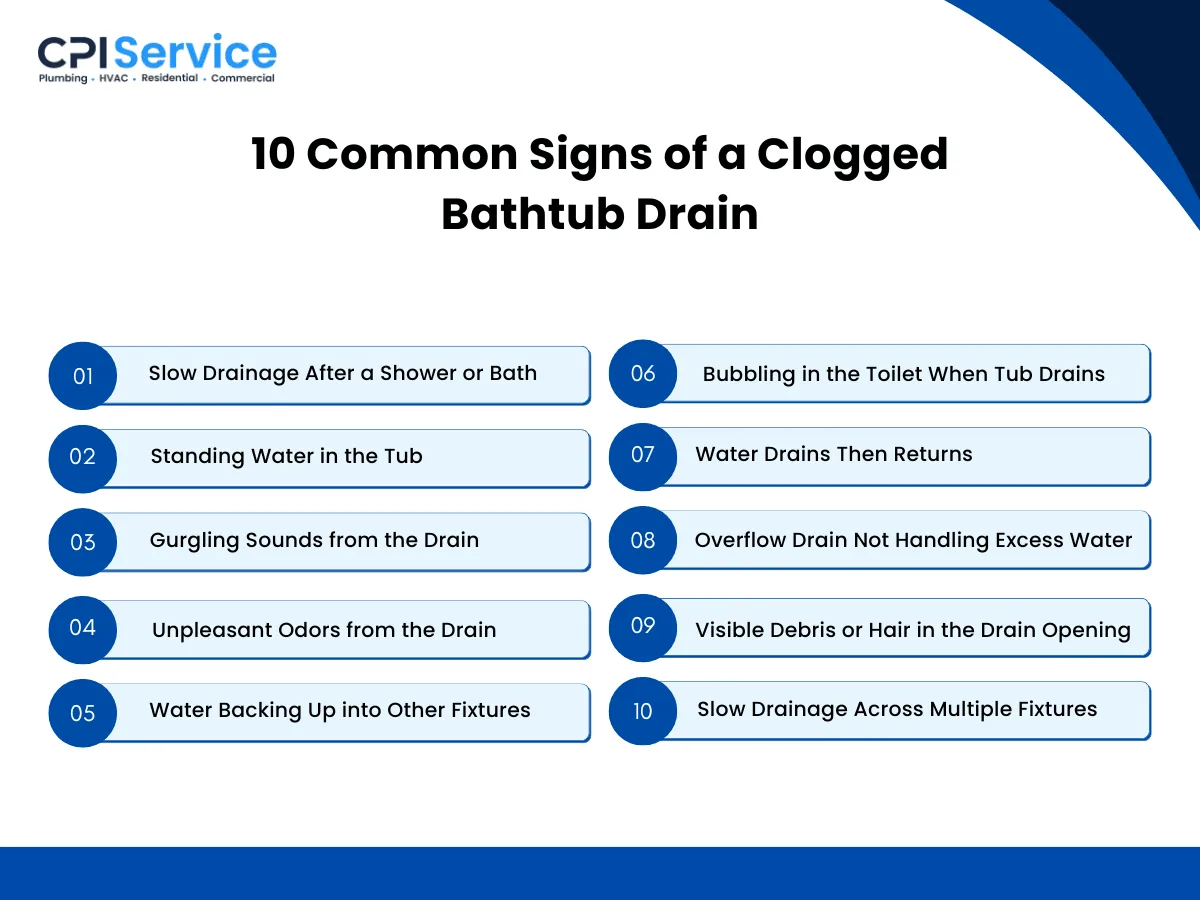
Table of Contents
A bathtub drain rarely clogs all at once. It slows over weeks as hair, soap scum and bath oils build up in the stopper, and in San Jose, hard water adds mineral scale that helps them stick. Some signs mean a clog at the stopper you can clear yourself; others mean a deeper problem for a plumber.
That slow build gives plenty of warning. When the problem is farther down, in a shared drain or the main sewer line, a plumber is needed. Clogs can form faster in San Jose and South Bay homes: San Jose Water’s 2025 water quality report lists average hardness of about 99 to 288 ppm (as calcium carbonate), depending on the source.
Left alone, a tub clog doesn’t stay small. Standing water damages the floor and caulk around the tub, odors and bacteria build up, and a slow drain can turn into a complete blockage. These are the ten signs to watch for:
- Slow drainage after a shower or bath
- Standing water in the tub
- Gurgling sounds from the drain
- Unpleasant odors from the drain
- An overflow drain that can’t keep up
- Visible hair or debris in the drain opening
- Water draining, then coming back
- Bubbling in the toilet when the tub drains
- Water backing up into other fixtures
- Slow drainage across several fixtures
Signs of a Local Tub Clog
These six signs usually mean the clog is in the tub’s own drain: at the stopper, in the overflow linkage or in the trap just below the tub. You can usually clear them yourself; see how to unclog a bathtub drain.
1. Slow Drainage After a Shower or Bath
Water that takes minutes instead of seconds to go down is the first sign of a partial clog. Hair is the main culprit: it tangles with soap scum and oils into dense clumps that catch more debris and narrow the pipe a little more every week. Act before it becomes standing water. Pull the stopper and clean off the hair, then use a plastic drain cleaning strip or a small hand drain snake to pull out what’s below it, and rinse with very hot tap water to clear soap residue. If it’s still slow after that, the clog is deeper or the pipe has narrowed with scale.
2. Standing Water in the Tub
Water that sits in the tub during or after a shower means the clog is severe enough to stop most of the flow. Besides hair and soap, small objects like shampoo caps, razor covers and bath toy parts can lodge in the drain and form a solid blockage. Standing water seeps into caulk and grout, damages the bathroom floor, smells, and grows mold and bacteria. Try a plunger (with the overflow opening covered by a wet rag so the pressure goes into the clog) or a hand snake. Avoid chemical drain cleaners: they rarely dissolve hair, they can damage older pipes and finishes, and they leave caustic water in the tub for whoever clears it next. If it won’t clear, call a plumber.
3. Gurgling Sounds from the Drain
Gurgling is air being forced through water as it squeezes past a partial clog. You may hear it as the tub drains, or when a nearby toilet or sink is used. Check the drain for visible debris and clear it with a plunger or snake. If the gurgling continues after the tub drains freely, the cause may be a deeper clog or a problem with the plumbing vent, which lets air into the drain system so water can flow. A plumber can find which it is.
4. Unpleasant Odors from the Drain
A musty or sour smell comes from hair, soap, skin oils and other organic matter decaying in the drain. It’s often strongest while the tub drains, when the moving water pushes the air out. Clean the stopper and pull out the buildup first; baking soda followed by vinegar and a hot tap-water rinse freshens the drain and loosens light residue. If the smell stays, or it smells like sewage rather than stale soap, there may be a deeper clog, a dry or damaged trap, or a venting problem, and a plumber should take a look.
5. Overflow Drain Not Handling Excess Water
The overflow opening under the faucet carries away water before it spills over the rim. Its pipe joins the tub drain above the trap, so if the trap is clogged the overflow can’t drain either, and water rises toward the plate or over it. On tubs with a trip-lever stopper, the linkage inside the overflow also collects hair and soap. Remove the overflow plate and check for buildup; if the overflow area is clear, the clog is farther down and needs a snake or professional cleaning. Cleaning the overflow now and then prevents surprises the one time the tub is left running.
6. Visible Debris or Hair in the Drain Opening
Hair and gunk you can see at the drain opening or on the stopper is buildup in progress. As it hardens with soap scum, it restricts flow, holds odors and feeds clogs farther down the pipe. Wearing gloves, pull it out by hand or with a drain brush or plastic strip, and use a hand snake for what’s deeper. A hair catcher and regular cleaning keep it from coming back. If the drain stays slow after cleaning, call a plumber.
Signs the Problem Is the Main Line
These four signs point to a clog beyond the tub, in a drain the tub shares with other fixtures or in the main sewer line. The tub is usually the lowest drain in the house, so it’s often where a main line clog shows up first. Stop using water, and don’t run the washing machine or dishwasher, until it’s cleared; see signs of a clogged main sewer line.
7. Water Drains, Then Returns
When the tub drains and then water rises back up into it, or into another fixture, the water is hitting a blockage deeper in the system and has nowhere to go but back. Grease, hair, soap, wipes and tree roots can all build a dense clog in a shared drain or the main line. Stop using the plumbing to avoid flooding or a sewage backup. A plumber will usually run a camera to find the blockage, then clear it by snaking or hydro jetting.
8. Bubbling in the Toilet When the Tub Drains
A toilet that bubbles or gurgles while the tub empties means air is being pushed through the toilet’s water. There are two common causes. A partial clog in the drain the tub and toilet share forces air back up as water from the tub tries to get past it. Or a blocked plumbing vent, from debris, leaves or a bird’s nest on the roof, starves the system of air. Check the toilet and nearby drains for slow draining first. Vent problems need a plumber: clearing a vent means roof work, and a plumber can confirm whether the vent or the drain is the problem.
9. Water Backing Up into Other Fixtures
Water that comes up in a sink, shower or toilet when the tub drains, or in the tub when you flush or run the washing machine, means a blockage in the main sewer line or a shared drain pipe. Hair, grease, soap, wipes or tree roots stop the flow toward the sewer, so water takes the easiest way out: the lowest connected fixture. Stop using water right away. A plunger may clear a minor clog in a nearby fixture, but a main line blockage needs professional cleaning before it becomes a sewage backup.
10. Slow Drainage Across Multiple Fixtures
When the tub, sinks and toilets are all slow at the same time, the blockage is almost always in the main sewer line, where every drain in the house comes together. Grease, wipes and tree roots in older laterals are the usual causes. DIY methods may give temporary relief at one drain but don’t reach the main line. A plumber will inspect it with a camera and clear it with a cable machine or hydro jetting. CPI’s free sewer line inspection special covers the camera inspection for homes with an accessible main line cleanout.
How to Prevent Bathtub Drain Clogs

A few habits keep most hair, soap and oil out of the pipe:
- Install a drain cover or hair catcher. A mesh cover or hair catcher over the drain traps hair before it reaches the pipe. Empty it after each shower; it’s the single most effective step.
- Rinse with hot water. Running very hot tap water down the drain for a minute or two once a week, and after oily products, helps carry soap scum and oils through the pipe. Use hot tap water, not boiling water: PVC drain pipe is made for water no hotter than 140°F (Charlotte Pipe), and boiling water can soften it.
- Go easy on oils and solid bath products. Bath oils, heavy lotions and bath bombs can leave residue that sticks in the pipe. Choose water-soluble products, use less oil, and wipe off excess lotion before a bath.
- Clean the drain routinely. Clean the stopper every month or two. Baking soda followed by vinegar and a hot-water rinse freshens the drain, and a plastic strip or hand snake every few months pulls out buildup before it becomes a clog. Skip chemical drain cleaners; they rarely work on hair and can damage older pipes.
When to Call a Professional Plumber
Call a plumber when:
- Any of the main line signs above show up: water backing up into other fixtures, several slow drains, or a toilet that bubbles when the tub drains
- The tub stays slow or keeps standing water after you’ve cleaned the stopper, plunged and snaked
- Gurgling or sewage odors continue after the drain is clear
- Water from the tub drain shows up in a ceiling below
These mean the blockage is deep in the system, beyond what household tools reach. A plumber can find it with a sewer camera and clear it with a drain machine or hydro jetting, which scours the pipe walls clean. In San Jose, professional drain cleaning usually costs $250 to $600, and hydro jetting a main sewer line $1,500 to $2,500. See drain cleaning cost.
Tub Clogs in San Jose Homes
- Hard water leaves scale that catches hair and soap.
- Older cast-iron and galvanized drains narrow over time.
- Main line clogs from roots in older laterals often show up first in the tub.
CPI Service clears tub, shower and main line clogs throughout San Jose and the South Bay. See drain and sewer cleaning, request a free estimate or call (408) 978-3093.
Frequently Asked Questions
How do I know if the clog is in the tub or the main line?
If only the tub is slow, it's a local clog, usually hair at the stopper. If the toilet bubbles when the tub drains, water comes up in the tub when you flush, or several drains are slow, the main line is likely blocked.
Why does my tub drain slowly even after I clean the stopper?
The clog may be farther down, in the trap below the tub, or scale and soap may have narrowed an older drain pipe. A small hand auger or a plumber can clear it.
Luis came to my house to look at a toilet that had been frequently backing up. He was very thorough in his diagnosis, taking out the toilet and using the outdoor cleanouts to capture videos of the pipes. He found and removed the blockage, and the toilet has been flushing great since. Thanks CPI for a job well done
Brian W., Google review
Read more reviews →Serving San Jose and the South Bay
CPI Service is based at 2880 Aiello Dr in San Jose and serves homes and businesses across the South Bay and the Peninsula. See all the areas we serve.