How Does Drain Cleaner Work? Types, Risks and Safer Alternatives
Table of Contents
- What Is a Drain Cleaner?
- What Types of Drain Cleaners Are There?
- Drain Cleaner Safety and Risks
- Where and When to Use Drain Cleaners?
- Drain Cleaner Formats and Forms
- Alternatives to Chemical Drain Cleaners
- If You’ve Already Used a Drain Cleaner
- When to Call a Plumber
- Drain Care in San Jose Homes
- Frequently Asked Questions
Chemical drain cleaners promise a quick fix for a slow drain and sometimes work on soft, fresh buildup, but they often fail on real clogs, they’re hazardous to handle, and repeated use is hard on older pipes. In South Bay homes with original galvanized or cast-iron drains, mechanical methods are the better choice.
Here’s how the different types work, what can go wrong, and the safer ways plumbers recommend to clear a drain.
Drain cleaners work through a chemical or biological reaction that dissolves or loosens grease, hair, soap scum and food waste. Some use strong alkalis that turn grease into soap and soften buildup with heat; others release oxygen to break down organic matter; acid formulas corrode dense clogs; and enzyme products digest waste slowly. They come as liquids, gels, powders, crystals and foams. The wrong product, or the right one used the wrong way, can damage pipes, injure people and harm septic systems.
What Is a Drain Cleaner?
A drain cleaner is a product that clears clogs by breaking down the material blocking the pipe: hair, grease, soap buildup or food particles. Depending on its formula, it works by a chemical reaction (caustic, oxidizing or acidic) or by biological activity (enzymes or bacteria). How well and how safely it works depends on the pipe material, where the clog is, and whether the home is on a city sewer or a septic system.
What Types of Drain Cleaners Are There?
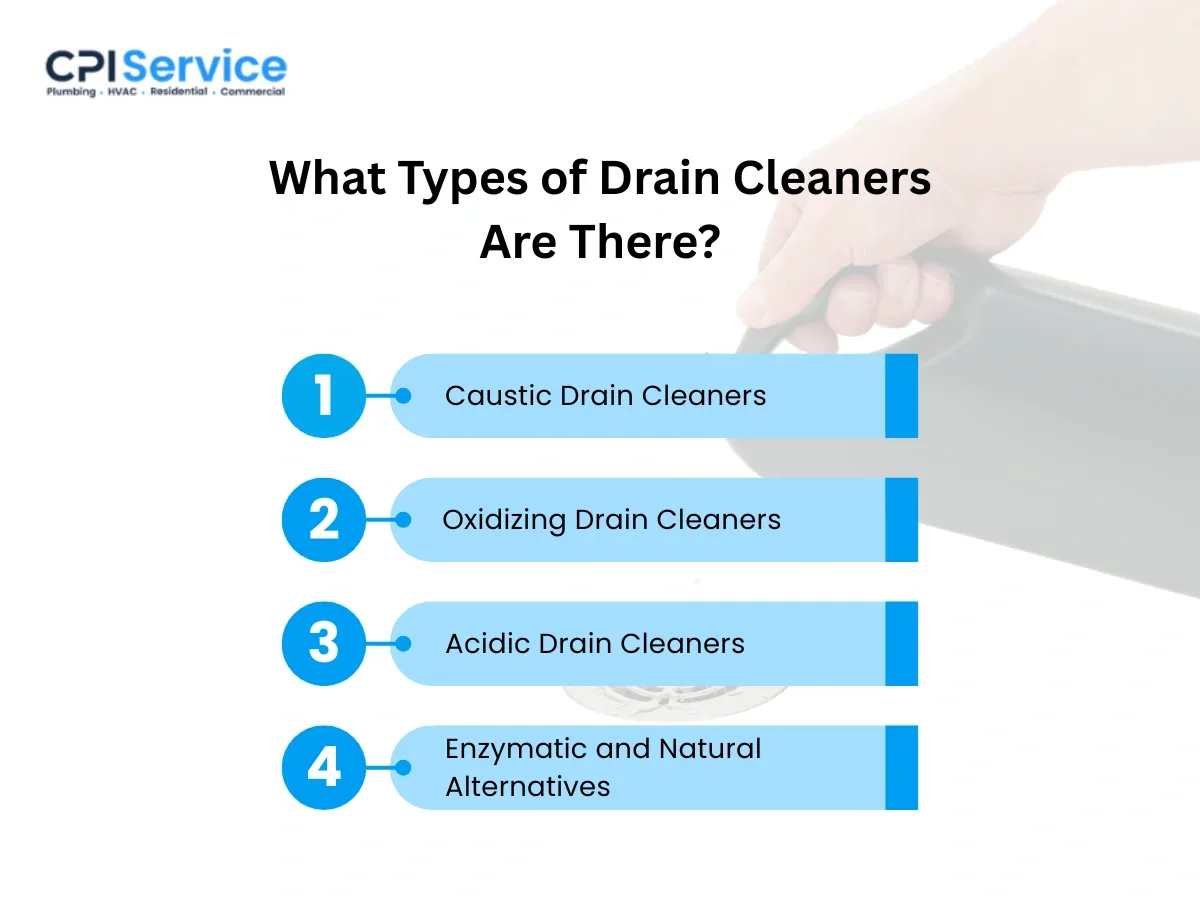
Drain cleaners fall into four main groups by how they work: caustic, oxidizing, acidic, and enzymatic or natural. Each is aimed at certain clog materials and drain locations.
Caustic Drain Cleaners
Caustic cleaners are strongly alkaline, usually with sodium hydroxide (lye) as the active ingredient. On grease and soap clogs, the lye reacts with fats to form soap and glycerol (saponification) and releases heat, which helps melt congealed grease and loosen debris on the pipe walls. They’re the common gels and liquids sold for kitchen and bathroom sinks. Used often, the heat and alkali are hard on joints, gaskets and older metal pipe.
Oxidizing Drain Cleaners
Oxidizing cleaners use ingredients such as sodium hypochlorite (bleach), peroxides or nitrates that pull electrons from organic matter, breaking hair, proteins, fats and food residue into smaller, water-soluble pieces. They’re usually sold for bathroom sinks, tubs and showers, where hair and soap scum build up. You may see bubbling, warmth, a chlorine smell or a color change while they work. They’re less corrosive than acids but give off fumes that irritate the lungs in a small, unventilated bathroom.
Acidic Drain Cleaners
Acid cleaners use strong acids such as sulfuric or hydrochloric acid. They attack hair, paper, tissue and even mineral scale, and give off a lot of heat. That strength is the problem: a splash causes severe burns, the reaction can release toxic gas, and acids corrode metal pipes and damage fixtures. They’re mostly sold for professional use. We don’t recommend them for homeowners.
Enzymatic and Natural Alternatives
Enzyme and bacterial cleaners use enzymes such as proteases (for proteins like hair) and lipases (for fats), or live bacteria that produce them, to digest organic buildup over hours or days. Baking soda followed by vinegar makes a fizzing reaction that stirs up light debris and freshens a drain. Both are gentle on pipes and septic systems and work for routine maintenance and odors, but neither clears a solid blockage.
| Cleaner type | Clog materials it targets | Where it’s usually sold for | Risk to pipes and people | Septic-safe |
|---|---|---|---|---|
| Caustic | Grease, food waste, soap residue | Kitchen sinks, utility drains | Moderate: heat can soften PVC joints; burns skin and eyes | No |
| Oxidizing | Hair, soap scum, organic residue | Bathroom sinks, tubs, showers | Moderate: fumes in small rooms; dangerous if mixed | Rarely |
| Acidic | Hair, paper, mineral scale | Professional use | High: corrosive, toxic gas, severe burns | No |
| Enzymatic | Hair, organic sludge, food particles | Any household drain, maintenance | Low: gentle on pipes and septic systems | Yes |
| Professional products | Grease, scale, sludge in large lines | Restaurants and commercial buildings | High: trained use with protective equipment only | Varies |
Drain Cleaner Safety and Risks
Strong acids and alkalis react aggressively with skin, eyes and plumbing materials. Burns, toxic fumes, corroded pipes and environmental harm are the main risks, and they rise sharply when products are overused, misused or mixed.
Risk of Skin and Eye Burns from Chemical Contact
Sodium hydroxide, sulfuric acid and hydrochloric acid burn skin and eyes on contact, and splashes are most likely when you plunge or open a trap after using a cleaner. Even brief contact with a concentrated product can cause blistering or permanent eye damage. If you use one, wear chemical-resistant gloves and sealed goggles. If it touches skin or eyes, rinse with plenty of running water right away, follow the first-aid directions on the label, and call Poison Help at 1-800-222-1222 or get medical care.
Risk of Respiratory Issues from Fumes
The reactions in a drain can release chlorine or other irritating vapors, especially with standing water and organic matter. In a small bathroom they build up quickly and can cause coughing, dizziness, nausea and chest tightness. Open windows and run the exhaust fan, and keep children and pets out of the room.
Risk of Pipe Corrosion in PVC and Metal
The heat from caustic and acid reactions can soften and warp PVC and weaken its glued joints, and the chemicals speed up corrosion in copper, galvanized steel and cast iron. Repeated use slowly weakens joints, causes leaks and shortens the life of the pipe. That’s a real concern in the many South Bay homes with original galvanized or cast-iron drains.
Risk of Septic System Disruption
Septic systems depend on bacteria to break down waste. Bleach, acids and other harsh chemicals kill those bacteria, which can lead to backups, odors and overflows. Most San Jose homes are on the city sewer, but a few hillside and rural South Bay homes have septic systems; they should use only septic-safe or enzyme products.
Risk of Chemical Explosions from Misuse
Mixing products, or adding a second product to a drain that already holds a first, can cause violent reactions. Bleach mixed with acid releases chlorine gas, bleach with ammonia releases toxic chloramine vapor, and an acid poured onto a caustic cleaner can boil and spatter out of the drain. Never combine drain cleaners or use them back to back, and follow every warning on the label.
Risk of Environmental Harm from Drain Disposal
What goes down the drain ends up at the wastewater treatment plant, and some chemicals aren’t fully removed there before the water is released. Use as little as possible, prefer enzyme products, and never pour leftover cleaner down a drain or into a storm drain. In Santa Clara County, drain clog remover is accepted as corrosive waste by the Household Hazardous Waste program, with free drop-off appointments.
Where and When to Use Drain Cleaners?
Drain cleaners are marketed for slow, partly blocked drains with soft organic clogs like grease, hair or food residue. They don’t work on solid objects, roots or a main line blockage, and a product that’s wrong for the drain or pipe can damage it. If you’re unsure what’s safe for your plumbing, or the clog doesn’t respond to a plunger, call a professional drain cleaning service instead.
Using Drain Cleaner in Kitchen Sinks
Kitchen sinks clog with grease and food scraps, which is what caustic cleaners target. But grease clogs usually sit farther down the line than the product can reach, and the hot, softened grease can set up again downstream. Overuse damages aluminum and old metal parts. A plunger (with the other side of a double sink blocked), cleaning the trap, or a snake works better; see how to unclog a sink drain.
Using Drain Cleaner for Shower Drain Blockages
Shower and tub drains clog with hair and soap scum. Oxidizing cleaners are sold for this, but they rarely dissolve a hair mat completely, and the chemicals can dull chrome and damage plastic parts. Pulling the hair out from under the stopper is faster and safer, and an enzyme cleaner helps with maintenance. See how to unclog a bathroom drain.
Using Drain Cleaner for Toilet Clogs
Most drain cleaners aren’t made for toilets. The product sits in the bowl without reaching the clog in the trapway, can damage the porcelain finish and wax seal, and makes plunging dangerous. Never use chemicals on a toilet clogged by an object. Use a flange plunger or a closet auger, and call a plumber if several fixtures back up at once.
Using Drain Cleaner in Commercial Plumbing
Restaurants, offices and other commercial buildings have larger, longer lines and heavier grease loads. Industrial-strength products exist for them, but they’re for trained staff following OSHA rules and the product’s Safety Data Sheet. Most commercial drains are better served by scheduled mechanical cleaning or hydro jetting and grease interceptor maintenance; see commercial plumbing.
Drain Cleaner Formats and Forms
Drain cleaners come as liquids, powders, crystals, gels and foams. The format changes how the product reaches the clog, how long it stays in contact, and how risky it is to use.
Liquid vs Powder vs Crystal
- Liquids are pre-mixed and easy to pour. They spread quickly but get diluted by standing water, so they work only on light clogs near the drain opening.
- Powders dissolve in water in the drain. How well they work depends on mixing and on how far away the clog is.
- Crystals are highly concentrated and fast-acting, and they’re the riskiest: they react violently, get very hot and are the most likely to damage pipes or cause burns.
Foam and Gel Formulations
Foams expand as they move through the drain and coat the pipe walls, so they reach buildup in vertical sections. Gels are thick and heavy, so they sink through water and settle on the clog. Both are sold for hair and soap scum in bathroom sinks, tubs and showers, and they splash less than liquids. They still carry the same chemical risks if they don’t clear the clog.
Alternatives to Chemical Drain Cleaners
Most clogs can be cleared without chemicals, using a plunger, a hand tool, a snake or enzymes. These methods are safer for your pipes, a septic system and the air in your home, especially with children around.
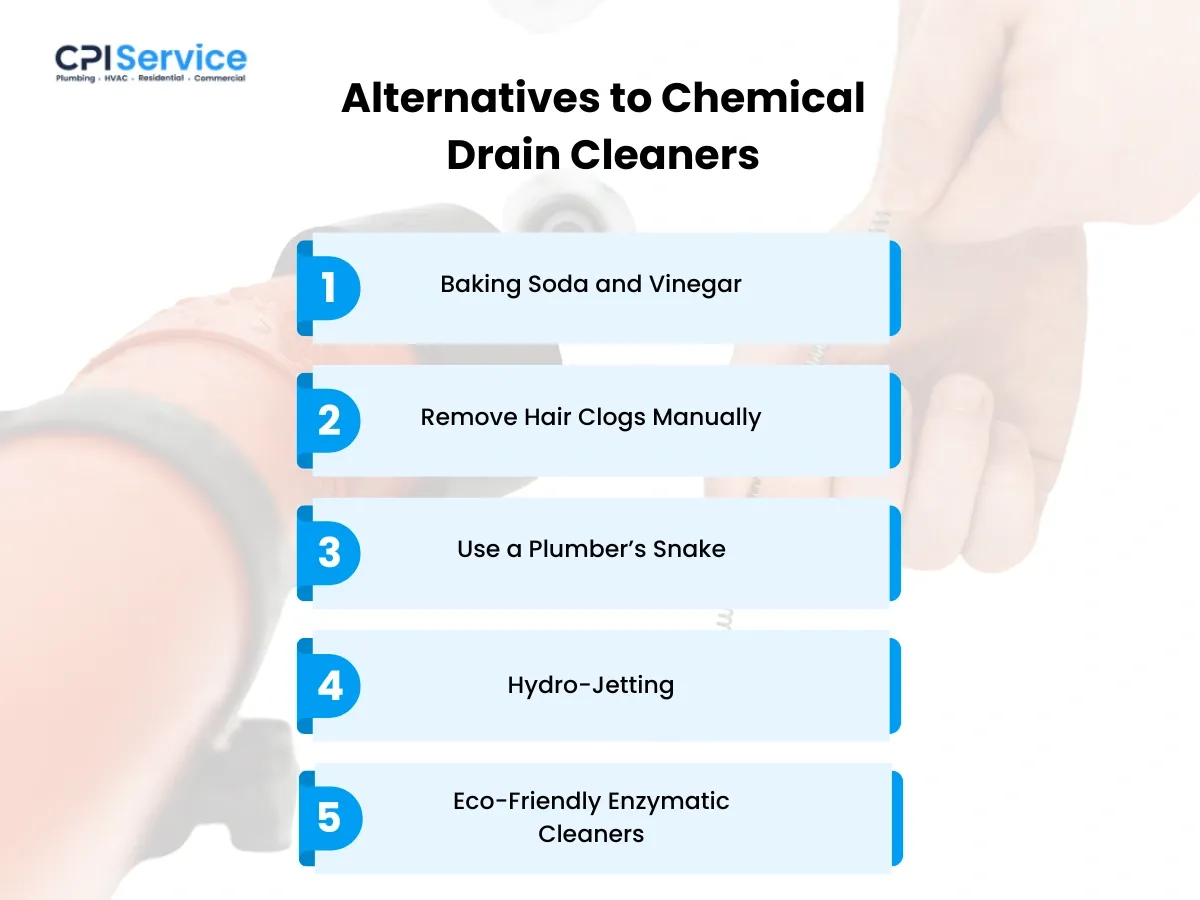
Start with the simplest tools:
- Plunger: cup plunger for sinks and tubs, flange plunger for toilets.
- Remove hair by hand from tub and sink stoppers with a plastic drain tool.
- Clean the P-trap under a sink.
- Hand auger (snake) for clogs a few feet down.
- Enzyme cleaners monthly for maintenance in drains prone to buildup.
- Baking soda and vinegar to freshen a drain (mild; won’t clear a solid clog).
- Professional cleaning or hydro jetting for main lines, grease and roots.
Step-by-step: how to unclog a drain and how to unclog a sink drain.
How Baking Soda and Vinegar Work for Drain Cleaning?
Baking soda (a base) and vinegar (an acid) react to release carbon dioxide gas. The fizzing stirs up loose organic matter and residue in the pipe. Pour about a cup of baking soda into the drain, follow it with a cup of vinegar, let it work for 15 to 30 minutes, then flush with hot tap water. It’s safe for PVC, metal and septic systems, but it’s for light buildup and odors only, not a solid clog.
How to Remove Hair Clogs Manually?
Remove the stopper and use a plastic barbed drain tool, a bent wire or a small hand snake to hook and pull out the hair and soap residue. Wear gloves. It’s the most effective fix for shower and bathroom sink clogs, and there’s no chemical exposure or pipe damage.
How to Use a Plumber’s Snake to Clear Drains?
Feed the snake’s coiled cable into the drain and turn the handle as you push, until you feel the clog. The tip grabs or breaks up the blockage so you can pull it out or push it through. Use steady pressure and controlled turning so you don’t scratch fixtures or damage the pipe. A snake reaches clogs a plunger can’t, in sinks and tubs; use a closet auger for toilets. See how to use a drain snake.
How Hydro-Jetting Clears Stubborn Blockages?
Hydro jetting sends high-pressure water through a hose and a special nozzle that scours the inside of the pipe, cutting through grease, sludge, scale and small roots. It’s the most thorough way to clean a main sewer line or a commercial line with years of buildup. Because of the force involved, it’s a job for a trained technician, usually after a camera inspection confirms the pipe is sound. See hydro jetting vs. drain snaking.
When to Choose Eco-Friendly Enzymatic Cleaners?
Choose an enzyme cleaner for routine maintenance, slow drains that aren’t fully blocked, odor control and septic systems. The enzymes or bacteria break down hair, grease and food residue gradually without harming pipes. They work over hours or days, not minutes, and won’t clear a drain that’s already stopped.
If You’ve Already Used a Drain Cleaner
- Don’t plunge, snake or open the trap while caustic water is standing.
- Don’t add a different product.
- Ventilate the room and keep children and pets away.
- Tell your plumber exactly what you used.
When to Call a Plumber
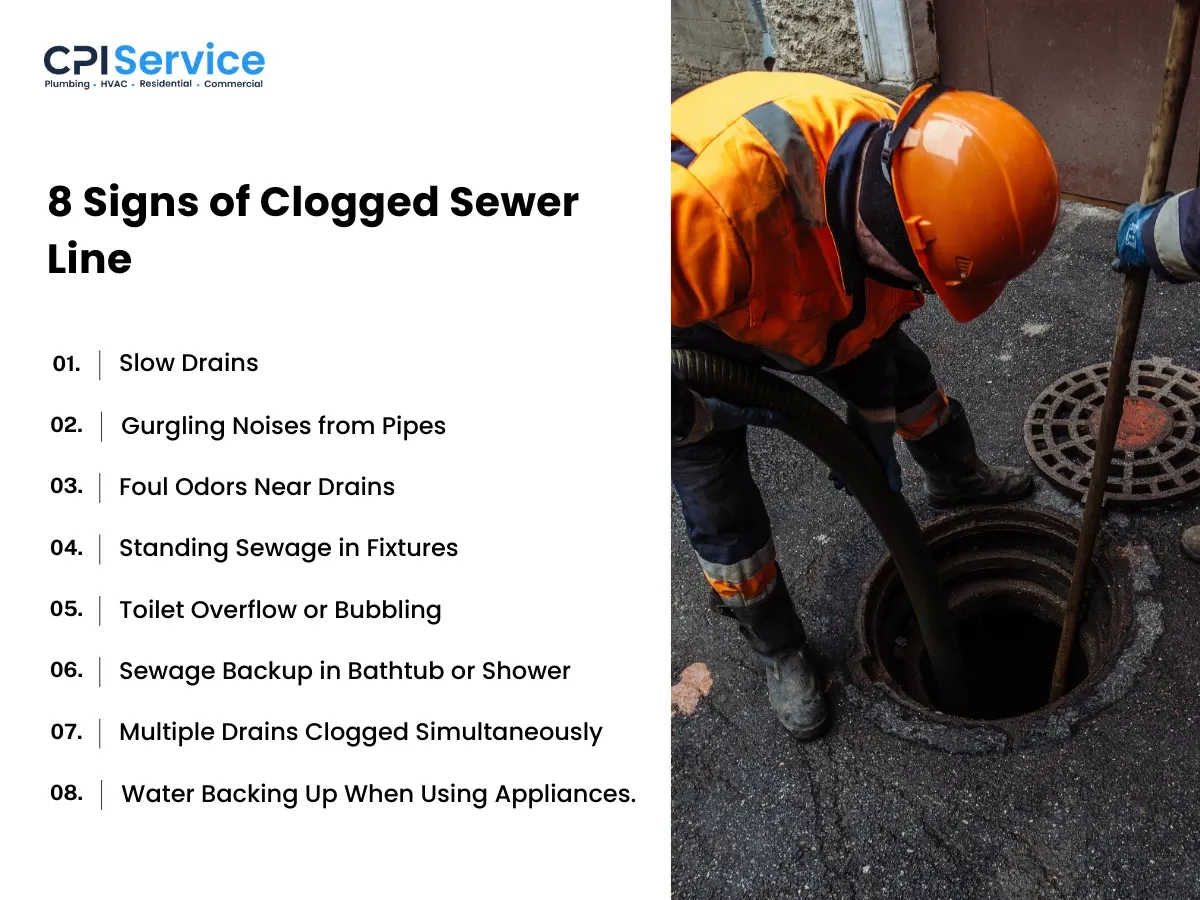
Several slow drains, gurgling, sewage odors, water backing up into a tub, or a clog that keeps returning point to the main line. In San Jose, professional drain cleaning (snaking) typically costs $250 to $600. See signs of a clogged main sewer line and drain cleaning cost.
Drain Care in San Jose Homes
- Older metal drains in 1950s to 1970s South Bay homes are especially vulnerable to chemical damage.
- Hard water adds scale that catches debris; regular mechanical cleaning works better than chemicals.
- Roots in older sewer laterals won’t respond to drain cleaners at all.
CPI Service clears drains safely throughout San Jose and the South Bay. See drain and sewer cleaning, request a free estimate or call (408) 978-3093.
Frequently Asked Questions
Is drain cleaner safe for PVC pipes?
Caustic cleaners used occasionally as directed generally won't damage PVC, but the heat they generate can soften joints, and repeated use or acid cleaners can harm older metal pipes. Mechanical methods are safer.
Does drain cleaner work on standing water?
Poorly. The water dilutes it, and if it doesn't clear the clog you're left with a sink full of caustic water. Gels and foams sold for standing water sink further, but the same problem applies if they fail. Use a plunger or call a plumber instead.
What's the best way to clear hair clogs?
Remove the stopper and pull the hair out with a plastic drain tool. Chemical cleaners often don't dissolve hair completely. For regular maintenance, an enzyme cleaner is gentler than an oxidizing one.
Can I use drain cleaner in a toilet?
We don't recommend it. It rarely reaches the clog in the trapway, and plunging afterward can splash it. Use a flange plunger or a closet auger.
What is the pH of drain cleaner?
Most household drain cleaners are lye-based and strongly alkaline, near the top of the pH scale. Acid drain cleaners sit near the bottom. Both extremes burn skin and eyes and attack some pipe materials, which is why they need careful handling.
Can you leave drain cleaner in overnight?
Only if the label says so. Most products are meant to sit for a short time stated on the label, then be flushed. Leaving a strong caustic or acid product longer can damage pipes and release fumes.
CPI Service was sent to my home by my condominium association. They agreed to a very early morning appointment and the gentleman arrived exactly on time. He went through the problem very methodically to see where the problem was. Something that no one else could figure out was taken care of in half an hour. I would very definitely recommend them.
Fern F., Yelp review
Read more reviews →Serving San Jose and the South Bay
CPI Service is based at 2880 Aiello Dr in San Jose and serves homes and businesses across the South Bay and the Peninsula. See all the areas we serve.