
 Emergency Plumbing
 Plumbing Repairs
 Water Heaters
 Drain Cleaning
 Sewer Service
 Faucets & Fixtures
 Repiping
 Toilet Plumbing
 Trenchless
 Plumbing Leaks
 Air Conditioning
 Heating
 Minisplit Systems
 Heat Pumps
 HVAC Components
 HVAC Rebates
How to Reduce Sewer Bills: 12 Smart Tips
Sewer bills can often come as a surprise for homeowners, especially when they spike without an apparent reason. One major cause is unnoticed water waste, like leaking toilets or faucets, which can waste hundreds of gallons of water daily. Old plumbing fixtures and inefficient appliances, such as outdated toilets and showerheads, also consume more water, raising costs. Additionally, outdoor water use, such as lawn watering, often contributes to higher sewer charges because municipalities charge sewer fees for all water used, regardless of whether it enters the sewer system.
Fortunately, reducing these bills is possible with a few simple, smart changes. By improving your water usage habits and upgrading to more efficient appliances, you can significantly lower both your water and sewer costs. For instance, a running toilet can waste up to 200 gallons of water a day. Replacing old toilets, faucets, and showerheads with low-flow models can cut water consumption by up to 30%, leading to long-term savings.
Managing outdoor water use is another practical approach. Installing or using rainwater collection systems can help you avoid sewer charges for outdoor water use, further reducing your bills.

Why Is My Sewer Bill So High?
Hidden water waste, outdated plumbing fixtures, and increased seasonal usage often cause high sewer bills. Leaks, such as a leaky showerhead, can waste up to 500 gallons of water a month, while old toilets and faucets consume more water. Outdoor water use, like lawn irrigation, is often included in sewer fees even if the water does not enter the sewer system.
- Leaks and Drips (Hidden Water Wasters): Leaks, such as a dripping faucet or running toilet, are often overlooked but can lead to significant water waste. For instance, a leaking faucet can waste over 3,000 gallons of water annually, driving up your sewer costs. Many homeowners are not aware of how much water is being wasted until they see the higher sewer charges.
Fixing these small leaks quickly by replacing faulty parts like toilet flappers or faucet washers can help reduce your water usage and lower your sewer bill. Regular checks and timely repairs are essential for preventing unnoticed water waste.
- Seasonal Billing and Household Size Impacts: Seasonal water use and household size can increase your sewer bill due to higher water consumption. During the summer, outdoor activities like lawn watering with automatic sprinkler systems and pool filling can increase water usage by up to 50%, which may lead to higher sewer charges, even though this water does not always enter the sewer system.Larger households also tend to use more water, with a family of four consuming about 10,000 gallons per month on average, contributing to higher sewer fees. To manage these costs, reduce outdoor water usage during peak seasons, and monitor household water consumption to avoid unnecessary increases in your sewer bill.
- Old Fixtures and Appliances: Old fixtures and appliances can increase your sewer bill by using more water than newer, more efficient models. For instance, older toilets can use up to 6 gallons per flush, while low-flow toilets use only 1.28 gallons, reducing water usage by over 70%. Similarly, older showerheads can use 5-8 gallons per minute, whereas WaterSense-labeled showerheads use around 2 gallons per minute, saving 2,700 gallons a year. These outdated fixtures waste more water, which directly contributes to higher sewer charges.By replacing old toilets, showerheads, and faucets with water-efficient models, you can significantly reduce your water consumption, leading to lower sewer bills and long-term savings.
- Outdoor Use Mistakenly Charged to Sewer: Outdoor water use, such as watering lawns or filling a pool, is often mistakenly included in sewer charges, even though this water does not enter the sewer system. Many municipalities charge sewer fees based on total water usage, including outdoor activities, leading to higher sewer bills. For example, using a sprinkler system for 1 hour per week can waste up to 1,300 gallons of water, which may be charged to your sewer bill.To avoid this, consider installing a deduct meter, which tracks outdoor water use separately, or set up a rainwater collection system to minimize unnecessary sewer charges for outdoor activities. These measures can help reduce your sewer bill by preventing the overcharging of water used outdoors.
12 Smart Ways to Reduce Your Sewer Bill
To reduce your sewer bill, fix leaks, upgrade to low-flow fixtures, and manage outdoor water use. Leaky faucets and running toilets can waste hundreds of gallons of water daily, while outdated toilets and showerheads use excessive water. Upgrading to water-efficient models helps cut water usage. Additionally, using a deduct meter or rainwater collection system for outdoor water use can help avoid unnecessary sewer charges, further reducing your bill.
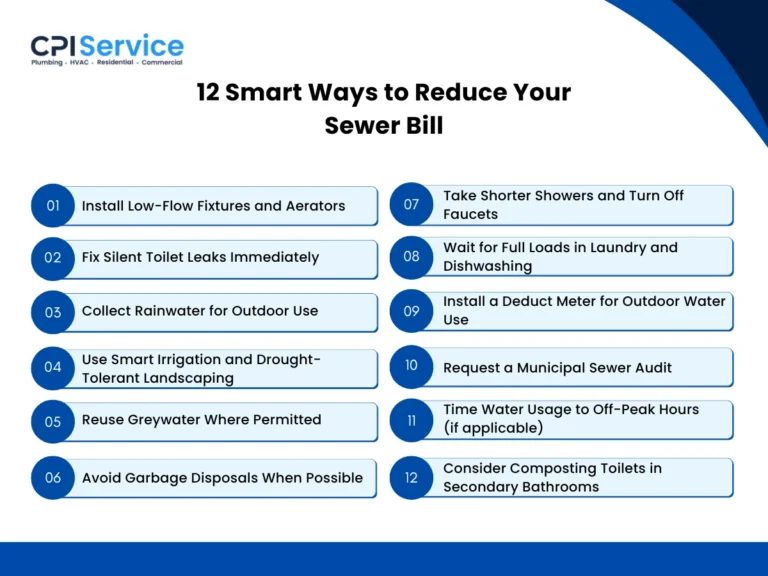
1. Install Low-Flow Fixtures and Aerators
Upgrading to low-flow fixtures and aerators directly reduces your sewer bill by decreasing the amount of water you use, which in turn lowers the water that flows into the sewer system. Low-flow toilets use less water per flush, while low-flow showerheads and faucet aerators limit water flow during daily activities, like washing hands or showering.
Since sewer charges are typically based on water usage, using less water directly reduces the amount being processed by the sewage system. As a result, you can cut water usage by up to 30%, leading to substantial savings on both your water and sewer bills. These simple changes can help conserve water and reduce your environmental impact, all while lowering your monthly utility costs.
2. Fix Silent Toilet Leaks Immediately
Silent toilet leaks are a major contributor to high sewer bills, as they can waste hundreds of gallons of water every day without being noticed. A small leak in the toilet tank, often caused by a faulty flapper valve, can add up quickly. Over time, this wasted water is processed by the sewer system, increasing your sewer charges.
By fixing these leaks immediately, either by replacing the flapper valve or performing a simple dye test, you can stop the water waste and significantly lower your sewer bill. Regular toilet checks are key to preventing unnoticed leaks and saving on utility costs.
3. Collect Rainwater for Outdoor Use
Collecting rainwater can significantly reduce your sewer bill by reducing the amount of water used for outdoor activities. Watering your lawn or garden with potable water contributes to both your water and sewer charges, even though it does not enter the sewer system.
By installing rain barrels or a more extensive rainwater harvesting system, you can capture rainwater from your roof and use it for outdoor purposes like irrigation, car washing, or filling a pool. This reduces the total water processed by the sewer system, which in turn lowers your sewer charges. For example, a single rain barrel in a 100 sq. ft. roof can collect up to 50 gallons of water from just one inch of rainfall, helping you save both water and money.
4. Use Smart Irrigation and Drought-Tolerant Landscaping
Smart irrigation systems and drought-tolerant landscaping can significantly reduce your sewer bill by lowering outdoor water usage. Smart irrigation systems adjust watering schedules based on weather conditions, ensuring your lawn or garden only gets the necessary amount of water. This can reduce water use by up to 50% compared to traditional systems.
Additionally, drought-tolerant plants, which require less frequent watering, can help further reduce water consumption. For example, switching to native plants that are adapted to your region’s climate can cut watering needs by up to 75%. By reducing the total water used for irrigation, these strategies lower the amount of water entering the sewer system, helping to reduce your sewer charges and conserve resources.
5. Reuse Greywater Where Permitted
Reusing greywater is an excellent way to reduce your sewer bill by repurposing water from baths, showers, and washing machines for non-potable uses. Many areas allow greywater to be used for irrigation, toilet flushing, or landscape maintenance, reducing the need for fresh water and lowering both your water and sewer costs.
For example, a greywater system can save up to 40,000 gallons of water per year, significantly cutting down on water consumption. By rerouting water from showers or laundry to outdoor areas, you reduce the amount processed by the sewer system, lowering your sewer bill. Be sure to check local regulations before installing a greywater system to ensure compliance.
6. Avoid Garbage Disposals When Possible
Using a garbage disposal can increase your sewer bill due to the additional water required to flush food waste through the system. Garbage disposals often use between 2-5 gallons of water per use to push waste into the sewer system, which adds to your overall water consumption and sewer charges.
To reduce these costs, consider alternatives such as composting food scraps or using a yard waste bin instead. These methods do not require water and help cut down on the amount of waste entering your sewer system, ultimately lowering both your water and sewer bills.
7. Take Shorter Showers and Turn Off Faucets
Taking shorter showers and turning off faucets when not in use are simple habits that can lead to significant savings on your sewer bill. Standard showerheads use about 2.5 gallons per minute, so reducing your shower time by just a few minutes can save hundreds of gallons of water annually.
Similarly, turning off the faucet while brushing your teeth or shaving can prevent unnecessary water waste, saving up to 8-10 gallons of water per day. By being mindful of these small changes, you reduce water consumption, which lowers both your water and sewer charges over time.
8. Wait for Full Loads in Laundry and Dishwashing
Waiting for full loads before running your laundry or dishwasher can significantly reduce both your water and sewer bills. Running a half-load in either appliance uses nearly the same amount of water as a full load, leading to unnecessary water consumption and higher sewer charges.
For example, a washing machine uses about 15-40 gallons per load, and running it half-full wastes that water. By waiting for a full load, you ensure that you are using water efficiently, saving up to 320 gallons of water per year in the average household. This reduces the overall water processed by the sewer system, which helps lower your sewer bill while also conserving water.
9. Install a Deduct Meter for Outdoor Water Use
Installing a deduct meter can significantly reduce your sewer bill by preventing sewer charges for outdoor water use. Standard meters measure all water consumption, including water used for irrigation, filling pools, or washing cars, even though this water does not enter the sewer system. A deduct meter tracks only the water used indoors, preventing sewer charges for outdoor activities. Many municipalities offer this service, and it can reduce sewer charges by up to 50%.
For example, watering a 1,000 square feet lawn can use up to 125 gallons per day, but with a deduct meter, you will only be charged for indoor water use, leading to significant savings. This measure also provides you with more flexibility to use water outdoors without added costs.
10. Request a Municipal Sewer Audit
A municipal sewer audit can help pinpoint the specific factors contributing to high sewer bills. Many local utilities offer free or low-cost audits to assess your home’s water usage and sewer system for inefficiencies. During the audit, experts check for issues like hidden leaks, outdated plumbing, or improper sewer billing that could be inflating your charges.
Auditors also provide actionable recommendations, such as fixing leaks or upgrading to water-efficient fixtures. By requesting an audit, you can uncover problems that may go unnoticed, ensuring that you are not paying more than necessary and helping to reduce your overall sewer bill.
11. Time Water Usage to Off-Peak Hours (if applicable)
Shifting your water usage to off-peak hours can help lower your water and sewer bills, especially if your utility provider uses time-of-use billing. Many municipalities charge lower rates for water usage during off-peak hours, which typically occur late at night or early in the morning. For example, water rates can be up to 30% lower during off-peak times.
By scheduling activities like laundry, dishwashing, or outdoor watering during these hours, you can significantly reduce your water consumption costs. Since sewer bills are often based on total water usage, using water during these cheaper periods can also lower the associated sewer charges, helping you save on your overall utility bills.
12. Consider Composting Toilets in Secondary Bathrooms
Installing a composting toilet in secondary bathrooms, such as guest bathrooms or basements, can significantly reduce your water usage and lower your sewer bill. Composting toilets use no water for flushing, eliminating the water consumption and sewer charges associated with traditional toilets.
By replacing a standard toilet with a composting toilet, you can save up to 6,600 gallons of water per year per person, depending on usage. This is especially beneficial for areas with low water consumption needs, such as bathrooms that are not used frequently. Composting toilets also contribute to environmental sustainability by turning waste into compost, reducing your water footprint, and sewer costs.
Understanding How Sewer Bills Are Calculated
Sewer bills are usually based on your water usage, as most of it enters the sewer system. Some areas charge sewer fees directly based on water consumption, while others estimate wastewater output. Understanding your local billing method helps you manage water usage effectively, allowing you to reduce both water and sewer costs.
- Billing Based on Water Usage vs Wastewater Output
Sewer bills are typically calculated based on either water usage or estimated wastewater output, depending on your municipality. In areas where sewer bills are based on water usage, the formula is straightforward:
Sewer Bill = Water Consumption (in gallons) × Sewer Rate (per gallon)
In regions that estimate wastewater output, the sewer fee is calculated by assuming a certain percentage of water used ends up in the sewer system, often around 90%. The formula for this method is:
Sewer Bill = Water Consumption (in gallons) × Estimated Wastewater Percentage × Sewer Rate (per gallon)
Understanding these formulas can help you adjust your water usage accordingly and identify opportunities to save on your sewer bill.
- How Winter Averaging Works in Some Cities
In some cities, winter averaging is used to calculate sewer bills, helping to reduce higher charges during warmer months. This method estimates your sewer fee based on your water usage during the winter months, when outdoor water use (like irrigation) is minimal. The formula is:Sewer Bill = Average Water Consumption (winter months) × Dry Winter Compensation Factor × Billing Period × Sewer Rate (per gallon)
Since winter usage is generally lower, it provides a more consistent and lower average, which is then applied to your sewer bill for the rest of the year. This method helps homeowners avoid inflated sewer charges during peak water usage months, such as summer.
- Role of Deduct Meters and Outdoor Submeters
Deduct meters and outdoor submeters can help reduce sewer bills by separately measuring the water used outdoors, such as for irrigation. Since outdoor water typically does not enter the sewer system, using a deduct meter ensures you are not charged sewer fees for water used outside.By installing a deduct meter, you only pay sewer fees for indoor water use, potentially saving up to 50% on your sewer charges. This solution is particularly beneficial for homes with significant outdoor water consumption, like those with large gardens or lawns.
Why Choose Professionals to Reduce Sewer Bills?
Hiring professionals, such as plumbers or sewer auditors, can help identify and fix issues that contribute to high sewer bills. These experts have the experience and tools to detect hidden leaks, inefficiencies, or plumbing problems that may not be visible to the average homeowner. They can also provide advice on the best water-saving appliances and strategies to reduce both water and sewer usage. In some cases, professional services may even recommend a sewer line replacement if older pipes are causing frequent issues, leading to higher bills. While there is an upfront cost, investing in these services can result in long-term savings and improved water efficiency.

Alex Hamilton
Alex Hamilton is the owner of CPI Service, a trusted provider of plumbing and HVAC solutions. With over 35+ years of hands-on experience in the industry, He brings deep technical expertise and a proven track record in delivering reliable installation, maintenance, and repair services. His leadership ensures that CPI Service consistently upholds the highest standards of quality, safety, and customer satisfaction.