

 Emergency Plumbing
 Plumbing Repairs
 Water Heaters
 Drain Cleaning
 Sewer Service
 Faucets & Fixtures
 Repiping
 Toilet Plumbing
 Trenchless
 Plumbing Leaks
 Air Conditioning
 Heating
 Minisplit Systems
 Heat Pumps
 HVAC Components
 HVAC Rebates
How to Unclog a Clogged Drain?
Reviewed by Luis, Plumbing Superintendent
15+ years of residential and commercial plumbing experience
OSHA Safety Trained | NASSCO Trained (PACP, MACP, LACP) | RHEEM Heat Pump Certified Tech | Noritz Tankless Heating LVL 3 Tech
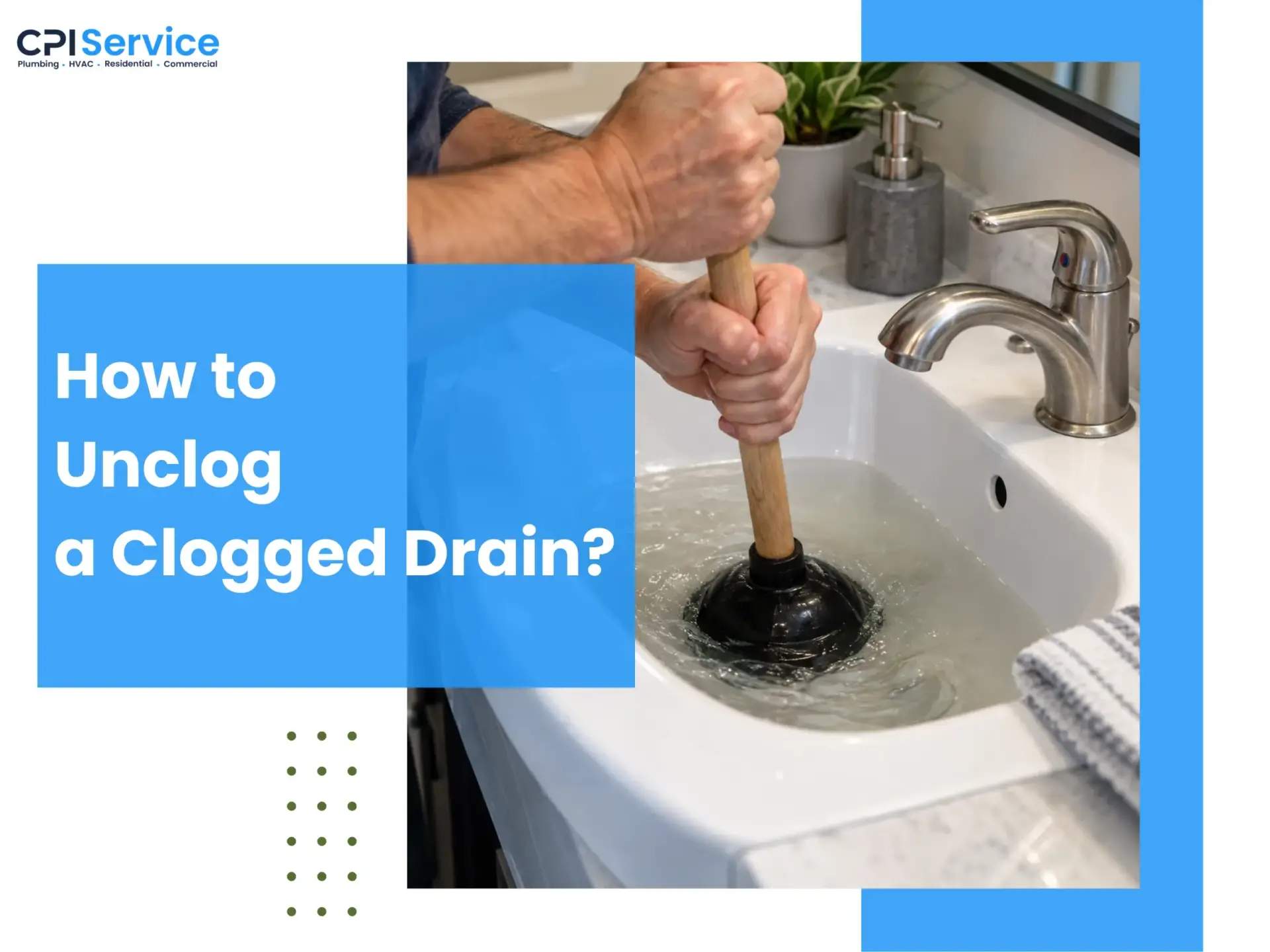
To unclog a drain, use the hot water method for light grease buildup, a plunger for shallow sink or tub clogs, or a hand drain snake for hair and debris deeper in the pipe. Start with a method that matches the type and location of the blockage, then move to a more advanced approach only if the drain remains restricted. Plungers are commonly used for minor fixture clogs, while hand snakes can reach blockages farther inside sink, tub, or shower drain lines.
A clogged drain restricts wastewater flow and can leave standing water in sinks, tubs, or showers, interfere with everyday washing and cleaning, and eventually cause backups or odors. Kitchen clogs commonly develop from grease, food particles, oils, and soap residue, while bathroom drains are more often blocked by hair and soap buildup that gradually narrows the pipe.
Stop DIY attempts if the clog keeps returning, affects multiple fixtures, causes water to back up through another drain, or produces persistent gurgling or foul odors, as these signs may indicate a deeper drain or main sewer line problem.
The 8 methods below explain how to address common household drain clogs based on the blockage type and location.
8 Ways to Unclog a Drain
The eight ways to unclog a drain are:
- Use Hot Water for Light Buildup
- Use Dish Soap for Grease-Based Clogs
- Use Baking Soda and Vinegar for Minor Buildup
- Use Basic Drain Unclogging Tools
- Use a Plunger for Shallow Clogs
- Use Liquid Drain Cleaner With Caution
- Remove and Clean the P-Trap
- Use a Drain Snake for Deeper Clogs
These methods work best when matched to the clog type and location. Start with lower-risk approaches such as hot water, plunging, P-trap cleaning, or hand snaking before considering chemical cleaners, since harsh drain chemicals can damage pipes and create exposure risks if the line later needs to be opened or mechanically cleared.
Prefer Professional Drain Cleaning in San Jose?
If the drain keeps clogging, several fixtures are backing up, water is returning through another drain, or you suspect a deeper sewer-line blockage, CPI Service provides licensed drain cleaning in San Jose using drain snakes, hydro jetting, and video inspection equipment. CPI Service is licensed and insured under CSLB #1101278 and offers same-day and 24/7 drain and sewer service for residential and commercial properties. CPI Service
1. Use Hot Water for Light Buildup

Use hot water when a drain is slow because of light grease, oil, soap residue, or other soft buildup near the fixture. Heat can loosen some residue and help water carry it through the pipe, but it is unlikely to clear dense hair clogs, solid objects, or deeper blockages. Avoid boiling water on PVC or other heat-sensitive piping because excessive heat can soften or damage the material.
- Remove standing water first: Bail out excess water so the hot water can reach the drain opening and build up more directly.
- Use hot, not boiling, water when pipe material is uncertain: This reduces the risk of heat damage to plastic piping.
- Pour the water gradually: Add it in stages rather than all at once so you can watch whether drainage improves.
- Check the flow: If the water begins draining normally, run additional hot tap water briefly to move loosened residue through the line.
- Switch methods if the clog remains: If the blockage does not respond, use a plunger or drain snake instead of repeatedly adding hot water.
2. Use Dish Soap for Grease-Based Clogs

For a slow kitchen drain caused by grease, fats, cooking oils, or greasy food residue, dish soap can help loosen the coating that has collected along the inside of the pipe. Grease often enters the drain as a liquid but cools and sticks to pipe walls, where food particles can attach and gradually restrict water flow. Dish soap helps disperse lighter grease buildup so hot water can carry it farther through the drain, but it is unlikely to clear compacted food, hair, solid objects, or a fully blocked line. angi.com
- Remove standing water: Clear excess water from the sink so the soap can reach the drain more directly.
- Add a small amount of dish soap: Pour about 1 ounce into the affected drain rather than using excessive soap that can create additional residue. Angi
- Follow with hot water: Slowly add hot, non-boiling water to help loosen and carry grease through the pipe.
- Let the mixture work briefly: Let the soap and heat work for several minutes.
- Flush the drain: Run hot tap water and check whether drainage returns to normal.
- Change methods if the clog remains: Use a plunger or drain snake if the blockage does not improve, since dish soap mainly helps with grease-related clogs rather than deeper obstructions.
How Dish Soap Helps Break Down Grease?
Dish soap helps break down grease by using surfactants to surround oily residue and make it easier for water to carry away. Each surfactant molecule has a hydrophobic tail (water-repelling) that attaches to grease and a hydrophilic head (water-attracting) that stays attracted to water, which helps separate grease from the pipe surface and lowers water’s surface tension.
As more surfactant molecules gather around the grease, they form tiny structures called micelles that trap oil in the center while their water-attracting ends face outward. In simple terms, dish soap breaks a greasy coating into smaller, water-carried droplets that rinse away more easily, especially when warm water softens fats and improves flow through the drain.
3. Use Baking Soda and Vinegar for Minor Buildup

Use baking soda and vinegar for minor drain buildup, light soap residue, odors, or slow drainage caused by soft organic material. The mixture creates a fizzing reaction that can loosen light residue along the pipe surface, but it works better for maintenance and small clogs than for dense hair, compacted food, foreign objects, or deeper drain blockages. This method is best for light maintenance rather than major clogs.
- Remove standing water: Clear excess water so the ingredients can reach the drain opening directly.
- Add baking soda: Pour about ½ cup into the drain.
- Add white vinegar: Follow with about ½ cup to 1 cup of vinegar to create the fizzing reaction. Angi
- Cover the drain: Place a stopper or damp cloth over the opening to keep the reaction concentrated in the drain.
- Let it sit: Allow the mixture to work for about 10 to 15 minutes.
- Flush with hot water: Rinse the drain with hot water to carry loosened residue through the pipe.
- Switch to a mechanical method if needed: Use a plunger, P-trap cleaning, or drain snake if drainage remains restricted, since baking soda and vinegar are unlikely to clear a substantial blockage.
How Baking Soda Breaks Down Clogs?
Baking soda helps loosen minor drain buildup by reacting with vinegar to produce carbon dioxide bubbles that agitate soft residue along the pipe surface. Baking soda, or sodium bicarbonate, acts as a base, while the acetic acid in vinegar acts as an acid. When they react, they form carbon dioxide, water, and sodium acetate. The fizzing can help disturb light soap scum, grease residue, and other loose organic buildup, but it does not chemically dissolve dense hair, solid objects, or severe clogs.
4. Use Basic Drain Unclogging Tools

Use basic drain-unclogging tools when hot water, dish soap, or baking soda and vinegar do not clear the blockage. A plunger works well for shallow clogs, a drain snake or hand auger can reach deeper debris, a Zip-It style tool can pull hair from bathroom drains, and a wet/dry vacuum may remove loose material near the drain opening. Match the tool to the fixture and clog location because using the wrong tool can damage the drain or push the blockage deeper.
Here are some essential tools to consider for unclogging your drain:
- Plunger: Use for shallow clogs in sinks, tubs, or toilets by creating pressure and suction around the drain opening.
- Drain snake: Feed the flexible cable into sink, tub, or shower drains to break up or retrieve deeper hair, grease, and debris.
- Zip-It tool: Use the thin barbed strip to pull hair and soft debris from bathroom sink, tub, and shower drains.
- Hand auger: Use the hand-cranked cable when a blockage sits farther down the drain than a simple hair-removal tool can reach.
- Toilet auger: Use a toilet-specific auger for bowl and trapway clogs rather than a standard drain snake, which can scratch porcelain.
- Wet/dry vacuum: Use suction to pull loose debris or standing water from a drain when you can create a tight seal around the opening.
- Drain cleaning brush: Use for accessible soap residue, hair, or mineral buildup near the drain opening or removable pipe sections.
5. Use a Plunger for Shallow Clogs

A plunger clears shallow sink, tub, shower, or toilet clogs by creating alternating pressure and suction that loosens the blockage and moves it through the drain. Use a cup plunger for flat sink and tub drains and a flange plunger for toilets. Plunging works best when the clog is relatively close to the fixture and is caused by soap residue, hair, food particles, or other soft debris.
- Choose the right plunger: Use a cup plunger for sinks and tubs and a flange plunger for toilets.
- Cover the overflow opening: Block the sink or tub overflow with a wet cloth to keep pressure focused on the clog.
- Add enough water: Keep a few inches of water in the fixture so the plunger cup stays submerged and forms a tight seal.
- Seal the drain completely: Center the plunger over the opening and press down gently before beginning stronger strokes.
- Plunge repeatedly: Use firm, consistent up-and-down movements for about 20 to 30 seconds.
- Test the drain: Remove the plunger and check whether the water begins flowing normally.
- Move to another method if needed: Use a drain snake if repeated plunging does not clear the blockage, especially if the clog is deeper in the line.
6. Use Liquid Drain Cleaner With Caution

For soft organic clogs such as grease, soap residue, or hair buildup, a compatible liquid drain cleaner may help dissolve material that simpler methods have not removed. Use liquid drain cleaner only as a last resort because many products contain caustic chemicals such as sodium hydroxide, which generate heat and break down organic matter but can also damage older pipes, harm septic systems, or remain trapped in the line if the clog persists.
- Choose the correct product: Match the cleaner to the fixture, pipe material, clog type, and septic system if applicable. Lowe’s
- Follow the label exactly: Use only the stated amount and leave it in the drain only for the recommended time.
- Wear protective equipment: Use gloves and eye protection as directed by the manufacturer. Lowe’s
- Never mix drain cleaners: Combining different products can produce dangerous fumes or chemical reactions. Lowe’s
- Flush as directed: Rinse the drain only as directed by the product instructions.
- Do not plunge or open the P-trap afterward: Chemical residue can splash and cause burns if the clog remains.
- Tell the plumber what you used: If you need professional service, disclose any chemical drain cleaner already in the line.
- Switch to professional help if it fails: Do not keep adding more chemicals if the blockage persists. Mechanical clearing or professional drain cleaning is the safer next step.
7. Take Apart the P-Trap

Check the P-trap when a sink clog appears concentrated directly below the fixture, especially if plunging has not restored normal drainage. The P-trap is the curved section of pipe beneath the sink that holds a small amount of water to block sewer gases, but its shape also makes it a common collection point for hair, grease, food scraps, soap scum, toothpaste residue, and small foreign objects. As this material accumulates, water may drain slowly or stop completely, making direct trap cleaning useful when the blockage is still close to the fixture.
- Place a bucket underneath: Catch water and debris that drain from the trap when you remove it.
- Loosen the slip nuts: Unscrew the connections at both ends of the P-trap by hand, or use pliers if needed.
- Remove the trap carefully: Lower it into the bucket and avoid spilling the standing water inside.
- Clear the blockage: Remove hair, grease, sludge, or other debris and rinse the trap thoroughly.
- Check the wall-side drain: If the P-trap is clear but the sink is still blocked, the clog may be farther down the branch drain.
- Reinstall the P-trap: Align the fittings correctly and tighten the slip nuts without overtightening plastic connections.
- Test for drainage and leaks: Run water through the sink and inspect each connection for dripping.
- Cover an open drain pipe: If the trap remains removed, temporarily plug the wall-side opening with a removable wet cloth to limit sewer gas entry.
If you recently used a chemical drain cleaner, do not remove the P-trap immediately, because trapped cleaner can splash and cause chemical burns.
8. Use a Drain Snake for Deeper Clogs

Use a drain snake when the blockage sits farther inside the pipe and will not clear with hot water, plunging, or P-trap cleaning. A hand drain snake, also called a plumbing auger, uses a long flexible cable that travels through the drain line until it reaches resistance, where the rotating tip can break apart or retrieve hair, soap buildup, grease, and other debris. It works best for localized branch-drain clogs, while recurring or multiple-fixture blockages may indicate a deeper sewer-line problem.
To use a drain snake effectively, follow these steps:
- Prepare the area: Place a bucket or towel beneath the drain to catch water and debris.
- Feed the cable slowly: Insert the snake into the drain and advance it until you feel resistance.
- Rotate the handle: Turn the cable while applying gentle forward pressure so the tip can work into or through the blockage.
- Avoid forcing the cable: Stop if the snake will not advance, since excessive force can damage fittings or cause it to get stuck in the pipe.
- Retract the snake carefully: Pull the cable back while continuing to rotate it and remove any collected debris.
- Flush the drain: Run water to check whether normal flow has returned and to move loosened material through the line.
- Repeat once if needed: A second pass may help remove remaining debris from the same localized clog.
- Call a plumber if the clog persists: If the snake cannot reach the blockage, multiple fixtures are affected, or the clog keeps returning, you may need professional snaking, hydro jetting, or video inspection to identify a deeper drain or sewer-line problem.
Cost Comparison of DIY Methods vs Hiring a Plumber
DIY drain unclogging usually costs less upfront, while professional drain cleaning costs more because it can involve powered equipment, camera inspection, main-line access, and deeper blockage removal. Basic DIY tools may cost only a few dollars to around $100 or $120, while professional drain cleaning ranges from $100 to $275 for a single fixture and $175 to $600 for multiple drains or a main-line clog.
Method | Typical Cost | Best Use |
Plunger | $5–$20 | Shallow sink, tub, or toilet clogs |
Hand drain snake | $10–$100 | Hair and localized deeper clogs |
Liquid drain cleaner | $10–$20 | Limited soft organic buildup |
Baking soda and vinegar | $5–$10 | Light residue and maintenance |
Wet/dry vacuum | $40–$120 | Loose debris and standing water |
Professional drain snaking | $100–$275 | Persistent fixture clogs |
Main-line cleaning | $175–$600 | Multiple affected fixtures or deeper blockages |
Video camera inspection | $125–$500 | Locating recurring or hidden drain and sewer problems |
Hydro jetting | $300–$800+ | Heavy grease, sludge, scale, and severe sewer-line buildup |
DIY methods make the most sense for a first-time, localized clog that responds quickly to a plunger, P-trap cleaning, or hand snake. Professional service is more appropriate when the clog keeps returning, affects several fixtures, sits in the main sewer line, or may involve grease buildup, tree roots, or pipe damage. Video inspection can identify the blockage location and pipe condition before you use more intensive cleaning.
For San Jose properties, the right professional service depends on the clog location, severity, access, and condition of the drain or sewer line. A localized blockage may only require professional snaking, while recurring clogs, heavy grease buildup, tree-root intrusion, or deeper sewer restrictions may call for video inspection or hydro jetting. CPI Service can inspect the line, identify the source of the blockage, and recommend the right cleaning method based on the pipe’s actual condition rather than repeated DIY attempts.
Is It Cheaper to Unclog a Drain Yourself?
Yes, unclogging a minor drain blockage yourself is usually cheaper than hiring a plumber because basic tools and supplies often cost $25 or less, while professional drain cleaning averages about $147 to $352 nationally. DIY makes the most sense for a first-time, localized clog that responds to a plunger, P-trap cleaning, or hand snake. If the blockage keeps returning, affects multiple drains, sits deeper in the sewer line, or risks pipe damage, professional cleaning can be more cost-effective than repeated DIY attempts.
Troubleshooting Tips for DIY Drain Cleaning
When a DIY drain-cleaning method does not work, match the next step to the type of blockage instead of repeating the same method. A deeper or denser clog may need mechanical removal, while recurring clogs, multiple affected drains, sewage odors, or water backing up through another fixture can indicate a main drain or sewer-line problem that requires professional diagnosis.
- Hot water does not clear the clog: Switch to a plunger or hand drain snake if hair, compacted food, or other solid debris is causing the blockage.
- Dish soap does not loosen grease: Try mechanical clearing if the grease buildup is thick or has trapped food particles deeper in the pipe.
- Baking soda and vinegar do not work: Switch to a plunger, P-trap cleaning, or a drain snake because the mixture works better for light buildup than dense blockages.
- The plunger does not work: Check that the plunger forms a tight seal and that any overflow opening is blocked, then use a drain snake if the clog sits farther down the line.
- The drain snake cannot reach the blockage: Stop forcing the cable. The clog may be deeper in the branch or main drain and may require longer professional equipment.
- The P-trap is clear, but drainage is still slow: The blockage is likely farther inside the drain line, making snaking or professional inspection the next step.
- Liquid drain cleaner does not work: Do not add more chemicals or immediately plunge, open the P-trap, or snake the line without accounting for the chemical still inside the pipe. Chemical cleaners can remain trapped behind a clog and create burn hazards.
- The clog keeps returning: Recurring blockages can point to grease accumulation, root intrusion, pipe damage, or another deeper problem that may require video inspection.
- Several drains clog at the same time: Stop DIY troubleshooting because simultaneous backups often indicate a main sewer-line restriction rather than an isolated fixture clog.
Why Is Professional Drain Cleaning Better for Persistent or Recurring Clogs?
Professional drain cleaning is better for persistent or recurring clogs because it can identify the blockage location, determine the cause, and use equipment suited to the drain or sewer line’s actual condition. Unlike repeated DIY methods that may only open a temporary path through buildup, professional plumbers can use powered snaking, hydro jetting, and video inspection to address grease, sludge, root intrusion, and deeper obstructions.
For San Jose properties, CPI Service provides drain cleaning services based on the blockage location, severity, access, and condition of the drain or sewer line. A localized clog may only need professional snaking, while recurring blockages, heavy grease buildup, root intrusion, or deeper sewer restrictions may require hydro jetting or video inspection to identify and clear the underlying problem.
Reviewed By Luis, Plumbing Superintendent
Luis, Plumbing Superintendent at CPI Service, reviewed this guide for technical accuracy and practical relevance. He has more than 15 years of residential and commercial plumbing experience, including video inspections, drainage solutions, sewer repairs, trenchless replacements, repiping, and new construction. His background is especially relevant to recurring clogs and sewer-line problems that may require camera inspection or advanced drain cleaning. Luis is OSHA Safety Trained, NASSCO Trained in PACP, MACP, and LACP, RHEEM Heat Pump Certified, and Noritz Tankless Heating LVL 3 certified. cpiservice.com
Still Dealing With a Clogged Drain?
If plunging, P-trap cleaning, or hand snaking does not restore normal flow, the blockage may be deeper in the drain or sewer line. CPI Service can evaluate recurring clogs, multiple slow drains, backups, grease buildup, and suspected root intrusion, then determine whether professional snaking, hydro jetting, sewer video inspection, or another repair is appropriate. CPI provides residential and commercial drain and sewer services throughout San Jose under CSLB License #1101278.
Call (408) 549-8181 or request a free estimate to schedule drain service in San Jose. CPI Service offers 24/7 plumbing support and can inspect the affected line before recommending the next step.
FAQs About Drain Clog
How Do You Know if a Drain Clog Is Serious?
A drain clog is more serious when it repeatedly returns, affects multiple fixtures, causes wastewater to back up through another drain, or is accompanied by persistent gurgling or sewer odors. These signs can indicate a blockage deeper in the main drain or sewer line rather than a localized fixture clog.
What Is the Fastest Way to Unclog a Drain?
The fastest way to unclog a drain is to use a plunger for a shallow fixture clog or a hand drain snake when hair or debris is lodged deeper in the pipe. Many common clogs clear in about 10 to 30 minutes with the right method. Grease-based kitchen clogs may respond to hot water and dish soap, while bathtub and shower clogs caused by hair often respond better to a drain snake. If several drains are backing up at once, the blockage may be in a larger drain or sewer line, and basic DIY tools are unlikely to provide the fastest solution.
Can Boiling Water Damage Drain Pipes?
Yes, boiling water can damage or soften some plastic drain pipes, especially when the piping is older or already weakened. Use hot, not boiling, water when the pipe material is uncertain, and avoid repeated high-temperature flushing if the clog does not improve.
Should You Use Chemical Drain Cleaner on a Clogged Drain?
Use chemical drain cleaner cautiously, and only when the product is compatible with the pipe, fixture, and clog type. Repeated use can damage piping, and cleaner trapped behind a blockage can create a chemical exposure hazard if you open the P-trap or mechanically clear the drain afterward.
Why Does My Drain Keep Clogging?
A drain may keep clogging because grease, hair, soap residue, food debris, scale, or roots remain deeper inside the line. Recurring blockages can also indicate pipe damage, poor drainage slope, or a sewer-line restriction. Video inspection can help identify the cause when ordinary snaking does not stop the problem from returning.
When Should You Call a Plumber for a Clogged Drain?
Call a plumber when DIY methods fail, the clog keeps returning, several drains are affected, wastewater backs up through another fixture, or you suspect roots or a main sewer-line blockage. Professional drain cleaning can use powered snaking, hydro jetting, and video inspection to diagnose and clear deeper restrictions. CPI Service provides these drain and sewer services throughout San Jose.
Need help with a stubborn clog or drain issue?
Don't let minor plumbing problems turn into major headaches. Contact CPI Service today for expert drain cleaning solutions, and let our experienced team restore your plumbing to its optimal condition.
Call Us Now
Alex Hamilton is the owner of CPI Service, a trusted provider of plumbing and HVAC solutions. With over 35+ years of hands-on experience in the industry, He brings deep technical expertise and a proven track record in delivering reliable installation, maintenance, and repair services. His leadership ensures that CPI Service consistently upholds the highest standards of quality, safety, and customer satisfaction.
