

 Emergency Plumbing
 Plumbing Repairs
 Water Heaters
 Drain Cleaning
 Sewer Service
 Faucets & Fixtures
 Repiping
 Toilet Plumbing
 Trenchless
 Plumbing Leaks
 Air Conditioning
 Heating
 Minisplit Systems
 Heat Pumps
 HVAC Components
 HVAC Rebates
An HVAC system not blowing warm air results from common causes such as an incorrect thermostat setting, a tripped electrical switch, a dirty or clogged filter, or blocked ductwork that restricts airflow. Deeper HVAC malfunctions include a failed pilot light, dirty burners, a high limit switch failure, low refrigerant in a heat pump, or a malfunctioning blower motor. Each of these failures disrupts heating production, heat transfer, or air movement, causing cold air to come from vents even though the system appears to be working.
Start troubleshooting by verifying that the thermostat mode is set to Auto and the temperature is 3-5 degrees higher than the room temperature, confirming system power, inspecting and replacing the dirty air filter, checking breakers, clearing vents, and performing a controlled system reset. When the unit still fails to heat, makes grinding or banging noises, leaks refrigerant or water, trips breakers repeatedly, or shuts down during extreme cold, a licensed HVAC technician must inspect the system and diagnose component-level failure safely.
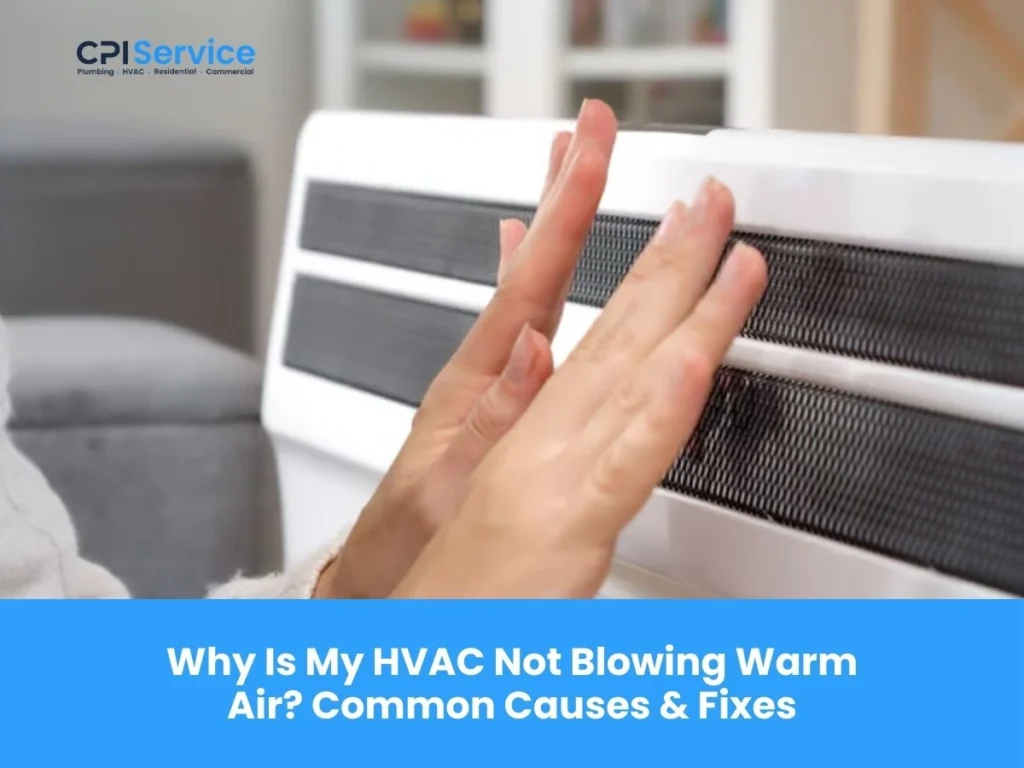
What Should You Check First When Your HVAC Won’t Blow Warm Air?
When your HVAC system is not blowing warm air, check the thermostat settings, the power supply, and the air filter. These key issues are often the root causes of HVAC not blowing warm air, as incorrect thermostat settings can disrupt heating control, a tripped circuit breaker can cut off power, and a clogged air filter can restrict airflow.
3 things you need to check first when your HVAC is not blowing warm air are:
1. Check Your Thermostat Settings
When the thermostat settings are incorrectly configured, the HVAC system may not engage the heating cycle and may instead blow cold air. Diagnose this by checking the thermostat settings, ensuring it is set to “Heat” mode, the temperature is 3-5 degrees higher than the room temperature, and the fan is set to “Auto.” If your thermostat display is blank, start by replacing the batteries. If the system remains unresponsive after the swap, you will need to recalibrate or replace the unit.
2. Verify System Power and Circuit Breakers
Your HVAC system not blowing warm air could be due to a tripped breaker, safety switch, or power issue. These disruptions can prevent the HVAC system from receiving power, causing it to malfunction or fail to engage the heating cycle. To troubleshoot, check the main electrical panel for any tripped breakers, ensure the furnace or air handler power switch is set to “On,” and inspect the outdoor disconnect box for blown fuses or a removed pullout handle. If the HVAC system remains unresponsive, further electrical inspection may be needed.
3. Inspect Your Air Filter
A clogged or dirty air filter can severely restrict airflow, causing the HVAC system to overheat or fail to heat the home effectively. To solve this, check the air filter and replace it if it is clogged. Ideally, replace the filter every 1-3 months as part of a routine HVAC maintenance plan to maintain optimal system performance. Ensure the new air filter is installed with the arrow pointing toward the furnace.
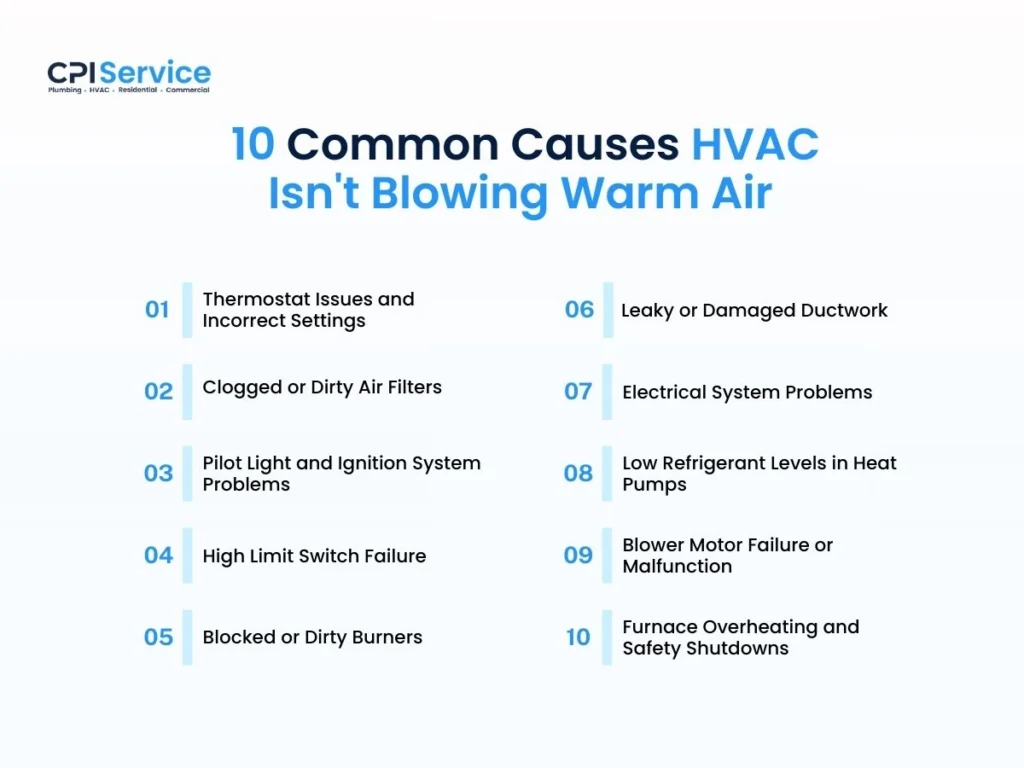
10 Common Causes HVAC Isn’t Blowing Warm Air
The most common causes of an HVAC system not blowing warm air include thermostat issues, dirty air filters, ignition system problems, high limit switch failure, dirty burners, damaged ductwork, electrical system problems, low refrigerant levels in heat pumps, and blower motor failure or malfunction. These HVAC issues typically disrupt airflow, cause inadequate heating, or even prevent the system from blowing warm air altogether.
1. Thermostat Issues and Incorrect Settings
If the thermostat is set to the wrong mode or temperature, your HVAC system will fail to blow warm air. For example, if the thermostat is set to “cool” mode or the temperature is too low, the HVAC system will run but fail to activate the heating cycle. This often results in cold air blowing from the vents, even though the heating function is supposed to engage.
Solution: To fix this, verify that the thermostat is set to “Heat” mode and adjust the temperature to 3-5 degrees higher than the room temperature. If the thermostat display is blank, replace the batteries. If it remains unresponsive, recalibrate or replace the thermostat to restore heating.
2. Clogged or Dirty Air Filters
A clogged or dirty air filter can prevent your HVAC system from blowing warm air by restricting airflow, leading to overheating. When airflow is restricted, the HVAC system has to work harder to maintain the desired temperature, which can reduce efficiency and potentially cause it to shut down due to overheating, leading to common HVAC airflow issues.
Solution: Turn off the HVAC system and inspect the air filter. If the air filter appears thick and clogged, replace it with a clean filter. For routine maintenance, clean or replace the air filter every 1-3 months to ensure the HVAC system runs efficiently. If airflow remains restricted, consider scheduling a professional AC inspection.
3. Pilot Light and Ignition System Problems
When the pilot light or Ignition System malfunctions due to drafts, a clogged tube, or a faulty thermocouple, the furnace will not ignite, and your AC will not produce heat. Issues with the hot-surface igniter or a dirty flame sensor prevent the furnace from lighting, causing cold air to blow or no air at all.
Solution: Check the pilot light and relight it by turning the knob to “OFF” and waiting for 5 minutes. Then, turn it to “PILOT,” hold the reset button, and use a long match to relight. Clean the flame sensor with steel wool or a soft cloth, and replace any worn or cracked igniters.
4. High Limit Switch Failure
When a high-limit switch fails, the furnace overheats, triggering a safety shutdown of the burners while the blower continues to run to cool the system. Without adequate airflow, the heat exchanger overheats, triggering the high limit switch and preventing the system from heating effectively. This is often caused by restricted airflow due to a dirty air filter, closed vents, or a malfunctioning blower motor.
Solution: Replace the dirty air filter and clear any blockages from vents. Ensure the blower motor area is free of debris. A recurring high-limit switch issue may indicate a cracked heat exchanger, which requires professional attention.
5. Blocked or Dirty Burners
Dirty burners in an HVAC system prevent proper fuel ignition, resulting in the system blowing cold air. Grime buildup on the burners or a dirty flame sensor can restrict combustion, causing the furnace to shut down prematurely. As a result, the blower fan may continue to run, but no heat is produced because the burners cannot ignite fuel.
Solution: Inspect the burners for soot or dirt buildup, and clean them with a soft brush or a vacuum. Clean the flame sensor with an emery cloth or steel wool. Handling the burners and gas valve requires precision and should be done by an HVAC technician to ensure safe and thorough cleaning.
6. Leaky or Damaged Ductwork
Ductwork in an HVAC system helps carry heated air from the furnace or air handler to each supply vent throughout the home. When leaky or damaged ductwork develops gaps, loose connections, or crushed sections, heated air escapes before reaching the living space, reducing airflow pressure and vent temperatures. As a result, the HVAC system does not blow warm air, even though it is operating.
Solution: Inspect accessible ductwork for loose joints, gaps, or crushed sections. Seal minor leaks with mastic sealant or foil HVAC tape. Severely damaged or disconnected duct sections require professional repair, and an HVAC technician should perform airflow testing to restore proper heat delivery.
7. Electrical System Problems
When internal electrical issues, such as tripped circuit breakers, failed capacitors, or shorted wiring, disrupt the flow of voltage to heating components, the HVAC system cannot energize critical components, preventing the heating cycle from starting. Common failure symptoms include humming during startup, persistent buzzing, repeated breaker trips, incomplete heating cycles, and unexpected system shutdowns.
Solution: Turn off the power at the thermostat and breaker, then inspect the panel and visible wiring for loose connections or burn marks before restoring power. Repeated breaker trips, buzzing, or shutdowns require a licensed HVAC technician to safely diagnose capacitor and internal electrical faults.
8. Low Refrigerant Levels in Heat Pumps
Heat pumps with low refrigerant levels directly reduce heat transfer because they lack sufficient refrigerant to absorb and move thermal energy. When the refrigerant level drops due to a leak or damaged coils, the unit struggles in both heating and cooling modes. Symptoms include longer run cycles, weak temperature output, and inconsistent airflow temperatures.
Solution: Check for oil spots on the coils or a hissing sound near the lines to confirm a leak. If found, contact a licensed HVAC technician to seal the leak and recharge the heat pump to the correct pressure specified for your air conditioner.
9. Blower Motor Failure or Malfunction
Mechanical wear or electrical faults, such as a failing control board or damaged capacitors, cause blower motor malfunctions that halt airflow, preventing the HVAC from blowing warm air. Common symptoms include weak airflow from vents, grinding or squealing noises, uneven room temperatures, and the furnace running without blowing warm air. In these cases, evaluating the potential blower motor replacement cost becomes a critical part of the repair vs. replace decision.
Solution: Turn off the system, then check vents and the blower compartment for visible blockages and loose wiring before restoring power. If the system continues to blow cold air despite the fix, a licensed HVAC technician must safely diagnose the blower motor.
10. Furnace Overheating and Safety Shutdowns
Your HVAC system may blow cold air if the furnace overheats, as overheating forces the burners to shut off while the blower continues running, reducing warm air output and activating safety shutdowns. Overheating is often caused by clogged air filters, restricted airflow, a failing blower motor, loose wiring, or an aging HVAC system (15-20 years old). Common signs of furnace overheating include unusual noises, burning smells, or repeated shut-offs.
Solution: Replace dirty air filters, ensure vents are open, check the blower motor for proper operation, and clear any debris around the furnace and ducts. If the HVAC system continues to blow cold air, schedule regular professional maintenance from HVAC specialists to inspect all components.
How Can You Troubleshoot Your HVAC Not Blowing Warm Air?
When troubleshooting a HVAC that is not blowing warm air, start by checking thermostat settings and confirming the temperature is set correctly. If the problem persists, verify system power at the circuit breaker and confirm the unit is operational. Inspect the air filter for dirt or debris buildup, and replace it to restore airflow. Examine vents and duct openings for blocked passages, and test whether the blower motor is moving air properly. If the system runs but still produces cold air, perform an HVAC system reset and inspect key components, such as the heating element, for malfunctions before proceeding to professional diagnosis.
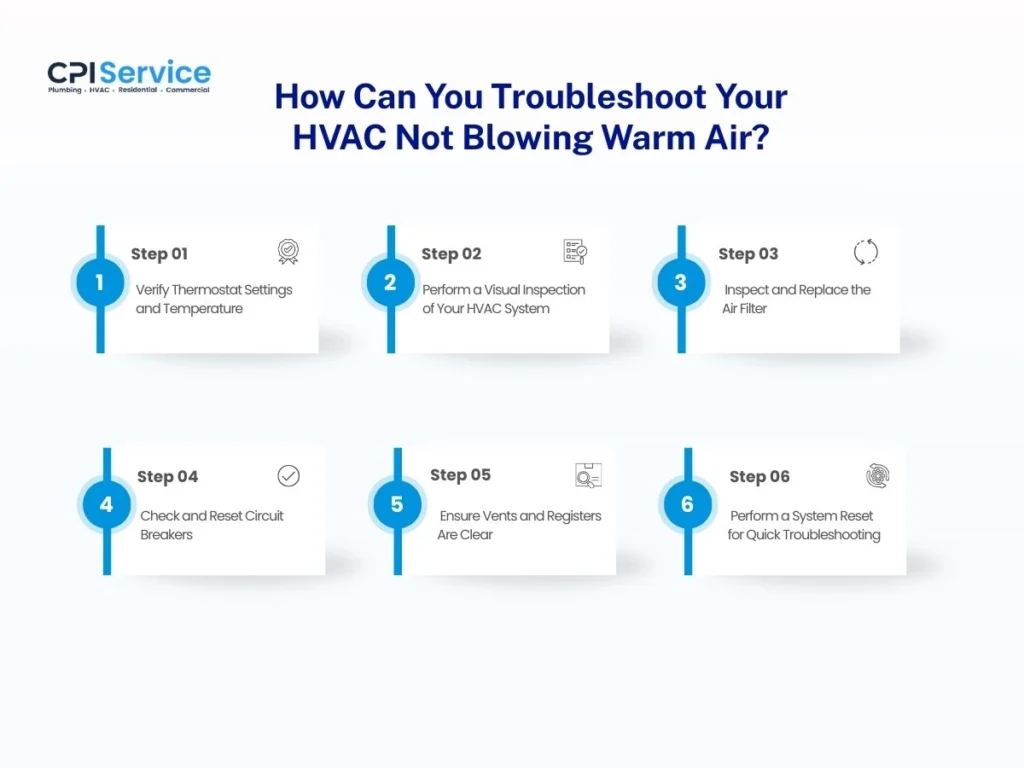
5 steps you can follow to troubleshoot your HVAC not blowing warm air are:
Step 1: Verify Thermostat Settings and Temperature
- Check the mode and confirm it is set to Heat, not set to Cool or Off.
- Increase the temperature setting 3-5 degrees above the current indoor air temperature to activate the heating system.
- Set the fan to Auto so the blower runs only when warm air is being produced.
- Inspect the display and replace batteries if the screen is blank or weak.
- Confirm the thermostat is powered on and responding.
Step 2: Perform a Visual Inspection of Your HVAC System
- Turn off the system’s power. Open the indoor unit panel and look for visible damage, rust, or pooled water that may signal a drainage problem.
- Check the outdoor unit. Remove leaves, dirt, or debris and maintain a clear space around it so airflow remains unrestricted.
- Inspect exposed ductwork in areas like the attic or crawlspace. Reattach any loose sections and seal small gaps with approved HVAC tape.
- Listen for loud banging or constant humming while the HVAC system runs. Unusual noise from the furnace, blower motor, or heat pump can signal a mechanical or electrical issue that prevents warm air from circulating properly
Step 3: Inspect and Replace the Air Filter
- Turn off the HVAC system and wait about 30 seconds to ensure it fully shuts down.
- Remove the air filter from the return vent or air handler and check for heavy dust buildup. If the filter appears clogged, replace it.
- Insert the new filter by aligning the airflow arrow on the frame with the arrow pointing toward the furnace or air handler. Slide the filter straight into the slot with the airflow arrow pointing toward the furnace, push it in fully, and close the access panel.
- Restore power and check if the HVAC system begins blowing warm air properly.
Step 4: Check and Reset Circuit Breakers
- Locate your home’s primary electrical panel, usually in the garage, basement, or utility closet. Ensure your hands are dry and you are not standing in water.
- Find the breakers labeled “Furnace,” “Air Handler,” “AC/Heat Pump,” or “Electric Heat.” Many HVAC systems use a double-pole breaker for 240V power.
- A tripped breaker may sit in the middle or feel springy.
- Flip the breaker firmly to Off first, then wait about 30 seconds to let the residual charge dissipate.
- Flip the breaker back to On until you hear a click. If it immediately returns to the middle or Off, stop and call a professional.
- Make sure the indoor unit power switch is On and, for heat pumps, the outdoor disconnect handle or fuse block is seated and On.
Step 5: Ensure Vents and Registers Are Clear
- Walk through each room and remove furniture, rugs, or curtains that block supply vents or return grilles.
- Check the small lever or thumbwheel on each register and make sure it is fully open.
Vacuum dust and pet hair from vent covers. Pop off floor registers and inspect the inside of the duct “boot” for small objects or debris, removing any you can reach safely. - In the attic or crawlspace, ensure flexible ducts are not crushed, kinked, or disconnected. Reattach any loose ducts securely.
- For high-efficiency furnaces, make sure outdoor intake and exhaust pipes are free of snow, leaves, or nests.
Step 6: Perform a System Reset for Quick Troubleshooting
- Locate the power switch on the side of the indoor furnace or air handler.
- Turn the switch off and wait 60 seconds to allow the system to fully discharge. Do not touch internal components while they may be hot.
- Turn the switch back on. The control board will reboot.
- Wait about 2 minutes while the system runs its startup check. Avoid adjusting the thermostat during this time.
- Listen for the system to start: small fans spinning, the igniter warming, and the burners lighting.
- After the burners ignite, wait another 90 seconds before the blower fan starts.
- Check vents for warm air to confirm the reset was successful.
When Should You Call a Professional HVAC Technician?
Schedule professional HVAC services when the HVAC system runs but does not produce warm air despite correct thermostat settings, or when the AC unit blows warm air in cooling mode. Complex HVAC issues such as motor failure, refrigerant imbalance, furnace failure to ignite, frequent circuit breaker trips, or non-working safety controls require professional HVAC services, as improper handling can further damage the system.
The need for an HVAC technician becomes even more urgent when malfunctions escalate into grinding or banging noises, burning or gas odours, water or refrigerant leaks, or a shutdown during extreme cold. Sudden energy bill increases or rooms that remain cold while the system operates also signal a progressing HVAC system failure that requires immediate professional inspection.
FAQs
Why is my HVAC blowing cold air instead of warm?
Incorrect thermostat settings (set to “Fan On” instead of “Auto”), clogged air filters, a tripped circuit breaker, or a malfunctioning pilot light or ignition system can cause an HVAC system to blow cold air instead of warm air. It may also result from blocked burners, high limit switch failure, leaky ductwork, electrical issues, low refrigerant in heat pumps, or a failing blower motor.
How often should I replace my HVAC air filter?
Replace a 1-inch HVAC air filter every 1 to 3 months, and a 4 to 5-inch high-efficiency HEPA filter every 6 to 12 months. Make sure to replace the filter monthly if it appears thick and clogged or if the home has pets, allergies, or smokers to maintain indoor air quality and heating system efficiency.
What does it mean when my heat pump blows cold air?
Cold air from a heat pump in winter often indicates a temporary defrost mode, restricted airflow due to a dirty filter, a low refrigerant charge, incorrect thermostat fan settings, a tripped breaker, or a malfunctioning reversing valve. Extremely low outdoor temperatures can also limit heat absorption, leading the system to supply cool air rather than warm air.
How much does it cost to fix an HVAC that’s not heating?
Most HVAC heating repairs range from about $150 to $1,200, with smaller component fixes, such as filters, on the lower end and major part replacements, such as a blower motor or gas valve, at the higher end. Severe failures involving core components, such as a heat exchanger or compressor, can exceed $1,500, while full system replacement typically starts around $3,000 and can reach $16,000 or more, depending on equipment type and scope.
When should I replace my HVAC system instead of repairing it?
Replace your HVAC system after 10 to 15 years for most air conditioners and heat pumps, and after 15 to 20 years for furnaces. A new system is the better financial choice when a repair exceeds 50% of the replacement cost or when the unit’s age multiplied by the repair estimate exceeds $5,000. Major failures, such as a compressor or heat exchanger, repeated repairs within a short period, use of R-22 refrigerant, or consistently rising energy bills, also justify a full system replacement.
