

 Emergency Plumbing
 Plumbing Repairs
 Water Heaters
 Drain Cleaning
 Sewer Service
 Faucets & Fixtures
 Repiping
 Toilet Plumbing
 Trenchless
 Plumbing Leaks
 Air Conditioning
 Heating
 Minisplit Systems
 Heat Pumps
 HVAC Components
 HVAC Rebates
The cost to replace a Thermostatic Expansion Valve (TXV) ranges from $250 to $2,000+, depending on factors such as HVAC system type, system size, refrigerant type, and labor rates. Larger and more complex systems, such as heat pumps and commercial HVAC systems, tend to be more expensive to replace due to their added components and specialized parts.
Furthermore, the type of refrigerant, especially older ones like R-22, can also significantly raise the price, as these require special handling and are more costly. Labor rates vary by location and valve accessibility, with urban areas generally charging higher rates. Other factors influencing the cost include system size and TXV valve type. In some cases, additional components such as refrigerant, fittings, or filter driers may be required, further adding to the total cost. By considering these factors, homeowners can better estimate the cost of replacing their TXV.
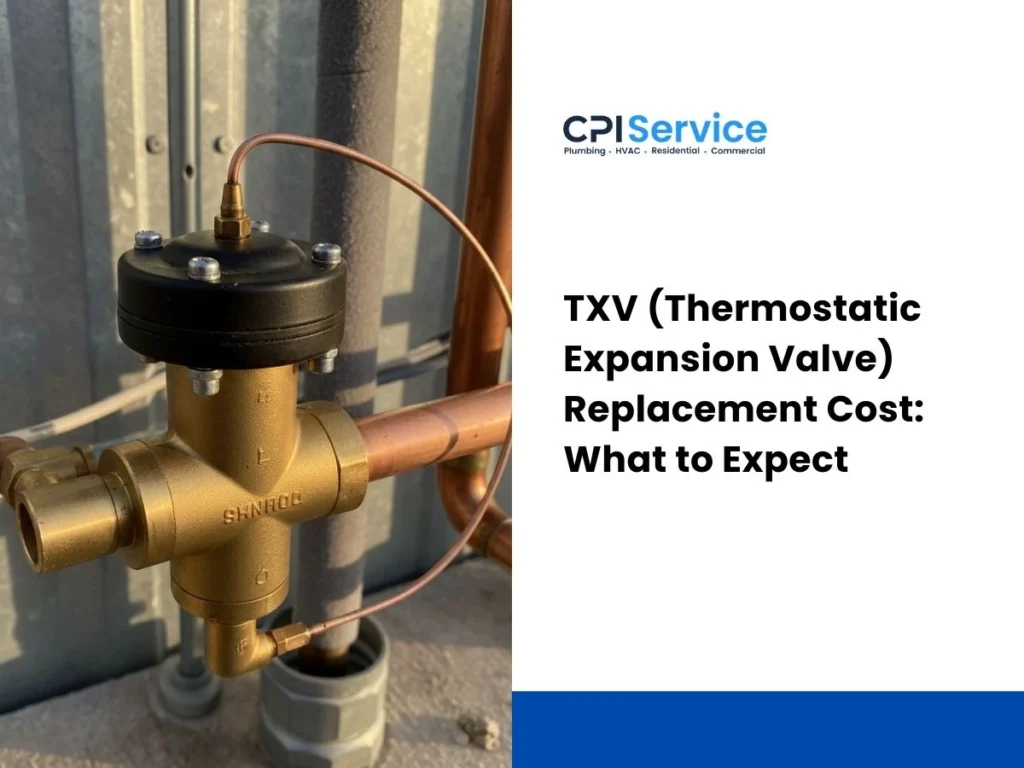
What is the Average Cost to Replace a TXV Valve?
The average cost to replace a TXV valve is $250 to $850, with most homeowners paying around $500 for parts and labor. However, this cost can vary depending on the type of HVAC system (central AC, heat pump, or mini-split), system size, brand, and service location. For example, replacing a TXV in a central AC system generally costs between $400 and $1,000, while in a heat pump system, the cost may range from $500 to $700. Additional factors, such as labor rates, refrigerant type, and system size, also play a crucial role in determining the final cost of TXV valve replacement.
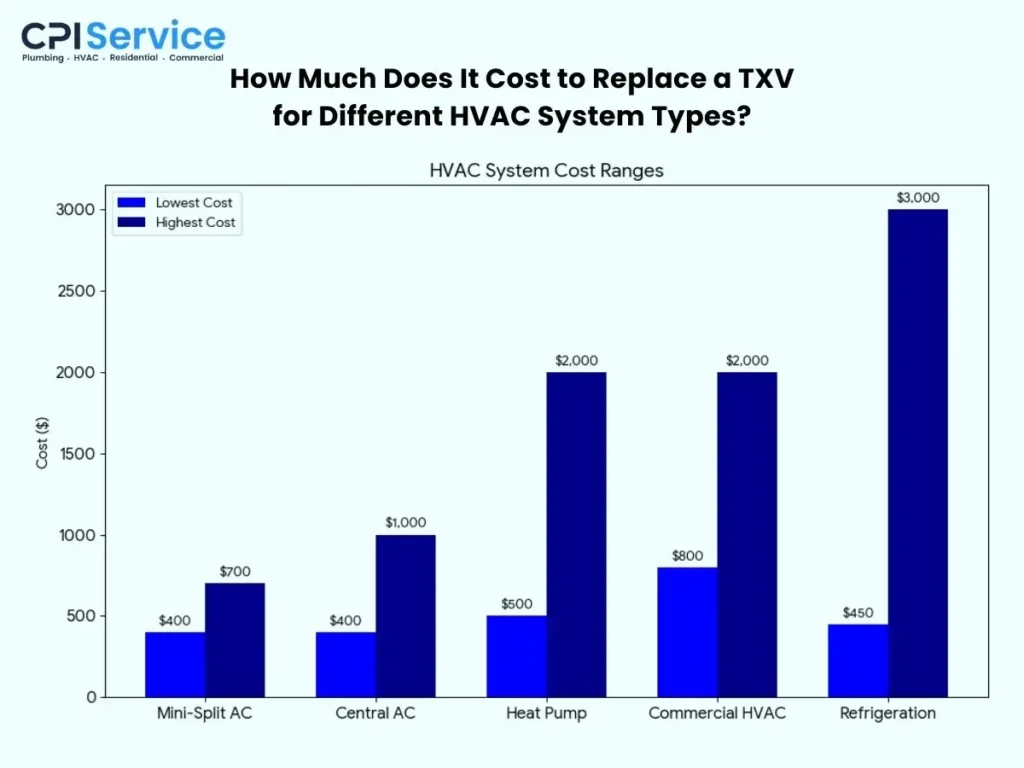
How Much Does It Cost to Replace a TXV for Different HVAC System Types?
To replace TXVs across different HVAC systems, the cost ranges from $450 to $2,000+, with heat pump replacements the most expensive and mini-split AC replacements the least. The variation in costs is due to the need for specialized components and refrigerants, as well as the system’s complexity. Additionally, factors such as system size, refrigerant type (R-22 vs. R-410A), and labor rates contribute to the cost differences.
What Is The TXV Replacement Cost For A Central AC System?
The cost to replace a TXV valve in a central AC system ranges from $400 to $1,000, depending on system size, labor rates, and refrigerant type. Additionally, if the AC system uses an older refrigerant like R-22, the TXV replacement cost may increase due to higher refrigerant prices and the need for special handling. On the other hand, AC systems using newer refrigerants, such as R-410A, generally have lower associated costs. Labor charges can also fluctuate depending on geographic location, with urban areas typically seeing higher rates.
How Much Does It Cost To Replace A TXV Valve In A Heat Pump System?
Replacing a TXV valve in a heat pump system costs from $500 to $2,000, with total costs influenced by the heat pump system’s complexity, the refrigerant used, and the HVAC technician’s expertise. Heat pump systems are generally more expensive to repair than central AC systems because they serve both heating and cooling functions. Additionally, heat pump systems using R-22 refrigerant may cost more due to its higher price, while newer models using R-410A may keep costs lower.
What Is The Cost To Replace A TXV Valve In A Mini-Split AC System?
The cost to replace a TXV valve in a mini-split AC system typically falls from $400 to $700. However, final costs can still vary depending on factors such as the refrigerant used (R-22 vs. R-410A), labor rates, and the complexity of the mini-split unit. While mini-split systems generally have lower replacement costs than larger HVAC systems due to their smaller size and simpler installation, those with multiple zones or advanced features may be more expensive to repair. Labor charges can also vary by location and the HVAC technician’s experience.
What Is The TXV Replacement Cost For A Commercial HVAC System?
Replacing a TXV valve in a commercial HVAC system can cost from $800 to $2,000 or more. Commercial systems are generally larger and more complex than residential units, due to factors such as HVAC system size, refrigerant type, labor rates, and system complexity. HVAC systems that use R-22 refrigerant are likely to cost more due to its higher price and phase-out. Additionally, larger systems often require more labor and specialized components, further increasing the cost of TXV replacement. Commercial HVAC systems in urban areas may also experience higher labor rates.
How Much Does It Cost To Replace A TXV Valve In A Refrigeration System?
The cost to replace a TXV valve in a refrigeration system typically ranges from $450 to $3,000+, with residential units costing less while complex commercial systems cost more due to their complexity. Like any other HVAC system, the cost of replacing a TXV valve in a refrigeration system can be influenced by factors such as system size, refrigerant type, and labor rates. Refrigeration systems that use R-22 refrigerant may be more expensive to repair due to R-22’s higher cost, while systems using newer refrigerants like R-410A will likely cost less. Labor costs can vary significantly depending on the system’s complexity, the HVAC technician’s experience, and the service location.
What Factors Affect TXV Valve Replacement Cost?
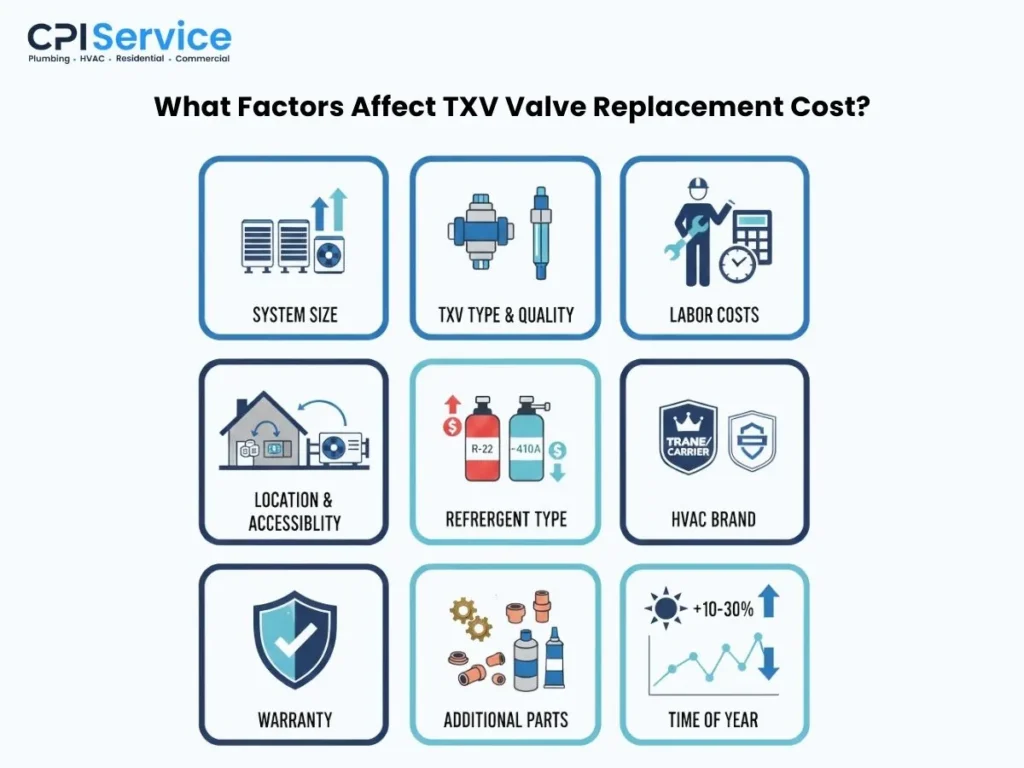
Factors affecting TXV valve replacement cost include system size, TXV type, labor costs, system location, and refrigerant type. Additionally, factors like warranty and unforeseen issues also add to the total. Together, these variables determine the overall cost of TXV valve replacement, which can vary significantly depending on the specific HVAC system and installation conditions.
How Does System Size Impact TXV Replacement Cost?
The size of the HVAC system plays a crucial role in determining the cost of replacing a TXV valve, as larger systems, such as heat pumps and commercial HVAC units, require more expensive parts, longer labor hours, and more complex installations. All of these factors directly contribute to higher replacement costs.
4 Factors Affecting TXV Replacement Cost Based on HVAC System Size:
- Part Cost: Larger systems require larger, more robust TXVs, which are inherently more expensive than those for smaller units.
- Labor Time: Pumping down refrigerant from larger systems takes longer, leading to increased labor hours.
- Refrigerant Quantity: Bigger systems hold more refrigerant, driving up the costs for refrigerant recovery and recharge, particularly for phased-out refrigerants like R-22.
- Complexity: Larger systems or commercial units may have more intricate designs or require specialized TXVs, further increasing labor and parts costs.
How Does TXV Valve Type and Quality Affect Cost?
The TXV valve type and quality directly affect total cost through differences in efficiency, precision, materials, and system integration requirements. The two primary types of TXV valves are thermostatic and electronic, and each varies in cost based on its function and complexity. Thermostatic TXV valves, which regulate refrigerant flow based on temperature, are the standard and typically cost between $75 and $300 for parts alone. These valves are commonly used in residential systems due to their reliability and relatively lower cost.
On the other hand, electronic TXV valves (EEV) provide more precise control over refrigerant flow, improving system efficiency and performance. Due to this advanced technology, electronic valves are generally more expensive, with parts costing from $80 to over $700, depending on the system’s size and complexity.
How Does Labor Cost Affect the TXV Replacement Price?
Labor costs for TXV replacement range from $170 to $450 per project, with experienced HVAC technicians charging $100 to $250 per hour, depending on accessibility, system complexity, and whether refrigerant recovery/recharge is needed. While a typical TXV replacement takes a professional 2 to 3 hours, factors such as accessibility, HVAC system size, and type can increase labor time, thereby increasing the total cost.
How Does Location and Accessibility Affect TXV Replacement Cost?
Location and accessibility impact TXV valve replacement costs by affecting labor time and fees. HVAC units in hard-to-reach areas, such as crawl spaces or attics, increase labor costs due to the extra time required to access them. Additionally, urban areas generally have higher labor rates (20-40%) than rural ones, and seasonal demand can raise prices during peak times.
For example, replacing a TXV valve in a major metropolitan area like New York City can cost between $900 and $1,500 due to higher labor rates, whereas the same repair in a rural area may cost between $500 and $900. Similarly, units located in tight attics or crawl spaces can add an extra $150-$400 in labor costs compared to easily accessible indoor systems.
How Does Refrigerant Type Impact TXV Replacement Cost?
Refrigerant type plays a significant role in TXV replacement costs, mainly due to refrigerant prices, the complexity of replacing the filter drier, and recovery/recharge expenses. R-22 refrigerant is considerably more expensive per pound than newer refrigerants like R-410A, making TXV replacement in R-22 systems more costly. Older systems often require specific TXVs and mandatory filter drier replacements, further increasing material costs.
In contrast, R-410A systems are more affordable to repair because R-410A is cheaper, easier to handle, and does not require the same specialized components. Replacing a TXV in an R-22 system can cost $100 to $300 more than in an R-410A system, highlighting how refrigerant type affects overall replacement costs.
How Does HVAC Brand Affect TXV Replacement Cost?
Premium or high-end brands, including Trane and Carrier, often result in higher TXV replacement costs due to proprietary components and specialized service requirements. TXV parts for these brands typically range from $150 to $350. Mid-range brands like Lennox and Goodman usually cost $90 to $200 for the part, while universal systems use standard TXVs priced around $50 to $120. Older or discontinued brands may exceed $300 due to limited availability.
How Does Warranty Coverage Impact TXV Replacement Costs?
Warranty coverage can significantly reduce the out-of-pocket cost of TXV valve replacement by covering parts and, in some cases, labor rates. For HVAC systems under a manufacturer’s warranty or an extended warranty, the homeowner or business owner may only need to pay for labor or a small deductible, rather than the full cost of replacement. On the other hand, if the HVAC system is out of warranty, the full cost of the valve and labor will fall to the homeowner or business owner, which can be significantly higher.
How Do Additional Parts and Components Affect Total Cost?
Additional parts and components can significantly increase the total cost of a TXV valve replacement by adding to material, labor, and overhead expenses. For example, depending on the HVAC system, refrigerant recharge may cost $50 to $150 per pound, while replacing a filter drier typically adds $30 to $80. Additional fittings, sealants, and brazing materials can contribute another $20 to $60, and system evacuation or leak testing may increase labor costs by $100 to $300. While these components are essential to ensure proper system performance and prevent future leaks, they can add $200 to $600 or more to the total replacement cost.
How Does Time of Year Affect TXV Replacement Cost?
The time of year can significantly affect the cost of TXV valve replacement due to seasonal demand. During peak seasons, such as summer, HVAC service providers often raise prices due to higher demand and limited HVAC technician availability. For example, replacing a TXV valve in the summer may cost 10% to 30% more than during the off-season.
In contrast, during off-seasons such as fall or winter, HVAC companies offer more affordable rates because demand for services is lower and HVAC technicians are more readily available. Therefore, scheduling a TXV replacement during these slower months can often save $50 to $200 on the overall cost.
TXV Repair vs. Replacement: Which Option Is More Cost-Effective?
TXV repairs are typically less expensive in the short term, while replacement may be more cost-effective in the long run due to improved system efficiency and the avoidance of future repairs. To determine whether to repair or replace the TXV, follow the 50% rule or the rule of 5000. If the repair cost exceeds half the price of a new TXV unit, replacement is typically the better option. Additionally, if your system is 10+ years old and frequently breaks down, it may be time to replace the valve.
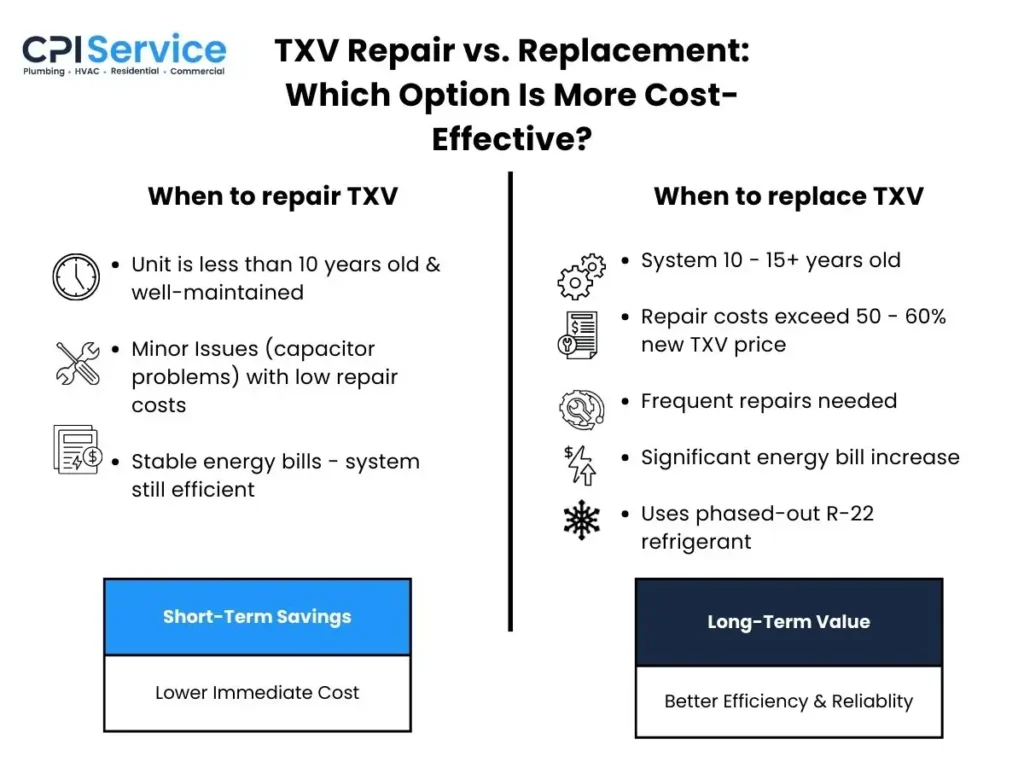
When to repair TXV:
- The unit is less than 10 years old and has been well-maintained.
- The problem is minor (e.g., a capacitor issue), and repair costs are much lower than replacement.
- Energy bills have not risen significantly, indicating the system is still operating efficiently.
When to replace TXV:
- The HVAC system is nearing or exceeding its 10-15-year lifespan.
- Repair costs approach or exceed 50-60% of the price of a new TXV unit.
- The system frequently requires repairs, indicating unreliability.
- Significant inefficiencies in energy bills suggest the system is no longer operating optimally.
- The system uses R-22 refrigerant, which is phased out, making repairs more expensive due to the high cost of refrigerant.
How to Save Money on TXV Replacement?
To save money on TXV replacement, schedule service in the off-season for lower labor costs, get multiple quotes from different contractors, and check your warranty. Additionally, if needed, get bundle repairs and consider if a full system upgrade makes sense for an older unit.
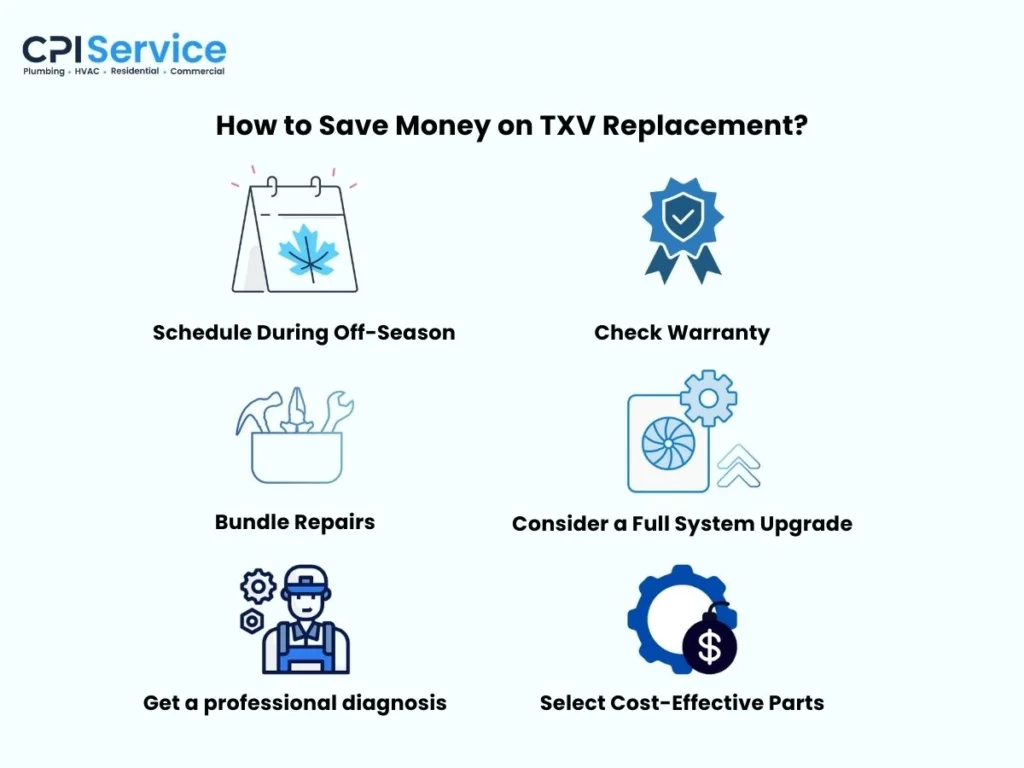
Tips to save money on TXV replacement:
- Schedule During Off-Season: Labor costs are typically lower during the off-season (fall or winter) when HVAC companies are less busy.
- Check Warranty: Ensure the cost of replacement or repair is covered to significantly reduce out-of-pocket expenses.
- Bundle Repairs: If other issues need attention, bundle them with the TXV replacement to save on labor costs.
- Consider a Full System Upgrade: For older systems, replacing the TXV valve might be a temporary fix. Upgrading the entire system could be more cost-effective in the long term.
- Get a professional diagnosis: Always have a certified HVAC technician properly diagnose the issue to avoid paying for unnecessary repairs or services.
- Select Cost-Effective Parts: While premium parts offer better efficiency, choosing high-quality but cost-effective components can save money without compromising performance.
Why Is It Important to Choose the Right HVAC Technician for TXV Replacement?
Choosing the right HVAC technician for TXV valve replacement is essential to ensure proper installation, improve system efficiency, and extend system life. An experienced, certified HVAC technician can spot underlying issues and perform the replacement correctly, saving you from future repairs and improving overall performance.In contrast, an unskilled HVAC technician may make mistakes during installation, resulting in system inefficiency or additional damage. This can result in higher repair costs and a shorter lifespan for your HVAC system. Therefore, opting for a qualified, certified HVAC technician ensures the replacement is done correctly, reducing the risk of costly future repairs and keeping your HVAC system running efficiently.

