

 Emergency Plumbing
 Plumbing Repairs
 Water Heaters
 Drain Cleaning
 Sewer Service
 Faucets & Fixtures
 Repiping
 Toilet Plumbing
 Trenchless
 Plumbing Leaks
 Air Conditioning
 Heating
 Minisplit Systems
 Heat Pumps
 HVAC Components
 HVAC Rebates
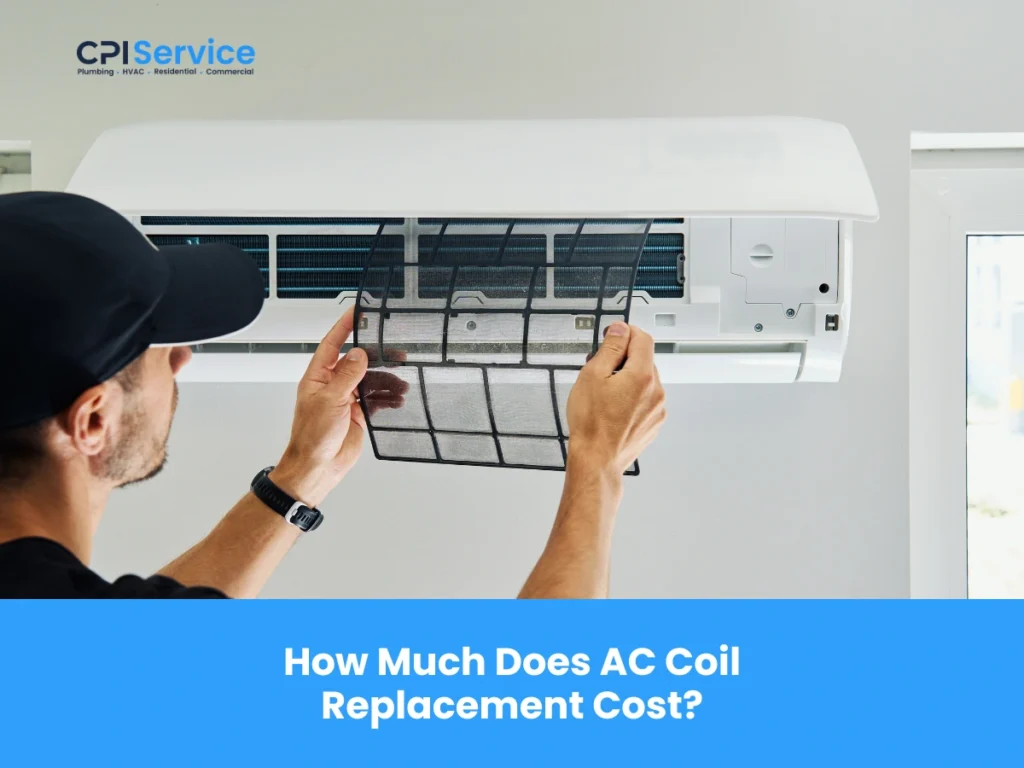
AC coil replacement costs $600 to $3,500, depending on the coil type, HVAC system configuration, unit size, labor hours, and additional services needed to complete the replacement. For the AC evaporator coil, replacement costs $600 to $3,500, while condenser coil replacement starts at $1,200 and can exceed $4,200 due to heavier materials, greater labor, and additional supporting services.
Cost decisions also depend on whether repairing or replacing the coil delivers better long-term value, especially for older systems or units with recurring issues. DIY replacement also reduces upfront expenses, but professional installation is frequently chosen to reduce the risk of future breakdowns and avoid added repair costs. By understanding these cost ranges, tradeoffs, and service variables, homeowners can evaluate estimates based on system condition, efficiency, and overall operating costs.
How Much Is the Average Cost to Replace an Air Conditioner Coil?
AC coil replacement costs $500 to $2,500, depending on whether the evaporator or condenser coil is replaced and on the HVAC system’s configuration. In most residential settings, evaporator coil replacement typically costs $600 to $3,500, while condenser coil replacement usually ranges from $1,200 to $4,200 due to higher material and labor costs. Split systems often fall within standard pricing ranges, while packaged systems may cost more due to tighter component integration and limited access.
For example, a standard residential split system with a moderate unit size may require $1,200 to replace an evaporator coil, including labor and refrigerant. The same home may face costs closer to $2,500 if a condenser coil replacement is needed due to outdoor unit access, heavier materials, and longer installation time.
What Factors Affect AC Coil Replacement Cost?
AC coil replacement cost depends on system type, unit size, coil material and quality, labor requirements, system age, and HVAC company pricing. Split systems usually cost less to service than packaged systems, while larger units and copper coils increase costs. Older systems also tend to require more labor, making replacements more expensive than newer, accessible units.
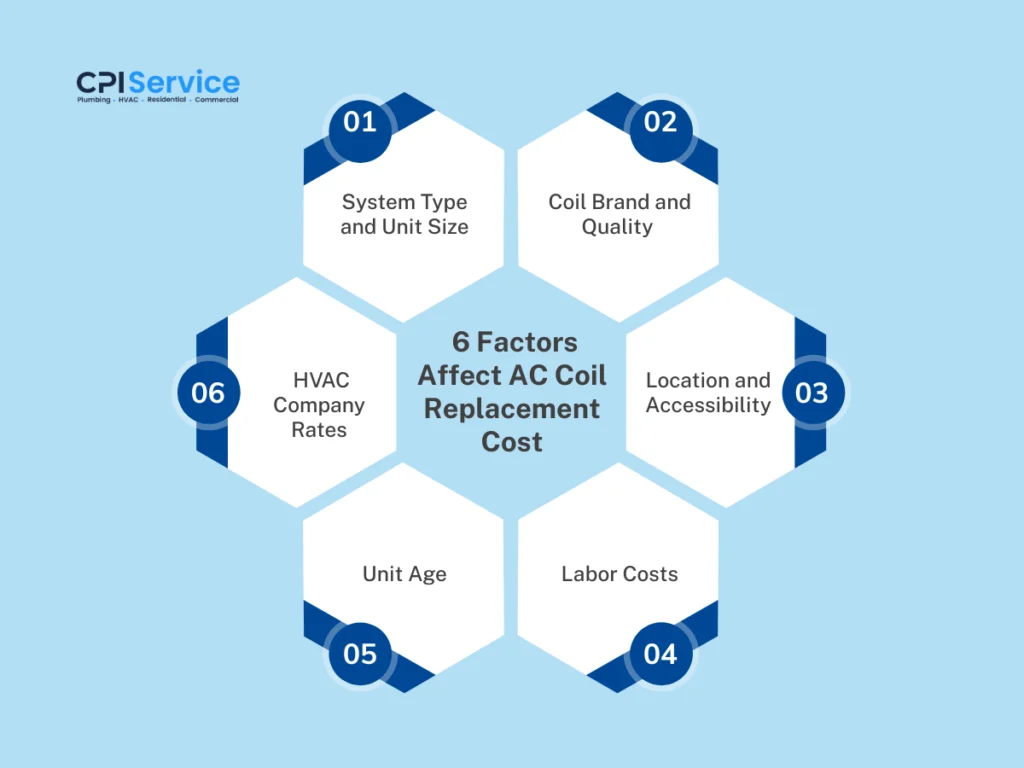
6 key factors that influence the final replacement cost include:
- System type and unit size: Split systems usually cost less to service, while packaged systems and larger units require bigger coils and more labor
- Coil brand, quality, and material: OEM and copper coils cost more due to better fit and durability, while aftermarket and aluminum options have lower upfront costs
- Location and accessibility: Hard-to-reach units in attics or tight spaces increase labor time and cost
- Labor rates: Higher hourly rates, urban locations, and peak seasons raise replacement costs
- Unit age: Older systems cost more due to limited parts and compatibility issues
- HVAC company pricing: Labor structure, emergency fees, and add-on charges can increase the final price
How Does the System Type and Unit Size Affect AC Coil Replacement Cost?
System type and unit size affect AC coil replacement cost by changing installation complexity and coil capacity requirements, with typical costs ranging from $1,000 to $2,500. Split systems usually cost less because evaporator coils installed indoors, such as A-coil, N-coil, or slab configurations, are easier to access, while packaged systems often increase costs due to tighter layouts. Larger units require larger or more complex coils to efficiently absorb and release heat, which increases material and labor costs, especially for condenser coils in the outdoor unit.
How Do Coil Brand and Quality Affect AC Coil Replacement Cost?
AC coil replacement costs vary by brand and build quality, with higher-end brands such as Trane and Carrier priced at $900-$2,500, while more affordable brands like Goodman fall in the $500-$1,200 range. These price differences reflect variations in durability, system compatibility, and warranty coverage. Premium OEM coils also increase AC coil replacement costs because they are engineered to match exact AC system specifications, thereby improving long-term reliability and reducing the risk of fit or performance issues.
In contrast, lower-cost or aftermarket coils reduce upfront costs but may compromise fit precision and service life. Material choice further influences total cost, further shapes total replacement cost, since copper coils increase prices due to stronger heat transfer and corrosion resistance, whereas aluminum coils lower initial costs while delivering moderate efficiency under standard operating conditions.
How Do Location and Accessibility Impact AC Coil Replacement Cost?
AC coil replacement costs increase when the unit location limits access, since tight or elevated spaces add labor time and complexity, with typical totals ranging from $1,200 to $3,000. For example, AC units installed in accessible areas such as basements or garages typically involve baseline labor costs of $400 to $700, while systems located in standard closets or attic spaces usually add $150 to $250 in labor due to reduced access. Additionally, in difficult locations such as tight crawlspaces or confined attics, labor costs can increase by $300 to $450 or more due to limited clearance and safety constraints that extend installation time.
How Do Labor Costs Influence AC Coil Replacement Cost?
Labor costs account for up to 50% of the total AC coil replacement cost, making AC technician hourly rates and installation time major pricing factors. Under normal conditions, AC technician labor rates typically range from $75 to $150 per hour, depending on experience level and regional pricing. Rates are often higher in urban areas where demand and operating expenses increase, and labor costs can rise further during high-demand seasons such as summer or winter. For example, a standard residential replacement that might normally involve $140 per hour labor can reach $250 per hour during peak season in busy metropolitan areas when service demand is high.
How Does Unit Age Affect AC Coil Replacement Cost?
Unit age significantly increases AC coil replacement costs, often reaching $500 to $2,500 or more, because older systems require harder-to-source parts, longer labor time, and additional system adjustments to ensure compatibility. As AC systems pass the 10- to 12-year mark, they are more likely to experience reduced efficiency, outdated component designs, and limited availability of compatible replacement coils, all of which increase material and labor costs.
This cost impact is greater for AC systems manufactured before 2010, many of which use R-22, a phased-out refrigerant that is more expensive and harder to obtain than modern R-410A. As a result, an air conditioner operating for more than 15 years may require specialized coils, refrigerant conversions, or system modifications, resulting in longer installation times and higher overall AC coil replacement costs than for newer units.
How Do HVAC Company Rates Affect AC Coil Replacement Cost?
HVAC company rates play a major role in AC coil replacement costs, as different companies charge different labor rates and service fees, and HVAC technician expertise can push total expenses from $1,200 to well over $2,000. Hourly labor rates typically range from $75 to $150, and many HVAC companies also charge a diagnostic or service fee starting at $98. Pricing structure matters as well, since flat-rate billing and hourly pricing can produce different totals for complex replacements.
Additionally, AC coil replacement rates are higher when certified HVAC technicians are required for difficult-to-access areas or emergency services during evenings, weekends, or peak seasons. Costs also vary by location, with urban and high-cost-of-living areas charging more than competitive markets.
What Additional Costs Should Be Considered When Replacing an AC Coil?
Additional costs to consider when replacing an AC coil include mandatory technical services, component upgrades, and administrative fees that are often not included in the base quote. Refrigerant recovery, recharge, and disposal are required by regulation and typically add $200 to $600, while labor for a 4-6 hour professional installation can range from $400 to $1,000 or more, depending on access.
System testing, such as pressure checks and vacuuming, may further increase labor time. In some cases, related upgrades such as a TXV valve, condensate pump, or copper line set can cost $75 to $650, while ductwork modifications can cost $500 to $2,000 if sizing changes are required. Permits, inspections, disposal fees, and emergency service charges may add another $50 to $300+, depending on local requirements and timing.
How Much Does Evaporator Coil Replacement Cost?
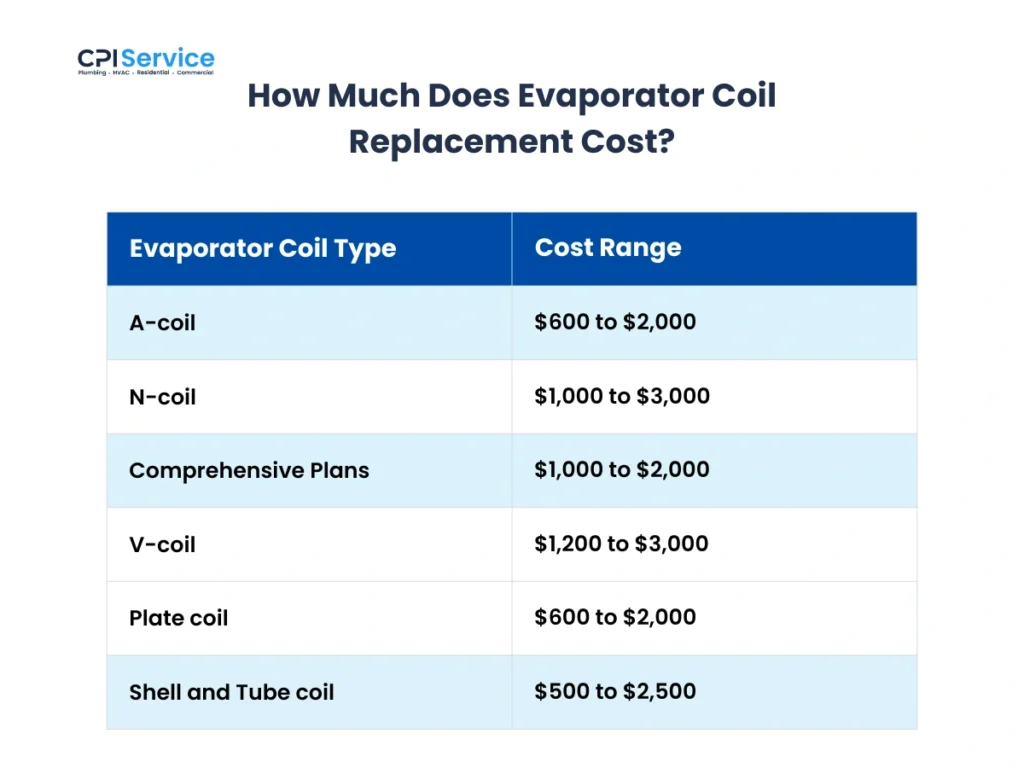
Evaporator coil replacement generally costs $600 to $3,500, with total costs varying based on the coil design installed inside the air handler and the complexity of installation, since larger or more intricate coils use heavier materials and require additional labor compared to simpler configurations.
| Evaporator Coil Type | Cost Range |
| A-coil | $600 to $2,000 |
| N-coil | $1,000 to $3,000 |
| Slab coil | $1,000 to $2,000 |
| V-coil | $1,200 to $3,000 |
| Plate coil | $600 to $2,000 |
| Shell and Tube coil | $500 to $2,500 |
How Much Does Condenser Coil Replacement Cost?
Condenser coil replacement typically costs $1,200 to $4,200, including the coil, labor, refrigerant handling, and any supporting services required to complete the job. It costs more because the condenser coil sits in the outdoor unit, uses heavier materials, and requires more labor for disassembly, refrigerant recovery, and system testing. Larger HVAC systems, copper condenser coils, and refrigerant recharge or airflow adjustment services push the total cost toward the upper end of the range.
AC Coil Repairing or Replacing: Which Is the Better Option?
Replacing an AC coil makes more sense for older systems with frequent issues, while repairing the coil is more cost-effective for newer, energy-efficient units with minor damage. If the AC coil repair costs exceed 50% of the cost of a new system, replacement is the better option. For example, a 12-year-old AC that requires an expensive coil repair close to half the cost of a full replacement is usually better served by replacing the coil, while a 4-year-old unit with a small leak can continue operating reliably after a targeted repair.
Which is More Cost-Effective: DIY or Professional AC Coil Replacement?
DIY AC coil replacement is more cost-effective upfront, as it typically costs $200 to $1,100 in materials, while professional AC coil replacement ranges from $600 to $3,500 when parts and labor are included. The upfront savings of DIY work come from avoiding labor charges, but essential tasks like refrigerant handling, precise installation, and system calibration are ignored, which can increase long-term costs if errors occur. Hiring a licensed AC technician is usually the better option for complex HVAC systems installed in difficult locations or situations that require refrigerant recovery and testing. Professional installation usually includes warranties and verified workmanship, reducing future repair expenses and protecting overall system reliability.
What Are the Most Common Questions About AC Coil Replacement?
How Long Do AC Coils Last?
AC coils typically last 10 to 15 years, but they can reach 20 years when serviced regularly, since regular cleaning, filter replacement, and scheduled HVAC maintenance help preserve heat transfer and reduce corrosion. Neglected maintenance or harsh environments, such as coastal areas with high humidity, can shorten lifespan, as salt exposure and restricted airflow place added strain on the AC coil.
Where Is the Air Conditioner Coil Located?
The evaporator coil is installed inside the indoor unit near the air handler or blower, and the condenser coil is housed in the outdoor unit. The evaporator coil absorbs heat from indoor air as it passes through the system, which allows the air to cool before circulating back into the space. Then the condenser coil releases the absorbed heat outside, allowing the HVAC system to maintain efficient cooling by completing the heat transfer cycle.
How to Save Money on AC Coil Replacement?
You can save on AC coil replacement costs by keeping the HVAC system well-maintained and scheduling replacements at the right time, rather than reacting to sudden failure. Regular maintenance, such as cleaning coils, changing air filters, and addressing minor performance issues early, helps prevent damage that may lead to a full replacement. When replacement is unavoidable, scheduling the work during off-peak seasons like spring or fall lowers labor demand, and many homeowners save 30% to 40% compared to peak summer pricing. Furthermore, professional installations prevent errors that lead to additional repair costs later.
How Long Does AC Coil Replacement Take?
AC coil replacement usually takes 4 to 8 hours, depending on system size, accessibility, and overall job complexity. Smaller residential systems with easy access take less time (2-3 hours at minimum), while larger units or installations that require refrigerant recovery, recharge, or airflow adjustments take up to 8 hours. Coil location within the system and the need for post-installation testing also influence the total time required.
Is It Worth Replacing a Coil on an Air Conditioner?
Replacing a coil is worthwhile when repair costs exceed 50% of a new coil’s cost, or when the system is older and inefficient. Frequent breakdowns, weak cooling, or systems operating beyond 10 years often signal declining reliability. For example, a repair costing $800 may not make sense compared to a $1,500 replacement if the unit continues to fail, since replacement often provides better long-term value and fewer service interruptions.

