

 Emergency Plumbing
 Plumbing Repairs
 Water Heaters
 Drain Cleaning
 Sewer Service
 Faucets & Fixtures
 Repiping
 Toilet Plumbing
 Trenchless
 Plumbing Leaks
 Air Conditioning
 Heating
 Minisplit Systems
 Heat Pumps
 HVAC Components
 HVAC Rebates
Replacing an AC compressor typically costs between $800 and $3,000, including both the compressor and labor. Several factors influence the total price, including the compressor’s size, type (single-stage vs. variable-speed), brand, and refrigerant type, with older refrigerants like R-22 being more expensive. Labor charges typically account for 40-60% of the total cost and can vary based on location and job complexity. Additionally, AC system size and brand quality can affect the final price, with high-efficiency models and older systems often resulting in higher costs.
Other costs to consider include refrigerant refills ($100-$500), disposal fees ($50-$150), and replacement of parts such as capacitors or contactors ($50-$200). If the replacement occurs outside normal working hours or during peak seasons, you may face additional charges of $100 to $500. Understanding these factors will help you better manage the overall cost of AAC compressor replacement.
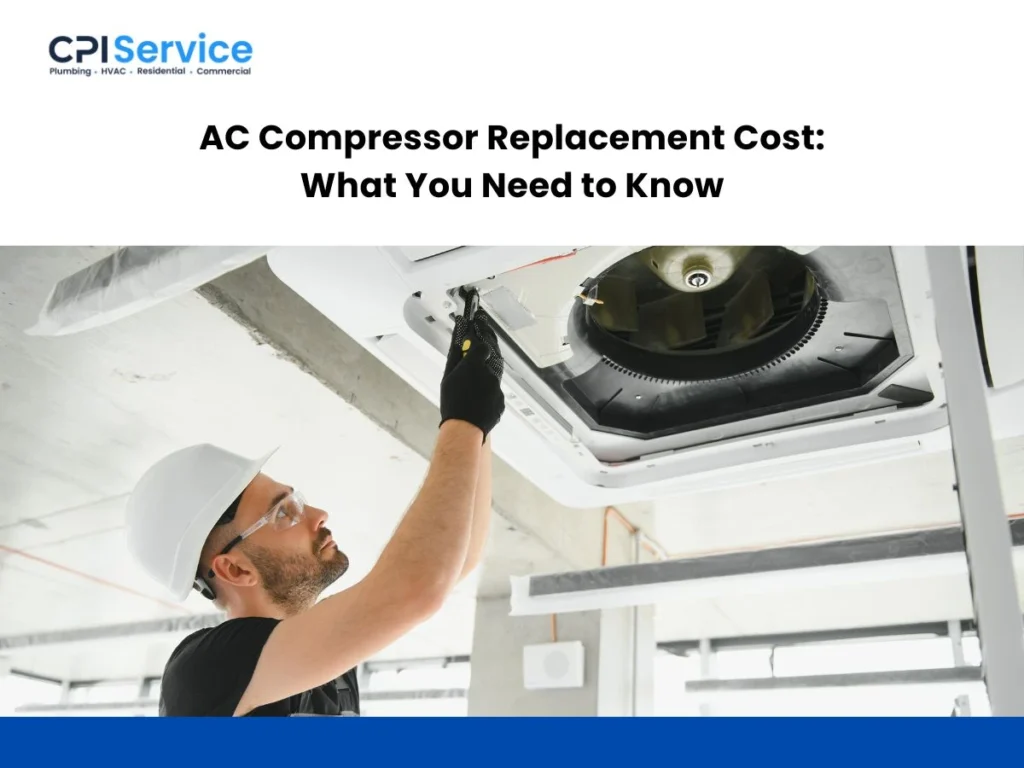
What is the Average Cost to Replace a Compressor in an AC Unit?
The average cost to replace an AC compressor in an AC unit is $800 to $2,300, including the compressor and labor charges. Key factors influencing this price include the compressor’s size and type (single-stage vs. variable-speed), brand, and refrigerant type (older R-22 is pricier). Labor rates, which vary by location and job complexity, also contribute to the overall cost. Other potential costs include refrigerant refills or replacement of other parts like capacitors, which can further increase the total price. Furthermore, if the compressor replacement occurs outside normal working hours or during an emergency, additional fees may apply.
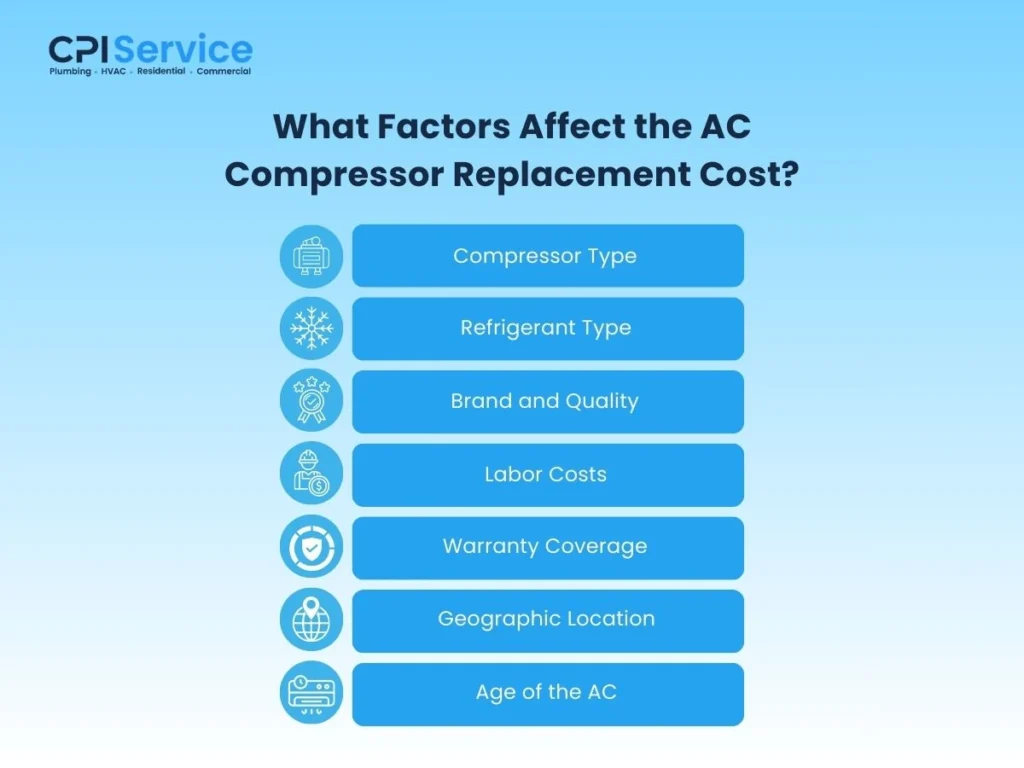
What Factors Affect the AC Compressor Replacement Cost?
Factors affecting the cost of replacing an AC compressor include compressor type, refrigerant type, AC system size, labor costs, and warranty coverage. For example, more advanced compressors, such as variable-speed models, are typically more expensive due to additional labor costs. Additionally, the age of the AC system, the compressor brand, and whether any warranties cover parts also play significant roles in determining the overall cost.
How Does Compressor Type Affect Replacement Cost?
The type of compressor used in your AC system affects the overall replacement cost, as advanced types like variable-speed compressors are pricier, while standard reciprocating compressors are cheaper upfront. Additionally, the total cost is influenced by factors such as system tonnage (cooling capacity), brand, and efficiency rating, with high-efficiency models having a higher upfront cost but offering long-term energy savings.
Cost of different AC compressor types:
- Rotary Compressors: $50 – $100 (Budget-friendly, lower efficiency)
- Reciprocating Compressors: $400 – $1,000 (Standard, older tech)
- Scroll Compressors: $500 – $1,500 (good balance of performance and cost)
- Variable-speed Compressors: $1,500 – $2,800+ (Advanced technology and higher energy efficiency)
How Does the Refrigerant Type Affect the Cost of Compressor Replacement?
Refrigerant type directly affects the cost of compressor replacement, as older, phased-out refrigerants like R-22 are much more expensive (over $5,000) due to scarcity and environmental regulations. As R-22 is no longer produced, sourcing replacement parts becomes more difficult and costly, often requiring system upgrades. On the other hand, newer and more common refrigerants like R-410A or R-32 are more affordable to replace, typically costing between $1,200 and $3,000, as these refrigerants are widely available and comply with current environmental standards.
How Does the Size of the AC System Impact Compressor Replacement Costs?
The size of your AC system directly affects the cost of compressor replacement, as larger units require more powerful, more expensive components to handle higher cooling loads. For example, a 4-ton AC system requires a larger, more costly compressor and complex installation, resulting in higher parts and labor costs. Smaller systems, such as 1.5- to 2-ton AC units, are generally more affordable to replace, with costs ranging from $700 to $1,400.
Compressor Replacement Costs According to AC Size:
- 1.5–2 ton AC unit: $700 – $1,400
- 2.5–3 ton AC unit: $900 – $2,500
- 3.5–4 ton AC unit: $1,100 – $3,500
How Does Brand and Quality Affect AC Compressor Replacement Cost?
Brand and quality significantly influence AC compressor part costs, with premium brands such as Trane and Carrier typically charging $800 to $3,000+ for the part alone, reflecting higher build quality and proprietary designs. Mid-range brands like Lennox and Goodman usually fall between $600 and $1,200. Budget or universal aftermarket compressors can cost $400 to $800, while high-efficiency or variable-speed AC compressor parts may exceed $3,500 due to advanced technology and efficiency gains.
What Role Do Labor Costs Play in the AC Compressor Replacement Price?
Labor costs typically account for 40% to 60% of the total AC compressor replacement price, ranging from $75 to $150 per hour, or a flat fee of $300 to $900. The complexity of accessing and installing the compressor significantly impacts labor costs. More time-consuming installations require additional hours, which increases the overall price. On average, a standard residential AC compressor replacement takes an HVAC technician 4 to 8 hours to complete, with longer or more complex jobs adding both time and cost to the final bill.
How Does Warranty Coverage Affect the Total Replacement Cost of an AC Compressor?
Warranty coverage can significantly reduce the cost of replacing an AC compressor by covering the compressor, leaving you to pay only for labor. Without warranty coverage, the full cost for both the compressor and labor can range from $800 to $2,800 or more. While standard manufacturer warranties usually cover the compressor for 5 to 10 years, it is important to review your specific warranty plan for any exclusions, such as service fees or failed related parts, that may still add costs.
How Does Geographic Location Affect AC Compressor Replacement Costs?
Your geographic location can affect the cost of replacing an AC compressor, as labor rates and market demand for HVAC services vary by region. For example, in high-cost urban areas like San Jose, total replacement costs often range from $1,500 to $3,000, largely due to higher labor rates. In hot-climate cities such as Phoenix, prices range from $2,200 to $4,000 due to high seasonal demand. By contrast, rural areas in the Midwest may see lower costs, averaging $1,500 to $3,000.
Does the Age of the AC Unit Affect the Cost of Compressor Replacement?
Yes, the age of the AC unit significantly impacts the cost of compressor replacement, as older units (10-15 years) have outdated or hard-to-find parts, which can drive up replacement costs. Additionally, older systems, such as those using R-22 refrigerant, are generally less energy-efficient, increasing the likelihood that the compressor will need to be replaced rather than repaired. While newer units (under 10 years old) may still be under warranty, offering potential savings, older units may require costly simultaneous upgrades to meet modern standards. Furthermore, the low efficiency of older systems often makes repairs less economical in the long term.
What Additional Costs Should Be Considered When Replacing an AC Compressor?
Additional costs to consider when replacing an AC compressor include refrigerant, disposal fees, and extra parts. These costs can vary depending on your AC system’s specific needs and the complexity of the replacement. It is also important to account for these extra charges to get a complete understanding of the total cost of the replacement.
Additional Costs That Should Be Considered When Replacing an AC Compressor:
- Refrigerant Refills: Refilling refrigerant can cost $100 to $500, especially if your system uses older refrigerants like R-22, which are more expensive.
- Disposal Fees: You may incur a $50 to $150 fee for the proper disposal of the old compressor and refrigerant, depending on local regulations.
- Parts Replacement: Other parts, such as capacitors, contactors, or filters, may need to be replaced, adding $50-$200 to the total cost.
- Emergency or Off-Hours Service: If the replacement occurs during emergency hours or the off-season, you may incur an additional charge of $100 to $500 for after-hours service.
AC Compressor Repair vs. Replacement: Which Option Saves You More?
Repairing an AC compressor may save money in the short term, but replacing the entire unit is often a better long-term investment, especially if the system is 10-15 years old or older. Additionally, if the AC system uses outdated refrigerant like R-22, replacing it is the best option, as parts for it are more expensive to obtain.
On the other hand, new units offer higher energy efficiency, lower utility bills, and come with a new warranty, reducing recurring costs and providing peace of mind. To make a more informed decision, use the 50% rule, meaning if the cost of repairs exceeds half the price of a new unit, replacement is typically the more cost-effective option.
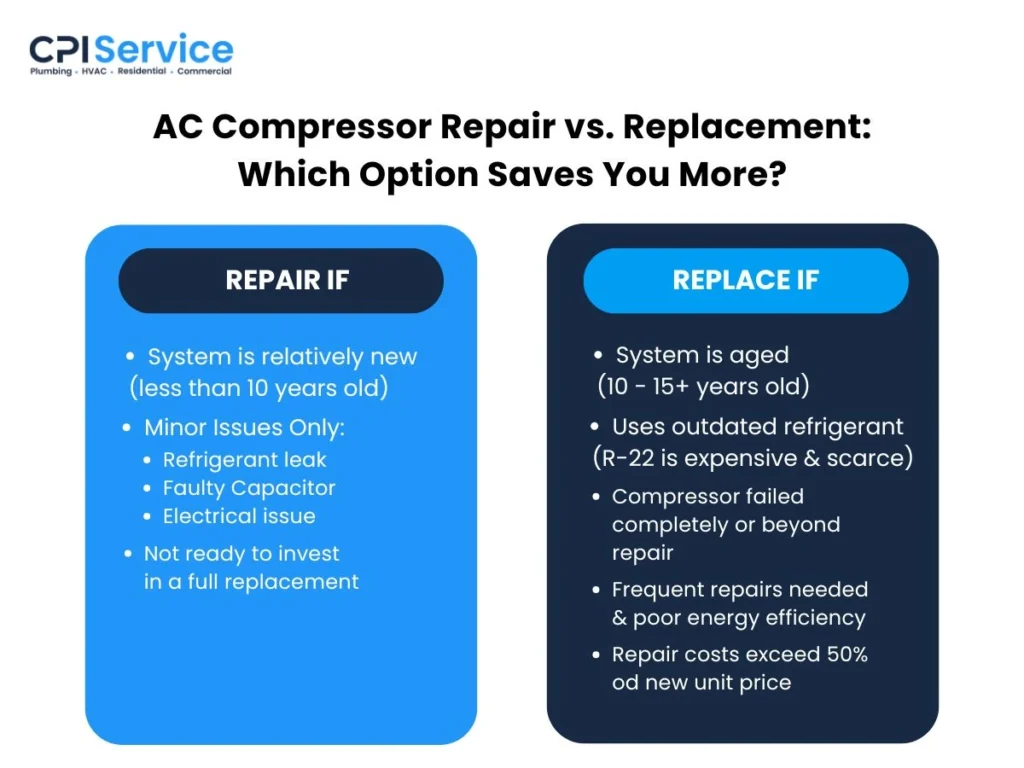
Repair AC Compressor If:
- The system is relatively new (less than 10 years old).
- The issue is minor, like a refrigerant leak, a faulty capacitor, or a simple electrical issue.
- You are not ready to invest in a full replacement but want to keep the unit running for a few more years.
Replace AC Compressor If:
- Your system is over 10 years old or more.
- It uses outdated refrigerants, such as R-22, which are expensive and hard to find.
- The compressor has failed completely or is beyond repair.
- Your system requires frequent repairs and is no longer energy-efficient.
- The repair costs exceed 50% of the cost to replace the unit.
- You want a more energy-efficient system with a new warranty.
How to Save Money on AC Compressor Replacement?
To save money on AC compressor replacement, schedule it during the off-season, compare quotes, consider financing options, and choose the right parts. Following each of these steps will surely help to save extra on your next AC compressor replacement.
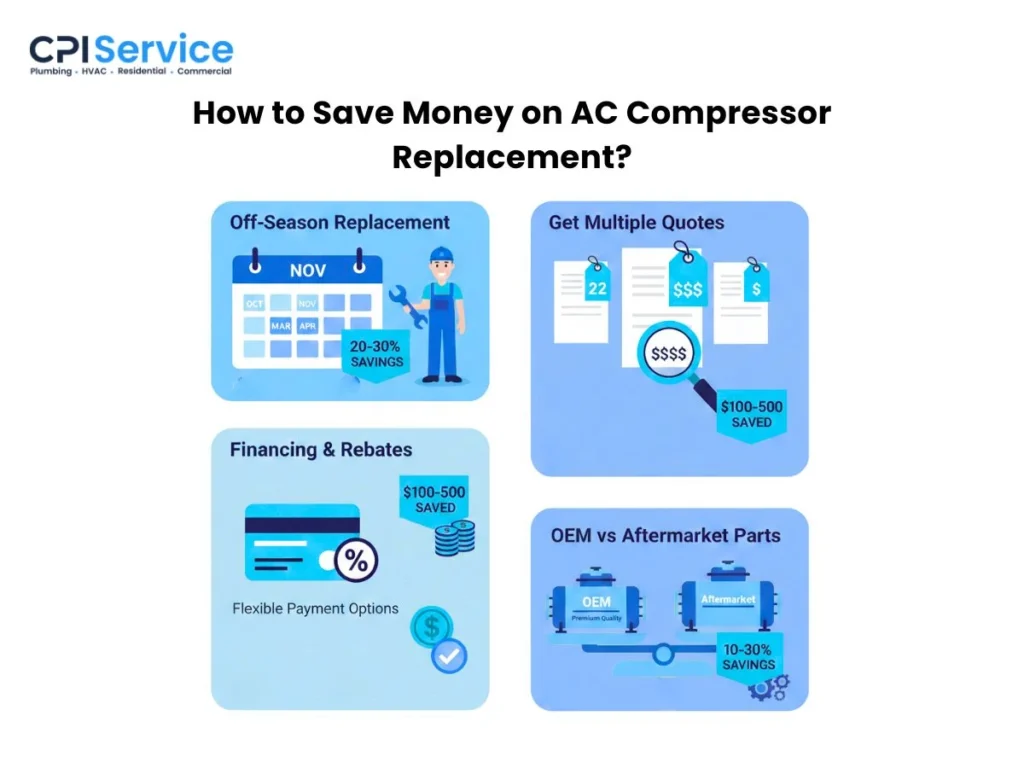
Tips to save money on AC compressor replacement:
- Off-Season Replacement: Replacing your compressor during the off-season (fall or spring) can help you save 20-30% on labor costs, as HVAC technicians are less busy and service fees may be lower.
- Get Multiple Quotes: Always request at least 3 quotes to compare pricing and avoid overpaying. This simple step could save you anywhere from $100 to $500.
- Consider Financing or Rebates: Many HVAC companies offer financing plans like ike 0% APR for 12+ months or rebates, making the upfront cost more manageable and potentially saving you money.
- Weigh OEM vs. Aftermarket Parts: Consider using aftermarket parts to save 10-30%, but ensure they are high-quality and compatible. OEM parts offer better reliability but cost more.
Finding the Right HVAC Professional for AC Compressor Replacement
Finding the right HVAC professional is crucial to ensuring a successful, cost-effective AC compressor replacement. Choosing a certified AC technician can save you money, prevent future issues, and ensure the job is done right.
Here are some key qualities to look for when evaluating potential contractors:
- Experience: Look for AC contractors with extensive experience in AC compressor replacements. A certified AC technician will be familiar with a variety of systems and issues, enabling them to quickly identify and fix problems.
- Certifications: Look for certifications from organizations such as NATE (North American Technician Excellence) ensure that the AC technician is skilled and up to date with industry standards and practices.
- Good Reputation: Check online reviews and ask for recommendations from family, friends, or neighbors. An AC contractor with positive reviews and a solid reputation is more likely to deliver quality service.
- Transparent Pricing: Ensure the AC contractor provides clear, upfront pricing with no hidden fees. Avoid contractors who give vague or fluctuating estimates. You should know the total cost before work begins.
- Quick Response Time: A reliable HVAC professional should respond promptly to service requests, especially in urgent replacement situations.

