

 Emergency Plumbing
 Plumbing Repairs
 Water Heaters
 Drain Cleaning
 Sewer Service
 Faucets & Fixtures
 Repiping
 Toilet Plumbing
 Trenchless
 Plumbing Leaks
 Air Conditioning
 Heating
 Minisplit Systems
 Heat Pumps
 HVAC Components
 HVAC Rebates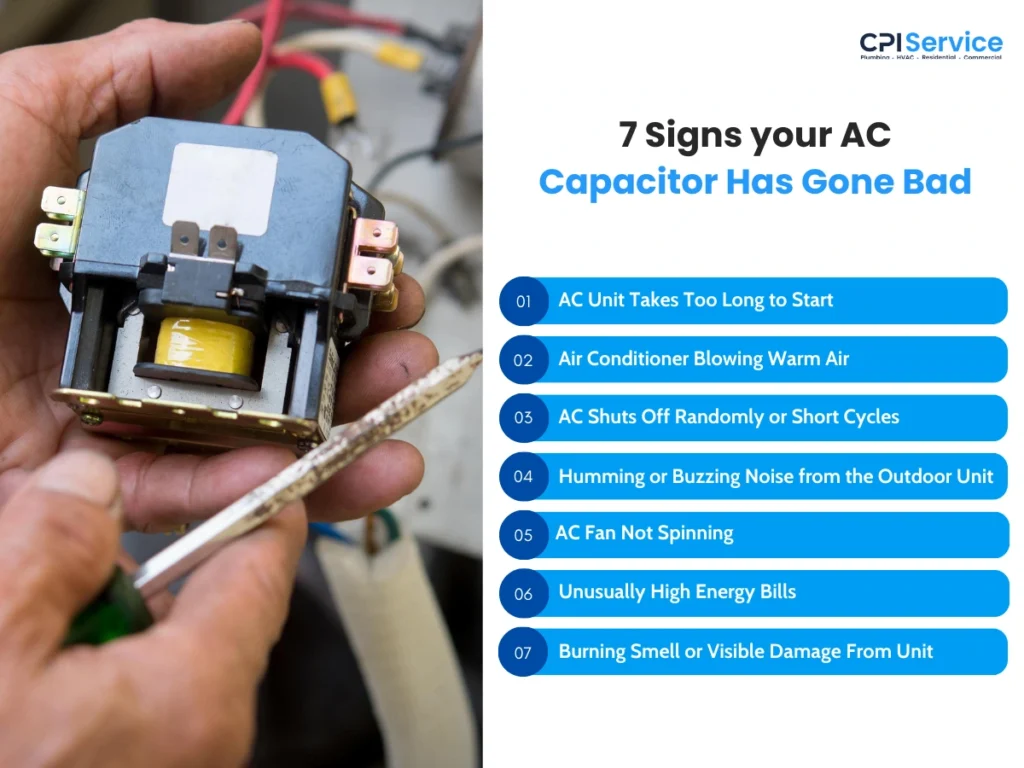
An AC capacitor is an electrical component in an air conditioning system that stores and releases electrical energy to help start and run the compressor and fan motors. Common signs of a bad AC capacitor include slow startup, warm air, random shutoffs, buzzing from the outdoor unit, a non-spinning fan, high energy bills, and visible damage or a burning smell. Capacitors fail due to surges, heat, age, or moisture, and typically last 5–20 years. Ignoring a faulty capacitor can damage components, increase energy costs, cause premature wear, create safety risks, and lead to system shutdown.
To diagnose or resolve these issues, turn off the power, safely discharge the AC capacitor, inspect it, test it with a multimeter, replace it if faulty, restore power, and monitor system performance. While DIY replacement is possible, professional air conditioning services ensure safety, proper installation, and reliable operation, helping maintain efficient cooling and protecting the overall AC system.
7 common signs an AC capacitor has gone bad:
- AC Unit Takes Too Long to Start
- Air Conditioner Blowing Warm Air
- AC Shuts Off Randomly or Short Cycles
- Humming or Buzzing Noise from the Outdoor Unit
- AC Fan Not Spinning
- Unusually High Energy Bills
- Burning Smell or Visible Damage From Unit
AC Unit Takes Too Long to Start
If an AC unit takes too long to start, it often signals a failing start capacitor, which provides the initial electrical surge required to start the compressor and fan motors. When the capacitor weakens, the motors struggle to begin operation, producing humming sounds, slow fan movement, or delayed cooling.
Repeated startup strain places extra load on motor windings, relays, and contactors. Over time, this stress can cause overheating, reduced efficiency, and possible compressor damage. Replacing a weak capacitor early helps restore proper startup and prevents costly HVAC repairs.
Air Conditioner Blowing Warm Air
When an air conditioner starts blowing warm air, it often indicates a disruption in the cooling process, commonly caused by a failing AC capacitor. The capacitor supplies the electrical charge needed to start and run the compressor and fan motor.
If it cannot store or release sufficient energy, the compressor struggles to circulate refrigerant, and the fan fails to move air effectively. This can result in the AC not blowing cold air from the vents, uneven indoor temperatures, and irregular cooling cycles, leading to discomfort and higher energy use, even when the AC runs continuously.
AC Shuts Off Randomly or Short Cycles
Once an air conditioner shuts off randomly or enters short cycling, it is often due to a thermostat malfunction, clogged air filters, or a failing AC capacitor that disrupts normal system operation. A misreading thermostat can cause the AC to stop or start too frequently, while restricted airflow from dirty filters may overheat the system, triggering safety shutoffs for the compressor or fan.
In some cases, a weak or damaged capacitor cannot deliver the electrical charge required to start or sustain the compressor and fan motors, which causes the unit to shut down prematurely or restart repeatedly. This repeated on-and-off operation prevents full cooling cycles, reduces efficiency, and creates uneven indoor temperatures, often leading to rapid bursts of airflow, higher energy usage, and extra strain on system components.
Humming or Buzzing Noise from the Outdoor Unit
A persistent humming or buzzing sound from the outdoor AC unit often signals electrical or mechanical issues, such as a failing AC capacitor, loose wiring, or a malfunctioning fan motor. This abnormal noise can indicate that the fan is struggling to start or spin consistently, reducing airflow and forcing the compressor to work harder.
Homeowners may notice the sound intensifying during startup or high-demand cooling periods, which, if left unaddressed, can lead to overheating, reduced efficiency, and potential long-term damage to the condenser and connected components.. Professional inspection and timely replacement of faulty components, such as the capacitor, wiring, or fan motor, can resolve the noise and restore normal AC operation.
AC Fan Not Spinning
When the AC fan stops spinning, it can be due to a faulty capacitor, a seized motor, or obstructed fan blades. Without proper rotation, the fan cannot circulate air across the condenser coil, reducing heat exchange and preventing the system from cooling effectively.
Warm air coming from vents, along with unusual humming sounds or vibrations from the outdoor unit, often indicate that the AC system is struggling to operate properly. Ignoring this issue can overwork the compressor, increase energy consumption, and lead to long-term damage, potentially raising repair costs. Prompt inspection by an HVAC technician and timely repair or replacement of faulty components can restore normal cooling performance and prevent further system strain.
Unusually High Energy Bills
If you notice unusually high energy bills, this can signal that the air conditioner is operating inefficiently and consuming more electricity than normal. Issues such as worn-out capacitors, partially blocked coils, or struggling motors force the system to run longer and harder to maintain the desired indoor temperature.
This extended runtime increases electricity usage even when cooling seems adequate. A sudden spike in utility costs signals that the AC system requires professional inspection and maintenance to restore efficiency and prevent further energy waste. Addressing the issue early helps identify underlying performance problems and allows the system to return to normal cooling cycles.
Burning Smell or Visible Damage From Unit
A burning smell or visible damage from the AC unit is a sign of an electrical or mechanical failure within the system, such as a faulty capacitor, an overheated motor, or frayed wiring. Over time, these issues can cause insulation to burn, components to discolor, or smoke to appear near the unit.
In some cases, the system may begin operating irregularly, with sudden shutdowns or reduced cooling performance as internal components struggle under electrical stress. Detecting these warning signs early is crucial, as continuing to operate the system under these conditions can lead to complete component failure, higher repair costs, and potential safety hazards to the home.
What Causes an AC Capacitor to Go Bad?
Common causes of an AC capacitor going bad include power surges and electrical issues, overheating due to poor ventilation, natural age and wear, and moisture exposure and corrosion damage. Identifying these causes early can help prevent sudden AC failures, reduce repair costs, and maintain efficient cooling performance.
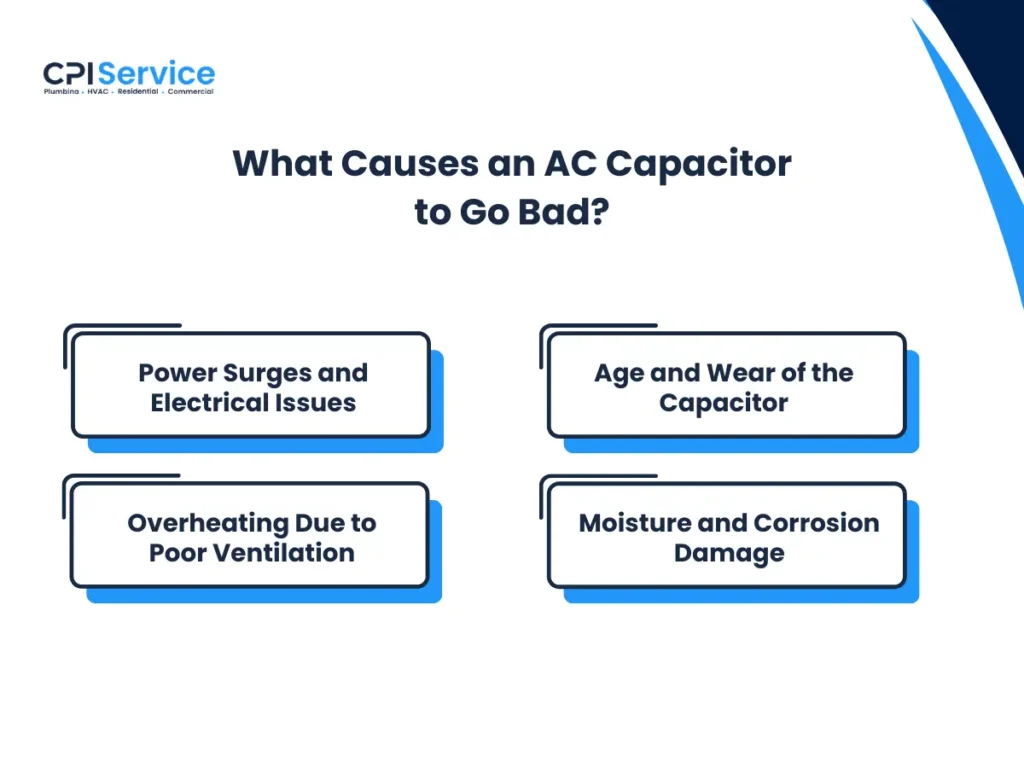
Common causes an AC capacitor fails include:
- Power Surges and Electrical Issues
Power surges and electrical issues can damage an AC capacitor by delivering sudden spikes of voltage that exceed its rated capacity. Sudden voltage spikes can weaken the dielectric material, burn out internal circuitry, and degrade terminals, which impairs the capacitor’s ability to store and release energy consistently.
Repeated exposure accelerates wear, leading to irregular compressor and fan motor performance, longer startup times, and increased system strain. Over time, these electrical stresses can drastically shorten the capacitor’s lifespan and increase the risk of sudden AC failure or costly repairs. Installing surge protection and maintaining stable electrical connections can help prevent this damage.
- Overheating Due to Poor Ventilation
In terms of overheating due to poor ventilation, this condition can cause an AC capacitor to fail because excessive heat accelerates the breakdown of its internal components. Restricted airflow around the condenser or compressor, caused by blocked vents, dirty coils, or insufficient spacing, forces the capacitor to absorb more thermal stress than it is designed to handle.
This degrades the dielectric material and reduces its ability to store and release electrical energy efficiently. Over time, it can lead to delayed motor startups, reduced cooling performance, and a shortened overall service life of the AC system.Keeping the outdoor unit clean and ensuring proper airflow helps reduce heat buildup.
- Age and Wear of the Capacitor
When your AC is several years old and has undergone repeated charge-discharge cycles, the capacitor naturally ages and wears, gradually diminishing its performance. This repeated electrical stress slowly degrades the dielectric material and internal components, reducing the capacitor’s ability to store and release energy efficiently.
As the capacitor continues to age, regular HVAC maintenance becomes important to maintain system reliability. Routine inspections allow technicians to test capacitor performance and replace worn components before they affect compressor or fan operation.
- Moisture and Corrosion Damage
Concerning moisture and corrosion damage, water or high humidity can penetrate the AC capacitor housing and compromise its electrical connections. This exposure may lead to rusted terminals, oxidized components, or short circuits, preventing the AC capacitor from functioning properly and affecting the overall performance of the air conditioning system.
This degradation forces the AC’s compressor and fan motors to struggle during startup or run inconsistently, lowering cooling efficiency and increasing system strain. Keeping the outdoor unit protected from excessive moisture and scheduling routine HVAC inspections can help identify corrosion early and prevent further capacitor damage.
How Long Do AC Capacitors Last?
AC capacitors last 5 to 20 years, but their actual lifespan depends on how frequently they are used, the operating environment, and the quality of the capacitor itself. Common signs of aging capacitors include slow or failed motor starts, humming or buzzing noises, visible bulging or leaks, and inconsistent cooling performance.
Factors that influence lifespan include heat exposure, poor ventilation, moisture and corrosion, and electrical surges. Each of these factors weakens the capacitor, accelerating dielectric breakdown and reducing its ability to store and release energy efficiently. Addressing these issues early can prevent further deterioration and help manage potential AC capacitor replacement costs by scheduling timely maintenance. Regular inspections and preventive care ensure the AC system operates efficiently, reduces the risk of sudden failures, and prolongs the lifespan of the capacitor.
What Happens if You Ignore a Bad AC Capacitor?
Ignoring a bad AC capacitor can damage other components, raise energy costs, cause premature wear, create safety hazards, and potentially lead to complete system failure. Timely replacement or repair safeguards the system’s performance and prevents costly disruptions.
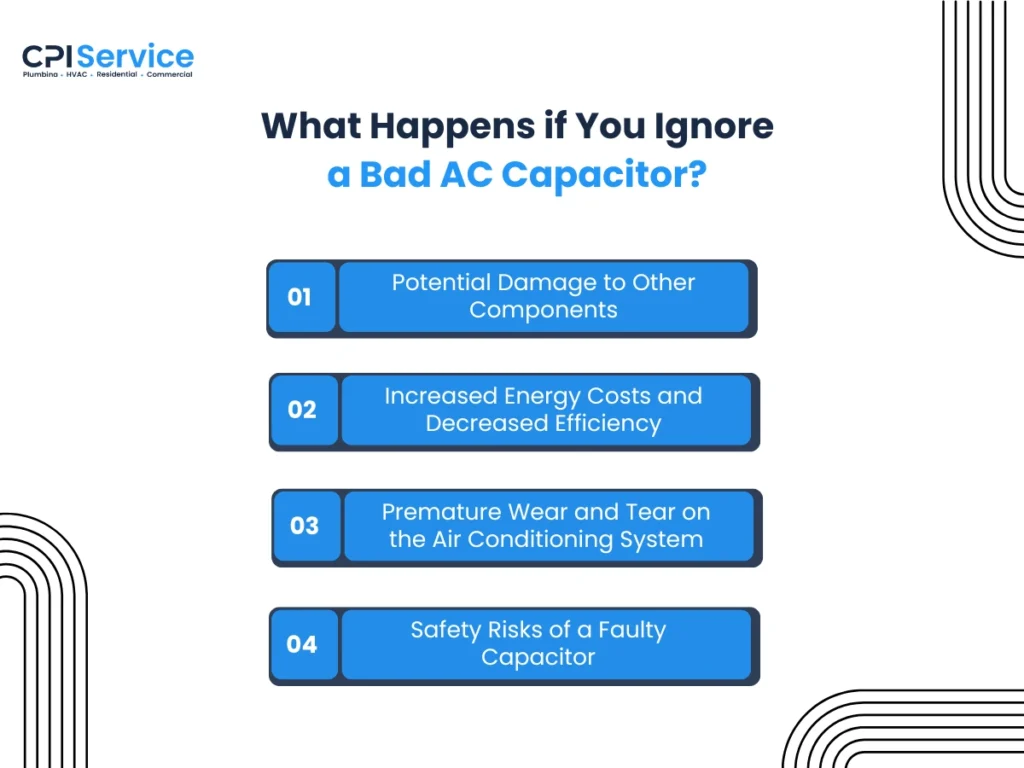
Key consequences of ignoring a bad AC capacitor include:
- Potential Damage to Other Components
Ignoring a failing AC capacitor can damage critical system components, such as the compressor, fan motor, relays, and contactors. Immediately, these parts may overheat or struggle to operate efficiently, while long-term neglect can cause premature wear, electrical faults, and permanent component failure.
This cascading stress reduces overall system reliability, decreases cooling performance, and can result in costly repairs. Timely detection and replacement of a faulty capacitor are essential to protect the AC system and maintain its efficiency.
- Increased Energy Costs and Decreased Efficiency
Neglecting a faulty AC capacitor causes the compressor and fan motors to strain, increasing energy consumption and reducing system performance. Over time, this constant stress can lead to premature wear on motors, relays, and other components, shortening their lifespan and resulting in more frequent breakdowns.
Additionally, the system may struggle to maintain consistent cooling, leading to uneven indoor temperatures and longer operating cycles. Addressing a failing capacitor promptly prevents further damage, lowers electricity costs, and helps maintain the overall reliability of the AC system.
- Premature Wear and Tear on the Air Conditioning System
A failing capacitor guarantees premature wear and tear by forcing the system’s motors to operate under constant electrical stress. This strains the compressor and fan motors, damaging motor windings, relays, contactors, and other connected components. Over time, the system suffers from reduced efficiency, inconsistent cooling, and increased maintenance needs.
Timely inspection and replacement of the capacitor prevents excessive wear, prolongs the lifespan of the AC system, and ensures reliable, efficient performance for both indoor and outdoor units.
- Safety Risks of a Faulty Capacitor
A faulty AC capacitor introduces immediate safety risks by compromising the system’s electrical stability. As it fails, it can generate sparks, cause overheating, or create electrical shorts in the compressor, fan motor, or wiring, which can pose immediate fire risks. A defective AC capacitor introduces significant safety risks by compromising the electrical stability of the system.
Persistent operation under these conditions accelerates component wear, reduces insulation integrity, and can ultimately lead to complete system failure. Correcting the faulty capacitor promptly mitigates these dangers, maintains efficient AC operation, and ensures a safer home environment.
- Risk of System Shutdown and Complete Failure
A defective AC capacitor can cause the entire air conditioning system to shut down unexpectedly, resulting in interrupted cooling, strain on other components, and potentially costly repairs. When the capacitor fails to deliver sufficient electrical charge, the compressor and fan motors may struggle to start or operate inconsistently, preventing proper cooling cycles.
This continuous stress can overload relays, contactors, and wiring, increasing the risk of cascading failures. Timely replacement of the capacitor restores reliable AC operation, protects system components, and ensures safe, efficient cooling performance.
How to Replace an Air Conditioner Capacitor?
To replace an AC capacitor, turn off power, locate and discharge the unit, inspect and test it, replace it, and check the system performance. Following these steps carefully ensures safety, prevents damage to the AC system, and restores efficient cooling operation.
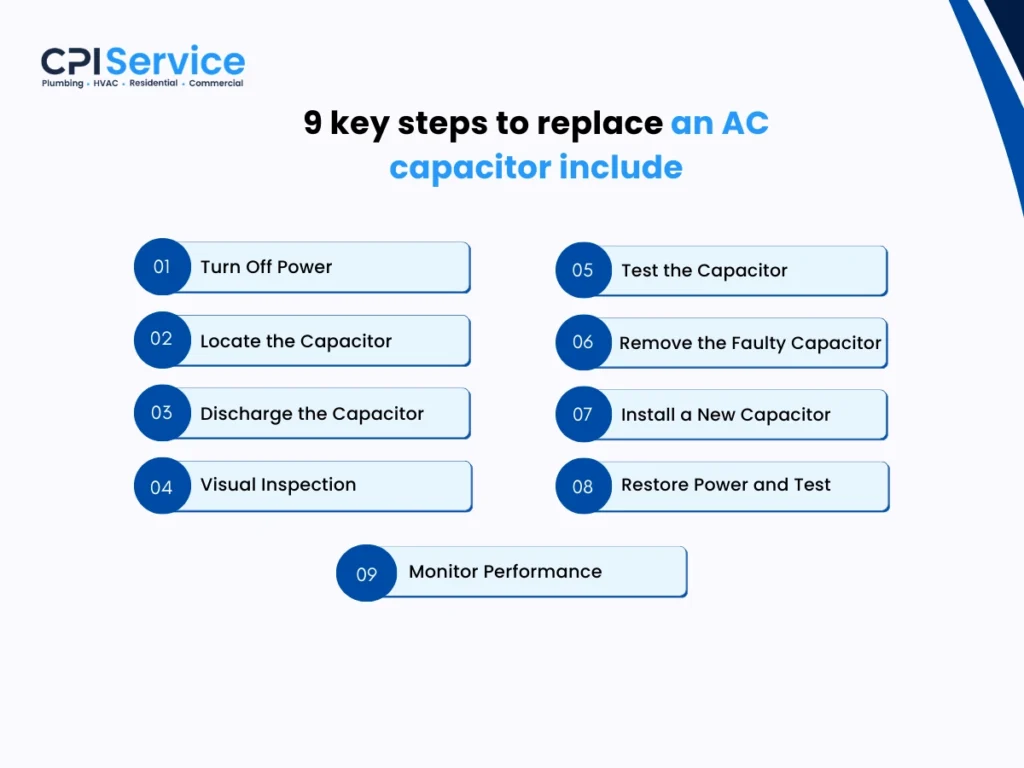
9 key steps to replace an AC capacitor include:
- Turn Off Power: Before inspecting or handling the AC capacitor, turn off the power at the breaker to ensure safety. Confirm the unit is completely disconnected from electricity to ensure safe testing and prevent electrical shock.
- Locate the Capacitor: Open the AC service panel to locate the capacitor, usually near the compressor or fan motor. AC capacitors are cylindrical or oval-shaped with terminals on top.
- Discharge the Capacitor: Use an insulated screwdriver or a proper capacitor-discharge tool to safely release the stored electrical energy. This prevents shocks during testing.
- Visual Inspection: Check the AC capacitor for visible signs of damage, such as bulging, fluid leakage, burnt marks, or corrosion on the terminals. Noticing any of these signs means the AC capacitor should be tested or replaced promptly to prevent further AC issues.
- Test the Capacitor: Use a multimeter with capacitance measurement or a dedicated AC capacitor tester. Compare readings with the microfarad (µF) rating on the capacitor label. Values significantly off indicate a faulty unit.
- Remove the Faulty Capacitor: If the AC capacitor is defective, carefully disconnect the wires (note their placement for reconnection) and remove the old capacitor from the mounting bracket.
- Install a New Capacitor: Match the replacement capacitor to the original in terms of voltage and microfarad rating. Secure it in place and reconnect all wires to the corresponding terminals.
- Restore Power and Test: Turn the power back on and test the AC system. The compressor and fan should start smoothly, and the system should cool effectively.
- Monitor Performance: Observe the unit for a few cycles to ensure the replacement has resolved the problem and no unusual noises or issues persist.
Should You Replace It Yourself or Call a Technician?
Replacing an AC capacitor yourself can be risky because capacitors store high voltage even after the system is turned off. If handled incorrectly, this stored electricity can cause serious electric shock or injury. Improper installation can also damage important AC components such as the compressor or fan motor.
Because of these safety and performance risks, it’s usually best to hire professional HVAC technicians offering comprehensive air conditioning services. Experienced technicians can properly test the capacitor, safely discharge stored electricity, and install the replacement correctly to ensure the system operates efficiently. While a DIY replacement may seem like a way to save money, professional air conditioning service helps prevent costly mistakes and ensures safe, reliable long-term AC performance.

