How Much Does AC Repair Cost in San Jose?
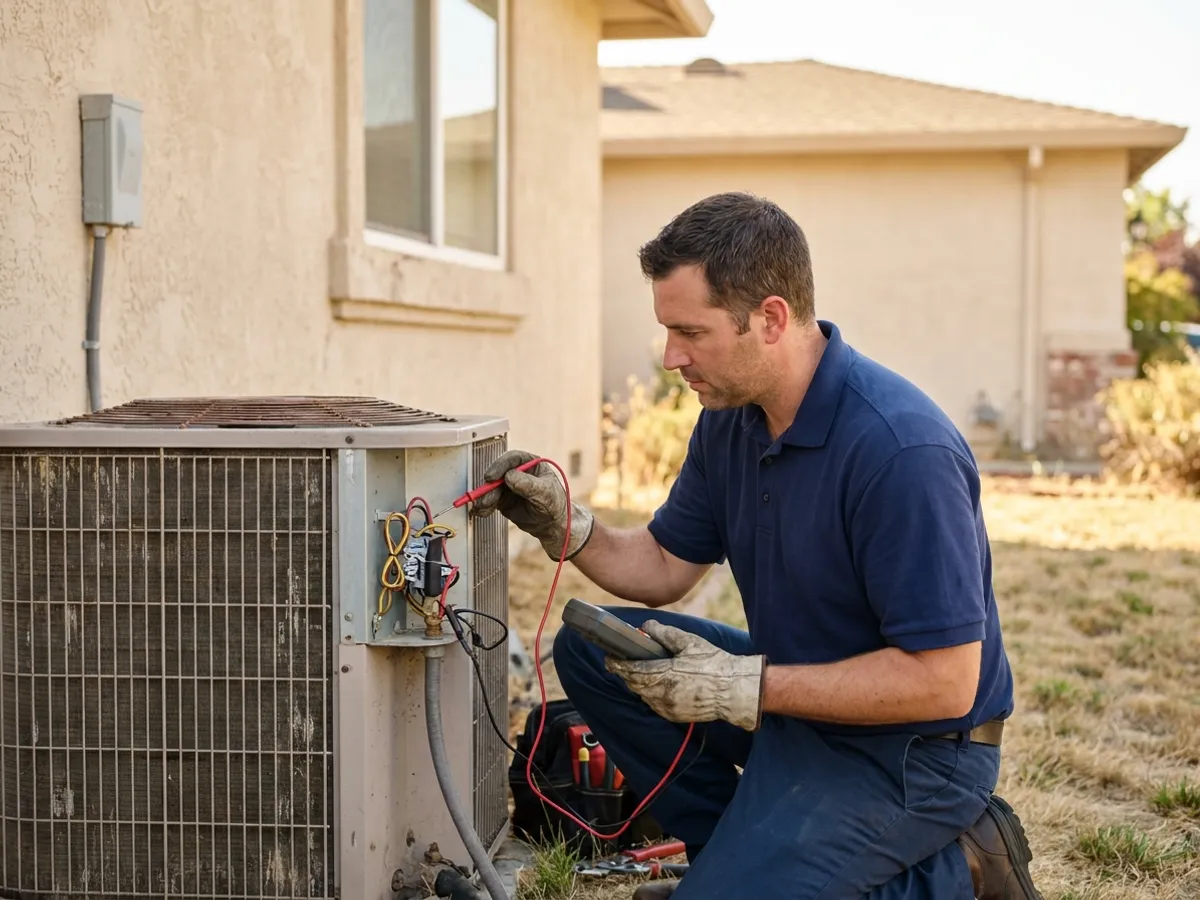
Table of Contents
- What Is the Average Cost of an AC Repair?
- What Affects the Cost?
- How Do Labor Costs Affect AC Repair Expenses?
- How Do Seasonal and Geographic Factors Influence AC Repair Costs?
- How Do Emergency AC Repairs Impact the Total Repair Cost?
- How Does Parts Replacement Affect AC Repair Expenses?
- How Does the Age and Condition of the AC Unit Influence Repair Costs?
- How Does the Severity of the Problem Affect AC Repair Costs?
- How Do Location and Accessibility of the AC Unit Influence Repair Expenses?
- How Do Warranty and Insurance Coverage Affect the Cost of AC Repairs?
- Repair or Replace Your AC?
- DIY vs. Professional AC Repair
- How to Keep AC Repair Costs Down
- AC Repair in San Jose
- Frequently Asked Questions
AC repair in San Jose ranges from about $200 for a thermostat replacement to $4,500 for a compressor replacement, with most repairs between $300 and $2,500 (a condenser fan motor to an expansion valve) and a compressor $2,000 to $4,500. The price depends on what failed, the part, the type of system, how easy the equipment is to reach, and whether the visit is during business hours.
CPI quotes most repairs as a fixed price once the technician has found the problem. In San Jose and the South Bay, most AC repair calls come in the first heat waves of June and July, when weak parts finally give out.
The repair price is also the starting point for a bigger decision: fix it or replace it. Repairs usually make sense on newer systems and for minor parts, while an older system with frequent breakdowns or a major failure is often better replaced. A few checks are safe to do yourself, like the filter and thermostat, but electrical parts, refrigerant and compressors need a licensed technician.
For every job in one place, see our dated San Jose plumbing and HVAC price table.
What Is the Average Cost of an AC Repair?
Most AC repairs in San Jose fall between $300 and $2,500, from a condenser fan motor to an expansion valve; a compressor costs $2,000 to $4,500. Small electrical parts such as a capacitor, contactor or thermostat sit at the low end; a coil, expansion valve or compressor, which means opening the refrigerant circuit, sits at the high end. CPI charges a $59 inspection fee to diagnose the problem, waived for members.
As national context, HomeAdvisor reports a normal range of about $172 to $664 for common AC repairs across the U.S., with most homeowners paying around $417. Bay Area prices run higher: labor costs more here, and the national figure is weighted toward small fixes, so use the San Jose ranges below for budgeting.
AC Repair Cost by Repair
| Repair | Typical San Jose cost | More detail |
|---|---|---|
| Capacitor or contactor | $400 to $600 | Signs of a bad capacitor |
| Clogged condensate drain | Quoted after diagnosis | Clogged AC drain line |
| Thermostat replacement | $200 to $500 | Smart thermostats cost more |
| Condenser fan motor | $300 to $800 (standard); $500 to $1,600+ (variable-speed) | Fan motor cost |
| Blower motor | $400 to $900 (standard); $800 to $2,000 (ECM) | Blower motor cost |
| Refrigerant leak search and repair | Quoted after diagnosis | Why an AC freezes up |
| TXV (expansion valve) | $1,000 to $2,500 | TXV cost |
| Evaporator coil | $1,500 to $3,500 | Coil cost |
| Compressor | $2,000 to $4,500 | Compressor cost |
Ranges include the part, labor and testing for a typical home central AC or heat pump. Warranty coverage can lower the cost of major parts; nights, weekends and holidays are billed at higher after-hours rates.
- Thermostat$200–$500
- Capacitor or contactor$400–$600
- Condenser fan motor$300–$800
- Blower motor$400–$900
- TXV$1,000–$2,500
- Evaporator coil$1,500–$3,500
- Compressor$2,000–$4,500
Bars share one scale, from $0 to $4,500.
AC Repair Cost by Unit Type
The type of air conditioner changes which parts can fail, how hard they are to reach and whether a repair is worth it at all. The table compares types without prices; small self-contained units cost the least to fix, and complex or specialized systems the most.
| Unit type | Relative repair cost | Common repairs | Worth knowing |
|---|---|---|---|
| Window | $ | Filter and coil cleaning, fan motor, controls | Past a minor fix, replacing the unit usually costs less |
| Portable | $ | Drainage, filters, fan, controls | Same as window units; compressor failure usually means replacement |
| Floor-mounted (ductless console) | $$ | Sensors, fan motor, drain, refrigerant | Repaired like a mini-split |
| Central split system | $$ | Capacitor, contactor, fan and blower motors, drain, refrigerant leak, coil, compressor | The most common home system; see the San Jose table above |
| Ductless mini-split | $$–$$$ | Sensors and boards, drain, fan motors, refrigerant leak, inverter compressor | Brand-specific parts and electronics |
| Hybrid (dual-fuel) | $$–$$$ | Heat pump parts plus furnace controls | Two systems sharing controls |
| Geothermal | $$$ | Heat pump, loop pumps, controls, refrigerant | Specialized parts and labor |
How Much Does Window AC Repair Cost?
Window units are the least expensive to repair because they’re small and self-contained. Cleaning, a new filter or a control fix costs little; a failed compressor or circuit board can cost a large share of a new unit. If a repair is more than about half the price of a new window unit, replace it.
How Much Does Split System Repair Cost?
A split system has an outdoor condenser and an indoor coil and blower, either a central ducted system or a ductless mini-split. Most repairs are the parts in the San Jose table above. The price depends on which part failed, the brand, and whether the work involves the refrigerant circuit.
How Much Does Central Air Conditioner Repair Cost?
Central AC repairs run from a few hundred dollars for a capacitor, contactor or thermostat to several thousand for a coil or compressor (see the table above). A clogged condensate drain is usually a modest repair. Duct problems and refrigerant leaks can add to the total, because the leak has to be found before it can be fixed.
How Much Does Ductless Mini-Split Repair Cost?
Mini-split repairs depend on the brand, part availability and warranty. Simple fixes such as a sensor, a drain or a capacitor cost less; a refrigerant leak, a control board or an inverter compressor costs more, and some parts have to be ordered from the manufacturer. See mini-split repair.
How Much Does a Portable Air Conditioner Repair Cost?
Portable units usually need only simple fixes: a clogged filter, a drainage problem or a stuck control. A compressor failure or refrigerant leak often costs more than the unit is worth, so replacement is usually the better choice. Age and brand matter too.
How Much Does Geothermal AC System Repair Cost?
Geothermal systems use a heat pump connected to underground loops. Repairs to the heat pump, loop pumps, refrigerant circuit or controls need specialized parts and training, so they cost more than repairs to a standard system. Regular maintenance reduces how often major repairs come up.
How Much Does a Hybrid Air Conditioner Repair Cost?
A hybrid or dual-fuel system pairs a heat pump with a gas furnace that takes over in cold weather. Simple repairs, like a capacitor or thermostat, cost about the same as on any heat pump; compressor or coil repairs are major. Because two systems share controls, diagnosis can take longer. See heat pumps.
How Much Does Floor-Mounted Air Conditioner Repair Cost?
Floor-mounted (console) units are a type of ductless system mounted low on a wall. Simple fixes, such as a filter, sensor or thermostat, are inexpensive; a compressor or coil replacement is a major repair. The price depends on the part, the brand and labor.
AC Repair Cost by Part
Minor parts like capacitors and thermostats cost the least; parts in the refrigerant circuit cost the most because the system has to be recovered, opened, brazed, evacuated and recharged.
- Compressor ($2,000 to $4,500 in San Jose). Common causes of failure are motor burnout, refrigerant problems and electrical faults. On an older system out of warranty, replacing the outdoor unit or the whole system is often the better value. See compressor replacement cost.
- Refrigerant leak (quoted after diagnosis). Leaks come from damaged or corroded coils, loose connections and rusted parts. The leak has to be found and repaired before the system is recharged; a badly corroded coil may need replacing instead.
- Capacitor ($400 to $600 for a capacitor or contactor). A failing capacitor keeps the compressor or fan motor from starting. It’s replaced rather than repaired. See capacitor replacement cost.
- Fan motor ($300 to $800 standard; $500 to $1,600+ variable-speed). Signs include a fan that won’t start, overheating or new noises. Accessibility and the motor type set the price.
- Thermostat ($200 to $500 installed). The price depends on whether it’s a basic or smart model and whether new wiring is needed.
- Relay switch or contactor. Relays and contactors fail from electrical surges, overheating or pitted contacts. The part is inexpensive; troubleshooting is most of the work. A contactor replacement falls in the capacitor or contactor range above; other relays are quoted after diagnosis.
- Drain pan. A cracked or rusted drain pan lets condensate leak into the house. Price depends on the pan material (plastic or metal) and access, especially for attic units. Quoted after diagnosis.
- Condenser coil. The outdoor coil can be damaged by corrosion, impact or leaks. Replacing it costs nearly as much as an outdoor unit, so on an older system replacement often makes more sense. Quoted after diagnosis.
- Evaporator coil ($1,500 to $3,500). Larger systems, hard-to-reach attic coils and refrigerant costs push the price up. See coil replacement cost.
- Expansion valve (TXV, $1,000 to $2,500). Like a coil, a TXV is part of the refrigerant circuit, so most of the cost is labor and refrigerant. See TXV replacement cost.
- Circuit board. Price depends on the brand and whether an original-manufacturer (OEM) part is required; if the board is under warranty, you may pay only labor. Quoted after diagnosis.
What Affects the Cost?
The price of any repair comes down to labor, parts, timing, the age and condition of the system, the severity of the problem, access, and what warranty or insurance covers. Knowing them helps you read a quote.
How Do Labor Costs Affect AC Repair Expenses?
Labor is a large part of every repair, and it grows with the complexity of the job and the time it takes. Many HVAC companies bill by the hour. CPI quotes most repairs as a fixed price before work starts, typically based on $150 to $250 per hour plus parts and drive time ($200 to $300 per hour after hours, with a minimum charge). Labor rates are higher in metro areas like the Bay Area than in rural ones.
How Do Seasonal and Geographic Factors Influence AC Repair Costs?
Summer is peak season. Heat waves bring a rush of calls, so waits get longer and more repairs end up as after-hours visits. Air conditioners in hot, humid inland climates run more hours and break down more often than those in the South Bay’s milder climate. Regional labor costs and parts availability also matter: urban areas have higher labor costs, and remote areas can wait longer for parts.
How Do Emergency AC Repairs Impact the Total Repair Cost?
Nights, weekends and holidays cost more. At CPI, after-hours repairs are priced on a $200 to $300 per hour basis, with a minimum charge, instead of $150 to $250, so the same capacitor replacement costs more at 9 p.m. on a Saturday than on a weekday morning. Parts can also be harder to get on short notice. If the house is safe and the AC can wait, scheduling during business hours saves money.
How Does Parts Replacement Affect AC Repair Expenses?
Parts are the other big driver. Compressors ($2,000 to $4,500) and evaporator coils ($1,500 to $3,500) cost far more than capacitors ($400 to $600). On older systems, specialized or discontinued parts can be scarce and expensive, and one failure is often followed by another. At that point, replacing the system may cost less over time.
How Does the Age and Condition of the AC Unit Influence Repair Costs?
Systems around 10 to 15 years old are more expensive to keep running: parts are worn, components may be outdated, and major repairs become more likely than minor ones. Systems that use R-22 refrigerant are the clearest example. Under EPA rules, R-22 hasn’t been produced or imported in the U.S. since 2020, so recharging one costs far more than recharging a current system. See how long air conditioners last.
How Does the Severity of the Problem Affect AC Repair Costs?
A minor issue, like a dirty filter or a tripped float switch on a clogged drain, is quick and inexpensive. A refrigerant leak takes time to find and repair, and a compressor failure means an expensive part and complex labor. The more serious the problem, the more specialized the parts and the longer the job.
How Do Location and Accessibility of the AC Unit Influence Repair Expenses?
Hard-to-reach equipment takes longer to work on. Attic air handlers, rooftop units and condensers in narrow side yards may need ladders, safety equipment or extra hands, and working in a hot attic or tight crawl space slows the job. Carrying large parts like a coil or compressor into a tight space adds time and risk too.
How Do Warranty and Insurance Coverage Affect the Cost of AC Repairs?
Warranty coverage can cut the cost of a major repair. Manufacturer warranties cover parts, not labor or refrigerant; HomeAdvisor puts the average manufacturer’s warranty at 5 years, and many brands give longer parts coverage when the equipment is registered. Read the terms before scheduling: some require a specific service provider, and a warranty can be voided if the system wasn’t maintained.
- Standard manufacturer warranty: covers major parts; usually excludes labor and refrigerant.
- Extended warranty: often covers parts and labor for a longer period, depending on the plan.
- Homeowners insurance: may cover damage from a covered event such as fire, a fallen tree or lightning, but rarely covers wear and tear.
Repair or Replace Your AC?
A common guide is the 50% rule: if the repair costs more than half the price of a new system, replacement is usually the better choice. Another rule of thumb multiplies the system’s age by the repair cost; above about $5,000, replace it. Age, frequent breakdowns and rising energy bills all tip the balance toward replacement.
Repair when:
- The system is under about 10 years old and well maintained.
- The problem is a part like a capacitor, contactor, drain, thermostat or fan motor.
- The repair is covered by warranty.
Replace when:
- The system is 12 to 15 years old or older and losing efficiency.
- The repair costs more than half the price of a new system.
- Breakdowns keep coming and repair bills keep adding up.
- Energy bills are rising because the system is inefficient.
- The compressor or a coil fails on an older system.
- It uses R-22 refrigerant.
A new system can be a heat pump that also heats your home. See how long air conditioners last.
DIY vs. Professional AC Repair
DIY saves the labor cost, but it’s only safe for simple tasks. Before you call, check:
- Is the thermostat set to Cool and below room temperature, with fresh batteries?
- Is the filter clean?
- Is the breaker for the outdoor unit on, and the outdoor disconnect switch in place?
- Is the outdoor unit clear of leaves and debris?
Anything beyond that, such as electrical parts, refrigerant or a frozen coil, is a job for a licensed technician. Capacitors hold a dangerous charge even with the power off, and federal rules require EPA certification to handle refrigerant. Turn the AC off if the coil is iced or the outdoor unit hums without the fan spinning; running it can damage the compressor. A professional brings the tools to diagnose the real cause, and the repair comes with a warranty on parts and labor.
How to Keep AC Repair Costs Down
- Schedule a tune-up each spring; see AC tune-up cost
- Change the filter regularly and keep the outdoor unit clear
- Fix small problems like short cycling early
- Consider a CPI membership plan: annual maintenance, a waived diagnostic fee and repair discounts
AC Repair in San Jose
- Heat waves. Capacitors, contactors and fan motors fail most often on the hottest days, when the system runs all afternoon.
- Side-yard condensers and attic coils. Many South Bay homes have the condenser in a narrow side yard and the coil on an attic furnace, which affects both how hard the system works and how long repairs take.
- Older systems. Many San Jose homes still have 15- to 20-year-old systems, some on R-22; we’ll tell you honestly whether a repair or a replacement makes more sense.
CPI Service repairs air conditioners throughout San Jose and the South Bay. Schedule AC repair, request a free estimate or call (408) 978-3093.
Frequently Asked Questions
What is the most common AC repair?
Capacitors and contactors in the outdoor unit, followed by clogged condensate drains and refrigerant leaks. A clogged drain is usually the least expensive of these; a refrigerant leak the most.
Is it worth repairing a 15-year-old AC?
For a small repair like a capacitor, often yes. For a compressor, coil or refrigerant leak on a 15-year-old system, especially one using R-22, a new AC or heat pump is usually the better value.
Do you charge to diagnose the problem?
CPI charges a $59 inspection fee to diagnose the problem; it's waived for CPI members.
Why does AC repair cost more in summer?
Demand peaks during heat waves, and more calls come in after hours. Scheduling maintenance in spring catches many problems before then.
Does homeowners insurance or a warranty cover AC repair?
A manufacturer's warranty usually covers major parts for a set number of years but not labor or refrigerant. Extended warranties and service plans may cover more. Homeowners insurance generally covers damage from a covered event such as fire or lightning, not wear and tear. Check your paperwork before scheduling.
Can I repair my AC myself?
You can safely change the filter, check the thermostat and breaker, and clear debris from around the outdoor unit. Electrical parts, refrigerant work and anything inside the unit need a licensed technician: capacitors hold a charge even with the power off, and handling refrigerant requires EPA certification.
CPI Service is a great company to use for HVAC too! Our A/C stopped working during the recent heatwave & another company wanted to replace our whole unit. Then we called CPI & they found it didn’t need to be replaced, they fixed it that day! I really appreciate a company that responds quickly, is very professional & reasonably priced!!! I’ll be using them for sure in the future.
Jaycee V., Google review
Read more reviews →Serving San Jose and the South Bay
CPI Service is based at 2880 Aiello Dr in San Jose and serves homes and businesses across the South Bay and the Peninsula. See all the areas we serve.