

 Emergency Plumbing
 Plumbing Repairs
 Water Heaters
 Drain Cleaning
 Sewer Service
 Faucets & Fixtures
 Repiping
 Toilet Plumbing
 Trenchless
 Plumbing Leaks
 Air Conditioning
 Heating
 Minisplit Systems
 Heat Pumps
 HVAC Components
 HVAC Rebates
Your AC may not be blowing cold air due to low refrigerant levels, malfunctioning thermostat settings, clogged air filters, a blocked outdoor condenser unit, a faulty blower motor, compressor failures, restricted ductwork, or frozen evaporator coils. These issues interfere with heat transfer, airflow, or system control, preventing the AC system from cooling effectively even while it continues to run.
To troubleshoot common issues with your AC not blowing cold air, start with basic maintenance checks such as replacing or cleaning clogged filters, verifying thermostat settings, ensuring vents and ducts are unobstructed, and clearing debris around the outdoor unit. Additional methods include inspecting the coils for ice or dirt and resetting the circuit breaker if necessary. Persistent problems such as refrigerant leaks, recurring coil freezing, or compressor malfunctions require professional HVAC service to restore efficient cooling, prevent further damage, and maintain long-term system reliability.
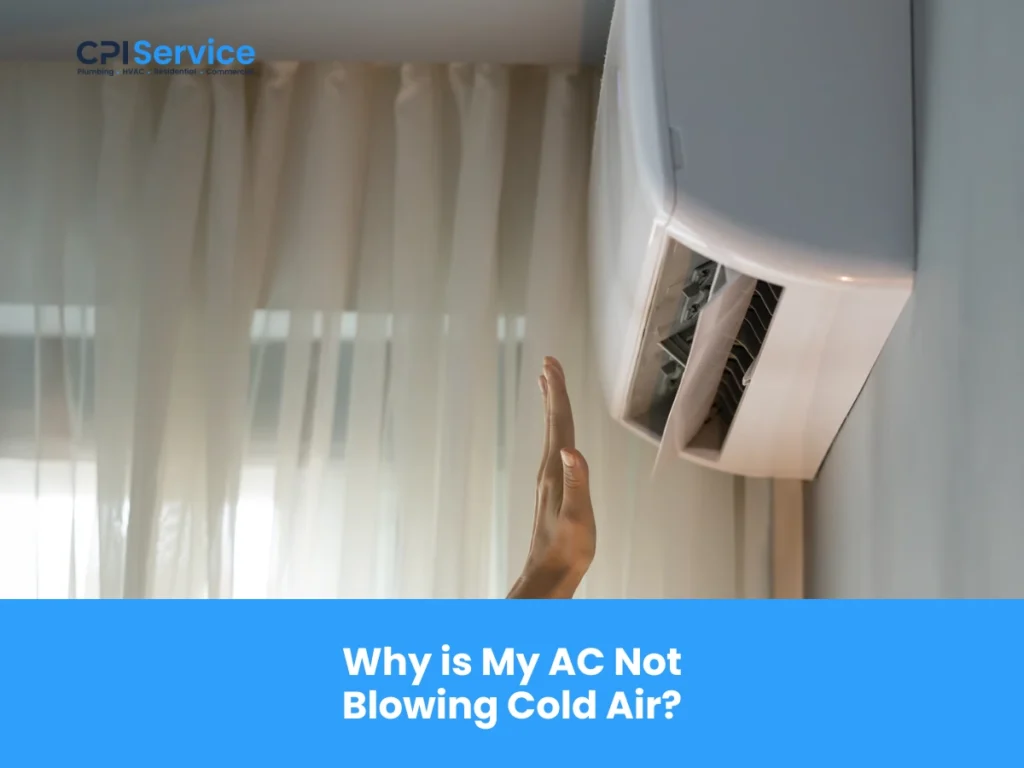
What Are the Most Common Causes of AC Not Blowing Cold Air?
The most common causes of AC not blowing cold air are low refrigerant levels, malfunctioning thermostat settings, clogged air filters, a blocked outdoor unit, a faulty blower motor, and restricted ductwork. Each of these issues interferes with heat removal, airflow, or system control, which prevents the air conditioning system from cooling your home effectively, even though it may still be running.
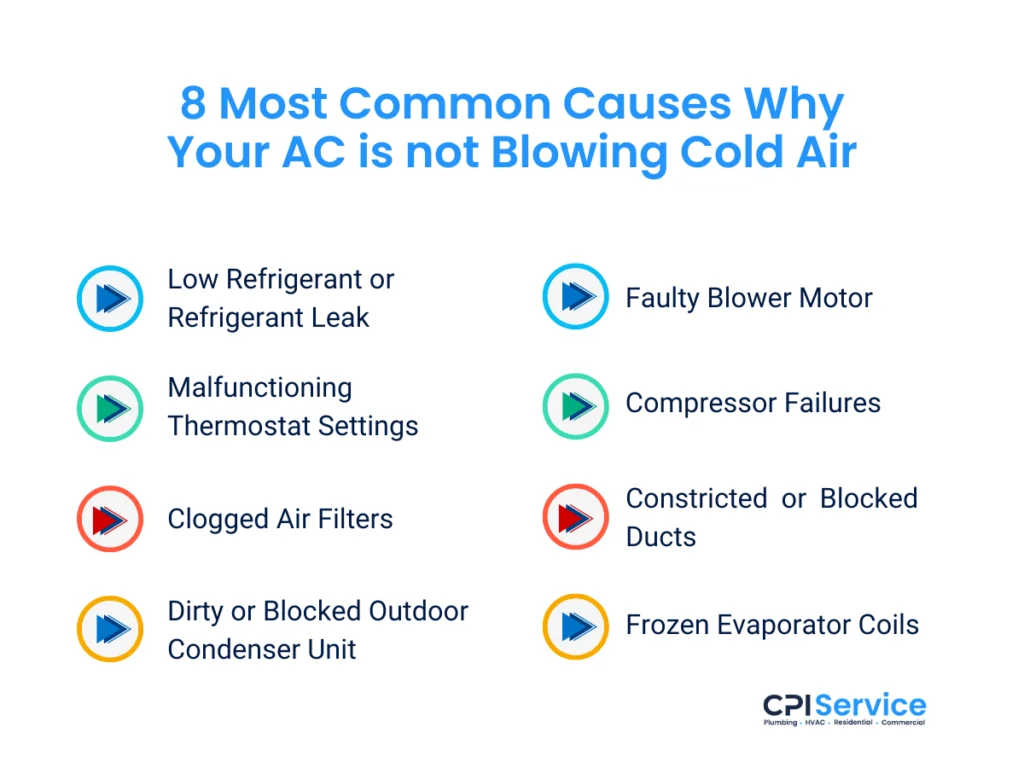
8 most common causes why your AC is not blowing cold air are:
1. Low Refrigerant or Refrigerant Leak
When refrigerant levels drop, often due to leaks in the coils or connecting joints, the AC system can no longer absorb heat from indoor air and release it outside, causing warm air to blow from the vents. Common warning signs of low refrigerant or a refrigerant leak include hissing or bubbling near the refrigerant lines, longer cooling cycles, uneven cooling throughout the home, and ice forming on the evaporator coils as the system pressure drops.
Solution: Fixing a low refrigerant or refrigerant leak problem requires locating and sealing the leak before restoring the AC system to the correct refrigerant charge. Because refrigerant handling is regulated, this repair should be completed by a licensed AC professional. Addressing the leak early helps prevent further damage and reduces total AC repair costs.
2. Malfunctioning Thermostat Settings
If the thermostat setting is not reading the indoor temperature correctly or is set improperly, the AC system may not enter the cooling cycle at the right time. This can cause the unit to blow warm or room-temperature air, run longer than normal, or cycle on and off frequently without lowering the temperature. In some cases, the AC system may appear to run normally while failing to cool the home.
Solution: Verify that the thermostat is set to Cool and the fan is set to Auto. If the thermostat screen is blank, replace the batteries. If it is active but not responding, recalibrate the thermostat or replace it to ensure proper communication with the AC system.
3. Clogged Air Filters
A dirty air filter restricts airflow through the AC system, preventing enough warm air from passing over the evaporator coils. As airflow decreases, cooling efficiency drops, leading to weak vent airflow, dusty registers, longer run times, and higher indoor temperatures. Over time, restricted airflow can also cause the evaporator coils to freeze, completely stopping the cooling process.
Solution: Replace or clean the air filter regularly (every 1-3 months) to restore proper airflow and maintain efficient cooling. If airflow remains weak despite a new filter, a professional AC tune-up may be necessary.
4. Dirty or Blocked Outdoor Condenser Unit
The outdoor condenser unit releases the heat removed from inside your home, and if it is blocked, it can recirculate hot air back into the room. When dirt, leaves, or grass obstruct airflow or coat the condenser coils, heat cannot escape properly, causing the AC system to stop blowing cold air. As heat builds up within the system, the AC continues to run but delivers warm air indoors.
Solution: Clear debris from around the outdoor unit and ensure there is at least two feet of clearance for proper airflow. Rinse the condenser coils with a garden hose to remove dirt. If the coils are heavily soiled, professional cleaning may be required.
5. Faulty Blower Motor
Blower motors in the AC system push cooled air through the ductwork and into your home. When the blower motor begins to fail, airflow becomes weak, inconsistent, or stops altogether, making it feel like the AC is not producing cold air. Additional symptoms often include uneven room temperatures, reduced airflow from vents, and grinding, rattling, or squealing noises during operation.
Solution: Have the blower motor inspected to identify electrical faults or worn components. Minor issues may be repairable, but severe damage often requires full replacement. Because this involves electrical testing and access to the internal system, a certified AC technician should handle the repair. Reviewing the costs of blower motor replacement helps you prepare financially.
6. Compressor Failures
The compressor moves refrigerant through the AC system so heat can be removed from your home. When it fails, refrigerant cannot circulate, and the cooling process stops completely. This results in warm air blowing from vents, loud clanking or buzzing noises, frequent system shutdowns, and sometimes tripped circuit breakers.
Solution: Compressor failures are complex and should be diagnosed by a qualified professional as soon as possible. In some cases, repairs may involve electrical components such as capacitors or wiring. However, if the compressor itself is damaged, a full replacement may be required. Understanding potential compressor replacement costs in advance can help homeowners prepare for this major AC repair and avoid unexpected expenses.
7. Constricted or Blocked Ducts
Air ducts distribute cooled air throughout your home, so if they are blocked, collapsed, or leaking, cooled air may never reach certain rooms. This causes weak airflow, uneven temperatures, and hot spots in specific areas, as well as whistling or rattling noises from the vents, even when the AC is running.
Solution: Check that all visible vents are open and free from furniture or debris, since simple blockages can restrict airflow. If cooling does not improve, the issue may involve hidden leaks or collapsed ducts, which require professional inspection and sealing to restore proper airflow.
8. Frozen Evaporator Coils
Evaporator coils absorb heat from indoor air during normal operation, but when airflow is restricted or refrigerant levels drop too low, the coils can drop below freezing, causing ice to form. As ice builds up, it interferes with proper heat transfer, reduces airflow, causes warm air to blow from the vents, and often leads to water pooling near the indoor unit as the ice begins to thaw.
Solution: Turn off the AC to allow the coils to thaw. Once thawed, replace the air filter and check for any airflow restrictions. If the freezing persists, it could indicate a refrigerant leak or a failing blower motor, both of which require professional service. Additionally, recurring freezing may suggest the need to assess coil replacement, making understanding the cost of coil replacement important.
What Should You Do When Your AC Is Running but Not Cooling?
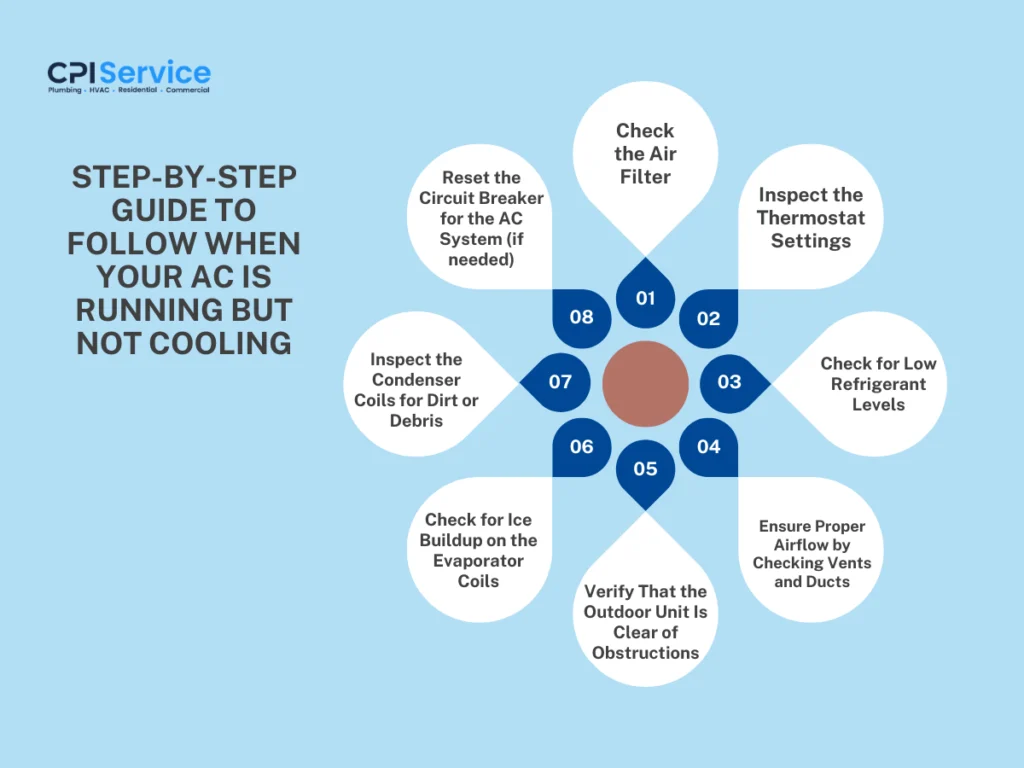
If your AC is running but not cooling, start by checking the air filter, then move on to the thermostat settings, refrigerant levels, vents and ductwork, and the outdoor unit for airflow issues or obstructions. You should also check for ice buildup on the system, inspect the condenser coils for dirt or debris, and reset the circuit breaker if necessary. Following these steps in this particular order helps determine whether the issue is a simple maintenance problem you can address yourself (DIY) or a mechanical failure that requires professional service.
Below is a step-by-step guide to follow when your AC is running but not cooling:
1. Check the Air Filter
When the filter becomes clogged, airflow is restricted, which can prevent the air conditioning system from cooling properly. To troubleshoot, locate the air filter, usually found in the return air vent or near the indoor air handler, and slide it out. If you cannot see light through the mesh, the filter is clogged and should be replaced with a new one of the same size. Also, if your air filters clog again within a few days or the AC unit still fails to cool, a professional AC tune-up may be needed to remove deep-seated dust and debris from the internal coils.
2. Inspect the Thermostat Settings
Incorrect thermostat settings can prevent the AC system from entering the cooling cycle properly, causing the AC to run without producing cold air. To solve this, first verify that the thermostat is set to Cool rather than Heat or Fan Only, and confirm that the target temperature is at least 5 degrees lower than the current room temperature. A blank display may require battery replacement. When the screen is active, but the AC fails to respond, wiring issues or a faulty sensor usually require professional diagnosis.
3. Check for Low Refrigerant Levels
Low refrigerant levels reduce the AC system’s ability to remove heat from indoor air, which often results in warm air blowing from the vents and longer cooling cycles. Although homeowners cannot safely measure or refill refrigerant, there are warning signs to watch for, including ice forming on refrigerant lines, reduced cooling performance, or hissing sounds near the indoor or outdoor unit. If any of these symptoms are present, professional service is required. A certified AC technician can locate refrigerant leaks and restore proper refrigerant levels, allowing the system to cool effectively again.
4. Ensure Proper Airflow by Checking Vents and Ducts
Blocked or restricted vents and ducts can prevent some rooms from cooling even when the AC runs. Walk through each room to ensure all supply vents are open and not blocked by furniture, rugs, or heavy curtains, and check that return air grilles are free of decor or heavy dust buildup. If airflow is strong in certain areas but weak or nonexistent in others, the issue may involve leaking, disconnected, or collapsed ductwork in the attic or crawlspace. These problems typically require professional sealing or repair to restore proper air circulation.
5. Verify That the Outdoor Unit Is Clear of Obstructions
The outdoor unit, also known as the condenser, removes heat from inside your home and releases it into the outdoor air. For proper condenser operation, airflow around the unit must remain unobstructed. Remove tall grass, weeds, fallen leaves, and any objects leaning against the unit, maintaining at least two feet of clearance on all sides. If the area is clear but the fan inside the outdoor unit is not spinning, the fan motor or start capacitor may have failed. In such a situation, professional replacement is required to restore proper cooling.
6. Check for Ice Buildup on the Evaporator Coils
When airflow is restricted or refrigerant levels are low, the evaporator coils inside the indoor unit can freeze. Inspect the copper refrigerant lines or the indoor cabinet for signs of frost or ice. In case ice is present, turn off the AC immediately and set the fan to On to help thaw the coils. After the ice melts, try running the AC system again with a clean air filter. If freezing persists, the issue may involve a refrigerant leak or a failing blower motor, both requiring professional attention.
7. Inspect the Condenser Coils for Dirt or Debris
The metal fins on your outdoor unit are designed to dissipate heat, but they cannot do so effectively if they are coated in grime. If the condenser coils look dusty or covered in lawn debris, turn off the power at the outdoor disconnect switch and gently rinse the fins with a garden hose, avoiding pressure washers, which can easily bend the delicate aluminum. If the coils are caked in heavy mud or grease, it is best to have a professional clean them to avoid damaging the unit’s efficiency.
8. Reset the Circuit Breaker for the AC System (if needed)
The circuit breaker is a safety feature that protects your home’s electrical system from dangerous overloads. If the AC will not turn on at all, find your electrical panel and look for the breaker labeled AC or HVAC. If it is in the middle tripped position, flip it all the way to Off before switching it back to On. Whereas if the breaker trips immediately or frequently, do not reset it, as this indicates a serious electrical short or a failing compressor that could pose a fire hazard.
When Should You Call a Professional HVAC Technician?
You should call a professional HVAC technician if your AC continues to run but fails to cool your home after basic troubleshooting, as this often indicates a deeper mechanical, electrical, or refrigerant issue. Problems such as low refrigerant levels, refrigerant leaks, recurring ice on evaporator coils, or compressor malfunctions require specialized tools, training, and certification to diagnose and repair safely.
Immediate professional HVAC technician help is also needed if you notice persistent short cycling, complete loss of cooling, or burning odors, which may indicate a failing compressor or serious blockages. Investing in professional air conditioning services ensures your AC system runs efficiently through comprehensive safety testing, performance tuning, and preventive care. This expert intervention not only restores your comfort but also identifies worn parts before they fail, preventing costly emergency shutdowns during peak summer.

