

 Emergency Plumbing
 Plumbing Repairs
 Water Heaters
 Drain Cleaning
 Sewer Service
 Faucets & Fixtures
 Repiping
 Toilet Plumbing
 Trenchless
 Plumbing Leaks
 Air Conditioning
 Heating
 Minisplit Systems
 Heat Pumps
 HVAC Components
 HVAC Rebates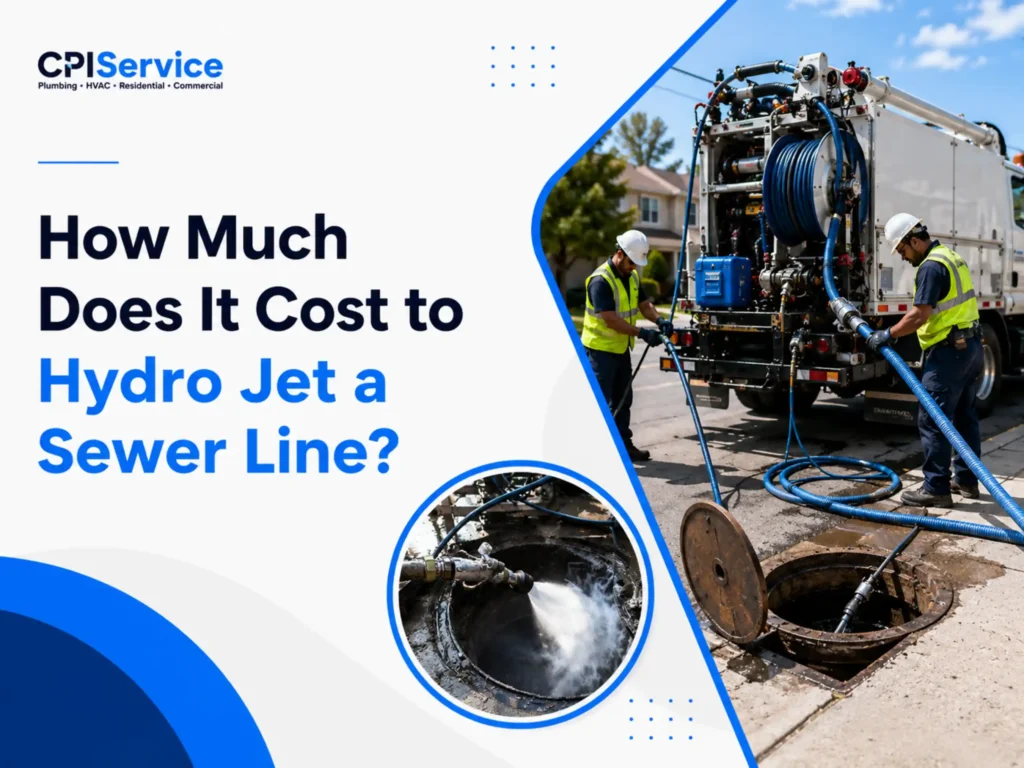
Hydro jetting a sewer line costs $200 to $800 for standard residential services, $600 to $1,000 for full-service cleanings, $250 to $1,400 for more complex jobs, and $500 to $2,500 or more for commercial properties requiring heavy-duty equipment. The final price depends on the section of the plumbing system being cleaned, the sewer line length, the severity of the clog, tree root intrusion, pipe condition, cleanout accessibility, required water pressure, emergency scheduling, and regional labor rates.
Comparing services by scope of work, pipe length, and cleaning thoroughness provides a more accurate measure of value than comparing base service prices alone. Understanding hydro jetting pricing requires looking beyond the initial quote. Service complexity, equipment requirements, accessibility, and labor intensity all affect what property owners pay, and similar jobs can vary in cost depending on the conditions and the provider’s expertise.
What Is the Average Cost to Hydro Jet a Sewer Line?
The average cost to hydro jet a sewer line ranges from $600 to $1,000, with most standard hydro jetting service appointments averaging approximately $475 nationwide. For minor, highly accessible line clearances, the baseline cost can drop to around $200. Conversely, resolving severe obstructions in main sewer lines that require heavy-duty hydro-jetting equipment can increase the total price to $1,200-$2,500 for complex commercial sewer line systems.
Many plumbing companies also quote hydro jetting based on labor time, with hourly rates ranging from $100 to $250 per hour before any emergency or after-hours fees. If immediate hydro jetting service is required at night, on weekends, or on holidays, emergency hydro jetting rates increase by 50% to 150%, depending on the service provider, location, and response time.
How Much Does Hydro Jetting Cost by Sewer Type?
Hydro jetting costs by sewer type range from $250 to $1,200, depending on the section of the plumbing system being cleaned and the scope of the service. Bathroom drains are the least expensive because they involve localized branch lines, while storm sewers and main sewer lines cost more due to their larger pipe diameters and broader cleaning scope. Kitchen drains, secondary drain lines, and septic lines fall within the mid-range, with pricing influenced by line size, accessibility, buildup, and the equipment required to restore full flow.
| Sewer Type | Hydro Jetting Cost |
| Main Sewer Line | $350-$1,100 |
| Drain Line | $300-$700 |
| Kitchen Drain | $300-$800 |
| Bathroom Drain | $250-$550 |
| Septic Line | $350-$900 |
| Storm Sewer | $400-$1,200 |
How Much Does Main Sewer Line Hydro Jetting Cost?
Main sewer line hydro jetting costs $350 to $1,100, with $500 to $800 representing the most common price range for standard residential properties. Property owners can expect this baseline main sewer line price to cover a standard hydro-jetting service targeting the primary subterranean lateral trunk pipe beneath the property that carries aggregate wastewater to the municipal junction. The complete physical scope covered by the main sewer line hydro jetting price includes locating and opening an exterior yard cleanout or a primary basement stack, then running high-volume hoses downstream to flush compacted sediment, scale, and standard soft blockages from 4-inch to 6-inch pipe networks.
How Much Does Drain Line Hydro Jetting Cost?
Secondary drain line hydro jetting costs $300 to $700, making it a highly effective choice for clearing the secondary branch plumbing systems that route wastewater from individual fixtures into the home’s main line. The final price for drain line hydro jetting varies based on clog severity, drain line length, accessibility, and the overall structural condition of the plumbing system. To restore full flow capacity, plumbers run high-pressure water through these 2- to 3-inch pipes by accessing existing cleanout tees, garage floor drains, or utility room pipe junctions. This standard clearing scope focuses solely on restoring internal-diameter capacity and excludes structural pipe repairs or main-lateral diagnostics.
How Much Does Kitchen Drain Hydro Jetting Cost?
Kitchen drain hydro jetting costs $300 to $800, depending on the amount of hardened grease, drain length, accessibility, and whether a sewer camera inspection is needed before cleaning. This targeted hydro jetting service focuses on removing the heavy grease, soap residue, food particles, and organic sludge that naturally coat the interior walls of kitchen plumbing over time. To execute the flush, a plumber will typically remove the 1½- to 2-inch P-trap assembly beneath the sink or utilize a nearby threaded wall cleanout, allowing the specialized nozzle to clean the entire length of the internal kitchen branch drain.
How Much Does Bathroom Drain Hydro Jetting Cost?
Bathroom drain hydro jetting costs $250 to $550 for a standard service, which includes cleaning the bathroom sink, shower, bathtub, or toilet drain lines to remove hair buildup, soap residue, and mineral deposits that restrict water flow. Because the bathroom drain hydro jetting service targets a single bathroom branch drain rather than the entire sewer system, it is one of the more affordable hydro jetting applications. To carry out this hydro jetting service, plumbers access the affected line through the most suitable fixture entry point, such as a shower grate, tub overflow, sink drain assembly, or toilet connection, allowing high-pressure water to clear the blockage while keeping the work localized to the bathroom drainage network.
How Much Does Septic Line Jetting Cost?
Septic line jetting costs $350 to $900, with pricing varying based on the total pipe length, the amount of accumulated sludge or root intrusion, accessibility to the septic line, and any additional effort required to locate buried access points before cleaning begins. This price applies specifically to hydro jetting the building sewer that connects a property’s plumbing system to the septic tank, removing sludge, grease, and other buildup that restrict wastewater flow before it reaches the tank. Service is performed through an exterior cleanout, the building’s sewer exit point, or an accessible septic distribution box, and is limited to the connecting sewer line rather than the septic tank itself.
How Much Does Storm Sewer Hydro Jetting Cost?
Storm sewer hydro jetting costs $400 to $1,200 for residential and commercial drainage systems. Pricing is primarily influenced by the diameter and length of the storm pipes, the volume of accumulated debris, site accessibility, and the equipment required to clean underground drainage infrastructure. The service cleans storm drainage pipes that carry rainwater away from buildings, using heavy-duty hydro-jetting equipment designed for larger pipe diameters. Plumbers access the drainage network through surface catch basins, yard drains, storm grates, or French drain entry points to remove compacted silt, mud, leaves, and other outdoor debris that restrict water flow.
How Much Does Hydro Jetting Cost by Property Type?
Hydro jetting costs by property type range from $200 to $800 for most residential properties and $500 to $2,500 or more for commercial facilities. Residential hydro jetting is generally less expensive because homes have smaller plumbing systems, standard 2- to 6-inch drain lines, and easier access through existing cleanouts. Commercial properties, on the other hand, require higher pricing due to larger 4- to 8+-inch pipe networks, higher daily wastewater usage, specialized access points, and truck-mounted hydro-jetting equipment designed to clean extensive drainage systems.

How Much Does Residential Hydro Jetting Cost?
Residential hydro jetting costs $200 to $800 for a standard service, making it the more affordable option for cleaning household sewer and drain systems. This price applies to single-family homes, townhouses, condominiums, and similar residential properties with smaller plumbing networks and standard 2-inch to 6-inch drain or sewer lines. Most residential hydro jetting services are performed through an existing cleanout or an accessible fixture connection, with the work focused on restoring normal flow in the home’s drainage system.
How Much Does Commercial Hydro Jetting Cost?
Commercial hydro jetting costs $500 to $2,500 or more, reflecting the larger plumbing infrastructure and broader service scope found in commercial properties. The expanded price range for commercial property is due to complex plumbing configurations with heavy-duty pipe sizes ranging from 4 to 8+ inches, intense daily usage levels that lead to massive fat, oil, and grease (FOG) accumulation, specialized access needs like commercial roof vents or deep parking lot manholes, and the industrial truck-mounted equipment required to clean extensive pipe runs.
What Factors Affect the Cost of Hydro Jetting a Sewer Line?
Factors affecting the cost of hydro jetting a sewer line include sewer line length, clog severity, tree root intrusion, pipe condition, availability of cleanouts or access points, required water pressure, emergency service timing, and local labor rates. Each of these factors influences the overall project scope differently, affecting the amount of labor, equipment, and time required to complete the hydro jetting service.

8 major factors affecting the cost of hydro jetting a sewer line are:
- Sewer Line Length
An extended sewer line run adds $100 to $500 to the final sewer line hydro jetting bill because standard service quotes cover only the first 50 to 100 feet of piping. When a lateral line extends beyond this standard length toward a distant municipal main, plumbers must deploy longer specialized high-pressure hoses and spend additional time on-site to clear the line. This increases both equipment wear and total labor hours, which directly increases the hydro jetting cost.
- Clog Severity
The severity of a sewer line clog can raise hydro jetting costs by $100 to $400, depending on whether the blockage involves heavy grease buildup, compacted sludge, or dense debris. These tougher obstructions demand more cleaning time, repeated passes with specialized nozzles, and increased water usage to fully restore proper flow, making the process more labor-intensive and requiring careful attention to ensure the line is completely cleared without causing damage.
- Tree Root Intrusion
Extensive tree root intrusion adds $250 to $800 to the final sewer line hydro jetting service invoice due to the difficulty of clearing woody, fibrous blockages from a drainage system. Standard hydro-jetting nozzles designed for grease and mud cannot cut through thick root systems, forcing the plumber to swap out equipment for mechanical root-cutting saw blades or high-RPM chain-flail heads. Blasting these roots out safely without shifting the underlying pipe takes significant expertise and extended labor.
- Pipe Condition
Aging or fragile pipe conditions inflate hydro jetting sewer line project costs by $150 to $400 because plumber must slow down and lower their operational water pressure to prevent a structural pipe collapse. When dealing with heavily corroded cast iron or old, brittle clay pipes, a plumber cannot simply blast the lines at maximum pressure (4,000+ PSI) without risking catastrophic damage. This forces a much slower, highly calculated cleaning approach that frequently requires intermediate camera checks to safely monitor the line’s integrity.
- Cleanout or Access Point Availability
The absence of an easily accessible cleanout point adds $150 to $350 to the final sewer line hydro-jetting bill because it forces the plumbing crew to create an alternative entry point for their equipment. As the property lacks an outdoor ground-level cleanout tee, the plumber must pull indoor plumbing fixtures like toilets, work from awkward roof vents, or cut directly into basement stacks. The extra time and labor required to prepare these complex access points and reset fixtures afterward significantly increase the price of sewer line hydro jetting.
- Water Pressure Needed
The need for specialized ultra-high-water-pressure configurations can increase sewer line hydro-jetting service prices by $100 to $300 above standard rates. While typical residential soft clogs are resolved at a standard pressure of 1,500 to 3,000 PSI, heavy industrial-scale hardened grease or chemical concrete-like blockages require heavy-duty commercial equipment operating at 4,000+ PSI. Utilizing these high-tier, specialized jetting units increases equipment overhead and fuel consumption, which is reflected in the final bill.
- Emergency Service Timing
An emergency, after-hours dispatch call will add a premium surcharge of 50% to 150% to standard business-hour rates, driving the final emergency hydro jetting cost to anywhere between $300 and $1,500+, depending on the severity of the blockage. Sewer line emergencies requiring hydro jetting that occur overnight, on weekends, or during major national holidays lead plumbers to charge premium overtime or on-call rates, which are passed directly on to the property owner.
- Local Labor Rates
Regional labor rates can increase or decrease the final hydro jetting cost by $100 to $400, depending on local labor costs and operating expenses. For example, hydro jetting services in high-cost metropolitan areas like San Jose, California, often command plumbing labor rates of around $180 per hour, while the same service in smaller Midwestern towns may be billed at $100 to $130 per hour. Local wages, insurance costs, business overhead, and market demand all influence how much plumbing contractors charge for hydro jetting services.
Is Hydro Jetting Worth the Cost?
Yes, hydro jetting is worth the cost when used to remove heavy sludge buildup, recurring tree root intrusions, severe grease blockages, or densely packed debris from a structurally sound sewer line. Unlike conventional drain snaking, which creates a temporary opening in the blockage, hydro jetting uses ultra-high-pressure water to scour the entire interior of the pipe, restoring near-full flow capacity and significantly reducing the likelihood of recurring clogs.
Over the long term, hydro jetting can save property owners $1,000 to $10,000 or more in cumulative maintenance and repair costs. By reducing the need for frequent emergency drain cleaning and removing buildup before it causes extensive damage, hydro jetting helps preserve pipe integrity, lowers the risk of premature sewer line failure, and may help avoid major sewer line replacement projects that can exceed $15,000.
Can Hydro Jetting Damage Sewer Pipes?
Yes, hydro jetting can damage sewer pipes if the pipe is already weak, cracked, collapsed, heavily corroded, or not inspected before service. Because hydro jetting machinery operates at extreme commercial pressures ranging from 1,500 to over 4,000 PSI, blasting water through a compromised structural system can easily fracture fragile clay, break apart crumbling orangeburg, or split heavily rusted cast iron lines.
Implementing a diagnostic plumbing sewer camera inspection before initiating service is absolutely mandatory to confirm whether the pipe material can safely handle the intense hydrodynamic pressure. A pre-jetting video scan from licensed plumbers can accurately identify hidden structural vulnerabilities, mapping out existing bellies, stress fractures, or joint separations that would otherwise cause an immediate pipe rupture or complete line blowout when subjected to high-pressure cleaning streams without proper calibration.
What Is Included in a Hydro Jetting Service Quote?
A hydro jetting service quote includes an initial camera inspection, equipment and nozzle selection, labor, debris and root removal, post-jetting camera verification, and warranty coverage. These components outline the typical scope of work for the service, although the exact details may vary depending on the plumbing company or the written estimate.

Below are the factors included in a hydro jetting service quote:
- Initial Camera Inspection: Assesses the interior condition of the sewer line prior to hydro-jetting. It helps identify the location of the blockage, the pipe condition, and any structural issues that could affect the cleaning process. Some plumbing companies include this inspection as part of the quoted service, while others list it separately.
- Equipment and Nozzle Selection: Hydro jetting equipment and nozzle selection are matched to the pipe size, drain configuration, and type of blockage being removed. Different nozzles are designed to cut roots, remove grease, or flush debris efficiently. The equipment included may vary depending on the plumber’s available hydro jetting system and service scope.
- Labor: Covers the time required to inspect the sewer line, set up the hydro jetting equipment, perform the cleaning, and verify that the system is flowing properly. The amount of labor included depends on the scope outlined in the written estimate and the plumber’s service procedures.
- Debris and Root Removal: Includes clearing grease, sludge, mineral deposits, organic buildup, and tree root intrusions from the sewer line using high-pressure water. The scope of cleaning may vary depending on whether the estimate covers routine maintenance or a complete sewer line restoration.
- Post-Jetting Camera Verification: Confirms that the blockage has been removed and that wastewater can flow freely through the cleaned sewer line. Some plumbing companies include this verification as part of the standard service, while others offer it as an optional inspection.
- Warranty Coverage: Outlines any workmanship guarantee provided after the hydro jetting service has been completed. Coverage periods and warranty terms differ between plumbing companies and should be clearly stated in the written estimate before the work begins.
What Should You Look for in a Hydro Jetting Plumber?
Factors to look for when choosing a hydro jetting plumber include proper licensing, sewer camera equipment, hydro jetting experience, upfront pricing, emergency availability, local service coverage, and the ability to provide both residential and commercial services. Evaluating these qualifications beforehand helps ensure homeowners hire a certified, experienced hydro jetting plumber in San Jose who can inspect, clean, and restore sewer lines safely while providing transparent pricing and professional workmanship.
The following are the key components you should look for in a hydro jetting plumber:
- Licensed Plumbers: A qualified hydro jetting plumber must hold active state-approved credentials, liability insurance, and formal bonding to protect your property from high-pressure pipe ruptures. You should proactively request the plumbing company’s license number and verify its active status on the state contractor board’s website before scheduling work.
- Sewer Camera Equipment: You should prioritize plumbers equipped with high-resolution, inline video inspection probes to avoid jetting a structurally weak or collapsed pipe segment blind. Always verify that a diagnostic camera scan is a mandatory part of the plumber’s pre-jetting safety checklist before any cleaning begins.
- Hydro Jetting Experience: Hydro jetting experience enables plumbers to select the appropriate water pressure, nozzle configuration, and cleaning method for different sewer systems. Before scheduling the service, ask how often the plumber performs hydro jetting and whether they have experience with your type of plumbing system.
- Upfront Pricing: Look for a plumbing company that offers transparent, flat-rate, or clearly capped itemized pricing in a binding written estimate to eliminate hidden hourly fees or unexpected diagnostic add-on costs. Ensure the quote explicitly details the cost of diagnostic camera work, equipment setup, maximum footage covered, and debris disposal fees.
- Emergency Availability: A reliable plumber should maintain a dedicated, 24/7 rapid-response dispatch infrastructure to address hazardous sewage backups immediately and prevent catastrophic property damage. When interviewing a plumber, verify their exact after-hours response times, weekend crew availability, and any specific holiday surcharges.
- Local Service Area: You should prioritize hiring a plumbing contractor with a physical storefront in their immediate municipality to ensure faster arrival times and expertise in regional sewer layouts. Verify their physical address via Google Maps to ensure they are a legitimate local business rather than an unvetted national digital broker.
- Residential and Commercial Service: The ideal plumbing firm should be fully equipped with both lightweight, portable jetting units and heavy-duty, truck-mounted industrial jetting systems, allowing them to scale their machinery to your specific system requirements. Verify the plumbing company’s service-vehicle capabilities up front to ensure they own commercial-grade rigs rather than small retail-tier drain snakes.

