
What Is a Sewer Scope Inspection and Why Do You Need One?
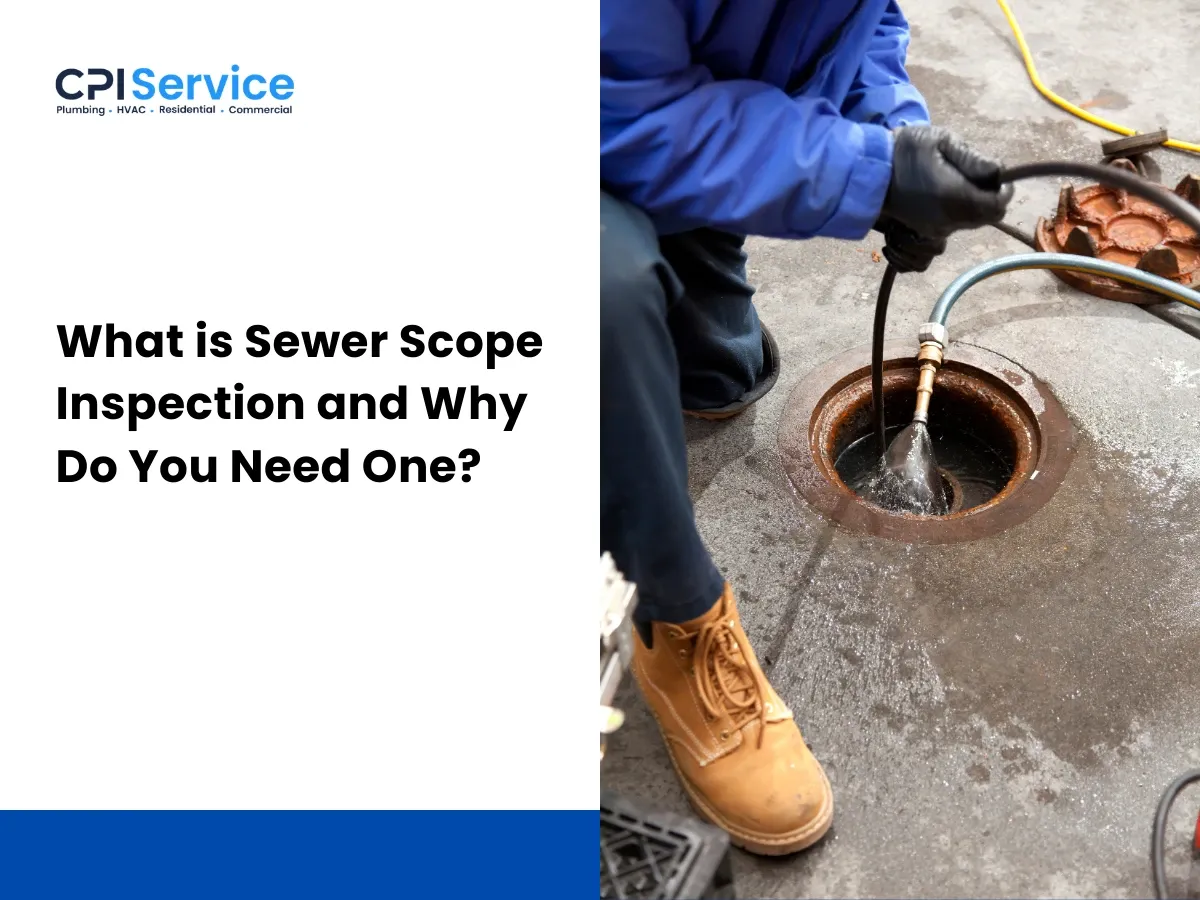
Table of Contents
- Benefits of Sewer Scope Inspections
- Common Problems Detected During Sewer Scope Inspection
- Signs You Need a Sewer Scope Inspection
- When to Schedule a Sewer Scope
- Tools Used During Sewer Scope Inspections
- What Does the Sewer Scope Inspection Process Consist Of?
- Types of Sewer Scope Inspections
- Common Challenges in Sewer Scope Inspections
- What Is the Average Cost of a Sewer Scope Inspection?
- Regulations for Sewer Scope Inspections
- Sewer Scopes in San Jose
- Frequently Asked Questions
A sewer scope inspection is a video inspection of your sewer line: a plumber feeds a waterproof camera on a flexible cable through the cleanout and watches the pipe as it travels toward the city main. For San Jose and South Bay homes, it shows roots, cracks, sags, offsets and buildup without digging.
For homeowners and buyers, especially in neighborhoods built in the 1950s to 1970s with clay or cast-iron laterals under mature trees, it’s the only way to know the condition of a line you can’t see.
The camera records as it goes, so the plumber can point out each problem, mark its location and depth from the surface, and recommend the right fix: routine cleaning, a targeted repair, or replacement. Whether you’re buying a home, maintaining an older one, or dealing with clogs that keep coming back, a scope catches problems while they’re still small and saves you from guessing.
This guide explains what a sewer scope is and when you need one. For San Jose prices and what affects them, see sewer line inspection cost.
Benefits of Sewer Scope Inspections
A sewer scope finds problems before they turn into backups, emergency calls or a full replacement:
- Prevent expensive sewer line repairs. Roots, cracks and blockages found early can often be cleaned or spot-repaired instead of waiting for the line to fail and need replacing.
- Find leaking pipe before it does damage. The camera shows cracks, broken pipe and separated joints where sewage seeps into the soil. (It finds leaks in the sewer line, not in your water supply pipes; see sewer line vs. water line.)
- Reduce health risks. Catching damage before it causes a backup avoids sewage in the house or yard and the contamination that comes with it.
- Know the condition before you buy. For a buyer, a scope shows roots, damage or worn-out pipe that would otherwise be a costly surprise after closing.
- Protect the property. A sound sewer line keeps leaking sewage from washing out soil near the foundation, and a clean scope report is useful when you sell.
Common Problems Detected During Sewer Scope Inspection
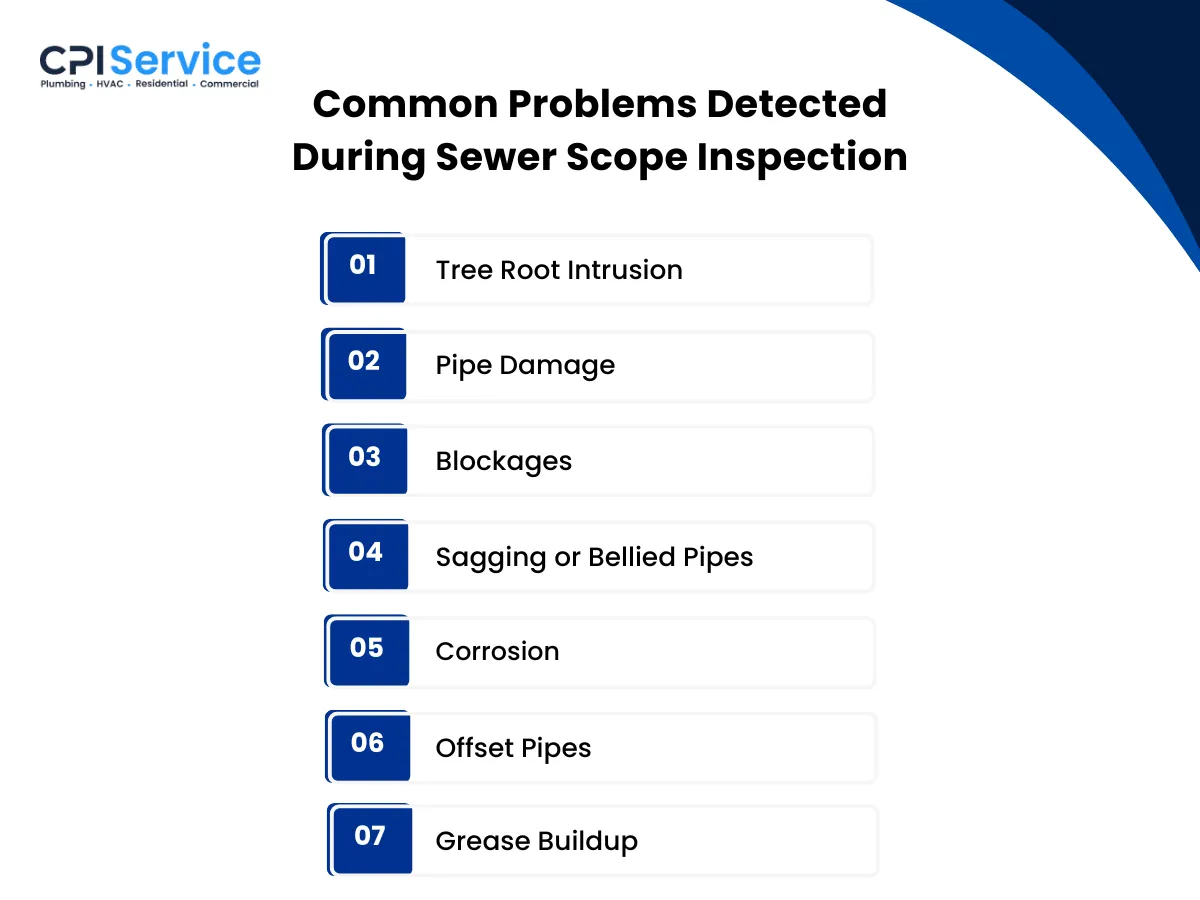
These are the issues a camera finds most often, and what causes them:
- Tree roots. Roots grow in through joints and cracks, looking for water, and then catch paper and waste. It’s the most common problem in older South Bay laterals. Early removal keeps them from cracking the pipe; see how to get rid of roots in a sewer line.
- Pipe damage. Cracks, breaks and collapsed sections in clay, cast iron or Orangeburg pipe, from age, ground movement or poor installation.
- Blockages. Debris, grease, wipes, hair and other material that partly or fully blocks the line, causing slow drains, odors and backups.
- Sags (bellies). Low spots where the pipe has settled. Water and waste collect there, which leads to repeated clogs.
- Corrosion and scale. Cast iron rusts from the inside, narrowing the pipe and eventually opening holes.
- Offset or separated joints. Shifting soil pushes pipe sections out of line. The lip catches debris and lets water and roots in.
- Grease buildup. Cooking fats harden on the pipe walls and narrow the line until it clogs.
Signs You Need a Sewer Scope Inspection
If several drains back up, you smell sewage, or the yard over the line sinks or stays soggy, the main line is the likely cause. A sewer line professional with a camera can find out where and why:
- Backups in more than one drain. Water coming up in a tub or shower when you flush, or several fixtures backing up at once, points to the main line rather than a single drain.
- Gurgling toilets or drains. Air pushed through the trap as water struggles past a partial blockage.
- Sewage odors inside or outside. A crack, broken joint or blockage can let sewer gas out; the scope shows which.
- Lush or soggy patches in the yard. A leaking line can water and feed the grass above it.
- Slow drains throughout the house. A partial blockage or damaged section in the main line slows everything downstream of it.
- Sinkholes or depressions in the yard. Soil washing into a broken or collapsed pipe can leave a dip over the line.
- Rodents or insects. Rats and insects can travel through broken sewer pipe. Less common, but a scope shows whether the line has an opening.
- Foundation cracks or settling. Rarely, a long-running leak under or beside the house washes out supporting soil. Many foundation cracks have other causes; a camera can rule the sewer line in or out.
- Repeated main line clogs. If the line needs clearing again and again, something in the pipe is catching debris.
When to Schedule a Sewer Scope
- Before buying a home, especially an older one or one with big trees out front
- When you have symptoms like the ones above
- Before and after cleaning or hydro jetting, to see the problem and confirm the line is clear (hydro jetting cost)
- Before a remodel that adds fixtures to an old line
- Every few years for older laterals with a history of roots
Is It Worth Getting a Sewer Scope for a New Home?
Usually, yes. A newly built home can still have a sewer line that was installed poorly, with the wrong slope or a bad joint, or one damaged during construction or later work, and construction debris sometimes ends up in the line. A scope finds these problems early, before they turn into backups. It matters even more for homes more than about 30 years old or with large trees near the line.
Tools Used During Sewer Scope Inspections
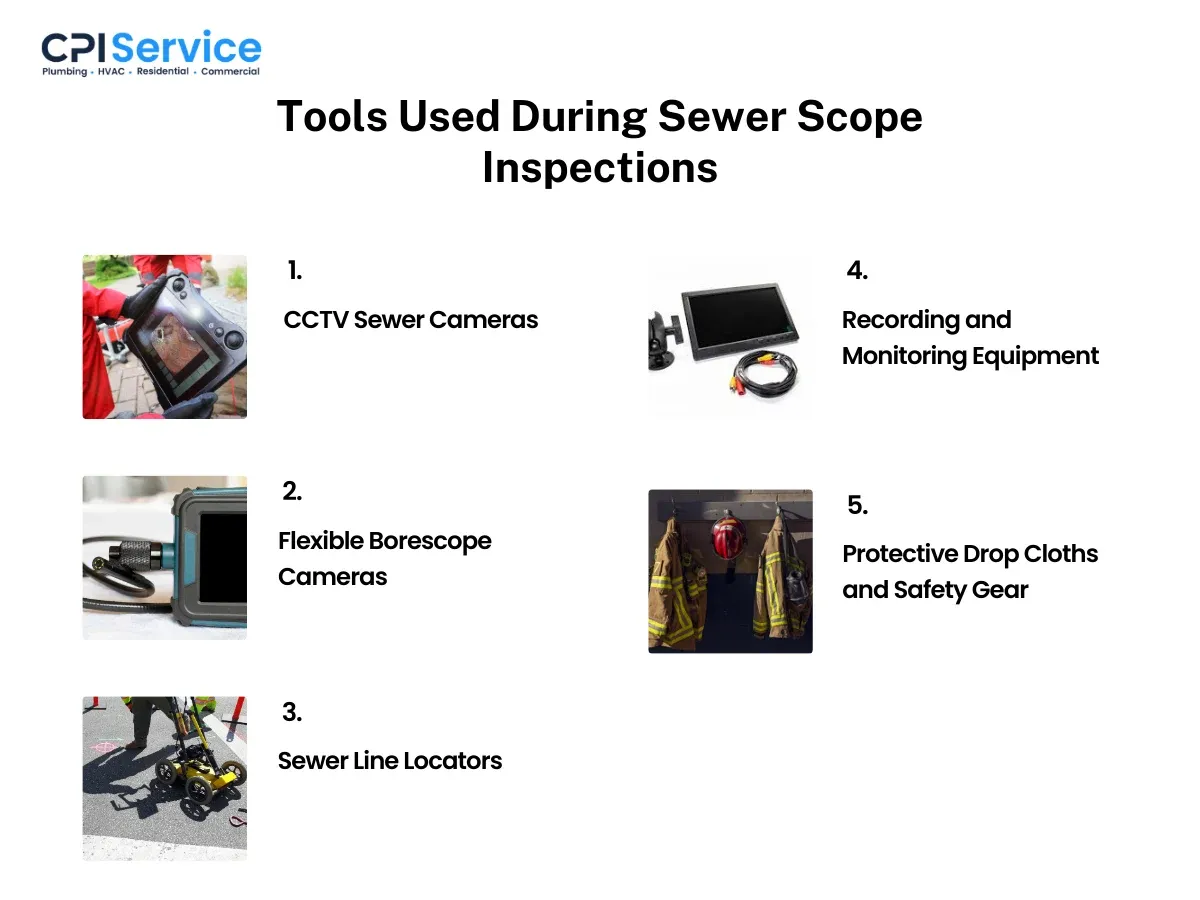
- Sewer camera (CCTV). A waterproof, lighted camera head on a stiff but flexible push cable, sending live video to a monitor. It’s the main tool for laterals and building sewers.
- Small-diameter (borescope) cameras. Smaller heads on thinner cables for branch drains and tight bends that a main line camera can’t pass.
- Sewer line locator. A small radio transmitter (sonde) in the camera head sends a signal that a receiver above ground picks up, showing exactly where the camera is and how deep. It marks problems on the surface so repairs open only the right spot.
- Recording and monitoring equipment. Records the footage, often with the distance from the cleanout shown on screen, so problems can be reviewed and located later.
- Drop cloths and safety gear. Gloves and eye protection for working with sewage, and drop cloths to keep the work area clean.
What Does the Sewer Scope Inspection Process Consist Of?
- Find the access and trace the line. The plumber locates the cleanout (or uses a toilet or roof vent if there isn’t one) and notes where the line runs.
- Set up and test the camera. Lighting, picture and the locator signal are checked so the footage is clear.
- Run the camera. The camera is pushed down the line toward the main while the plumber watches, slowing at joints, bends and transitions where problems usually are.
- Document and locate defects. Roots, cracks, offsets, sags and corrosion are noted with their distance from the cleanout, and the locator marks their position and depth from above.
- Review and recommend. You see the footage and get an explanation of what it shows, then a recommendation: nothing, cleaning, a spot repair or replacement. Ask whether a copy of the recording is included.
Types of Sewer Scope Inspections
Most residential sewer scopes are camera inspections. The terms below are often used as if they were different services; this is how they actually differ.
CCTV Inspections
“CCTV” (closed-circuit television) is the industry term for a sewer camera inspection: a camera on a cable sends live video to a monitor, and the run is recorded. For a home’s lateral, the camera is pushed by hand on its cable. Large municipal mains are usually inspected with crawler cameras, small self-driven vehicles that carry the camera through the pipe.
Camera Inspections
A “camera inspection” or “video inspection” is the same method under another name, not a less detailed version. What changes from job to job is the equipment: main line push cameras for laterals, smaller cameras for branch drains, and self-leveling heads that keep the picture upright. See CPI’s sewer video inspection.
Visual Inspections (Traditional)
Before cameras, a plumber could only look at what was exposed: cleanouts, pipe in a crawl space or basement, and the ground over the line, sometimes with a mirror and light at an open cleanout. A general home inspector’s look at the drains is a visual inspection of this kind. It can spot obvious damage and leaks at accessible points, but it can’t see inside a buried line.
Sewer Line Locating
Locating maps where the line runs and how deep it is. The locator picks up the camera’s transmitter, or a transmitter pushed down the line on its own, and the route is marked on the ground. It’s essential before any repair, so the right spot is opened and other utilities are avoided.
Smoke Testing
Where sewer odors come and go or a camera can’t explain a problem, smoke testing helps: harmless smoke is blown into the drain and vent system, and wherever it escapes shows a cracked pipe, a dry trap or a bad vent connection. CPI offers smoke testing along with camera inspections.
Common Challenges in Sewer Scope Inspections
A camera inspection is reliable, but it has limits:
- Reach and bends. Every camera has a maximum cable length and can stall at sharp bends or tight fittings, so very long lines may need a second access point.
- Obstructions. Heavy roots, debris or a full blockage can stop the camera. The line may need clearing first (drain cleaning or hydro jetting) and a second look afterward.
- Hidden defects. The camera can’t see through standing water in a deep sag or under heavy buildup, and it can’t see the outside of the pipe.
- Access. Without a cleanout, the camera may have to go in through a toilet or roof vent, which limits what it can reach. Lines deep under slabs or structures can be harder to locate from above.
What Is the Average Cost of a Sewer Scope Inspection?
In San Jose, a sewer scope typically costs $300 to $600. The price depends on access (an outdoor cleanout versus going through a toilet or vent), the length of the line, whether it has to be cleared before the camera can pass, and whether you need locating and a written report. A scope can also be added to a full plumbing inspection.
| Service | Typical San Jose cost |
|---|---|
| Sewer camera inspection | $300 to $600 |
| Plumbing inspection with sewer camera | $450 to $900 |
| Drain cleaning (snaking), if the line is blocked | $250 to $600 |
| Hydro jetting the main sewer line | $1,500 to $2,500 |
Ask for a clear quote before scheduling. CPI currently offers a free sewer line inspection for homes with an accessible mainline cleanout. Either way, a scope costs far less than the repairs it can help you avoid. See sewer line inspection cost for more on pricing.
Regulations for Sewer Scope Inspections
California has no statewide rule that requires a sewer scope when a home is sold. Requirements, where they exist, are local, and they vary:
- East Bay point-of-sale program. EBMUD’s Regional Private Sewer Lateral program requires a compliance certificate showing the lateral is leak-free to close escrow on a sale, for large remodels, and when the water meter size changes, in the cities it covers. A camera scope alone doesn’t earn the certificate: the lateral has to pass a leak test that EBMUD verifies.
- San Jose and the South Bay. We don’t know of a South Bay city that requires a lateral inspection at sale, but rules change, so check with your city before listing. Even where it isn’t required, many buyers ask for a scope.
- Repairs need permits. If a scope leads to a repair, the work is permitted and inspected. In San Jose, repairing or replacing a building sewer requires a plumbing permit, and a repair at the property line requires a property line cleanout (City sewer permit page).
Sewer Scopes in San Jose
- Street trees and older laterals. Roots in clay and cast-iron laterals are the most common finding in 1950s to 1970s neighborhoods.
- Home purchases. General home inspections usually don’t include a scope; ask for one before closing.
- Cleanouts. Many older homes have no outdoor cleanout; adding one makes every future inspection and cleaning easier. With an approved property line cleanout, the City of San Jose maintains the lower lateral, from the cleanout to the main, as a courtesy.
CPI Service performs sewer camera inspections throughout San Jose and the South Bay. See sewer video inspection, request a free estimate or call (408) 978-3093.
Frequently Asked Questions
Is a sewer scope part of a home inspection?
Usually not. Most general home inspections only run water through the drains. A sewer scope is a separate inspection that needs a sewer camera and someone trained to read the footage, often a plumber, and it's worth adding for older homes.
When should you get a sewer scope inspection?
Before buying a home, when you notice symptoms such as several slow drains, gurgling, sewage odors or repeated main line clogs, before and after cleaning a line with roots, before a remodel that adds fixtures, and every few years for an older lateral with a history of roots.
Is a sewer scope worth it for a newer home?
It's less critical, but construction debris, poor slope or damage from later work can still show up. For homes more than about 30 years old or with large trees nearby, it's strongly recommended.
How much does a sewer scope cost?
In San Jose, typically $300 to $600. See our sewer inspection cost guide for what affects the price.
Do any Bay Area cities require a lateral inspection when selling?
Some do. In the South Bay, Morgan Hill requires a camera inspection of the sewer lateral before a home more than 15 years old is sold (see sewer lateral rules by city). In the East Bay, EBMUD's Regional Private Sewer Lateral program requires a compliance certificate showing the lateral is leak-free to close escrow. There's no statewide California rule, and rules vary by city, so check with yours before listing.
Had the plumber Daniel come to my condo today for a clogged toilet. He spent almost two hours snaking with a camera my drain and pulled out a huge clog of tree roots. He knew exactly what he was doing and did a wonderful job. I would recommend this company very much.
Ron K., Google review
Read more reviews →Serving San Jose and the South Bay
CPI Service is based at 2880 Aiello Dr in San Jose and serves homes and businesses across the South Bay and the Peninsula. See all the areas we serve.