
Difference Between a Sewer Line and a Water Line
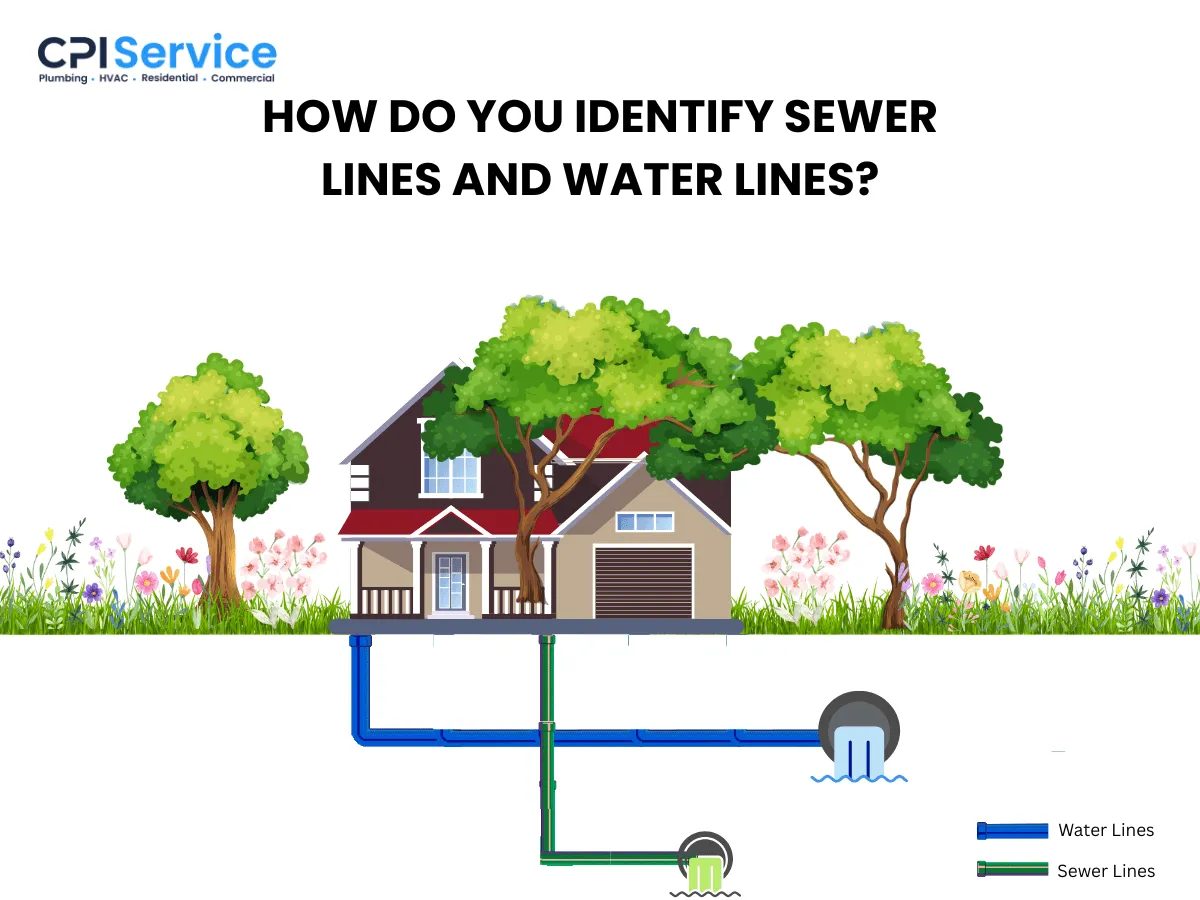
Table of Contents
In a San Jose home, the water line and the sewer line both run to the street, but they do opposite jobs. The water line (water service line) brings clean water from the meter into your home under pressure. The sewer line (sewer lateral) carries wastewater out of the house to the city sewer main by gravity.
Knowing the difference helps you spot problems early and tell a plumber what you’re seeing. In San Jose and the South Bay, many 1950s to 1970s homes still have their original galvanized water lines and clay or cast-iron sewer laterals, and both are reaching the end of their life.
Because one line is pressurized and the other isn’t, they’re built differently: water lines are smaller pipes of copper, PEX or PVC, while sewer lines are larger pipes of PVC, ABS, cast iron or clay, laid on a steady downhill slope. They also fail differently, which is why the warning signs, inspections and repairs are different too.
Water Line vs. Sewer Line at a Glance
| Water line | Sewer line | |
|---|---|---|
| Job | Brings clean water in | Carries wastewater out |
| How it moves water | Under pressure (typically 40 to 80 psi) | By gravity; must slope downhill |
| Pipe size | Usually 3/4 to 1 inch | Usually 4 inches (3 to 6 inches) |
| Common materials | Copper, PEX, PVC; older homes galvanized steel | PVC or ABS; older homes clay or cast iron |
| Depth | Shallower | Usually deeper, set by the slope to the main |
| Installation | Simpler connections, less digging | Precise slope, deeper digging |
| Relative repair cost | Generally lower | Generally higher |
| Typical problems | Leaks, corrosion, low pressure | Clogs, roots, cracks, sags |
| How it’s inspected | Pressure test, meter test, leak detection | Sewer camera inspection |
| Health risk if it fails | Contaminated drinking water, water damage | Sewage backups and exposure |
What Is a Water Line?
A water line is the pressurized pipe that brings drinking water to your home from the public water system (or a private well). The water service line runs from the meter, often in a box near the sidewalk, to the house, where it reaches the main shutoff valve. From there, smaller branch lines carry water to sinks, toilets, showers and appliances.
Water lines are made of copper, PEX or PVC; older homes often have galvanized steel. Copper lasts a long time, PEX is flexible and resists freezing, and PVC is affordable for cold-water service lines. Service lines are usually 3/4 to 1 inch in diameter, depending on how much water the home uses; branch lines inside are often 1/2 inch.
Because the line is pressurized, even a small break leaks all the time. Common problems are leaks, corrosion (especially in galvanized pipe), mineral buildup that lowers pressure, and, in cold snaps, frozen exposed pipe. Good installation, protecting exposed pipe and regular checks keep a water line reliable.
Benefits of a Water Line
A sound water line does more than fill the tap:
- Reliable supply. Steady pressure at every fixture, from the kitchen sink to the shower, even when several are running.
- Health and hygiene. Clean water for drinking, cooking, bathing and handwashing protects against waterborne illness.
- Efficient delivery. The right pressure lets dishwashers, washing machines and showers work as designed without wasting water.
- Lower bills. A tight, well-installed line doesn’t lose water to hidden leaks.
- Fire protection. The public water system also supplies hydrants and, in homes that have them, fire sprinklers.
Signs of Water Line Problems
Most water line problems show up as one of these:
- A drop in water pressure throughout the house. A leak, a corroded or blocked pipe, or a failing valve can all cut flow. If it’s sudden, have it checked soon.
- A higher water bill you can’t explain. A hidden service line leak can waste a lot of water unnoticed. Compare recent bills with the same months last year, then check the meter: if it moves with all water off, there’s a leak.
- Wet spots or pooling water in the yard. A soggy or unusually green patch with no rain or irrigation often sits over a leaking service line.
- Discolored or cloudy water. Brief discoloration can follow work on the water main, but rusty water that persists usually means corroded galvanized pipe.
- Unusual sounds in the pipes. Hissing or running water with everything off suggests a leak; banging (water hammer) points to pressure problems.
Preventing Water Line Problems
A little attention prevents most water line failures:
- Schedule periodic plumbing inspections. A plumber can spot leaks, corrosion and pressure problems before they cause damage.
- Keep pressure in range. Household pressure should stay under 80 psi; above that, the plumbing code calls for a pressure regulator, which protects pipes, fixtures and appliances.
- Replace failing pipe with durable material. When an old galvanized or leaking service line is replaced, copper, PEX or PVC lasts far longer.
- Plant trees away from the line. Roots rarely break a sound pressurized pipe, but they seek out leaking joints and can widen them.
- Fix small leaks promptly. A small leak wastes water, raises the bill and can undermine soil or a slab.
- Know where your main shutoff is and make sure it turns, and do a two-hour meter test once in a while to catch hidden leaks.
Fixes: a leak can often be repaired in place; an old galvanized or leaking service line is usually replaced, sometimes by trenchless methods. See leak detection cost, how to detect water leaks and water line replacement.
What Is a Sewer Line?
A sewer line is the underground pipe that carries wastewater from your sinks, toilets, tubs and appliances to the city sewer main (or, in some rural areas, a septic system). Its job is to remove waste safely and keep sewage away from people and drinking water.
The system has several parts: the drain pipes inside the house, traps under each fixture that hold water to block sewer gas, vents that let air in so drains flow, the sewer lateral that runs to the main, and cleanouts that give access for clearing clogs. In San Jose, the owner is responsible for the lateral to the main; once an approved wye cleanout is installed at the property line, City crews repair the section from the cleanout to the main. See what a sewer system is for the bigger picture.
Sewer lines are PVC or ABS in newer homes and clay or cast iron in older ones. PVC is light and doesn’t corrode; cast iron is strong but rusts from the inside over decades; clay joints let roots in. The line isn’t pressurized, so it depends on a steady slope. Common problems are clogs, root intrusion, sags (bellies) where waste settles, cracks and collapse. Regular cleaning, careful disposal habits and, where needed, a backwater valve keep it working.
Benefits of a Sewer Line
A working sewer line protects your home and the community:
- Sanitation. Wastewater leaves the house quickly instead of collecting in pipes or the yard, so there’s no standing sewage or odor.
- Public health. Bacteria, viruses and parasites in sewage stay contained, away from people and the water supply.
- Reliable disposal. Wastewater reaches the treatment plant without backups or overflows. In San Jose it’s treated at the regional plant before release.
- Environmental protection. A sound line keeps untreated sewage out of soil, creeks and the Bay.
Signs of Sewer Line Problems
Sewer problems usually affect more than one fixture, because the main line serves the whole house. If you notice these, schedule a sewer line inspection:
- Several drains backing up at once. That points to a blockage in the main sewer line from roots, grease or a foreign object. Stop using water and call; it can back up into the house.
- Gurgling drains or toilets. Air pushed through a partial blockage makes drains gurgle, often when another fixture drains. Water backing up into a tub or shower when you flush is a related sign.
- Sewage odors inside or outside. A crack, a leak or a dry trap lets sewer gas escape. Persistent odor needs prompt repair.
- Slow drains across several fixtures. Sinks, showers and toilets all draining slowly suggests a partial main line blockage from grease, roots or debris, among the leading causes of sewer backup.
- Wet patches, lush grass or sinkholes in the yard. Wastewater escaping from a broken or collapsed lateral saturates the soil and can wash it out.
Preventing Sewer Line Problems
Most sewer problems can be prevented or caught early:
- Keep the wrong things out. No grease, wipes (even “flushable”), hygiene products or paper towels; they don’t break down and cause backups. See clogged drain causes and prevention.
- Protect the line from roots. Avoid planting trees over the lateral; a root barrier along its path helps. Roots already inside need professional root removal.
- Schedule periodic cleaning. Where roots or grease keep coming back, maintenance cleaning or hydro jetting on a schedule your plumber recommends keeps the line clear.
- Watch for slow drains. A slow drain in several fixtures is an early warning; dealing with it then prevents a full backup.
- Consider a backwater valve. It lets wastewater out but closes if the city sewer backs up toward your home. It’s most useful where fixtures sit below the next upstream manhole cover, which the plumbing code addresses; a plumber can tell you if your home needs one.
- Camera-inspect an older line, especially clay or cast iron with trees nearby, before it fails.
Fixes: drain cleaning or hydro jetting for clogs and roots, spot repairs for a single break, and sewer line replacement, often trenchless, for a failing lateral. A sewer camera inspection shows which one you need. See sewer line repair methods.
What’s the Difference Between Sewer Lines and Water Lines?
The main difference is direction and force: water lines bring clean water in under pressure, and sewer lines carry wastewater out by gravity. That one difference shapes their purpose, cost, materials, depth, inspections and the health risks when they fail.
Purpose and Functionality
The water line delivers clean water from the public system or a well for drinking, cooking, bathing and cleaning. The sewer line removes the used water and waste to the city sewer or a septic system. One keeps the house supplied; the other keeps it sanitary.
Cost Factor
Water line work is generally less expensive than sewer work: the pipe is smaller and shallower, connections are simpler and there’s less digging. Sewer lines need deeper excavation, a precise slope and heavier pipe, so repairs and replacement cost more. Typical San Jose prices for CPI’s work:
| Water line | Sewer line | |
|---|---|---|
| Finding the problem | Leak detection: $150–$1,500 (most accessible leaks $150–$600) | Sewer camera inspection: $300–$600 |
| Clearing a blockage | Not usually needed | Drain cleaning (snaking): $250–$600; hydro jetting the main line: $1,500–$2,500 |
| Repair | A leak can often be repaired in place; quoted after inspection | Spot repair: $2,000–$5,000 |
| Replacement | Quoted after inspection | Sewer lateral replacement: typically $6,000–$15,000; long, deep or street work $15,000–$20,000+ |
| Installation complexity | Simpler connections, less digging | Precise slope, deeper digging |
Every job is quoted as a fixed price after an on-site look. See sewer line replacement cost for what moves a sewer price up or down.
Flow Direction
Water flows into the house through the water line, pushed by the pressure in the public system. Wastewater flows out through the sewer line, pulled by gravity. That’s why the sewer line has to slope continuously downhill from the house to the main, and why it’s usually deeper.
Materials
Water lines use materials safe for drinking water: copper, PEX and PVC (older homes have galvanized steel). Sewer lines use larger, rigid pipe made to carry solids and resist the corrosive gases in sewage: PVC and ABS today, cast iron and clay in older homes. Each material affects how long the line lasts and how it fails.
Location in the Ground
Water service lines are buried deep enough to protect them from damage and, in cold climates, below the frost line; frost is rarely a concern in San Jose. Sewer depth is set by the slope needed to reach the main: shallow near the house and often several feet deep at the street, deeper where the city main is deep. Exact depths vary by property, so a plumber locates the lines before anyone digs.
Pressure vs. Gravity
A water line works under pressure, typically 40 to 80 psi in a home; above 80 psi the plumbing code calls for a pressure regulator. A sewer line has no pressure at all: it relies on a steady slope to carry waste. That’s why a water leak sprays or seeps constantly, while a sewer problem shows up as slow drains and backups.
Installation and Repair
Water lines are generally simpler to install and repair: they’re shallower, have simple connections and need less excavation. Sewer lines must be laid on an exact slope with durable pipe, and sewer line repair usually means excavation or trenchless methods such as lining or pipe bursting.
Inspection Methods
Water lines are checked with pressure tests, meter tests, acoustic leak detection equipment and thermal imaging, which find leaks without digging. Sewer lines are inspected from the inside with a sewer camera that shows clogs, cracks, sags and roots, and a locator that marks where the line runs.
Health Hazards
A leaking water line can let soil, bacteria or other contaminants into the drinking water, a long-term risk if it goes unnoticed. A broken or blocked sewer line exposes people to raw sewage and its pathogens right away, through backups indoors or seepage in the yard. Both need prompt repair, but a sewage backup is the more urgent hazard.
How Do You Identify Sewer Lines and Water Lines?
Before you dig: call 811 at least two working days ahead to have public utilities marked. The utilities don't mark your private water and sewer lines, so a plumber can locate those.
When utility lines are marked before digging, the paint and flags follow the uniform color code: blue for potable water and green for sewers and drain lines (USA North 811). The pipes themselves aren’t color-coded. Water lines are smaller, usually 3/4 to 1 inch, while sewer lines are larger, typically 3 to 6 inches.
| Water line | Sewer line | |
|---|---|---|
| Locate-mark color | Blue (potable water) | Green (sewers and drain lines) |
| Pipe size | Smaller, usually 3/4 to 1 inch | Larger, usually 3 to 6 inches |
| Material | Copper, PEX, PVC; older homes galvanized | PVC, ABS; older homes cast iron or clay |
| Where it meets the house | Enters at the main shutoff valve, often at the front or side near a hose bib | Leaves through the main drain and cleanout, often at the front, side or back |
| Inspection | Pressure tests, leak detection tools | Sewer camera, pipe locator |
- Water line: follow the line from the meter box to where it enters the house, usually at a hose bib or the main shutoff.
- Sewer line: look for the cleanout, a capped pipe (often 3 or 4 inches) near the foundation or in the front yard.
Sewer and Water Lines in San Jose Homes
- Galvanized water lines. Many older South Bay homes still have galvanized service lines that corrode from the inside, causing low pressure and leaks.
- Clay and cast-iron laterals. Older sewer laterals crack and let roots in from mature street trees.
- Slab homes. In slab-on-grade homes, a supply leak under the floor can show up as warm spots or the sound of running water; see slab leak signs.
- City sewer problems. In San Jose, report sewer spills and main line problems to the City at (408) 794-1900 (24/7).
CPI Service repairs and replaces water and sewer lines throughout San Jose and the South Bay. Request a free estimate or call (408) 978-3093.
Frequently Asked Questions
Who is responsible for the water line and the sewer line?
Generally, the water company owns the line up to the meter and the homeowner owns the service line from the meter to the house. In San Jose, the property owner is responsible for the sewer lateral from the house to the City main. Once an approved wye cleanout is installed at the property line, City crews repair the section between that cleanout and the main. Other South Bay cities set their own rules.
Which is deeper, the water line or the sewer line?
Usually the sewer line. It must slope continuously downhill to the main, so it often runs deeper than the water line, which only needs to be buried below the minimum depth for protection.
How do I know which line has a problem?
Water line problems show up as low pressure, a meter that moves with all water off, wet spots in the yard or rusty water. Sewer problems show up as several slow drains, gurgling, sewage odors, or water backing up into a tub or shower.
What color marks water and sewer lines?
When utilities are marked before digging, blue paint or flags mark potable water and green marks sewers and drain lines. The pipes themselves aren't color-coded, and private lines on your property usually aren't marked, so a plumber locates them.
Is it cheaper to repair a water line or a sewer line?
Usually the water line. It's smaller, shallower and has simpler connections. Sewer lines are deeper, must keep a precise slope and use heavier pipe, so repairs cost more. In San Jose, a sewer spot repair typically runs $2,000 to $5,000 and a lateral replacement $6,000 to $15,000.
Do I need a backwater valve?
It depends on your home. A backwater valve lets wastewater out but closes if the city sewer backs up toward the house. It matters most where fixtures sit below the next upstream manhole cover; a plumber can tell you if your home needs one.
We had a water service line leak. Danny the technician arrived on time and explained everything to us clearly. He is nice, knowledgeable and professional. He finished the job by himself perfectly and the area was left clean. We would definitely request this technician again when we contact CPI Service in the future.
Thu L., Google review
Read more reviews →Serving San Jose and the South Bay
CPI Service is based at 2880 Aiello Dr in San Jose and serves homes and businesses across the South Bay and the Peninsula. See all the areas we serve.