

 Emergency Plumbing
 Plumbing Repairs
 Water Heaters
 Drain Cleaning
 Sewer Service
 Faucets & Fixtures
 Repiping
 Toilet Plumbing
 Trenchless
 Plumbing Leaks
 Air Conditioning
 Heating
 Minisplit Systems
 Heat Pumps
 HVAC Components
 HVAC Rebates
Leak detection costs between $100 and $1,500, with most homeowners paying $100 to $350 for a standard inspection. The final price depends on the type of leak, its location, accessibility, and the detection method used. For example, slab leak detection costs $150-$1,000, underground and water line leak detection $175-$500 (or $2,000+ for complex cases), water main leak detection $175-$350, pipe and plumbing leak detection $150-$600, and pool leak detection $200-$1,000.
Property size, plumbing complexity, emergency services, and local labor rates also influence leak detection costs. Professional leak detection further influences the overall leak detection price range, as they offer a complete service that includes inspection, diagnostic testing, precise leak localization, and repair recommendations, with repair costs billed separately.
What Is the Average Leak Detection Cost?
The average leak detection cost ranges from $100 to $400, with most homeowners paying around $250 per job. Costs vary based on the leak’s location, the required detection method, and the complexity of the inspection. For example, locating a visible leak under a sink is less expensive than finding a hidden slab leak beneath a concrete foundation or an underground water line that requires specialized equipment. Most plumbers also charge a service call or diagnostic fee, which may be charged separately or credited toward the repair if you proceed with the same contractor.
How Much Do Plumbers Charge to Find a Leak?
Plumbers charge between $150 and $350 to find a leak, with complex hidden leaks costing $3,000 or more, depending on the leak’s location, accessibility, and the diagnostic methods required. The final price is further influenced by factors such as property size, plumbing system complexity, emergency service requests, and the detection technology used. A professional leak detection service includes a visual inspection, diagnostic testing, precise leak location, and repair recommendations. If advanced methods such as thermal imaging, acoustic leak detection, tracer gas testing, or hydrostatic pressure testing are required, additional charges may apply.
Do Plumbers Charge a Diagnosis Fee for Leak Detection?
Yes, plumbers charge a $75 to $300 diagnostic fee for leak detection, which covers the initial inspection, leak assessment, basic testing, and identification of the leak’s location before any repairs begin. The amount depends on factors such as the plumber’s pricing structure, the complexity of the inspection, your location, and whether specialized diagnostic equipment is required. Additional charges may apply if advanced methods such as acoustic leak detection, thermal imaging, pressure testing, or after-hours emergency service are needed. Because the diagnostic fee only covers locating and evaluating the leak, it is charged separately from both the repair cost and the overall leak-detection charges when more extensive testing is required.
What Does Professional Leak Detection Typically Include?
Professional leak detection includes a thorough visual inspection, acoustic listening tests, thermal imaging, pressure testing, and a detailed diagnostic report to accurately locate hidden leaks before repairs begin. The overall cost depends on the leak’s location, accessibility, property size, and the diagnostic equipment required. Once the leak is identified, the plumber provides the exact location, the cause, and recommended repair options. Additional charges may apply if advanced testing, multiple leak locations, or emergency service is required. Because professional leak detection focuses on diagnosing the problem rather than fixing it, repair costs are separate from the leak detection fee.
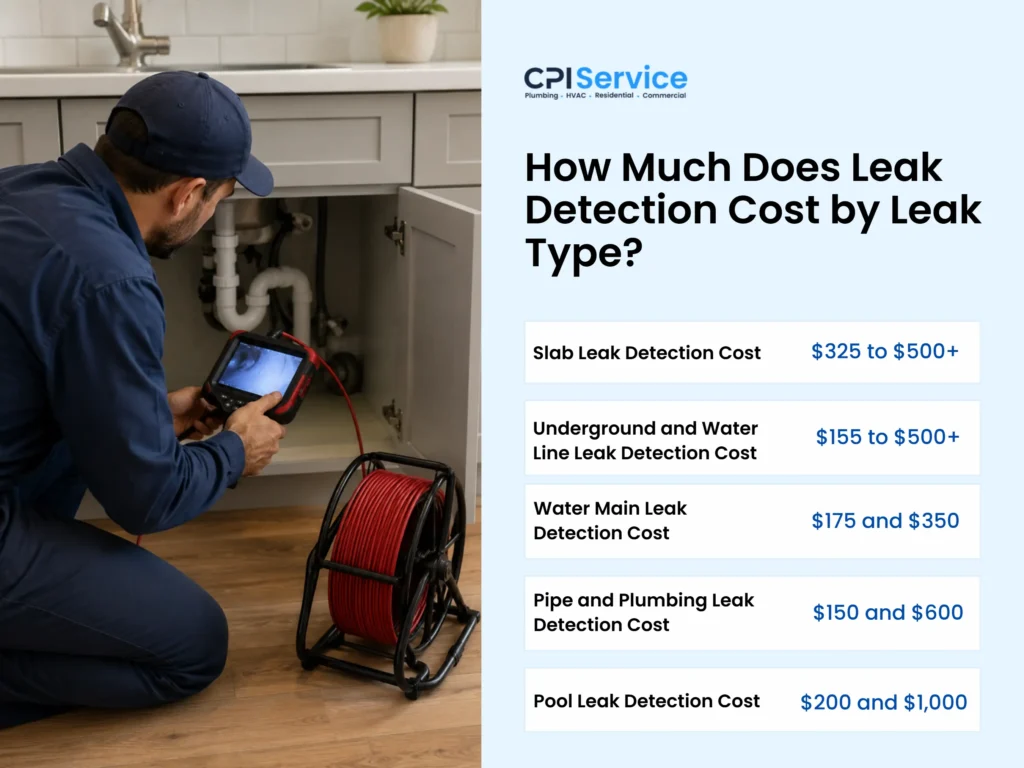
How Much Does Leak Detection Cost by Leak Type?
Leak detection costs range from $150 to $600, with the type of leak being one of the biggest factors affecting the final price. Visible plumbing leaks are the least expensive to locate because they require minimal inspection, whereas slab leaks, underground water lines, water mains, and pool leaks often cost more due to their hidden location and the need for specialized equipment such as acoustic leak detection, thermal imaging, pressure testing, or tracer gas detection. Accessibility, leak depth, and inspection complexity can further increase the overall cost. The following sections outline the typical leak-detection costs for each common leak type and explain the factors that influence pricing.
How Much Does Slab Leak Detection Cost?
Slab leak detection costs between $150 and $1,000, depending on the leak’s location, accessibility, and the detection methods needed to locate it beneath the concrete foundation. Because slab leaks are hidden under the foundation, plumbers often use acoustic leak detection, thermal imaging, pressure testing, or tracer gas detection to pinpoint the leak without unnecessary excavation. Price may increase for deep or difficult-to-access leaks, multiple inspections, emergency service, or additional testing. A standard service includes inspection, diagnostic testing, leak localization, and repair recommendations. Since leak detection only identifies the source of the problem, concrete removal, pipe repair, and slab restoration are charged separately from the detection fee.
How Much Does Underground and Water Line Leak Detection Cost?
Underground and water line leak detection costs between $175 and $500, with complex jobs or deep mainline leaks increasing the cost to $2,000 or more. As these leaks are buried beneath soil, driveways, or landscaping, plumbers often use acoustic leak detection, pressure testing, tracer gas detection, and ground listening devices to locate them with minimal excavation. Final proce may increase for deep or hard-to-access pipes, long water lines, emergency service, or additional testing. A leak detection service includes an inspection, diagnostic testing, accurate leak localization, and repair recommendations. Because the service is limited to locating the leak, excavation and water line repairs are billed separately.
How Much Does Water Main Leak Detection Cost?
Water main leak detection costs between $175 and $350. However, leaks hidden underground or in concrete slabs can increase the cost to $500 to $1,500 or more. Since water mains are buried underground and often run long distances from the meter to the home, plumbers use acoustic leak detection, pressure testing, tracer gas detection, and ground-listening equipment to accurately locate leaks without unnecessary excavation. Costs may increase for deep service lines, difficult terrain, emergency service, or additional diagnostic testing. A standard service includes inspection, leak localization, and repair recommendations. Since water main leak detection only identifies the source of the problem, excavation and water main repair or replacement costs are billed separately from the detection fee.
How Much Does Pipe and Plumbing Leak Detection Cost?
Pipe and plumbing leak detection costs between $150 and $600, depending on the leak’s location, accessibility, and the diagnostic methods required. Because plumbing leaks can occur behind walls, beneath floors, in ceilings, or within crawl spaces, plumbers may use visual inspections, acoustic leak detection, thermal imaging, moisture meters, and pressure testing to locate the source accurately. Detection costs can be higher for concealed leaks, multiple leak locations, emergency callouts, or plumbing systems that require additional testing to access difficult areas. It covers inspection, diagnostic testing, accurate leak localization, and repair recommendations. Because the service is limited to identifying the leak, pipe repairs, replacement work, and any wall or floor restoration are charged separately.
How Much Does Pool Leak Detection Cost?
Pool leak detection costs between $200 and $1,000, based on the leak’s location, pool type, accessibility, and the diagnostic methods required. As leaks can occur in the pool shell, plumbing lines, skimmers, returns, or main drains, professionals use dye testing, pressure testing, acoustic leak detection, and electronic leak detection equipment to pinpoint the source accurately. The total price can increase if the leak is difficult to access, involves underground pool plumbing, requires emergency service, or needs additional testing to confirm its location. Standard leak detection covers inspection, testing, precise leak identification, and a repair assessment. Repair work, including pipe replacement, crack sealing, or structural restoration, is not included in the detection fee.
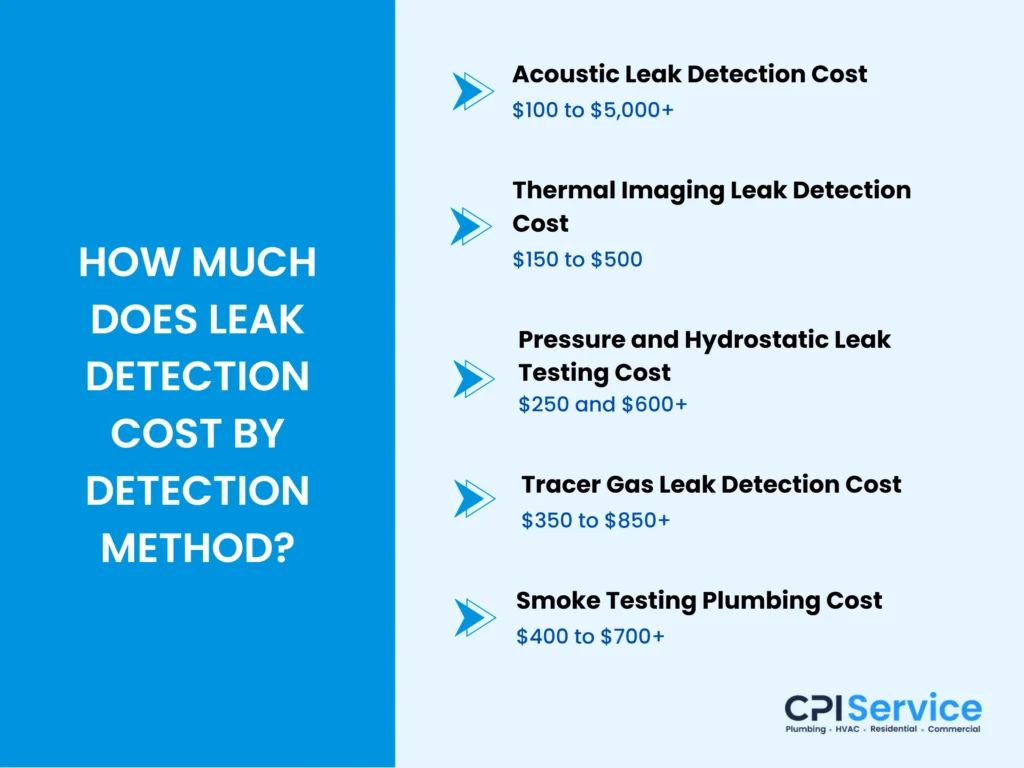
How Much Does Leak Detection Cost by Detection Method?
Leak detection costs range from $100 to $1,500 by detection method, with costs varying depending on the technology used and the complexity involved. Basic inspections and pressure testing are the most affordable, while acoustic leak detection, thermal imaging, tracer gas detection, and electronic testing cost more due to specialized equipment and expertise. Hidden plumbing leaks often require acoustic or thermal methods, whereas slab, underground, sewer, and pool leaks require pressure testing, tracer gas, or dye testing.
How Much Does Acoustic Leak Detection Cost?
Acoustic leak detection costs between $100 and $500, based on the leak’s location, accessibility, and the complexity of the inspection. This leak detection method uses sensitive listening equipment to detect the sound of escaping water and pinpoint hidden leaks without damaging walls, floors, or landscaping. Deep pipe installations, complex leak locations, emergency service, and supplementary testing can all increase acoustic leak detection costs. A professional service includes an inspection, acoustic listening tests, precise leak identification, and recommended repair options. If thermal imaging or pressure testing is needed, these services are charged separately. Any repairs are also billed independently of the detection service
How Much Does Thermal Imaging Leak Detection Cost?
Thermal imaging leak detection costs between $100 and $600, depending on the leak’s location, accessibility, and the size of the area being inspected. The method uses infrared cameras to detect temperature differences caused by hidden moisture, helping plumbers locate leaks behind walls, beneath floors, and in ceilings without invasive demolition. It is most effective for hidden plumbing leaks, slab leaks, radiant heating systems, and moisture intrusion. For large properties, difficult-to-access areas, multiple inspection zones, or when additional diagnostic methods are required, which increases the price increases. A standard service includes a thermal scan, leak assessment, precise leak localization, and repair recommendations. Additional testing, such as pressure testing or acoustic leak detection, may incur additional costs if needed. Since thermal imaging only identifies the leak source, repair costs are billed separately from the detection fee.
How Much Does Pressure and Hydrostatic Leak Testing Cost?
The cost of pressure and hydrostatic leak testing ranges from $150 to $500, based on factors such as system accessibility, plumbing layout, and the number of testing zones. This technique identifies leaks by detecting pressure loss within water supply, sewer, slab, underground, and pool plumbing systems. More complex inspections or follow-up testing can increase the final price. Standard services include leak confirmation, system testing, and repair recommendations. Since the service focuses on diagnosis, repair costs are not included in the detection fee.
How Much Does Tracer Gas Leak Detection Cost?
Tracer gas leak detection costs between $400 and $2000, with the final price influenced by the property’s size, the accessibility of the plumbing system, and the complexity of locating the leak. This method introduces a safe, non-toxic gas into the pipework, allowing plumbers to accurately identify leaks in slab foundations, underground water lines, water mains, and concealed plumbing without unnecessary excavation. For more complex facilities, the price may exceed $5,000+.
How Much Does Smoke Testing Plumbing Cost?
Smoke testing plumbing costs between $250 and $800, with the final amount determined by the size of the drainage system, ease of access, and the scope of the inspection. During the test, harmless smoke is introduced into the drain, sewer, and vent network, allowing plumbers to trace leaks, cracks, or failed pipe joints wherever the smoke escapes. A professional smoke test provides system evaluation, fault identification, and recommended corrective actions. When further diagnostic procedures are necessary to verify the exact defect, they are performed at an additional cost. Any plumbing repairs identified during the inspection are quoted separately, as smoke testing is limited to locating defects rather than repairing them.
What Factors Affect Leak Detection Cost?
Leak detection costs are primarily affected by the leak type and location, accessibility and depth, property size and plumbing complexity, the number and severity of leaks, emergency service requirements, and local labor rates. Hidden or difficult-to-access leaks require more time, specialized equipment, and skilled labor than visible plumbing leaks, increasing overall costs. Advanced detection methods such as acoustic leak detection, thermal imaging, tracer gas detection, and pressure testing also affect pricing, as they require specialized technology and expertise. Larger or more complex plumbing systems, multiple leak locations, and after-hours service can further increase inspection costs. The following sections explain how each of these factors contributes to the total cost of professional leak detection.

How Does Leak Type and Location Affect Cost?
Leak type and location are two of the biggest factors affecting leak detection cost, as they determine the time, equipment, and labor needed to locate the problem. Visible leaks in exposed pipes are less expensive to detect. In contrast, hidden leaks beneath concrete slabs, underground water lines, behind walls, or in swimming pool plumbing are more costly because they require specialized diagnostic methods. For example, locating a leaking faucet involves a simple inspection, whereas finding a slab or underground leak may require acoustic leak detection, thermal imaging, or tracer gas testing. Costs increase as accessibility decreases and detection becomes more complex, with equipment requirements and labor working together to influence the final price.
How Do Leak Accessibility and Depth Affect Cost?
Leak accessibility and depth can significantly increase leak detection costs, with prices ranging from $150 to $1,500+ depending on the inspection complexity. Easily accessible leaks are faster and less expensive to locate, with pricing between $ 150 and $400, while leaks hidden behind walls, beneath floors, under concrete slabs, or deep underground often require acoustic leak detection, thermal imaging, tracer gas detection, or pressure testing. As accessibility decreases and depth increases, more labor, diagnostic time, and specialized equipment are required, resulting in overall detection costs exceeding $5000.
How Do Property Size and Plumbing Complexity Affect Cost?
Property size and plumbing complexity can increase leak detection costs by 10%-15%, with total prices ranging from $100 to $1,500+. Larger homes often have longer pipe runs, multiple bathrooms, separate plumbing zones, irrigation systems, and additional water lines, all of which require more extensive inspection.
Complex plumbing layouts, including pipes hidden behind walls, beneath concrete slabs, inside crawl spaces, or spread across multiple stories, also increase the time and effort needed to locate leaks accurately. In these cases, plumbers may need to use advanced equipment such as acoustic listening devices, thermal imaging cameras, or video pipe inspection systems. The added labor, specialized tools, and longer inspection times contribute to higher overall leak detection costs.
How Do the Number and Severity of Leaks Affect Cost?
The number and severity of leaks directly affect leak detection costs, which are around $500, because multiple leak locations and significant water loss require more inspection time, labor, and specialized testing to accurately identify the full extent of the problem. A single, isolated leak is faster and less expensive to locate than multiple leaks spread throughout a plumbing system.
As the number of leaks and the severity of the damage increase, so do the labor, equipment, and testing requirements. Multiple leak locations often require advanced methods such as pressure testing, acoustic leak detection, or thermal imaging to confirm each leak, resulting in leak-detection costs of up to $1,500, compared with a single minor leak.
How Does Emergency and Scheduled Service Affect Cost?
Emergency leak detection services cost 3-5 times as much as scheduled appointments, as they require faster response times, priority scheduling, and possible after-hours labor. Scheduled services are more affordable because they can be completed during normal business hours. The cost often increases for same-day, weekend, holiday, or overnight service.
For example, a routine inspection booked in advance costs less than an emergency call for active flooding, major water loss, or a suspected water main break. Emergency leak detection service also affects labor, plumber availability, and equipment use. While the leak detection method may be the same, urgent appointments incur higher costs because the plumber must respond quickly to minimize water damage and prevent the issue from worsening.
How Do Local Labor Rates Affect Cost?
Local labor rates can increase leak detection costs by $125 to $400 per hour, depending on the region, because plumber wages, licensing requirements, insurance premiums, and overall business operating expenses vary by location. Areas with a higher cost of living generally have higher service rates, while smaller towns and rural communities often offer more affordable pricing.
For example, in San Jose, California, licensed plumbers charge $125-$200 per hour for standard services, while emergency service calls can cost $200-$400 per hour. These higher labor costs make leak detection services in major metropolitan areas significantly more expensive than the national average, even for similar jobs.
Professional vs. DIY Leak Detection: What Is the Cost Difference?
Professional leak detection costs between $100 and $1,500+, while DIY leak detection costs $15 to $200 for basic tools such as moisture meters, food coloring, or leak detectors. Although the DIY approach has a lower upfront cost, it is limited to identifying visible or easily accessible leaks. Professional plumbers use specialized equipment, including acoustic listening devices, thermal imaging cameras, tracer gas systems, and pressure testing tools, to locate hidden leaks more accurately while minimizing unnecessary property damage
| Factor | DIY Leak Detection | Professional Leak Detection |
| Cost (Estimated) | $15-$200 | $100-$1,500+ |
| Tools Used | Water meter checks, food coloring, moisture indicators, and basic leak detectors | Acoustic listening devices, thermal imaging cameras, tracer gas equipment, and pressure testing tools |
| Accuracy | Limited to visible or easily accessible leaks | High accuracy for both visible and hidden leaks |
| Hidden Leak Detection | Often difficult to locate leaks behind walls, under floors, or underground | Designed to locate concealed leaks with specialized technology |
| Time Required | It can take hours or days of trial and error | Completed in a single service visit |
| Risk of Property Damage | Higher risk if walls, floors, or landscaping are unnecessarily disturbed | Lower risk due to non-invasive detection methods |
| Best For | Checking for obvious leaks, monitoring water usage, and performing basic troubleshooting | Locating hidden, complex, underground, slab, or recurring leaks |
What Are the Signs You Need Leak Detection?
Signs you need professional leak detection include an unexplained spike in your water bill, the sound of running water when all fixtures are off, and wet spots or musty odors in your home or yard. These warning signs often indicate a hidden plumbing leak that may be causing water loss, property damage, or mould growth behind walls, beneath floors, or underground. Identifying these issues early can help prevent more extensive damage and costly repairs.
The 5 Signs You Need Leak Detection:
- Unexplained Increase in Your Water Bill: Higher water bills without increased usage often indicate a hidden leak. If the increase continues over multiple billing cycles, it can lead to wasted water and higher costs. Professional leak detection can identify the source before further damage occurs.
- Sound of Running Water When Everything Is Off: Hearing water running after all fixtures are turned off may indicate a hidden leak in the walls, beneath the slab, or underground. Ignoring it can result in ongoing water loss and property damage. Leak detection helps locate the leak accurately.
- Warm Spots on the Floor, Damp Patches, or Mould: Warm flooring, damp areas, or mould growth often indicate hidden moisture from a leaking pipe. If left untreated, these issues can damage flooring and walls and compromise indoor air quality. Professional leak detection identifies the underlying cause.
- A Drop in Water Pressure: A noticeable decrease in water pressure may occur when water escapes from a damaged pipe. Persistent low pressure can indicate a hidden plumbing leak that requires prompt inspection. Leak detection confirms the source before repairs begin.
- Cracks in Walls or Foundation Movement: New or expanding cracks in walls or the foundation may result from long-term underground or slab leaks. Left unchecked, they can lead to costly structural damage. Leak detection determines whether a plumbing leak is causing the movement.
Is Professional Leak Detection Worth the Cost?
Yes, professional leak detection is worth the cost because it accurately locates hidden leaks before they cause extensive water damage, higher repair expenses, or structural problems. Although there is an upfront inspection fee, a certified leak detection service reduces long-term repair costs and helps avoid unnecessary property damage.
Here are 4 major reasons why professional leak detection is worth the cost:
- Prevents Costly Water Damage: Early leak detection stops water from damaging walls, ceilings, flooring, and belongings, helping avoid expensive restoration costs.
- Lowers Eventual Repair Costs: Identifying leaks early prevents small plumbing issues from becoming major repairs, reducing overall repair expenses.
- Protects Walls, Floors, and Foundations: Accurate leak detection limits moisture damage that can lead to mould, wood rot, and foundation movement.
- Finds Hidden Leaks DIY Methods Can Miss: Professional tools locate leaks behind walls, beneath slabs, and underground, reducing guesswork and unnecessary repairs.

