

 Emergency Plumbing
 Plumbing Repairs
 Water Heaters
 Drain Cleaning
 Sewer Service
 Faucets & Fixtures
 Repiping
 Toilet Plumbing
 Trenchless
 Plumbing Leaks
 Air Conditioning
 Heating
 Minisplit Systems
 Heat Pumps
 HVAC Components
 HVAC Rebates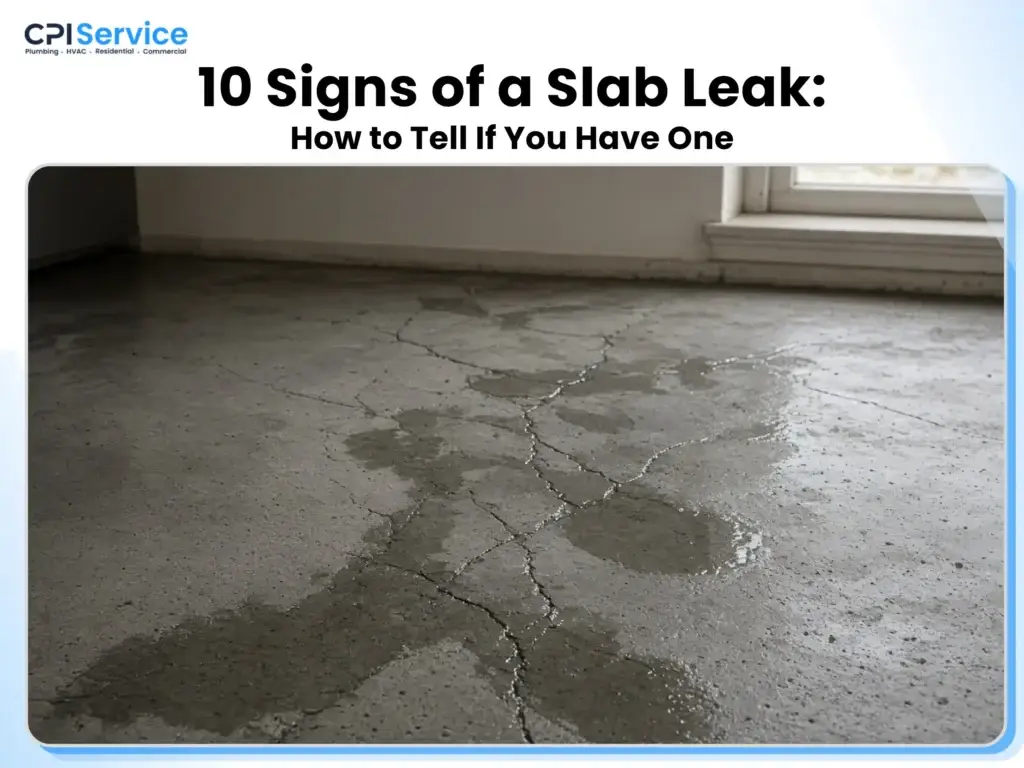
A rising water bill, unexplained dampness, or a warm patch underfoot can be the first indication that water is escaping somewhere you cannot see, even when every visible fixture appears normal. A 2026 study of more than 21,000 residential water users found that leak days produced systematically higher hourly water volumes (Cobacho & Arregui, 2026), showing how concealed leakage can create measurable consumption changes before its source becomes obvious. Common slab leak signs include unexplained water use, meter movement with fixtures off, warm floor spots, low water pressure, running-water sounds, damp flooring, recurring seepage, musty odors, mold or mildew, and new floor or foundation cracks.
Slab leaks can develop when corrosion, shifting soil, excessive water pressure, installation problems, abrasion, or age-related deterioration affects under-slab pipes. Individual symptoms can have other causes, but persistent or multiple signs increase the reason to investigate concealed plumbing. Professional slab leak detection can identify the source and location of water loss before continued leakage contributes to greater water damage, flooring problems, mold growth, or foundation-related concerns. EPA also notes that undetected household leaks can damage homes in addition to wasting water.
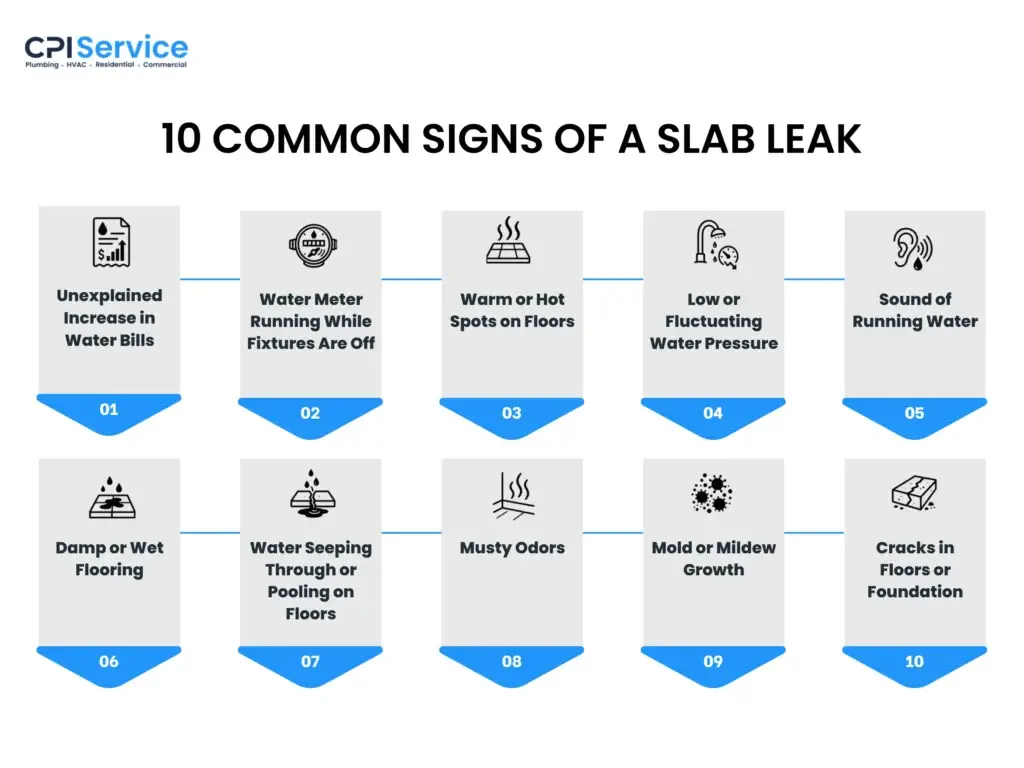
10 Common signs of a slab leak include:
- Unexplained Increase in Water Bills
An unexplained increase in your water bill without a matching change in household water use can indicate water escaping from a concealed supply pipe beneath the slab. Because a pressurized line can leak continuously, even when fixtures are not in use, extra consumption may raise your baseline monthly water bill. The EPA notes that the average family can waste about 180 gallons per week, or 9,400 gallons annually, from household leaks.
Compare current bills with previous billing periods and similar months from the prior year to identify unusual consumption patterns. Higher usage can also result from irrigation, leaking toilets, dripping fixtures, appliance leaks, or changes in household activity. If consumption remains unexplained and occurs with meter movement, pressure changes, warm flooring, or damp areas, professional slab leak detection can help locate the source. Compare monthly bills year over year when checking for unidentified household leaks.
- Water Meter Running While Fixtures Are Off
A water meter that continues registering flow when all fixtures and water-using appliances are off can indicate a concealed plumbing leak. Water escaping from a pressurized pipe beneath the slab may keep the meter moving even when no one in the home is intentionally using water. However, meter movement confirms unexplained water consumption but does not prove the leak is beneath the foundation.
Turn off faucets, toilets, dishwashers, washing machines, ice makers, irrigation systems, and other known water uses before checking the meter. The EPA recommends taking a meter reading during a period of no water use and checking it again two hours later. A changed reading indicates a probable household leak. If visible fixtures, irrigation, treatment equipment, and accessible plumbing do not explain the loss, especially when other slab leak symptoms are present, the concealed supply lines should be investigated.
- Warm or Hot Spots on Floors
A persistent warm or hot area on the floor can indicate a leaking hot-water pipe beneath the concrete slab. Escaping hot water transfers heat into the surrounding concrete, which can radiate upward through tile, hardwood, laminate, or carpet and create a localized area that feels noticeably warmer than the surrounding floor. Warm floor spots are commonly identified in U.S. slab-leak guidance as a warning sign of a concealed hot-water line leak.
Check whether the warm area remains in the same location and whether the water heater appears to run more frequently than normal. Direct sunlight, HVAC ducts, radiant floor heating, and heat-producing appliances can also create temperature differences. If none of these sources explains a persistent warm patch and it occurs with increased water use, meter movement, or running-water sounds, investigate a hot-water slab line.
- Low or Fluctuating Water Pressure
A leaking supply pipe beneath the slab can divert water before it reaches faucets, showers, and appliances, causing weaker or fluctuating pressure across multiple fixtures. Pressure loss at only one fixture is more likely indicates a localized problem. If pressure drops throughout the home and is accompanied by unexplained meter activity, damp flooring, or other slab leak signs, a concealed supply-line leak may be responsible.
Pressure problems affecting only one fixture are more likely to involve a localized restriction or fixture issue. Whole-house pressure changes can also result from municipal supply conditions, partially closed valves, pressure regulators, or other plumbing leaks. If widespread pressure loss occurs alongside unexplained meter activity, damp flooring, or running-water sounds, check the home’s concealed supply lines for leaks.
- Sound of Running Water
Hissing, rushing, or running-water sounds beneath floors or inside walls when no fixtures are operating can indicate water escaping from a concealed pressurized pipe. A damaged line beneath the slab can generate high-frequency vibrations as water moves through the opening, allowing the sound to travel through concrete and surrounding building materials. Running-water sounds with fixtures off are consistently identified among common slab leak warning signs.
First, eliminate toilets, appliances, irrigation systems, water heaters, and other normal sources of water movement. If the sound continues when known water uses are off, and the meter also registers unexplained flow, a concealed plumbing leak becomes more likely. Plumbers can use non-invasive detection methods such as acoustic listening devices, thermal imaging cameras, and tracer gas equipment to narrow down the location before accessing the slab.
- Damp or Wet Flooring
Persistent damp carpet, darkened flooring, warped hardwood, loose flooring, or wet grout without an obvious surface spill can indicate moisture originating beneath the floor. Water from a leaking pipe beneath the slab can migrate through cracks, joints, gaps, or surrounding building materials and eventually affect flooring and lower interior surfaces. Damp flooring is one of the most commonly reported warning signs of slab leaks.
Look for moisture that returns repeatedly after the area has dried, especially when no nearby fixture or appliance explains it. Groundwater intrusion, condensation, exterior drainage problems, appliance leaks, and other plumbing failures can produce similar symptoms. Persistent unexplained floor moisture, along with meter movement, increased consumption, warm spots, or pressure loss, warrants investigating the plumbing beneath the slab.
- Water Seeping Through or Pooling on Floors
Water that repeatedly seeps through floor joints, cracks, slab edges, or flooring seams can indicate moisture accumulating beneath the concrete foundation. A leaking sub-slab hydrostatic pipe can saturate surrounding materials and allow water to migrate toward openings in the slab or flooring, producing puddles that return after the visible water has been removed.
Pooling water does not by itself confirm a slab leak. Also consider groundwater, poor exterior drainage, flooding, appliance failures, fixture leaks, and other moisture sources. Check whether the water meter registers flow when household water use is off, and whether other signs such as higher bills, pressure loss, or running-water sounds are present. Persistent pooling combined with unexplained water consumption provides a stronger reason to investigate concealed plumbing beneath the slab.
- Musty Odors
A persistent musty or earthy odor near floors, baseboards, closets, or lower walls can indicate concealed moisture associated with a slab leak. Water migrating beneath the slab can dampen carpet padding, drywall, wood, and other porous materials. Mold growing in these damp areas can release microbial volatile organic compounds (mVOCs), which the EPA identifies as a source of the characteristic moldy or musty smell.
Musty smells can also result from condensation, high humidity, HVAC moisture, roof leaks, or other plumbing problems. NIOSH reports that detecting musty odors and conducting visual inspections can be more reliable than short-term air sampling for identifying indoor dampness and mold problems. When no moisture is visible, NIOSH recommends investigating hidden areas such as wall cavities and beneath flooring, sometimes using moisture meters or infrared cameras. Persistent floor-level odors combined with dampness or unexplained water use warrant further leak investigation.
- Mold or Mildew Growth
Mold or mildew appearing along lower walls, baseboards, flooring, or carpet can indicate a persistent moisture source, including water migrating from a concealed leak beneath the slab. If surrounding building materials remain damp, mold can develop on wood, paper-faced drywall, and carpet. The EPA identifies moisture control and correction of the underlying water problem as central to controlling indoor mold growth.
Mold alone does not identify the source of moisture. Also investigate high humidity, condensation, roof leaks, exterior water intrusion, HVAC drainage problems, and above-ground plumbing leaks. If mold repeatedly develops near floor level alongside damp flooring, meter movement, increased water use, or other signs of a slab leak, have a plumber inspect the concealed plumbing system. Generally, dry wet building materials within 24 to 48 hours to limit mold growth.
- Cracks in Floors or Foundation
New or expanding floor or foundation cracks can occur when prolonged underground leakage changes soil conditions beneath a slab. However, cracks can also result from normal settlement, expansive soils, drainage problems, tree roots, or ground movement. Cracking is a stronger slab leak warning sign when it appears alongside unexplained water loss, recurring moisture, or other plumbing symptoms.
Concrete shrinkage, normal settlement, expansive soils, poor drainage, tree roots, construction conditions, and ground movement can also produce cracks. Pay closer attention when new or worsening cracks appear together with unexplained water loss, persistent floor moisture, meter movement, low water pressure, or other plumbing symptoms. That combination warrants professional leak detection and, where structural movement is suspected, an appropriate foundation assessment.
How Can You Tell Whether the Signs Point to a Slab Leak or Another Water Problem?
You can identify a possible slab leak by checking whether water loss continues without visible fixture problems, the water meter moves when fixtures are inactive, or moisture appears without rainfall or surface causes. Comparing the location, timing, and behavior of water helps separate concealed plumbing leaks from fixture leaks, groundwater, surface water, or garage intrusion. Persistent dampness, unexplained water usage, warm floors, and recurring moisture patterns indicate the need for professional leak detection when the source remains unclear.
The following signs can help distinguish a slab leak from other common water problems:
- Fixture Leaks
- Rainwater or Groundwater Intrusion
- Surface Water on the Floor
- Garage Water Intrusion
Fixture Leaks
Fixture and appliance leaks can create substantial above-slab water loss, with EPA data showing that even a small toilet leak from a worn flapper can waste about 860 gallons per month. Check toilets, faucets, under-sink connections, water heaters, washing machines, and dishwashers for drips, puddles, or wet fittings. These leaks can raise water bills and keep the meter moving just like slab leaks. EPA recommends a two-hour no-use meter test to detect unexplained leakage. If accessible fixtures and appliances show no leaks but the meter reading changes, you may need professional detection to investigate concealed piping.
Rainwater or Groundwater Intrusion
Rainwater and groundwater can enter around a foundation and create recurring floor moisture that resembles a slab leak, particularly where poor grading, pooled rainwater, or drainage problems keep soil around the structure wet. EPA identifies rainwater, groundwater, plumbing leaks, and condensation as distinct sources of foundation moisture and recommends checking whether surrounding landscaping directs water away from the building. Environmental intrusion generally corresponds with rainfall or groundwater conditions, while slab-leak moisture can persist during dry weather. Both can cause damp floors and musty odors. Persistent dry-weather moisture accompanied by unexplained meter activity warrants professional leak detection.
Surface Water on the Floor
Surface water from spills, overflowing fixtures, pet bowls, cleaning, or wet footwear usually creates localized moisture with an identifiable source and does not return after thorough drying. A slab leak can produce similar dampness, staining, or flooring damage, but moisture may repeatedly appear without an obvious surface source. Both conditions can leave visible puddles or wet flooring so that meter activity can be a useful additional clue. EPA recommends checking the meter over two hours with no water use. Recurring moisture combined with a changed meter reading warrants professional leak detection.
Garage Water Intrusion
Rainfall, landscape irrigation, and exterior runoff can enter a garage around door thresholds or foundation edges, particularly where drainage is inadequate. EPA guidance recommends a 5% finish-grade slope, about 6 inches over 10 feet, away from foundations to control surface water and also advises keeping irrigation from soaking soil next to the foundation. Look for pooling after rain or irrigation near doors, walls, driveway edges, or drains. Unlike weather-dependent intrusion, slab-leak moisture may persist during dry conditions. Both can cause standing water and concrete staining. Persistent dry-weather moisture with unexplained meter movement warrants professional leak detection.
What Causes a Slab Leak?
A slab leak can develop from pipe corrosion, shifting soil, high water pressure, poor pipe installation, abrasion and friction, or age-related pipe deterioration that weaken underground plumbing lines. These factors damage pipes through corrosion, movement, excessive stress, installation defects, physical wear, or material breakdown. Over time, weakened pipes can develop cracks, pinholes, or failed connections that allow water to escape beneath the concrete slab.

6 main factors that contribute to a slab leak include:
- Pipe Corrosion
Chemical reactions between water and metal can gradually corrode under-slab pipes, particularly copper lines. EPA research identifies water pH, plumbing age, temperature, hydraulics, dissolved inorganic carbon, and microbial activity as factors influencing copper corrosion. Localized pitting can thin small areas until pinhole leaks develop beneath the slab. Certain water conditions can increase susceptibility, but slab-leak symptoms alone cannot identify corrosion as the cause, so pipe inspection is needed.
- Shifting Soil
Seasonal soil movement can bend water lines or place concentrated stress on them beneath a concrete slab. USGS explains that expansive soils change volume as their moisture content changes, with clay mineral composition influencing how much swelling occurs. Repeated expansion, contraction, or settlement can strain pipes and joints until cracks or connection failures develop. Expansive clay and changing soil moisture increase susceptibility, but leak detection is needed to establish the actual failure location.
- High Water Pressure
Excessive service pressure continually loads under-slab pipes, fittings, and joints beyond normal operating conditions. EPA WaterSense recommends incoming residential pressure of 45–60 psi and notes that most U.S. plumbing codes require pressure regulation when supply pressure exceeds 80 psi. Sustained high pressure can increase stress and the risk of leakage at vulnerable connections or damaged pipes. However, a pressure reading cannot confirm a slab leak, so you need pressure testing and leak detection.
- Poor Pipe Installation
Installation defects can leave under-slab plumbing vulnerable before normal service conditions take hold. Poorly made joints, inadequate support, improper routing, excessive bending, or insufficient clearance can create concentrated stress points. Water pressure, thermal movement, and building movement may then worsen these weaknesses until a joint separates or a pipe cracks. Installation-related problems are more likely when workmanship is inadequate, but identifying the exact concealed failure usually requires professional inspection.
- Abrasion and Friction
Repeated contact with concrete, aggregate, or other hard materials can gradually abrade pipes beneath a slab. Hot-water lines also expand and contract as temperatures change, allowing inadequately isolated pipes to move against nearby surfaces. Repeated rubbing can progressively thin a localized section until a pinhole or crack develops. Poor clearance or pipe movement can increase susceptibility, but the resulting symptoms cannot identify abrasion specifically without locating and inspecting the damaged line.
- Age-Related Pipe Deterioration
Years of service expose under-slab plumbing to water chemistry, pressure, temperature changes, corrosion, and mechanical stresses that can progressively reduce pipe integrity. Plumbing age is a leading factor in copper corrosion, along with water quality and hydraulics. Accumulated deterioration can eventually produce pinholes, cracks, or weakened connections. Older plumbing may be more susceptible depending on material and conditions, but pipe age alone cannot explain why or where a slab leak developed.
Why Shouldn’t You Ignore Signs of a Slab Leak?
Ignoring slab leak signs can cause ongoing water loss, moisture buildup, and hidden pipe damage to worsen over time. An active leak beneath the concrete foundation may increase water bills, spread moisture into building materials, encourage mold growth, damage flooring, weaken plumbing components, and contribute to foundation concerns. Persistent or worsening symptoms require professional inspection to identify the source and prevent broader damage.
Ignoring slab leak signs can lead to:
- Higher Water Bills
An active slab leak can continuously add unplanned water consumption to a household bill while the damaged line remains pressurized. EPA notes that undetected household leaks can waste thousands of gallons annually, while a family of four using more than 12,000 gallons (or 16 hundred cubic feet [CCF]) per month during winter may have a serious leak. Persistent increases despite unchanged household use can therefore justify professional leak detection to locate concealed water loss.
- Water Damage
Continued leakage beneath a slab can spread moisture beyond the original pipe failure and damage nearby building materials. Water may migrate into carpet, drywall, wood, baseboards, or other porous materials, producing damp areas, stains, swelling, or recurring moisture. EPA warns that household leaks can cause serious home damage. As moisture spreads, it can affect additional materials, increasing the need to locate and diagnose the concealed leak promptly.
- Mold and Mildew Growth
Persistent moisture from an unresolved slab leak can create conditions that allow mold to develop on damp building materials. EPA states that mold can grow on wood, paper, and carpet when sufficient moisture is present and recommends drying water-damaged materials within 24–48 hours to limit growth. Homeowners may notice visible growth or musty odors as dampness persists. Locating the underlying leak is necessary to address the continuing moisture source.
- Damaged Flooring and Subfloor
Moisture reaching flooring from an active slab leak can progressively affect carpet, wood, flooring systems, and underlying materials. Homeowners may notice staining, damp carpet, lifting finishes, swelling, or other moisture-related deterioration. EPA specifically includes carpet and backing, porous flooring, and wood surfaces among materials requiring attention after water exposure. Continued wetting can expand the affected area, so locating the leak matters before further flooring damage develops.
- Pipe Deterioration
An ongoing slab leak may accompany pipe damage that continues to deteriorate while the underlying condition remains unresolved. Old piping, corrosion, irregular water pressure, incorrect installation, and equipment problems are among factors that can cause household leaks. Homeowners may notice continuing water loss or recurring plumbing symptoms, but these signs cannot identify the damaged pipe or failure mechanism. Professional leak detection helps determine the source, location, and extent of the plumbing failure.
- Foundation Damage
Water escaping beneath a slab can alter moisture conditions around supporting soil and may contribute to foundation-related problems in some circumstances. Persistent water movement can affect soil conditions beneath or around the foundation, while homeowners may notice new cracks, uneven areas, or recurring moisture. Because cracking and settlement have many possible causes, these symptoms do not establish a slab leak. Locating the concealed water source helps determine whether a plumbing leak is contributing to foundation issues.
- Structural Damage
Long-term slab leakage can contribute to broader building damage when persistent moisture reaches moisture-sensitive materials or accompanies foundation movement. Uncontrolled indoor moisture can affect concealed spaces, so it is best to correct unintended water accumulation promptly. Homeowners may notice recurring wall or floor damage, material deterioration, or changes around affected areas. Not every slab leak causes structural damage, but continuing symptoms increase the need to locate the leak and assess affected components.
- Higher Slab Leak Repair Costs
Delaying slab leak detection can increase the overall repair scope when continued water loss affects materials beyond the failed pipe. Flooring, drywall, carpet, or other moisture-sensitive components may require additional work if exposure continues. The EPA emphasizes addressing household leaks promptly because they can waste water and damage homes. As the affected area expands, restoration may become more involved, so locating the leak early helps define the plumbing problem before additional damage develops.
When Do Slab Leak Signs Need Professional Inspection?
Slab leak signs need professional plumbing inspection when multiple symptoms appear together, the water meter moves without usage, pressure changes occur, warm floors persist, or moisture continues without a clear source. Persistent water seepage, rising bills, running-water sounds, or flooring and foundation changes further increase the need for evaluation. Because these signs can overlap with other plumbing problems, professional leak detection can confirm whether a concealed pipe is leaking and locate the source before repairs begin.
7 signs that indicate the need for a professional slab leak inspection include:
- Several Slab Leak Signs Appear at the Same Time
Multiple signs, such as rising water bills, damp flooring, warm spots, and meter movement, create stronger evidence of concealed leakage than one symptom alone. The pattern becomes more significant once you have ruled out visible water sources.
- Water Meter Runs While All Fixtures Are Turned Off
Continued meter movement when no water is being used indicates unexplained flow somewhere in the plumbing system. If toilets, irrigation, appliances, and visible plumbing are not responsible, concealed piping becomes a more likely source.
- Water Pressure Drops Without a Clear Cause
Persistent pressure loss across multiple fixtures can indicate water escaping from a concealed supply line. It becomes more significant when municipal supply issues, valves, regulators, and localized plumbing problems do not explain the change.
- Warm Floor Spots Remain Persistent
Persistent localized warmth can indicate heat transferring upward from a leaking hot-water pipe beneath the slab. The sign becomes more suspicious when sunlight, HVAC ducts, radiant heating, or appliances do not explain it.
- Water Keeps Seeping Through the Floor
Water that returns after the floor has dried suggests an ongoing moisture source rather than a one-time spill. Recurring seepage without an identifiable surface or environmental source can indicate moisture migrating from beneath the slab.
- Water Bills Continue to Rise Without Higher Usage
Rising water consumption without changes in household activity can indicate continuous hidden water loss. The pattern becomes more suspicious when irrigation, fixtures, occupancy, and other known water uses do not explain the increase.
- Cracks or Flooring Damage Become Visible
New cracks, lifting flooring, or uneven areas can indicate changing moisture or soil conditions beneath the slab. Their connection to a possible leak becomes stronger when they occur with unexplained water loss or recurring moisture.

