

 Emergency Plumbing
 Plumbing Repairs
 Water Heaters
 Drain Cleaning
 Sewer Service
 Faucets & Fixtures
 Repiping
 Toilet Plumbing
 Trenchless
 Plumbing Leaks
 Air Conditioning
 Heating
 Minisplit Systems
 Heat Pumps
 HVAC Components
 HVAC Rebates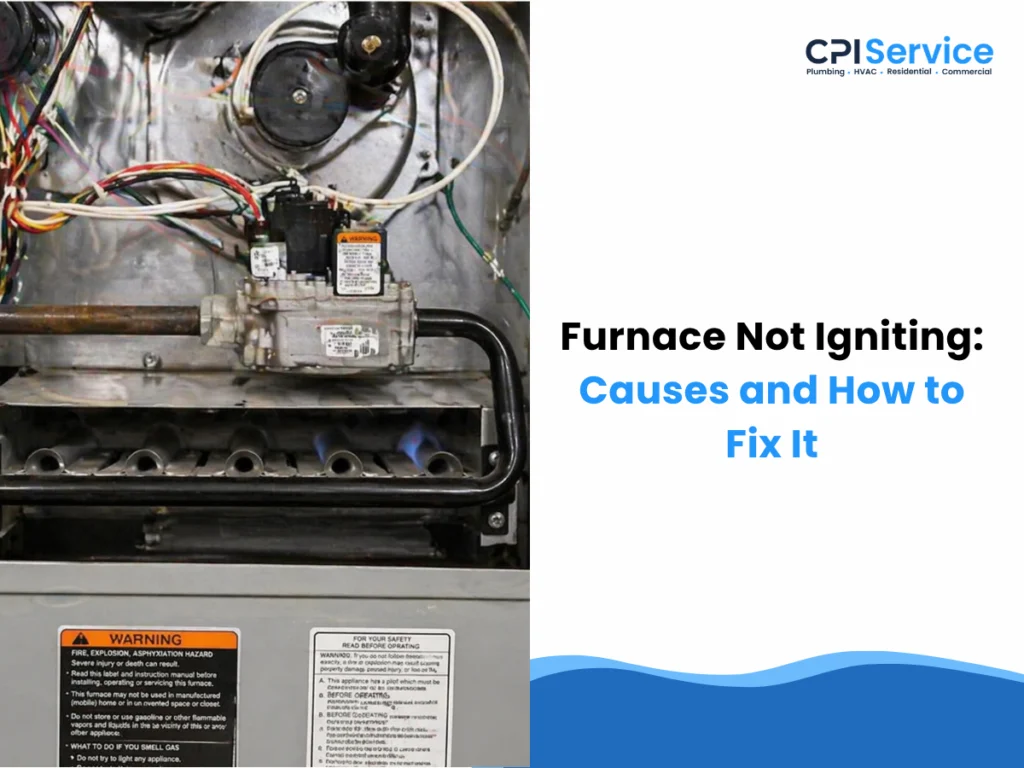
Furnace ignition failure occurs when one or more critical startup components, such as the ignitor, flame sensor, gas supply, thermostat, burners, venting system, pressure switch, or control board, fail to function properly, preventing the furnace from safely initiating combustion. When any of these parts fail, the system cannot produce a spark, deliver gas, confirm airflow, or detect flame, causing it to shut down before or shortly after ignition. Common signs include no heat, short cycling, weak or no flame, repeated startup attempts, unusual noises or smells, or error codes indicating system faults.
Fixing ignition issues involves checking and correcting simple problems like thermostat settings, power supply, gas valve position, air filter condition, and cleaning parts such as the flame sensor or ignitor. More complex issues require inspecting vents, pressure switches, and control systems, which requires contacting a professional HVAC technician to handle persistent or safety-related problems for safe and efficient furnace operation.
What Causes Furnace Ignition Failure?
Issues that cause furnace ignition failure include a dirty flame sensor, a defective igniter, a pilot light outage, a restricted gas supply, clogged burners or filters, blocked vents, a pressure switch failure, a thermostat malfunction, or a faulty control board, all of which can prevent the system from completing the ignition sequence safely. These problems interrupt key steps like spark generation, gas flow, airflow verification, or flame detection, causing the system to shut down before or shortly after ignition.
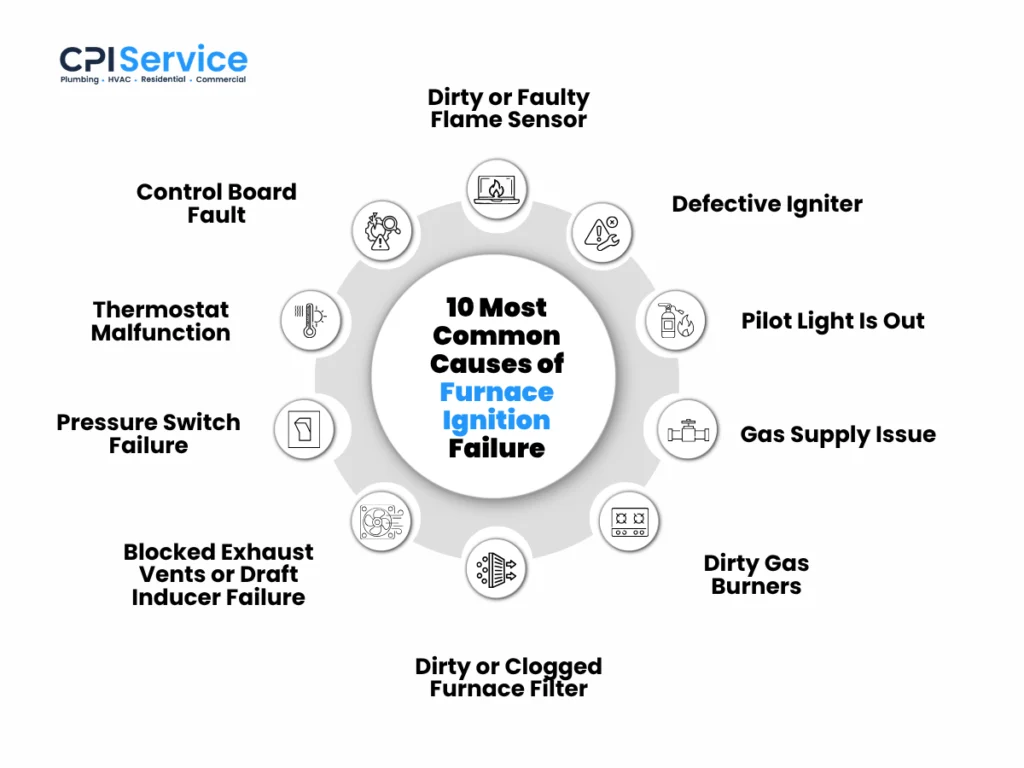
10 most common causes of furnace ignition failure are:
- Dirty or Faulty Flame Sensor
- Defective Igniter
- Pilot Light Is Out
- Gas Supply Issue
- Dirty Gas Burners
- Dirty or Clogged Furnace Filter
- Blocked Exhaust Vents or Draft Inducer Failure
- Pressure Switch Failure
- Thermostat Malfunction
- Control Board Fault
Dirty or Faulty Flame Sensor
A contaminated or failing flame sensor prevents ignition by falsely signaling that no flame is present, which causes the furnace to shut off the gas supply immediately after ignition begins. When the flame sensor is covered in carbon buildup or corrosion, it cannot properly detect the flame. As a result, the system assumes ignition has failed and shuts everything down to avoid potential hazards, which stops the heating system from operating.
You will notice the furnace starting, lighting for a few seconds, and then turning off repeatedly. This cycle may continue until the system enters safety lockout mode, stopping further ignition attempts.
Defective Igniter
A malfunctioning igniter stops ignition by failing to generate the heat or spark needed to light the gas in the burners. If the igniter is cracked, worn out, or not receiving power, it cannot produce the heat or spark required to initiate combustion. Without this initial ignition source, the gas cannot ignite even if it is flowing correctly.
In this situation, you may hear the furnace attempting to start, but no flame will appear. The system’s blower may still run, circulating air through your home, but since combustion never begins, you may notice your furnace blowing cold air instead of heat.
Pilot Light Is Out
An extinguished pilot light prevents ignition in older gas furnaces that rely on a standing pilot flame to ignite the burners. When this flame goes out due to drafts, dirt, or a faulty thermocouple, the furnace cannot light the gas when heat is called for.
A furnace may remain inactive when turned on or attempt to start without ever producing a flame. If the pilot will not stay lit after relighting, it often indicates a deeper issue with the gas supply or safety components.
Gas Supply Issue
A disruption in gas flow prevents ignition by stopping fuel from reaching the burners, making combustion impossible. Problems such as a closed gas valve, low pressure, or a faulty internal gas valve can block fuel delivery, preventing the furnace from producing heat even if the igniter is functioning properly.
Common signs include an ignitor that glows or sparks, but no flame appears, or repeated attempts to start without success. In some cases, other gas appliances in the home may also stop working, indicating a broader supply issue.
Dirty Gas Burners
Blocked or contaminated burners prevent proper ignition by disrupting the flow and distribution of gas needed for consistent combustion. When dirt, rust, or debris accumulates, gas flow becomes uneven or restricted, preventing the burners from releasing fuel evenly. This can lead to delayed ignition, weak flames, or complete failure to ignite.
You might notice unusual flame patterns, delayed startup, or the furnace attempting to ignite but shutting down quickly. Poor burner performance often triggers safety shutdowns due to unstable combustion.
Dirty or Clogged Furnace Filter
Restricted airflow from a clogged filter prevents ignition by causing the furnace to overheat or trigger safety limits before the ignition process can complete. When airflow is blocked, internal temperatures rise too quickly, activating limit switches that shut the system down for safety.
The furnace may begin running but fail to complete a stable ignition cycle, often shutting down early or operating inconsistently. Over time, restricted airflow can place added strain on internal components and interfere with proper ignition.
Blocked Exhaust Vents or Draft Inducer Failure
A venting or inducer problem prevents ignition by stopping the furnace from confirming safe exhaust airflow, which is required before gas can ignite. If vents are blocked or the inducer motor fails, the furnace cannot properly remove combustion gases, preventing the system from proceeding with the ignition cycle.
As a result, the system halts the ignition sequence to prevent dangerous gas buildup. You may notice the furnace attempting to start without lighting, or error codes indicating pressure or venting issues.
Pressure Switch Failure
A faulty pressure switch prevents ignition by failing to verify proper airflow conditions, which stops the system from proceeding with the ignition cycle. If it does not close properly due to a malfunction or incorrect pressure readings, the furnace assumes unsafe conditions and blocks ignition because it cannot confirm that the draft inducer is working and venting is safe.
Common signs include a furnace that starts the initial sequence but fails to light the burners. The issue may stem from the switch itself, blocked tubing, or airflow restrictions.
Thermostat Malfunction
A thermostat malfunction prevents ignition by failing to send the proper call-for-heat signal to the furnace. If it is set incorrectly, has dead batteries, or has wiring issues, the furnace may not receive the command to start the heating cycle. Even minor faults can interrupt communication and stop the system from operating.
As a result, the system may remain inactive even when the room temperature drops below the set level. In this case, the furnace won’t turn on when heat is needed, since the ignition cycle is never triggered.
Control Board Fault
A malfunctioning control board prevents ignition by failing to send or coordinate the signals required to start the furnace. It controls key startup components such as the inducer motor, igniter, and gas valve, ensuring each step of the ignition process occurs in the correct order. If it sends incorrect signals or fails to communicate with these components, the entire startup process can fail.
When this occurs, the furnace may behave erratically, fail to start, or repeatedly attempt ignition without success. In some cases, error codes may appear, but an accurate diagnosis typically requires professional testing due to the control board’s complexity.
How to Fix a Furnace That Won’t Ignite?
To fix a furnace that won’t ignite, check key components, including the ignitor, thermostat, pilot light, flame sensor, gas supply, electrical connections, and system controls to identify where the ignition process is failing. Most ignition issues stem from a specific step in the startup process, so it’s best to begin with simple fixes such as adjusting the thermostat, restoring power, or cleaning components. If the problem continues, professional repair may be required, especially for gas system faults, control board failures, or safety components that require specialized tools and diagnostic equipment.
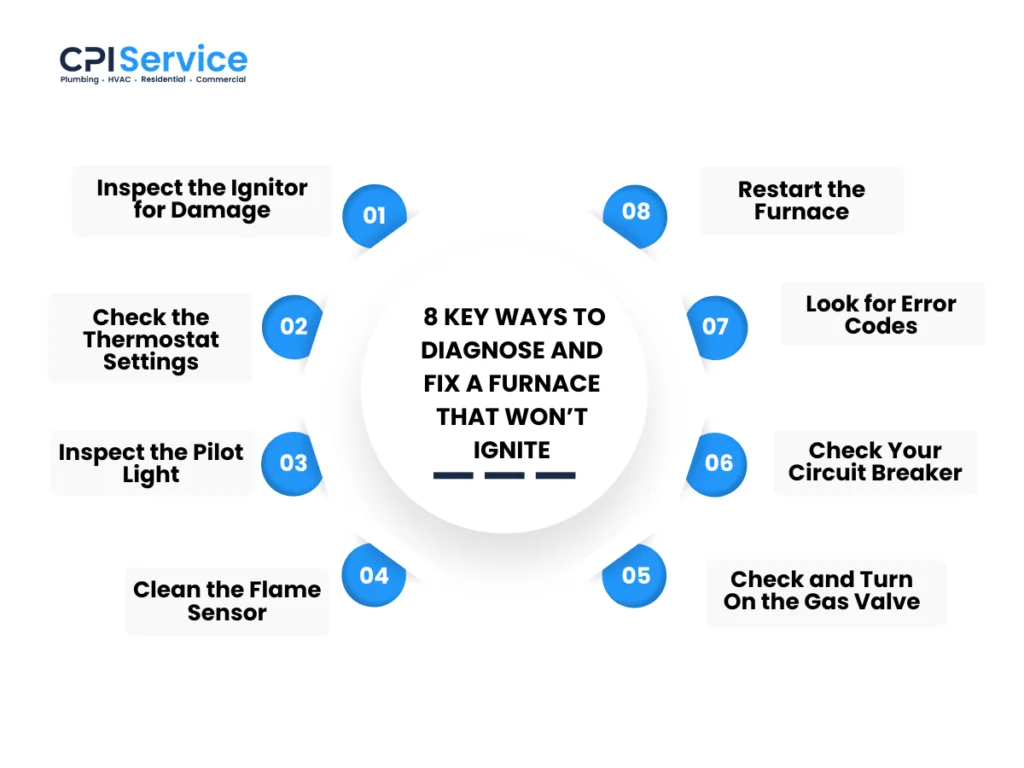
The 8 key ways to diagnose and fix a furnace that won’t ignite are:
- Inspect the Ignitor for Damage
- Check the Thermostat Settings
- Inspect the Pilot Light
- Clean the Flame Sensor
- Check and Turn On the Gas Valve
- Check Your Circuit Breaker
- Look for Error Codes
- Restart the Furnace
Inspect the Ignitor for Damage
A faulty ignitor is one of the most common reasons a furnace fails to ignite, as it produces the heat or spark needed for combustion. When it is cracked, worn out, or not receiving power, the ignition process cannot begin. Turn off the furnace power, locate the ignitor near the burners, and inspect it for visible damage or lack of glow during startup. If it appears damaged or inactive, replacing it is usually necessary to restore normal operation.
Check the Thermostat Settings
Incorrect thermostat settings or a loss of power can prevent the furnace from receiving the call-for-heat signal required to initiate ignition. The thermostat is the primary control for initiating heating, so even minor issues can prevent the system from turning on.
Steps to check and correct the thermostat settings of a furnace are:
- Verify the thermostat is in “Heat” mode, and switch it if needed
- Confirm the set temperature is above room temperature, and adjust it if necessary
- Inspect the display for power issues, and replace batteries if blank or weak
- Look for loose wiring, and tighten or repair connections if needed
- Confirm communication with the furnace, and restore it if not responding
- Test responsiveness, and reset or replace the thermostat if it remains unresponsive
Inspect the Pilot Light
In older furnace systems, the pilot light is required to ignite the burners, so if it goes out, the furnace will not heat. Check whether the pilot flame is lit and, if not, relight it carefully following the manufacturer’s instructions. If it repeatedly goes out, inspect for drafts, dirt buildup, or potential issues with the thermocouple or gas supply that may be causing the failure.
Clean the Flame Sensor
The flame sensor in a furnace ensures the burners are lit by detecting the flame, and if it becomes dirty or corroded, it can shut the furnace down shortly after ignition. Turn off the power to the furnace, remove the sensor carefully, and clean it using a soft abrasive pad or cloth. Reinstall the sensor and restart the furnace to confirm it maintains a steady flame during operation.
Check and Turn On the Gas Valve
The furnace cannot ignite without a proper gas supply, so any closed or partially restricted gas valve will prevent it from producing heat. Locate the gas shut-off valve near the furnace and ensure it is fully open so gas can flow freely to the burners. Check whether other gas appliances in the home are working to see if the issue is isolated or part of a larger supply problem. If no gas is available, contact your utility provider for assistance before further troubleshooting.
Check Your Circuit Breaker
A furnace requires electrical power to operate key components such as the ignition system, blower motor, and control board, so any power interruption can stop it from running. If the furnace is not working, the electrical supply should be checked to ensure it has not been disrupted. Once stable power is restored, the furnace should be able to restart and continue the ignition process normally.
Check the following:
- Inspect the home’s electrical panel for a tripped breaker or blown fuse and reset it if needed
- Ensure the furnace power switch near the unit has not been accidentally turned off
Look for Error Codes
Modern furnaces are equipped with diagnostic systems that display error codes to indicate specific ignition or system failures. Check the control board or display panel for blinking LEDs or alphanumeric codes (e.g., E01, F3, A2) that signal a fault. These codes are designed to narrow down the exact issue, so referring to the furnace manual is important for accurate interpretation. Identifying the correct code helps avoid unnecessary trial-and-error repairs and speeds up troubleshooting.
Restart the Furnace
Restarting the furnace can often clear temporary faults or safety lockouts that prevent the ignition cycle from completing. Turn off the furnace power completely and wait a few minutes to allow the system to reset internal controls. Then switch the power back on and observe the startup sequence. If the issue was minor or temporary, the furnace should successfully restart and complete ignition without further interruption.
What Safety Precautions Should You Take When Troubleshooting Furnace Ignition?
When troubleshooting furnace ignition issues, prioritize safety by stopping immediately if you detect any gas odor, shutting off power at the breaker before inspecting internal components, and never attempting to bypass safety switches or sensors. Furnaces involve gas, electricity, and combustion, so even small mistakes can create serious hazards. Keep the area around the furnace clear to reduce risk and ensure safe access during inspection.
- If You Smell Gas, Stop Immediately
Stop troubleshooting the furnace immediately if you detect a gas odor, as it may indicate a leak that could cause a fire or explosion. Continuing to operate or inspect the furnace in this condition is extremely dangerous.
Leave the area immediately, avoid turning on switches or appliances, and contact emergency services or your gas provider from a safe location. Addressing a gas leak should always be handled by an HVAC professional to ensure safety.
- Turn Off Power Before Inspecting Internal Components
Always shut off the power to the furnace before opening or inspecting internal parts, as live electrical components can cause serious injury. Even when the system appears off, it may still carry electrical current.
Use the furnace switch or circuit breaker to disconnect power completely before starting any inspection. This simple step reduces the risk of electric shock and prevents accidental system activation during troubleshooting.
- Never Bypass Safety Switches or Sensors
Avoid bypassing safety switches or sensors because they are designed to protect the system and prevent dangerous operating conditions. Disabling them can lead to overheating, gas buildup, or unsafe combustion.
If a safety component is preventing the furnace from running, it usually indicates a real problem. Instead of bypassing it, identify the root cause or contact an HVAC technician to ensure the system operates safely.
- Keep the Area Around the Furnace Clear
Maintain a clear space around the furnace, as clutter can restrict airflow and increase the risk of fire. Objects placed too close to the unit can also interfere with proper operation.
Remove any flammable materials, debris, or storage items from the surrounding area. Keeping the space clean and open helps ensure safe airflow and reduces the chances of overheating or accidental ignition.
Should I Replace My Furnace If It won’t Ignite?
No, a furnace that won’t ignite does not always need to be replaced, as many ignition problems are caused by minor issues such as a dirty flame sensor, a faulty igniter, or a clogged filter that can be repaired easily. Replacement is recommended if the furnace is 15 to 20 years old, inefficient, or requires frequent repairs. The decision ultimately depends on factors such as the furnace repair costs, age, and the frequency of breakdowns.
If the furnace is relatively new and the issue is limited to a single component, repair is usually the most practical and cost-effective solution. In general, repairs are best for minor, isolated problems, while replacement is more suitable for aging systems with ongoing issues or declining performance.
A quick comparison to help you choose between repairing and replacing your furnace:
| Factor | Repair the Furnace | Replace the Furnace |
| Age | Less than 10–15 years old | 15–20+ years old |
| Issue Type | Minor or single component (igniter, sensor, filter) | Multiple or recurring failures |
| Repair Cost | Low and affordable | High or close to replacement cost |
| Frequency of Issues | Rare or first-time problem | Frequent breakdowns |
| Energy Efficiency | Still operating efficiently | Noticeable decline in efficiency or higher energy bills |
| Performance | Heats home normally after repair | Inconsistent heating or poor performance |
| Long-Term Value | Repair extends system life at low cost | Replacement reduces future repair and energy costs |
When Should You Call a Professional Furnace Technician?
You should call a professional furnace technician when ignition problems persist, unusual sounds or smells occur, the system short-cycles, the furnace is old, or repairs become frequent, as these issues often indicate deeper mechanical or safety concerns. While some ignition issues can be resolved with basic troubleshooting, certain signs indicate problems that require expert diagnosis. Reaching out to professional furnace services can safely identify the root cause, prevent further damage, and ensure the system operates efficiently and safely.
- Repeated Ignition Failures
Call an HVAC technician if the furnace repeatedly fails to ignite because this usually indicates an underlying issue that basic troubleshooting cannot resolve. Ongoing failures may involve components like the control board, gas valve, or pressure switch.
Proper diagnostic tools and expertise are required to determine why the ignition sequence keeps failing accurately. This helps pinpoint the exact faulty component and prevents the system from entering safety lockout.
- Strange Noises or Smells
Seek professional help if you notice unusual noises or smells because these can signal unsafe or malfunctioning furnace operation. Sounds like banging, clicking, or humming may point to mechanical or ignition issues.
Unusual odors, such as gas or burning smells, can signal serious issues that require immediate attention. A carbon monoxide alarm is a critical warning that may indicate a dangerous combustion or venting problem. An HVAC technician should inspect the system to identify and safely fix the issue.
- Furnace Short Cycling
If your furnace keeps turning on and off repeatedly, it is a strong indication of short cycling that needs professional attention. This issue often disrupts normal ignition and reduces system efficiency.
The problem may be linked to overheating, airflow restrictions, or faulty sensors that interfere with proper operation. Proper diagnostic tools and expertise are required to identify the exact cause and restore normal cycling, helping prevent long-term damage.
- System Is Old
An aging furnace is more likely to experience ignition issues and reduced efficiency, making professional evaluation important. Older units often become less reliable over time.
Recurring failures often signal deeper system-wide deterioration that cannot be fixed through isolated repairs. Professional evaluation ensures the underlying issue is identified so you avoid repeated breakdowns and unnecessary expenses.
- Constant Need for Repairs
When your furnace requires frequent repairs, it usually indicates a declining system that is becoming unreliable. Repeated fixes can quickly add up in cost, as ongoing repairs and recurring part failures often end up costing more than investing in a long-term solution.
A reliable HVAC technician can evaluate the overall health of the system and recommend whether continued repairs or replacement makes more sense. This ensures you avoid unnecessary expenses and maintain consistent heating performance.
How Can You Prevent Furnace Ignition Problems?
You can prevent furnace ignition problems by regularly replacing the air filter, scheduling annual tune-ups, cleaning the flame sensor, inspecting the ignitor before the heating season, and keeping vents and flue passages clear. These steps ensure proper airflow, reliable ignition, and safe system operation by reducing strain on key components and preventing common faults. Routine maintenance helps catch small issues early, improves efficiency, and lowers the risk of unexpected ignition failure during operation.
- Replace the Air Filter Every 90 Days
Change the air filter regularly because restricted airflow can cause overheating and disrupt the ignition process. A clogged filter puts strain on the system and can trigger safety shutdowns. Check the filter every few months and replace it if it appears dirty or blocked. Keeping a clean filter allows proper airflow, helping the furnace operate efficiently and reducing the risk of ignition-related issues.
- Schedule Annual Furnace Tune-Ups
Arrange yearly maintenance because professional inspections help identify and fix small issues before they lead to ignition failure. Regular servicing ensures all components are working correctly. During a tune-up, a technician will inspect, clean, and test key parts of the system. This proactive approach improves performance, extends system lifespan, and helps prevent unexpected ignition problems.
- Clean the Flame Sensor Regularly
Keep the flame sensor clean because buildup can prevent it from detecting the burner flame properly. A dirty sensor may cause the furnace to shut off shortly after ignition. Turn off the power and gently clean the sensor as part of routine maintenance. Regular cleaning ensures accurate flame detection and helps the furnace maintain stable operation during each heating cycle.
- Inspect the Ignitor Before Heating Season
Check the ignitor before heavy use because wear or damage can prevent the furnace from starting when needed. Early inspection helps catch problems before they cause failure. Look for cracks or signs of wear and test whether it glows during startup. Replacing a weak ignitor before the heating season ensures reliable ignition when temperatures drop.
- Keep Vents and Flue Passages Clear
Maintain clear vents because blockages can interfere with airflow and prevent safe ignition. Obstructions may trigger safety switches that stop the furnace from starting. Inspect vent openings and flue passages for debris, dust, or external blockages. Keeping these areas clear supports proper airflow and allows the furnace to complete the ignition process safely.
