

 Emergency Plumbing
 Plumbing Repairs
 Water Heaters
 Drain Cleaning
 Sewer Service
 Faucets & Fixtures
 Repiping
 Toilet Plumbing
 Trenchless
 Plumbing Leaks
 Air Conditioning
 Heating
 Minisplit Systems
 Heat Pumps
 HVAC Components
 HVAC Rebates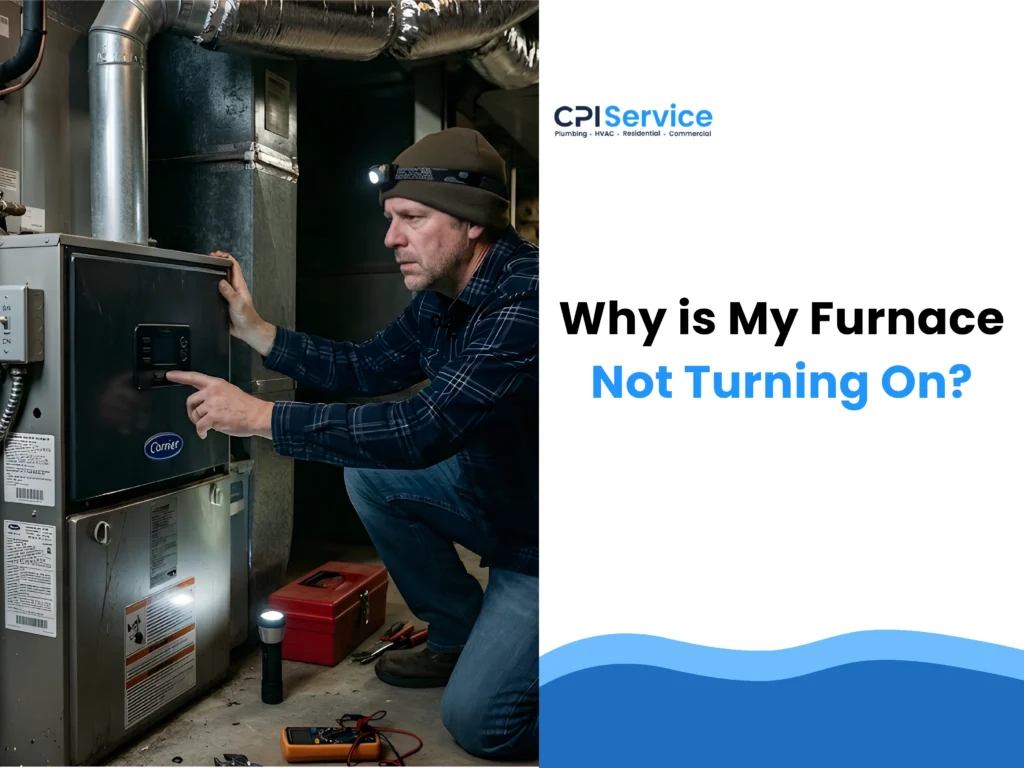
Your furnace may not be turning on if issues such as a thermostat misconfiguration, a tripped circuit breaker, a switched-off power supply, or an interrupted gas flow are present. These initial checks often reveal deeper problems such as clogged filters, blocked vents, ignition failure, or failing components like flame sensors, blower motors, limit switches, gas valves, or loose wiring. Once these possible causes are understood, identifying whether the system is electric, gas, or oil-based helps narrow the focus and guides more precise troubleshooting.
With that context, a structured troubleshooting sequence helps identify problems quickly and reduces the likelihood of overlooking causes. Begin by verifying the thermostat and power supply, then move on to the gas supply and airflow through the filters and vents, and continue by inspecting the ignition system, safety switches, and control panel. This step-by-step flow not only improves accuracy but ties directly into ongoing maintenance, where regular filter changes, clean vents, and routine inspections reduce wear and lower the risk of breakdowns. Signs such as unusual noises, uneven heating, frequent cycling, or system unresponsiveness indicate that professional repair or replacement may be needed.
What Are the Common Reasons Why Your Furnace Won’t Turn On?
Common reasons your furnace won’t turn on include incorrect thermostat settings, a tripped circuit breaker, a power switch that’s off, or a gas supply interruption. These problems prevent the furnace from receiving the correct signal, fuel, or electrical power required to begin the heating cycle. Problems with internal components can also stop the system from operating properly. Issues involving a dirty air filter, clogged vents, a faulty flame sensor, ignition system failure, or a worn blower motor can prevent the furnace from starting or producing heat.
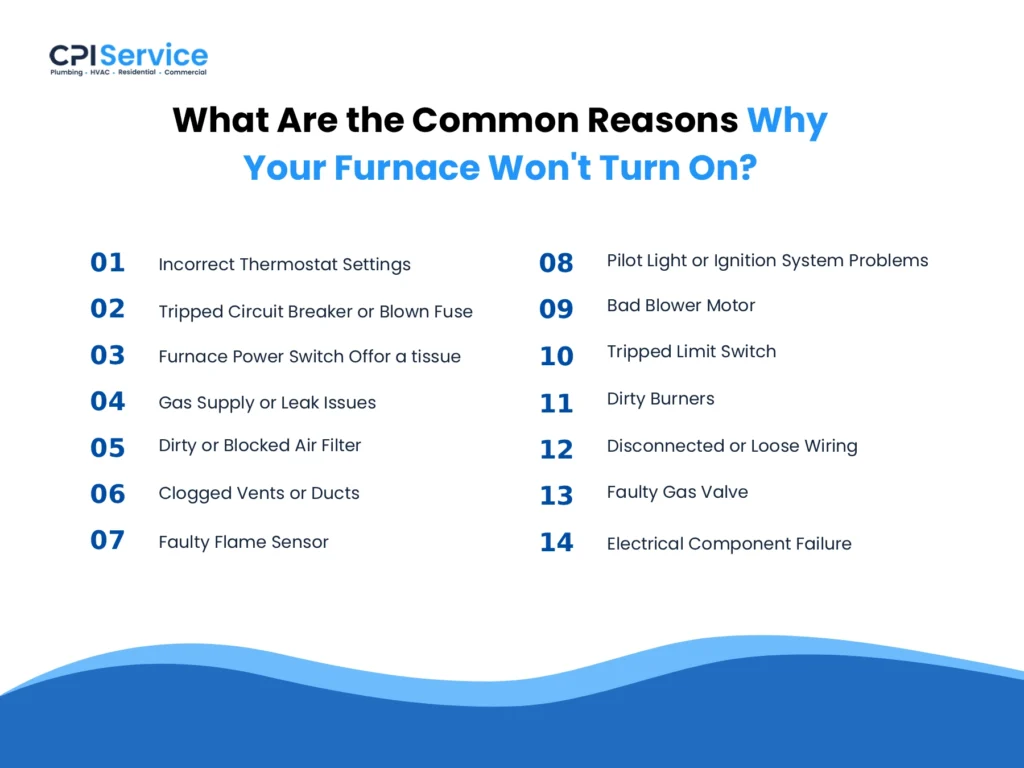
14 key reasons why your furnace won’t turn on are:
- Incorrect Thermostat Settings
- Tripped Circuit Breaker or Blown Fuse
- Furnace Power Switch Off
- Gas Supply or Leak Issues
- Dirty or Blocked Air Filter
- Clogged Vents or Ducts
- Faulty Flame Sensor
- Pilot Light or Ignition System Problems
- Bad Blower Motor
- Tripped Limit Switch
- Dirty Burners
- Disconnected or Loose Wiring
- Faulty Gas Valve
- Electrical Component Failure
Incorrect Thermostat Settings
If the thermostat is not set to heat mode or the temperature is set below the current room temperature, the furnace will not turn on, usually due to an incorrect thermostat setting. This problem can also occur if the thermostat batteries are dead, the temperature controller is misconfigured, or the wiring is loose, preventing proper signals from reaching the furnace control board.
When the thermostat does not send a heating command, the ignition system and blower motor remain inactive. Without this essential signal, the furnace cannot initiate the heating cycle, leaving the system completely off and preventing the home from being properly warmed and comfortable.
Tripped Circuit Breaker or Blown Fuse
When a circuit breaker trips or a fuse blows in the electrical panel, the furnace may fail to turn on. This condition typically results from an electrical overload, a short circuit, or a malfunctioning furnace component, causing the circuit breaker to trip or the fuse to blow, interrupting the electricity required for the furnace to operate.
Without electrical power, key components such as the control board, ignition system, and blower motor cannot function. Because these parts require continuous power to initiate the heating cycle, the furnace remains inactive until the circuit breaker or fuse issue is identified and corrected.
Furnace Power Switch Off
If the power switch connected to the heating system is turned off, the furnace may fail to start. This switch is usually installed near the furnace cabinet or on the access panel and often resembles a standard light switch, making it easy to accidentally turn off during cleaning, maintenance, or nearby electrical work.
When the switch cuts off the electrical supply, the furnace control board and other internal components receive no power. Without electricity reaching the system, the ignition process cannot begin, and the blower motor cannot operate, leaving the heating system inactive until the furnace power switch is turned back on.
Gas Supply or Leak Issues
The furnace cannot operate if fuel does not reach the burner assembly inside the heating system. A closed gas shut-off valve, interruption in the natural gas line, or blockage in the fuel supply can prevent gas from flowing to the furnace. Sometimes, the gas supply may be temporarily stopped for maintenance or safety reasons.
Without fuel entering the combustion chamber, the ignition system has nothing to ignite, and the burner assembly cannot produce flame. Because combustion never begins, the furnace cannot generate heat, leaving the home without warm air until the problem related to gas supply or a potential leak is identified and resolved.
Dirty or Blocked Air Filter
A dirty air filter can prevent the furnace from turning on by restricting the airflow required for safe operation. Dust, debris, and pet hair accumulate in the filter over time, reducing the amount of air that moves through the heating system.
When airflow becomes too limited, the furnace safety system detects rising temperatures in the heat exchanger and shuts off the heating cycle to prevent overheating. As a result, the furnace remains shut down until the airflow problem caused by the dirty or blocked air filter is corrected.
Clogged Vents or Ducts
Blocked vents or obstructed ductwork can prevent the furnace from turning on because proper airflow is required for the heating system to operate safely. Dust buildup, furniture blocking vents, debris in ducts, or collapsed duct sections can restrict airflow through the ventilation system.
When airflow becomes severely limited, safety controls inside the furnace detect abnormal pressure or overheating conditions. These protective mechanisms stop the heating cycle to prevent internal damage, leaving the furnace inactive until the airflow restriction caused by clogged vents or ducts is resolved.
Faulty Flame Sensor
A furnace may fail to start or even shut down if the system cannot confirm a burner flame is present during the heating cycle. This situation often occurs when the flame sensor becomes dirty, corroded, or coated with carbon buildup, which interferes with its ability to detect combustion inside the burner assembly.
When the sensor fails to detect a flame, the furnace control board automatically shuts off the gas valve as a safety measure. Because the system cannot confirm safe combustion, the heating cycle stops, and the furnace remains inactive until the flame sensor issue is cleaned or repaired.
Pilot Light or Ignition System Problems
The furnace will not start if the burner system cannot produce a flame, which usually occurs due to a pilot light or ignition system problem. This can occur when the pilot light goes out in older furnaces or when the electronic ignition system fails due to a worn ignitor, faulty ignition module, or damaged thermocouple.
When the burner assembly cannot produce a stable flame, the furnace control board stops the heating sequence to prevent gas from accumulating inside the combustion chamber. As a result, the heating system remains off until the issue affecting the pilot light or ignition system is repaired.
Bad Blower Motor
A faulty blower motor can prevent the furnace from turning on because proper airflow is required for safe operation during the heating cycle. When the motor becomes worn, seized, or electrically damaged, it cannot move air through the system, which disrupts normal furnace startup.
If airflow across the heat exchanger is insufficient, the control system may shut down the furnace to prevent overheating and internal damage. As a result, the system may remain inactive until the blower motor is repaired or replaced.
Tripped Limit Switch
Excessive temperature inside the furnace can cause the heating system to shut down automatically when the limit switch detects overheating in the heat exchanger, which may result from restricted airflow, a clogged air filter, or blocked ventilation. The limit switch is designed to monitor furnace temperature and protect internal components from heat damage.
When this safety switch activates, it interrupts the furnace heating cycle and stops the burner operation until the temperature returns to a safe level. Because this safety device prevents the system from continuing to operate under unsafe conditions, the furnace may remain inactive until the underlying cause of the overheating is identified and resolved.
Dirty Burners
Dirty burners can prevent the furnace from turning on because proper combustion is required to begin the heating cycle. When dust, dirt, or corrosion builds up on the burner assembly, the gas-air mixture may fail to ignite or burn properly, disrupting startup.
If the burners cannot produce a stable flame, the control system may shut down the furnace as a safety measure. As a result, the system may remain inactive until the burners are cleaned or serviced.
Disconnected or Loose Wiring
A furnace will not turn on if the electrical wiring is loose, disconnected, or corroded, as this interrupts the signals and power needed to start the heating cycle. When connections to the thermostat, control board, ignition system, or blower motor are unstable, the system cannot respond properly to a call for heat.
If these signals fail to reach key components, the furnace will not activate, and the heating cycle cannot begin. As a result, the system remains off until the wiring is inspected and securely repaired.
Faulty Gas Valve
A furnace will not turn on if the gas valve is faulty, as fuel cannot reach the burner to begin the heating cycle. When the valve is defective, stuck, or fails to open due to internal failure, signal loss, or a blockage in the gas line, gas flow to the burner assembly is interrupted.
Without fuel entering the combustion chamber, the system cannot produce a flame, and the heating cycle cannot start. As a result, the furnace remains inactive until the gas valve issue is diagnosed and repaired.
Electrical Component Failure
Failures in the furnace’s electrical components can stop the system from turning on by interrupting the signals and power needed for startup. When parts such as the control board, transformer, relay, or capacitor malfunction, the furnace cannot respond to the thermostat or activate essential components.
Without these functions, the ignition system and blower motor will not operate. The furnace remains off until the faulty component is identified and repaired.
Why Is My Electric Furnace Not Turning On?
Your electric furnace may not be turning on due to power loss, wiring issues, incorrect thermostat settings, or failed components such as heating elements, relays, transformers, or sequencers. A tripped circuit breaker or a malfunctioning control board may also prevent the system from starting.
The furnace will remain inactive until these electrical problems are identified and repaired. Regular inspection and maintenance of electrical components help prevent these issues and keep the system operating safely and efficiently.
Why Is My Gas Furnace Not Turning On?
Your gas furnace may not be turning on due to a dirty flame sensor, a failed igniter, a tripped circuit breaker, a faulty thermostat, or other issues with mechanical or safety components. These faults can interrupt the ignition sequence and prevent the furnace from starting.
If the system cannot produce or maintain the burner flame required for heating, it will not begin the heating cycle. Problems with components such as the draft inducer motor, pressure switch, control board, or safety switches can disrupt startup, leaving the furnace inactive until the underlying issue is diagnosed and repaired.
Why Is My Oil Furnace Not Turning On?
Your oil furnace may not be turning on due to issues such as an empty oil tank, a clogged fuel filter, a blocked oil line, or ignition failure. When fuel cannot reach the burner or the burner cannot ignite the oil properly, the system cannot produce heat or warm the home effectively.
Other mechanical or electrical problems may also prevent operation. Faults in the burner motor, thermostat signal, control board, or safety controls can interrupt the startup process, leaving the furnace inactive until the underlying issue is diagnosed and repaired by a technician.
Why Is My Furnace Running But Not Heating?
Your furnace may be running but not heating due to issues such as a dirty air filter, blocked vents, a malfunctioning thermostat, or a faulty flame sensor. These problems can prevent the system from properly producing or distributing heat, even while it continues to run.
Airflow blockages inside your home, such as furniture placed against vents or rugs covering registers, can further limit heat circulation and leave some rooms cold. Clearing these obstructions can help restore proper airflow and improve comfort. Restricted airflow or improper combustion can also cause the furnace to blow cold air instead of warm air.
Why Is My Furnace Not Turning On After a Power Outage?
Your furnace may fail to turn on after a power outage due to a tripped circuit breaker, a safety switch that requires resetting, or a thermostat that lost its programmed settings. These interruptions prevent electricity or control signals from reaching key furnace components, stopping the heating system from starting.
Internal parts such as the control board, ignition system, or safety switches may also need to be reset before normal operation can resume. Until these components restore proper function, the furnace will remain inactive, and manually checking the electrical panel, resetting switches, or restoring thermostat settings is often required to bring the system back online.
How Can You Troubleshoot a Furnace That Won’t Turn On?
To troubleshoot a furnace that will not turn on, verify the thermostat settings, ensure the power switch is on, and check the circuit breaker for interruptions. Confirm the gas supply is active and the valve is open, then clean or replace the air filter to maintain proper airflow. Examine the ignition system to ensure the burners ignite and service the flame sensor if necessary. Ensure the blower motor operates correctly and clear any clogs in the condensate drain. Check vents and ducts for airflow restrictions, assess the limit switch for overheating, and review control panel error codes to identify faults. If no major issues are detected, reset the furnace to restore normal operation.
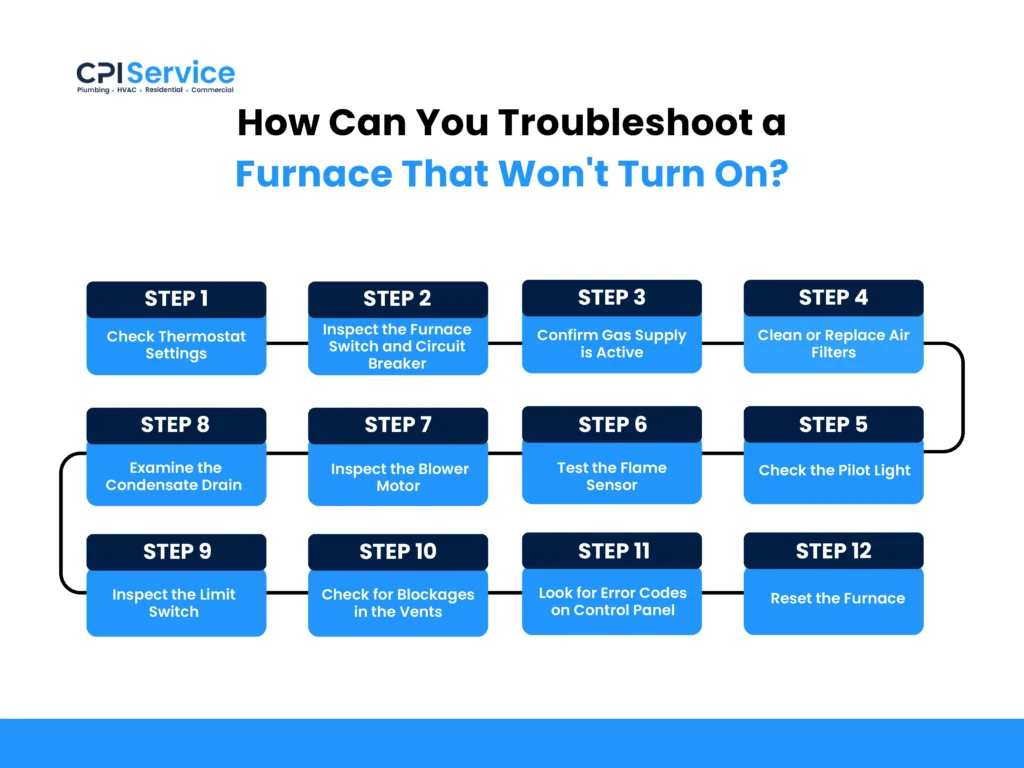
- Check Thermostat Settings
Set the thermostat to “Heat” mode and adjust the temperature above the current room temperature to trigger the furnace. The thermostat controls when the system turns on or off, so correct settings are necessary for proper operation. After making the adjustment, observe whether the furnace responds. If it does not turn on, the issue may be with the thermostat or another part of the system.
- Inspect the Furnace Switch and Circuit Breaker
Make sure the furnace power switch is turned on and check the breaker panel for any tripped breakers. The system requires electrical power to operate all its components, so any interruption will prevent it from starting. Reset any tripped breakers or turn the switch back on to restore power, then verify whether the furnace runs properly.
- Confirm Gas Supply is Active
Ensure the gas valve is open and check that other gas appliances are working to verify the supply is active. Fuel is required for combustion, so without it the burners cannot ignite or produce heat. Verifying the supply helps determine whether the issue is fuel-related or caused by another mechanical problem.
- Clean or Replace Air Filters
Remove the air filter and clean it if reusable, or replace it with a new one to maintain proper airflow. A clogged filter restricts airflow, which can lead to overheating or system shutdown. Keeping the filter clean supports safe operation of the heat exchanger and improves overall furnace performance.
- Check the Pilot Light
Ensure the pilot light is lit or relight it if necessary, and check that the electronic ignition system is functioning properly. A working ignition source is required to start the furnace burners and allow safe combustion. If the pilot light or ignition system fails, the furnace will not ignite and cannot produce heat.
- Test the Flame Sensor
Clean the flame sensor with fine sandpaper or replace it if needed, to ensure proper operation. The sensor confirms that the burners are producing a stable flame for safe combustion. If it is dirty or faulty, it can interrupt the heating cycle and shut down the furnace. Regular maintenance helps prevent unnecessary safety shutdowns.
- Inspect the Blower Motor
Check whether the blower motor is running, listen for unusual noises, and inspect the bearings and wiring for damage. The blower motor circulates heated air throughout the home, so proper operation is necessary for heat distribution. If it fails, warm air will not reach the rooms even if the furnace is running. Ensuring the blower functions properly helps restore consistent heating.
- Examine the Condensate Drain
Examine the drain line for clogs and clear it with water or a brush as needed. High-efficiency furnaces produce condensate that must drain properly to operate safely. A blocked drain can trigger safety switches and shut down the system. Keeping the drain line clear prevents unnecessary interruptions and ensures the furnace runs reliably.
- Check for Blockages in the Vents
Inspect all vents and registers, remove any furniture or rugs covering them, and check ducts for debris that may block airflow. Obstructed vents or ductwork can restrict airflow and prevent the furnace from heating effectively. Clearing these obstructions helps restore proper heat delivery and allows warm air to circulate efficiently throughout the home.
- Inspect the Limit Switch
Determine if the limit switch has tripped and identify any underlying causes, such as restricted airflow or a dirty filter. The limit switch prevents the furnace from overheating by shutting it off when temperatures rise too high. Once the issue is resolved, reset the switch to restore safe and normal furnace operation.
- Look for Error Codes on the Control Panel
Check the furnace control panel for any blinking lights or displayed error codes and compare them with the unit’s manual. Many furnaces use these diagnostic codes to indicate specific system issues. Interpreting the codes helps identify the faulty component and speeds up troubleshooting, reducing unnecessary repairs.
- Reset the Furnace
Turn the furnace off, wait a few minutes, and then turn it back on to reset the system. This process helps clear temporary faults or power-related interruptions that may prevent startup. If the issue is minor, the furnace may restart and resume normal heating after the reset.
When Should You Call a Professional Furnace Repair Technician?
You should call a professional furnace repair technician when your system shows signs such as unusual noises or odors, gas leaks or carbon monoxide concerns, frequent or short cycling, complete unresponsiveness, or poor heat distribution. Issues with the ignition system or signs of an aging and failing unit also require professional attention.
Accurate diagnosis, safe handling of components, and reliable repairs ensure the furnace operates correctly. Addressing problems promptly helps prevent further damage and allows a technician to determine whether repair or replacement is the most appropriate solution. Choosing professional furnace service helps maintain long-term system safety and performance.
The 7 warning signs that require a professional furnace repair technician are:
- Unusual Noises or Smells
Loud banging, grinding noises, or unusual odors from the furnace may indicate serious mechanical failure, electrical faults, or overheating components. A professional technician will inspect critical components, identify the exact cause, and perform the necessary repairs or replacements to restore safe, proper operation.
Handling these issues without proper tools or training can lead to electrical shock, fire hazards, or further system damage. Professional intervention is necessary to ensure accurate diagnosis, safe repair, and long-term reliability of the furnace.
- Gas Leaks or Carbon Monoxide Concerns
If you detect a gas smell or suspect carbon monoxide, turn off the furnace immediately and evacuate the home. A certified technician will locate the source of the leak, repair or replace faulty gas lines or components, test for carbon monoxide levels, and ensure the system is safe before restoring operation.
Attempting to handle gas leaks or CO issues without proper training can lead to explosion, poisoning, or fatal exposure. Professional intervention is required to manage these hazards safely and ensure the furnace operates without risk.
- Frequent Cycling or Short-Cycling
A furnace that turns on and off repeatedly may indicate issues such as a clogged filter, thermostat malfunction, or overheating within the system. A professional technician will inspect airflow, test the thermostat’s accuracy, check internal components, and address the underlying cause to restore proper operation.
Aiming to fix short-cycling without proper knowledge can lead to misdiagnosis, increased component wear, and higher energy use. Professional service ensures the issue is accurately resolved and helps protect the furnace from long-term damage.
- The system is Completely Unresponsive
When the furnace fails to start despite proper thermostat settings and power supply, it may indicate a control board failure, a blown fuse, or other electrical faults. A qualified technician will test electrical circuits, inspect the control board, identify failed components, and perform the necessary repairs or replacements to restore operation.
Attempting to troubleshoot electrical faults without proper training can result in electric shock, further damage to the system, or incorrect fixes. Professional service ensures safe handling, accurate diagnosis, and reliable system restoration.
- Poor Heat Distribution
Uneven heating, cold spots, or weak airflow may result from blower motor issues, blocked ducts, or failing internal components. A professional technician will inspect the blower system, check ductwork for obstructions or leaks, test airflow performance, and repair or replace faulty parts to restore even heat distribution.
Trying to fix airflow or internal component issues without proper knowledge can lead to further imbalance, hidden damage, or reduced system efficiency. Professional service ensures accurate diagnosis, proper airflow restoration, and consistent heating throughout the home.
- Ignition System Repair
Problems with the pilot light or electronic ignitor can prevent the burners from igniting and producing heat. A professional technician will inspect the ignition system, test components, clean or replace faulty parts, and ensure proper ignition timing to restore reliable operation.
Repairing ignition components without proper knowledge can lead to gas buildup, ignition failure, and safety risks, whereas professional servicing ensures safe handling and reliable furnace operation.
- Your Furnace is Old and Needs Replacement
Furnaces nearing the end of their lifespan often require frequent repairs and operate less efficiently. A professional technician will evaluate the system’s condition, compare repair costs with replacement options, and recommend a suitable upgrade based on performance, safety, and energy efficiency.
Attempting to continue using or repairing an aging furnace without proper assessment can lead to higher energy costs, unexpected breakdowns, or safety risks. Professional service ensures the right decision is made for long-term reliability and safe operation.
When Should You Replace Your Furnace Instead of Repairing It?
Replace your furnace when it is over 15–20 years old, has a cracked heat exchanger, or requires repairs that exceed 50% of its current value. Frequent breakdowns, unusual noises, or repeated service calls are strong indicators that the system is no longer cost-effective to maintain.
Investing in a new furnace in these situations ensures safer operation, better energy efficiency, and more reliable heating compared with continual repairs to an aging or damaged system. It also helps homeowners avoid recurring furnace repair costs that can add up significantly over time.
How Can You Maintain Your Furnace to Prevent Issues?
You can prevent furnace issues by performing regular maintenance tasks such as replacing the air filter, cleaning debris around the unit, and keeping vents and ducts clear to maintain proper airflow and efficient operation. Inspecting key components and performing routine maintenance, such as testing the thermostat and checking for leaks, ensures reliable operation, reduces the risk of breakdowns, and extends the furnace’s lifespan.
12 maintenance tips to help prevent furnace issues are:
- Regular Maintenance
Schedule routine furnace maintenance and seasonal inspections with a qualified technician to identify worn components, electrical faults, or airflow restrictions early. Regular checkups ensure that safety controls, such as limit switches and pressure sensors, function properly, helping maintain efficiency, prevent unexpected breakdowns, and extend the furnace’s lifespan.
- Replace or Clean the Air Filter Regularly
Check the air filter monthly during peak heating season and clean or replace it as needed to maintain proper airflow. A clean filter helps the furnace run efficiently, protects the blower motor and heat exchanger from strain, ensures consistent heat distribution, and extends the system’s lifespan.
- Keep Vents and Ducts Clean
Regularly inspect vents and ducts and remove any dust, debris, or blockages to maintain proper airflow. Unrestricted airflow helps the furnace operate efficiently, prevents overheating or short cycling, reduces strain on the blower motor, and maintains consistent temperatures while improving indoor air quality.
- Check the Furnace Blower Motor
Examine the blower motor for proper operation, listen for unusual noises, and check for worn bearings, electrical issues, or signs of overheating. A well-functioning motor ensures consistent heat distribution, reduces strain on the system, improves energy efficiency, and helps prevent costly breakdowns.
- Inspect and Clean the Flame Sensor
Keep the flame sensor clean and free of carbon buildup to ensure proper flame detection. Cleaning or replacing a dirty or coated sensor supports reliable ignition, prevents unnecessary shutdowns, reduces strain on the control system, and helps maintain safe and efficient furnace operation.
- Lubricate Moving Parts
Apply manufacturer-recommended lubricant to furnace motors, blower bearings, and other moving parts to reduce friction and ensure smooth operation. Proper lubrication helps prevent overheating, minimize wear, lower energy use, reduce noise, and maintain reliable furnace performance.
- Monitor the Furnace’s Performance
Track the furnace’s heat output, listen for unusual noises, and review energy usage to identify potential problems early. Regular observation helps detect inefficiencies, address minor issues, maintain consistent heating, and ensure safe and efficient operation.
- Ensure Proper Insulation and Sealing
Inspect the ductwork, vents, and furnace area for leaks or gaps, and seal them to prevent heat loss. Proper insulation and sealing help maintain consistent temperatures, improve energy efficiency, reduce system strain, and ensure warm air reaches all areas of the home.
- Test the Thermostat’s Accuracy
Set the thermostat to a higher or lower temperature and verify that the furnace responds correctly to the change. Accurate readings help maintain consistent indoor temperatures, reduce energy waste, prevent unnecessary cycling, and ensure the furnace operates efficiently.
- Clean the Furnace’s Combustion Chamber and Burner
Promptly clearing the combustion chamber and burners of residue ensures proper fuel combustion. This routine maintenance improves heating efficiency, prevents irregular flames, reduces the risk of carbon monoxide buildup, and keeps the furnace operating safely and reliably.
- Check for Gas Leaks
Look for any signs of leaks in the furnace and gas lines, including connections, valves, and piping. Identifying leaks promptly helps prevent fire hazards and carbon monoxide exposure, ensures a steady fuel supply, and keeps the furnace operating safely. If a leak is discovered, turn off the gas and call a qualified technician immediately.
- Schedule Annual Inspections and Tune-Ups
Arrange a professional furnace inspection and tune-up annually to assess worn parts, clean components, verify system calibration, and test safety controls. Regular maintenance prevents breakdowns, improves energy efficiency, extends the furnace’s lifespan, and ensures safe, consistent heating.

