

 Emergency Plumbing
 Plumbing Repairs
 Water Heaters
 Drain Cleaning
 Sewer Service
 Faucets & Fixtures
 Repiping
 Toilet Plumbing
 Trenchless
 Plumbing Leaks
 Air Conditioning
 Heating
 Minisplit Systems
 Heat Pumps
 HVAC Components
 HVAC Rebates
A heater usually stops working due to incorrect thermostat settings, restricted airflow, ignition or gas supply issues, or electrical problems like a tripped breaker. To troubleshoot, start by checking that the thermostat is set to “heat” and functioning correctly, then confirm the power supply and circuit breaker. Next, inspect the air filter and vents, as clogged filters or blocked airflow can cause overheating and shutdowns. If the system still fails to produce heat, the issue may involve the ignition system, pilot light, or gas supply.
Pay attention to specific symptoms for quicker diagnosis. A heater that runs but blows cold air often indicates airflow or ignition issues, while one that won’t turn on may have a thermostat or electrical fault. Short cycling usually indicates overheating or sensor problems. If the issue persists or you notice warning signs like gas smells, unusual noises, or repeated shutdowns, professional help is necessary. Regular maintenance, including filter replacement and annual tune-ups, helps prevent breakdowns and ensures safe, efficient operation.
What Are the Most Common Reasons Your Heater Is Not Working?
Heaters often stop working due to dirty or clogged filters, thermostat issues, ignition or pilot problems, power failures, overheating, blower motor faults, ductwork issues, heat pump malfunctions, or lack of maintenance. Restricted airflow can cause overheating and uneven heating, while thermostat or ignition faults can prevent the system from turning on or producing heat. Electrical issues may cut power, and problems with airflow or components can reduce heat distribution. Regular maintenance helps prevent airflow issues and breakdowns, keeping the heater running efficiently.
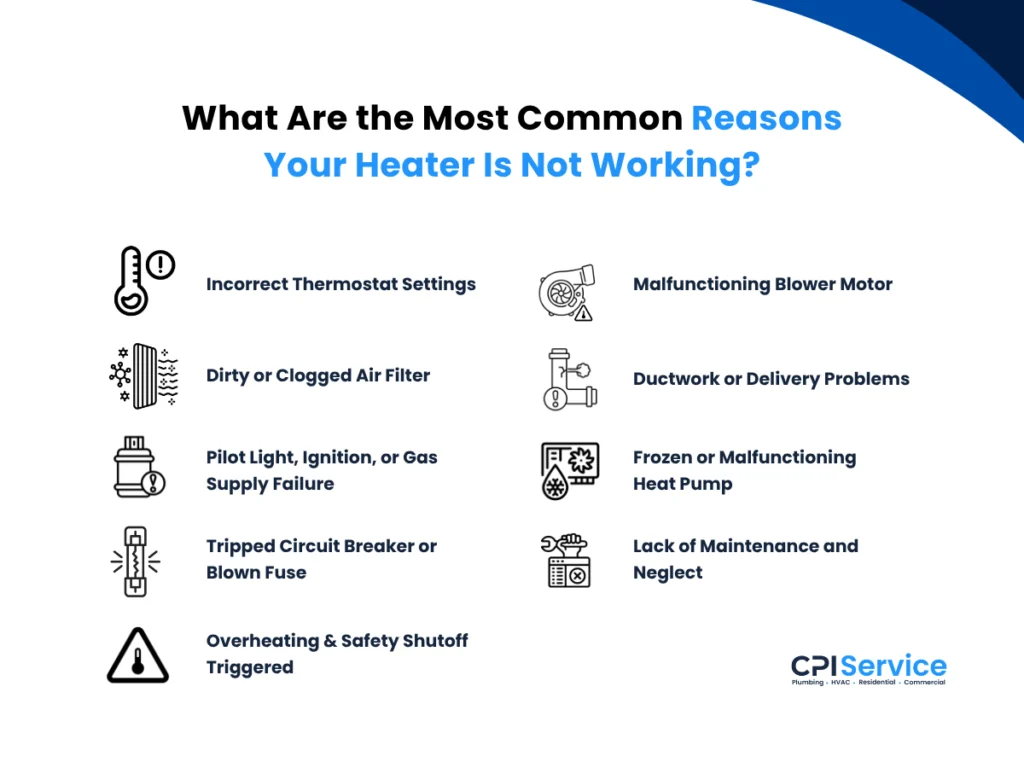
9 most common reasons your heater is not working:
- Thermostat Issues
- Dirty or Clogged Air Filter
- Pilot Light, Ignition, or Gas Supply Failure
- Tripped Circuit Breaker or Blown Fuse
- Overheating & Safety Shutoff Triggered
- Malfunctioning Blower Motor
Thermostat Issues
Incorrect thermostat settings, weak or dead batteries, or damaged wiring that disrupts communication between the thermostat and the furnace can prevent it from sending the correct signal, causing the heater to fail to turn on or regulate temperature. The heater may fail to start, struggle to reach the set temperature, cycle on and off irregularly, or run without producing heat.
In some cases, the thermostat may appear functional, but inconsistent readings can lead to underperformance and make it difficult to maintain a steady indoor temperature. Sensor faults, calibration issues, or loose connections can worsen the problem over time, increasing energy use and system strain and often requiring inspection, battery replacement, or wiring repair.
Dirty or Clogged Air Filter
Dust, pet hair, and other debris can clog the air filter, restricting airflow and causing the heater to overheat and shut down. Reduced airflow lowers efficiency and makes it harder for the system to maintain the desired temperature. The heater may work harder than necessary, increasing wear on internal components and raising energy use.
Uneven heating, extended cycles, and rooms that remain cold even when the system is operating are common signs of restricted airflow. Replacing air filters every 1 to 3 months helps maintain proper airflow, reduce system strain, and support safe, efficient operation.
Pilot Light, Ignition, or Gas Supply Failure
Drafts, a faulty thermocouple, normal wear and tear, low gas pressure, dirty burners, or ignition system issues can prevent the pilot light or igniter from working properly, causing the heater to fail to start. The heater may not turn on, may click or spark without producing heat, operate intermittently, or shut down unexpectedly.
The pilot may relight repeatedly but fail to stay lit, leaving rooms cold. These problems can disrupt normal operation, reduce heating performance, and increase safety risks. Because gas flow is involved, prompt inspection and repair are necessary to ensure safe, reliable operation.
Tripped Circuit Breaker or Blown Fuse
An overloaded circuit, faulty wiring, or a surge in electrical demand can trip a circuit breaker or blow a fuse, cutting power to the heater and causing it to shut off. The heater may fail to start even when the thermostat is set to heat, shut down unexpectedly, or become completely unresponsive during operation.
A tripped breaker or blown fuse often signals an underlying electrical issue that should be addressed before the heater is used again. Repeated trips indicate overloaded circuits or wiring faults, which can increase safety risks and affect system reliability, making prompt inspection and repair important for safe operation.
Overheating & Safety Shutoff Triggered
Blocked airflow from dirty filters, clogged vents, or a faulty blower motor can cause heat to build up inside the heater, triggering the safety shutoff. The heater runs for short periods, cycles on and off frequently, or produces uneven indoor temperatures, reducing comfort and efficiency.
The heating system appears to operate normally at first, then shuts down repeatedly as the safety mechanism prevents overheating. Frequent shutdowns place additional strain on components and affect performance over time, making inspections and airflow corrections important for reliable, safe operation.
Malfunctioning Blower Motor
A failing blower motor, caused by wear, electrical issues, overuse, or age-related deterioration, can prevent your heater from distributing warm air even when it is running. The heater can run without air from the vents, produce unusual noises such as grinding or rattling, blow cold air during operation, or create uneven heating.
Restricted airflow can lead to inefficient heating, overheating, or irregular cycling, all of which affect overall performance. Continued operation under these conditions can place added strain on internal components and increase the risk of further damage, making timely inspection and repair important for safe, reliable operation.
Ductwork or Delivery Problems
Problems with ductwork can block or leak airflow, reducing the heater’s ability to deliver warm air evenly throughout the house. Damage, disconnections, or blocked vents can disrupt airflow and prevent proper heat distribution across different rooms.
Some areas remain cold, airflow feels weak, and indoor temperatures become inconsistent even while the heater is running. The heater works harder to compensate for airflow issues, increasing energy use and system strain. Ongoing issues can reduce efficiency and comfort, making inspection and repair of ducts and vents important for proper heating performance.
Frozen or Malfunctioning Heat Pump
Cold weather, refrigerant imbalance, or airflow restrictions can cause ice buildup or component failure, reducing a heat pump’s ability to provide heat effectively and leading to inefficient operation. The heater produces reduced heat output, blows cold air from the vents, runs continuously without reaching the desired temperature, or exhibits poor heat transfer.
Ice formation or mechanical faults can block proper operation and limit heating performance. Continued operation under these conditions increases strain on components and reduces efficiency, making defrosting, refrigerant adjustment, or professional repair necessary to ensure reliable, consistent heating.
Lack of Maintenance and Neglect
Neglecting regular maintenance can cause heater components to degrade, reducing efficiency and increasing the risk of failure. Dirty filters, worn parts, and unchecked electrical connections can lead to performance issues and reduced system reliability.
The heater can produce weak airflow, inconsistent heating, unusual noises, or frequent breakdowns, with complete failure possible during peak winter use. Poor maintenance can lead to multiple issues at once, increasing system strain and energy use, making routine inspections, cleaning, and timely part replacement important for safe, reliable operation.
What Do These Specific Heater Situations Mean?
Heater problems usually stem from safety shutdowns, faulty parts, or blocked airflow. A heater running without heat often points to a dirty filter, ignition issue, or incorrect thermostat setting, while short cycling suggests overheating or a thermostat fault. After outages or long inactivity, tripped breakers, lockouts, or dust buildup may also affect function. Common signs include weak airflow, uneven heating, and odd smells, typically addressed by checking filters, power, and ignition.
- Heater Not Blowing Hot Air
A heater that is running but not blowing hot air indicates that the system’s ability to generate or transfer heat has been interrupted. While the fan continues to operate and the heater responds to the thermostat, neither heat production nor airflow delivery functions properly. This issue can occur as a safety mechanism or due to a failure in one of the heating components.
Clogged or dirty air filters, pilot light or ignition system failures, and incorrect thermostat settings can prevent the heater from entering proper heating mode. The heater blows cold air, airflow feels weak or uneven, or the unit runs continuously without raising the room temperature.
- Heater Keeps Shutting Off After a Few Minutes
When a heating system turns on but shuts off shortly after, it is known as short cycling and indicates the system cannot continue operating due to internal safety or temperature issues. It shuts down before completing a full 10-15 minute heating cycle, resulting in uneven heating, higher energy bills, and additional wear on components.
Dirty or clogged air filters that restrict airflow, safety shutoff switches triggered by overheating, and faulty thermostats sending inconsistent signals often lead to this situation. The heater runs for only a few minutes, cycles on and off frequently, and fails to maintain a steady indoor temperature.
- AC Works, but the Heater Does Not
When the cooling system operates normally, but the heater does not, the issue is limited to the heating components or the mechanism that switches between heating and cooling. Power supply and airflow remain functional, but the heating elements fail to activate or operate properly.
A malfunctioning heating element or burner, a thermostat that does not switch to heating mode, or an inactive ignition system or gas supply are the reasons behind this issue. The system cools normally, but no heat is produced when set to heating mode, and the thermostat does not trigger the heater.
- Heater Not Working After a Power Outage
A heater that does not restart after a power outage indicates a safety lockout or a reset issue within the system. The interruption disrupts normal operation, and the control board or sensors prevent the heater from restarting until proper conditions are restored or a manual reset is performed.
Tripped circuit breakers, a furnace power switch left off, or a control board that does not reset automatically are common causes. The heater fails to turn on after power returns, produces no airflow from the vents, and remains unresponsive even when the thermostat is active.
- Heater Not Working After Summer
A heater that fails to operate after a long period of inactivity often indicates dust buildup, minor corrosion, or a safety lockout during initial startup. Components may not function properly after months of non-use, preventing ignition or normal operation when the system is turned on again.
Common causes include a dirty air filter, an unlit pilot light or faulty flame sensor, electrical issues such as a tripped breaker, or incorrect thermostat settings. The heater may start slowly, produce a burning smell due to dust buildup, show weak airflow, or deliver inconsistent heating.
Why Is My Gas Heater Not Working?
A gas heater may stop working due to issues with the pilot light, ignition system, gas valve, or airflow, all of which can prevent it from igniting fuel or maintaining a steady gas supply. If it will not start, check the power connections, such as breakers and switches, and make sure the thermostat is set to heat. Replace blocked air filters to restore proper airflow.
Resetting the unit, relighting the pilot light, or cleaning the flame sensor may help restore function. A clicking sound without ignition usually indicates a faulty igniter or a disruption in fuel delivery, which may require professional attention.
Why Is My Electric Heater Not Working?
Your electric heater may stop working due to a problem with its wiring, heating elements, or circuit connections, as any disruption can prevent it from producing heat. When it fails to operate, the problem is often linked to electrical faults that interrupt power delivery or heat generation.
Common causes include a tripped circuit breaker, a blown fuse, a faulty thermostat, a damaged heating element, or a triggered high-limit safety switch. To troubleshoot, check the electrical panel for tripped breakers, ensure the thermostat is set to heat and above room temperature, and inspect connections to confirm proper power flow.
Why Is My Space Heater Not Working?
Your space heater may stop working because of built-in safety mechanisms or electrical issues. Features like tip-over switches, overheat protection, and thermal fuses are designed to prevent accidents but can shut down the unit when triggered. Other possible causes include a faulty thermostat, a blown fuse, or simple power interruptions.
To troubleshoot, unplug the heater, inspect it for blockages, and make sure it is placed on a stable, flat surface. In such cases, the unit may turn off unexpectedly, fail to start, or produce little to no heat even when it appears to be powered.
How Do You Troubleshoot a Heater That Is Not Working?
You can troubleshoot a heater by checking the thermostat settings and batteries, inspecting and replacing clogged air filters, and verifying that the circuit breaker, power switch, and, for gas heaters, the pilot light or gas valve are functioning. If the furnace is in lockout, reset it, and listen for unusual noises that may indicate mechanical problems or loose components.
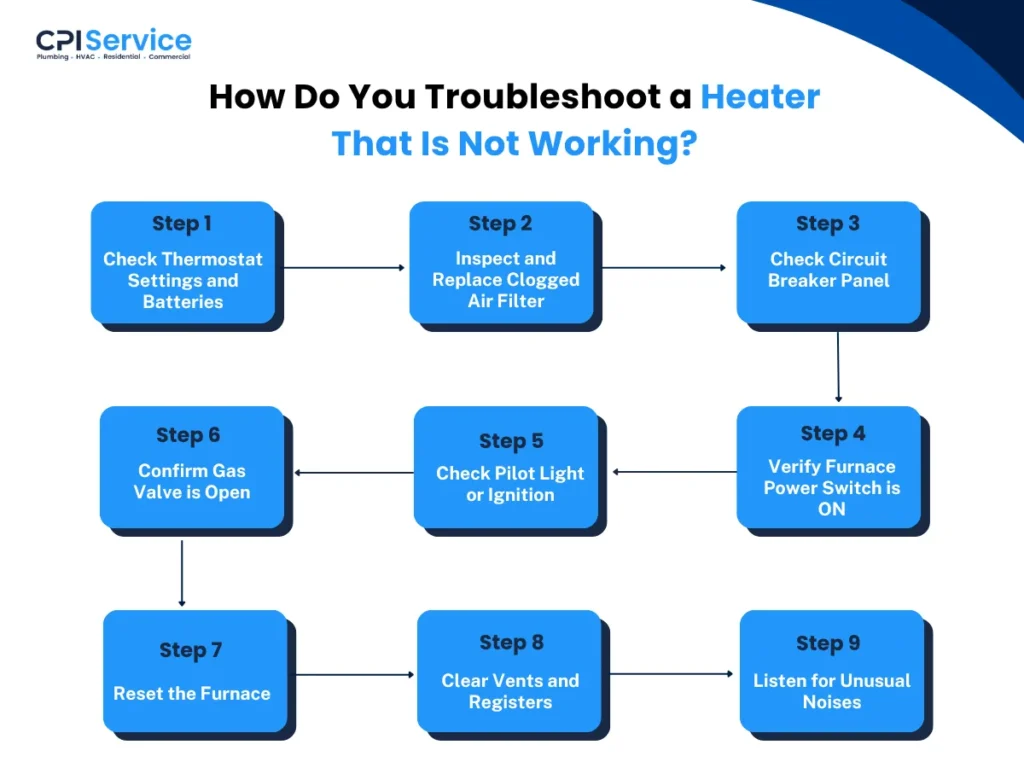
Following the 9 actions below helps identify common causes of heater failure and safely and efficiently restore normal operation:
- Check Thermostat Settings and Batteries
- Inspect and Replace Clogged Air Filter
- Check Circuit Breaker Panel
- Verify Furnace Power Switch Is On
- Check Pilot Light or Ignition
- Confirm Gas Valve Is Open
- Reset the Furnace
- Clear Vents and Registers
- Listen for Unusual Noises
Check Thermostat Settings and Batteries
Check that the thermostat is set to “heat” mode and adjust the temperature above the current room temperature. Replace batteries if the display appears dim or unresponsive, and confirm that the system responds when settings change.
The thermostat controls how the heater operates, and incorrect settings or weak batteries can prevent the system from turning on. If it fails to send a proper signal, the heating system remains inactive even when the temperature drops below the set level.
Inspect and Replace Clogged Air Filter
Locate the air filter near the return vent or furnace and remove it for inspection. If the filter appears dirty or filled with dust, replace it with a clean one to restore proper airflow and system performance.
A clogged air filter restricts airflow in the heating system, reducing efficiency and potentially causing overheating. When airflow becomes blocked, the heater cannot distribute warm air properly and may shut down as a safety measure.
Check Circuit Breaker Panel
Open the breaker panel and locate the switch assigned to the heating system. If the breaker appears to be tripped, reset it by switching it off and then back on, and check whether the heater resumes operation.
The circuit breaker supplies electrical power to the heater, and a tripped breaker can stop the system from operating. Electrical interruptions prevent the heater from receiving the power required to run its components.
Verify Furnace Power Switch is ON
Locate the power switch near the furnace, often positioned like a standard wall switch. Ensure it is in the ON position, then observe whether the heater starts after power is restored.
The furnace power switch controls direct power to the heating unit, and if it is turned off, the system cannot function. Even when the thermostat and breaker are working, the heater remains inactive without this power source.
Check Pilot Light or Ignition
Inspect the pilot light to see if a steady flame is present. If the flame is out, follow the manufacturer’s instructions to relight it, or check the ignition system for signs of failure, such as repeated clicking without ignition.
The pilot light or ignition system is responsible for starting the heating process. If this component fails, the heater cannot ignite fuel and will not produce heat.
Confirm Gas Valve is Open
Locate the gas valve near the furnace and check its position. Ensure the handle aligns with the gas pipe, indicating that it is open, and confirm that the system begins heating after restoring fuel flow.
The gas valve controls the flow of fuel to the heater, and a closed valve prevents the system from generating heat. Without a proper gas supply, the heater cannot operate even if other components function correctly.
Reset the Furnace
Turn off the furnace power and wait a few minutes before turning it back on. If the system includes a reset button, press it as instructed and observe whether the heater resumes normal operation.
Resetting the furnace clears minor faults and allows the system to restart after an interruption or error. The heater may enter a lockout state when it detects a problem, which prevents normal operation.
Clear Vents and Registers
Inspect all vents and registers throughout the home and remove any furniture, dust, or debris blocking airflow. Ensure each vent remains open so the system can distribute heat evenly.
Blocked vents and registers restrict airflow and prevent warm air from reaching different areas of the house. Obstructions reduce heating efficiency and create uneven temperature distribution.
Listen for Unusual Noises
Turn on the heater and listen carefully for sounds such as banging, rattling, or clicking. Identify when the noise occurs and note its type, as this information helps diagnose issues like blower motor failure or ductwork problems.
Unusual noises indicate internal problems within the heating system, such as mechanical wear or loose components. Sounds often reveal issues that are not immediately visible during normal operation.
When Should You Call an HVAC Technician?
Homeowners should contact an HVAC technician if their heater continues to malfunction after basic troubleshooting, such as checking the thermostat, replacing the air filter, or resetting the system. Persistent issues like the heater failing to produce heat, blowing cold air, or shutting off repeatedly usually indicate problems with internal components such as the ignition system, blower motor, or control board that require professional diagnosis.
Immediate attention is also needed for signs of electrical, mechanical, or safety issues, including gas or burning odors, repeated circuit breaker trips, unusual noises, water leaks, frozen coils, uneven heating, frequent cycling, rapidly rising energy bills, or if the heater is over 10 years old. These problems involve complex or potentially hazardous components, and a qualified HVAC technician can safely identify the root cause, perform necessary repairs or replacements, and ensure regular maintenance to maintain safety and efficiency.
Should You Repair Your Heater or Replace It?
You should repair a heater if it has minor issues such as clogged air filters, a faulty thermostat, tripped safety switches, or loose components and operates reliably, while replacement is often the better choice for systems with frequent breakdowns, reduced efficiency, or high repair expenses. Repairing works well for stable systems with small faults, whereas replacement ensures long-term reliability for older or repeatedly failing units. The decision to repair or replace your heater depends on its age, overall performance, and the frequency of the issue.
Here is a clear breakdown to help you choose the right option.
| Factor | Repair Heater | Replace Heater |
| System Age | Under 8–10 years, components in good condition | Over 12–15 years, parts worn or outdated |
| Repair Cost | Low, limited to a single part | High, close to replacement cost |
| Frequency of Issues | Rare or minor problems | Frequent breakdowns |
| Heating Performance | Heats consistently | Uneven or insufficient heating |
| Energy Efficiency | Stable energy bills | Rising energy bills |
| Safety | No hazards | Gas leaks, overheating, or wiring issues |
| Component Condition | Most parts work well | Multiple parts failing |
| Long-Term Value | Extends system life | Improves efficiency and reliability |
How Do You Prevent Heater Problems From Happening Again?
To prevent heater problems, focus on regular maintenance, replace or clean the air filter every 1–3 months, schedule an annual HVAC tune-up, keep vents and registers clear, and test the thermostat before winter. Additionally, inspect the pilot light and gas valve annually and keep the area around the heater clean and free of debris or flammable materials. Together, these maintenance tasks help improve performance, reduce strain on components, enhance safety, and prevent costly breakdowns.
- Replace the Air Filter Regularly
Check the air filter every 1–3 months and replace it if it appears dirty or clogged. Install a filter that matches your system specifications to maintain proper airflow and improve overall heating performance.
Maintaining a clean air filter is essential for smooth airflow and proper heating system function. When the filter becomes clogged, it restricts airflow, reduces efficiency, and puts extra strain on components such as the blower motor.
- Schedule Annual HVAC Tune-Up
Plan a service visit once a year, ideally before winter begins. During the inspection, an HVAC technician will examine critical components such as the thermostat, blower motor, and ignition system to ensure consistent, reliable heating.
A yearly tune-up is essential for preventing recurring heater problems, as it helps identify worn parts, ignition issues, or electrical faults early, while also cleaning components and resolving minor concerns before they develop into major failures or a full system breakdown.
- Keep Vents and Registers Clear
Regularly inspect all vents and remove any furniture, dust, or debris that may be blocking airflow. Make sure each register stays open so warm air can circulate evenly throughout the home.
Keeping vents and registers unobstructed ensures proper airflow, prevents the heater from overworking, reduces energy costs, avoids uneven heating, and lowers the risk of system damage and carbon monoxide buildup.
- Test Thermostat Each Fall
Set the thermostat to heat mode and raise the temperature above the current room level. Confirm that the heater starts and responds properly, check that wiring and safety components are functioning, and replace batteries if the thermostat appears unresponsive.
Before the heating season begins, it’s important to test your thermostat to ensure the heater responds correctly. This helps prevent emergency repairs, short-cycling that strains motors, and inefficient temperature regulation.
- Inspect Pilot Light and Gas Valve Annually
Check that the pilot light shows a steady flame and confirm that the gas valve is open. This inspection also helps identify, clean, or replace faulty thermocouples and clear rust or debris from the pilot assembly. If the flame appears weak or unstable, contact a HVAC technician for further inspection.
Annual inspection of the pilot light and gas valve is essential to prevent heater failures, ensure safety, and improve efficiency. Inspecting them ensures the heater receives a steady fuel supply, preventing issues such as no heat, carbon monoxide leaks, or system breakdowns.
- Clear Area Around Heater
Check for dust, debris, flammable materials, or stored items that could block vents or interfere with the heater’s function. Keep snow, debris, and objects away from the unit, and maintain a safe distance around it to ensure reliable, safe operation.
To ensure safe and efficient operation, always keep the area around your heater clear. This prevents fire hazards, system overheating, and dangerous carbon monoxide buildup by allowing proper airflow and combustion.

