How to Clean a Furnace Flame Sensor
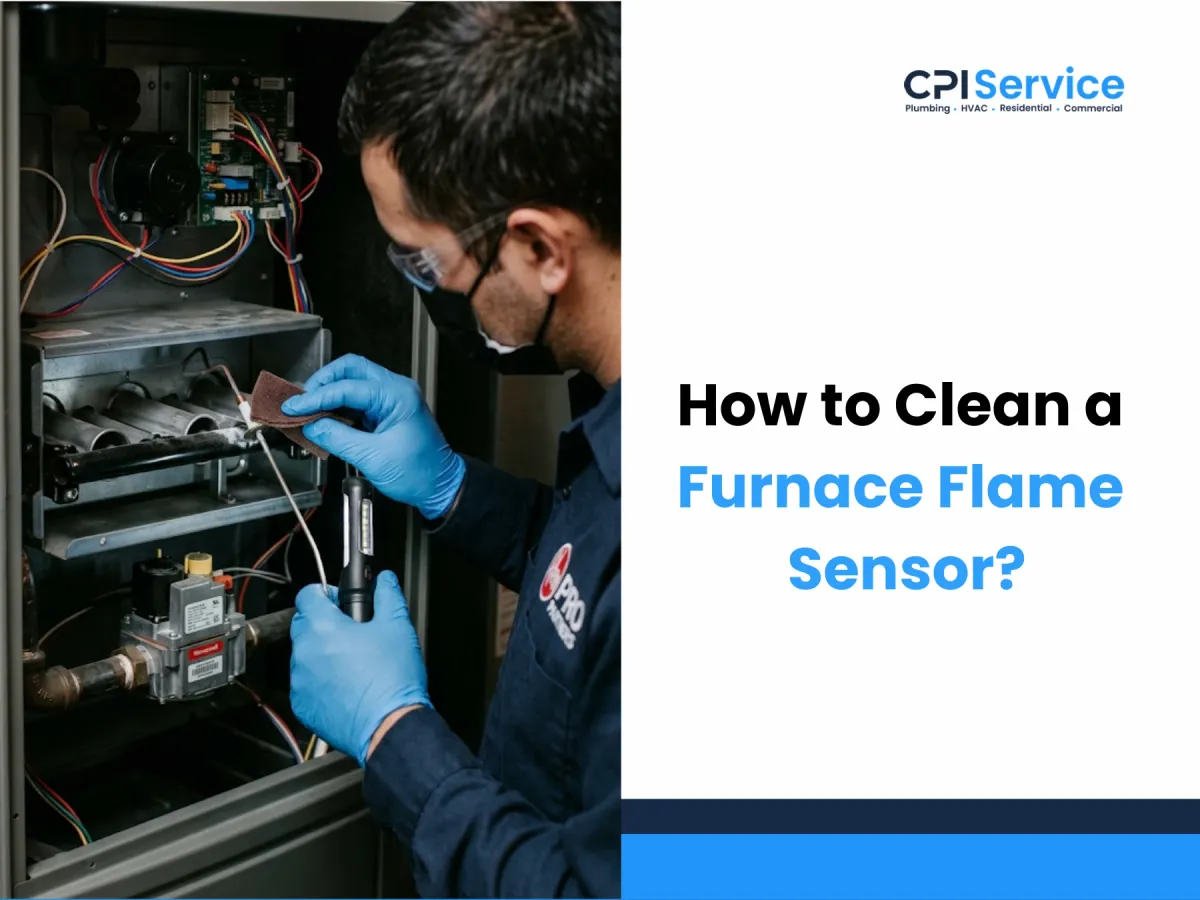
Table of Contents
- What Is a Flame Sensor on a Furnace?
- Signs Your Flame Sensor Needs Cleaning
- Why Is It Important to Clean a Flame Sensor on a Furnace?
- Before You Start
- Step-by-Step Guide to Cleaning a Flame Sensor on a Furnace
- Step 1: Shut Off the Furnace Power
- Step 2: Turn Off the Gas Supply
- Step 3: Remove the Furnace Access Panel
- Step 4: Locate the Flame Sensor
- Step 5: Disconnect the Flame Sensor Wire
- Step 6: Remove the Flame Sensor
- Step 7: Clean the Flame Sensor
- Step 8: Reinstall the Flame Sensor
- Step 9: Reconnect the Wire and Replace the Panel
- Step 10: Restore Power and Test the Furnace
- How to Clean Flame Sensors in Different Types of Furnaces
- Tools and Materials Needed to Clean a Furnace Flame Sensor
- How Often Should You Clean Your Furnace Flame Sensor?
- Issues That May Arise When Cleaning a Furnace Flame Sensor
- How to Resolve Common Furnace Flame Sensor Cleaning Issues
- Flame Sensor Problems in South Bay Homes
- When to Call a Professional
- Frequently Asked Questions
A flame sensor is a thin metal rod in the burner flame that tells the furnace’s control board the gas is burning. When soot or oxidation coats it, the board shuts the gas off seconds after the burners light. It’s the most common reason a furnace lights and then quits, often on San Jose’s first cold nights.
Because the board can’t confirm the flame, it then tries again, and the cycle repeats. In South Bay homes it often shows up after the furnace has sat idle all summer.
Cleaning the sensor takes about 15 minutes with basic tools: turn off the power and gas, remove the sensor, polish the rod gently with fine steel wool or emery cloth, and put it back exactly where it was. If you’re not comfortable working inside the furnace, a technician can clean and test it during a service call or fall tune-up.
What Is a Flame Sensor on a Furnace?
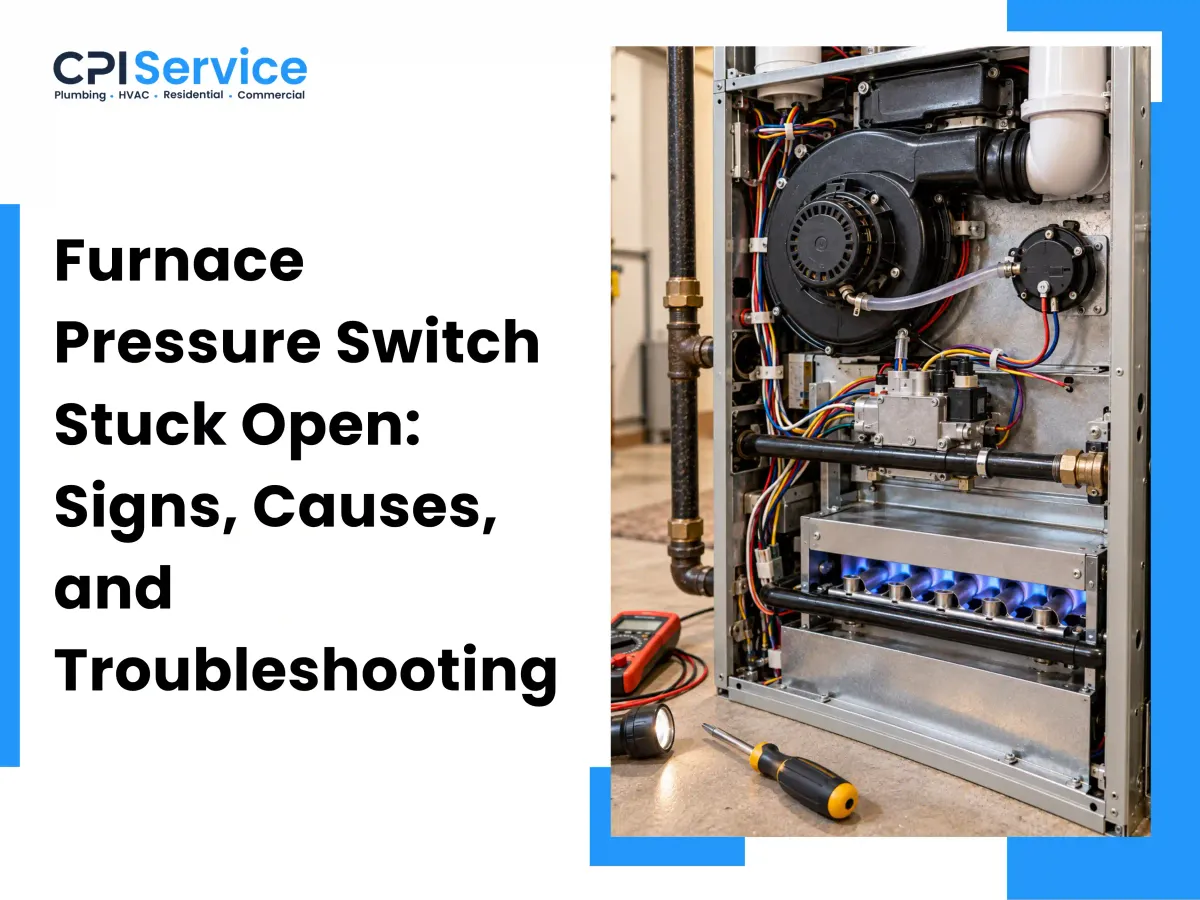
A furnace flame sensor (also called a flame rod) is a safety component: a thin metal rod with a white porcelain insulator at its base, mounted so the rod sits in the flame of one burner. After the igniter lights the gas, the control board sends a small electrical signal through the flame to the rod. If the signal comes back, the board knows the burners are lit and keeps the gas valve open. If it doesn’t, the board closes the gas valve within seconds, so unburned gas can’t build up in the furnace.
Every heating cycle depends on that check. Over time the rod collects soot, oxidation and dust, which weakens the signal until the board can no longer confirm the flame. The result is short cycling, failed ignition and, eventually, a furnace in lockout on a cold night. Cleaning the rod restores the signal.
Signs Your Flame Sensor Needs Cleaning
The classic sign is a furnace that lights and then shuts off. These are the signs to watch for:
- The furnace shuts off shortly after igniting. The burners light, run for a few seconds, then shut off because the sensor can’t confirm the flame. This is the most common sign.
- The furnace cycles on and off repeatedly. The control board retries ignition several times, lighting and shutting down each time.
- The furnace stops trying (lockout). After several failed tries, most furnaces lock out and won’t restart for a while, or until the power is reset, so it can look as if the furnace won’t turn on at all.
- Error codes on the control board. A blinking light or display code for “flame not sensed,” “ignition failure” or lockout points to flame detection. Check the code chart on the inside of the furnace door. A code for “flame sensed with no call for heat” is different: it can mean the gas valve isn’t closing fully or the board has a fault, so call a technician rather than cleaning the sensor.
- Visible soot or buildup on the rod. A dull, white, brown or black coating on the metal rod is a clear sign it needs cleaning.
- The furnace blowing cold air between attempts, because the blower runs while the burners are off.
Two related signs need a different fix. A weak, uneven, yellow or lazy burner flame isn’t caused by a dirty sensor, but it can be why the sensor isn’t seeing flame and why it gets dirty fast; burner and gas pressure problems need a technician. Higher gas or electric bills aren’t a typical flame sensor symptom; repeated ignition attempts waste a little energy, but a jump in bills usually has another cause.
Why Is It Important to Clean a Flame Sensor on a Furnace?
A clean sensor lets the furnace confirm the flame and finish each heating cycle instead of shutting down and retrying.
- Prevents unexpected shutdowns. With a clear signal, the furnace runs through its cycle and keeps the house warm instead of locking out on a cold night.
- Keeps the safety check working. A dirty sensor fails safe: it shuts the gas off even when the flame is fine. The sensor is what shuts off the gas if the flame really goes out, so it should be kept clean and never bypassed, jumpered or removed to keep a furnace running.
- Avoids wasted cycles. Every failed attempt runs the inducer, igniter and blower without delivering heat. Fewer retries mean less wasted energy and steadier heat.
- Reduces wear. Repeated ignition attempts wear the igniter, relays and other parts. Less cycling helps them last.
- Avoids unnecessary repairs. A dirty sensor is often misdiagnosed as a failed igniter, gas valve or board. Cleaning it first, or having it checked at a tune-up, can avoid replacing parts that were fine.
Before You Start
- You’ll need: a 1/4-inch nut driver or screwdriver, fine steel wool or a fine emery cloth, a clean dry cloth and a flashlight (full list below).
- Stop and call a technician if you smell gas, see soot outside the burner area, find a cracked porcelain insulator on the sensor, or aren’t comfortable working near the burners and gas valve.
Step-by-Step Guide to Cleaning a Flame Sensor on a Furnace
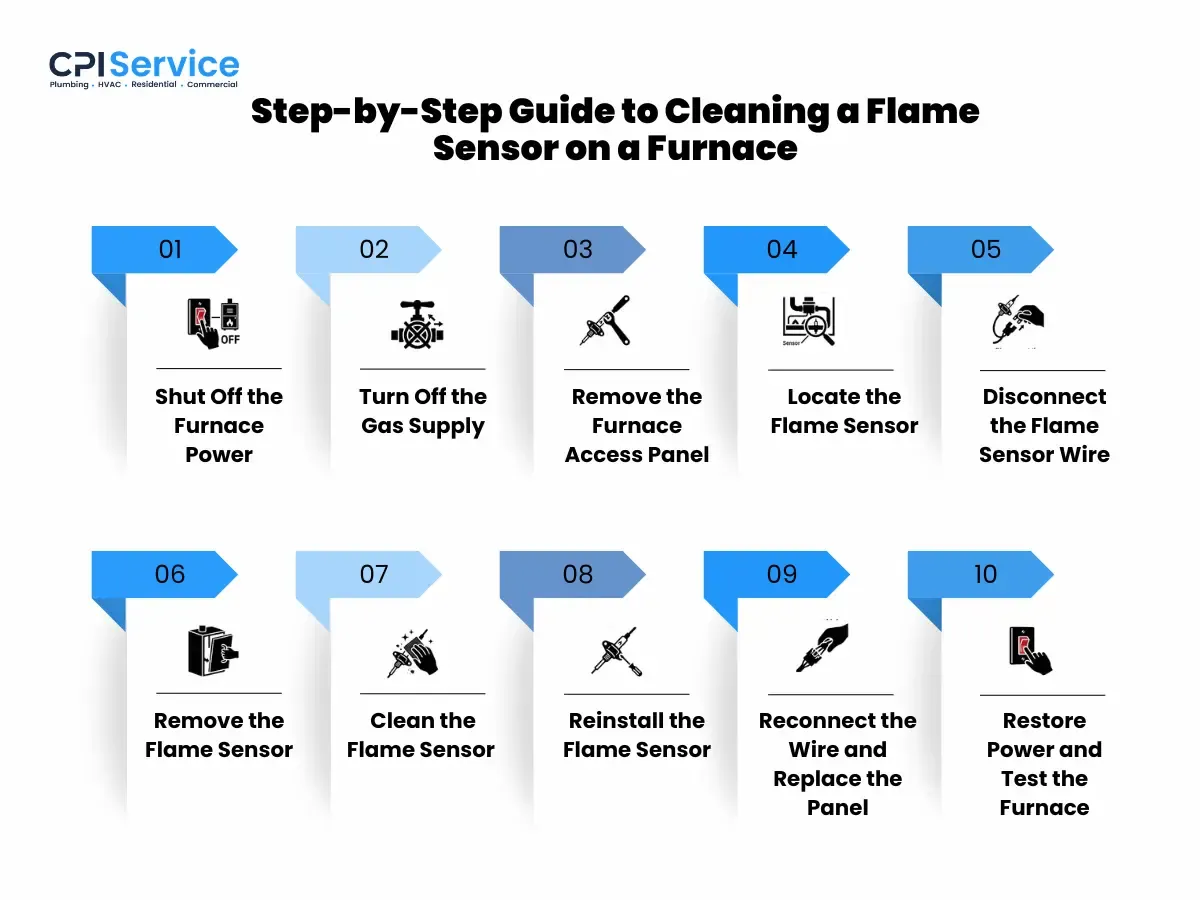
These steps are for a standard natural gas or propane furnace. Check your owner’s manual for anything specific to your model.
Step 1: Shut Off the Furnace Power
Set the thermostat to Off, then switch off the furnace’s power switch (it looks like a light switch on or near the furnace) or its breaker. Working with the power off protects you from the furnace’s 120-volt wiring and keeps the furnace from trying to light while you work.
Step 2: Turn Off the Gas Supply
Find the shutoff valve on the gas line next to the furnace, usually near its base, and turn the handle so it’s crosswise (perpendicular) to the pipe. That closes the valve.
Step 3: Remove the Furnace Access Panel
Most panels lift off or are held by a few screws; a 1/4-inch nut driver fits most of them. Set the screws aside for reassembly, and lift the panel off without forcing it, as wiring may run near the edges. Many furnaces have a door safety switch, so the furnace won’t run with the panel off.
Step 4: Locate the Flame Sensor
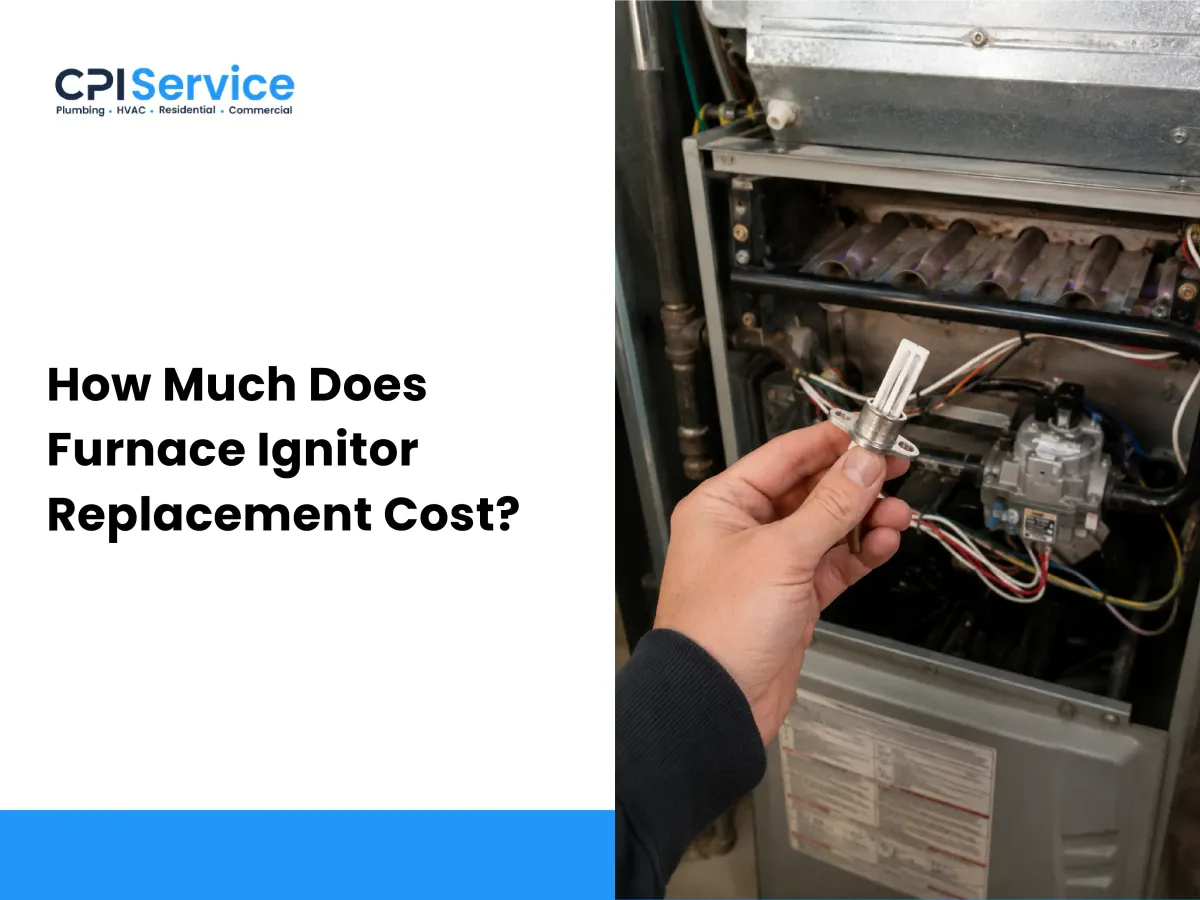
Use a flashlight to look along the row of burners. The sensor is a thin metal rod with a white porcelain base, mounted on a bracket so the rod sits in the path of one burner’s flame, usually at the end opposite the igniter, held by a single screw and connected to one wire. Don’t confuse it with the igniter, which is flat or coiled, fragile and should not be touched.
Step 5: Disconnect the Flame Sensor Wire
Grip the connector, not the wire, and pull it straight off with steady pressure. If it’s tight, wiggle it gently or use needle-nose pliers on the connector. Pulling on the wire can break it at the terminal.
Step 6: Remove the Flame Sensor
Remove the mounting screw and slide the sensor out gently, keeping the rod straight. Hold it by the base; the rod bends easily and the porcelain can crack.
Step 7: Clean the Flame Sensor
Gently rub the metal rod with fine steel wool or emery cloth, using light, even strokes, until the soot and oxidation are gone and the metal is clean and bright. Then wipe it with a clean, dry cloth. Don’t use coarse sandpaper or a file, which scratch the rod and help buildup return faster, and don’t scrub the porcelain.
Step 8: Reinstall the Flame Sensor
Slide the sensor back into exactly the same position, so the rod sits in the flame path, and line the bracket up with its mounting hole. Start the screw by hand, then tighten it snugly without overtightening, which can strip the threads or knock the sensor out of position.
Step 9: Reconnect the Wire and Replace the Panel
Push the wire connector firmly onto the sensor terminal; a loose connection causes the same problem as a dirty rod. Put the access panel back, making sure it seats fully so the door switch closes, and replace the screws.
Step 10: Restore Power and Test the Furnace
Turn the gas valve back in line with the pipe, switch the power on, and set the thermostat to Heat. The burners should light and keep running. Watch a full cycle: the flame should stay lit and the furnace shouldn’t shut down after a few seconds.
If the furnace still lights and shuts off, the sensor may be worn out, the wire or ground may be poor, or the problem may be elsewhere. See furnace not igniting for the other causes, and call for service.
How to Clean Flame Sensors in Different Types of Furnaces
The steps above apply to natural gas furnaces, which are what almost every South Bay home has, and to propane furnaces. Oil furnaces work differently.
How to Clean a Flame Sensor on an Oil Furnace
Oil furnaces don’t use a flame rod. They sense the flame with a cadmium sulfide (cad) cell, a small light sensor that “sees” the flame through the burner. A cad cell gets dirty from soot too, and the furnace locks out the same way. Because it sits inside the oil burner assembly, and soot on it usually means the burner needs adjusting, cleaning or replacing a cad cell is best done by a technician during an oil burner service. Don’t press the reset button over and over; each reset can pump more oil into the chamber.
How to Clean a Flame Sensor on a Propane Furnace
Propane furnaces use the same flame rod as natural gas furnaces, so the steps are the same. In Step 2, close the shutoff valve at the furnace; if you can’t find one, close the valve at the propane tank. If you smell propane, leave the home and call your propane supplier and 911 from outside.
Tools and Materials Needed to Clean a Furnace Flame Sensor
- Fine steel wool or fine emery cloth to remove soot and oxidation from the rod
- A 1/4-inch nut driver, or flathead and Phillips screwdrivers, for the access panel and the sensor’s mounting screw
- Needle-nose pliers for a tight wire connector
- A clean, dry, lint-free cloth to wipe the rod after cleaning
- Work gloves to protect your hands from sharp sheet-metal edges
- A flashlight to find the sensor among the burners
- The owner’s manual for model-specific details and reassembly
How Often Should You Clean Your Furnace Flame Sensor?
Once a year is usually enough, ideally during a fall furnace tune-up before the heating season. That prepares the furnace for steady winter use and catches buildup before it causes a shutdown.
Clean it sooner if the furnace starts lighting and shutting off. Furnaces in dusty attics and garages may need it more often. If the sensor needs cleaning several times a season, something is making it dirty, such as poor combustion, a dirty burner or air pollutants, and the furnace should be checked.
Issues That May Arise When Cleaning a Furnace Flame Sensor
Most problems come from too much force, the wrong tool or careless reinstallation. Each can stop the furnace from lighting:
- Bending or scratching the rod. Scrubbing too hard can bend the rod out of the flame or scratch it.
- Breaking the wire connector by pulling on the wire instead of the connector.
- Misaligned reinstallation. If the rod isn’t back in the flame path, or the screw is loose, the furnace won’t confirm the flame.
- Stripping the mounting screw with the wrong tool or too much force.
- Cracking the porcelain insulator with rough handling. A cracked insulator lets the signal leak to ground.
- Incomplete cleaning that leaves residue on the rod, so the shutdowns continue.
- Disturbing nearby parts such as the igniter, wiring or burners while removing the panel or sensor.
How to Resolve Common Furnace Flame Sensor Cleaning Issues
- Replace a cracked or damaged sensor. Install a manufacturer-compatible replacement with the same specifications and mounting. Flame sensors are inexpensive parts; in San Jose, a flame sensor replacement typically costs $150 to $350 installed.
- Handle the connector carefully. Grip the connector itself, with needle-nose pliers if needed, and pull straight off without twisting.
- Check alignment before tightening. Set the bracket flush against its mount and start the screw by hand to avoid cross-threading.
- Clean with fine material only. Light strokes with fine steel wool or emery cloth remove buildup without scratching the rod.
- Inspect the porcelain before reinstalling. Look for hairline cracks, discoloration or a loose rod; replace the sensor if you find any.
- Wipe the rod dry and clean with a lint-free cloth before reinstalling.
- Call a technician if ignition failure continues. A technician can measure the flame signal (in microamps), check the ground and wiring, and test the igniter, gas valve and control board to find the real fault.
Flame Sensor Problems in South Bay Homes
- Idle summers. Dust settles on the sensor and burners during the months the furnace sits unused, so the first cold nights of fall are when most flame sensor calls come in.
- Attic and garage furnaces collect more dust and debris, so they tend to need cleaning more often.
- Gas safety. If you smell gas at any point, stop, leave the home and call 911 and PG&E from outside.
- Fall tune-ups. Cleaning the flame sensor is part of a standard furnace tune-up. ENERGY STAR recommends checking the heating system each fall, including the burner combustion. Our membership plans include annual HVAC maintenance.
When to Call a Professional
Call a technician if cleaning doesn’t fix the problem, the sensor or its porcelain is cracked, the furnace won’t turn on at all, you see soot or yellow flames, or you’d simply rather not work inside the furnace. For typical prices, see our furnace repair cost guide.
CPI Service repairs and maintains furnaces throughout San Jose and the South Bay. Schedule furnace repair, request a free estimate or call (408) 978-3093.
Frequently Asked Questions
What do I use to clean a furnace flame sensor?
Fine steel wool or a fine emery cloth or abrasive pad, used gently. Avoid coarse sandpaper and files, which scratch the rod and make it dirty faster. Wipe it with a clean, dry cloth afterward.
How often should a flame sensor be cleaned?
Once a year during a fall furnace tune-up is usually enough. If it needs cleaning more often, something is making it dirty, such as poor combustion or air pollutants, and the furnace should be checked.
What if cleaning the flame sensor doesn't fix it?
The sensor may be worn out or cracked, the wire or ground connection may be poor, or the problem may be elsewhere, such as the igniter, gas valve or control board. A technician can measure the flame signal to find out.
How do I know the flame sensor is the problem?
The classic sign is a furnace that lights, runs for a few seconds, shuts the burners off, and tries again, often ending in lockout with a flashing code.
CPI Service is a great company to use for HVAC too! Our A/C stopped working during the recent heatwave & another company wanted to replace our whole unit. Then we called CPI & they found it didn’t need to be replaced, they fixed it that day! I really appreciate a company that responds quickly, is very professional & reasonably priced!!! I’ll be using them for sure in the future.
Jaycee V., Google review
Read more reviews →Serving San Jose and the South Bay
CPI Service is based at 2880 Aiello Dr in San Jose and serves homes and businesses across the South Bay and the Peninsula. See all the areas we serve.