

 Emergency Plumbing
 Plumbing Repairs
 Water Heaters
 Drain Cleaning
 Sewer Service
 Faucets & Fixtures
 Repiping
 Toilet Plumbing
 Trenchless
 Plumbing Leaks
 Air Conditioning
 Heating
 Minisplit Systems
 Heat Pumps
 HVAC Components
 HVAC Rebates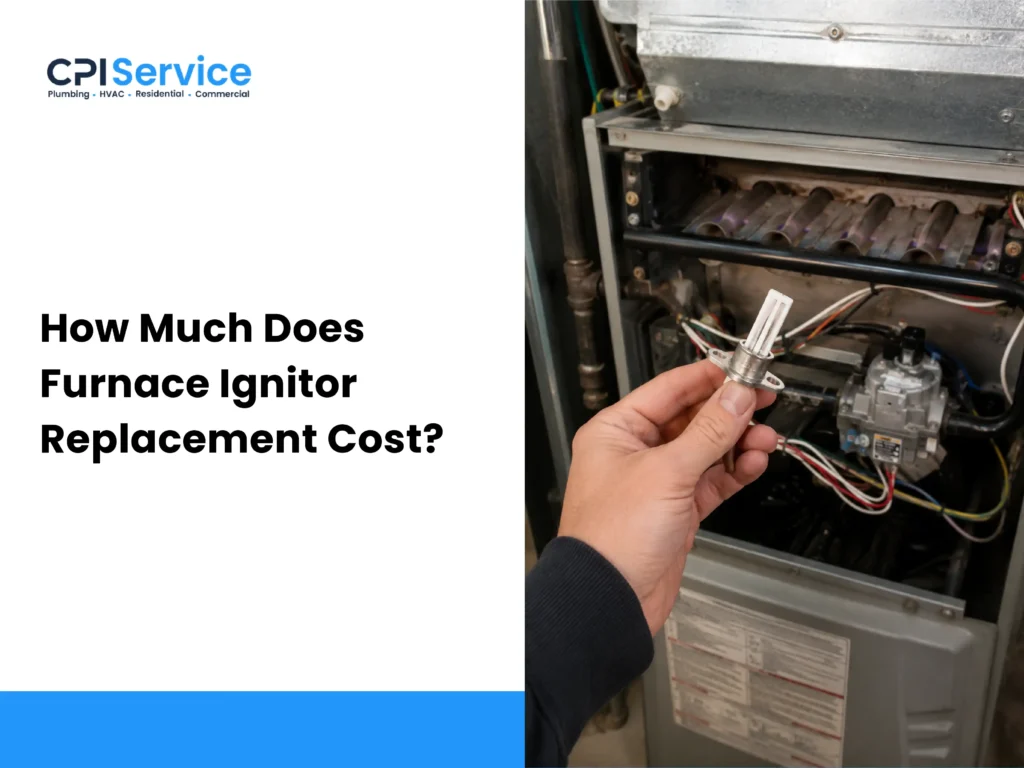
Furnace ignitor replacement costs range from $100 to $425, with most homeowners paying between $100 and $350, depending on the furnace model, ignitor type, and labor costs. Within this price range, individual cost components have their own benchmarks, such as ignitor parts costing $15 to $120, labor charges ranging from $50 to $150, and service call fees ranging from $50 to $100. Pricing also varies by repair approach, including DIY replacement ($15 to $120), standard professional service ($100 to $425), and emergency service calls that increase labor costs.
Although these pricing structures serve as benchmarks for furnace ignitor replacement costs, the actual price depends on system complexity and repair conditions. Simple ignitor swaps require less investment, whereas repairs involving OEM parts, older furnaces, or additional component damage require more. Cost differences are further influenced by furnace type, ignitor material, geographic labor rates, and part availability, with oil and propane systems incurring higher costs due to complex ignition systems and calibration requirements.
What Is the Average Furnace Ignitor Replacement Cost?
The average furnace ignitor replacement cost ranges from $100 to $350, depending on the furnace model, ignitor type, and labor costs required to restore proper ignition in the heating system. This average furnace ignitor replacement price range includes both the ignitor part and the service needed to diagnose and replace a faulty ignitor. The furnace ignition component type also influences cost, as a hot surface ignitor (HSI) or an OEM-compatible ignitor increases the price due to higher material durability and strict compatibility requirements with specific furnace models.
- Typical Labor Cost for Furnace Ignitor Replacement
Labor cost for furnace ignitor replacement ranges from $50 to $150, depending on the complexity of the service, regional labor costs, and the furnace technician’s expertise. Most furnace repair companies apply a flat-rate pricing model for this repair, which includes a service call fee and basic diagnostics to assess the faulty ignitor. Labor costs are higher in major metropolitan areas due to increased overhead and demand for skilled HVAC services. For example, homeowners in San Jose, CA, may pay between $120 and $180 for labor alone, while rates in Dallas, TX, often range from $70 to $120. Certified and experienced furnace technicians may charge more, but they help ensure safe electrical work, proper ignitor installation, and reliable furnace performance.
- Total Replacement Cost
The total cost to replace a furnace ignitor ranges from $100 to $425, including parts and labor, for a single service visit. This total includes the full repair process, where a furnace technician diagnoses the faulty ignitor, removes the damaged component, installs a compatible replacement part, reconnects the electrical circuit, and tests the heating system to confirm proper ignition and heat production. The final cost may rise if additional issues, such as wiring damage or gas valve problems, require repair, but the overall expense remains moderate compared to major furnace repairs.
How Does Furnace Ignitor Replacement Cost Vary by Furnace Type?
Furnace ignitor replacement cost varies by furnace type based on ignition design, fuel system, and installation complexity, with gas furnaces costing $150 to $300, oil furnaces $150 to $400, and propane furnaces $120 to $425. Gas furnace ignitor replacement remains moderate due to the widespread availability of HSI, whereas oil furnace systems cost more because of their complex components and soot-related wear. Propane furnace ignitor replacement shows a wider variation due to pressure calibration and part availability.
Gas Furnace Ignitor Replacement Cost
Gas furnace ignitor replacement costs range from $150 to $300, depending on the ignitor type and installation labor. Most gas furnaces use hot-surface ignitors made of silicon carbide or silicon nitride, which are common in residential heating systems and widely available as replacement parts, helping keep costs within a moderate range. During the service, a furnace technician replaces the faulty ignitor, inspects the gas valve, and verifies that the furnace ignites natural gas properly during the heating cycle, ensuring safe, reliable operation.
Oil Furnace Ignitor Replacement Cost
Oil furnace ignitor replacement costs range from $150 to $400 because oil-based heating systems have more complex ignition components and require additional safety checks during installation. These ignitors operate under higher heat conditions and are exposed to soot buildup, which increases part wear and raises replacement costs over time. To complete an oil furnace ignitor replacement, a furnace technician aligns the ignition electrodes, cleans any residue from the burner assembly, and verifies proper ignition to ensure stable, efficient heat production.
Propane Furnace Ignitor Replacement Cost
Propane furnace ignitor replacement costs range from $120 to $425, depending on the ignitor type, furnace compatibility, and labor costs. Although propane furnace systems use ignition components similar to those in gas furnaces, they require precise calibration due to their higher BTU output and different pressure levels. During propane furnace ignitor replacement, a furnace technician installs the correct ignitor, checks gas connections for a secure seal, and confirms proper ignition to ensure safe, consistent furnace performance.
How Does Furnace Ignitor Replacement Cost Vary by Ignitor Type?
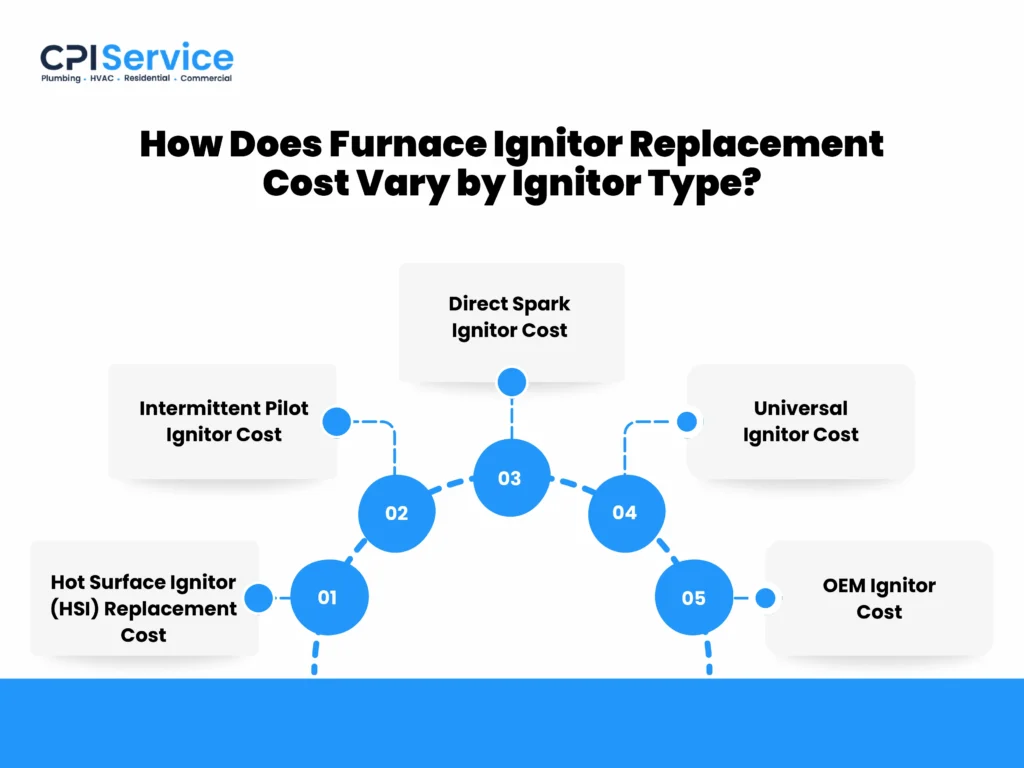
Furnace ignitor replacement costs range from $120 to $350, depending on ignition type, with hot surface ignitors costing $150 to $250, intermittent pilot ignitors costing $150 to $350, and direct spark ignitors costing $120 to $340. Universal ignitors cost $150 to $300, while OEM ignitors range from $200 to $400. This variation in overall price occurs because each ignitor type uses a different ignition mechanism, employs distinct materials, and requires specific compatibility with the furnace model, all of which directly affect both part cost and installation complexity.
Furnace ignitor replacement cost by ignitor type includes:
- Hot Surface Ignitor (HSI) Replacement Cost
Hot surface ignitor replacement costs range from $150 to $250, as these ignitors are widely used in modern furnaces and rely on materials such as silicon carbide or silicon nitride to generate heat and ignite the gas. The cost includes both the ignitor part and labor, with a furnace technician installing the new component and verifying that it glows bright orange to ensure proper ignition during the heating cycle.
- Intermittent Pilot Ignitor Cost
Intermittent pilot ignitor cost ranges from $150 to $350, including both the part and labor, with the component itself costing between $20 and $80. This ignition system activates the pilot flame only when the thermostat calls for heat, which improves energy efficiency compared to a constantly burning pilot light. To complete the replacement, a furnace technician performs a diagnostic check of the spark generator and pilot gas tube to ensure the flame ignites correctly before the main burners engage.
- Direct Spark Ignitor Cost
Direct spark ignitor cost averages between $120 and $340 for a full replacement, depending on system configuration and labor requirements. This ignition system uses a high-voltage electrical arc to ignite the gas directly at the burner, eliminating the need for a pilot light and simplifying the ignition process. The overall cost remains moderate because the metal electrodes are durable, although additional diagnostics of the ignition module and wiring may be required to ensure consistent spark performance.
- Universal Ignitor Cost
Universal ignitor replacement cost ranges from $150 to $300, with the ignitor part itself priced between $15 and $35. These ignitors are designed to fit multiple furnace brands and models, making them a flexible option for a wide range of heating systems. This approach allows a furnace technician to complete the repair quickly with readily available stock parts, reducing downtime and avoiding delays from ordering model-specific components.
- OEM Ignitor Cost
OEM ignitor replacement cost ranges from $200 to $400, reflecting higher pricing due to brand-specific design and guaranteed compatibility with the furnace model. These parts cost between $20 and $100 and are manufactured to match the exact specifications of the original ignition component. Using an OEM ignitor ensures proper fitment, maintains system performance, and helps preserve manufacturer warranty coverage, making it a preferred choice for newer or high-end heating systems.
What Factors Affect Furnace Ignitor Replacement Cost?
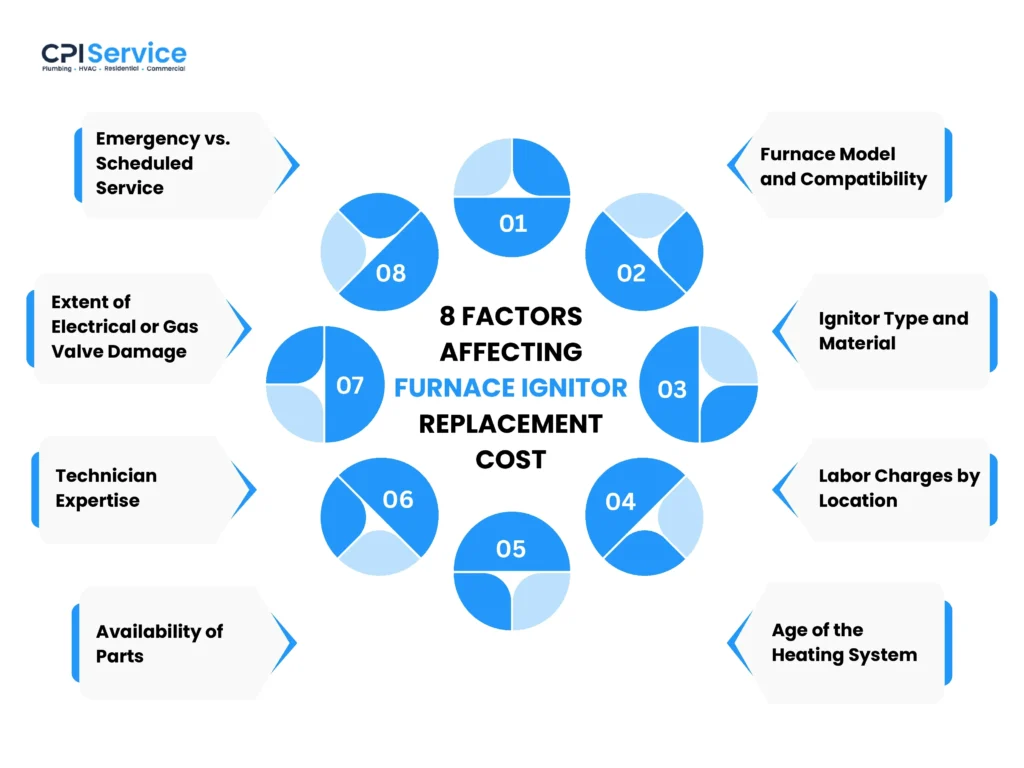
Factors affecting the cost of furnace ignitor replacement include the furnace model, ignitor type, labor charges, the age of the heating system, part availability, technician expertise, and the extent of electrical or gas valve damage. Each of these factors influences how a furnace technician diagnoses the issue, selects a compatible ignitor, and performs the installation, affecting furnace ignitor replacement cost.
8 factors affecting furnace ignitor replacement cost are:
- Furnace Model and Compatibility
The furnace model directly affects the cost of replacing the furnace ignitor because compatibility determines whether a standard or OEM ignitor is required, which can increase part costs. A specialty furnace or brand-specific HVAC unit often requires an exact-fit ignition component, which can increase costs. For example, a Trane or Lennox system may require an OEM ignitor rather than a universal replacement.
- Ignitor Type and Material
Ignitor type and material affect furnace ignitor replacement costs due to differences in durability and performance. For example, silicon nitride ignitors cost more than silicon carbide ignitors because of their longer lifespan. Hot surface ignitors, direct spark ignitors, and intermittent pilot systems use different components and installation methods, which impact compatibility and directly lead to variation in overall replacement cost.
- Labor Charges by Location
Based on regional pricing and service demand, labor costs for furnace ignitor replacement vary by location, which can increase total replacement costs in urban or high-cost areas. HVAC professionals in metropolitan regions often charge higher service rates than those in smaller towns, which directly affects the final repair price. For example, a furnace technician in New York may charge more than one in a rural area in the Midwest.
- Age of the Heating System
Furnace age influences replacement cost because older systems, over 7 years old, often require compatible parts that are harder to source and may not fit standard ignitors. As wear accumulates over time, the heating system may also require additional diagnostics or minor repairs, which increase labor time and raise the overall cost of furnace ignitor replacement.
- Availability of Parts
Part availability affects the cost of furnace ignitor replacement by determining how quickly and easily a compatible ignitor can be sourced, as limited or discontinued parts increase the price. Furnace technicians may need to special-order the part, increasing both labor time and material costs. This commonly happens with obsolete furnace brands like Coleman Evcon, where compatible replacement ignitors are no longer widely available.
- Technician Expertise
Furnace technician expertise affects the cost of furnace ignitor replacement because experienced, certified HVAC professionals charge higher rates for accurate diagnostics and safe installation. For example, apprentice furnace technicians charge around $50-$75 per hour, while experienced furnace specialists charge $100-$150 per hour. Their expertise helps ensure proper ignitor alignment, secure electrical connections, and reliable ignition performance, reducing the likelihood of repeat repairs or additional furnace damage.
- Extent of Electrical or Gas Valve Damage
Additional damage to the furnace’s electrical system or gas valve increases ignitor replacement costs because extra repairs may be required beyond replacing the ignitor itself. Common examples include burnt wiring, damaged control boards, loose electrical connections, or a malfunctioning gas valve. These related furnace issues raise both labor and replacement part expenses, increasing the total repair cost for homeowners.
- Emergency vs. Scheduled Service
Service timing affects the cost of furnace ignitor replacement because emergency or after-hours repairs carry higher labor charges than scheduled appointments. Emergency furnace service can cost $150-$300 or more, depending on time and location, due to priority scheduling and the need for immediate technician availability. In contrast, pre-booked service appointments follow standard labor rates, helping homeowners reduce overall repair costs.
How Much Does It Cost to Replace a Furnace Ignitor Yourself vs Hiring a Professional?
Replacing a furnace ignitor yourself (DIY) costs $15 to $120, since only the ignitor is required, whereas a professional furnace ignitor replacement costs around $100 to $425. This cost difference exists because DIY replacement involves only part purchase and manual installation, while professional service includes diagnostics, labor, system testing, and safety checks. DIY requires handling electrical connections and proper alignment, which increases risk if done incorrectly. In contrast, hiring a furnace technician ensures reliable ignition, correct installation, and safe furnace operation, making it a more dependable option for most homeowners.
DIY Furnace Ignitor Replacement Cost
DIY furnace ignitor replacement costs range from $15 to $120, as this only includes the ignitor part, not labor. Additional expenses may include basic tools and safety equipment, such as a screwdriver set, a multimeter, and protective gloves, especially when handling delicate hot-surface ignitors. While this approach reduces upfront cost, the homeowner must locate the correct ignitor, remove the access panel, disconnect wires, and install the component correctly to restore proper furnace operation.
Professional Furnace Ignitor Replacement Cost
The cost to replace a furnace ignitor ranges from $100 to $425, including service call charges, labor, and the ignitor part. Service call fees range from $50 to $100, while labor costs range from $50 to $150, depending on repair complexity, location, and the HVAC company. This total cost covers diagnostics, installation, and system testing, and often includes a warranty or service guarantee to ensure proper ignition and safe furnace operation. Compared to a DIY replacement, a furnace ignitor replacement performed by a licensed furnace technician ensures proper calibration and verifies that safety sensors and ignition controls function correctly after the repair.
How Much Does It Cost to Replace Furnace Components?
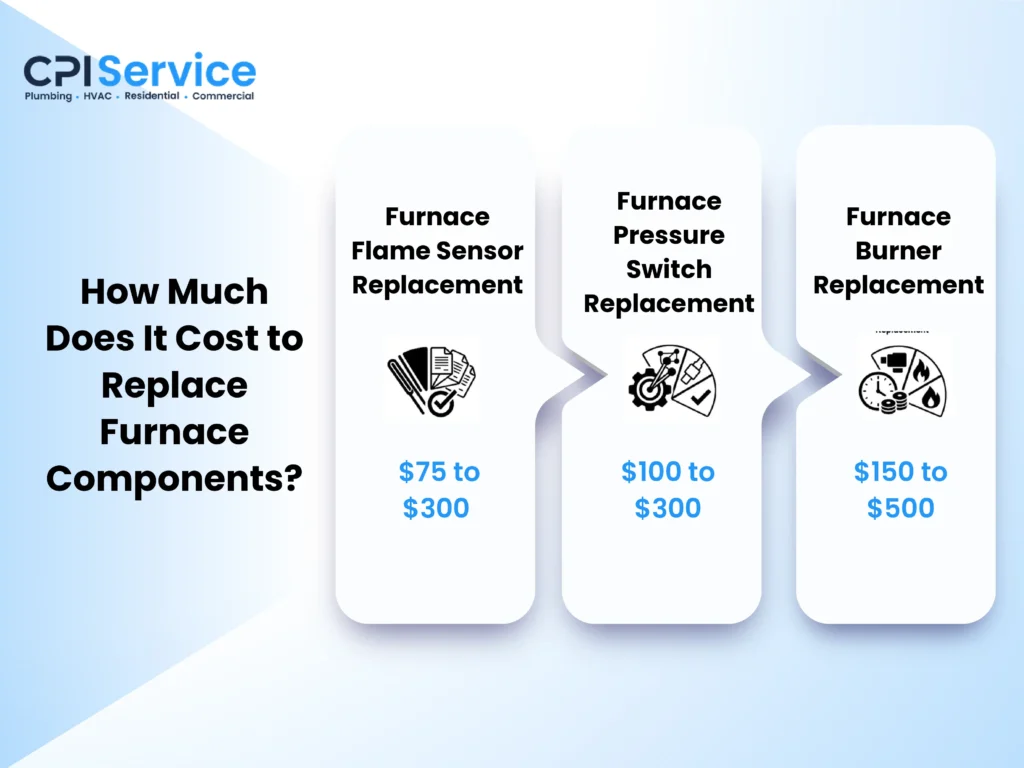
Furnace component replacement cost ranges from $75 to $500, with flame sensor replacement costing $75 to $300, pressure switch replacement costing $100 to $300, and burner replacement costing $150 to $500. This variation occurs because each component serves a different function and requires a different level of diagnostic effort. Flame sensors need precise positioning for safety, pressure switches require airflow verification, and burners involve full assembly replacement.
Cost to replace furnace components is:
- Furnace Flame Sensor Replacement Cost
Furnace flame sensor replacement costs range from $75 to $300, including parts and labor, with the most common professional rate being $150 to $250. The total price reflects the relatively low cost of the sensor itself, along with the diagnostic labor required to ensure the probe is correctly positioned within the burner flame. This component is a critical safety device that detects the presence of a flame, preventing unburned gas from entering the home.
- Furnace Pressure Switch Replacement Cost
Furnace pressure switch replacement costs between $100 to $300, depending on the furnace model and labor involved. A significant portion of this cost comes from diagnostic time, as a furnace technician must confirm that the issue is the switch and not airflow restrictions, such as a blocked flue or a failing inducer motor. The replacement ensures proper airflow monitoring and safe combustion operation.
- Furnace Burner Replacement Cost
Furnace burner replacement costs range from $150 to $500, reflecting the burner assembly’s importance in heat production. The process includes removing the existing burner, installing a compatible unit, and testing the system for proper ignition and flame stability. This repair ensures efficient fuel combustion and consistent heat output across the heating cycle.
How Do You Know if Your Furnace Ignitor Needs Replacement?
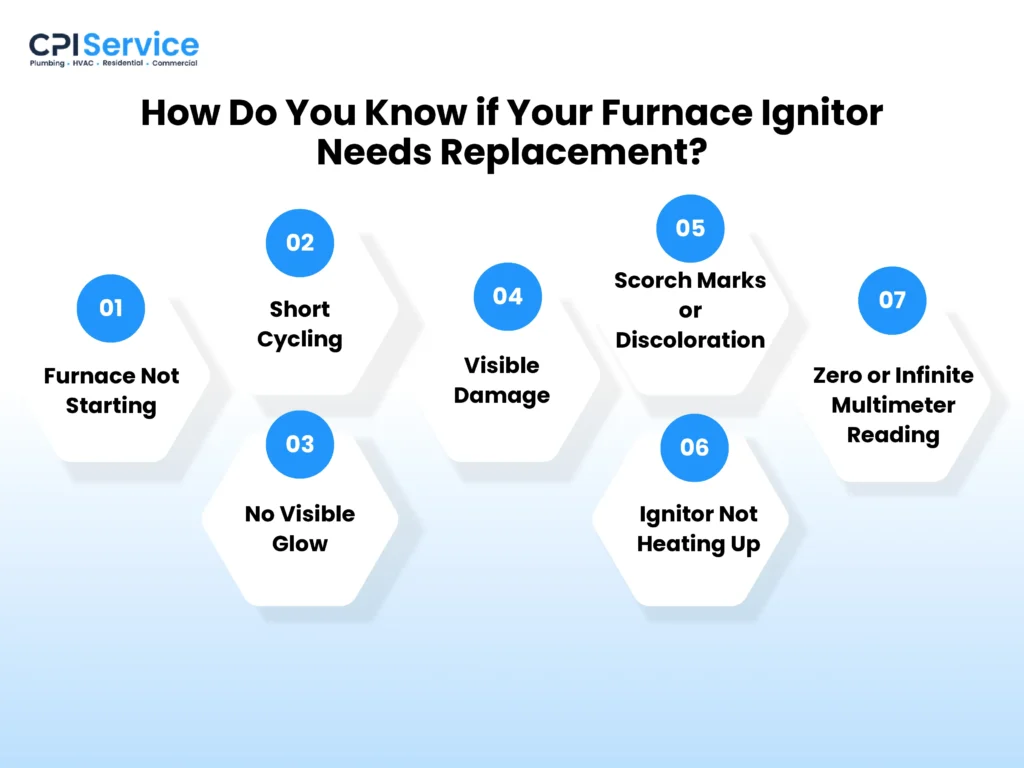
Your furnace ignitor needs replacement if the furnace is not starting, short-cycling, has no visible glow, shows visible damage or discoloration, is not heating up, or the multimeter reads 0 or infinity. These symptoms indicate that the ignitor is failing to initiate or sustain proper ignition, which directly affects the furnace’s ability to produce heat and operate safely.
7 signs your furnace ignitor needs replacement are:
- Furnace Not Starting
A furnace not starting indicates the heating system fails to begin the heating cycle, often because a faulty ignitor cannot ignite the gas. This prevents heat production and leads to repeated startup attempts followed by shutdown, making it a high-severity issue commonly seen when a furnace fails to turn on.
- Short Cycling
Short cycling occurs when the furnace turns on and off repeatedly without completing a full cycle, often due to an inconsistent ignitor that delays proper ignition. This behavior increases wear on system components and reduces efficiency, making it a medium-severity issue frequently associated with a heater not working properly.
- No Visible Glow
The absence of an orange glow during the startup sequence is a definitive visual confirmation of a dead hot-surface ignitor. Under normal conditions, the element should become bright orange before the gas valve opens. If the unit stays dark, the furnace not igniting ensures that no heat will be produced. This symptom points to a broken ceramic base or a burnt-out filament.
- Visible Damage
Physical cracks on the surface of the ignitor element are a clear indication that the part is compromised and needs to be removed immediately. These hairline fractures often occur with age or when someone touches the element with bare hands, leaving behind oils that create hot spots. Replacing the part at this stage prevents a sudden failure during a period of high demand.
- Scorch Marks or Discoloration
Dark spots or soot buildup on the ignitor indicate that the component is burning out or the burner assembly is not venting properly. This discoloration suggests that the material has been compromised by excessive heat or moisture, leading to inconsistent ignition. Ignoring these marks often leads to a complete break in the electrical circuit.
- Ignitor Not Heating Up
If the ignitor fails to heat up, the furnace cannot generate the heat needed to ignite the gas, resulting in cold air circulating through the system. It indicates a complete loss of function and is a high-severity issue, often noticed when the furnace blows cold air instead of producing heat.
- Zero or Infinite Multimeter Reading
An incorrect resistance reading during a diagnostic test provides mathematical proof that the ignitor is defective. When a furnace technician uses a multimeter, an infinite-ohm reading indicates a dead circuit where current cannot flow through the element. This technical confirmation is the standard protocol for justifying the cost of a new component.
Is Furnace Ignitor Replacement Worth the Cost?
Yes, replacing a furnace ignitor is a highly cost-effective repair that is essential for the safe and efficient operation of your heating system. Compared to a full furnace replacement, which can cost between $4,500 and $8,000, a $150 to $350 ignitor swap is a minor maintenance expense that restores immediate functionality. Ignitors are wear components that require replacement every 3 to 5 years, even though furnaces can last up to 20 years.
Timely furnace ignitor replacement improves heating efficiency by ensuring proper ignition and preventing cold air circulation. Delaying the repair increases the risk of system damage, including heat exchanger failure. For furnace ignitor systems over 7 years old, replacing the furnace ignitor and flame sensor together can reduce emergency breakdowns and improve overall reliability.
How Can You Reduce Furnace Ignitor Replacement Cost?
To reduce furnace ignitor replacement costs, conduct regular maintenance, detect issues early, compare service quotes, and buy parts independently. These methods help reduce both parts and labor expenses by preventing premature failures, avoiding emergency service charges, selecting cost-effective providers, and minimizing markups on replacement components.
4 ways to reduce furnace ignitor replacement cost are:
- Regular Maintenance and Cleaning
By preventing dust buildup, corrosion, and overheating, regular maintenance and cleaning reduce furnace ignitor replacement costs by minimizing premature failure. This reduces the frequency of replacements and keeps overall repair costs under control. For example, cleaning air filters and inspecting the ignitor during annual servicing helps maintain proper ignition and extends component lifespan.
- Early Issue Detection
Monitoring system behavior reduces furnace ignitor replacement costs by identifying early signs of failure before they lead to system lockout or secondary damage. Detecting issues such as delayed ignition or unusual sounds allows repairs to be scheduled during standard hours, avoiding higher emergency service charges.
- Comparing Service Quotes
Sourcing and comparing multiple estimates from at least 3 HVAC companies helps reduce costs by revealing price differences between local HVAC contractors and larger national franchises. This helps you avoid inflated trip fees or overpriced part markups by selecting a provider with a transparent flat-rate pricing model.
- Buying Parts Independently
Purchasing your own ignitor saves cost by eliminating the 50% to 100% markup that service companies add to replacement parts. By ordering a universal or OEM ignitor for $20 to $50 from a reputable online supplier, you only pay the furnace technician for the diagnostic and labor time.

