Furnace Not Igniting: Causes and How to Fix It
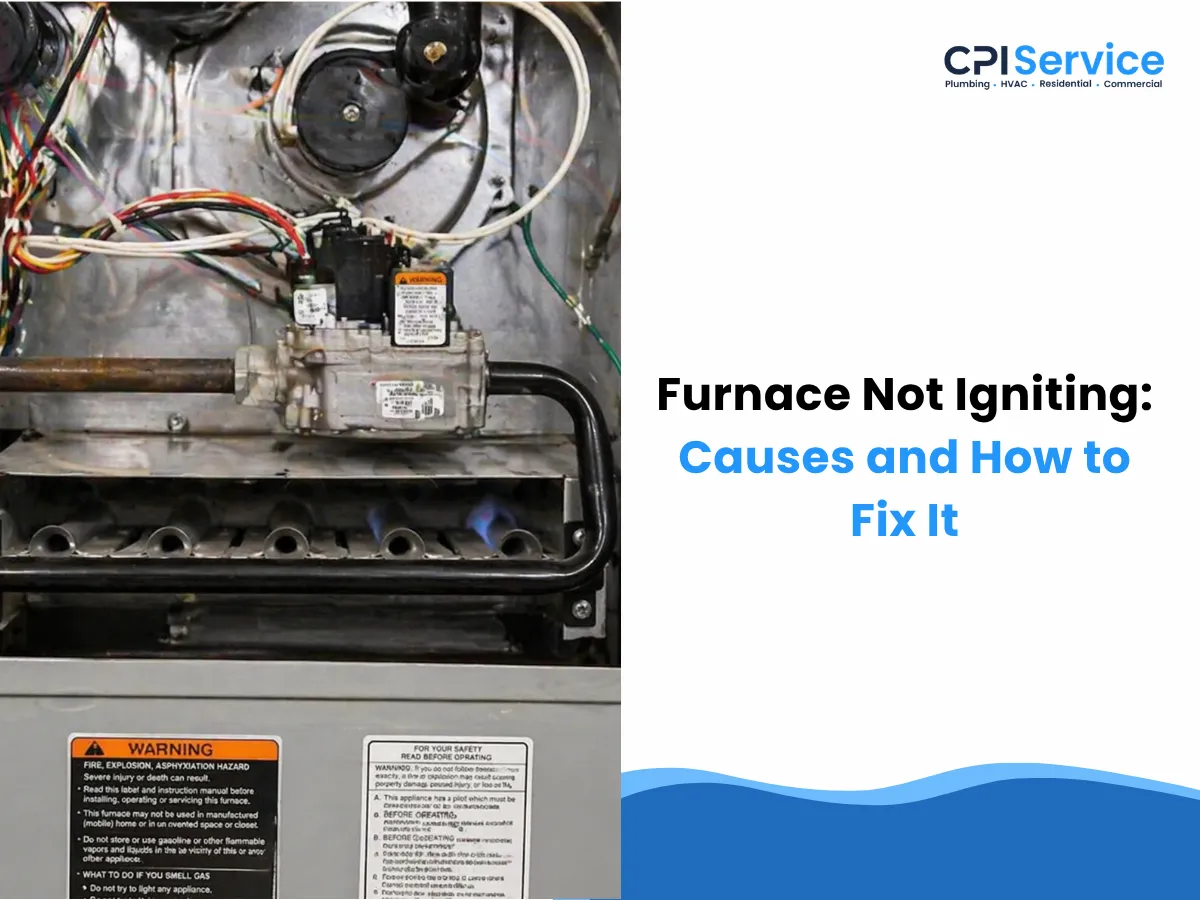
Table of Contents
- Where Does Your Furnace Stop?
- What Causes Furnace Ignition Failure?
- How to Fix a Furnace That Won’t Ignite
- What Safety Precautions Should You Take When Troubleshooting Furnace Ignition?
- Should I Replace My Furnace If It Won’t Ignite?
- Ignition Problems in South Bay Homes
- When Should You Call a Professional Furnace Technician?
- How Can You Prevent Furnace Ignition Problems?
- Frequently Asked Questions
A gas furnace that won’t ignite usually has a dirty flame sensor, a worn igniter, a gas supply problem, or a blocked vent or failed pressure switch. In San Jose and the South Bay, where furnaces sit idle most of the year, these failures often show up on the first cold nights of fall.
The furnace lights in a fixed sequence, and it won’t ignite if any step fails: the thermostat calls for heat, the inducer fan starts, the pressure switch proves the venting is clear, the igniter heats up, the gas valve opens, and the flame sensor confirms the burners are lit.
Signs of an ignition problem include no heat, short cycling, a weak flame or none at all, repeated start attempts, unusual noises or smells, and a flashing error code. Some causes are simple to check yourself, like the thermostat, power, gas valve and filter. Others, like the venting, pressure switch, gas valve and control board, need a technician.
Where Does Your Furnace Stop?
Watch (and listen to) your furnace when the thermostat calls for heat. Where the sequence stops points to the cause:
| What happens | Likely cause |
|---|---|
| Nothing at all | Thermostat, power switch, breaker, door safety switch or control board |
| Inducer fan runs, but nothing else | Pressure switch or blocked vent (see pressure switch stuck open) |
| Inducer runs, igniter doesn’t glow | Failed igniter or control board |
| Igniter glows or clicks, but no flame | Gas valve, gas supply or dirty burners |
| Burners light, then shut off after a few seconds | Dirty or failing flame sensor |
| Burners run briefly, then shut off and the blower keeps running | Overheating from a dirty filter or blocked vents (high-limit switch) |
| Furnace tries several times, then stops with a flashing light | Lockout; note the flash code |
What Causes Furnace Ignition Failure?
Each of these interrupts a step in the ignition sequence: the heat or spark, the gas flow, the airflow check or the flame detection. The furnace then shuts down before or just after the burners light.
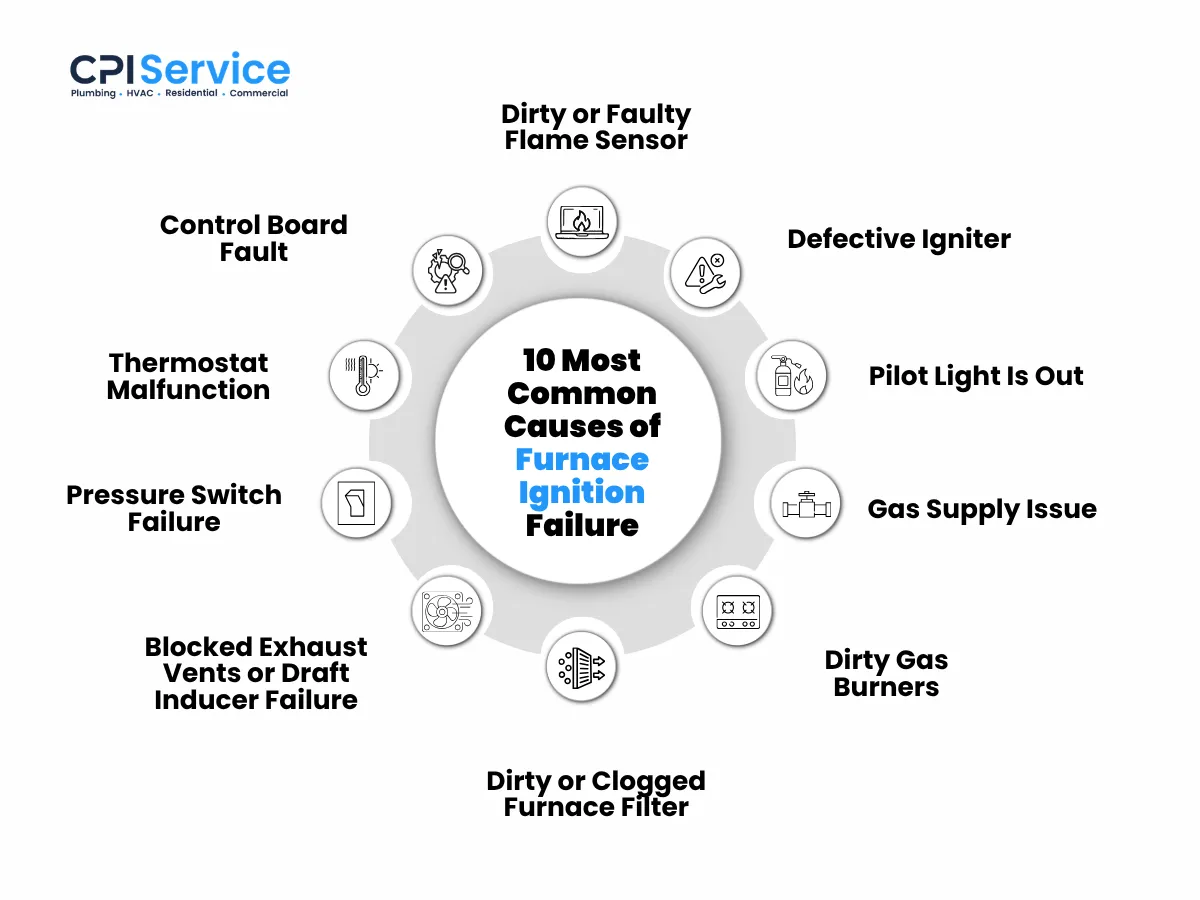
Dirty or Faulty Flame Sensor
The flame sensor is a thin rod that sits in the burner flame. When carbon buildup or corrosion coats it, it can’t detect the flame, so the board assumes ignition failed and shuts the gas off to avoid a hazard. You’ll see the furnace start, light for a few seconds and turn off, over and over, until it goes into safety lockout. It’s the most common cause; see how to clean a furnace flame sensor.
Defective Igniter
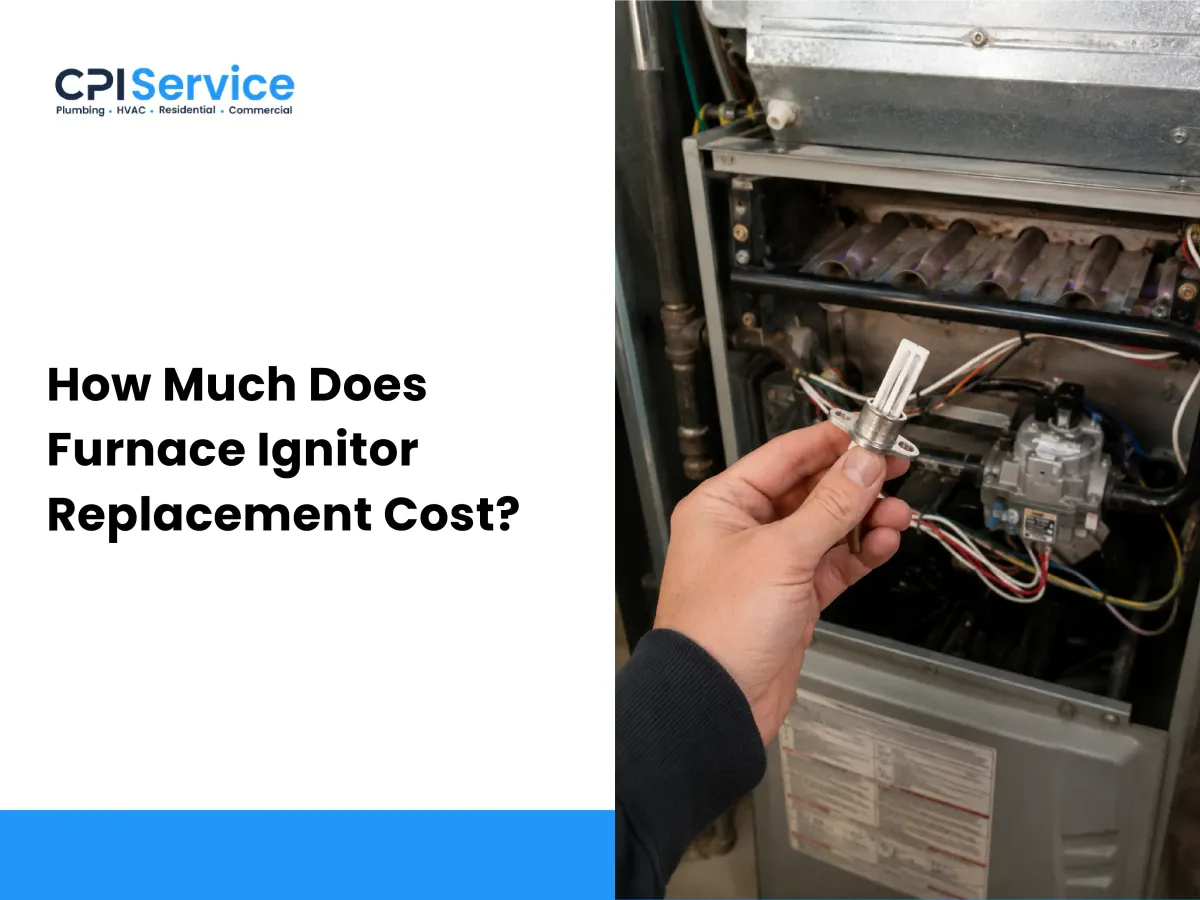
If the igniter is cracked, worn out or not getting power, it can’t make the heat or spark that lights the gas, even when gas is flowing normally. You may hear the furnace try to start, but no flame appears. The blower may still run, so you feel the furnace blowing cold air. See furnace igniter replacement cost.
Pilot Light Is Out
Older furnaces use a standing pilot flame to light the burners. Drafts, dirt or a failing thermocouple can put it out, and then the furnace can’t light when heat is called for. It may stay silent or try to start without a flame. If the pilot won’t stay lit after relighting, there’s usually a deeper problem with the thermocouple, the gas supply or another safety part.
Gas Supply Issue
No gas, no flame. A closed valve, low gas pressure or a failed gas valve inside the furnace blocks fuel even when the igniter works. The usual sign is an igniter that glows or sparks with no flame, or repeated failed starts. If your stove and water heater also stopped working, it’s the supply, not the furnace.
Dirty Gas Burners
Dirt, rust or debris on the burners makes the gas flow uneven or restricted, which causes delayed ignition, weak flames or no ignition at all. You might notice odd flame patterns, a delayed start, or a furnace that lights and then shuts down quickly, because unstable combustion trips the safety controls.
Dirty or Clogged Furnace Filter
A clogged filter restricts airflow, so the furnace overheats and the high-limit switch shuts the burners off before a heating cycle can finish. The furnace may start, then shut down early or run unevenly, and the blower can keep running with no heat. Over time, restricted airflow strains other parts too.
Blocked Exhaust Vents or Draft Inducer Failure
Before the gas can light, the furnace has to prove that its exhaust can vent safely. If the vent is blocked or the inducer motor fails, it can’t clear combustion gases, so it stops the sequence to prevent a dangerous buildup. You’ll notice the furnace trying to start without lighting, often with a pressure or venting code.
Pressure Switch Failure
The pressure switch confirms the inducer is running and the venting is clear. If it doesn’t close, because the switch has failed, its tubing is cracked, blocked or water-logged, or the drain on a high-efficiency furnace is clogged, the furnace assumes conditions are unsafe and blocks ignition. The inducer runs, but the burners never light.
Thermostat Malfunction
If the thermostat is set wrong, has dead batteries or has a wiring fault, the furnace never gets the call for heat, so the ignition sequence never starts. The house cools below the set temperature and the furnace won’t turn on.
Control Board Fault
The control board runs the sequence, telling the inducer, igniter and gas valve when to start, in the right order. If it sends the wrong signals or stops communicating with those parts, the whole startup can fail. The furnace may act erratically, not start, or keep trying without success. It may show an error code, but confirming a bad board takes professional testing.
How to Fix a Furnace That Won’t Ignite
Start with the simple checks, which find many ignition problems: thermostat, power, gas valve and filter. If the furnace still won’t light, the cause is likely a gas, venting, safety-control or board problem that needs a technician’s tools.
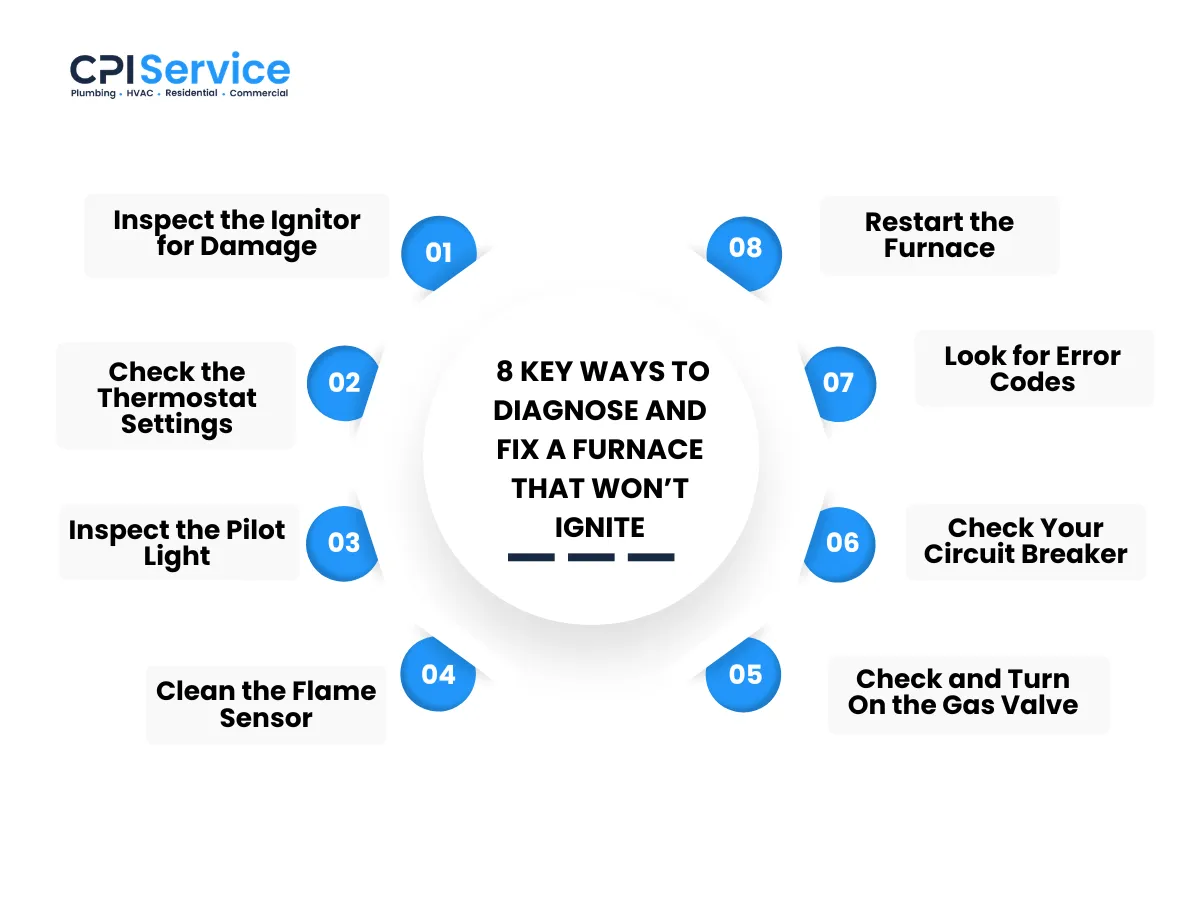
Inspect the Igniter for Damage
With the furnace power off, find the igniter near the burners and look for cracks or white spots, without touching it. Then restore power and watch during startup: a hot-surface igniter should glow bright orange. If it’s cracked or never glows, it likely needs replacing. Igniters are brittle and must match the furnace, so we recommend having a technician replace it, which also confirms the igniter is really the problem.
Check the Thermostat Settings
- Set it to Heat.
- Set the temperature a few degrees above room temperature.
- Replace the batteries if the display is blank or weak.
- Check schedules on a programmable or smart thermostat.
- If it still doesn’t respond, or you see loose wires, have the thermostat and its wiring checked; a failed thermostat may need replacing.
Inspect the Pilot Light
On an older furnace with a standing pilot, look through the sight window to see whether it’s lit. If it’s out and there’s no smell of gas, relight it following the instructions on the furnace exactly. If it keeps going out, a technician should check for drafts, dirt, a failing thermocouple or a gas supply problem.
Clean the Flame Sensor
If the burners light and shut off within seconds, the sensor probably needs cleaning. With the power and gas off, remove the burner access panel, take out the sensor (usually one screw), rub the rod lightly with fine emery cloth or steel wool, wipe it and reinstall it, then restore gas and power and watch for a steady flame. Our step-by-step guide has the details. Stop and call a technician if you smell gas, the porcelain insulator is cracked, or you’re not comfortable working near the burners and gas valve.
Check and Turn On the Gas Valve
Make sure the handle on the gas valve at the furnace is in line with the pipe (open). Check whether your other gas appliances work, to tell a furnace problem from a supply problem. If there’s no gas to the house, contact PG&E. Leave gas pressure and the gas valve inside the furnace to a technician.
Check Your Circuit Breaker
The igniter, inducer, blower and control board all need power.
- Check your electrical panel for a tripped breaker or blown fuse, and reset it once.
- Make sure the furnace power switch, which looks like a light switch on or near the furnace, hasn’t been turned off.
- Make sure the furnace door is fully closed: most furnaces have a door safety switch.
If the breaker trips again, leave it off and call for service.
Look for Error Codes
Most modern furnaces show a fault through a blinking LED behind a small window in the door, or a letter-number code on a display. The chart on the furnace door or in the manual says what each pattern means. Noting the code narrows down the problem and saves trial-and-error repairs, and it helps the technician bring the right part.
Restart the Furnace
A reset can clear a temporary fault or lockout: set the thermostat to Off, switch off the furnace power for about 30 seconds, switch it back on and set the thermostat to Heat. Watch the startup sequence. If the furnace locks out again, note the code and call for service instead of resetting it over and over.
On high-efficiency furnaces, also check outside that the white PVC vent and intake pipes aren’t blocked by nests, leaves or debris. Leave these to a technician: igniter replacement, gas valve and gas pressure work, pressure switch and inducer testing, and control board diagnosis.
What Safety Precautions Should You Take When Troubleshooting Furnace Ignition?
A furnace combines gas, electricity and combustion, so small mistakes can create serious hazards.
If You Smell Gas, Stop Immediately
A gas smell can mean a leak that could cause a fire or explosion. Don’t keep troubleshooting or try to light anything. Leave the home, don’t operate switches or appliances on the way out, and call 911 and PG&E from outside.
Turn Off Power Before Inspecting Internal Components
Live electrical parts can cause serious injury, and a furnace that looks off may still have power. Switch off the furnace power switch or breaker before opening any panel. That also keeps the furnace from starting while your hands are inside.
Never Bypass Safety Switches or Sensors
Pressure switches, limit switches, rollout switches and flame sensors protect against overheating, gas buildup and unsafe combustion. If one is stopping the furnace, it’s usually reporting a real problem. Never jumper or disable one to get heat; find the cause or call a technician.
Keep the Area Around the Furnace Clear
Clutter around a furnace restricts airflow and adds fire risk. Keep storage, flammable materials and debris away from the unit, especially in garages and closets, so it has the air it needs and stays safe to service.
Should I Replace My Furnace If It Won’t Ignite?
Usually not. Most ignition problems come from a single part, like a dirty flame sensor, a worn igniter or a clogged filter, that’s inexpensive to fix. Replacement makes sense when the furnace is old, inefficient or breaking down often. HomeAdvisor puts most furnaces’ life at 15 to 30 years, and suggests shopping for a new one when a repair quote is more than half the price of a new furnace. See furnace repair cost for typical San Jose prices.
| Factor | Repair the furnace | Replace the furnace |
|---|---|---|
| Age | Well within its expected life | Near the end of its expected life |
| Type of problem | One part (igniter, sensor, filter) | Several or recurring failures |
| Repair cost | Low | More than about half the price of a new furnace |
| How often it fails | Rarely, or for the first time | Frequent breakdowns |
| Energy efficiency | Still running efficiently | Efficiency falling, bills rising |
| Performance | Heats normally after the repair | Uneven or unreliable heat |
| Long-term value | A small repair extends its life | Avoids future repairs and lowers energy costs |
If you do replace it, many South Bay homeowners choose a heat pump, which heats and cools without combustion.
Ignition Problems in South Bay Homes
- The first cold nights. South Bay furnaces sit unused from spring to fall. Dust on the flame sensor and burners, a forgotten filter or a nest in the vent pipe often shows up on the first chilly evening. A fall tune-up catches most of these.
- Attic and garage furnaces. Furnaces in attics and garages collect more dust, and their long vent runs can sag and hold water, which upsets the pressure switch.
- CO alarms. California requires carbon monoxide alarms in homes with gas appliances. Test them before heating season.
When Should You Call a Professional Furnace Technician?
Call for furnace repair when the basic checks don’t fix it, or if you notice any of these:
- Repeated ignition failures. A furnace that keeps failing to light usually has a control board, gas valve or pressure switch problem that takes diagnostic tools to pin down.
- Strange noises or smells. Banging, repeated clicking or humming can point to ignition or mechanical faults. A gas or burning smell, or a carbon monoxide alarm, is urgent: leave the home first, then call 911 and PG&E from outside.
- Short cycling. A furnace that keeps turning on and off often has an overheating, airflow or sensor problem.
- An old furnace. Older units fail more often, and repeated ignition trouble can be a sign of wider wear that one repair won’t fix.
- Constant repairs. When repair bills keep adding up, a technician can tell you honestly whether to keep repairing or replace.
For the whole-system view, see heater not working.
How Can You Prevent Furnace Ignition Problems?
- Check the air filter monthly. ENERGY STAR recommends checking it every month and replacing it when it’s dirty (maintenance checklist); a clean filter prevents the overheating that trips the safety controls.
- Schedule an annual tune-up. ENERGY STAR recommends having heating checked in the fall. A technician inspects, cleans and tests the burners, igniter, flame sensor, safety switches and venting, so small problems are fixed before they stop the furnace. Our membership plans include annual HVAC maintenance.
- Keep the flame sensor clean. Have it cleaned at the tune-up, or clean it yourself with our guide, so it reads the flame reliably.
- Check the igniter before heating season. At the tune-up, the technician checks it for cracks and wear and watches it glow; a weak igniter replaced in the fall won’t fail on a cold night.
- Keep vents and flue passages clear. Check outdoor vent and intake pipes for nests, leaves and debris, and keep the area around the furnace clear, so the pressure switch can prove the venting.
CPI Service repairs furnaces throughout San Jose and the South Bay: schedule furnace repair, request a free estimate or call (408) 978-3093.
Frequently Asked Questions
Why does my furnace click but not ignite?
The control board is trying to light the burners, but something in the sequence fails: a cracked or worn igniter, a gas valve that doesn't open, no gas, or a pressure switch that hasn't proved the venting. A technician can test each step.
Why does my furnace light and then shut off?
Most often a dirty or failing flame sensor: the burners light, but the board can't confirm the flame, so it shuts the gas off for safety and tries again.
Can I replace a furnace igniter myself?
We don't recommend it. Hot-surface igniters are brittle and fail early if touched or mounted wrong, they must match the furnace, and the work is next to the gas burners. The igniter may also not be the real cause.
How do I reset a furnace that won't ignite?
Set the thermostat to Off, switch off the furnace's power for about 30 seconds, then turn it back on and set the thermostat to Heat. If the furnace locks out again, note the flashing code and call for service instead of resetting it repeatedly.
CPI Service is a great company to use for HVAC too! Our A/C stopped working during the recent heatwave & another company wanted to replace our whole unit. Then we called CPI & they found it didn’t need to be replaced, they fixed it that day! I really appreciate a company that responds quickly, is very professional & reasonably priced!!! I’ll be using them for sure in the future.
Jaycee V., Google review
Read more reviews →Serving San Jose and the South Bay
CPI Service is based at 2880 Aiello Dr in San Jose and serves homes and businesses across the South Bay and the Peninsula. See all the areas we serve.