

 Emergency Plumbing
 Plumbing Repairs
 Water Heaters
 Drain Cleaning
 Sewer Service
 Faucets & Fixtures
 Repiping
 Toilet Plumbing
 Trenchless
 Plumbing Leaks
 Air Conditioning
 Heating
 Minisplit Systems
 Heat Pumps
 HVAC Components
 HVAC Rebates
How Much Does Furnace Repair Cost?
Furnace repair costs range from $64 to $2,500, with most homeowners paying an average of $133 to $378 for standard repairs, depending on the issue, part, and labor involved. Within this price range, costs vary by severity, where minor repairs ($64-$500) involve simple fixes, moderate repairs ($300-$500) include component replacements, and major repairs ($700-$2,500) require complex system-level work. Part-specific costs also vary, from low-cost sensors ($75-$300) to high-cost components such as blower motors ($400-$1,800) and heat exchangers ($500-$1,500).
While these price ranges define typical furnace repair costs, the final estimate depends on factors such as furnace type, age, brand, labor rates ($50-$150/hour), and repair urgency; emergency services can increase costs by 1.5x to 2x. Additional expenses may include service call fees ($75-$200) and maintenance services ($70-$500), while long-term costs are influenced by system condition, repair frequency, and whether replacement ($3,000-$8,000) becomes more cost-effective.
What Is the Average Cost to Repair a Furnace?
The average cost to repair a furnace ranges from $133 to $378 for a standard residential repair, including parts, a diagnostic fee, and basic labor by a furnace technician. This price range for furnace repair can vary based on the furnace type, the damaged part, the labor rate, and the urgency of the repair. Furthermore, simple fixes, such as cleaning the flame sensor or repairing the thermostat, remain near the lower end of the range, while more complex repairs, like blower motor repair or gas valve replacement, increase the total estimate.
How Much Does Furnace Repair Cost by Severity?
Furnace repair costs vary by severity, ranging from $64 to $1,500+, with minor repairs starting at $64, moderate repairs at $300, and major repairs at $700. This price variation reflects differences in parts, labor time, and overall system complexity. Minor furnace repairs involve simple issues, such as a clogged air filter or a dirty flame sensor, that require minimal labor and low-cost parts. In contrast, moderate and major repairs involve more complex components, such as a blower motor capacitor or ignitor, and require deeper system-level work, increasing both labor effort and total repair cost.
Minor Furnace Repair Cost
Minor furnace repair costs range from $64 to $500 and cover simple issues such as basic maintenance or the replacement of small external components, like a blown fuse, a clogged air filter, or a dirty flame sensor. These furnace repairs require minimal labor as the furnace technician primarily inspects and performs quick fixes rather than replacing complex parts, so labor costs remain moderate while parts costs stay low. These minor issues may prevent the furnace system from starting or reduce heating efficiency, but the overall risk level remains low, and the furnace avoids long-term damage when the homeowner schedules repair promptly.
Moderate Furnace Repair Cost
Moderate furnace repair costs range from $300 to $500 and include issues such as a faulty blower motor capacitor, pressure switch malfunction, or ignitor repair. The total price for moderate furnace repair is balanced between parts and labor, as these components require a licensed furnace professional for safe installation but can be replaced within 1 to 2 hours. The risk level is medium, since these malfunctions often cause short cycling or inconsistent furnace operation, which increases wear on critical components such as the blower motor and heat exchanger, and can lead to more expensive system failure if not repaired in time.
Major Furnace Repair Cost
Major furnace repair costs range from $700 to $2,500 and involve critical failures such as a damaged heat exchanger, control board malfunction, or inducer motor breakdown. These repairs require advanced technical work, in which the furnace technician must access internal furnace components and perform detailed system-level replacements. In many cases, the furnace unit cannot operate at all or runs under unsafe conditions when combustion-related components are compromised. The overall risk level remains high because these failures can disrupt the entire heating system and, if not addressed immediately, pose safety risks, including potential gas leaks or combustion issues.
How Much Does Furnace Repair Cost per Visit Compared to a Service Call?
Furnace repair costs $50 to $150 per visit, while a service call fee ranges from $75 to $200 for a diagnostic-only inspection. A furnace service call covers the technician visit, system diagnosis, and evaluation of the furnace malfunction, but does not include repair labor or parts. In contrast, a furnace repair visit includes diagnosis and the actual labor time to fix the issue, and the total cost increases with time spent, repair complexity, and required parts. Many HVAC companies apply the service call fee toward the total furnace repair cost if the homeowner approves the repair, which reduces the final invoice.
How Much Does Furnace Repair Cost by Part?
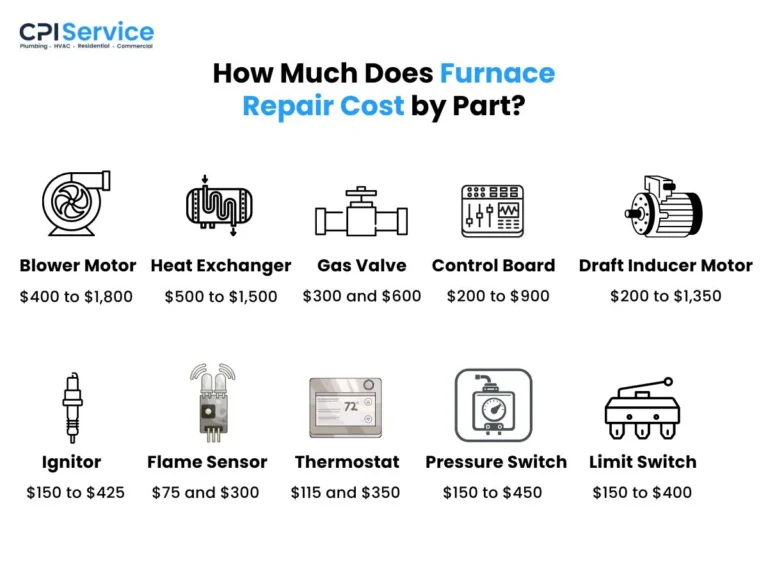
Furnace repair costs by part range from $75 to $1,800, depending largely on the specific component, system complexity, and labor required for installation or replacement. Lower-cost repairs, such as flame sensors and thermostats, fall at the bottom of the range, while mid-level components like ignitors, pressure switches, and gas valves reflect moderate repair effort. High-cost repairs, including blower motors and heat exchangers, require more complex labor and expensive parts. Overall furnace repair costs increase as the scope of repair shifts from simple component fixes to major system-level replacements.
How Much Does Blower Motor Repair Cost?
Blower motor repair costs range from $400 to $1,800, including parts and labor, with single-speed motors costing $400 to $700, multi-speed motors costing $600 to $1,200, and variable-speed or ECM motors costing $1,000 to $1,800. The overall difference in this furnace blower motor repair cost is due to higher complexity and advanced performance features. Motor type (single vs. variable-speed), labor time required, furnace system accessibility, horsepower, brand, and whether the furnace technician performs a repair or full replacement further affect the overall blower motor repair price.
How Much Does Heat Exchanger Repair Cost?
Heat exchanger repair costs $500 to $1,500, depending on the extent of damage and whether the furnace technician performs a repair or partial replacement of the component. This price range varies based on labor intensity, furnace type, and the exchanger’s accessibility, while older units (10+ years) or severe damage can push repair costs higher due to safety requirements and the potential need for system-level adjustments. The heat exchanger plays a critical role in safely transferring heat within the furnace system, so repair complexity increases when cracks, corrosion, or structural damage compromise combustion performance.
How Much Does Gas Valve Repair Cost?
Gas valve repair costs between $300 and $600, covering both the part and the skilled labor required for safe installation. In most cases, this component cannot be repaired easily, so the furnace technician replaces the entire valve when it malfunctions or leaks. The total gas valve repair price varies based on the furnace brand and the type of valve used, such as single-stage, two-stage, or modulating systems, where more advanced and electronically controlled valves increase both part cost and overall repair estimate.
How Much Does Control Board Repair Cost?
Control board repair costs range from $200 to $900, including both parts and professional labor. The total furnace control board repair cost varies based on the furnace model and system complexity, as basic control boards for older, single-stage units are on the lower end, while advanced boards used in high-efficiency or modulating furnaces increase the overall estimate. Labor cost also rises when the furnace technician must handle wiring configuration, system recalibration, or compatibility checks. Factors such as brand-specific parts, electronic sensitivity, and the potential need for surge protection can further influence the final price of a control board repair.
How Much Does Draft Inducer Motor Repair Cost?
Draft inducer motor repair costs range from $200 to $1,350, depending on the furnace brand and the overall complexity of the furnace system. Standard inducer motors for basic furnace units are at the lower end, whereas high-efficiency, two-stage, or variable-speed draft inducer assemblies for premium systems drive up the total draft inducer motor repair price. Labor costs also account for a higher range of $150 of the total, as the furnace technician must access and repair the motor in most cases within one to two hours. The final price for draft inducer motor repair further varies based on part availability, motor design, and the level of system integration required during installation.
How Much Does Ignitor Repair Cost?
Ignitor repair costs range from $150 to $425, depending on the furnace type and whether the furnace technician replaces the ignitor or performs a minor fix. This price varies based on ignitor type (e.g., hot-surface or spark ignitors), part quality, and compatibility with the furnace system. Labor costs for furnace ignitor repair remain relatively low because the furnace technician can access and replace the ignitor quickly, but high-efficiency furnace units or premium-brand components can increase the overall repair estimate.
How Much Does Flame Sensor Repair Cost?
Flame sensor repair or cleaning costs between $75 and $300, with most jobs falling at the lower end of the range. In many cases, the furnace technician only needs to clean the sensor with fine-grit sandpaper to remove carbon buildup, keeping the total cost close to that of a standard service call. If the sensor is damaged, such as a cracked insulator or severe oxidation, the furnace technician replaces the component, which increases the overall repair estimate. Labor costs remain low because the furnace technician can access the burner assembly and complete the repair quickly.
How Much Does Thermostat Repair Cost?
Thermostat repair costs around $115 and $350, depending on the device complexity and the nature of the wiring or system issue. Minor problems such as dead batteries, loose connections, or software glitches often require simple fixes that keep the repair price close to a standard service call. If the thermostat is faulty, replacing it with a programmable or smart thermostat will increase the total repair price due to higher part costs and setup requirements. The labor costs also rise when the furnace technician must calibrate the unit and ensure proper communication with the furnace control system to maintain consistent performance.
How Much Does Pressure Switch Repair Cost?
Pressure switch repair costs range from $150 to $450, depending on whether the furnace technician repairs the component or replaces it entirely. This price includes the diagnostic fee and professional labor, as the furnace technician must test the switch and verify that the issue is not due to related problems, such as vent blockages or airflow restrictions. While the part itself remains relatively affordable ($10-$50), the total repair cost varies based on furnace type, part compatibility, and system accessibility. Labor costs can increase when additional diagnoses are required, though the installation is straightforward and often completed within an hour.
How Much Does Limit Switch Repair Cost?
Limit switch repair or replacement costs range from $150 to $400, including the furnace technician’s labor and diagnostic fee. While the part itself is relatively inexpensive, the total price for the furnace limit switch repair reflects the time required to test the switch and confirm its failure. The furnace technician must also identify the underlying cause of overheating, such as restricted airflow or a damaged component, to prevent repeated system shutdowns. This additional diagnosis increases labor effort when the furnace requires further inspection to ensure the new switch operates correctly and safely.
How Much Does Furnace Repair Cost by Furnace Type?
Furnace repair costs range from $75 to $1,500+, with gas furnace repairs ($75-$550) falling in the lower to mid-range due to common part availability, but increasing with high-efficiency components and safety checks. Electric furnace repairs ($100-$600) remain relatively moderate due to a simpler design and fewer moving parts. Oil furnace repairs ($300-$1,500+) are the most expensive due to soot buildup, higher maintenance needs, and variable part availability, which increases overall repair frequency and cost.
How Much Does Gas Furnace Repair Cost?
Gas furnace repair costs range from $75 to $550, with more complex repairs for high-efficiency systems reaching the upper end of the range. This variation in gas furnace repair cost occurs because gas furnace units rely on combustion-based components such as burners, gas valves, and venting systems, which require careful handling and safety checks during repair. Part availability remains high since gas furnaces are widely used, but advanced systems with 95%+ AFUE ratings often use more expensive, specialized components. Labor costs are also higher because furnace technicians must inspect for gas leaks and carbon monoxide risks, while regular maintenance needs, such as soot and sensor buildup, contribute to a moderate repair frequency.
How Much Does Electric Furnace Repair Cost?
Electric furnace repair costs range from $100 to $600, depending on the component failure and system configuration. These furnace systems are less complex than gas or oil furnaces because they rely on electric resistance coils rather than combustion, reducing the number of mechanical parts that can fail. Most repairs involve electrical components such as sequencers, relays, or heating elements, allowing furnace technicians to diagnose and fix issues more quickly. Labor involvement remains moderate due to focused electrical troubleshooting, and although repair frequency is lower, part replacements can still affect overall repair costs.
How Much Does Oil Furnace Repair Cost?
Oil furnace repair costs range from $300 to $1,500+, making it the most expensive category of furnace repairs. This higher cost is driven by the fuel type, which produces heavy soot and dirt buildup, requiring more intensive and frequent cleaning of components such as the combustion chamber and nozzles. Part availability can also vary in regions where oil systems are less common, which can increase the overall repair estimate. Due to the high-maintenance nature of oil combustion, these systems tend to require more frequent repairs if not cleaned and serviced regularly.
How Much Does Labor Cost for Furnace Repair?
Labor for furnace repair ranges from $50 to $150 per hour, with a national average of $75 to $125 per hour. This rate covers professional expertise, though separate diagnostic fees often apply. Total costs are driven by job complexity, with simple ignitor swaps completed within an hour, while labor-intensive tasks such as accessing hard-to-reach ignitors or replacing surrounding components require significantly more time and expense.
Pricing fluctuates based on furnace technician experience and regional cost of living, with higher rates in major cities. For example, furnace repair labor in cities like San Jose, CA, may range from $120 to $180 per hour, while rates in Phoenix, AZ, often average $80 to $120 per hour. Apprentice HVAC technicians charge $50 to $75 per hour, whereas certified, experienced furnace specialists may charge $100 to $150 per hour. During peak winter months or emergency after-hours service, labor rates can increase to 1.5x to 2x the standard hourly cost.
How Much Does Emergency Furnace Repair Cost?
Emergency furnace repair costs range from $250 to $1,500+, with additional emergency service fees averaging $150 to $300 for after-hours, weekend, or holiday calls. The higher cost reflects urgent response requirements, limited availability of furnace technicians, and priority scheduling, which increase both labor rates and service charges. Total furnace repair cost varies based on the severity of the issue, the time of service, and the parts required, with nighttime or peak winter repairs often reaching the higher end of the range.
When Is Emergency Furnace Repair Necessary?
Emergency furnace repair becomes necessary when the furnace system fails in a way that affects safety, heating availability, or critical system operation, especially during extreme weather conditions. These situations require immediate attention to prevent property damage, health risks, or complete heating system failure.
5 common scenarios when emergency furnace repair becomes necessary are:
- Complete Loss of Heat in Extreme Weather: Indicates a total system failure that can compromise indoor safety and lead to frozen pipes.
- Gas Leak or Combustion Issue: Signals a dangerous condition that can lead to fire hazards or carbon monoxide exposure.
- Electrical Malfunction Causing Shutdown: Reflects a serious internal failure that prevents the furnace from operating safely.
- Carbon Monoxide Risk: Points to critical safety hazards requiring immediate system shutdown and inspection.
- Furnace Not Turning On in Critical Conditions: Indicates an urgent failure when heating is essential to maintain safe indoor temperatures.
How Much More Does Emergency Repair Cost Compared to Scheduled Service?
Emergency furnace repair costs 1.5x to 2x as much as scheduled service, with homeowners paying an additional $100 to $200 for the initial visit alone. While a standard diagnostic fee ranges from $75 to $200, emergency service fees increase to $150 to $300 and are rarely applied toward the final repair cost. Labor rates also rise during emergency calls, often billed at time-and-a-half or double-time, which can increase a standard $100 hourly rate to $150 or $200, depending on whether the service occurs at night, on weekends, or during holidays.
How Much Does Furnace Inspection, Tune-Up, and Maintenance Cost?
Furnace inspection, tune-up, and maintenance costs range from $70 to $500 per service and $150 to $500 annually for maintenance plans, depending on service depth and system condition. Inspections ($80-$150) focus on diagnosis and safety checks, while tune-ups ($70-$200) involve performance adjustments and minor repairs. Cleaning ($100-$500) addresses dust and airflow issues, with higher costs for deep cleaning. Maintenance plans bundle inspections and tune-ups with added benefits, offering long-term savings by preventing major breakdowns and maintaining system efficiency.
How Much Does a Furnace Inspection Cost?
Furnace inspection costs range from $80 to $150, with basic diagnostic-only visits starting as low as $70, depending on the service provider. This service focuses on evaluation, where a licensed furnace technician performs a multi-point safety and performance check, including combustion testing, heat exchanger inspection, and verification of electrical connections and venting. The overall purpose of a furnace inspection is to identify early signs of wear or potential system failure, allowing homeowners to address issues before they lead to a complete furnace breakdown during peak heating periods.
How Much Does a Furnace Tune-up Cost?
Furnace tune-up costs between $70 and $200, depending on the level of service and the furnace fuel type. Unlike a standard inspection, a tune-up is action-focused, emphasizing performance optimization rather than evaluation, with tasks such as lubricating moving parts, adjusting burner settings, testing thermostat calibration, and performing minor repairs. The total price for a furnace tune-up varies based on the furnace system’s condition and the time required to fine-tune components. Regular annual tune-ups help maintain consistent performance and keep the furnace operating at its intended efficiency.
How Much Does Furnace Cleaning Cost?
Furnace cleaning costs range from $100 to $500, with basic surface cleaning at the lower end and more intensive deep cleaning at the higher end. A standard furnace cleaning includes removing dust and debris from the blower wheel, cleaning the flame sensor, and vacuuming the burner assembly to maintain proper airflow. The total price increases when the system requires deeper cleaning, such as clearing soot buildup or servicing heavily contaminated components. Regular cleaning helps prevent airflow restrictions and reduces the risk of operational issues that can increase wear on furnace components.
How Much Does an Annual Furnace Maintenance Plan Cost?
Annual furnace maintenance plans cost between $150 and $500 per year. These service contracts act as a subscription for your furnace system, covering one or two scheduled visits (a tune-up and an inspection) and providing added benefits such as priority scheduling and discounts on repairs. While the upfront cost is higher than a one-time service, maintenance plans provide long-term savings by catching minor issues early and ensuring your manufacturer’s warranty remains valid through documented professional upkeep.
What Are the Factors That Affect the Repairing Cost of a Furnace?
Factors that affect furnace repair costs are its age, size, model, brand, seasonal demand, and the service type. Older furnaces tend to incur higher repair costs due to outdated or unavailable parts and increased wear and tear, while larger models often require more complex and expensive repairs. Additionally, repairs are typically more expensive during colder months when furnace use increases, and emergency repairs often come with higher hourly rates compared to regular maintenance.
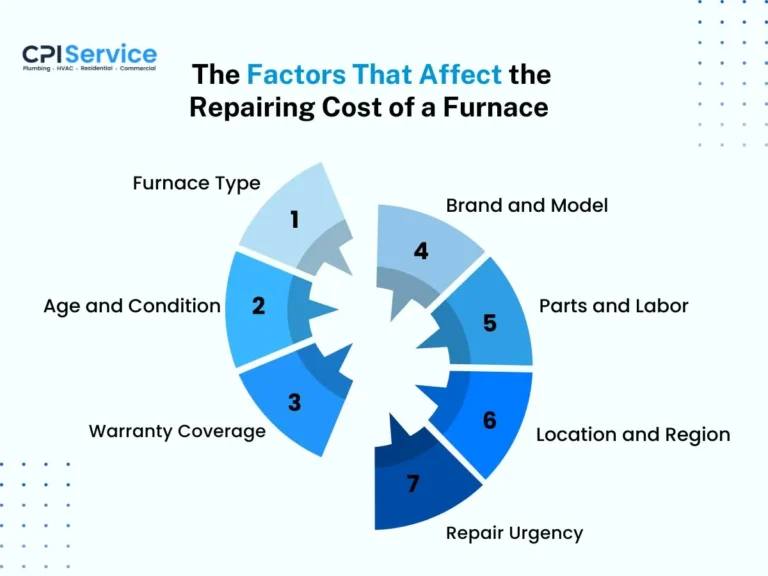
7 key factors affecting furnace repair costs are:
Furnace Type
Furnace type directly affects repair cost because system design, fuel type, and component complexity differ between gas, electric, and oil units. Gas furnaces often increase costs due to combustion-related parts and safety checks, while electric furnaces reduce costs with simpler systems, and oil furnaces increase costs due to cleaning and fuel-handling requirements. This factor is highly important because it determines both part pricing and labor involvement. For example, an older oil furnace with limited part availability can significantly increase both parts cost and service time.
Age and Condition
A furnace’s age and overall physical condition serve as cost multipliers, affecting both part availability and the total labor hours required. Furnace systems older than 15 years often experience a domino effect, where replacing one part reveals secondary issues, such as brittle wiring or rusted fasteners, that complicate the repair. Furthermore, finding components for discontinued models can lead to higher shipping costs or the need for expensive retrofitting. Poorly maintained units also take longer to diagnose, as furnace technicians must work through layers of neglect, significantly increasing the final labor bill compared to a well-kept, newer system.
Brand and Model
The specific brand and model of your furnace determine whether a furnace technician can use affordable, universal parts or must order high-priced proprietary components, which increases the overall furnace repair cost. Premium brands and high-efficiency models (95% AFUE and above) rely on sophisticated, specialized technology such as variable-speed motors and advanced sensors that carry much higher price tags than standard components found in entry-level units. While these models offer greater energy savings, their engineering complexity often leads to higher specialized labor costs and longer wait times for brand-specific parts.
Parts and Labor
Parts and labor define the total furnace repair cost by balancing component price with installation time. Minor repairs, such as cleaning or replacing the flame sensor, involve low-cost parts and minimal labor time. In contrast, major repairs like blower motor or heat exchanger replacement involve expensive components and several hours of work, which significantly increase the total invoice. This factor determines the overall weight of the repair, separating simple maintenance tasks from high-cost system-level fixes.
Location and Region
Geography influences furnace repair cost by setting local labor rates and reflecting regional demand. Homeowners in major cities or in extreme climates, such as New York or Minnesota, often pay higher hourly rates due to higher operating costs and strong seasonal demand. In heating-dependent regions, limited technician availability during peak winter months can further increase service fees. In contrast, rural areas such as Kansas or Iowa have lower demand and operating costs, which result in more competitive pricing for the same furnace repair services.
Repair Urgency
Service timing determines whether you pay standard rates or significant emergency surcharges, which directly affects the furnace repair cost. Scheduled weekday appointments are billed at base rates, but calling at 2 AM or on a holiday triggers premium diagnostic fees, often between $150 and $300. Furthermore, emergency labor is frequently billed at time-and-a-half or double-time rates. This urgency factor can add hundreds of dollars to a repair that would have been significantly more affordable during regular business hours.
Warranty Coverage
A valid manufacturer’s warranty can significantly reduce repair costs by covering the price of replacement parts, leaving the homeowner responsible mainly for labor and diagnostic fees. Most furnaces include a 5- to 10-year parts warranty that covers major components such as control boards and motors. When the unit is under warranty, repair expenses remain lower because only service time is billed. Without this coverage, homeowners must pay for both high-cost parts and professional labor, which substantially increases the total repair cost.
What Are the Signs Your Furnace Needs Repair?
Signs your furnace needs repair are no heat output, strange noises, burning smells, short cycling, high energy bills, and the furnace failing to turn on. These warning signs indicate underlying mechanical, electrical, or airflow-related issues that affect furnace system performance and signal the need for immediate inspection by a furnace technician.
6 signs your furnace needs repair are:
- No Heat or Poor Heating Output: Indicates problems such as a failing ignition system, malfunctioning thermostat, or a cracked heat exchanger. Lukewarm air reflects a moderate efficiency issue, while a complete lack of heat during cold conditions signals a serious system failure that affects home safety.
- Strange Noises: Banging, screeching, or whistling sounds indicate mechanical strain, such as a slipped blower belt, worn motor bearings, or a damaged inducer housing. Persistent metal-on-metal noise signals a serious condition, as it suggests imminent component failure that can impact surrounding parts.
- Burning Smells and Unusual Odors: A temporary dusty smell may suggest minor buildup, but persistent odors such as burning plastic, ozone, or gas indicate electrical faults or fuel-related risks. These signs carry high severity and reflect potential safety hazards within the furnace system.
- Short Cycling: Frequent on-and-off cycling signals overheating, restricted airflow, or a sensor malfunction. This condition places repeated strain on internal components and constitutes a moderate-to-serious issue that reduces system lifespan.
- Unusually High Energy Bills: A sudden increase in energy usage without a corresponding rise in demand indicates declining efficiency. It points to internal resistance, airflow restriction, or worn components, making it a moderate indicator of furnace system issues.
- Furnace Won’t Turn On: A complete failure to start indicates a failure of key components, such as the ignitor, control board, or electrical system. This condition represents a serious issue and indicates total operational failure.
Is It Better to Repair or Replace a Furnace?
If your furnace is relatively new (under 15 years) and has minor issues, it is better to repair it, whereas if it is older and has frequent breakdowns or major component failures, it is better to replace it. Repair makes sense when the unit is under 10-15 years old, the cost stays below 50% of its value, and efficiency remains acceptable. Furnace replacement becomes the better option when repair costs rise, efficiency declines, or failures like a heat exchanger or control board increase long-term expenses, where a new furnace system can reduce energy usage and ongoing repair frequency.
Criteria | Repair a Furnace | Replace a Furnace |
Recommended Furnace Age | Furnace is under 10–15 years old | Furnace is 10–15 years old or older |
Cost Consideration | Repair cost is less than 50% of the furnace value | Repair costs exceed 50% of the furnace value |
Type of Issue | Minor component failures (e.g., faulty sensor or ignitor) | Major component failures (e.g., cracked heat exchanger or damaged control board) |
Warranty Status | System is still under warranty | Warranty has expired |
Energy Efficiency | Furnace still provides acceptable efficiency | Efficiency has declined, causing higher utility bills |
Financial Impact | Lower short-term cost with no major upfront investment | Higher upfront cost but long-term energy savings |
Long-Term Benefit | Extends life of existing system | Modern units can reduce energy costs by up to 30% |
How Much Does Furnace Replacement Cost Compared to Repair?
A new furnace replacement costs between $3,000 and $8,000, which is significantly higher than the average repair cost of $133 to $378. Replacement becomes more cost-effective when repair expenses increase relative to the furnace’s age, often evaluated using the 5,000 Rule, in which multiplying the furnace’s age by the repair estimate helps determine the value. When this threshold is exceeded, replacement provides a better financial return. Although the upfront cost is higher, long-term savings from improved efficiency, warranty coverage, and reduced repair frequency often offset the initial investment.
Should You DIY or Hire a Professional for Furnace Repair?
For basic problems such as filter replacement, thermostat reset, flame sensor cleaning, or checking the power supply, it is better to take a DIY approach, whereas it is better to hire professional furnace technicians for complex repairs involving gas systems, electrical components, or major part replacements. Professional furnace technicians also ensure proper diagnosis, adhere to safety standards, and perform system-level repairs accurately, reducing the risk of further damage and ensuring the furnace operates reliably.
- What Furnace Repairs Can Homeowners Do Themselves?
Homeowners can safely handle simple furnace repair tasks such as replacing the furnace filter, adjusting or resetting the thermostat, cleaning the flame sensor, and checking the circuit breaker or power supply. These repairs are low-risk because they do not involve internal system disassembly, gas handling, or complex electrical work, and they help maintain basic furnace performance without requiring specialized tools or technical expertise.
- What Furnace Repairs Require a Licensed Technician?
High-risk furnace repair tasks, including gas valve adjustments, electrical board replacements, and major component installations (such as blower motors or heat exchangers), strictly require a licensed furnace technician. These repairs involve technical complexities and legal permit requirements that ensure the furnace system meets local safety codes. Professional furnace repair technicians possess the diagnostic tools to prevent improper repairs that could lead to gas leaks or fires. Furthermore, unauthorized tampering with gas or structural components often entails legal liability and poses significant safety risks to the household.
- What Are the Risks of DIY Furnace Repair?
DIY furnace repair carries risks such as gas leaks, electrical hazards, system damage, incorrect diagnosis, carbon monoxide poisoning, explosive gas leaks, electrical fires, and voided warranty coverage. Such risks range from moderate to severe, especially when homeowners attempt complex repairs without proper tools or training. Mistakes often increase long-term repair costs, making DIY attempts less cost-effective compared to professional service for anything beyond basic maintenance tasks.
How Can You Save On Furnace Repair Costs?
To save on furnace repair costs, homeowners should schedule repairs during off-season periods, invest in regular maintenance, verify warranty coverage, compare multiple repair estimates, consider maintenance plans, and check for available rebates or incentives. These strategies work together to reduce immediate repair expenses, prevent major system failures, and improve long-term cost efficiency by minimizing unexpected breakdowns.
6 ways to save on furnace repair costs are:
- Schedule Repairs in the Off-Season
Scheduling furnace repair during off-season months, such as spring or early fall, reduces cost because service demand remains low and furnace technicians offer more competitive pricing. This approach lowers short-term expenses and helps prevent emergency repair costs during peak winter periods.
- Invest in Annual Maintenance
Annual furnace maintenance reduces furnace repair costs by identifying wear and tear early and preventing major component failure. Regular servicing improves system efficiency and lowers long-term expenses by reducing the frequency of breakdowns.
- Check Warranty Before Paying for Parts
Reviewing warranty coverage before furnace repair reduces out-of-pocket costs by covering eligible parts such as control boards or motors. This step ensures homeowners pay only for labor and diagnostic fees while the furnace remains under warranty.
- Get Multiple Estimates
Requesting multiple repair estimates helps compare pricing, labor charges, and service scope across providers. This approach reduces the risk of overpayment and ensures a fair, competitive repair quote.
- Ask About Membership and Maintenance Plans
Maintenance plans reduce furnace repair costs by offering discounted services, priority scheduling, and bundled inspections. These plans provide long-term savings compared to one-time repair visits.
- Check for Energy Rebates and Incentives
Energy rebates and local incentives reduce overall heating system cost by offsetting repair or upgrade expenses. These programs provide financial benefits when improving system efficiency or replacing outdated components.

Alex Hamilton is the owner of CPI Service, a trusted provider of plumbing and HVAC solutions. With over 35+ years of hands-on experience in the industry, He brings deep technical expertise and a proven track record in delivering reliable installation, maintenance, and repair services. His leadership ensures that CPI Service consistently upholds the highest standards of quality, safety, and customer satisfaction.
