

 Emergency Plumbing
 Plumbing Repairs
 Water Heaters
 Drain Cleaning
 Sewer Service
 Faucets & Fixtures
 Repiping
 Toilet Plumbing
 Trenchless
 Plumbing Leaks
 Air Conditioning
 Heating
 Minisplit Systems
 Heat Pumps
 HVAC Components
 HVAC Rebates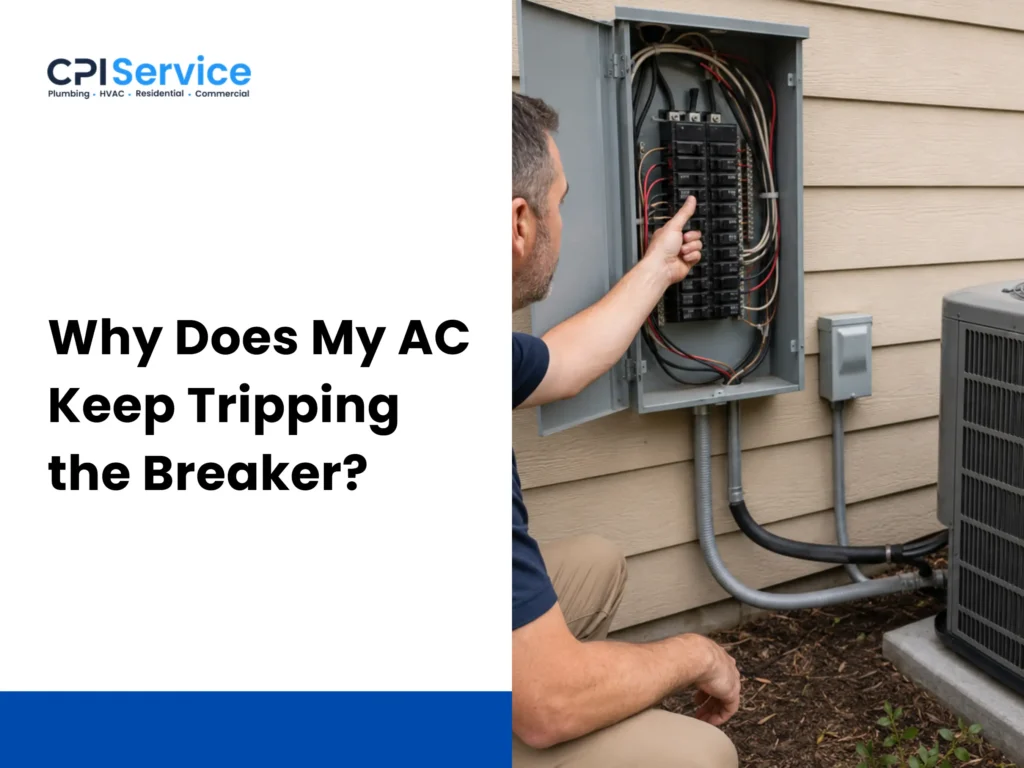
Your AC keeps tripping the breaker because it is drawing more electrical current than the circuit can safely handle, causing the breaker to shut off power to protect the system from overheating, electrical damage, and fire hazards. Common causes include a dirty air filter, clogged condenser coils, low refrigerant, a failing compressor, loose wiring, ground faults, short circuits, overloaded circuits, worn-out breakers, and weak capacitors. These issues fall into three categories: airflow restrictions, mechanical strain, and electrical faults, all of which can increase the AC system’s electrical load.
If your AC breaker trips, turn off the system, wait 30 minutes before resetting it, inspect the air filter, and clear debris from the outdoor unit. If the breaker continues to trip after basic troubleshooting, stop resetting it and contact a licensed AC technician. Immediate professional service is recommended if you notice burning odors, sparks, unusual noises, dimming lights, or repeated breaker trips, as these warning signs may indicate a serious electrical or mechanical failure.
What Does It Mean When Your AC Trips the Breaker?
When your AC trips the breaker, it means the air conditioning system is drawing more electrical current than the circuit is designed to handle, causing the circuit breaker to shut off power as a safety measure. The AC unit breaker acts as a protective shield by instantly interrupting the electrical current when it detects an overload.
By cutting power before excessive heat can build up, the breaker helps prevent wiring, motors, and other components from overheating, reducing the risk of equipment failure and electrical fires. Several issues can trigger this overload, including restricted airflow from a dirty air filter, dirty condenser coils that force the system to work harder, and electrical problems such as loose wiring or overloaded circuits
What are the reasons your AC keeps tripping the breaker?
Reasons your AC keeps tripping the breaker include a dirty air filter, clogged condenser coils, low refrigerant, a failing AC compressor, electrical issues such as loose wiring, and a weak capacitor. These diverse AC trip breaker issues fall into three main categories: airflow restrictions, mechanical strain, and electrical faults, which cause your AC system to draw excessive current and trigger a protective shutdown.
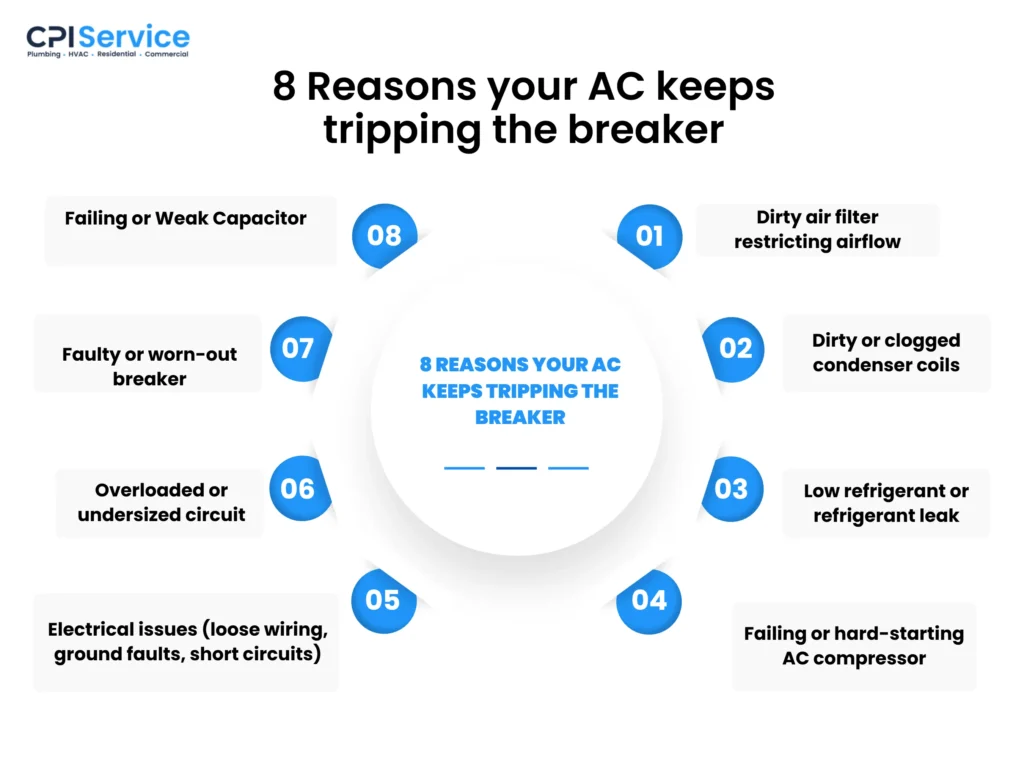
8 reasons why your AC keeps tripping the breaker are:
- Dirty air filter restricting airflow
- Dirty or clogged condenser coils
- Low refrigerant or refrigerant leak
- Failing or hard-starting AC compressor
- Electrical issues (loose wiring, ground faults, short circuits)
- Overloaded or undersized circuit
- Faulty or worn-out breaker
- Failing or Weak Capacitor
Dirty air filter restricting airflow
A dirty air filter can trip the AC unit’s breaker by restricting airflow through the system. When the filter becomes clogged with dust, dirt, and airborne debris, the blower motor and compressor must work harder to circulate air throughout the AC system. This extra strain can cause the electrical motor in your AC to overheat and draw more current than the circuit is designed to handle, leading the circuit breaker to shut off power as a safety measure.
To address this problem, follow these steps:
- Step 1: Turn off the AC at the thermostat and switch off the breaker.
- Step 2: Remove the air filter and replace it if it appears dirty or clogged.
- Step 3: Restore power and run the AC system.
- Step 4: If the breaker trips again, inspect and gently clean the outdoor condenser coils.
Dirty or clogged condenser coils
Acting like a thick blanket covering your AC unit, especially the outdoor unit, dirty or clogged condenser coils trap heat inside the air conditioning system and can cause the breaker to trip. Condenser coils are designed to release heat absorbed from inside your home, but dirt, grass, leaves, and other debris can reduce their ability to transfer heat efficiently. As a result, the compressor must work harder to cool your home, increasing the AC system’s electrical load. When the load becomes too high, the breaker trips to protect the AC unit and electrical circuit from damage.
If dirty or clogged condenser coils are causing your AC unit breaker to trip, follow these steps:
- Clean the Coils: Turn off the power to the AC unit and rinse the coils gently with a garden hose. Use a condenser coil cleaner for heavy buildup.
- Clear the Area Around the Unit: Remove leaves, grass, weeds, and debris within 2 to 3 feet of the outdoor unit.
- Check the Air Filter: Inspect the air filter and replace it if it is dirty or clogged.
Low refrigerant or refrigerant leak
A low refrigerant charge or a refrigerant leak strains your air conditioner’s compressor, causing it to overheat and pull excessive electrical current, which ultimately trips the circuit breaker. Because refrigerant absorbs and transfers heat from your home, low refrigerant levels force the compressor to work harder to maintain cooling performance, increasing the risk of breaker trips and compressor damage.
Here is what you should do if low refrigerant or a refrigerant leak is causing the AC unit to trip the breaker:
- Replace the filter if it is dirty or clogged.
- Remove leaves, grass, and debris blocking airflow around the condenser.
- Stop resetting the breaker if it keeps tripping.
- Schedule an inspection from a certified AC technician if you notice warm airflow, ice on refrigerant lines, or recurring breaker trips.
Failing or hard-starting AC compressor
A failing or hard-starting AC compressor can trip the breaker by drawing excessive current during startup. One common cause is a shorted-to-ground compressor, where damaged internal insulation creates a direct electrical fault and trips the breaker almost instantly. Another cause is locked-rotor amperage (LRA), which occurs when worn or seized internal components prevent the compressor from turning properly, causing it to draw a massive current surge. A faulty start or run capacitor can create a similar problem by leaving the compressor stuck in a high-amp startup state.
Dirty condenser coils, incorrect refrigerant levels, restricted airflow, burnt wiring, or even a weak circuit breaker can place additional strain on the compressor and increase its electrical demand. When the current draw exceeds the breaker’s safe operating limit, the circuit trips to protect the AC unit and electrical system from damage. Because compressor-related issues often involve high-voltage components and specialized testing, professional AC technicians’ assistance is required.
Electrical issues – loose wiring, ground faults, short circuits
Problems within your AC system’s electrical components can cause repeated breaker trips by creating overloads, current surges, or unsafe electrical pathways. Loose wiring increases electrical resistance, generating excess heat that can overload the circuit and trigger the breaker. Ground faults occur when a hot wire comes into contact with a grounded metal surface, such as the AC unit’s cabinet, causing a sudden surge of current. Short circuits develop when damaged wire insulation allows electricity to bypass its intended path, creating an immediate overload that trips the breaker.
Other electrical problems, including failed capacitors, damaged compressor windings, faulty breakers, and overloaded circuits, can produce similar symptoms by increasing current draw or disrupting normal system operation. Because electrical faults can damage equipment and increase the risk of fire, they should be inspected and repaired by a qualified AC technician.
Overloaded or undersized circuit
An overloaded or undersized circuit occurs when the air conditioner draws more electrical current than the circuit can safely handle, causing the breaker to trip. This often happens when the AC shares a circuit with other appliances or when the wiring and breaker are not properly sized for the system. Common triggers include a failing capacitor, restricted airflow from a dirty air filter, an overworked compressor, or multiple high-power devices running on the same circuit.
To troubleshoot an overloaded or undersized circuit, follow these steps:
- Step 1: Replace or clean the air filter, as a clogged filter restricts airflow and can increase the AC system’s electrical load.
- Step 2: Remove leaves, grass, and other debris from around the condenser unit to improve airflow and reduce strain on the compressor.
- Step 3: Unplug or turn off other appliances that may be sharing the same circuit as the air conditioner.
- Step 4: If the AC breaker continues to trip, contact a qualified AC technician.
Faulty or worn-out breaker
A faulty or worn-out breaker can cause an AC unit breaker to trip even when the air conditioning system is operating normally. Over time, breakers can weaken due to age, repeated use, overheating, or internal damage, making them more sensitive to electrical loads they previously handled without issue. In some cases, loose connections, internal wear, or short circuits within the breaker can prevent it from reliably managing the current drawn by the AC unit.
Common signs of a faulty breaker include:
- Hot to the Touch: Excessive heat may indicate internal damage or an overloaded electrical connection.
- Burn Marks or Burning Odors: Discoloration, scorch marks, or a burning smell near the electrical panel can signal breaker or wiring damage.
- Loose Connections: A breaker that does not sit securely in the panel may cause arcing, overheating, and repeated trips.
Failing or Weak Capacitor
When the capacitor weakens, the AC unit can trip the breaker because the compressor and fan motors do not receive the electrical support they need to start properly. The capacitor provides the initial power surge that helps these motors start and run smoothly. If it begins to fail, the compressor may struggle during startup and pull excessive current from the electrical system.
This extra current draw can overload the circuit and cause the breaker to trip. A weak capacitor can also create symptoms that resemble other AC problems, such as a shorted compressor, damaged wiring, dirty condenser coils, or low refrigerant. If your AC continues to trip the breaker after basic troubleshooting, contact a qualified AC technician for a professional diagnosis before further damage occurs.
What to do when your AC trips the breaker?
When your AC trips the breaker, turn off the AC, wait 30 minutes, check and replace the air filter, clear debris from the outdoor unit, monitor the system, and, if the problem persists, contact a licensed AC technician. Following these steps helps eliminate common causes such as restricted airflow and dirty condenser coils while reducing the risk of further damage to the compressor, electrical components, and wiring.
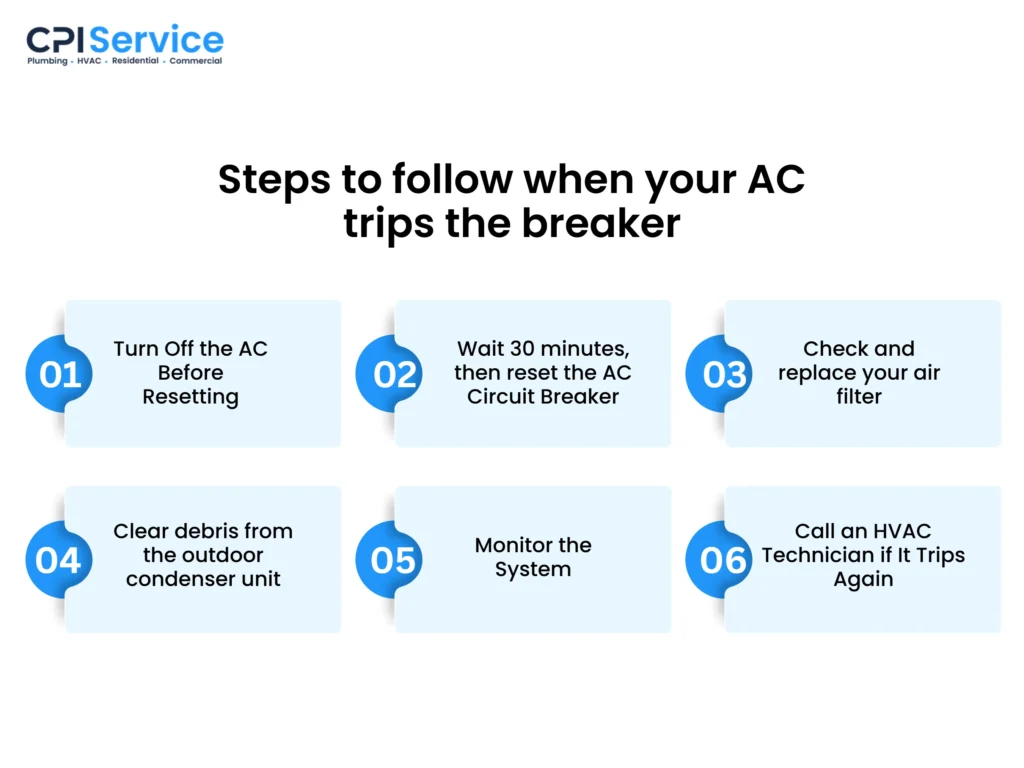
Steps to follow when your AC trips the breaker are:
- Step 1: Turn Off the AC Before Resetting
- Step 2: Wait 30 minutes, then reset the AC Circuit Breaker
- Step 3: Check and replace your air filter
- Step 4: Clear debris from the outdoor condenser unit
- Step 5: Monitor the System
- Step 6: Call an HVAC Technician if It Trips Again
Step 1 – Turn Off the AC Before Resetting
Always turn off your air conditioning unit completely at the thermostat before attempting to reset the circuit breaker. Leaving the AC system switched on during a reset can trigger a sudden power surge that risks causing permanent short circuits, damaging the sensitive electrical motor, or burning out the compressor. If the AC unit breaker trips again immediately after a reset, stop completely and do not attempt repeated resets, as forcing electricity through an active fault creates a severe fire and shock hazard.
Step 2 – Wait 30 Minutes then Reset the AC Circuit Breaker
After ensuring the AC system is powered down at the thermostat, wait at least 30 minutes before flipping the circuit breaker back on. This mandatory pause allows the internal refrigerant pressure in the compressor to equalize safely and gives the AC system’s thermal safety switches adequate time to cool down. Resetting the breaker too quickly forces the electrical motor to start under heavy mechanical strain, which can cause immediate overheating, trigger an instant secondary trip, and degrade your home’s internal wiring.
Step 3 – Check and replace your air filter
A dirty air filter severely restricts airflow through your air conditioning system, choking the blower motor and forcing the compressor to work significantly harder to circulate air. This increased strain causes the AC unit to draw more electricity, which can overload the circuit and trip the breaker.
To check and replace your air filter, follow these steps:
- Locate the filter inside the air handler or return grille.
- Remove and inspect the filter.
- Replace it if it appears dirty or blocks light.
- Install the new filter with the airflow arrow pointing toward the unit.
Step 4 – Clear debris from the outdoor condenser unit
Accumulated debris, such as leaves, grass clippings, and dirt on your outdoor condenser coils, acts as an insulating blanket that blocks heat transfer, causing the entire system to run hotter and draw a dangerous electrical load. Before cleaning, strictly shut off all power to the unit at the thermostat, the main electrical panel, and the outdoor disconnect box for maximum safety. Once fully powered down, wear work gloves to pull away local vegetation, maintain at least 2 feet of clear space around the entire perimeter, and gently clear the outdoor condenser coils to restore vital airflow.
Step 5 – Monitor the System
Once the air filter is replaced and the outdoor unit is clear, perform a controlled test by switching the circuit breaker fully off, waiting 30 minutes, turning the breaker back on, and then adjusting your thermostat to cooling mode. Closely observe the air conditioner during its initial operational cycles to see if it runs smoothly or exhibits abnormal patterns, such as tripping after a few minutes of operation or shutting down only during peak afternoon heat. If the AC system continues to trip despite clean components, it signals a deeper, non-DIY mechanical or electrical malfunction.
Step 6 – Call an AC Technician if It Trips Again
If the AC unit circuit breaker trips a second time during your monitoring period, cease all troubleshooting and contact a certified AC technician immediately. Persistent trips indicate a severe underlying hazard, such as a compressor failure, a failed capacitor, a refrigerant leak, or burnt wiring, which requires assistance from a licensed AC technician. Continuing to reset an AC unit breaker that handles complex, high-voltage circuits will cause permanent equipment damage, ruin your compressor windings, and create a risk of an active electrical fire inside your home.
When Should You Call for Emergency AC Service?
You should call for emergency AC service in San Jose if there are burning odors, tripped breakers, unwanted sounds, visible sparks, dimming lights, or repeated breaker trips. These warning signs can indicate a serious problem that may damage the system, create a fire hazard, or leave your home without cooling during extreme temperatures.
Below are the scenarios when you should call for emergency AC service:
- Burning or Electrical Odors: A burning smell may indicate overheated wiring, a failing motor, or an electrical short in the AC system. These issues can damage electrical components and increase the risk of fire if left unaddressed.
- Breaker Trips Immediately: If the AC breaker trips as soon as you reset it, the system may have a short circuit, ground fault, or compressor-related issue. Immediate breaker trips signal an unsafe electrical condition that can damage the AC system and create a safety hazard.
- Buzzing, Clicking, or Grinding Noises: Unusual sounds can indicate failing electrical components, fan motor problems, or compressor damage. Continuing to operate the system may cause further mechanical failure and costly repairs.
- Visible Sparks, Smoke, or Melted Components: Any sign of sparking, smoke, or melted wiring indicates active electrical damage. These conditions can quickly escalate into equipment failure or fire and require immediate professional attention.
- Dimming Lights When the AC Starts: Lights that flicker or dim significantly when the AC turns on may indicate excessive current draw or an overloaded electrical circuit. This can place additional strain on your home’s electrical system and signal a developing electrical fault.
- Dangerously High Indoor Temperatures: Emergency service may be necessary if the AC fails during extreme heat, particularly in homes with children, older adults, or individuals with medical conditions. Excessive indoor temperatures can create health and safety risks.
- Repeated Breaker Trips: Frequent breaker trips often indicate an unresolved electrical or mechanical problem, such as a failing compressor, damaged wiring, or a weak capacitor. Ignoring repeated trips can lead to equipment damage, electrical hazards, and complete system failure.
How to prevent your AC from tripping the breaker?
To prevent the AC from tripping the breaker, replace the air filter, clear debris from the outdoor unit, gently clean the coils, and perform a hard reset. These issues force the electrical motor in your AC to work harder, which can overload the circuit and cause repeated breaker trips.
Here are the key ways to prevent your AC from tripping the breaker:
- Replace the air filter: A dirty air filter restricts airflow, making the system work harder and increasing the risk of a breaker trip. Check and replace the filter every 1 to 3 months to keep air moving freely.
- Clear debris from the outdoor unit: Remove leaves, grass, and dirt from around the outdoor condenser. Ensure there is at least 2 feet of clearance on all sides so the unit can release heat efficiently.
- Gently clean the coils: Dirty condenser coils reduce heat transfer, forcing the compressor to draw more electricity. Use a soft brush or gentle water spray to clean the coils without damaging them.
- Perform a hard reset: Turn off the thermostat, switch the AC breaker off at the electrical panel, wait 30 minutes, then turn the breaker and thermostat back on. This reset can clear temporary faults and allow the system to restart safely.

