

 Emergency Plumbing
 Plumbing Repairs
 Water Heaters
 Drain Cleaning
 Sewer Service
 Faucets & Fixtures
 Repiping
 Toilet Plumbing
 Trenchless
 Plumbing Leaks
 Air Conditioning
 Heating
 Minisplit Systems
 Heat Pumps
 HVAC Components
 HVAC Rebates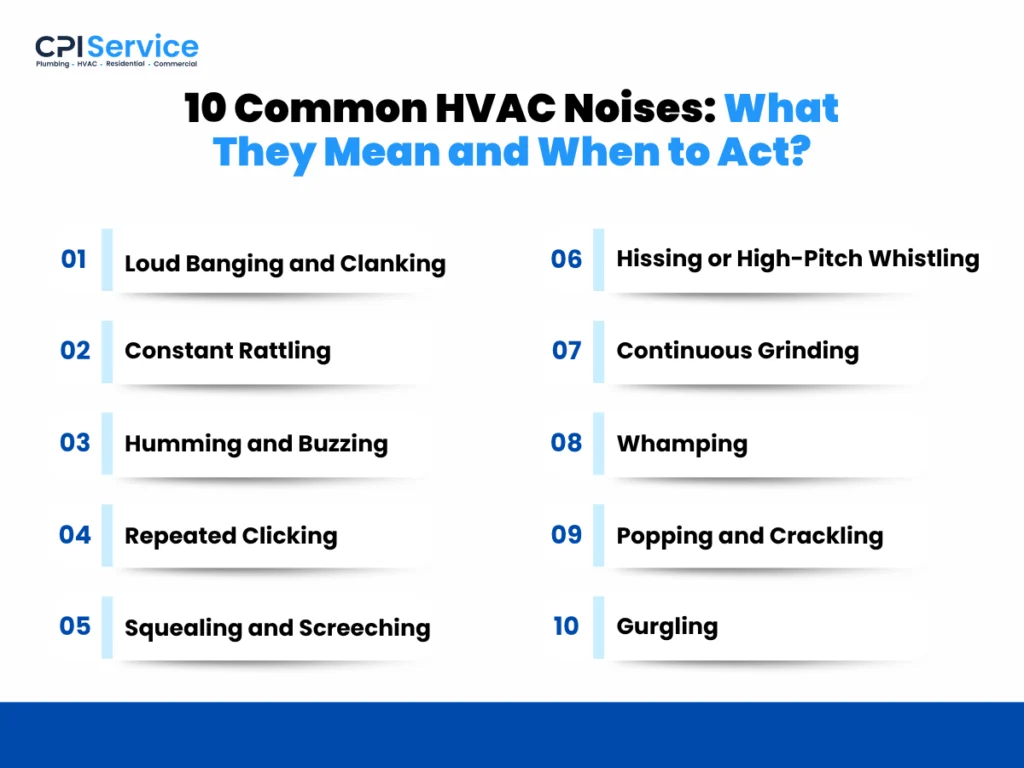
HVAC systems can produce a variety of noises, each signaling different issues, such as banging or clanking from mechanical problems, rattling from loose panels or ducts, and humming or buzzing from electrical or motor strain. Squealing or grinding often indicates worn bearings or belts, while hissing, whistling, popping, or gurgling can signal airflow blockages, refrigerant leaks, or condensate issues.
If HVAC noise is loud, persistent, worsening, or accompanied by a burning smell or a system shutdown, contact a certified HVAC professional immediately. To keep your system running smoothly and prevent such issues, routine cleaning, tightening, and inspections help maintain efficiency and ensure quiet, reliable operation.
The 10 common HVAC Noises are:
- Loud Banging and Clanking: Indicates loose, broken, or heavily damaged internal components striking each other.
- Constant Rattling: Caused by loose panels, screws, or debris vibrating during system operation.
- Humming and Buzzing: Often signals electrical issues or motor strain within the system.
- Repeated Clicking: Suggests startup or shutdown issues linked to faulty electrical or control components.
- Squealing and Screeching: Caused by friction from worn belts, bearings, or lack of lubrication.
- Hissing or High-Pitch Whistling: Indicates airflow restrictions or possible refrigerant leaks.
- Continuous Grinding: A serious sign of metal-on-metal contact from worn or damaged mechanical parts.
- Whamping: Points to an unbalanced or obstructed blower fan causing rhythmic flapping or thumping sounds.
- Popping and Crackling: Usually caused by ductwork expansion and contraction during temperature changes.
- Gurgling: Suggests trapped air or blockages in drain lines or irregular refrigerant flow.
Loud Banging and Clanking
When an HVAC system produces loud banging or clanking sounds, it often indicates a serious internal fault that may occur during startup or operation, usually caused by a failing blower motor, unbalanced fan blades, or a damaged compressor rod. As components shift or strike internal parts, they produce repeated metallic impacts, which may worsen if debris is present inside the unit.
If this occurs, the system should be shut down immediately to prevent further mechanical damage. Inspect the exterior for loose panels or visible debris and remove any obstructions around the unit housing. Check for displaced or unstable components where accessible and secure them to prevent further impact. If the noise returns after restarting, stop use to avoid internal failure.
Constant Rattling
Constant rattling is a persistent vibration or buzzing noise caused by loose panels, screws, internal components, or ductwork connections vibrating under airflow pressure. It may increase as mechanical parts loosen over time.
Power off the system and tighten all external panels, screws, and mounting points to eliminate vibration sources. Inspect duct connections for looseness and secure any unstable joints. Clear debris around vents and ensure internal access points are properly fastened. If vibration continues, isolate the affected section and prevent further operation in that area.
Humming and Buzzing
Continuous humming or buzzing from an HVAC system is often an early warning of electrical or motor-related issues, typically linked to stressed components such as the capacitor, wiring, or contactor, or to a compressor or fan motor under strain. While it may seem minor at first, the sound can gradually intensify.
Check the air filter and replace it if clogged, as restricted airflow can strain the motor. Ensure all vents are open and unobstructed to maintain proper airflow. Check the outdoor unit for debris and ensure it is free of obstructions that could affect operation. Inspect accessible electrical connections for looseness. If the noise becomes irregular or intensifies, stop operation immediately to prevent electrical damage.
Repeated Clicking
Intermittent clicking from an HVAC system often indicates that the unit is having trouble starting or stopping correctly. The noise becomes noticeable when the system fails to complete its normal cycle. Clicking occurs when electrical components do not respond as expected, causing the control board or thermostat to repeatedly attempt to trigger the system.
Reset the thermostat and check battery levels or wiring connections to ensure proper communication with the system. Inspect the air filter and replace it if clogged, as restricted airflow can disrupt startup cycles. If clicking continues, avoid repeated cycling to prevent further electrical strain.
Squealing and Screeching
A high-pitched squeal or screech from an HVAC system indicates excessive friction between moving parts in the blower motor or fan assembly, typically due to worn motor bearings, damaged belts, or insufficient lubrication. If the noise becomes constant or intensifies, the system should be inspected promptly to prevent component damage.
Apply lubricant to accessible motor bearings, if applicable, and replace any worn or damaged belts immediately. Ensure fan components are properly aligned to reduce friction; if the issue persists, a full motor inspection may be required to restore proper operation.
Hissing or High-Pitched Whistling
Hissing or whistling noises from an HVAC system often indicate airflow blockages or refrigerant issues, commonly caused by dirty filters, gaps in the ductwork, or leaks, which can reduce overall system efficiency. This high-pitched sound occurs when air is forced through restricted pathways or when refrigerant escapes from the system.
Replace or clean the air filter to restore proper airflow, then inspect vents and ductwork for blockages or gaps and ensure they are properly sealed. If the noise continues after airflow is corrected, a refrigerant leak may be present.
Continuous Grinding
A continuous grinding noise from an HVAC system is a strong warning sign of serious mechanical damage, often caused by metal components rubbing against each other due to worn motor bearings or misaligned internal parts. Debris inside the unit can further intensify the noise, which may worsen over time if not addressed, making immediate action essential. Ignoring this noise can lead to severe component failure and costly repairs.
Shut down the HVAC system immediately to prevent further damage. Inspect the unit for any visible debris around the fan assembly and remove it carefully if accessible. Check for loose or misaligned components and ensure nothing is obstructing the motor or fan movement. If grinding continues after restarting, stop using the system to prevent further internal damage.
Whamping
Whamping noises in an HVAC system are usually caused by an unbalanced or obstructed blower fan, producing a repetitive flapping sound that may worsen during operation. This issue can gradually impact airflow and reduce system efficiency if not addressed quickly.
Power off the system and inspect the blower assembly for debris or blockages, carefully removing any material interfering with the fan blades. Tighten loose components and ensure the fan housing is secure and stable. Check that the blower wheel spins freely without rubbing or misalignment. If the noise persists after a restart, stop the operation immediately to avoid further damage.
Popping and Crackling
HVAC systems can produce intermittent popping and crackling noises during startup or shutdown due to temperature changes that cause ductwork to expand and contract. Loose duct connections, fluctuating air pressure, and restricted airflow from dirty air filters can further intensify the sound and create a pressure imbalance within the system.
Check and replace the air filter if clogged to reduce airflow restriction and stabilize system pressure. Inspect accessible duct connections and tighten any loose joints to limit movement during thermal expansion and contraction. Ensure all vents are open and unobstructed to maintain proper airflow distribution. If the noise persists or worsens, secure any unstable duct sections to prevent further shifting during operation.
Gurgling
When water collects in the condensate drain line or air becomes trapped in the refrigerant lines, HVAC units often produce a gurgling sound that resembles bubbling water. This can also occur when refrigerant flow becomes uneven, indicating the system is not operating smoothly. Blocked drain lines, trapped air, and irregular refrigerant circulation are common causes of reduced overall system performance.
Shut off the HVAC system and inspect the condensate drain line for blockages, removing any visible buildup to restore proper drainage. Ensure the drain line is correctly positioned to allow continuous water flow and prevent pooling. Check for trapped air in accessible sections of the line and clear any obstructions affecting flow. If the gurgling persists or worsens, stop using the system to prevent further strain.
Which HVAC Parts Are Most Likely to Cause Noise?
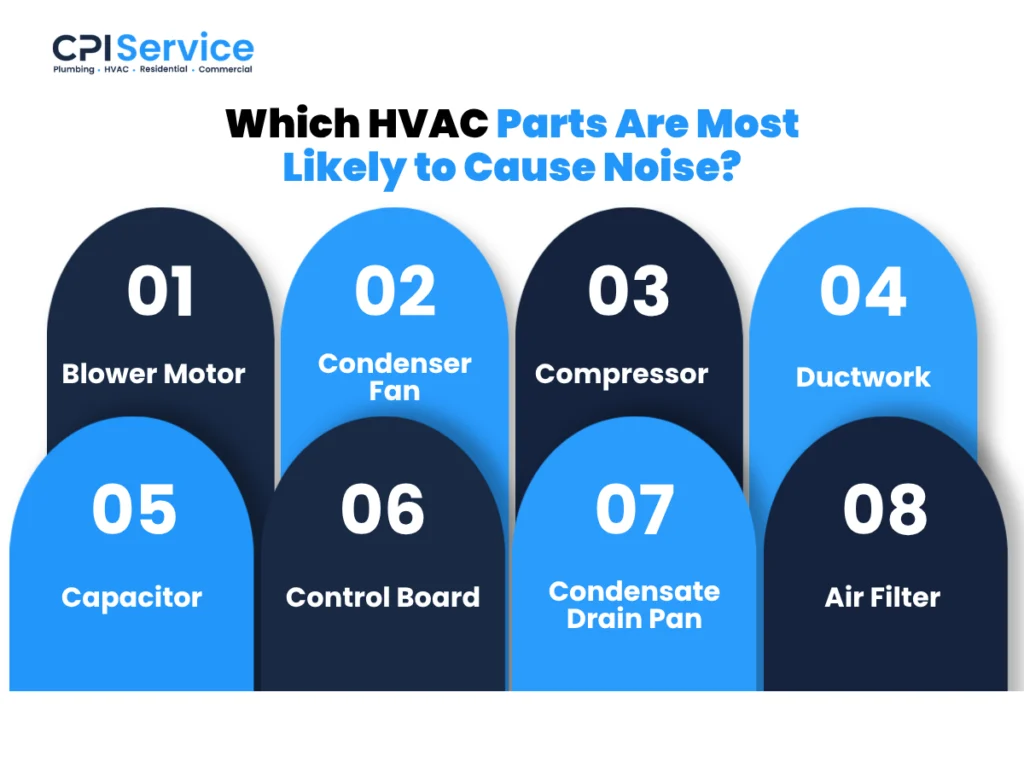
The HVAC parts most likely to cause unusual noises include the blower motor, condenser fan, compressor, ductwork, capacitor, control board, condensate drain pan, and air filter, each producing characteristic sounds such as screeching, rattling, clunking, popping, buzzing, clicking, gurgling, or whistling. These noises often result from worn components, airflow restrictions, electrical faults, or water buildup, and regular maintenance or professional inspection can prevent damage and ensure quiet, efficient operation.
- Blower Motor
In HVAC systems, the blower motor can produce screeching or squealing noises, particularly at startup or during operation, which may indicate potential issues. These problems result from worn bearings, loose fan blades, or dust buildup, which can reduce airflow, lower system efficiency, and increase energy costs, making timely maintenance essential.
- Condenser Fan
Noises from the condenser fan, such as flapping, rattling, or whirring, often indicate airflow disruption around the outdoor unit. Even minor imbalances in high-speed fan blades, debris buildup, or worn motor parts can cause vibration. These problems affect heat transfer and reduce cooling performance.
- Compressor
A failing compressor is often the main source of loud HVAC noises, producing starting(clunking/stuttering) or hissing sounds. These noises occur when worn components or internal pressure imbalances create vibration inside the compressor. Over time, this can disrupt refrigerant flow, reduce system efficiency, and affect the entire HVAC system, potentially leading to cooling failure.
- Ductwork
Popping, whistling, or rattling noises from the ductwork are often caused by changes in air pressure within the HVAC system. Expansion and contraction of duct materials, along with leaks or gaps, are common sources of sound. These issues can disrupt airflow, reduce comfort, and affect system performance. Sealing leaks, securing connections, and performing regular maintenance help restore quiet, efficient operation.
- Capacitor
Loud buzzing or humming sounds from your HVAC system often indicate a failing capacitor, which powers the motors at startup and during operation. The noise occurs when the capacitor cannot maintain a steady power supply, leading to repeated startup attempts. Causes include wear, electrical surges, and overheating, and ignoring the issue can strain components like the fan motor or compressor. Timely replacement and professional HVAC inspection restore proper function and keep the system running quietly and efficiently.
- Control Board
Rapid clicking or beeping from an HVAC system usually signals a failing control board, which manages communication between components. The noise occurs when commands aren’t executed properly, causing repeated startup attempts. Electrical faults, damaged circuits, or worn relays are often to blame, and leaving them unresolved can affect system performance.
- Condensate Drain Pan
Gurgling or dripping noises from an HVAC system often come from the condensate drain pan, which collects moisture from the unit. These sounds occur when water does not drain properly, causing irregular flow or accumulation. Clogged drain lines, standing water, or improper slope can cause overflow, reduce efficiency, and damage the system. Regular cleaning and professional checks by a licensed HVAC technician prevent noise and ensure smooth operation.
- Air Filter
Dirty or clogged air filters can cause whistling, vibrating, or other unusual noises in an HVAC system by restricting airflow and forcing air through tight spaces. Prolonged use without replacement or heavy dust buildup is a common cause, and neglecting it may stress system components and reduce efficiency. Regularly replacing or cleaning the filter maintains smooth airflow, lowers noise, and ensures reliable, efficient HVAC operation.
Why Does an HVAC System Make Noises?
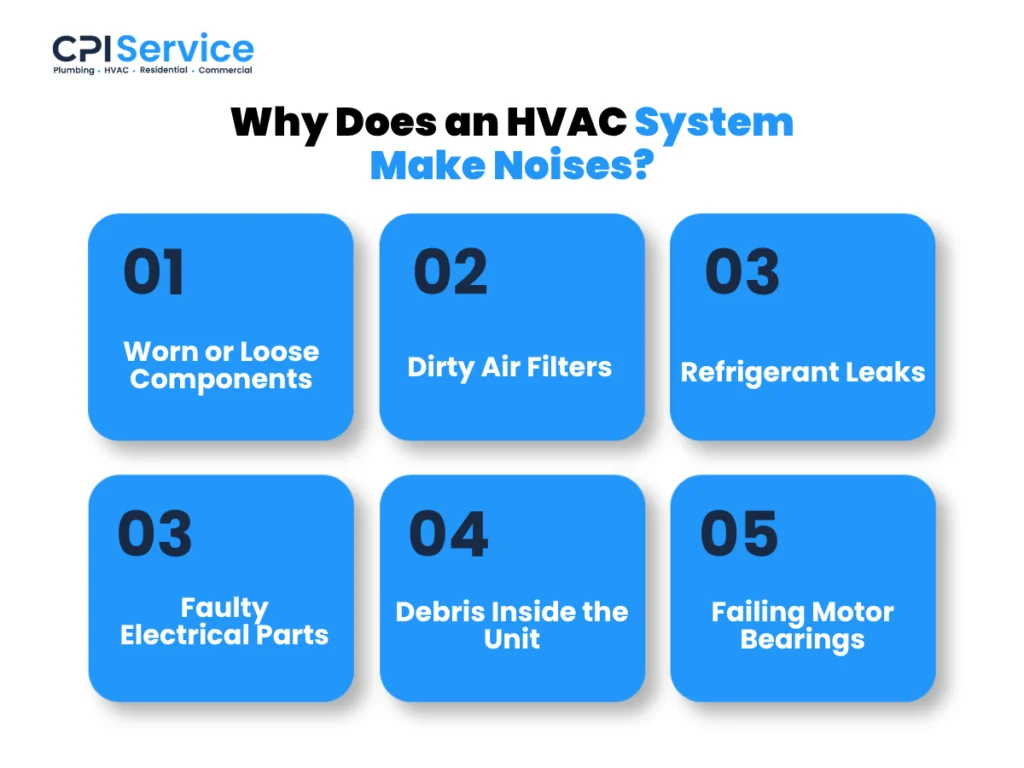
HVAC noises are caused by worn or loose components, dirty air filters, refrigerant leaks, faulty electrical parts, debris inside the unit, and failing motor bearings. These issues create rattling, banging, whistling, hissing, clicking, grinding, or squealing sounds, which reduce efficiency, strain components, disrupt airflow, and, if left unaddressed, can lead to motor or system damage.
- Worn or Loose Components
Parts inside an HVAC system can wear out or loosen over time, causing rattling, banging, or vibrating noises as the unit operates. These movements increase internal vibration and strain surrounding components, which can decrease HVAC efficiency, accelerate wear, and lead to more frequent repairs.
- Dirty Air Filters
When an HVAC air filter becomes clogged with dust and debris, airflow is restricted, which can lead to unusual noises such as whistling or humming. This restriction increases pressure, disrupts normal airflow, and causes the HVAC to blow cold air, and places additional strain on the blower motor, which can reduce system efficiency and increase energy consumption.
- Refrigerant Leaks
Hissing noises occur in an HVAC system when refrigerant escapes under pressure due to a leak. This indicates a disruption in the cooling cycle, which reduces temperature control, increases run times, and places extra strain on the compressor. Ignoring the leak can lead to serious damage.
- Faulty Electrical Parts
Beeping or clicking noises occur when faulty wiring, capacitors, or relays prevent the HVAC system from operating smoothly. The noise reflects operational instability, which can stress the blower motor, compressor, and other components, lowering efficiency and increasing the risk of failure.
- Debris Inside the Unit
Rattling or grinding noises in an HVAC system often occur when debris such as leaves, dirt, or small particles enters the unit and disrupts the movement of internal components. Debris disrupts moving parts, especially the fan and blower assembly, causing imbalance and vibration. This noise disrupts operations, reduces efficiency, and stresses vital HVAC components.
- Failing Motor Bearings
When motor bearings in an HVAC system begin to fail, increased friction produces grinding or squealing noises. This friction forces the motor to work harder, creating more vibration and noise that can spread to other components. Over time, the strain reduces system efficiency, disrupts airflow, and can lead to complete motor failure if left unaddressed.
When to Call a Professional HVAC Technician for Noise Problems?
Call a Certified HVAC technician if your HVAC produces continuous banging or clanking, persistent hissing, grinding, or burning smells, shuts down after making noise, or if sounds gradually worsen. These issues often indicate loose or broken parts, refrigerant leaks, electrical faults, or worn bearings. Early inspection and repair prevent further damage, ensure safe operation, restore system efficiency, and help maintain quiet, reliable HVAC performance over time.
- Loud Banging or Clanking That Does Not Stop
If your HVAC makes continuous banging or clanking, it usually means internal parts are loose or broken. This can damage other components if ignored. An HVAC technician can inspect the system, identify the faulty parts, and repair or replace them to restore safe, quiet operation.
- Hissing That Indicates a Refrigerant Leak
Persistent hissing often signals a refrigerant leak, which reduces cooling efficiency and increases stress on the compressor. A licensed HVAC technician can locate the leak, repair it, and recharge the system to restore proper operation.
- Burning Smell Accompanied by Any Noise
Hearing unusual noises accompanied by a burning smell indicates overheating electrical components, like wiring, motors, or the control board. An experienced HVAC technician can safely shut down the system, diagnose the electrical issue, and replace or repair the faulty parts to prevent hazards.
- Grinding That Suggests Bearing Failure
Grinding noises often signal worn motor bearings, which create friction and put stress on the motor. Ignoring the issue may result in complete motor failure. A professional HVAC service can replace the bearings or motor assembly to restore smooth, reliable operation.
- System Shuts Down After Making a Noise
If your HVAC shuts down after making noise, it may be a safety response to electrical faults, overheating, or compressor issues. A licensed HVAC technician can test components, identify the root cause, and fix the problem to allow safe, consistent operation.
- Noise Gets Louder Over Time
Gradually increasing noise in an HVAC system indicates that internal components are wearing down, loosening, or losing efficiency. Early intervention by an experienced heating and cooling technician during HVAC maintenance can help identify and repair issues before they escalate into costly damage.
How to Troubleshoot Common HVAC System Noises?
To troubleshoot common HVAC system noises, check and replace dirty air filters, tighten loose panels or screws, clear debris around the outdoor unit, flush blocked condensate drain lines, listen to locate the source of the noise, and schedule a professional inspection. These troubleshooting actions help restore airflow and reduce whistling, stop rattling and buzzing, eliminate gurgling, identify hidden issues, keep the system running quietly and efficiently, and prevent costly repairs.
- Check and Replace Dirty Air Filters
Restricted airflow from a dirty air filter can cause whistling or humming noises in your HVAC system and increase strain by forcing it to work under higher pressure. To fix this, locate and remove the filter, then check for dust buildup. If it is clogged, replace it with a suitable new one. This clears the HVAC airflow restriction, reduces noise, improves efficiency, and helps prevent damage to internal components.
- Inspect and Tighten Loose Panels and Screws
Rattling or vibrating sounds in an HVAC unit are often caused by loose panels or screws that shift during operation. To address this, check the exterior panels and tighten any loose screws with a screwdriver. Properly securing these components helps reduce vibration, quiet the system, and protect internal parts from damage caused by constant movement.
- Clear Debris Around the Outdoor Unit
Debris surrounding the outdoor HVAC unit, such as leaves, dirt, and small objects, can gather near the condenser fan, block airflow, and cause buzzing or rattling noises as it runs. To resolve this, turn off the HVAC system and clear all leaves, dirt, and debris from the unit and its surroundings. Keeping the area clear ensures smooth fan operation, reduces system stress, improves airflow, and maintains consistent cooling performance.
- Check the Condensate Drain Line for Blockages
A blocked condensate drain line, caused by dirt or buildup that prevents proper drainage, can lead to gurgling sounds as water accumulates and flows irregularly within the HVAC system. Locate the drain line, check for any blockage, and flush it with water or a suitable cleaning solution to restore normal flow to fix this issue. Clearing the line eliminates noise, prevents water overflow, and ensures proper moisture control within the system.
- Listen to Identify Where the Noise Is Coming From
Pinpointing the source of HVAC noise helps identify the problem quickly. Run the system and listen carefully to see whether the sound comes from the indoor unit, the outdoor unit, or the ductwork. This helps determine whether the issue is related to airflow, mechanical components, or electrical parts, enabling faster, more effective troubleshooting.
- Schedule a Professional HVAC Inspection
Certain HVAC noise issues require expert evaluation, especially when the cause isn’t obvious. A professional inspection includes testing system components, checking electrical connections, and diagnosing internal problems. Scheduling this service helps identify hidden issues before they worsen. Regular inspections maintain system efficiency, reduce the risk of major repairs, and ensure the HVAC unit operates quietly and reliably.

