

 Emergency Plumbing
 Plumbing Repairs
 Water Heaters
 Drain Cleaning
 Sewer Service
 Faucets & Fixtures
 Repiping
 Toilet Plumbing
 Trenchless
 Plumbing Leaks
 Air Conditioning
 Heating
 Minisplit Systems
 Heat Pumps
 HVAC Components
 HVAC Rebates
Cleaning a furnace flame sensor involves turning off the power and gas, locating the sensor near the burner, removing it with a 1/4-inch nut driver, and gently cleaning the metal rod with steel wool or a stiff cloth, avoiding harsh sandpaper that can damage the surface. This process removes soot and oxidation products, improving flame detection accuracy and supporting stable furnace operation.
Once cleaned, reinstall the sensor in its original position, reconnect the wire, and secure the access panel before restoring power and gas supply. Run the furnace to confirm steady ignition and continuous operation. Oil systems may require deeper cleaning due to heavier residue, while propane furnaces involve lighter buildup. Regular cleaning of the furnace flame sensor improves heating efficiency, maintains accurate flame detection, reduces unnecessary system cycling, and extends the furnace lifespan while ensuring safe and reliable operation.
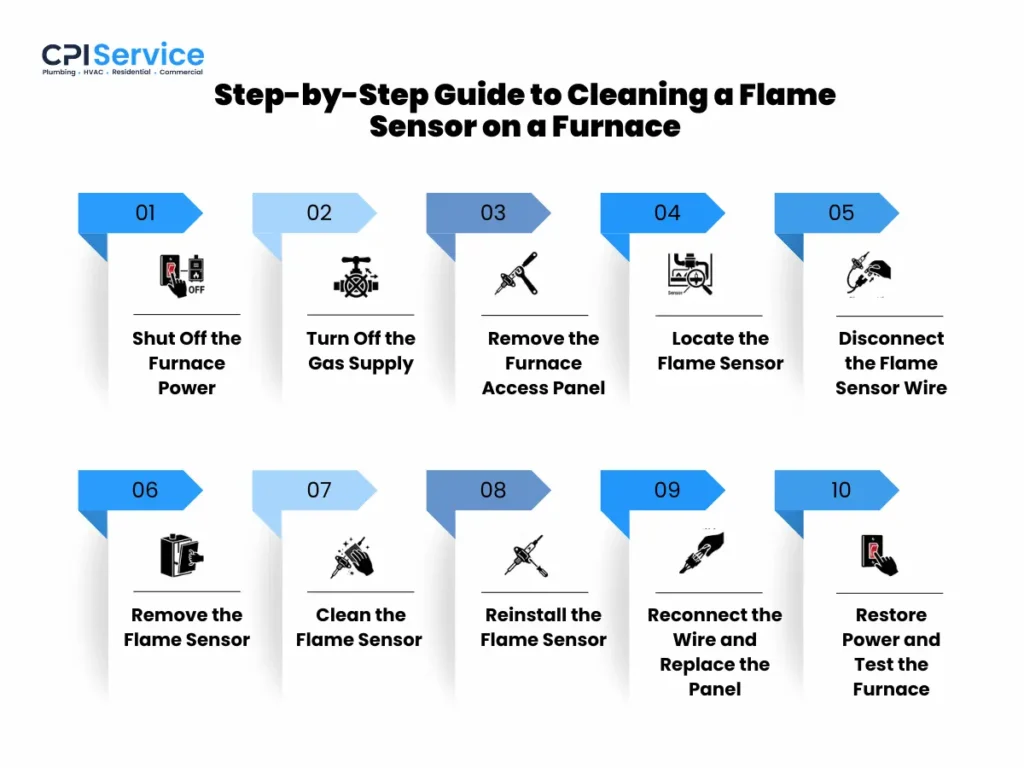
Proceed with the following steps to ensure safe and proper cleaning:
- Step 1: Shut Off the Furnace Power
- Step 2: Turn Off the Gas Supply
- Step 3: Remove the Furnace Access Panel
- Step 4: Locate the Flame Sensor
- Step 5: Disconnect the Flame Sensor Wire
- Step 6: Remove the Flame Sensor
- Step 7: Clean the Flame Sensor
- Step 8: Reinstall the Flame Sensor
- Step 9: Reconnect the Wire and Replace the Panel
- Step 10: Restore Power and Test the Furnace
What Is a Flame Sensor on a Furnace?
A furnace flame sensor is a critical safety component that uses a thin, ceramic-insulated metal rod in the burner assembly to confirm the presence of a flame after ignition. The furnace control board uses this sensor to verify that gas combustion is active and stable. If the sensor does not detect a proper flame signal, it immediately shuts off the gas supply to prevent unsafe conditions such as unburned gas accumulation.
Essential for furnace safety and performance, the flame sensor verifies that each heating cycle completes properly. Over time, the sensor rod may accumulate soot, oxidation, or debris, reducing its ability to detect the burner flame. This buildup can cause problems such as short cycling or failed ignition. Regular inspection and cleaning improve flame detection accuracy and reduce operational issues, and maintain consistent heating performance.
What Are the Signs Your Furnace Flame Sensor Needs Cleaning?
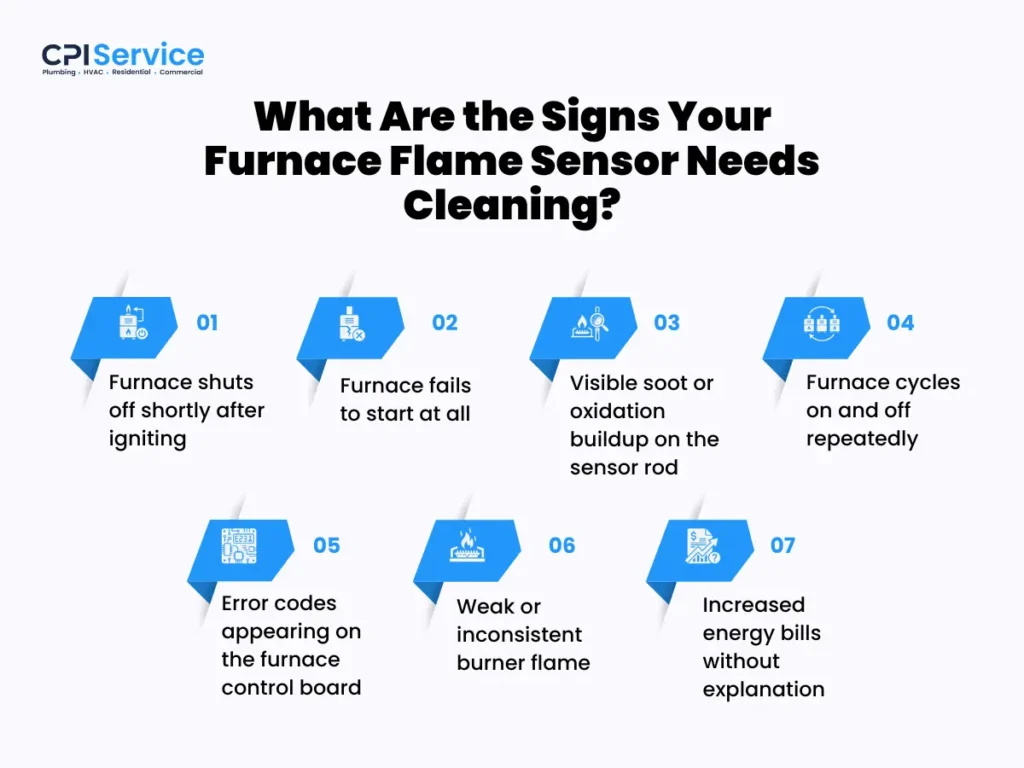
Signs your furnace flame sensor needs cleaning include the furnace shutting off after ignition, visible soot buildup on the sensor rod, repeated on-off cycling, error codes on the control board, a weak burner flame, and increased energy bills. The system may run for 10–15 seconds before shutting down when flame detection becomes inconsistent. Soot or corrosion can interfere with combustion sensing, disrupting operation and causing the furnace to blow cold air. Recognizing these signs early helps maintain safe, efficient, and reliable heating.
- Furnace shuts off shortly after igniting
A furnace that turns off soon after ignition is a common sign that the flame sensor needs cleaning. This happens because the sensor fails to detect the flame properly and shuts the system down as a safety precaution.
- Furnace fails to start at all
A furnace that fails to start at all may indicate a dirty or malfunctioning flame sensor. When the sensor cannot confirm a flame, the system may prevent ignition to avoid unsafe operation. In some cases, the furnace won’t turn on due to a safety lockout triggered by failed flame detection, preventing the system from running until the issue is resolved.
- Visible soot or oxidation buildup on the sensor rod
Visible soot or oxidation on the sensor rod is a clear sign that the furnace flame sensor likely needs cleaning. This buildup interferes with the sensor’s ability to accurately detect the burner flame.
- Furnace cycles on and off repeatedly
Frequent cycling on and off suggests the flame sensor of the furnace may be dirty. Inconsistent flame detection causes the system to repeatedly shut down and restart.
- Error codes appearing on the furnace control board
Error codes such as “flame not detected,” “ignition failure,” or “flame sensed with no call for heat” indicate issues with flame detection or sensor performance. These alerts occur when the system cannot verify a stable flame, which disrupts ignition and normal furnace operation.
- Weak or inconsistent burner flame
A weak or uneven burner flame can signal a problem with the flame sensor. Improper detection may disrupt steady combustion and affect overall performance.
- Increased energy bills without explanation
Higher energy bills without a clear reason can point to a dirty flame sensor. Reduced efficiency from improper operation forces the furnace to use more energy than necessary.
Why is It Important to Clean a Flame Sensor on a Furnace?
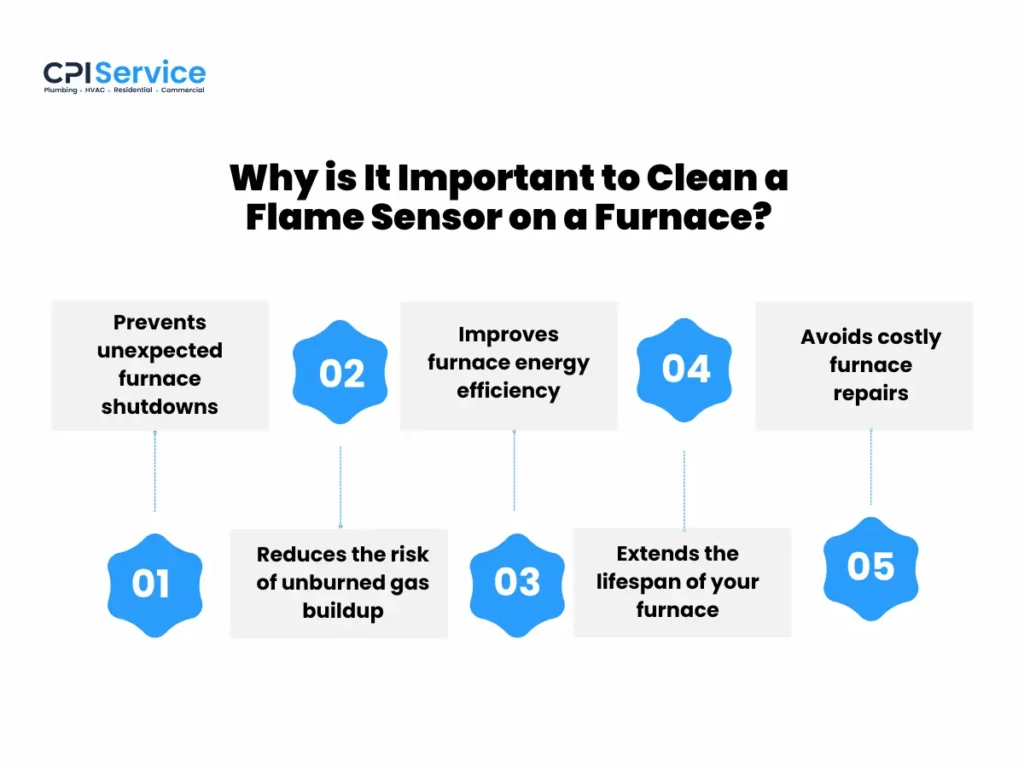
Furnace flame sensor cleaning is important to prevent furnace shutdowns, reduce the risk of unburned gas buildup, improve energy efficiency, extend system lifespan, and avoid costly repairs. A clean flame sensor maintains accurate flame detection, allowing the furnace to operate safely and complete each heating cycle without interruption.
- Prevents unexpected furnace shutdowns
A clean flame sensor accurately detects the burner flame during operation, preventing false shutdown signals and allowing the furnace to run continuously while maintaining consistent indoor heating. As a result, furnace performance becomes more reliable with fewer unnecessary interruptions.
- Reduces the risk of unburned gas buildup
Keeping a flame sensor clean is important to ensure accurate flame detection after ignition. A dirty flame sensor can shut off gas incorrectly or cause unsafe operation. Regular furnace flame sensor cleaning helps prevent unburned gas buildup and keeps the furnace running safely and reliably.
- Improves furnace energy efficiency
By ensuring accurate flame recognition, a clean flame sensor prevents repeated ignition attempts and unnecessary system restarts. This reduces energy waste and improves overall furnace operation, and helps maintain consistent heating performance.
- Extends the lifespan of your furnace
A clean flame sensor on the furnace supports consistent operation by preventing false shutdowns and repeated restarts. Reduced cycling lowers wear on components such as the burner and ignition system, improving efficiency and extending the furnace’s lifespan.
- Avoids costly furnace repairs
Routine cleaning of the flame sensor ensures proper flame detection, helping prevent system malfunctions. This reduces component wear and lowers the need for frequent repairs, ultimately improving furnace reliability and long-term performance.
Step-by-Step Guide to Cleaning a Flame Sensor on a Furnace
To clean a furnace flame sensor, shut off power and fuel, remove and clean the sensor rod, then reinstall and test the unit. The process removes soot or oxidation using fine steel wool to restore proper flame detection. Oil furnaces may require deeper cleaning due to heavier carbon deposits, while propane systems produce lighter buildup. Proper handling ensures safe operation, accurate detection, and consistent heating performance.
Step 1: Shut Off the Furnace Power
Before working inside the furnace, shut off the gas supply at the valve located on the gas line near the unit. Turn the handle until it is perpendicular to the pipe, indicating that gas flow has stopped. Ensuring the gas is fully turned off reduces the risk of leakage or accidental ignition and creates a safe environment for the cleaning steps that follow.
Step 2: Turn Off the Gas Supply
Locate the gas shutoff valve on the gas line connected to the furnace, usually positioned near the base of the unit. Rotate the handle until it is perpendicular to the pipe, which indicates that gas flow has stopped. Ensure the valve is fully closed to prevent leakage or accidental ignition. Turning off the gas supply is essential before proceeding, as it creates a safe environment for accessing and handling internal furnace components in the next steps.
Step 3: Remove the Furnace Access Panel
To access the furnace flame sensor, remove the access panel using a ¼ inch nut driver to loosen the screws. Keep the screws in a safe place to ensure proper reassembly. Carefully detach the panel without applying force, as nearby wiring and components may be exposed along the edges. Removing the panel reveals the burner assembly and flame sensor, improving visibility and allowing controlled access for accurate inspection and safe cleaning in the next step.
Step 4: Locate the Flame Sensor
Look inside the burner assembly area to locate the flame sensor, focusing on the path where the flame ignites. The sensor appears as a thin metal rod connected to a single wire and positioned directly in front of the burner flame. Use a flashlight to improve visibility and distinguish it from nearby components such as igniters or burners. Accurate identification prevents interference with other parts and ensures the correct component is handled safely in the next step.
Step 5: Disconnect the Flame Sensor Wire
Carefully locate the wire connector attached to the flame sensor terminal, and grip it firmly with your fingers. Pull it straight off with gentle, steady pressure, avoiding any twisting or pulling on the wire itself to prevent damage. If the connector feels tight, wiggle it slightly while maintaining control. Proper disconnection preserves the integrity of the wiring and ensures the sensor can be removed safely without affecting electrical connectivity in the next step.
Step 6: Remove the Flame Sensor
Locate the mounting screw securing the flame sensor and remove it with the appropriate screwdriver or nut driver. Once the screw is removed, gently slide the sensor out while keeping the rod straight and steady. Avoid tilting or applying pressure, as the rod is delicate and can bend easily. Careful removal preserves the sensor’s structure and accuracy, ensuring it can be cleaned effectively without causing damage that may affect flame detection in later steps.
Step 7: Clean the Flame Sensor
Hold the flame sensor by its base and gently scrub the metal rod using fine steel wool or emery cloth to remove soot, carbon, and oxidation buildup. Apply light, even pressure to avoid scratching or wearing down the surface. Avoid harsh materials such as sandpaper, as they can damage the coating. After cleaning, wipe the rod with a clean, dry cloth to remove any residue, ensuring a smooth surface for accurate flame detection before reinstallation.
Step 8: Reinstall the Flame Sensor
Carefully place the cleaned flame sensor back into its original position near the burner assembly, ensuring the rod sits directly in the flame path. Align the mounting hole with the bracket, then secure it with the screw without over-tightening, as this can damage the threads or misalign the sensor. Proper positioning allows accurate flame detection during operation. Once secured, reconnect the wire firmly to restore electrical connection and prepare for final reassembly in the next step.
Step 9: Reconnect the Wire and Replace the Panel
Reconnect the wire connector by aligning it with the sensor terminal and pushing it in firmly until it fits securely. Ensure the connection is tight to maintain proper electrical contact during operation. Next, position the access panel back over the furnace opening and align it with the screw holes. Tighten all screws evenly using a nut driver to secure the panel. Proper enclosure protects internal components and prepares the system for safe operation in the final step.
Step 10: Restore Power and Test the Furnace
Turn the gas supply back on by aligning the valve parallel to the pipe, then restore electrical power at the breaker or furnace switch. Start the furnace and closely observe the ignition cycle, watching for a steady, consistent flame. Listen for smooth operation without short cycling or shutdown. Proper ignition and continuous running confirm the sensor is functioning correctly. Successful testing ensures the cleaning process is complete and the furnace is ready for normal operation.
How to Clean Flame Sensors in Different Types of Furnaces?
Oil and propane furnaces require slightly different cleaning approaches when cleaning a flame sensor due to variations in combustion residue, even though the core cleaning process remains the same. Oil furnaces accumulate heavier carbon deposits, while propane systems produce lighter soot and oxidation. Understanding these differences helps ensure proper cleaning, accurate flame detection, and safe, consistent furnace operation.
How to Clean a Flame Sensor on an Oil Furnace?
Cleaning a flame sensor on an oil furnace requires careful handling due to heavier carbon buildup from combustion residue. The process involves safe shutdown, removal, cleaning, and proper reinstallation to restore accurate flame detection.
Steps for cleaning a flame sensor on an oil furnace:
- Turn off the power and shut the oil supply valve.
- Remove the access panel using a screwdriver.
- Locate the flame sensor near the burner assembly.
- Disconnect the wire connector and remove the sensor.
- Clean the rod with fine steel wool to remove carbon deposits.
- Wipe the surface with a dry cloth.
- Reinstall the sensor and secure it properly.
- Restore power and test for stable ignition.
How to Clean a Flame Sensor on a Propane Furnace?
Cleaning a flame sensor on a propane furnace involves removing light soot and following similar safety steps. Proper cleaning ensures consistent flame detection and smooth furnace operation.
Steps to clean a flame sensor on a propane furnace:
- Shut off the electrical power and close the propane gas valve.
- Remove the access panel to access internal components.
- Locate the flame sensor near the burner.
- Disconnect the wire and remove the sensor.
- Clean the rod using steel wool or emery cloth.
- Wipe the rod clean with a dry cloth.
- Reinstall the sensor in its correct position.
- Reconnect the wire, restore power and gas, and test operation.
Tools and Materials Needed to Clean a Furnace Flame Sensor
Cleaning a furnace flame sensor requires fine steel wool or emery cloth, screwdrivers, pliers, and safety equipment to ensure proper handling and effective cleaning. Each tool supports a specific step, from safely opening the furnace to removing buildup and restoring accurate flame detection. While homeowners can perform basic maintenance, a certified HVAC technician is recommended for safe, accurate service when needed. Using the correct materials helps prevent damage, improve cleaning accuracy, and support reliable furnace performance.
- Fine steel wool or emery cloth: Gently removes soot, carbon, and oxidation from the sensor rod, restoring its ability to accurately detect the burner flame.
- Flathead and Phillips screwdriver: Required for removing the furnace access panel and loosening the mounting screw that secures the flame sensor in place.
- Needle-nose pliers: Helpful when handling tight wire connectors, allowing careful disconnection without damaging the wiring.
- Clean dry cloth or microfiber towel: Keeps the sensor surface free of residue after cleaning, supporting consistent flame detection.
- Protective gloves: Provide hand protection from sharp edges, dirt, and internal furnace components during the cleaning process.
- Flashlight for visibility: Improves visibility inside the furnace, making it easier to locate and handle the flame sensor accurately.
- Owner’s manual for reference: Offers model-specific instructions and component details, helping ensure correct handling and proper reassembly.
How Often Should You Clean Your Furnace Flame Sensor?
You should clean your furnace flame sensor once a year during a fall furnace tune-up, before the heating season begins. Scheduling cleaning at this time helps prepare the system for continuous winter operation and reduces the chances of unexpected breakdowns.
More frequent cleaning may be required in certain conditions, such as furnaces installed in dusty environments or propane systems, where buildup can occur more quickly. Early shutdown after ignition is also a sign that cleaning may be needed sooner. A consistent schedule improves flame detection accuracy, maintains furnace efficiency, and ensures reliable furnace performance.
Issues That May Arise When Cleaning a Furnace Flame Sensor
Improper cleaning of a furnace flame sensor can damage the sensor rod, disconnect wiring, or lead to improper reinstallation, affecting overall system performance. These problems often result from excessive force, incorrect tool use, or improper handling during the process. Each issue disrupts flame detection, affects ignition performance, and reduces furnace efficiency. Careful handling, proper tools, and attention to detail in each step help prevent these complications and ensure safe, effective maintenance.
- Accidental damage to the sensor rod during scrubbing
Excessive force while cleaning can bend or scratch the furnace flame sensor rod. A damaged rod can affect flame detection accuracy and may require replacement by a certified HVAC technician.
- Breaking the wire connector while disconnecting the sensor
Pulling the wire instead of the connector can damage the connection point of the furnace flame sensor. A broken connector prevents proper electrical contact and disrupts sensor function.
- Improper reinstallation causing furnace ignition failure
Incorrect positioning or loose mounting can misalign the furnace flame sensor. Misalignment prevents accurate flame detection, which may stop the furnace from igniting.
- Stripping the mounting screw during sensor removal
Using the wrong tool or applying too much force on the furnace flame sensor can strip the screw head. This makes removal or reinstallation difficult and may require additional repair work.
- Cracking the porcelain insulator on the sensor rod
Rough handling can crack the porcelain base of the furnace flame sensor. A damaged insulator affects electrical stability and requires immediate replacement.
- Incomplete cleaning, leaving residue on the sensor rod
Remaining soot or oxidation reduces the sensor’s ability to detect flame properly. Incomplete cleaning leads to continued performance issues and repeated shutdowns that a certified HVAC technician can resolve.
- Damaging surrounding furnace components during access panel removal
Improper handling when opening the furnace flame sensor panel can affect nearby components. This may lead to additional faults or affect overall furnace operation.
How to Resolve Common Furnace Flame Sensor Cleaning Issues?
Resolve furnace flame sensor cleaning issues by replacing damaged sensors, handling connectors carefully, aligning screws properly, cleaning buildup with fine steel wool or a similar mild abrasive, inspecting the insulator, wiping the rod dry, and seeking professional help if needed. These actions correct issues such as poor flame detection, loose connections, or improper installation. Careful cleaning, proper reassembly, and timely replacement restore accurate sensor performance and maintain safe, efficient furnace operation.
- Replace a cracked or damaged sensor rod immediately
Remove the faulty furnace flame sensor and install a manufacturer-compatible replacement with the same specifications. A new rod restores accurate flame signal transmission, prevents false shutdowns, and ensures the control board receives a stable reading during operation. Improper handling or incorrect replacement can increase furnace repair costs by causing additional damage to system components.
- Use needle-nose pliers carefully when disconnecting the wire
Hold the connector firmly with pliers and pull it straight out without twisting or bending. Controlled removal protects the terminal pins and maintains connection integrity, which ensures uninterrupted signal flow after reassembly.
- Double-check mounting screw alignment before tightening
Position the sensor bracket flush against its mounting point and start threading the screw by hand before tightening. Proper alignment prevents cross-threading, secures the sensor firmly in place, and keeps it correctly positioned within the flame path.
- Use fine steel wool only to protect the sensor coating
Apply light, even strokes with fine-grade material to remove buildup without scratching the rod surface. Preserving the outer layer maintains conductivity, allowing the sensor to detect the presence of flame with consistent accuracy.
- Inspect the porcelain insulator before reinstalling
Examine the base for hairline cracks, discoloration, or looseness around the rod. A stable insulator maintains electrical isolation, preventing signal disruption and supporting reliable furnace ignition cycles.
- Wipe the sensor rod dry before reinstalling
Use a lint-free cloth to remove dust, fibers, or moisture left after cleaning. A clean surface ensures uninterrupted contact with the flame, which improves detection response and reduces the chance of repeated shutdowns.
- Contact a furnace technician if ignition failure persists
Arrange a professional inspection if the furnace continues to short-cycle or fails to ignite. A qualified furnace technician can test components such as the control board, wiring, and gas valve, helping identify deeper faults and ensuring safe system restoration.

