

 Emergency Plumbing
 Plumbing Repairs
 Water Heaters
 Drain Cleaning
 Sewer Service
 Faucets & Fixtures
 Repiping
 Toilet Plumbing
 Trenchless
 Plumbing Leaks
 Air Conditioning
 Heating
 Minisplit Systems
 Heat Pumps
 HVAC Components
 HVAC Rebates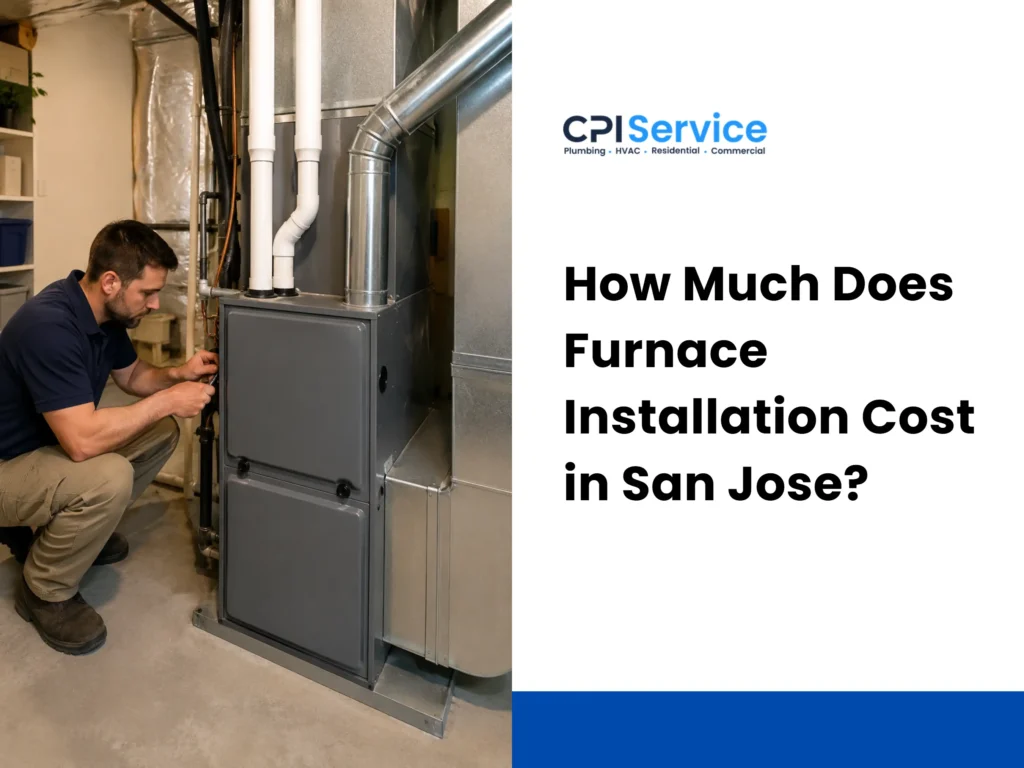
Furnace installation in San Jose costs $5,500 to $10,000+ fully installed, with average costs ranging from $1,450 to $1,700+ depending on the furnace type, efficiency rating, home size, BTU capacity, and installation requirements. Within this price range, a new furnace installation costs $3,500 to $12,000+, while furnace replacement adds $1,500 to $5,500 in labor, removal, disposal, permits, and system modifications. Installation costs also vary by furnace type, with gas furnaces ranging from $1,000 to $10,000+, electric furnaces from $1,500 to $8,500+, propane furnaces from $1,500 to $7,500+, oil furnaces from $2,500 to $10,000+, and high-efficiency furnaces from $3,500 to $11,000+.
Final pricing depends on factors such as AFUE rating, ductwork condition, labor rates, permit requirements, furnace brand, and utility connections. Certified furnace technicians evaluate these factors to properly size the system, complete code-compliant installation, and determine whether additional work, such as ductwork replacement, venting upgrades, gas line modifications, electrical improvements, thermostat upgrades, or air filtration systems, is required, all of which can increase the overall installation cost.
What Is the Average Furnace Installation Cost in San Jose?
The average furnace installation cost in San Jose ranges from $1,450 to $1,700+, depending on the furnace type, size, efficiency rating, and installation complexity. A new furnace installation costs $3,500 to $12,000+, while furnace replacement adds $1,500 to $5,500 in labor, removal, disposal, permits, and system modifications. Installation costs include both the furnace equipment and the labor required to install, connect, test, and commission the system.
Prices tend to be higher when a project involves furnace replacement rather than a new installation. Removing an existing furnace, updating ductwork, modifying gas lines, upgrading venting systems, or completing electrical improvements can significantly increase project expenses. Bay Area labor rates and local permit requirements also influence overall pricing, particularly when additional code-compliance upgrades are necessary.
How Much Does a New Furnace Cost With Installation in San Jose?
A new furnace with installation in San Jose costs between $3,500 and $12,000+, including the furnace unit, installation labor, permits, and standard system connections. Furnace type, BTU output, and AFUE efficiency rating directly affect pricing, with larger, higher-efficiency systems costing more than standard models. The final price also depends on the installation requirements and any system upgrades needed to support the new furnace.
Standard furnace installation includes furnace setup, system connections, safety testing, and connection to existing ductwork. Price increase when the project requires thermostat upgrades, venting modifications, ductwork changes, or other code-related updates. New furnace installation often costs less than furnace replacement because contractors do not need to remove and dispose of an existing furnace.
How Much Does Furnace Replacement Cost in San Jose?
Furnace replacement in San Jose costs $1,500 to $5,500 in replacement-related costs on top of the new furnace equipment, covering labor, removal, disposal, permits, and required system modifications. Labor costs range from $1,500 to $3,000, while furnace removal and disposal add $60 to $330 because contractors must disconnect and remove the existing unit. The final cost depends on system condition and installation complexity.
Replacement projects often cost more than new installations because contractors must remove the old furnace before installing the new equipment. Price increase when the project requires ductwork modifications, gas line upgrades, venting changes, electrical updates, or code-compliance corrections. Local permit and inspection requirements can also raise costs, particularly in older San Jose homes that require upgrades to meet current building codes.
How Much Does Furnace Installation Cost by Furnace Type?
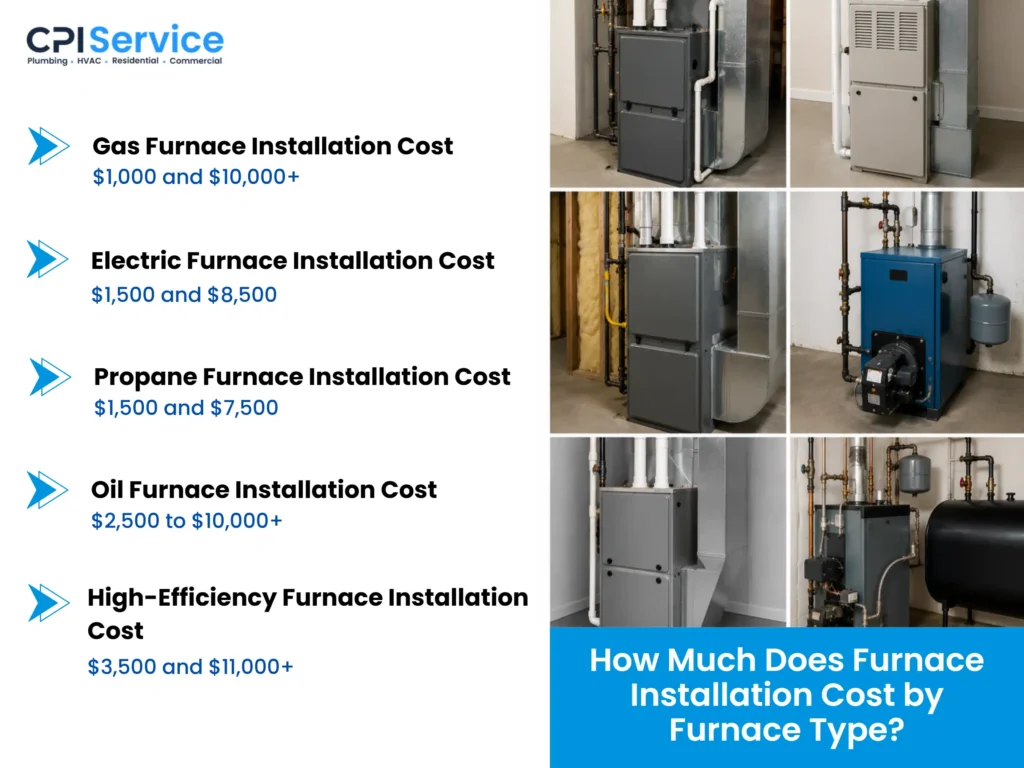
Furnace installation costs by furnace type range from $1,000 to $11,000+, depending on the fuel source, equipment, and installation requirements. Gas furnace installation costs $1,000 to $10,000+, electric furnace installation ranges from $1,500 to $8,500, and propane furnace installation costs $1,500 to $7,500. Oil furnace installation ranges from $2,500 to $10,000+, while high-efficiency furnace installation costs $3,500 to $11,000+. The final furnace installation price depends on factors such as the furnace fuel source, AFUE rating, equipment cost, venting requirements, fuel-line or electrical connections, permit requirements, and the overall complexity of the installation project.
How Much Does Gas Furnace Installation Cost?
Gas furnace installation in San Jose costs between $1,000 and $10,000+, with furnace equipment ranging from $1,200 to $5,000. Natural gas systems require gas line connections that can add $200 to $1,200+, depending on distance, accessibility, and scope of work. Existing gas infrastructure can help reduce installation costs, whereas new gas line installations increase the overall project cost.
Venting installation or upgrades often cost $300 to $ 1,200 or more and can increase labor requirements. Furnace technicians must connect the gas supply, install venting components, perform safety testing, and comply with local permit requirements. High-efficiency gas furnaces cost more upfront because they use advanced heat exchangers and specialized venting systems that improve energy efficiency and heating performance.
How Much Does Electric Furnace Installation Cost?
Electric furnace installation in San Jose costs between $1,500 and $8,500, with electric furnace equipment ranging from $700 to $3,500. Electric furnaces often cost less to install because they use electricity rather than combustible fuel, eliminating the need for gas lines, fuel storage, or venting systems. Homes with sufficient electrical capacity require fewer modifications, thereby reducing installation costs.
Costs can increase if the project requires new wiring, a dedicated circuit, or an electrical panel upgrade. Labor requirements are lower than for gas furnace installations because contractors only need to complete electrical connections and system testing. High-efficiency electric furnaces cost more upfront due to advanced components and improved energy performance.
How Much Does Propane Furnace Installation Cost?
Propane furnace installation in San Jose costs between $1,500 and $7,500, depending on the furnace size, efficiency rating, and installation requirements. Propane systems require a dedicated fuel supply and combustion venting, which increases both equipment and installation costs. The final price depends on the complexity of the fuel connection, venting requirements, and any modifications needed to support the new system.
Additional expenses may arise when the installation requires a propane tank connection, venting modifications, or fuel-line upgrades. High-efficiency propane furnaces command a higher upfront investment because they convert more fuel into usable heat and often require specialized venting components. Local permit requirements and Bay Area labor rates can further increase costs when fuel-system work must comply with current safety and building codes.
How Much Does Oil Furnace Installation Cost?
Oil furnace installation in San Jose costs range from $2,500 to $10,000+, depending on the furnace size, efficiency rating, and installation complexity. Oil furnace equipment ranges from $2,000 to $6,000+, while fuel connections and related infrastructure can add $1,000 to $4,000+. These systems require fuel storage, fuel-line connections, combustion components, and venting equipment, which increases both material and installation costs.
Costs can increase when the project requires a new oil tank, fuel-line upgrades, or venting modifications. High-efficiency oil furnaces carry a higher upfront cost because they use advanced combustion technology that improves fuel efficiency and heating performance. Local labor rates and the scope of required fuel-system work can further affect the final installation price.
How Much Does High-Efficiency Furnace Installation Cost?
High-efficiency furnace installation costs between $3,500 and $11,000+, depending on the furnace size, AFUE rating, and installation requirements. High-efficiency furnace equipment ranges from $2,000 to $5,000+. These systems cost more because they use advanced heat exchangers, variable-speed components, and high-performance controls that convert more fuel into usable heat and improve energy efficiency.
Installation costs can increase when the system requires specialized venting, condensate drainage, or upgrades to existing connections. Additional work is often necessary to meet manufacturer specifications and support proper system performance. Local labor technician rates and installation complexity can further affect the total project cost.
How Much Does Furnace Installation Cost by AFUE Rating?
Furnace installation costs range from $3,200 to $12,000+, depending on the AFUE (Annual Fuel Utilization Efficiency) rating. Higher AFUE ratings improve heating efficiency and reduce fuel waste but require a larger upfront investment because they use more advanced components and installation methods. Installation costs by AFUE rating include:
- Standard Efficiency (80% AFUE): $3,200 to $8,000 for non-condensing furnaces with lower upfront costs.
- High Efficiency (90%–95% AFUE): $4,000 to $10,000 for condensing furnaces that provide improved energy efficiency and lower operating costs.
- Ultra-High Efficiency (96%–98% AFUE): $6,000 to $12,000+ for premium systems featuring advanced condensing technology, variable-speed components, and the greatest long-term energy savings.
How Much Does Furnace Installation Cost by Home Size?
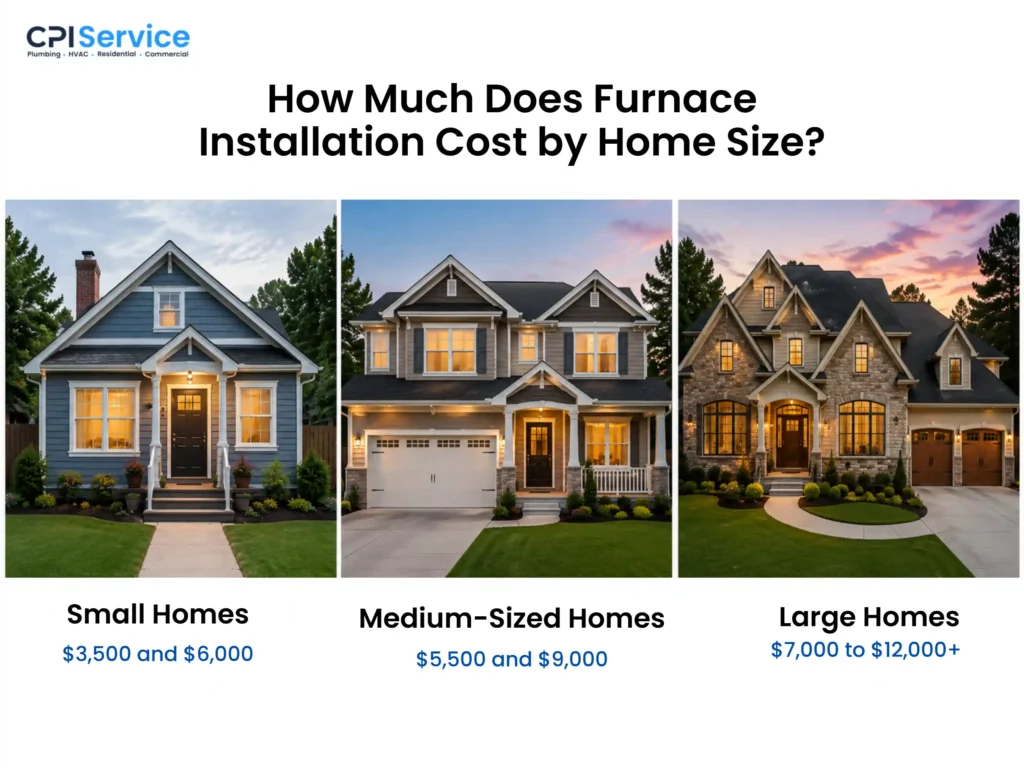
Furnace installation costs by home size range from $3,500 to $12,000+, with small homes costing $3,500 to $6,000, medium-sized homes ranging from $5,500 to $9,000, and large homes costing $7,000 to $12,000+. Larger homes require higher-capacity furnaces, greater airflow, and more extensive installation work, which increases overall project costs. Proper furnace sizing depends on factors such as home size, insulation, ceiling height, window area, heating demand, and the condition of the existing HVAC system to ensure efficient, reliable performance.
How Much Does Furnace Installation Cost for Small Homes?
Furnace installation costs for small homes in San Jose range from $3,500 to $6,000 and are commonly designed for homes under 1,500 square feet. Most small homes require a furnace with a heating capacity of 40,000 to 60,000 BTUs, depending on insulation, window area, and layout. Existing ductwork and proper airflow distribution can help keep installation costs lower, while ductwork modifications, high-efficiency equipment, or permit requirements can push costs toward the higher end. San Jose permit and inspection fees add $150 to $400+, while local labor rates can further affect the final installation price.
How Much Does Furnace Installation Cost for Medium-Sized Homes?
Furnace installation for medium-sized homes costs between $5,500 and $9,000. Most medium-sized homes require a furnace with a heating capacity of 60,000 to 100,000 BTUs, depending on insulation, ceiling height, window area, and layout. Existing ductwork can help reduce installation costs, while larger furnace capacities, ductwork modifications, and high-efficiency systems often push costs toward the higher end of the range.
How Much Does Furnace Installation Cost for Large Homes?
Furnace installation cost for large homes ranges from $7,000 to $12,000+. Most large homes require a furnace with a heating capacity of 80,000 to 120,000+ BTUs, depending on insulation, ceiling height, window area, and layout. Higher heating loads often require larger blower capacity, greater airflow, properly sized ductwork, and balanced air distribution to maintain consistent indoor temperatures throughout the home. High-efficiency furnaces, multi-level floor plans, zoning systems, and ductwork modifications can further increase installation costs toward the upper end of the range.
How Much Does Different Furnace BTU Capacity Installation Cost?
Furnace installation costs by BTU capacity range from $3,500 to $13,000+, with 60,000 BTU furnaces costing $3,500 to $6,500, 80,000 BTU furnaces costing $5,500 to $9,000, 100,000 BTU furnaces costing $6,500 to $10,500, and 120,000 BTU furnaces costing $8,000 to $13,000+. As BTU capacity increases, larger furnace equipment and greater installation complexity often raise the total cost. Proper furnace sizing depends on factors such as home size, insulation, ceiling height, window area, and heating demand to ensure efficient, reliable performance.
- 60,000 BTU Furnace
A 60,000 BTU furnace costs $3,500 to $6,500 to install and is commonly used in smaller homes with moderate heating needs. Well-insulated homes often achieve reliable comfort with this capacity while keeping equipment and installation expenses relatively low. Projects requiring ductwork modifications, venting upgrades, or high-efficiency furnace models generally fall toward the upper end of the price range.
- 80,000 BTU Furnace
An 80,000 BTU furnace costs $5,500 to $9,000 to install and is suitable for many medium-sized homes with average insulation and ceiling heights. Many homeowners choose this capacity because it balances heating performance with energy efficiency. Larger duct systems, venting upgrades, or high-efficiency equipment can increase the total installation cost.
- 100,000 BTU Furnace
A 100,000-BTU furnace costs $6,500 to $10,500 to install and is designed for larger homes with higher heating demands. Greater heating output often requires increased airflow and more robust HVAC components to maintain efficient operation. Premium high-efficiency models, ductwork upgrades, and venting modifications often increase installation costs.
- 120,000 BTU Furnace
A 120,000-BTU furnace costs $8,000 to $13,000+ to install and is intended for large homes or properties with substantial heating needs. This capacity is commonly selected for homes that require higher heat output across multiple living areas or expansive floor plans. Installation costs rise when the project includes high-efficiency equipment, extensive ductwork modifications, or multi-zone heating systems.
What Factors Affect Furnace Installation Cost in San Jose?
The factors that affect furnace installation cost in San Jose include furnace type, efficiency rating, home size, BTU capacity, ductwork requirements, labor rates, furnace brand, permit requirements, and utility connection upgrades. Each factor affects either equipment costs, labor expenses, or installation complexity.
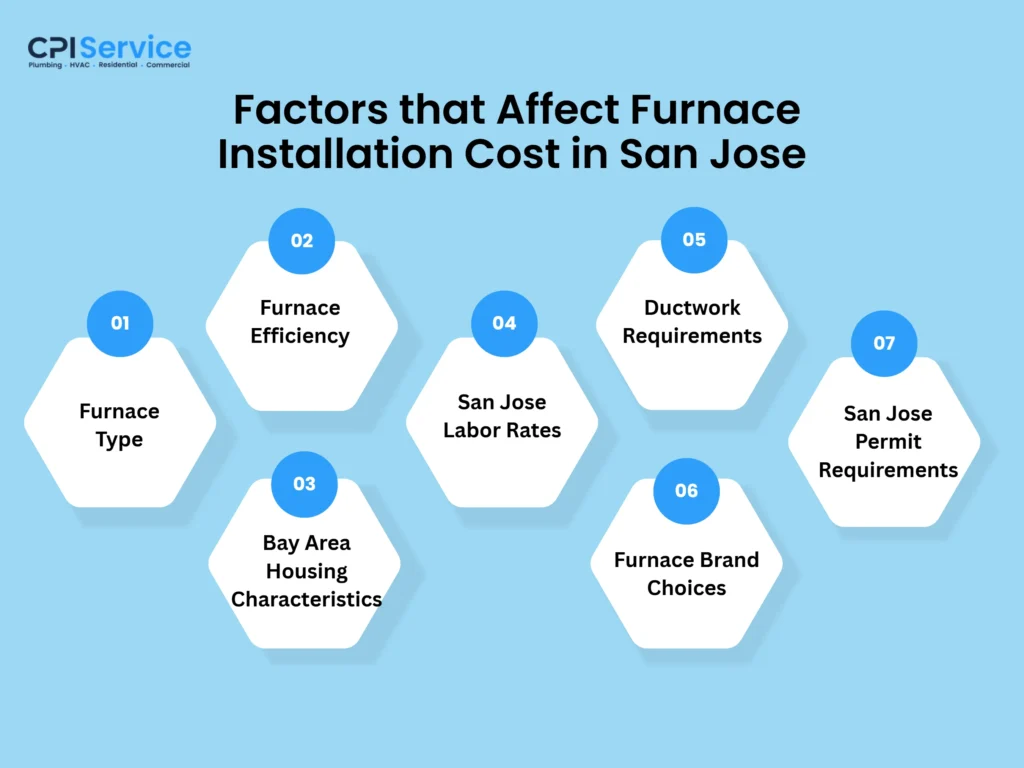
5 major factors affecting furnace installation cost in San Jose are:
- Furnace types
- Furnace efficiency
- Bay Area housing characteristics
- Labor rates
- Dutchwork requirements
- Brand choices
- Premit requirements
How Does Furnace Type Affect Furnace Installation Cost?
Furnace type can affect furnace installation costs by $1,000 to $11,000+, depending on the fuel source, equipment requirements, and installation complexity. Electric furnace installations range from $1,500 to $8,500, gas furnaces from $1,000 to $10,000+, propane furnaces from $1,500 to $7,500, oil furnaces from $2,500 to $10,000+, and high-efficiency furnaces from $3,500 to $11,000+. In San Jose, permit requirements and code compliance can further affect costs. Installation prices increase when the furnace requires fuel-line connections, specialized venting, higher-efficiency components, or more complex system modifications.
How Does Furnace Efficiency Affect Furnace Installation Cost?
Furnace efficiency can affect furnace installation costs by $3,200 to $12,000+, depending on the AFUE rating and system requirements. Standard-efficiency furnaces (80% AFUE) cost $3,200 to $8,000, high-efficiency models (90%–95% AFUE) range from $4,000 to $10,000, and ultra-high-efficiency systems (96%–98% AFUE) cost $6,000 to $12,000+. Higher AFUE ratings often require advanced heat exchangers and specialized venting, which increase equipment and installation costs. In San Jose, permit requirements and code-related upgrades can further raise installation expenses.
How Do Bay Area Housing Characteristics Affect Furnace Installation Cost?
Bay Area housing characteristics can increase furnace installation costs by 20% to 30% above the national average because home design, age, and construction quality influence furnace sizing and installation complexity. Homes built before the 1970s often require ductwork upgrades, airflow improvements, or code-related corrections before a new furnace can operate efficiently. Properties with high ceilings, large window areas, multiple stories, or poor insulation also require larger heating systems and higher BTU capacities. Installation costs increase when contractors must modify existing infrastructure to meet the home’s heating requirements.
How Do San Jose Labor Rates Affect Furnace Installation Cost?
Labor costs in San Jose add $2,500 to $6,000+ to a furnace installation project, making labor one of the largest contributors to the total cost. Higher local wage rates and operating expenses often make furnace installations 15% to 30% more expensive than national averages. Labor affects the overall price more than equipment costs. Projects that require ductwork modifications, venting upgrades, electrical work, fuel-line connections, or additional code-compliance work require more labor hours, which raises the total installation cost.
How Do Ductwork Requirements Affect Furnace Installation Cost?
Ductwork requirements can add $500 to $8,000+ to furnace installation costs in San Jose, making them a significant contributor to both labor expenses and overall project complexity. Homes with properly sized and well-sealed ducts require less work, while damaged, leaking, undersized, or poorly designed duct systems often need repairs or replacement. Costs increase when contractors must modify duct layouts, improve airflow, seal leaks, or replace duct sections to support efficient furnace operation and meet current code requirements.
How Do Furnace Brand Choices Affect Furnace Installation Cost?
Choosing a furnace brand can change installed costs by $500 to $3,000+, or roughly 10% to 30%, even among systems with similar efficiency ratings and features. For example, Goodman and Rheem furnace installations range from $3,500 to $8,000, while Carrier, Trane, and Lennox systems range from $5,000 to $11,000+ because of their premium features, advanced technology, and extended warranty coverage. In San Jose, homeowners can expect higher installation costs when selecting premium furnace models equipped with variable-speed blowers, communicating controls, or high-efficiency performance features.
How Do San Jose Permit Requirements Affect Furnace Installation Cost?
San Jose permit requirements affect furnace installation costs by adding $400 to $1,200+ to the total project cost, or roughly 5% to 15% of the installation budget. Direct permit and inspection fees range from $150 to $400, while additional compliance-related work can further increase costs. Permit requirements primarily affect project complexity rather than furnace equipment costs. Certified furnace technicians often need to update venting, electrical connections, or gas lines to comply with California Title 24 energy standards, HERS testing requirements, Ultra-Low NOx emission regulations, and current local building and mechanical codes, which can increase overall installation costs.
What Additional Costs Can Increase Furnace Installation Costs in San Jose?
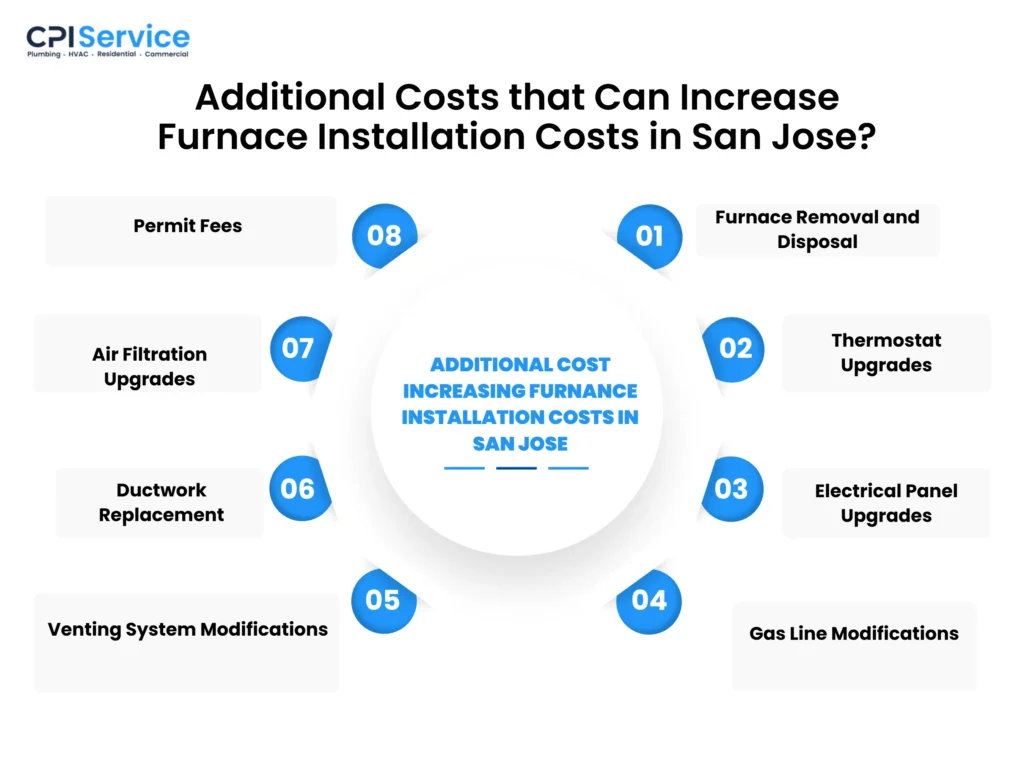
The additional costs that can increase furnace installation costs in San Jose include furnace removal and disposal, thermostat upgrades, electrical panel upgrades, gas line modifications, venting system modifications, ductwork replacement, air filtration upgrades, and permit fees. These expenses can increase labor costs, material costs, or project complexity, and they often become necessary to meet code requirements, support the new furnace, improve system performance, or correct issues discovered during installation.
Additional costs that can increase furnace installation costs in San Jose are:
- Furnace Removal and Disposal
- Thermostat Upgrades
- Electrical Panel Upgrades
- Gas Line Modifications
- Venting System Modifications
- Ductwork Replacement
- Air Filtration Upgrades
- Permit Fees
- Furnace Removal and Disposal
Furnace removal and disposal can increase a furnace installation project by $60 to $400, with most homeowners paying $100 to $330 when the service is bundled with the installation. Contractors must remove and properly dispose of the existing furnace before installing the replacement system. This service is common during furnace replacement projects, but is rarely needed for first-time installations. Difficult access, larger units, and additional disconnect work can increase the final cost.
- Thermostat Upgrades
Thermostat upgrades can contribute $150 to $600 to the total furnace installation cost, depending on the thermostat type and compatibility requirements. Many homeowners install a new thermostat to gain smart controls, remote monitoring, and programmable scheduling features. Compatibility limitations between the existing thermostat and the new furnace may also necessitate an upgrade. Advanced controls, wiring changes, and system configuration requirements often raise installation expenses.
- Electrical Panel Upgrades
Electrical panel upgrades can raise furnace installation costs by $1,000 to $4,000+ when the existing electrical system cannot support the new furnace’s power requirements. Older electrical panels may lack the capacity needed for modern HVAC equipment. Although many homes can use their current panel, insufficient amperage or limited circuit space often requires an upgrade. Larger panels, new circuits, and wiring improvements contribute to higher project costs.
- Gas Line Modifications
Gas line modifications can increase total furnace installation costs by $200 to $2,500, depending on the type and extent of the work required. A new or upgraded gas connection may be needed when installing a gas furnace or increasing heating capacity. Existing gas piping that is undersized, outdated, or non-compliant often requires correction. Longer pipe runs, accessibility limitations, and permit-related work can increase expenses.
- Venting System Modifications
Venting system modifications can increase furnace installation costs by $400 to $2,000+, with most high-efficiency furnace upgrades ranging from $600 to $1,500. Proper venting ensures safe removal of combustion gases and supports efficient furnace operation. Older vent systems may not meet the requirements of newer high-efficiency equipment. Replacing vent materials, rerouting exhaust pathways, or making structural adjustments can increase costs.
- Ductwork Replacement
Ductwork replacement can add $2,000 to $10,000+ to the total furnace installation cost, with most homeowners spending between $3,000 and $7,500. This upgrade becomes necessary when existing ducts are damaged, undersized, or unable to deliver proper airflow. While not required for every installation, replacing ductwork is often recommended to improve efficiency and system performance. Costs increase with larger homes, complex duct layouts, difficult access areas, and extensive reconstruction work.
- Air Filtration Upgrades
Air filtration upgrades can increase furnace installation costs by $250 to $ 3,500 or more, with most homeowners investing between $400 and $1,800 for effective system upgrades. Enhanced filtration systems help capture dust, allergens, and other airborne contaminants throughout the home. Basic filters offer limited performance, whereas media filters, electronic air cleaners, and whole-home purification systems provide greater filtration capability. Equipment quality and installation complexity largely determine the final cost.
- Permit Fees
Permit fees can add $400 to $1,200+ to the total furnace installation cost, representing roughly 5% to 15% of the overall project. These costs cover permits, inspections, and verification that the new furnace complies with local building, mechanical, and safety codes. Permit fees are required, not optional, for furnace installation projects. Costs can increase when inspections uncover code violations or require additional compliance-related work before final approval.
How Does Furnace Installation Cost Compare to Furnace Repair Cost in San Jose?
Furnace repair in San Jose costs $150 to $3,000+, while furnace installation ranges from $3,500 to $12,000+, making installation a much larger upfront investment. Repairs address specific component failures, whereas installation replaces the entire heating system and can improve efficiency, reliability, and overall performance.
| Service | Cost Range | What It Includes | Best For |
| Furnace Repair | $150-$3,000+ | Repairing or replacing components such as igniters, blower motors, thermostats, or control boards | Furnaces with isolated issues and remaining service life |
| Furnace Installation | $3,500-$12,000+ | New furnace equipment, installation labor, permits, and system connections | Older, inefficient, or frequently failing furnaces |
How Long Does a Furnace Last?
A furnace lasts 15 to 30 years, though its lifespan varies with furnace type, maintenance, and installation quality. Gas furnaces generally last 15 to 20 years, while electric furnaces can operate for 20 to 30 years. Regular inspections and preventive maintenance performed by certified furnace technicians, along with proper installation, help extend system life, maintain peak efficiency, and identify worn components before they lead to major repairs or unexpected breakdowns. As furnaces age, repairs become more frequent, efficiency declines, and replacement parts can become harder to find, making older systems more expensive to operate and maintain.
What Signs Suggest Furnace Replacement Is More Economical?
The signs that suggest furnace replacement is more economical include a furnace age of 15-20+ years, repair costs approaching replacement costs, frequent breakdowns, a cracked heat exchanger, rising energy bills, uneven heating, hard-to-find replacement parts, and safety concerns. These issues often indicate that the furnace is becoming less reliable, less efficient, and more expensive to maintain, making replacement a more cost-effective long-term solution.
Signs that suggest furnace replacement is more economical are:
- The furnace is 15-20+ years old
Most gas furnaces reach the end of their expected service life after 15 to 20 years. As components wear out, efficiency declines and repair frequency increases, making replacement a more cost-effective long-term investment.
- Repair costs are close to replacement costs
When a major repair costs a significant percentage of a new furnace, replacement often provides better long-term value. A new system also offers improved efficiency, greater reliability, and manufacturer warranty protection.
- Breakdowns happen repeatedly
Frequent breakdowns often indicate that multiple furnace components are nearing the end of their service life. Replacing the system can eliminate recurring repair expenses and restore dependable heating performance.
- The heat exchanger is cracked
A cracked heat exchanger is a serious safety issue because it can allow combustion gases, including carbon monoxide, to escape into the home. Since heat exchangers are expensive to replace, installing a new furnace is often the safer and more economical solution.
- Energy bills keep rising
Increasing heating bills without changes in energy use often indicate declining furnace efficiency. Replacing an older furnace with a high-efficiency model can reduce energy consumption and lower long-term operating costs.
- The furnace heats unevenly
Hot and cold spots throughout the home may indicate that the furnace can no longer distribute heat effectively. If airflow issues and major components have already been repaired, replacement is often the better long-term solution.
- Replacement parts are hard to find
Older or discontinued furnace models may require parts that are no longer manufactured or are expensive to source. Replacing the furnace can eliminate delays, reduce repair costs, and provide easier access to future replacement parts.
- Safety issues are present
Gas leaks, repeated ignition failures, electrical faults, or ventilation problems can create serious health and fire hazards. When safety-related issues become frequent or require major repairs, replacing the furnace is often the safest and most practical option.
Is Furnace Installation Worth the Cost in San Jose?
Yes, furnace installation is worth the cost in San Jose for homeowners with an aging, inefficient, or frequently failing heating system. A new furnace can improve energy efficiency, reduce repair expenses, enhance indoor comfort, and provide more reliable heating performance over the long term. Professional furnace installation in San Jose also helps ensure proper system sizing, code compliance, and safe operation, thereby maximizing equipment lifespan and overall value.
Furnace installation is worth the cost in San Jose if:
- Your furnace is 15–20+ years old and nearing the end of its expected lifespan.
- Repair costs are approaching the price of a new furnace.
- The system breaks down frequently and requires ongoing repairs.
- Energy bills continue to rise due to declining efficiency.
- The furnace heats your home unevenly or struggles to maintain the desired temperature.
- You want a higher-efficiency furnace that reduces long-term heating costs.
- Major components, such as the heat exchanger or blower motor, have failed.
- You want improved reliability, comfort, and compliance with current building and energy codes.
Furnace installation may not be worth the cost in San Jose
- The furnace is relatively new and still within its expected service life.
- The repair involves a minor, low-cost component with no underlying system issues.
- The system operates efficiently and consistently heats the home.
- Recent inspections show the furnace is in good mechanical condition.
- Repair costs are substantially lower than replacement costs.
- The furnace has been properly maintained and has no major safety concerns.
- Replacement is being considered only for cosmetic reasons, not for performance or reliability.
- A qualified HVAC technician recommends repair as the more cost-effective option.
