

 Emergency Plumbing
 Plumbing Repairs
 Water Heaters
 Drain Cleaning
 Sewer Service
 Faucets & Fixtures
 Repiping
 Toilet Plumbing
 Trenchless
 Plumbing Leaks
 Air Conditioning
 Heating
 Minisplit Systems
 Heat Pumps
 HVAC Components
 HVAC Rebates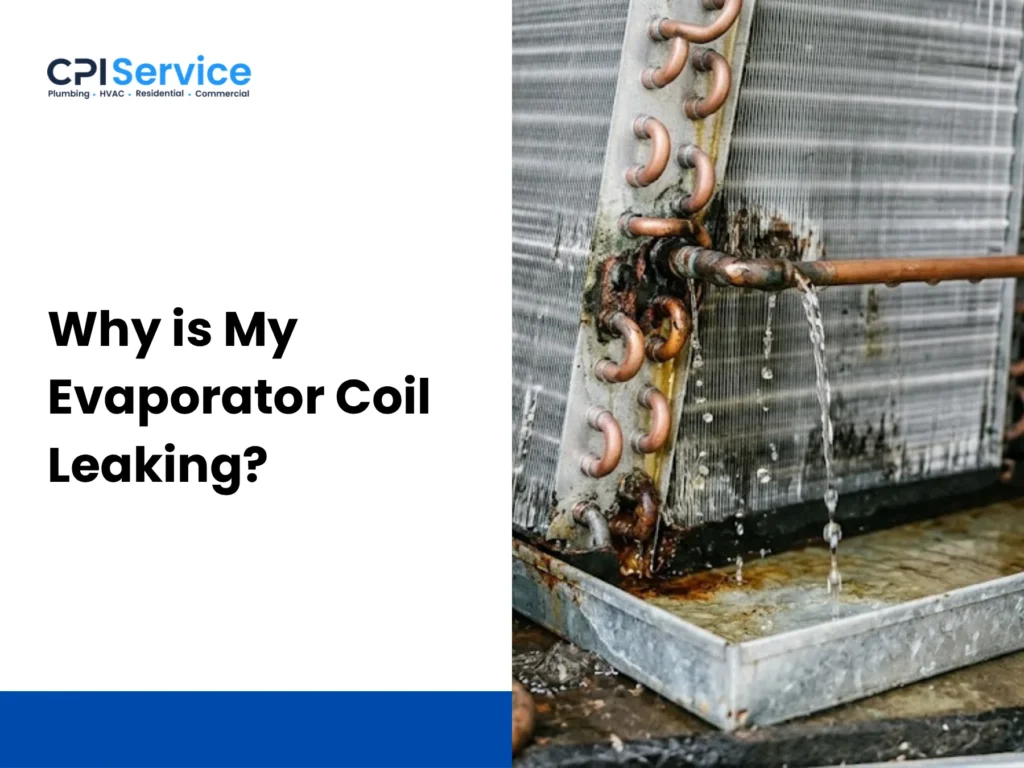
Evaporator coils leak when corrosion, physical damage, frozen coils, or a clogged drain system compromises the coil’s integrity. These leaks occur when the copper tubing corrodes over time, refrigerant pressure fluctuates, or condensate fails to drain properly, allowing water to enter the system or surrounding areas. Recognizing these causes helps determine whether the leak stems from mechanical wear, improper installation, or corrosion, all of which directly impact HVAC efficiency and indoor air quality.
Additional factors such as poor maintenance, dirty filters, or prolonged exposure to humidity can worsen coil damage and lead to leaks. As these conditions persist, small pinholes or cracks form, causing refrigerant or water to escape, reducing cooling performance and increasing energy consumption. As performance declines, the AC unit begins to show clear warning signs such as weak airflow, longer cooling cycles, uneven temperatures, frost buildup on the evaporator coil, and water pooling around the unit. Early detection and professional repair prevent further damage, maintain system efficiency, and protect your home from costly water damage or major HVAC repairs.
What Causes a Leaking Evaporator Coil?
Evaporator coil leaks are caused by corrosion, restricted airflow, clogged drain lines, or physical damage, all of which disrupt heat and moisture control in the HVAC system. When these issues affect normal operation, refrigerant pressure becomes unstable, and condensate may not drain properly, leading to moisture buildup and reduced cooling efficiency. Over time, factors such as dirty air filters, humidity, chemical exposure, or improper installation weaken the coil, creating cracks or corrosion points that allow refrigerant or water to leak. Understanding these causes helps identify problems early and prevent further system damage.
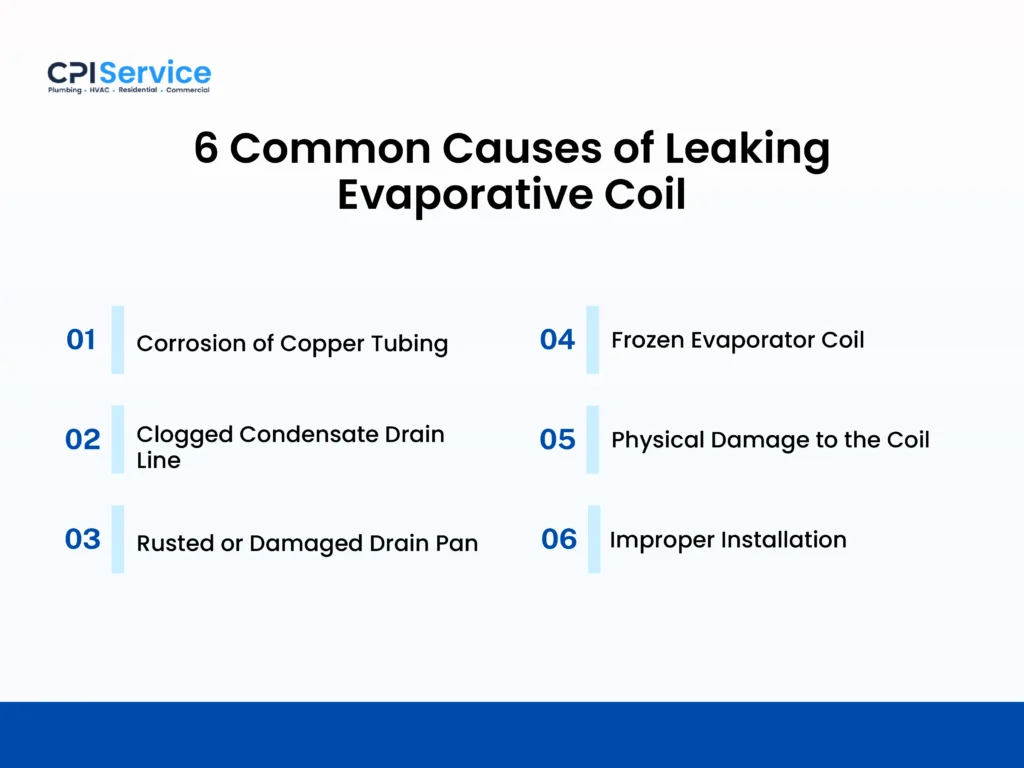
6 common causes of leaking Evaporative coil:
- Corrosion of Copper Tubing: Creates pinholes in copper tubing, causing refrigerant leaks that reduce cooling efficiency and increase energy use.
- Clogged Condensate Drain Line: Blocks condensate flow, causing water backup, overflow, and leakage around the AC unit.
- Rusted or Damaged Drain Pan: Fails to retain condensate, leading to water leakage and potential damage to surrounding areas.
- Frozen Evaporator Coil: A frozen coil thaws, overwhelming the drainage system and causing excess water leakage and reduced cooling performance.
- Physical Damage to the Coil: Creates cracks or holes in the coil, allowing refrigerant to leak and lowering system efficiency.
- Improper Installation: Improper installation disrupts drainage and refrigerant flow, leading to leaks, inefficiency, and recurring system issues.
Corrosion of Copper Tubing
Microscopic pinholes in the evaporator coil’s copper tubing, caused by corrosion, lead to refrigerant leaks, reducing cooling efficiency. The evaporator coil relies on sealed copper lines to circulate refrigerant and absorb heat from indoor air. When formicary corrosion develops due to chemical exposure, it gradually weakens the tubing and creates tiny leaks, allowing refrigerant to escape and disrupting heat exchange.
As this internal damage progresses, it directly affects the HVAC system’s performance rather than causing a sudden failure. Prolonged exposure to airborne chemicals such as VOCs from cleaners, paints, or insulation accelerates this corrosion. As refrigerant levels drop, system pressure becomes unstable, leading to longer cooling cycles, increased energy use, and reduced overall efficiency. A common diagnostic sign is weak cooling without visible water leakage, indicating a likely internal evaporator coil leak.
Clogged Condensate Drain Line
A blockage in the condensate drain line prevents proper drainage, causing water to back up and leak from the evaporator coil area inside the air handler. As the evaporator coil removes heat and humidity from indoor air, it continuously produces condensate that must exit through the drain line. When dirt, algae, or debris restrict this pathway, the water has nowhere to go and begins to accumulate within the system.
As this accumulation increases, it overflows from the drain pan, leaking around the AC unit and creating visible water pooling and moisture damage. This issue develops from poor maintenance over time, and a clear diagnostic sign is consistent water leakage near the indoor unit while the system is running, without hissing sounds or reduced cooling that would indicate a refrigerant leak.
Rusted or Damaged Drain Pan
A rusted or damaged drain pan causes evaporator coil leaks by losing its ability to contain and direct condensate water away from the system. Positioned beneath the evaporator coil, the drain pan collects moisture generated during the cooling process. When rust, cracks, or structural wear weaken the pan, condensate escapes rather than draining properly, resulting in direct water leakage from the air handler.
As this failure progresses, even normal condensate production results in continuous leakage, which can cause water pooling, surface damage, and deterioration around the AC unit. This condition typically develops over time due to constant moisture exposure and aging materials, and a clear diagnostic clue is persistent leakage despite a clear condensate drain line, confirming the drain pan as the source of the problem.
Frozen Evaporator Coil
Restricted airflow or low refrigerant can freeze the evaporator coil, leading to water leaks when the ice melts. The evaporator coil absorbs heat and regulates moisture, but when its temperature drops too low, condensation on the coil freezes. This buildup blocks normal heat exchange and prevents proper moisture removal within the HVAC system.
As the system continues to run or cycles off, the accumulated ice melts rapidly, releasing excess water that can overwhelm the drain system and cause leakage around the air handler. This condition is often noticed when the AC freezes up, usually due to dirty air filters, blocked airflow, or refrigerant imbalance, all of which reduce cooling efficiency and increase system strain.
Physical Damage to the Coil
Physical damage to the evaporator coil creates weak points in the copper tubing, leading to refrigerant leaks, reduced cooling performance, and system strain. The evaporator coil uses thin copper lines and tightly spaced fins for heat exchange, but this design makes it vulnerable to bending, puncturing, or mechanical stress. Once the tubing is compromised, the sealed refrigerant circuit breaks, reducing the coil’s ability to absorb heat.
As refrigerant escapes, system pressure drops, causing longer run cycles, uneven cooling, and higher energy use. This damage often occurs during installation, cleaning, or servicing due to improper handling. It typically appears as a drop in cooling performance, along with hissing sounds or oil residue near the coil, indicating a leak.
Improper Installation
Incorrect installation of the evaporator coil can cause leaks by disrupting refrigerant flow and preventing proper condensate drainage within the HVAC system. The coil must be correctly aligned, sealed, and connected to both the refrigerant lines and the condensate drain system. When installation errors occur, such as loose fittings, improper leveling, or poor drain line setup, they create pressure imbalances or restrict water flow, which leads to refrigerant leakage or condensate overflow.
Over time, these installation flaws place continuous stress on the AC system, reducing cooling efficiency and increasing the likelihood of recurring leaks and component failure. This issue often stems from unqualified installation or improper system setup, and it typically manifests as ongoing leaks, inconsistent cooling performance, or recurring system issues shortly after installation or repair.
How Do Refrigerant Leaks and Water Leaks Differ?
Refrigerant leaks are gas-based and invisible, reducing cooling by lowering system pressure and often causing warm air or coil freezing, while water leaks are visible liquid issues caused by drainage failure, leading to pooling and moisture damage around the unit. Refrigerant leaks occur when copper tubing corrodes or gets damaged, allowing gas to escape and weakening the coil’s ability to absorb heat. In contrast, water leaks result from blocked drain lines, damaged drain pans, or melting ice from frozen coils, in which excess condensate cannot drain and instead overflows, compromising moisture control and placing additional strain on surrounding components.
What Are the Symptoms of a Leaking Evaporator Coil?
The symptoms of a leaking evaporator coil include weak airflow, warm air from vents, hissing sounds, water pooling around the AC unit, ice buildup, fluctuating temperatures, and rising energy bills. These signs indicate that the HVAC system is no longer maintaining proper refrigerant flow or moisture control, which reduces cooling performance and efficiency. Therefore, recognizing these symptoms early helps identify the issue and prevent further damage to the system.
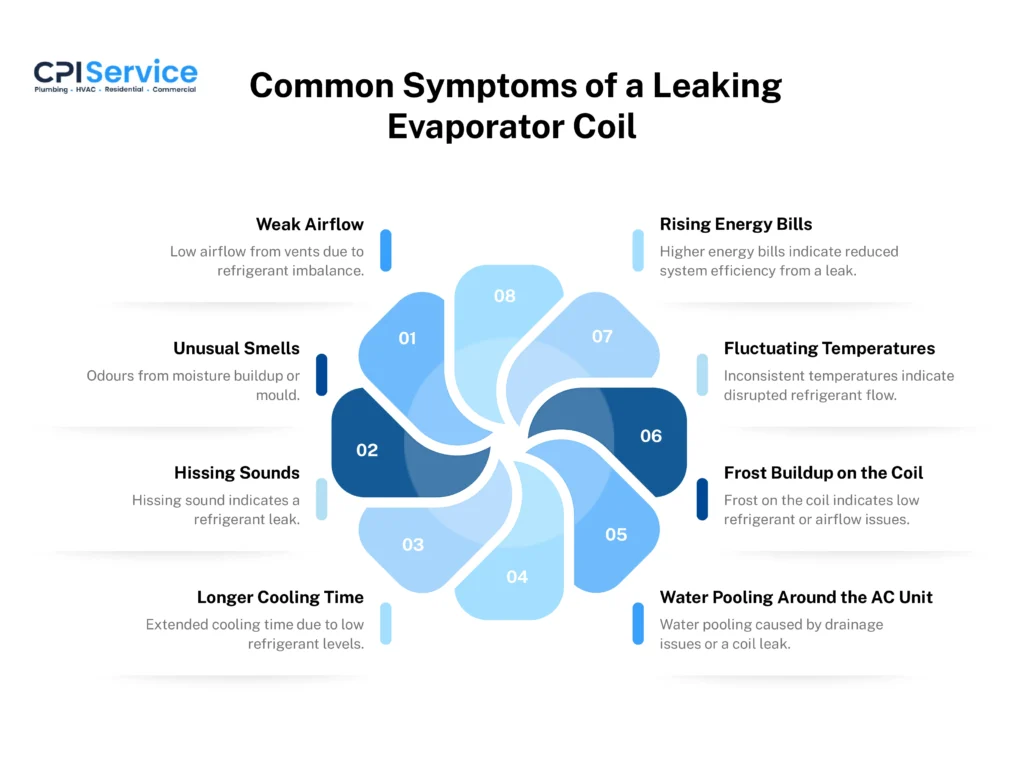
8 common symptoms of a leaking evaporator coil:
Weak Airflow: Reduced airflow from vents signals a refrigerant imbalance that limits cooling output and weakens air circulation.
Unusual Smells: Musty or unpleasant odors indicate moisture buildup from leaks, which can lead to mould or bacterial growth inside the system.
Hissing Sounds: A faint hissing noise points to refrigerant escaping under pressure from small leaks in the evaporator coil.
Longer Cooling Time: Extended cooling cycles occur when reduced refrigerant levels lower heat absorption and slow down temperature control.
Water Pooling Around the AC Unit: Visible water around the unit is caused by excess condensate overflowing due to drainage issues or a coil-related leak.
Frost Buildup on the Coil: Ice forming on the coil signals low refrigerant or airflow issues, causing moisture to freeze instead of draining.
Fluctuating Temperatures: Inconsistent indoor temperatures indicate unstable cooling due to disrupted refrigerant flow in the system.
Rising Energy Bills: Higher energy costs indicate the system is running longer and harder due to reduced efficiency from the leak.
- Weak AIrflow:
Reduced airflow from the vents is a key symptom of a leaking evaporator coil, often caused by low refrigerant levels that reduce cooling and air circulation. As refrigerant levels drop, the coil absorbs less heat, lowering cooling output and restricting airflow through the system. This forces longer run cycles, adding strain on the blower and compressor and leading to uneven cooling. A clear diagnostic sign is weak airflow and poor cooling even when filters, vents, and ducts are clean and unobstructed.
- Unusual Smells:
When your AC produces a musty or unusual smell during operation, it often indicates moisture buildup inside the system, commonly linked to a leaking evaporator coil. This excess moisture, caused by poor drainage or evaporation, allows air passing over damp components to carry odors into your living space while creating conditions for mould and bacteria growth. Over time, this affects indoor air quality more than cooling does, with recurring odors during each cycle indicating the source is within the system rather than from the vents or external dust.
- Hissing Sounds
A steady hissing sound from your AC during operation often indicates a refrigerant leak in the evaporator coil, which creates a pressure imbalance that affects cooling. When gas leaks through small cracks or weak points, system pressure drops, making it harder for the coil to absorb heat effectively. This reduced performance leads to longer run cycles and increased strain on components. Ongoing hissing, along with poor cooling, reflects a refrigerant imbalance affecting system operation.
- Longer Cooling Time
Extended cooling cycles often indicate an issue with the evaporator coil, where low refrigerant levels reduce the system’s ability to remove heat efficiently and maintain consistent indoor temperatures. With reduced refrigerant in the system, the unit runs longer because it cannot reach the desired temperature within a normal cycle. The coil’s heat absorption weakens, slowing the overall cooling process. This leads to increased runtime, higher energy consumption, and added strain on components, with consistently longer cycles under normal conditions indicating reduced system efficiency.
- Water pooling around the AC Unit
Water pooling around your AC unit often indicates a moisture issue linked to a leaking evaporator coil, where condensate fails to drain properly. Instead of exiting through the drain line, water collects near the indoor unit during or after operation, showing restricted flow and leading to AC water leakage. Causes include clogged drain lines, melted ice from a frozen coil, or internal drainage issues, allowing water to spread beyond the system and increase the risk of surface damage, mould growth, and damage to nearby flooring or walls.
- Frost Buildup on the Coil
Ice forming on the evaporator coil during operation is a sign of a refrigerant leak, where low refrigerant causes the coil to become excessively cold and freeze surrounding moisture. This appears as frost on the coil or refrigerant lines, indicating a disruption in heat exchange. As refrigerant drops, condensation turns into ice, restricting airflow and reducing cooling performance. This leads to longer run times, added strain on components, and frost that repeatedly forms and melts into water, signaling an imbalance in temperature and moisture control.
- Fluctuating Temperatures
Fluctuating indoor temperatures often indicate a leaking evaporator coil, in which inconsistent refrigerant flow prevents stable, uniform cooling. You may notice some rooms cooling quickly while others remain warm, even with unchanged thermostat settings. This imbalance limits the coil’s ability to absorb heat evenly, disrupting the distribution of cooling across the system. As a result, the unit runs longer and operates less efficiently. A clear diagnostic sign is recurring temperature swings during normal operation without any change in usage or external conditions.
- Rising Energy Bills
An unexpected rise in energy bills, even without changes in usage or thermostat settings, can indicate an evaporator coil leak, as the system loses efficiency and consumes more power to maintain cooling. As performance declines, the AC works harder to reach the desired temperature, increasing energy demand. This occurs when low refrigerant weakens the coil’s ability to absorb heat. Over time, longer run cycles and continuous strain raise energy use, making consistent spikes in utility bills a clear sign of declining system efficiency.
What to Do If You Have a Leaking Evaporator Coil?
If you have a leaking evaporator coil, shut off your AC system immediately and schedule a professional HVAC inspection to prevent further damage and restore proper function. Continuing to run the system with a leak reduces cooling efficiency and places added strain on key components, especially the compressor. Based on the diagnosis, the solution may involve sealing minor leaks, temporarily recharging the refrigerant, or replacing the evaporator coil to resolve the issue and maintain long-term system performance.
Here are 3 common solutions for a leaking evaporator coil:
Adding Refrigerant as a Short-Term Fix: Restores cooling for minor leaks, but follow up with a professional repair to fix the source.
Sealing Leaks with Special Sealants: Temporarily seal small coil leaks, but rely on a technician for safe, effective results.
Replacing the Full Evaporator Coil: Permanently fix severe or corroded leaks and restore full system performance.
- Adding Refrigerant as a Short-Term Fix:
Recharging the refrigerant is a short-term fix for minor evaporator coil leaks, restoring cooling by replenishing lost refrigerant so the coil can absorb heat effectively. However, since the leak continues to allow refrigerant to escape, the improvement is temporary, and the system’s efficiency gradually declines again. Because improper handling can damage components or reduce efficiency, professional service is essential. A certified HVAC technician ensures proper refrigerant levels and safe handling, and recommends permanent repairs or coil replacement to restore long-term system reliability.
- Sealing leaks with special sealants
Sealing leaks with specialized HVAC sealants offers a temporary fix for small, hard-to-reach leaks in evaporator coils, reducing refrigerant loss and maintaining partial cooling. By forming a barrier at the leak site, the system can continue operating while a permanent repair is arranged. However, since this method does not address the root cause, it is only suitable for minor leaks. Because improper application can damage components or reduce efficiency, a certified HVAC technician should handle the process and determine whether a repair or a full coil replacement is needed.
- Replacing the Full Evaporator Coil
When evaporator coil leaks are severe or due to corrosion, replacing the entire coil is the most effective solution, as temporary fixes can no longer restore proper performance. Installing a new coil restores efficient heat absorption and consistent cooling while eliminating refrigerant loss. Because this process involves system disassembly, refrigerant handling, and calibration, it requires a certified HVAC technician to ensure proper installation, prevent recurring issues, and protect key components such as the compressor and air handler.
How Can You Prevent Evaporator Coil Leaks?
Preventing evaporator coil leaks requires regular maintenance, proper air filter management, and careful monitoring of system conditions to reduce wear, corrosion, and blockages. This includes keeping coils clean, maintaining unobstructed airflow, controlling indoor air quality, and promptly addressing minor issues to prevent them from escalating into leaks. Understanding these preventive measures helps maintain cooling efficiency, minimize refrigerant loss, and extend the HVAC system’s lifespan, ensuring long-term reliability.
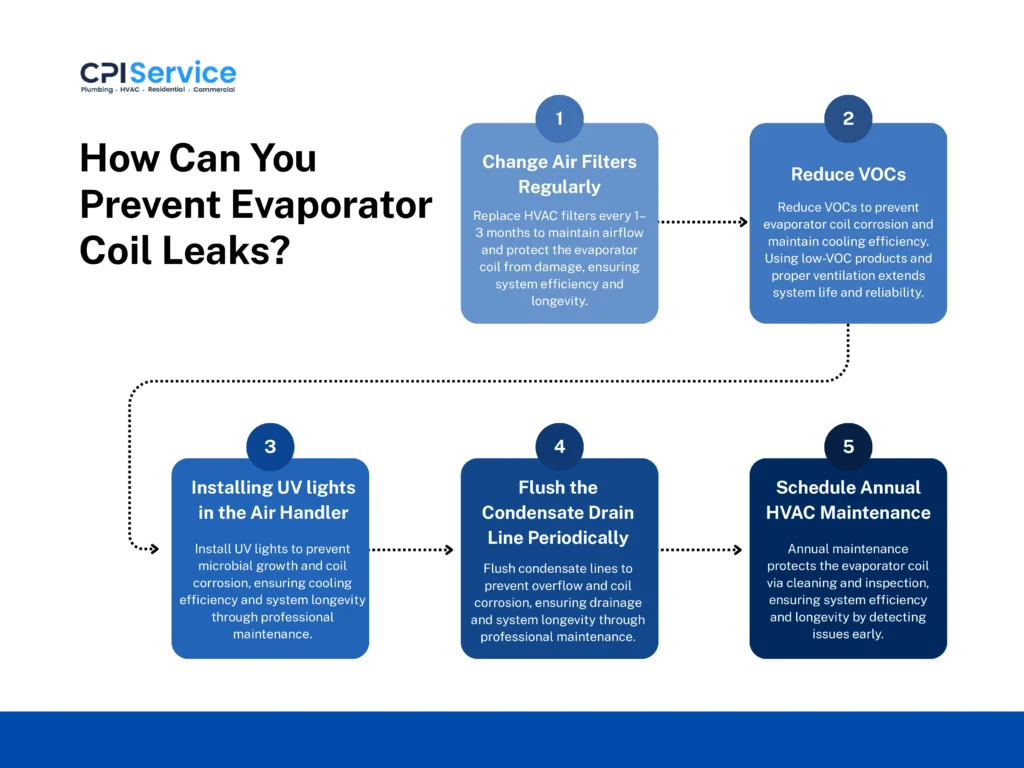
5 common ways to prevent evaporator coil leaks include:
Change Air Filters Regularly: Helps preserve airflow, reduce coil strain, and prevent blockages or corrosion.
Reduce VOCs: Protect the evaporator coil from chemical corrosion.
Install UV Lights in the Air Handler: Inhibit microbial growth, keep the coil clean, and improve indoor air quality.
Flush the Condensate Drain Line Periodically: Removes blockages, prevents water leaks, and protects the coil from corrosion.
Schedule Annual HVAC Maintenance: Maintenance helps clean coils, check refrigerant levels, and prevent leaks, ensuring long-term system reliability.
- Change Air Filters Regularly
Replacing or cleaning air filters every 1–3 months helps maintain proper airflow and prevents dust and debris from reaching the evaporator coil, reducing the risk of blockages and leaks. With unobstructed airflow, the coil can absorb heat efficiently and operate without added strain. When filters are neglected, restricted airflow lowers cooling efficiency and accelerates coil wear. While homeowners can handle basic replacement, a certified HVAC technician can ensure the correct filter type, proper installation, and overall system condition for long-term performance.
- Reduce VOCs
Maintaining low indoor VOC levels helps prevent chemical corrosion in the evaporator coil, as airborne pollutants can damage coil surfaces and internal components over time. By reducing exposure to paints, cleaning agents, and similar compounds, the system operates in cleaner air, supporting efficient cooling and a longer lifespan. This is especially important in chemically active spaces, where proper ventilation, low-VOC products, and periodic inspections by a certified HVAC technician help detect early signs of corrosion and ensure long-term performance.
- Installing UV lights in the Air Handler
Installing UV lights in the air handler helps control microbial buildup on the evaporator coil, especially in high-humidity environments or where biological growth is common. By neutralizing mould, algae, and bacteria, it keeps coil surfaces clean, supports efficient heat transfer, and reduces the risk of corrosion and leaks. However, since this method targets contamination rather than structural damage, it does not fix existing mechanical or refrigerant leaks. To maintain effectiveness, proper installation and regular maintenance are essential to ensure safe operation and long-term system protection.
- Flush the Condensate Drain Line Periodically
Regularly flushing the condensate drain line helps prevent water buildup that can overflow into the system, damage the evaporator coil, reduce cooling efficiency, and promote mould growth. This process clears algae, dirt, and debris that accumulate in the line, preventing blockages that can lead to corrosion or water-related damage. Keeping the drain line clear supports consistent system performance and reduces the risk of leaks. Professional flushing also ensures proper drainage and helps detect early clogs or damage, maintaining long-term reliability and efficient HVAC operation.
- Schedule Annual HVAC Maintenance
Scheduling annual HVAC maintenance helps prevent evaporator coil leaks and maintain system performance by identifying early signs of wear, corrosion, and refrigerant issues. During service, a technician inspects the system, cleans coils, checks refrigerant levels, and evaluates airflow, helping to detect hidden problems such as minor leaks or component strain early. Addressing these issues improves efficiency and avoids costly repairs, making the overall AC tune-up cost more manageable. Regular maintenance supports consistent performance, reduces energy use, and extends system lifespan for reliable operation.
How Much Does It Cost to Fix a Leaking Evaporator Coil?
Repairing a leaking evaporator coil costs between $1,000 and $3,000, depending on severity, system type, and labor. Minor leaks or seal repairs fall on the lower end at $1,000–$1,500, while more extensive, out-of-warranty repairs range from $1,500–$2,500. In severe cases, a full coil replacement can cost $2,000–$3,000 or more, and an air handler replacement can further increase the total cost. Addressing leaks early helps control repair costs and prevents damage to components like the compressor and air handler.
Cost Under Warranty: Costs are minimal, between $400 and $1000, often just a service call or minor labor fees.
Cost Out of Warranty: Ranges from $1,400 to $3,000, depending on leak severity, coil type, and labor.
Cost of Full Air Handler Replacement: $1,500–$ 35,00, depending on system size and brand.
- Cost Under Warranty
Repairing a leaking evaporator coil under warranty costs between $400 and $1,000, depending on factors such as system age, coil type, and specific warranty terms, while covering essential labor and minor parts. This cost applies when the HVAC system or coil components are covered by the manufacturer’s or an extended warranty, ensuring homeowners pay very little out-of-pocket. The main cost components include the service visit, minor labor, and any small parts covered by the warranty. Because major repairs are included, costs generally stay on the lower end, providing financial protection and peace of mind.
- Cost Out of Warranty
Fixing a leaking evaporator coil out of warranty typically costs $1,400–$3,000, depending on the leak’s severity, the coil type, system accessibility, and local labor rates. Without warranty coverage, the homeowner bears all repair expenses. Key cost components include labor, replacement parts, refrigerant recharge, and diagnostics, with complex or hard-to-access systems increasing labor requirements. Timely repairs prevent further damage to the air handler, compressor, and other components, preserving HVAC efficiency and long-term reliability.
- Cost of Full Air Handler Replacement
Replacing a full air handler due to a damaged evaporator coil typically costs between $1,500 and $3,500, depending on system size, brand, and installation complexity. This is required when the coil cannot be repaired, making full unit replacement necessary to restore proper system function. Costs include the new air handler, labor for removal and installation, and required materials, with larger units or more complex setups increasing the price. Understanding evaporator coil replacement costs helps homeowners plan repairs, avoid unexpected expenses, and maintain long-term system efficiency and reliability.
Is It Worth Replacing Just the Evaporator Coil?
Yes, replacing just the evaporator coil can be worth it when the coil is the only damaged component, and the air handler and other system parts are in good condition, particularly in newer or mid-aged units. This approach prevents the higher cost of a full system replacement while restoring proper cooling efficiency and leak-free operation. However, if the system is older, has multiple failing components, or shows signs of recurring leaks, replacing only the coil may serve only as a temporary fix and could be less cost-effective in the long run.
When Should You Call an HVAC Technician?
Call an HVAC technician immediately if you notice ice buildup, refrigerant leaks, warm air from the vents, or water pooling around your unit, as these are clear signs that your evaporator coil needs professional attention. Attempting DIY fixes on a faulty evaporator coil can worsen the damage, reduce system efficiency, and lead to more costly repairs down the line. Certified AC technicians providing reliable air conditioning services can safely handle refrigerant, detect leaks, repair or replace faulty coils, and ensure the system operates efficiently, protecting your HVAC investment and maintaining optimal indoor comfort and air quality.

