

 Emergency Plumbing
 Plumbing Repairs
 Water Heaters
 Drain Cleaning
 Sewer Service
 Faucets & Fixtures
 Repiping
 Toilet Plumbing
 Trenchless
 Plumbing Leaks
 Air Conditioning
 Heating
 Minisplit Systems
 Heat Pumps
 HVAC Components
 HVAC Rebates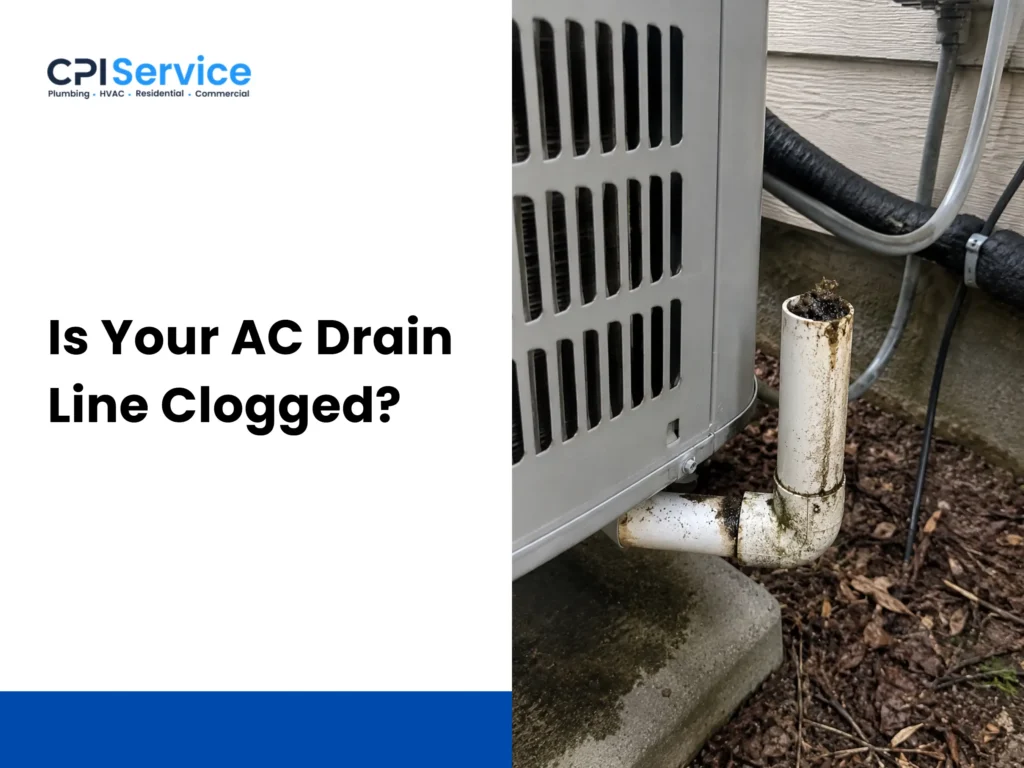
Your AC drain line is clogged when standing water sits in the drain pan, water damage appears near the indoor unit, indoor moisture increases, musty odors come from the vents, or the AC repeatedly shuts down. A clogged condensate drain line prevents condensation from flowing properly through the AC system, causing water to back up inside the condensate pipe, drain pan, and indoor air handler. Most clogs develop from algae, sludge, dirt, dust, or organic buildup inside the PVC drain pipe, while improper installation or exterior obstructions may also restrict drainage.
Homeowners can often clear minor AC drain line blockages using a wet/dry shop vacuum, warm water, distilled white vinegar, or specialized drain-cleaning tools. Preventive maintenance, such as replacing air filters, cleaning the condensate line, and scheduling annual AC inspections, helps reduce future clogs and maintain proper drainage. Meanwhile, ignoring a clogged AC drain line can lead to structural water damage, mold growth, electrical hazards, reduced cooling performance, and expensive AC repairs over time.
What Are the Signs of a Clogged AC Drain Line?
Signs of a clogged AC drain line include standing water, water damage near the AC, excess moisture, unexpected system shut-offs, water stains, and gurgling sounds from the drain pipe. These warning signs indicate that moisture cannot drain properly through the condensate drain line, leading to water buildup that may cause mold growth, AC damage, reduced cooling performance, and costly structural repairs if the blockage is not addressed quickly.
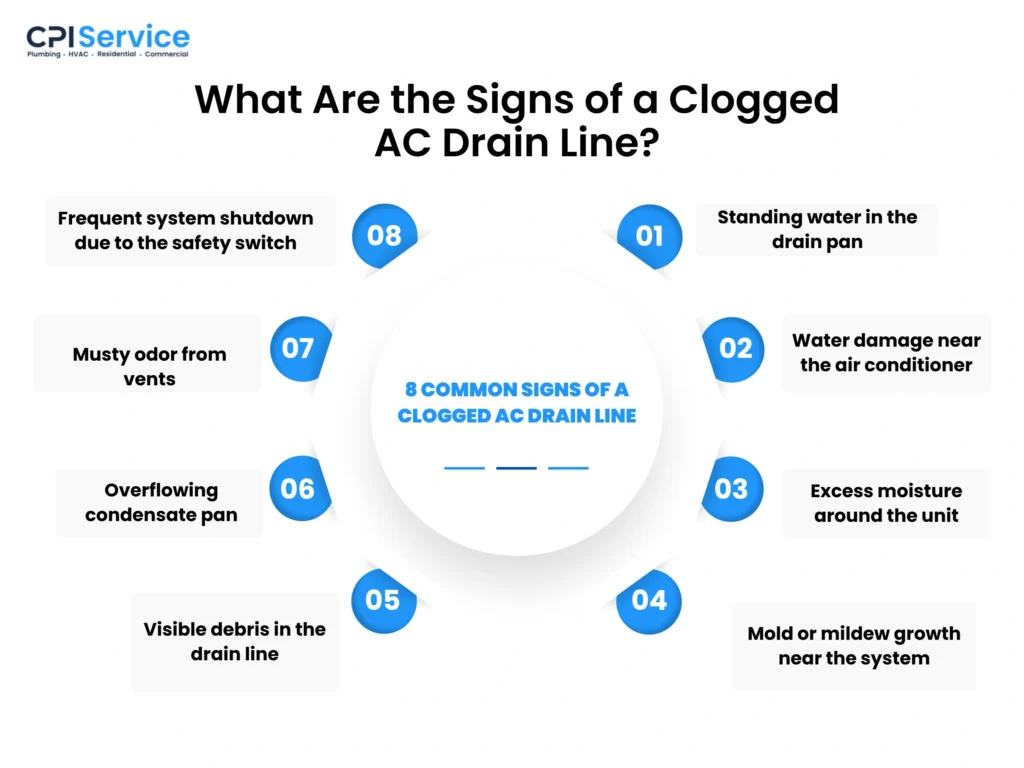
8 common signs of a clogged AC drain line are:
- Standing water in the drain pan
- Water damage near the air conditioner
- Excess moisture around the unit
- Mold or mildew growth near the system
- Visible debris in the drain line
- Overflowing condensate pan
- Musty odor from vents
- Frequent system shutdown due to the safety switch
Standing Water in Drain Pan
Standing water in the drain pan indicates that condensate cannot drain properly through the primary AC drain line due to algae, sludge, dirt, or debris buildup inside the pipe. During normal operation, moisture collected from the evaporator coil flows through the condensate line and exits outdoors, leaving the secondary safety pan dry. When the drain line becomes clogged, water backs up into the drain pan beneath the indoor unit and may eventually overflow onto ceilings, insulation, walls, or flooring.
Homeowners commonly notice visible water inside the drain pan, damp areas near the air handler, or moisture collecting around the indoor AC unit. Clearing the blockage with a wet/dry vacuum, flushing the condensate line with distilled white vinegar, and scheduling routine AC drain line maintenance can help restore proper drainage and prevent overflow damage.
Water Damage Near Air Conditioner
Consistent water damage near the air conditioner is a strong sign that backed-up condensate is escaping the AC system rather than draining properly outdoors. Once the condensate drain line becomes obstructed, excess water overflows from the drain pan and spreads to surrounding materials, such as drywall, insulation, flooring, or wood framing, near the indoor unit.
Property owners often notice yellow or brown water stains, bubbling paint, warped flooring, sagging ceiling sections, damp drywall, or soft spots around the air handler. Inspecting the condensate drain line, quickly removing the clog, and addressing standing water early can help reduce structural moisture damage and prevent costly repairs.
Excess Moisture Around Unit
Often occurring when stagnant condensate water becomes trapped inside the air handler due to restricted drainage, excess moisture around the AC unit is another common sign of a clogged AC drain line. A properly functioning condensate system removes humidity from indoor air and directs moisture outdoors through the drain line. When the pipe becomes blocked, trapped water remains exposed to warm airflow inside the cabinet, increasing humidity around the unit.
For this issue, homeowners may notice damp conditions, elevated humidity levels, condensation around the air handler, or lingering moisture near the indoor AC compartment. Cleaning the condensate line, replacing dirty air filters, and flushing the drain system regularly can help reduce moisture buildup and restore normal drainage.
Mold or Mildew Growth Near System
Mold or mildew near the AC system often forms when clogged condensate lines create dark, damp conditions that foster fungal growth. Standing water inside the drain pan, PVC condensate pipe, or evaporator compartment provides continuous moisture that allows mold spores, algae, and bacteria to spread rapidly throughout surrounding surfaces.
Signs of microbial growth may include black, green, or white patches near the air handler, mildew odors, or visible mold growth around insulation, condensate piping, or nearby drywall. Promptly cleaning the drain line, removing stagnant water, and improving condensate drainage can help limit mold growth and protect indoor air quality.
Visible Debris in Drain Line
Algae buildup, dark sludge, or visible residue inside the condensate pipe is a common sign that the AC drain line is clogged, restricting proper drainage. As condensation moves through the AC system, dust, pollen, pet dander, mold, and organic particles collect inside the PVC drain line and gradually form a buildup that blocks condensate flow.
Homeowners may notice slimy residue near the drain opening, standing water inside the pipe, or algae growth around the outdoor drain termination point. Removing the blockage with a wet/dry vacuum, drain brush, or vinegar flush can help restore proper condensate drainage and prevent water from backing up into the AC system.
Overflowing Condensate Pan
An overflowing condensate pan is another sign of a clogged AC drain line, as blocked condensate cannot drain properly and backs up into the secondary drain pan beneath the indoor AC unit. When algae, sludge, dirt, or debris restrict the primary condensate line, continuous moisture from the evaporator coil gradually fills the pan until water spills over the edges.
Property owners may notice puddles around the air handler, ceiling stains, water dripping from the indoor unit, or moisture damage near the AC system. Clearing the clogged drain line and removing standing water from the condensate pan can help restore proper drainage and prevent further structural water damage.
Musty Odor From Vents
Musty odors coming from AC vents are a sign of a clogged drain line because stagnant condensate trapped inside the AC system creates damp conditions where mold, mildew, algae, and bacteria grow rapidly. As biological buildup develops inside the clogged drain pan and condensate pipe, microbial odors circulate through the ductwork whenever the blower fan operates.
During this issue, homeowners often notice persistent mildew or earthy smells when the AC system turns on or while conditioned air moves through the vents. Cleaning the condensate drain line, removing standing water, and disinfecting affected AC components can help eliminate odors and reduce microbial contamination inside the system.
Frequent System Shutoff Due to Safety Switch
Frequent AC shutdowns are a sign of a clogged drain line because rising condensate water activates the AC system’s overflow safety switch to prevent flooding and water damage. Modern air conditioning systems use float switches to monitor water levels inside the drain pan, and once the water reaches a dangerous level, the switch automatically shuts down the cooling operation.
Homeowners may notice repeated shutdown cycles, inconsistent cooling, or sudden loss of AC operation when the condensate drain line becomes blocked. Clearing the clog, restoring proper condensate drainage, and inspecting the float switch can help prevent repeated system interruptions and protect the AC system from moisture damage.
How Can You Unclog an AC Drain Line?
To unclog an AC drain line, start by turning off the air conditioning system, locating the condensate drain line access point, removing blockage buildup with a wet/dry vacuum, and flushing the pipe with distilled white vinegar or warm water. These steps help clear algae, sludge, dirt, mold, and debris that restrict condensate flow through the PVC drain line and cause water backups inside the AC system.
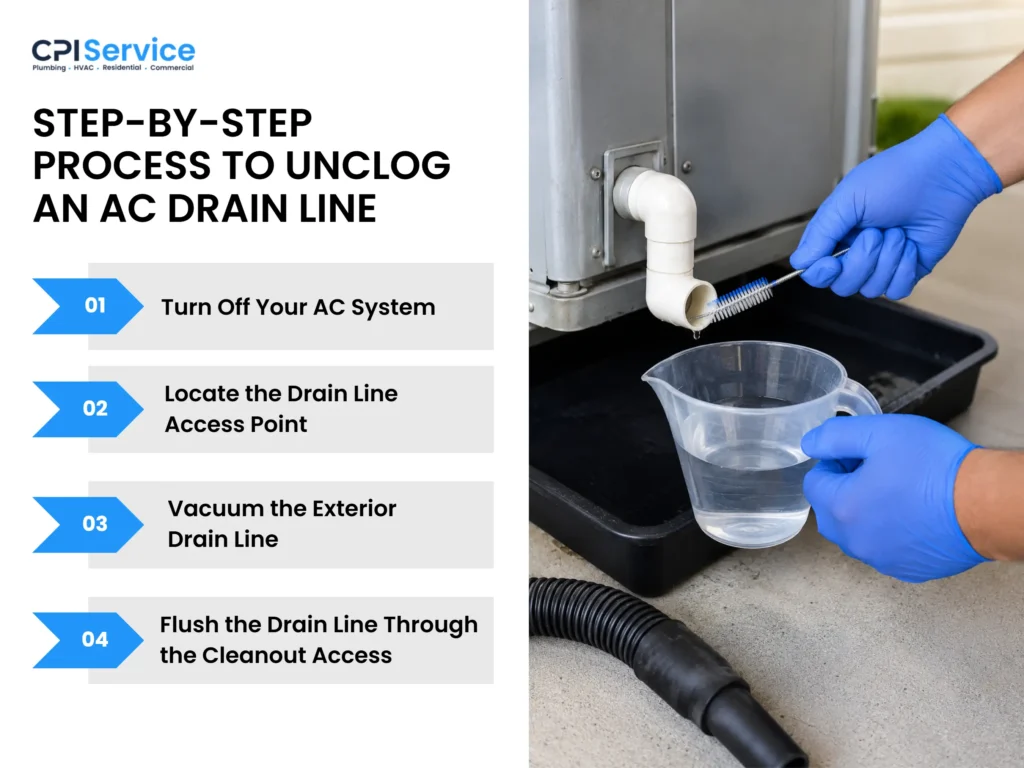
The step-by-step process to unclog an AC drain line is:
1. Turn Off Your AC System
To reduce the risk of electrical hazards or accidental water exposure, turn off the air conditioning system at both the thermostat and the main electrical breaker panel. Disconnecting power prevents the blower fan and evaporator coil from operating while cleaning the condensate drain system.
Steps to turn off the AC at the thermostat:
- Step 1: Locate your thermostat on an interior wall of your home.
- Step 2: Press the Power, Off, or Mode button, depending on your thermostat model.
- Step 3: If your thermostat has a mode setting, select Off to stop cooling.
- Step 4: Verify that the thermostat display indicates the system is off and that the AC is no longer running.
Steps to turn off the AC at the main electrical breaker panel:
- Step 1: Locate your home’s main electrical breaker panel, typically found in a garage, basement, utility room, or exterior service area.
- Step 2: Open the breaker panel door and locate the breaker labeled Air Conditioner, AC, HVAC, Air Handler, or Furnace.
- Step 3: Switch the appropriate breaker(s) to the Off position. Some systems have separate breakers for the indoor air handler and outdoor condenser unit; turn off both if applicable.
- Step 4: Confirm that the AC system is completely powered down by checking that the indoor blower fan and outdoor condenser unit do not operate when the thermostat is adjusted.
2. Locate the Drain Line Access Point
Locate the PVC condensate drain pipe connected to the indoor air handler or evaporator coil compartment. Most residential AC systems include a T-shaped cleanout vent with a removable cap positioned near the indoor unit. You should also identify the outdoor drain line termination point, which is located near the outdoor condenser unit, where condensate exits the home.
3. Vacuum the Exterior Drain Line
To clear a clogged AC drain line, attach a wet/dry shop vacuum to the outdoor end of the condensate drain pipe to suck out algae, sludge, standing water, and debris.
Follow the steps below to vacuum the exterior drain line:
- Step 1: Attach a wet/dry shop vacuum to the outdoor end of the condensate drain pipe.
- Step 2: Wrap a cloth, rag, or duct tape around the hose connection to create a tight seal and improve suction.
- Step 3: Run the vacuum for 1 to 2 minutes until dirty water, algae, or sludge collects in the vacuum container, confirming the blockage is cleared.
4. Flush the Drain Line Through the Cleanout Access
Flushing the condensate drain line helps remove any remaining algae, mildew, bacterial slime, and organic debris that may still be clinging to the inside of the pipe after vacuuming. This step helps restore proper condensate flow, reduces the risk of future clogs, and improves the overall performance of the AC drainage system.
- Step 1: Remove the cap from the condensate drain line cleanout opening.
- Step 2: Pour 1 cup of distilled white vinegar or warm soapy water into the opening.
- Step 3: Let the solution sit for about 30 minutes.
- Step 4: Flush the drain line with warm water.
- Step 5: Replace the cleanout cap and check that the line drains properly.
What Are the Most Effective Ways to Clean an AC Drain Line?
The most effective ways to clean an AC drain line include using a wet/dry shop vacuum, pouring distilled white vinegar, and rinsing the drain line with water. Using these AC drain line cleaning methods regularly helps prevent clogging and supports the long-term performance of your AC system.
Below are the most effective ways to clean an AC drain line:
- Use a wet/dry shop vacuum at the exterior exit:
Attach a wet/dry shop vacuum to the pipe, creating a tight seal with duct tape or a rag. Run the vacuum for a few minutes to suction out clogs, such as algae, dirt, or sludge. This method is especially effective for tough blockages and helps restore proper water flow.
- Pour distilled white vinegar or a specialized cleaner into the indoor access T-pipe:
Remove the cap and pour about one cup of distilled white vinegar or a commercial drain line cleaner into the AC pipe. Let the solution sit for 30 minutes to break down mold and organic buildup. Avoid using bleach, as it can damage PVC piping and sensitive evaporator coils. Vinegar is a safe and effective option for routine maintenance and helps prevent future line clogs.
- Rinse the drain line with water:
After the cleaning solution has worked, flush the drain line with clean water to remove loosened debris. Use a funnel or turkey baster to pour water into the access point and check that it flows freely out the exterior exit. This step ensures the line is clear and ready for regular operation.
What Tools and Cleaners Can Help Unclog an AC Drain Line?
Tools and cleaners that can help unclog an AC drain line include a wet/dry shop vacuum, an AC drain gun, a plumber’s snake or brush, distilled white vinegar, and specialty probiotic or enzyme cleaners. These tools help remove algae, sludge, standing water, mold, and organic buildup from the condensate drain system while restoring proper water flow through the PVC drain line.
5 tools and cleaners that can help unclog an AC drain line are:
- Wet/Dry Shop Vacuum: Provides strong suction to remove standing water, sludge, algae, and debris from the condensate drain line. It is one of the most common tools used for clearing AC drain clogs.
- AC Drain Gun or Sucker: Uses compressed air or suction to push stubborn blockages through the condensate pipe. This AC drain line tool helps remove compact debris and thick buildup inside the drain line.
- Plumber’s Snake or Brush: Scrapes mold, sludge, algae, and debris from the inside of the PVC drain pipe. These AC drain line tools help clear the buildup located deeper inside the condensate line.
- Distilled White Vinegar: Helps dissolve algae, mildew, bacterial slime, and organic residue inside the drain line. Regular vinegar flushing also helps prevent future condensate clogs.
- Specialty Probiotic and Enzyme Cleaners: Break down slime, mold, algae, and organic buildup inside the condensate system using biological cleaning agents. These AC cleaners help maintain proper drain line flow without exposing you to harsh chemicals.
How Should You Use Vinegar or Bleach in an AC Drain Line?
To use vinegar or bleach in an AC drain line, pour the solution into the indoor condensate drain cleanout opening to help dissolve algae, slime, mold, and other buildup inside the pipe. Let the solution sit for about 30 minutes, then flush the drain line with warm water to clear away loosened debris and restore proper drainage.
To use vinegar for the AC drain line:
- Turn off the power: Shut off the AC system at the thermostat or breaker panel to reduce the risk of electrical hazards or water damage.
- Locate the cleanout access: Find the T-shaped PVC condensate drain line near the indoor air handler and remove the cleanout cap.
- Pour in the vinegar: Slowly pour approximately 1/4 to 1 cup of distilled white vinegar into the drain line using a funnel.
- Let it sit: Allow the vinegar to remain inside the pipe for about 30 minutes to break down algae, mold, mildew, and bacterial slime.
- Flush with water: Pour warm or hot water down the drain to remove any loosened debris and restore proper condensate flow.
To use bleach for the AC drain line:
- Dilute the bleach: Mix 1 part bleach with 10 parts water, or use a stronger 50/50 mixture only for severe buildup.
- Apply carefully: Slowly pour the diluted solution into the condensate drain line, then allow it to sit for 10 to 30 minutes before flushing it thoroughly with fresh water.
- Limit use: Use bleach sparingly, as repeated application may corrode metal components, weaken PVC glue joints, and damage evaporator coils over time.
Note: Bleach should be used sparingly and only for stubborn clogs, as frequent use may damage parts of the system.
How Can You Prevent Future AC Drain Line Clogs?
You can prevent future AC drain line clogs by replacing air filters regularly, flushing the condensate line with vinegar, keeping the outdoor condenser area clean, scheduling annual AC maintenance, and removing buildup before it restricts water flow. These preventive steps help reduce the accumulation of algae, sludge, mold, dirt, and debris in the condensate drain system while supporting proper AC drainage and long-term cooling performance.
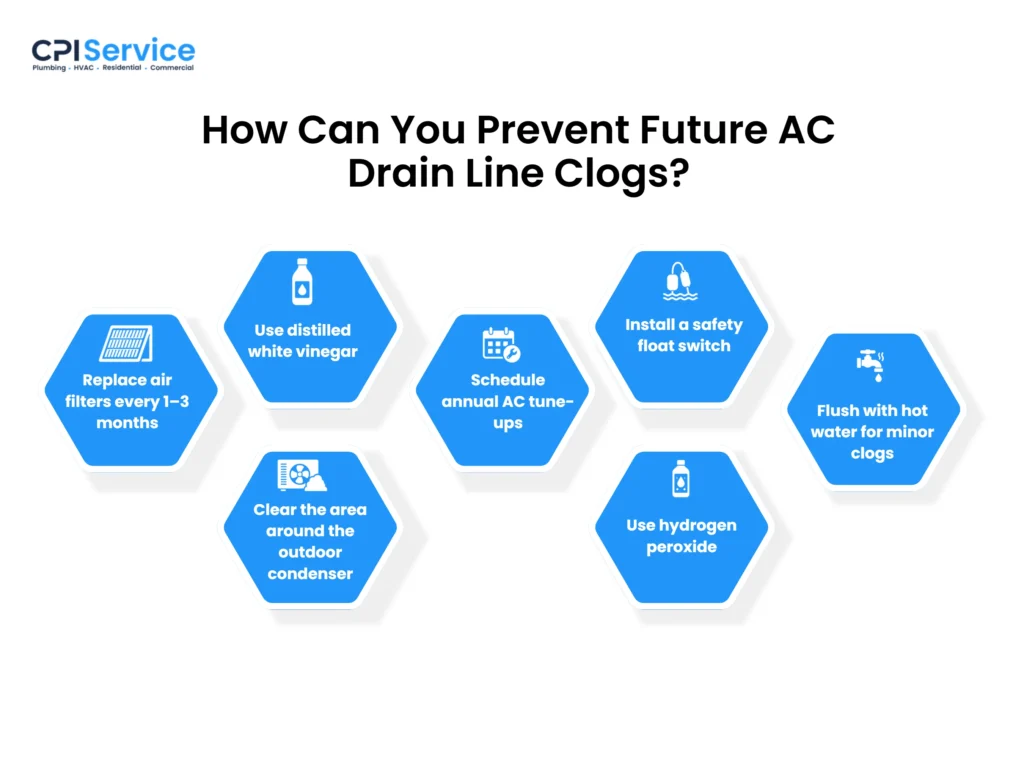
The following methods help reduce the risk of drain line clogs and support long-term system health:
- Replace air filters every 1–3 months: Clean air filters to prevent dust, dirt, and debris from reaching the evaporator coil and condensate drain system. Replacing filters regularly (1-3 months) also reduces particle buildup that may eventually clog the drain line.
- Use distilled white vinegar: Monthly vinegar flushing helps break down algae, mold, mildew, and bacterial slime inside the condensate pipe. Pour approximately 1 cup of distilled white vinegar into the drain line cleanout access, let it sit for 30 minutes, then flush the line with warm water.
- Clear the area around the outdoor condenser: Leaves, dirt, grass clippings, and overgrown vegetation may cause debris to enter the AC system. Keeping the surrounding area clean helps reduce contamination near the condensate drain line.
- Schedule annual AC tune-ups: An AC technician can inspect the system, check the drain line for early signs of blockage, and perform preventative cleaning. Regular AC tune-ups also help catch issues before they lead to a clogged drain line.
- Install a safety float switch: A float switch detects rising water levels in the drain pan and automatically shuts off the AC unit if a clog is present. This device helps prevent water damage by stopping the system before overflow occurs.
- Use hydrogen peroxide: Pour 2 cups of hydrogen peroxide down the drain line every 2 months to break down organic buildup and keep the line clear.
- Flush with hot water for minor clogs: Run hot water through the drain line to help clear small blockages and maintain a clear path for condensate to exit the system.
What Causes an AC Drain Line to Become Clogged?
Factors that cause an AC drain line to become clogged include sludge buildup from dust, dirt, and moisture, debris accumulation inside the condensate pipe, improper drain line installation, and exterior blockages around the outdoor drain termination point. These issues restrict condensate flow through the AC drainage system and may eventually cause water backups, mold growth, overflow leaks, and reduced cooling performance.
4 common causes that lead to an AC drain line becoming clogged are:
- Sludge from Dust, Dirt, and Moisture: Dust and dirt bypass dirty air filters and mix with moisture from the air conditioning system, creating a thick sludge in the condensate drain line. This sludge allows algae, mold, and mildew to thrive, which can block the pipe and stop water from draining.
- Debris and Dirt Accumulation: Airborne particles enter the AC system and collect in the drip tray and drain pipe, causing buildup that restricts water flow and can clog the drain line.
- Improper Installation: If the drain pipe does not have a proper downward slope, gravity cannot pull water through the line effectively, increasing the risk of clogs forming in the pipe.
- Exterior Blockages: Outdoor drain line terminals can become blocked by dirt, mud, leaves, twigs, insect nests, or animal hair, preventing water from exiting the AC system and causing it to back up into the drain pan or indoor unit.
When Should You Call a Professional for a Clogged AC Drain Line?
You should call a professional for a clogged AC drain line if the blockage keeps returning, water damage becomes visible, the AC system shuts down repeatedly, or DIY cleaning methods fail to restore proper drainage. Professional AC drain line in San Jose helps identify deeper drainage issues and prevents further damage to the air conditioning system and surrounding property.
Call a professional AC technician for a clogged AC drain line if:
- Water continues leaking around the indoor AC unit after cleaning the drain line.
- The condensate drain line becomes clogged repeatedly within short periods.
- You notice heavy sludge buildup or severe blockage deep inside the drain pipe.
- DIY methods such as vacuum cleaning or vinegar flushing do not clear the clog.
- Electrical components near the air handler become exposed to moisture or water leaks.
What Are the Risks of Ignoring a Clogged AC Drain Line?
Risks of ignoring a clogged AC drain line include extensive water damage, mold and mildew growth, system shutdowns, electrical hazards, and costly AC repairs. When condensate cannot drain properly through the AC system, backed-up water may overflow into surrounding building materials and damage critical AC components over time.
5 major risks of ignoring a clogged AC drain line are:
- Extensive Water Damage: A clogged condensate drain line can cause water to overflow from the drain pan, damaging ceilings, drywall, insulation, flooring, and nearby structural materials.
- Mold and Mildew Growth: Standing water inside the condensate system promotes mold, mildew, algae, and bacterial growth. Over time, microbial buildup may spread through ductwork, create musty odors, reduce indoor air quality, and contribute to respiratory irritation.
- System Shutdowns: Blocked condensate lines may activate the AC system’s safety float switch, which automatically shuts down cooling operation when excess water collects inside the drain pan. Repeated shutdowns can leave the home without proper cooling until the blockage is cleared.
- Electrical Hazards: Water leaking from a clogged drain line may reach electrical AC components such as the blower motor, wiring, capacitor, or control board, leading to short circuits, electrical damage, or equipment failure.
- Costly Repairs: Addressing a minor clog is simple and inexpensive, but ignoring the problem can lead to hundreds or even thousands of dollars in emergency AC repairs, structural repairs, and mold remediation.

