Why Does My AC Keep Tripping the Breaker?
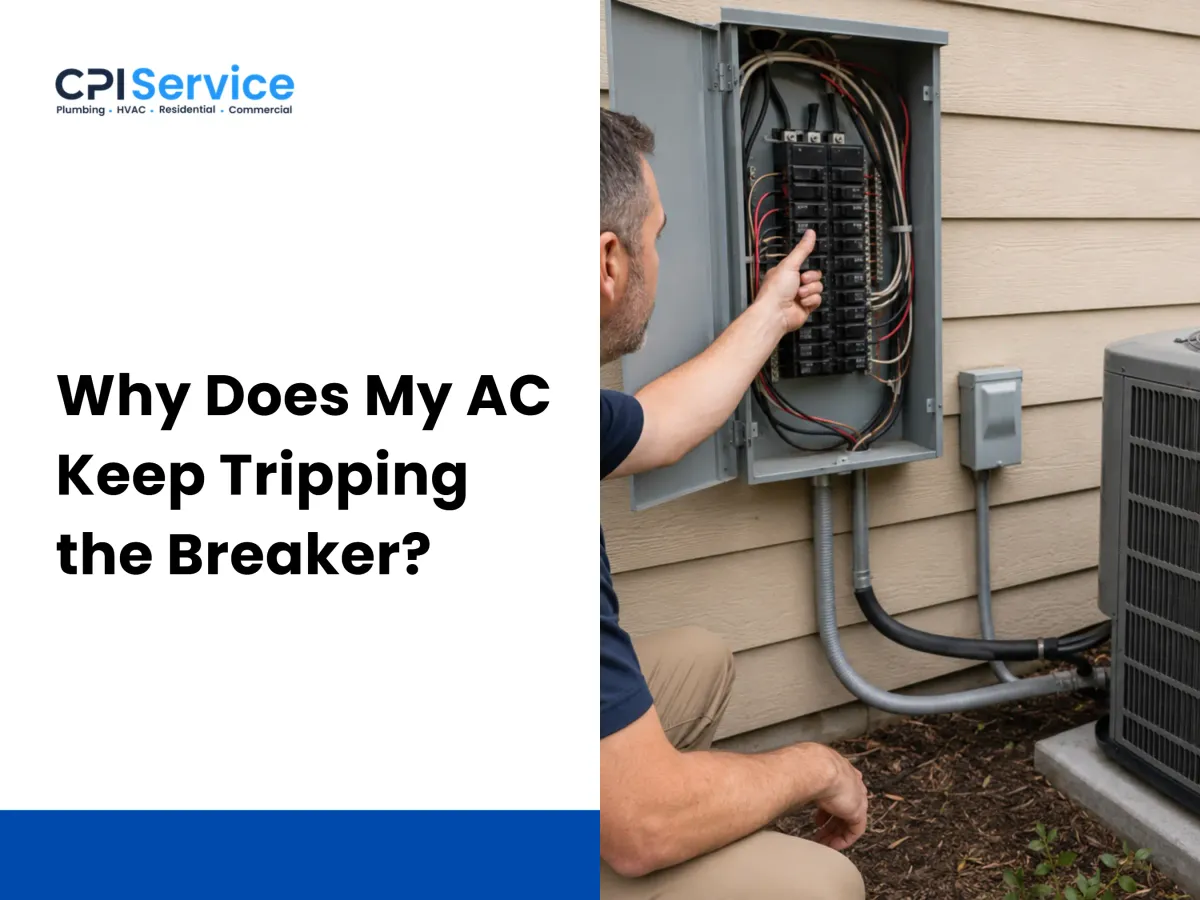
Table of Contents
- What It Means When Your AC Trips the Breaker
- Quick Diagnosis
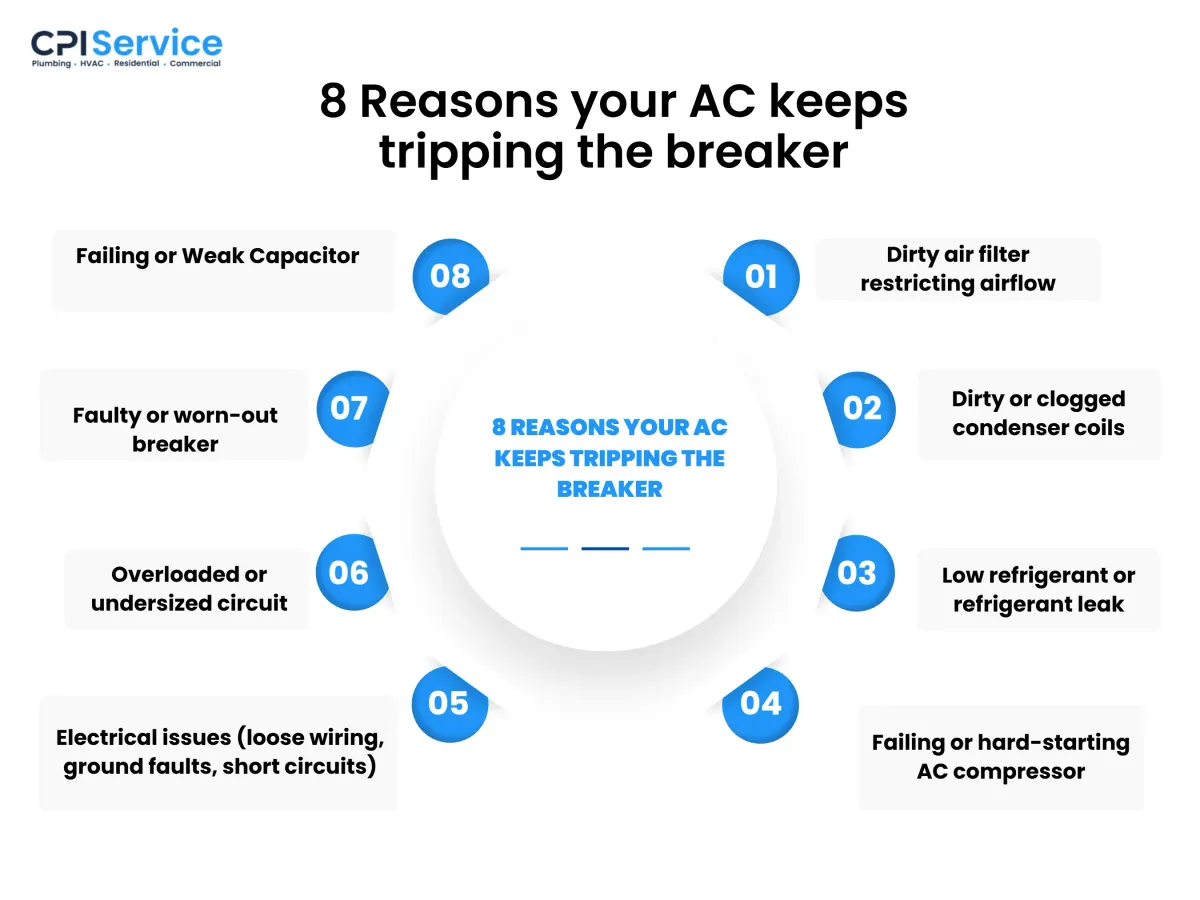
- 8 Reasons Your AC Keeps Tripping the Breaker
- 1. A Dirty Air Filter Restricting Airflow
- 2. A Dirty or Clogged Outdoor Coil
- 3. Low Refrigerant or a Refrigerant Leak
- 4. A Hard-Starting or Failing Compressor
- 5. Loose Wiring, Ground Faults and Short Circuits
- 6. An Overloaded or Undersized Circuit
- 7. A Faulty or Worn-Out Breaker
- 8. A Failing or Weak Capacitor
- What to Do When Your AC Trips the Breaker
- When to Call for Emergency AC Service
- Breaker Trips in San Jose Homes
- How to Prevent Your AC From Tripping the Breaker
- Frequently Asked Questions
If your AC keeps tripping the breaker, it’s drawing more current than the circuit is rated for, or there’s an electrical fault. The usual causes are a dirty filter or outdoor coil, a weak capacitor, a struggling compressor, low refrigerant, loose or damaged wiring, or a worn-out breaker. In San Jose, it often starts on the first hot days.
Those first hot days are when a system that’s been idle all winter suddenly runs hard, and a dirty filter or coil makes the compressor work harder still. ENERGY STAR’s maintenance checklist warns that a dirty filter can damage your equipment and that faulty electrical connections can cause unsafe operation.
Reset the breaker once. If it trips again, leave it off and call for service: repeatedly forcing power into a fault can damage the compressor and is a fire risk. Call right away if you notice burning smells, sparks, unusual noises or lights dimming when the AC starts.
What It Means When Your AC Trips the Breaker
The breaker is a safety device. When it senses more current than the circuit is designed to carry, it cuts the power instantly, before the wiring, motors and other parts can overheat. That protects the equipment from failure and your home from an electrical fire.
So a tripped breaker isn’t the problem itself; it’s the sign of one. The overload usually comes from one of three directions:
- Airflow restrictions: a dirty filter or a blocked outdoor coil makes the motors and compressor work harder.
- Mechanical strain: low refrigerant or a worn, hard-starting compressor pulls extra current.
- Electrical faults: loose wiring, ground faults, short circuits, a weak capacitor, an undersized circuit or a worn breaker.
Quick Diagnosis
| When it trips | Likely cause |
|---|---|
| Instantly, as soon as you reset it | A short circuit or a compressor shorted to ground; leave it off |
| A few seconds after the AC starts | A weak capacitor or a hard-starting compressor |
| After running a while on a hot day | Dirty filter or coil, low refrigerant, or a loose connection overheating |
| Randomly, sometimes with flickering lights | A loose connection or a worn breaker |
| Only when other appliances run (window or portable units) | A shared or overloaded circuit |
8 Reasons Your AC Keeps Tripping the Breaker
1. A Dirty Air Filter Restricting Airflow
When the filter clogs with dust and debris, the blower motor and compressor have to work harder to move air through the system. The extra strain makes the motors run hotter and draw more current than usual, sometimes enough to trip the breaker.
- Turn the AC off at the thermostat and switch off its breaker.
- Take out the filter and replace it if it’s dirty or clogged.
- Restore power and run the AC.
- If the breaker trips again, check the outdoor coil next.
2. A Dirty or Clogged Outdoor Coil
The outdoor (condenser) coil releases the heat taken from your home. A coating of dirt, grass clippings and leaves acts like a blanket over it: heat stays in the system, pressures and temperatures rise, and the compressor draws more current until the breaker trips to protect it.
- Clean the coil. Turn off power at the thermostat and the outdoor disconnect, then rinse the coil gently with a garden hose from the inside out if you can, or from the outside. Use a coil cleaner made for condensers for heavy buildup. Don’t use a pressure washer; it bends the fins.
- Clear around the unit. Remove leaves, grass, weeds and debris within 2 to 3 feet of the outdoor unit.
- Check the filter at the same time.
3. Low Refrigerant or a Refrigerant Leak
Refrigerant carries heat out of your home. When a leak lowers the charge, the compressor runs longer and hotter to keep up, overheats and pulls more current, which can trip the breaker and eventually damage the compressor. Signs include warm air from the vents and ice on the refrigerant lines (see why your AC isn’t blowing cold air).
Refrigerant isn’t something a homeowner can fix. Rule out the easy causes first (a dirty filter and a blocked coil), then stop resetting the breaker and have a certified technician find and repair the leak and charge the system correctly. Adding refrigerant without fixing the leak only delays the next failure.
4. A Hard-Starting or Failing Compressor
A compressor that’s wearing out can trip the breaker in two ways. If worn or seized internal parts keep it from turning freely, it draws its locked-rotor current, a surge many times its normal running current, every time it tries to start. If the insulation on its windings has broken down, it can short to ground, and the breaker trips almost instantly. A failed start or run capacitor can leave a healthy compressor stuck in that high-current starting state, too.
Dirty coils, an incorrect refrigerant charge, poor airflow, burnt wiring or a weak breaker all add strain. Because compressor problems involve high voltage and need specialized testing, they’re a job for a technician; see AC compressor replacement cost. A hard-start kit sometimes helps an older compressor that starts slowly.
5. Loose Wiring, Ground Faults and Short Circuits
- Loose wiring increases resistance at the connection, which generates heat and can arc and overload the circuit.
- A ground fault happens when a hot wire touches a grounded metal surface, such as the unit’s cabinet, sending a sudden surge of current to ground.
- A short circuit happens when damaged insulation lets current bypass its intended path, causing an immediate overload.
Failed capacitors, damaged compressor windings and faulty breakers can cause the same symptoms. All of these can damage equipment and are fire hazards, so leave the power off and have a qualified technician find and repair the fault.
6. An Overloaded or Undersized Circuit
A circuit is overloaded when the equipment on it draws more current than the wiring and breaker are sized for. A central AC should have its own dedicated circuit, with wiring and a breaker sized for the equipment’s rating. If a replacement system draws more than the old one, the circuit may need upgrading, and that’s work for a licensed electrician.
Window and portable units that share a circuit with other appliances can trip it when everything runs at once. For those, move other high-power devices to another circuit. For any AC, a dirty filter, a blocked coil or a failing capacitor raises the load too, so check those first; if the breaker still trips, call a technician.
7. A Faulty or Worn-Out Breaker
Breakers wear out with age, repeated trips, heat and internal damage, and a worn breaker can trip below its rating even when the AC is working normally. Loose connections or internal wear can also keep it from carrying the AC’s current reliably. Warning signs you may notice without opening the panel:
- Heat: the breaker or panel cover feels hot to the touch.
- Burn marks or burning smells: discoloration, scorching or a burning odor at the panel.
- A loose fit: a breaker that doesn’t sit firmly, which can arc and overheat.
Any of these needs a licensed electrician. Don’t remove the panel cover yourself.
8. A Failing or Weak Capacitor
The capacitor gives the compressor and fan motors the boost they need to start and run smoothly. When it weakens, the compressor struggles at startup and pulls extra current, which can overload the circuit. It’s one of the most common causes, and its symptoms can look like a shorted compressor, damaged wiring, dirty coils or low refrigerant, so a technician should test it before anything else is replaced. See the signs of a bad AC capacitor.
What to Do When Your AC Trips the Breaker
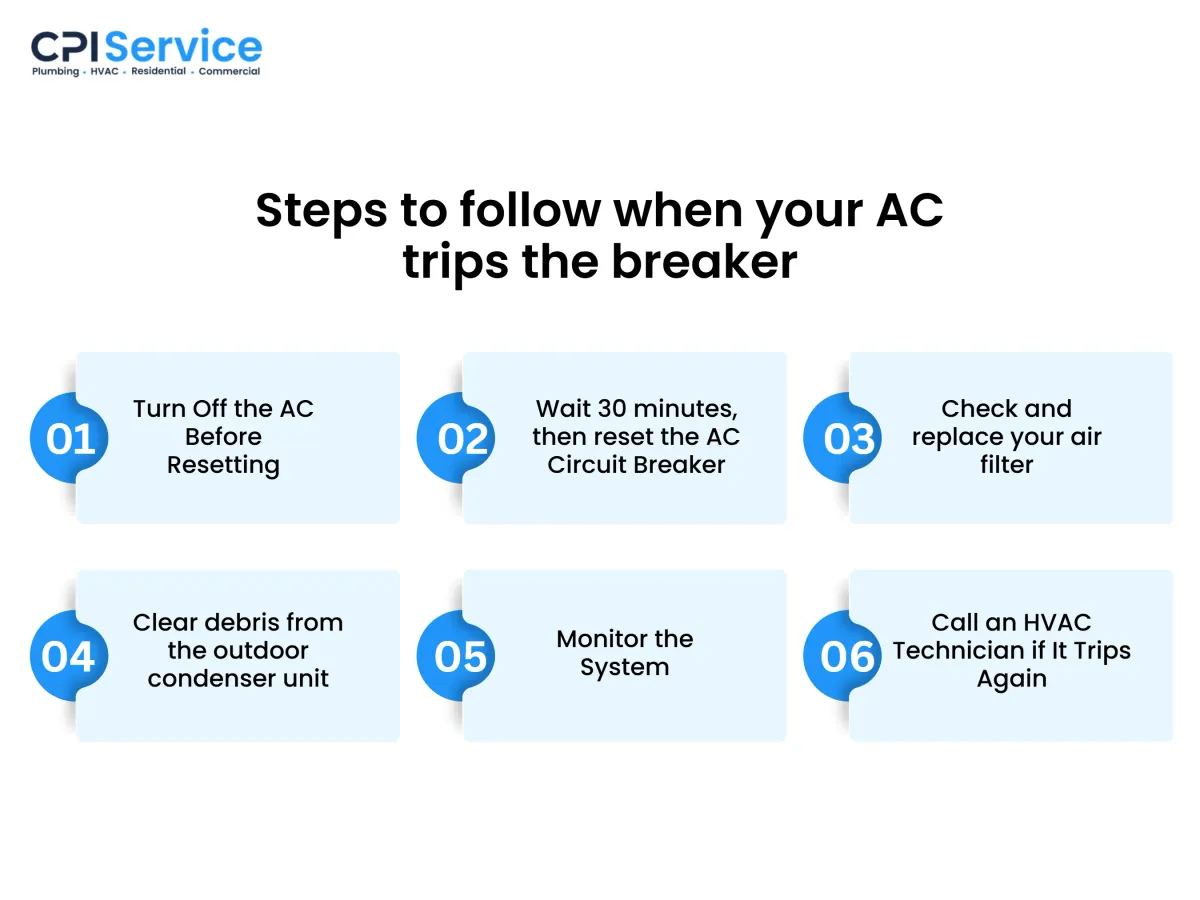
These six steps rule out the common, simple causes (restricted airflow and a dirty coil) and keep you from doing more damage while you find out whether it’s something more serious.
Step 1: Turn Off the AC Before Resetting
Turn the AC off at the thermostat before you touch the breaker. If the system is calling for cooling when the power comes back, the compressor tries to start immediately, under load, which can trip the breaker again and strain the motors and compressor. If the breaker trips again the moment you reset it, stop: forcing power through a fault is a fire and shock hazard.
Step 2: Wait 30 Minutes, Then Reset the Breaker
With the thermostat off, wait about 30 minutes before resetting the breaker. The pause lets the refrigerant pressures in the compressor equalize and gives its thermal overload protection time to cool. Restarting too soon makes the compressor start against high pressure, which can overheat it and trip the breaker again. To reset, push the breaker fully to Off, then back to On.
Step 3: Check and Replace the Air Filter
A dirty filter chokes airflow, so the blower and compressor work harder and draw more power.
- Find the filter in the air handler or behind the return grille.
- Take it out and look at it.
- Replace it if it’s dirty or you can’t see light through it.
- Put the new filter in with the airflow arrow pointing toward the unit.
Step 4: Clear Debris From the Outdoor Unit
Leaves, grass clippings and dirt on the outdoor coil block heat transfer and make the whole system run hotter. Before you start, turn off the power at the thermostat, the breaker panel and the outdoor disconnect box. Wear work gloves, pull back plants and debris to leave at least 2 feet of clear space all around the unit, and rinse the coil gently with a hose.
Step 5: Turn It Back On and Monitor the System
Set the thermostat to cool and watch the first few cycles. Does it run smoothly, trip after a few minutes, or shut down only during the hottest part of the afternoon? Note when it trips; the timing helps a technician narrow down the cause (see the quick-diagnosis table above). If it runs normally, keep an eye on it for a few days.
Step 6: Call an AC Technician If It Trips Again
If the breaker trips again after the filter and coil are clean, stop troubleshooting and leave it off. Repeated trips point to a problem a homeowner can’t safely fix, such as a failing compressor, a bad capacitor, a refrigerant leak or burnt wiring. Resetting it over and over risks damaging the compressor windings and starting an electrical fire.
When to Call for Emergency AC Service
Some signs mean you should leave the AC off and call right away rather than wait. Call for emergency AC service in San Jose if you notice:
- Burning or electrical odors. Overheated wiring, a failing motor or a short can damage parts and start a fire.
- A breaker that trips immediately when you reset it. That points to a short circuit, a ground fault or a compressor problem: an unsafe electrical condition.
- Buzzing, clicking or grinding noises. Failing electrical parts, a bad fan motor or compressor damage; running the system can make it worse.
- Sparks, smoke or melted parts. Active electrical damage that can quickly turn into a fire.
- Lights dimming hard when the AC starts. Excessive current draw or an overloaded circuit, often a hard-starting compressor or a developing electrical fault.
- Dangerously high indoor temperatures, especially with children, older adults or anyone with a medical condition at home.
- Repeated breaker trips. An unresolved problem, such as a failing compressor, damaged wiring or a weak capacitor, that leads to equipment damage and electrical hazards if ignored.
Breaker Trips in San Jose Homes
- Older electrical panels. Many San Jose homes built in the 1950s to 1970s still have their original 100-amp service, and some have older panel brands, such as Federal Pacific and Zinsco, that electricians often recommend replacing. If your AC is on an old panel, have an electrician check it.
- Heat waves and first hot days. A capacitor that weakened over the winter, or a coil full of spring debris, often shows up as a breaker trip on the first hot afternoons.
- Outages and surges. Power outages and the surge when power returns can damage capacitors and electronics. A surge protector at the outdoor unit is inexpensive protection.
- Heat pump upgrades. If you’re replacing an AC with a heat pump, check the circuit size and panel capacity as part of the estimate.
How to Prevent Your AC From Tripping the Breaker
Most trips start with a system that’s working harder than it should. These habits keep the load down:
- Replace the air filter every 1 to 3 months so air moves freely.
- Keep the outdoor unit clear, with at least 2 feet of clearance on all sides so it can release heat.
- Clean the coil gently with a soft brush or a gentle hose spray, with the power off, so the compressor doesn’t have to draw extra current.
- Reset the system properly after an outage or surge: thermostat off, AC breaker off, wait 30 minutes, then the breaker and thermostat back on. This can clear a temporary fault and lets the system restart without strain. It isn’t a fix for a breaker that keeps tripping.
- Have the capacitor, contactor and electrical connections checked at an annual tune-up; our membership plans include one.
- Fix refrigerant leaks properly and watch for short cycling, which adds hard starts.
If your AC keeps tripping the breaker, CPI Service can find the cause anywhere in San Jose and the South Bay. Schedule AC repair, request a free estimate or call (408) 978-3093.
Frequently Asked Questions
Is it safe to keep resetting my AC breaker?
Reset it once. If it trips again, leave it off and call for service. Repeatedly forcing power into a fault can damage the compressor and wiring and is a fire risk.
How long should I wait before resetting the AC breaker?
Turn the AC off at the thermostat and wait about 30 minutes. That lets the compressor's pressures equalize and its overload protection cool down, so it isn't restarting under strain.
Can a bad capacitor trip the breaker?
Yes. Without a good capacitor, the compressor struggles to start and draws a surge of current, which can trip the breaker. It's one of the most common causes.
Should my central AC be on its own circuit?
Yes. A central air conditioner's outdoor unit should have its own dedicated circuit and breaker sized for it. If the breaker or wiring is undersized, or the panel is old, have an electrician check it.
Why does my AC trip the breaker only on hot afternoons?
On the hottest part of the day the compressor works hardest and draws the most current. A dirty filter or outdoor coil, low refrigerant, a weak capacitor or a loose connection that heats up can push it over the breaker's limit only then. If cleaning the filter and coil doesn't stop it, have a technician test the system.
Is an AC tripping the breaker an emergency?
It is if the breaker trips the instant you reset it, or you notice burning smells, smoke, sparks, melted parts or lights dimming hard when the AC starts. Leave the power off and call right away. It's also urgent when the house is getting dangerously hot for children, older adults or anyone with a medical condition.
CPI Service is a great company to use for HVAC too! Our A/C stopped working during the recent heatwave & another company wanted to replace our whole unit. Then we called CPI & they found it didn’t need to be replaced, they fixed it that day! I really appreciate a company that responds quickly, is very professional & reasonably priced!!! I’ll be using them for sure in the future.
Jaycee V., Google review
Read more reviews →Serving San Jose and the South Bay
CPI Service is based at 2880 Aiello Dr in San Jose and serves homes and businesses across the South Bay and the Peninsula. See all the areas we serve.