
Does Homeowners Insurance Cover Sewer Line Repairs?

Table of Contents
- Sewer Line Coverage and Repairs
- When Does Homeowners Insurance Not Cover Sewer Line Damage?
- Service Line Coverage and Endorsements
- Septic System Coverage
- How to Submit a Claim for Sewer Line Damage
- How to Prevent Sewer Line Damage
- When to Call a Professional Plumber
- If You Need a Repair Anyway
- Sewer Lines and Insurance in San Jose
- Frequently Asked Questions
Most homeowners insurance policies don’t pay to repair a sewer line that has failed from age, wear or tree roots, the usual ways San Jose and South Bay laterals fail. Coverage usually comes into play for sudden, accidental damage, through optional service line coverage, or through a sewer backup endorsement for damage inside the home.
Policies vary widely, so read yours before you need it. Where a home has its original clay or cast-iron lateral under mature trees, as many here do, it’s worth knowing exactly what you have.
Standard policies are written to cover the house and your belongings against sudden events. The pipes underneath are a different matter: slow deterioration, clogs from neglect and problems that build up over years are excluded. Knowing those exclusions, the add-ons that fill the gaps and how the claims process works helps you avoid surprises when a line backs up.
Sewer Line Coverage and Repairs
A homeowners policy typically covers a sewer line repair only when the damage is sudden and accidental and comes from a peril the policy covers. To get a repair paid for, you file a claim, document the damage and work with an adjuster who decides whether the cause is covered.
What Is Covered Under Homeowners Insurance for Sewer Lines?
Depending on the policy, coverage may apply to:
- Sudden, accidental damage to the line from a covered cause, such as fire, an explosion or a falling object
- Repairs and replacement under service line coverage, an optional endorsement many insurers offer for underground lines you own (sewer lateral, water line, sometimes gas and electric), up to a set limit
- Damage inside the house from a sewage backup, usually only with a water or sewer backup endorsement
- Related costs like excavation and restoring the yard or driveway, under some service line endorsements
Common Causes of Sewer Line Damage That May Be Covered
Insurers look at the cause first. These are the causes most likely to be accepted, under the base policy or an endorsement:
- Accidental breakage: a line crushed or broken by an unforeseen event, such as a construction accident, digging or a heavy vehicle driving over a shallow line (often under service line coverage)
- Sudden rupture: a line that breaks suddenly rather than wearing out over time
- Storm events from a covered peril: for example, a tree blown over in a windstorm that tears up the line with its roots. Flooding itself is excluded from standard policies
- Freezing: a line that cracks in a sudden freeze, usually under service line coverage; rare for buried sewer lines in San Jose’s mild climate
Gradual problems are not on this list. Tree roots that grow into the pipe over years are generally excluded from the base policy, though some service line endorsements cover root damage.
What Is the Process for Repairing or Replacing Sewer Lines Under Homeowners Insurance?
The process has three parts: filing the claim, the adjuster’s assessment, and the repair. If the claim is approved, the insurer pays for the covered repair up to the policy limit, minus your deductible, and you coordinate the work with a licensed plumber. In San Jose a sewer line repair or replacement needs a permit and inspection, so make sure the estimate includes them. The claim steps are below.
When Does Home Insurance Cover Sewer Line Damage?
Home insurance pays when the damage comes from a sudden event the policy names as a covered peril. Review your policy’s covered perils and exclusions before you need them. The cases most likely to be covered are:
- Sudden ruptures caused by a covered peril
- Accidental breakage, such as a construction mishap or heavy vehicle impact
- Failures your endorsement names, such as root intrusion, wear or collapse, if you added service line coverage
Damage from neglect, wear and tear, gradual deterioration or root intrusion is generally excluded unless an endorsement adds it.
When Does Homeowners Insurance Not Cover Sewer Line Damage?
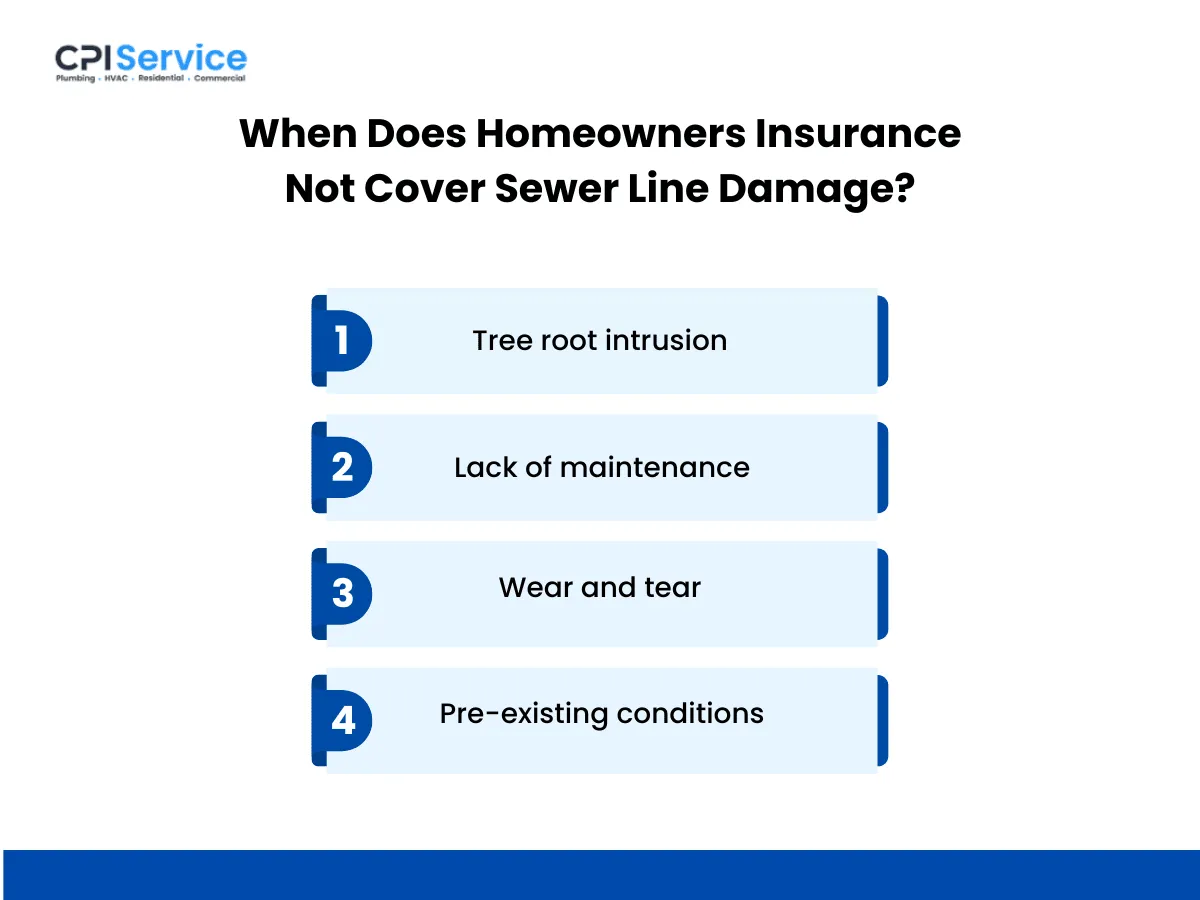
Insurance doesn’t cover sewer line damage that results from neglect, wear and tear or gradual deterioration. Insurers treat these as preventable or ongoing problems rather than sudden, accidental events, and most policies exclude them in writing.
Common Exclusions for Sewer Line Damage
- Tree roots, treated as a maintenance issue by most standard policies
- Wear and tear and old age, such as corroded cast iron or cracked clay
- Lack of maintenance, such as repeated grease clogs
- Pre-existing conditions known before the policy started
- Flooding from outside, which needs separate flood insurance
- Earthquake and earth movement, excluded from standard homeowners policies
- The part of the line under the street, if the city or district owns it
Why Tree Roots, Floods and Negligence Aren’t Covered
Tree roots look for water. Small roots work into cracks and joints in a sewer line and grow until they block or break it. Because that happens over years and can be found with a camera inspection and cleared, insurers see it as preventable.
Floods are excluded from standard homeowners policies; flood damage needs a separate flood policy, such as one through the National Flood Insurance Program. Earthquakes are excluded too; in California, earthquake coverage is bought separately, for example through the California Earthquake Authority’s participating insurers. If a quake or flood damages your lateral, check whether that separate policy covers underground lines before assuming it does.
Negligence, such as ignoring slow drains, never clearing roots or putting grease down the sink for years, falls outside coverage because the damage could have been prevented.
How Wear and Tear, Maintenance Issues and Pre-Existing Problems Affect Coverage
Pipes age. Cast iron corrodes, clay joints shift and crack, and Orangeburg (tar paper) pipe collapses, all slowly. Damage from that aging is excluded because it isn’t sudden. Problems that come from poor upkeep, like clogs and leaks that were never addressed, are excluded for the same reason. And a pre-existing condition, such as a sagging or broken line that was already there when the policy started, isn’t covered because the damage happened before the coverage did.
This is why a camera inspection before you buy a home matters: it shows the condition of the lateral while you can still negotiate the repair. See sewer inspection cost.
What Homeowners Can Do to Improve Their Coverage
- Read the policy: find the exclusions for water backup, earth movement and underground lines
- Add endorsements: service line coverage for the pipe itself, and water or sewer backup coverage for damage inside
- Maintain the line: clear roots, keep grease and wipes out, and have older lines camera-inspected
- Keep records: receipts and reports for cleaning, inspections and repairs help show a later failure was sudden, not neglect
Service Line Coverage and Endorsements
A standard policy leaves the underground lines you own (sewer lateral, water service, sometimes gas and electric) uncovered for most failures. Service line coverage and backup endorsements are the optional add-ons that fill those gaps. Without them, you pay the whole repair yourself, and a sewer lateral replacement is one of the bigger plumbing bills a homeowner faces.
What Is Service Line Coverage?
Service line coverage is an optional endorsement that pays to repair or replace underground utility lines on your property, such as the sewer lateral, the water line from the meter, and gas or electric lines. Depending on the endorsement, it can cover failures that the base policy excludes, like root intrusion, freezing, collapse or damage from a vehicle or digging, up to a set limit per claim. It’s not part of a basic policy, so ask your insurer whether it can be added.
How to Add Service Line Coverage to Your Policy
- Call your insurer or agent and ask whether service line coverage is available on your policy. Not every company offers it.
- Review what it covers: which lines, which causes (roots, wear, collapse), and whether excavation, restoring landscaping or pavement, and temporary housing are included.
- Check the cost and limits: the premium increase, the deductible and the limit per claim.
- Add the endorsement once you’re satisfied with the terms, and keep the updated declarations page.
Endorsements are usually inexpensive compared with the repairs they cover, but the limit matters: compare it with the cost of a sewer line replacement.
What Service Line Coverage Includes and Excludes
Terms vary by insurer, so read the endorsement itself. As a general pattern:
| Often included | Often excluded |
|---|---|
| Root intrusion (in many, not all, endorsements) | Wear and tear, unless the endorsement names it |
| Sudden collapse or breakage | Neglect and lack of maintenance |
| Freezing | Pre-existing conditions |
| Damage from digging, construction or a vehicle | Earthquake and flood, unless separately insured |
| Excavation and labor to repair the line | Lines owned by the city or utility |
| Restoring landscaping or pavement (some endorsements) | Damage inside the house (that’s backup coverage) |
Sewer Backup Coverage Is Separate
Service line coverage pays for the pipe. Damage inside the house when sewage backs up through a floor drain, toilet or tub (flooring, drywall, belongings and cleanup) usually needs a separate water or sewer backup endorsement. According to the Insurance Information Institute, sewer backup coverage is available from most providers for a nominal cost. If your home has fixtures below street level, or the line has backed up before, it’s worth pricing both.
Septic System Coverage
Most homes in the City of San Jose are connected to the city sewer. Septic systems are found mainly in rural and hillside parts of the South Bay, such as unincorporated Santa Clara County around Morgan Hill, San Martin and Gilroy. If your home has one, the coverage questions are similar.
Does Homeowners Insurance Cover Septic Systems?
Usually not under a standard policy. Tank failures, clogs and drain field problems from neglect, missed pumping or age are excluded. Some insurers offer an optional endorsement that helps pay for repair or replacement when the system fails suddenly, such as a tank collapse or an accidental malfunction.
How to Add Septic System Coverage
The steps match service line coverage: ask your insurer whether a septic endorsement is available, review which failures it covers (tank collapse, accidental damage, the drain field), check the premium, deductible and limit, and have it added to the policy.
What Is Covered and Excluded in Septic System Failures?
| Typically covered (with an endorsement) | Typically excluded |
|---|---|
| Sudden septic tank collapse | Neglect, such as tanks that were never pumped |
| Accidental malfunction | Wear and tear and gradual deterioration |
| Labor and materials to repair or replace the system | Pre-existing conditions |
Keep pumping and inspection records; like sewer maintenance records, they help show a failure wasn’t caused by neglect.
How to Submit a Claim for Sewer Line Damage
Start promptly: notify your insurer, document everything and give the adjuster what they need to assess the cause. If the claim is approved, you’ll be paid for the covered repair, less the deductible.
Step-by-Step Guide for Filing a Sewer Line Damage Claim
- Stop using water and limit the damage. Shut off the water if needed, and keep people and pets away from sewage, which carries bacteria. Wear gloves and boots if you must go near it.
- Call a plumber to clear the line and camera-inspect it. The footage shows the cause, which is what the claim turns on.
- Document everything: photos and video of the damage before cleanup, the camera video, and the plumber’s written findings and estimate.
- Call your insurer promptly and ask whether service line or backup coverage applies.
- File the claim with the documentation and any forms the insurer requires.
- Meet the adjuster with the documentation; your plumber can explain the findings.
- Keep receipts for cleanup, repairs and any temporary lodging.
Prompt cleanup also matters: drying, disinfecting and removing wet carpet and drywall quickly helps prevent mold and further damage, and insurers expect you to limit the loss.
What Documentation Is Needed for a Claim?
- Photos and video of the damage and the affected areas, taken before cleanup
- Sewer camera footage and the plumber’s written report on the cause and location
- Repair estimates from a licensed plumber, including permit and restoration
- Claim forms your insurer requires
- Maintenance records: past cleaning, inspections and repairs
- Proof the damage was sudden, such as photos of the event that caused it
- An itemized list of damaged belongings, with receipts where you have them
How to Work with an Insurance Adjuster
The adjuster evaluates the damage, decides whether it’s covered and sets the payment. To keep the claim moving:
- Share the documentation: photos, camera footage, estimates and maintenance records
- Make the damage available for an in-person inspection, and have your plumber explain the findings if needed
- Ask questions: have the adjuster explain what’s covered, what isn’t and why
- Follow up regularly and send any additional information promptly
How to Prevent Sewer Line Damage
Because most sewer failures aren’t covered, prevention is the best protection. Most of it is simple:
- Regular inspections. A camera inspection finds roots, cracks, sags and corrosion before they cause a backup. Older lines are worth checking every few years. CPI offers a free sewer line inspection with an accessible mainline cleanout.
- Tree root management. Plant trees away from the lateral and have roots cleared from the line before they block it. See how to get rid of roots in a sewer line.
- Proper disposal. Pour cooking grease into a container and throw it away once it cools, and don’t flush wipes, paper towels or feminine products, as the Insurance Information Institute advises.
- Clearing minor clogs early. A plunger or a small hand snake can clear a single slow drain. If several drains are slow or the clog keeps coming back, call a plumber before it backs up; skip chemical drain cleaners, which don’t clear a main line and can damage older pipes.
- A backwater valve. A properly installed valve lets sewage out but not back in, which protects fixtures below street level. Installing one means cutting into the sewer line, so have a licensed plumber do it.
- Keep rainwater out. Don’t connect downspouts, sump pumps or yard drains to the sewer line.
- Freezing. Buried sewer lines rarely freeze in San Jose’s climate, but exposed pipes in unheated crawl spaces or garages are worth insulating.
See sewer line maintenance tips and signs of a clogged main sewer line.
When to Call a Professional Plumber
A plunger handles one slow drain. These signs point to a problem in the sewer line that needs a plumber with a snake, jetter and camera:
- Persistent clogs that come back after plunging or snaking
- Slow drains in several fixtures at once, which points to the main line
- Gurgling from drains or toilets, a sign of a blockage or a venting problem
- Sewage backing up into tubs, showers or floor drains. Call right away, and keep people away from it
- Sewer odors inside or in the yard, or soggy spots over the line
A licensed plumber can clear the line, find the cause with a camera and recommend a repair, from drain cleaning to a spot repair or trenchless replacement.
If You Need a Repair Anyway
For typical prices and methods, see sewer line replacement cost and sewer line repair methods. Sewer repairs in San Jose need a permit and inspection.
Sewer Lines and Insurance in San Jose
- Older laterals. Root and age damage, the most common failures in 1950s to 1970s South Bay homes, are the least likely to be covered.
- Service line add-ons. For older homes with original laterals, an endorsement can be worth pricing.
- Ownership. In San Jose, owners are responsible for the lateral to the main, though City crews repair the section between an approved property-line cleanout and the main. Other cities differ; check before filing a claim.
- City main backups. If neighbors are backing up too, the City’s main may be blocked. Call the City’s 24/7 sewer line at (408) 794-1900; see causes of sewer backup.
CPI Service repairs and replaces sewer lines throughout San Jose and the South Bay and provides camera footage and written findings for claims. See sewer line replacement, request a free estimate or call (408) 978-3093.
Frequently Asked Questions
Does homeowners insurance cover tree roots in the sewer line?
Usually not. Root intrusion is generally treated as a maintenance issue. Some service line endorsements do cover root damage; read the policy wording.
What is service line coverage?
An optional add-on (endorsement) offered by many insurers that pays to repair or replace underground utility lines you own, such as the sewer lateral and water service line, after covered failures, usually up to a set limit.
Is sewage backup damage inside the house covered?
Often only with a water or sewer backup endorsement. Many standard policies exclude backup damage, so check for that coverage separately.
Does homeowners insurance cover septic systems?
Usually not under a standard policy, especially for failures from age, neglect or missed pumping. Some insurers offer an optional endorsement for sudden failures such as a tank collapse. Most homes in the City of San Jose are on the city sewer; septic systems are found mainly in rural and hillside parts of the South Bay.
Will my insurer pay if I didn't maintain the sewer line?
Probably not. Damage from neglect, such as repeated grease clogs or roots that were never cleared, is a standard exclusion. Records of cleaning, camera inspections and repairs help show that a failure was sudden rather than the result of poor upkeep.
Consolidated Plumbing has great plumbers, good pricing, and are always there when you need a plumber. All of their plumbers are professional and friendly. I would definitely recommend CPI for any of your plumbing needs.
Diana Q., Yelp review
Read more reviews →Serving San Jose and the South Bay
CPI Service is based at 2880 Aiello Dr in San Jose and serves homes and businesses across the South Bay and the Peninsula. See all the areas we serve.