12 Signs of a Clogged Drain and What Each One Means
Table of Contents
Clogged drains in San Jose and South Bay homes give warning signs long before they stop completely. Most clogs build up slowly from hair, grease, soap scum and food scraps, and catching them early keeps a five-minute fix from becoming a backup, water damage or a pipe repair.
Some signs point to a simple clog in one sink or tub you can clear yourself; others mean the main sewer line is blocked, which needs a plumber before it backs up. In homes with older drain lines and clay sewer laterals, the main line signs deserve quick attention.
This post helps you read the symptoms. For why drains clog in the first place and the habits that prevent it, see common causes of clogged drains and how to prevent them.
These are the 12 most common signs of a clogged drain:
- Slow drainage in sinks or tubs
- Standing water that won’t drain
- Gurgling sounds from drains
- Bad odors from the P-trap
- Drain flies, insects or rodents
- The same drain clogging again and again
- Several clogged drains at once
- Air bubbles in the toilet
- Water backing up into nearby fixtures
- Overflowing toilets or tubs
- A persistent sewer smell indoors
- Unusual wet spots on floors or the lawn
Signs of a Clog in One Drain
These six signs usually mean a clog in one fixture’s drain or trap. You can clear most of them yourself; see how to unclog a drain and how to unclog a sink drain.
1. Slow Drainage in Sinks or Tubs
Water that drains slowly is the earliest sign of a clog. Hair, grease, soap scum and food particles form a sticky sludge on the pipe walls that narrows the opening a little more every week. Left alone, the buildup closes the drain completely and water starts backing up into the fixture. Clear it while it’s still slow: clean the stopper or strainer, then use a plunger or a hand drain snake. Enzyme drain cleaners help keep organic buildup down over time but work slowly.
2. Standing Water That Won’t Drain
Water that sits in a sink, tub or shower means the clog has hardened into a solid blockage, or that it sits farther down the pipe where it can affect more than one fixture. Standing water seeps into cabinets, caulk and flooring and grows mold. Start with a plunger, then a drain snake for deeper clogs. If the water still won’t go down, a plumber can clear the line with a drain machine or, for heavy grease and scale, hydro jetting.
3. Gurgling Sounds from Drains
Gurgling is air being forced through water as it squeezes past a partial clog in the drain or a blockage in the vent pipe. You may hear it after a toilet flushes or a sink drains. A plunger or drain snake often fixes a clog in one drain. If the gurgling continues, the clog is deeper or the vent is blocked; a plumber can check the vent and run a camera to find a deeper clog before it causes a backup.
4. Bad Odors Coming from the P-Trap
The P-trap is the U-shaped bend under a sink, tub or shower. It holds a little water that seals sewer gas out of the house. When that water evaporates, because the fixture hasn’t been used in a while or the trap is cracked, sewer gas comes up the drain. Food, grease and hair rotting in the trap smell too. Run water for a minute in drains you rarely use to refill the seal. If the smell stays, clean the trap (see step 5 under what to do, below) and check it for cracks or a loose slip nut, and replace it if it’s damaged.
5. Drain Flies, Insects or Rodents
Small, moth-like drain flies around a sink, tub or floor drain breed in the organic gunk inside the pipe. Cockroaches are drawn to the same damp buildup, and rats can travel through damaged sewer lines. Clean the drain with a brush and an enzyme cleaner to remove the film the flies breed in. If they keep coming back, or you see signs of rodents, have a plumber inspect the drains and sewer line for buildup or a break, and call a pest control professional to handle the pests.
6. The Same Drain Keeps Clogging
A drain that clogs again a few weeks after you clear it usually still has buildup on the pipe walls past where a plunger or hand snake reaches, or a problem in the pipe itself: a belly where waste settles, roots, or scale in an old galvanized or cast-iron line. A plumber can clean the line fully and run a camera to see why it keeps happening.
Signs of a Main Sewer Line Problem
These six signs mean the clog is beyond one fixture: in a shared drain or in the main sewer line that carries everything out of the house. If you see them, stop using water (including the washing machine and dishwasher) and call a plumber; see signs of a clogged main sewer line. CPI’s free sewer line inspection special covers a camera inspection for homes with an accessible main line cleanout.
7. Multiple Clogged Drains in the House
When toilets, sinks, tubs and floor drains are slow at the same time, the blockage is almost always in the main sewer line, where every drain meets. Tree roots, cooking grease and fat, and wipes or small objects are the usual causes; the EPA names the same materials, including wipes marked “flushable”, behind sewer blockages (EPA). A plunger or snake on each drain won’t reach it. A plumber will clear the main line from the cleanout with a cable machine or hydro jetting, and a camera inspection shows whether roots or a damaged pipe caused it.
8. Air Bubbles in the Toilet
Bubbles rising in the toilet bowl, especially when a sink or tub drains, mean air is being pushed back through the toilet. The cause is either a clog in the drain the fixtures share, which forces air ahead of the draining water, or a blocked vent pipe that keeps air from flowing freely. Try a plunger on the toilet first. If the bubbling continues, call a plumber: checking and clearing a vent means working on the roof, and a deeper clog in the sewer line needs professional equipment.
9. Water Backing Up into Nearby Fixtures
Water rising in the tub when you flush the toilet, or bubbling up in a sink when the shower drains, means a clog in the main drain or a shared line is sending wastewater back into the nearest connected fixture. If it keeps happening, sewage can contaminate the fixture and the floor around it. A plunger may clear a clog close to the fixture; if the backflow continues, call a plumber to clear the deeper blockage.
10. Overflowing Toilets or Tubs
A toilet or tub that overflows, especially when other fixtures are running, usually has a blockage in the main drain or sewer line from tree roots, grease, too much toilet paper or foreign objects. Overflow water can damage floors, walls and the ceilings below, and sewage carries bacteria and viruses that can make people sick. Close the toilet’s shutoff valve (behind the toilet, near the floor) right away and stop using water elsewhere. Try a plunger once the water has settled; if it doesn’t clear, a plumber can snake or jet the main line. Clean up sewage with gloves and disinfectant, and keep children and pets away.
11. Persistent Sewer Smell Indoors
A strong sewer odor that lingers in a bathroom, kitchen or laundry comes from sewer gas getting into the house: through a dry or damaged P-trap, a broken drain, a loose toilet seal, or a vent blocked by leaves, debris or an animal nest that pushes gas back through the drains. Sewer gas can cause headaches, nausea and dizziness, and in high concentrations it’s dangerous. Air out the house, refill any rarely used traps, and call a licensed plumber to find the source; vent and drain inspections are a job for a pro.
12. Unusual Wet Spots on Floors or Lawn
Wet spots on floors, carpets, walls or ceilings near plumbing can come from a leaking drain or fitting, or from a backup that’s spilling out of a joint. Outdoors, soggy ground or unusually green patches over the sewer line can mean a leaking or broken lateral, or a blocked line seeping into the soil. Left alone, the water damages structure and grows mold. Check visible pipes and fixtures for drips; for anything under the floor or underground, a plumber can use a camera, moisture meters and leak detection to find it. See signs you need leak detection.
What About Low Water Pressure?
Low water pressure is often listed as a sign of a clogged drain, but it isn’t one: drains and water supply lines are separate systems, so a drain clog can’t lower the pressure at a faucet. Low pressure comes from the supply side. Check for a clogged faucet aerator or showerhead, a partly closed valve and visible leaks first. A pressure gauge on a hose bibb shows whether the whole house is low, which points to a failing pressure regulator, a leak, or corroded galvanized pipe, common in older South Bay homes. See how repiping improves water pressure.
What Happens if You Ignore These Clogged Drain Signs?
A slow drain rarely fixes itself. Small clogs grow until the drain stops completely or water backs up into sinks, tubs and toilets, and standing water and sewage bring mold and bacteria with them. Acting early is the cheapest fix.
- Water damage to floors and walls. Backed-up water seeps into wood floors, drywall, cabinets and carpet, causing stains, warping and, over time, weakened subfloors and framing. Repairing floors, walls and insulation costs far more than clearing a drain.
- Sewer backups and flooding. A serious clog can push wastewater out through the lowest fixtures, contaminating floors, walls and furniture and requiring professional cleanup. See signs of a sewer backup.
- Higher repair costs. A clog that’s easy to clear today can turn into repeated service calls, a damaged pipe or a sewer line repair if roots or grease are left to grow.
- Health risks from mold and contaminants. Stagnant water and sewage are a breeding ground for mold, mildew and harmful bacteria, which can cause allergies, breathing problems and infections. Mold remediation is expensive, another reason to fix drainage problems early.
What to Do If You Suspect a Clogged Drain
Check which drains are affected first. One slow drain is usually a local clog you can try to clear; several slow drains, or any backup, point to the main line and a call to a plumber. For a single drain:
- Use a plunger. For sinks, tubs and toilets, cover the drain completely with the plunger cup and plunge firmly to dislodge the clog. Use a flange plunger for toilets, and cover a sink’s or tub’s overflow opening with a wet rag.
- Run very hot tap water. For soap and light grease in a kitchen or bathroom sink, run the hottest tap water for a few minutes. Use hot tap water, not boiling water: PVC drain pipe is rated for a maximum of 140°F, and hotter water can damage it (Charlotte Pipe). Boiling water can also crack porcelain.
- Use a drain snake. For clogs deeper in the pipe, a hand drain snake or auger reaches and breaks up the obstruction or pulls it out.
- Try an enzyme cleaner. For organic buildup like food and grease, enzyme cleaners break down the material without damaging pipes. They work slowly and are better for maintenance than for a full clog. Don’t plunge or snake right after using a chemical drain cleaner; the splash can burn skin and eyes.
- Remove the trap. If the clog is in the P-trap under a sink, put a bucket underneath, loosen the slip nuts, remove the trap and clean it out, then reassemble it and run water to check for leaks.
- Call a professional plumber. If the clog persists, affects several drains, or is in the main sewer line, a plumber can run a camera inspection and clear it with a drain machine or hydro jetting.
DIY Fixes vs. Hiring a Professional Plumber
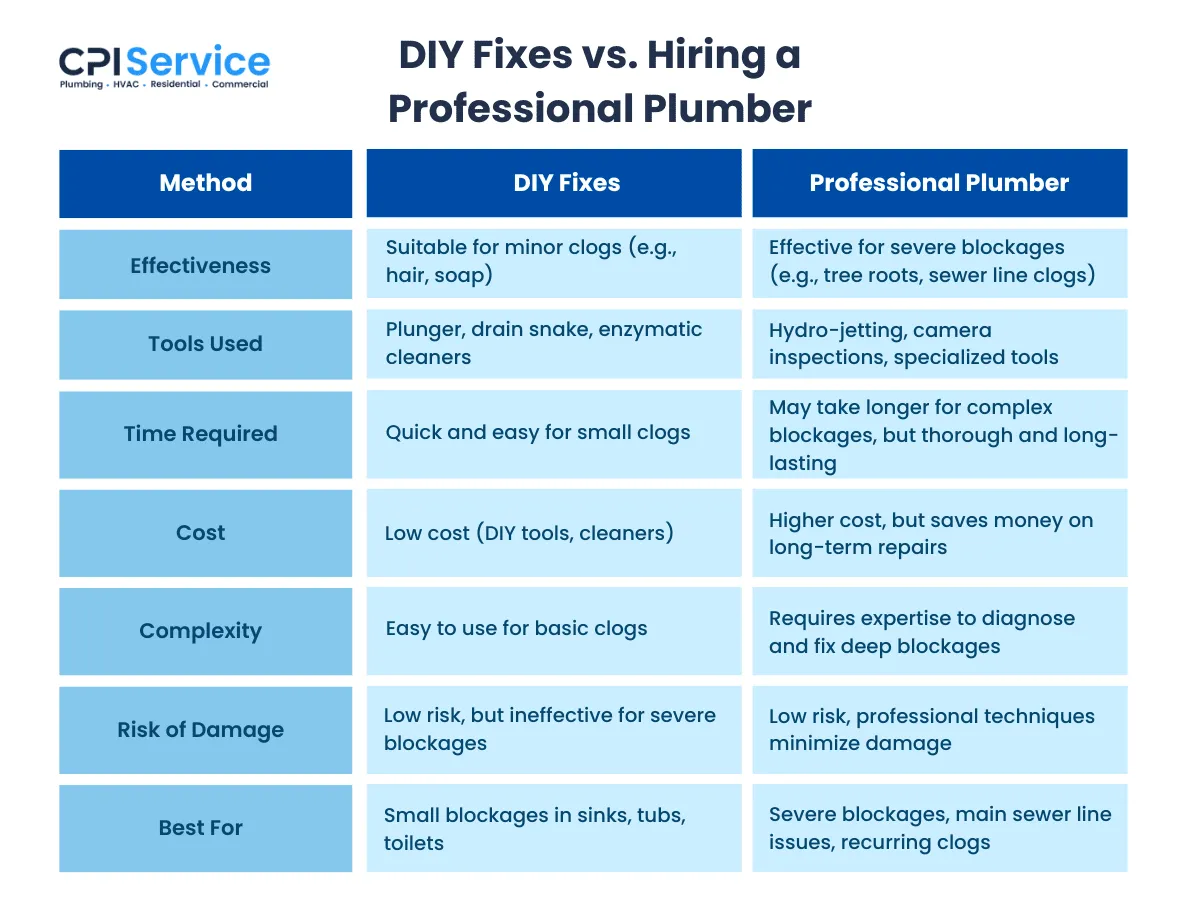
DIY tools handle minor clogs in sinks, tubs and toilets. Deep, stubborn clogs and anything in the main sewer line need a plumber’s equipment.
- Plunger and drain snake: quick, inexpensive and effective for hair and soap clogs in one fixture.
- Enzyme cleaners: break down grease and food without harming pipes, but slowly, and they won’t clear a hard blockage.
- Hydro jetting: high-pressure water scours the inside of the pipe, removing grease, scale and roots that a cable only punches through. See hydro jetting cost.
- Camera inspection: shows exactly where the blockage is and what caused it, so the fix is targeted.
- Cost and time: DIY is cheaper and faster for minor clogs; a plumber costs more up front but solves recurring and main line problems that DIY can’t reach.
We don’t recommend chemical drain cleaners or boiling water. In San Jose, professional drain cleaning (snaking) usually costs $250 to $600, hydro jetting a branch line $400 to $700, hydro jetting the main sewer line $1,500 to $2,500, and a sewer camera inspection $300 to $600. See drain cleaning cost.
Drain Clogs in San Jose Homes
- Older drain lines. Cast-iron and galvanized drains in older South Bay homes narrow with buildup.
- Roots in laterals. Recurring main line clogs often mean roots in clay sewer laterals.
- Kitchen grease. Years of grease in kitchen lines is one of the most common clogs we clear.
CPI Service clears drains and sewer lines throughout San Jose and the South Bay. See drain and sewer cleaning, request a free estimate or call (408) 978-3093.
Frequently Asked Questions
Can a clogged drain cause low water pressure?
No. Drains and water supply lines are separate systems. Low water pressure points to the supply side: a failing pressure regulator, corroded galvanized pipe or a leak. See our water pressure and repiping posts.
What happens if I ignore a slow drain?
It usually gets worse until it stops completely or backs up. A main line clog can push sewage into the lowest fixtures and damage floors and walls.
Prompt response, polite, knowledgeable. Good at explaining options and following through until solved.
Pauline M., Google review
Read more reviews →Serving San Jose and the South Bay
CPI Service is based at 2880 Aiello Dr in San Jose and serves homes and businesses across the South Bay and the Peninsula. See all the areas we serve.