How Repiping Can Improve Low Water Pressure
Table of Contents
- How Repiping Fixes Low Water Pressure
- Other Causes of Low Pressure (Check These First)
- Repiping Process: What to Expect
- Long-Term Benefits of Repiping for Water Pressure
- Repiping vs. Temporary Fixes for Low Water Pressure
- When Repiping Is the Best Long-Term Solution
- Low Water Pressure in San Jose Homes
- Frequently Asked Questions
Weak showers, faucets that sputter when the washer runs, and a toilet that takes forever to refill are classic signs of low water pressure. In many older San Jose and South Bay homes, the cause is the pipes themselves: original galvanized steel corrodes from the inside until a 3/4-inch pipe has the opening of a straw.
When that’s the problem, repiping restores full pressure. But low pressure has other causes too, so it’s worth confirming what’s behind it before you repipe.
Homes built before the 1970s are the most likely to have the problem. Rust, scale and mineral deposits narrow the pipe a little more every year, so pressure fades slowly until showers are weak, appliances fill slowly and pressure drops whenever two fixtures run at once. Repiping replaces the old lines with PEX or copper, which have smooth interiors and resist scale, and can correct undersized lines at the same time. Unlike a new aerator or a booster pump, it removes the restriction itself, so the improvement lasts.
How Repiping Fixes Low Water Pressure
Repiping restores pressure by replacing corroded or blocked pipe, correcting undersized lines, removing the leaks that bleed pressure, and laying out the system so every fixture gets its share. Together these fix both today’s restriction and the decline that would continue in old pipe.
1. Replacement of Corroded or Blocked Pipes
Galvanized steel rusts from the inside. The rust and scale narrow the opening and roughen the wall, which adds friction and cuts flow. Hard water adds calcium and magnesium deposits on top. By the time pressure is noticeably weak, the inside of an old galvanized pipe can be mostly closed off, and the narrowest points are often at the threaded fittings.
A repipe replaces those lines with full-bore PEX or copper, which brings the system back to its intended capacity.
2. Improved Water Flow Through Larger or More Efficient Pipes
Some homes have lines that are too small for today’s use: an original system sized for one bathroom that now serves three, or additions tapped off small branch lines. A repipe sizes the main trunk and the branches to the home’s fixtures, as the California Plumbing Code requires, so larger lines carry the flow over long runs and to second floors.
The material matters too. PEX’s smooth interior and its ability to bend around corners mean fewer elbows and tees, and every fitting adds a little resistance. Fewer, gentler turns and shorter routes all help pressure reach the far end of the house.
3. Prevention of Leaks and Pressure Drops
Old plumbing, especially galvanized pipe with threaded joints, develops pinhole leaks and weeping fittings that bleed off water and pressure, sometimes inside walls or under a slab where you can’t see them. New pipe joined with soldered or press-fit copper fittings, or PEX crimp and expansion fittings, is pressure-tested before the walls are closed, so the system holds its pressure.
4. Ensuring Consistent Pressure Across the Entire Plumbing System
Many older homes are plumbed in series: water passes several branches before it reaches the far fixtures, so the shower loses pressure when someone flushes or starts the dishwasher. A repipe is a chance to fix the layout.
One option is a home-run (manifold) system, where each fixture has its own line from a central manifold, so demand at one fixture has less effect on the others. A well-sized trunk-and-branch layout also works. Either way, the goal is steady pressure in an upstairs shower while the kitchen and laundry are running.
5. Long-Lasting Water Pressure Improvement
Patch repairs fix one section while the rest of the old pipe keeps corroding. A full repipe replaces the whole system with materials that resist corrosion and scale. PEX is flexible and chemical-resistant and isn’t prone to the mineral buildup that chokes galvanized pipe; Type L copper is strong and handles heat and pressure well. Combined with a good layout, they keep pressure steady for decades.
Other Causes of Low Pressure (Check These First)
Repiping only fixes low pressure when the pipes are the cause. Rule out these first:
- A failing pressure regulator (PRV) near the main, a common and less expensive fix
- A partly closed main shutoff or meter valve
- A leak, including under a slab; do the two-hour meter test (see leak detection cost)
- Clogged aerators, showerheads or cartridges at single fixtures
- A corroded or undersized water service line from the meter
- Low street pressure, which a booster pump can address
A plumber can test pressure at a hose bibb and at fixtures to narrow it down. Low pressure at one fixture usually points to that fixture; low pressure everywhere, on hot and cold, points to the pipes, the regulator or the main.
Repiping Process: What to Expect
A repipe is planned to keep disruption low: the old supply system is replaced with new lines sized for your home, through small, targeted openings, with water usually back on at the end of each day. In San Jose, a repipe needs a City plumbing permit and inspection; see repiping cost in San Jose for what that involves.
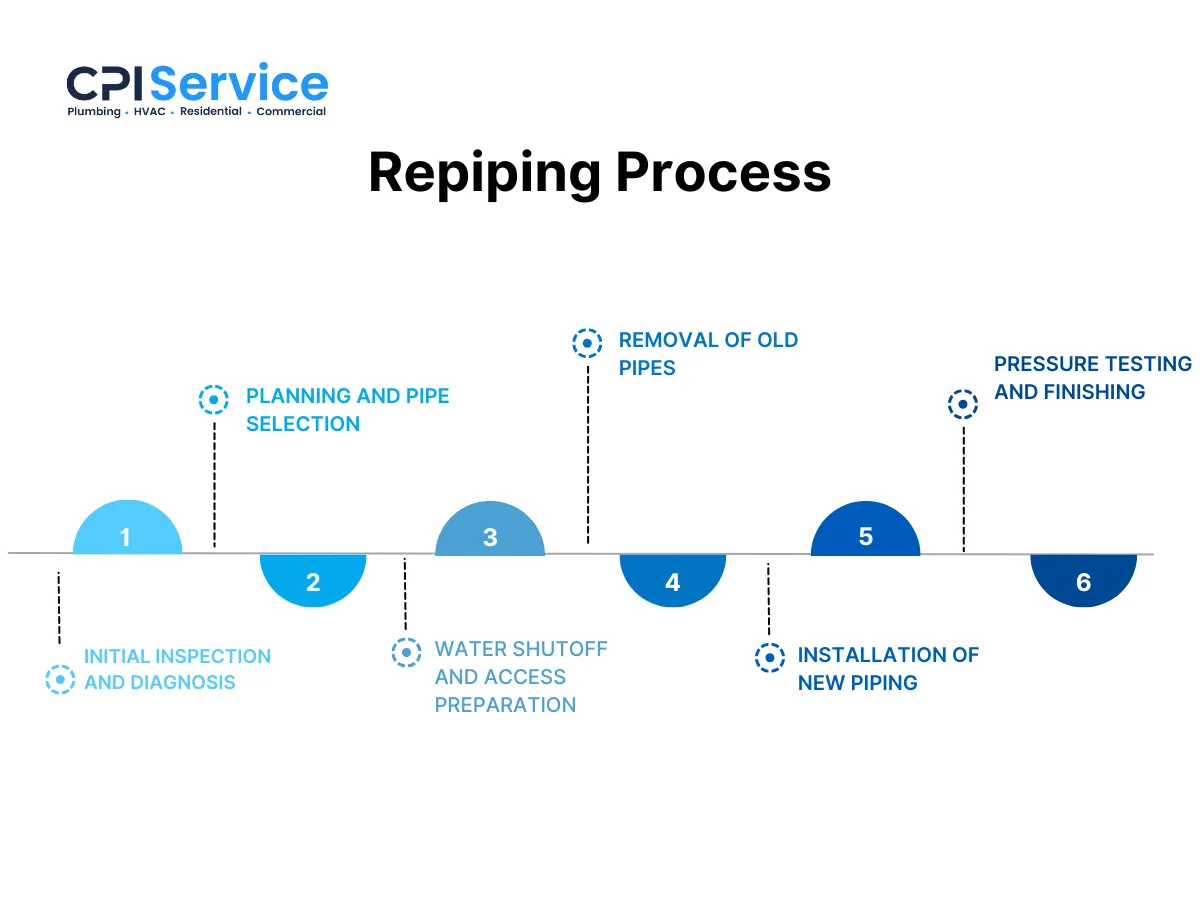
- Inspection and diagnosis. The plumber measures static pressure and the flow at fixtures, checks the regulator and valves, and inspects the visible pipe for corrosion and leaks. A camera can look inside walls without opening them. The goal is to confirm the pipes are the cause before any work starts.
- Planning and pipe selection. The new layout is designed around the home’s fixtures, with pipe sizes chosen to deliver proper pressure at every outlet. You choose PEX, copper or a mix (see below), and the permit is pulled.
- Water shutoff and access. Water is shut off for the work, and the crew cuts small, targeted openings in drywall or ceilings where the new lines will run. Floors and furniture are covered and dust is contained.
- Disconnecting the old pipes. The old galvanized, copper or CPVC lines are cut off and disconnected. Where removing them would mean opening more walls, they’re usually abandoned in place, which is normal and doesn’t affect the new system. Old fittings and valves that were part of the restriction are replaced.
- Installing the new piping. New lines are run along efficient routes: PEX is pulled through walls, joists and ceilings, and copper is cut and joined with lead-free solder or press fittings. Lines are strapped and supported to prevent noise and stress on the joints, and fixtures and shutoff valves are reconnected.
- Pressure testing and finishing. The new system is pressure-tested and inspected by the City before the walls are closed. Fixtures are checked for good flow, the openings are patched, and you get a walkthrough of the new system and its shutoffs.
A licensed plumber who does repipes regularly gets the sizing, joints and layout right the first time, which is what makes the improvement last. For more on the process, see what repiping is.
Choosing the Right Pipes for Repiping
The material affects pressure, durability and how many walls have to be opened. The right choice depends on the house layout, the water and the budget. See types of plumbing pipes for more on each.
- PEX (cross-linked polyethylene). Flexible, so it snakes through tight spaces with few fittings and fewer pressure-robbing elbows and tees. It resists scale from hard water and tolerates freezing better than rigid pipe. It’s rated for household water pressure and hot water and connects with crimp, clamp or expansion fittings, which install quickly.
- Type L copper. A thick-walled copper pipe that handles far higher pressure and temperature than a home needs and has a long service life. It’s rigid, so runs are straight and well supported, but it takes more labor to install and needs more wall access. It’s a common choice at water heaters and for exposed runs.
- CPVC (chlorinated polyvinyl chloride). A rigid plastic rated for hot and cold water, with a smooth bore that resists buildup. It’s sometimes chosen where water is corrosive to copper or copper costs too much. It can crack if stressed or bent, and its solvent-cement joints need the right conditions and time to cure.
Long-Term Benefits of Repiping for Water Pressure
Beyond stronger pressure on day one, a repipe means steadier flow, fewer plumbing problems, a longer-lived system and a home that’s easier to sell.
Enjoy Consistent Water Pressure Across the House
A new, properly sized layout spreads water evenly to every fixture. In old systems, pressure drops at the far outlets when several fixtures run at once; after a repipe, bathrooms, the kitchen and laundry all get steady pressure regardless of what else is running.
Minimize Future Plumbing Issues
Repiping removes the corrosion-prone pipe and weak joints behind most leaks in older homes. Galvanized and aging copper pipe develop scale, leaking joints and pinholes; PEX and Type L copper resist corrosion and need fewer fittings, so the system needs less upkeep and fewer emergency calls.
Increase Plumbing System Longevity
New pipe resets the clock. InterNACHI’s life-expectancy chart lists PEX at about 40 years and copper at about 50 to 70, guidelines rather than guarantees. Steady flow and clean water are also easier on valves, fixtures and appliances.
Improve Water Flow Efficiency
Old pipe has rough, scaled walls and restrictive fittings that slow water down. New pipe has smooth walls, and a planned layout with shorter runs and fewer sharp bends reduces friction, so water reaches fixtures faster and with more force.
Boost Property Value
Old galvanized or polybutylene pipe is a common flag on home inspections and can raise questions with buyers and insurers. A professionally repiped, permitted system removes that concern and can be a selling point, because buyers aren’t facing a repipe of their own. Keep the permit and inspection records for the sale.
Repiping vs. Temporary Fixes for Low Water Pressure
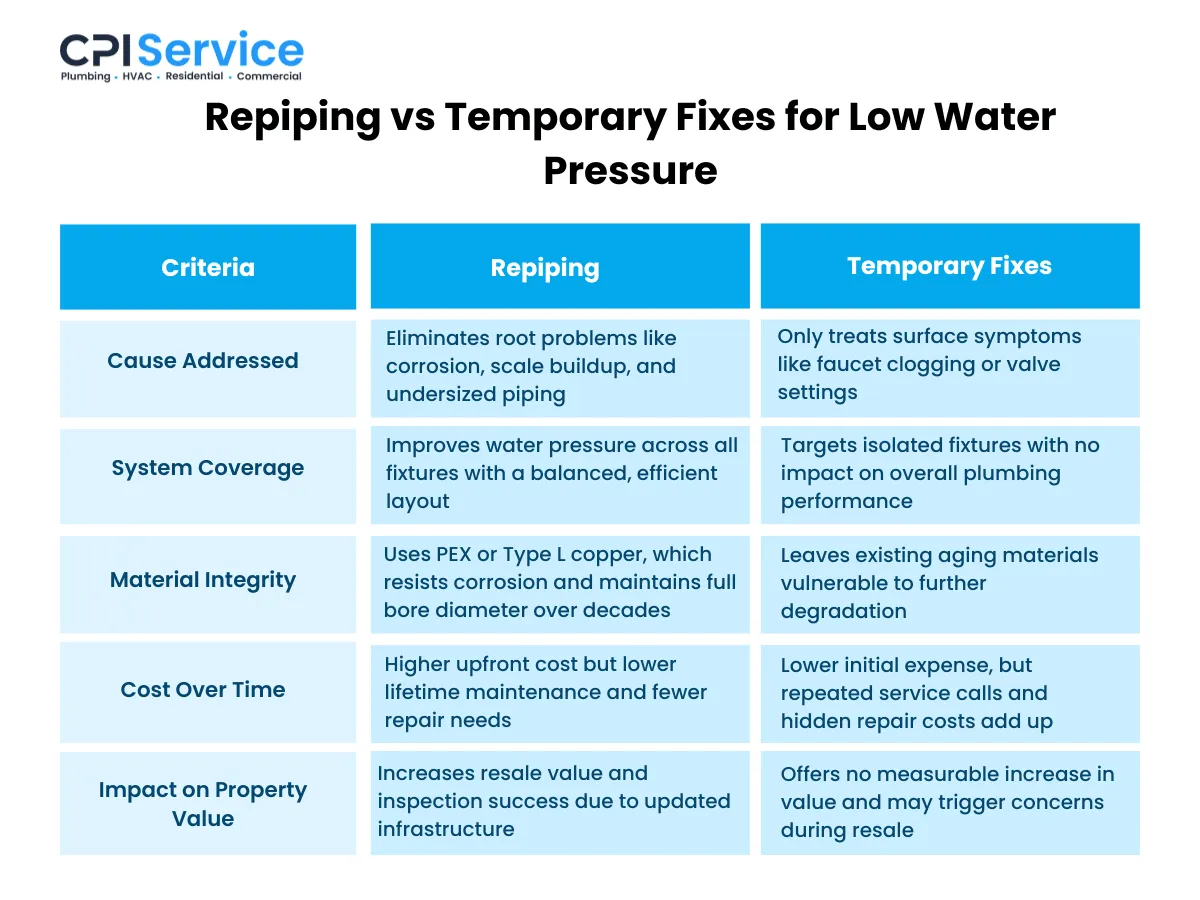
Cleaning an aerator, replacing a showerhead or adjusting a valve helps when one of those is the cause, and they’re always worth trying first. When corroded galvanized pipe is the cause, though, spot repairs and cleaning only buy time: each section you leave keeps corroding. The key differences:
- Root cause vs. symptoms. Repiping removes the rusted, scaled pipe that restricts flow. Cleaning aerators or adjusting valves does nothing about the pipe behind them.
- Whole-house vs. one fixture. A repiped system is laid out to supply every fixture evenly. A fixture-level fix may help one tap but leaves upstairs bathrooms and far fixtures weak.
- New materials vs. aging pipe. Repiping puts in PEX or copper that resists corrosion and scale. Temporary fixes leave the old pipe in place to keep narrowing and, eventually, to leak.
- One project vs. repeat repairs. A repipe costs more up front but ends the cycle of leak repairs and service calls that patchwork fixes bring.
- Resale. New plumbing is easier to sell and passes inspection more easily; deferring it leaves the issue for the buyer’s inspector.
| Repiping | Temporary fixes | |
|---|---|---|
| Cause addressed | Corrosion, scale and undersized pipe | Symptoms at a fixture: a clogged aerator, a valve setting |
| Coverage | Every fixture, with a balanced layout | One fixture or area |
| Materials | New PEX or Type L copper with a full bore | The old, aging pipe stays |
| Cost over time | Higher up front; fewer repairs afterward | Low at first; repeat service calls add up |
| Effect on resale | Removes a common inspection concern | No change; old pipe may be flagged at sale |
When Repiping Is the Best Long-Term Solution
When low pressure comes from corroded, blocked or undersized pipe, and the regulator, valves, service line and fixtures check out, repiping is the reliable long-term fix. It replaces the restriction instead of working around it, restores full flow at every fixture, and ends the leaks and rusty water that come with old galvanized pipe. A licensed plumber who does repipes regularly will confirm the cause first, size the new system to your home, and handle the permit and inspection.
Low Water Pressure in San Jose Homes
- Galvanized pipe. The leading cause of whole-house low pressure in 1950s to 1970s South Bay homes.
- Pressure regulators. Homes with regulators should have them checked; a failing one can cause low or high pressure.
- Water service lines. An old galvanized line from the meter can choke flow even after the house is repiped; replace it at the same time. San Jose Water lists a deteriorating galvanized service line between the meter and the house as a cause of gradual pressure loss, and the customer’s responsibility. See water line replacement.
CPI Service diagnoses pressure problems and repipes homes throughout San Jose and the South Bay. See repiping, request a free estimate or call (408) 978-3093.
Frequently Asked Questions
Will repiping fix my low water pressure?
If the cause is corroded or undersized pipe inside the house, yes. If the cause is a failing pressure regulator, a partly closed valve, a leak or low street pressure, repiping won't fix it, so the cause should be confirmed first.
What is normal household water pressure?
Typically 40 to 80 psi. California's plumbing code calls for a pressure regulator when street pressure is above 80 psi.
Is low pressure in one faucet a repiping problem?
Usually not. Low pressure at one fixture is often a clogged aerator, cartridge or supply valve. Low pressure everywhere, especially hot and cold, points to the pipes, regulator or main.
Dustin did a great job fixing my main valve pipe in the front of my house…didn’t leave until it was completed (took around 3+hours).
Saved my life!…Good guy! 🙂
Sean C., Google review
Read more reviews →Serving San Jose and the South Bay
CPI Service is based at 2880 Aiello Dr in San Jose and serves homes and businesses across the South Bay and the Peninsula. See all the areas we serve.