
Plumbing Inspection Checklist (Free PDF)
Get the free Plumbing Inspection Checklist (PDF)
Thanks! Your checklist is ready.
Download the Plumbing Inspection ChecklistTable of Contents
A plumbing inspection checklist covers every part of a home’s plumbing, from the water main and shutoff valves to drains, the sewer line, the water heater, fixtures and gas lines, so leaks and failing parts are found before they cause water damage. Use the checklist below to see what a thorough inspection covers and what you can check yourself, and download the printable PDF. In San Jose and the South Bay, where many homes were built in the 1950s to 1970s with galvanized supply pipes and clay or cast-iron sewer laterals, a yearly look is especially worthwhile.
Each item on the list has a clear pass-or-fail question (does the valve turn, is the pressure in range, is there corrosion at the joint), so homeowners and plumbers can work through the house the same way every time and compare one year with the next. For what an inspection is and the different types, see what is a plumbing inspection; for prices, see plumbing inspection cost.
Why Is a Plumbing Inspection Checklist Important?
Going through the house with a list keeps anything from being skipped. It catches problems early, keeps small repairs from turning into emergencies, and protects against the bigger risks: water damage, gas leaks and contaminated water.
- Early detection: leaks, slow drains and corrosion are found while they’re small.
- Fewer costly repairs: a worn valve or supply line is replaced on your schedule instead of after it fails.
- Lower water bills: hidden leaks and running toilets waste water you pay for, and high pressure pushes more water through every fixture.
- Safety: gas connections, water heater relief valves, venting and CO alarms all get checked.
- Longer system life: parts that are cared for last longer, so the whole system goes longer before replacement.
- Code compliance: problems with venting, traps or unpermitted work show up before a sale or remodel.
- Home value: a documented, well-kept plumbing system gives buyers confidence.
What a Plumbing Inspection Checklist Includes
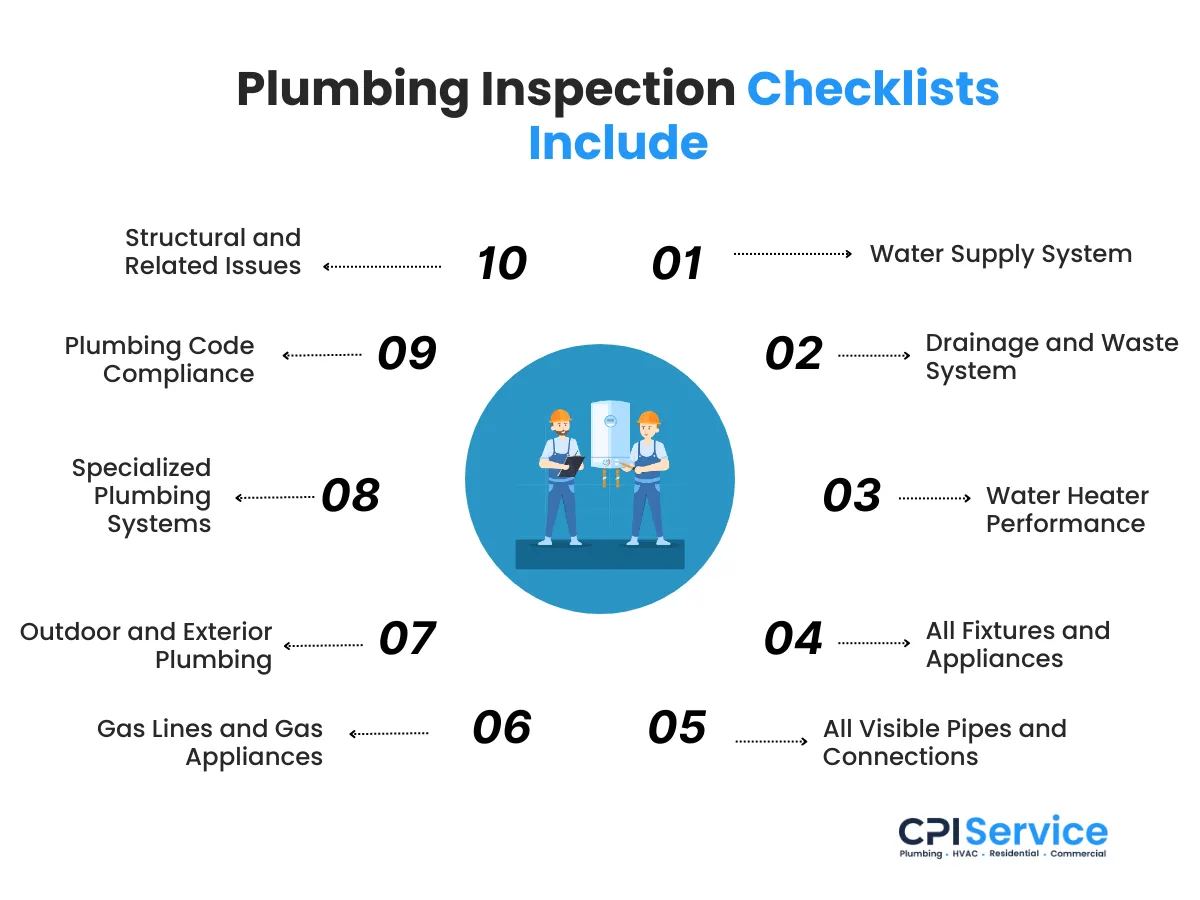
A complete checklist reviews every critical part of the system, from the water supply and drains to the water heater and gas lines. Each section below lists what to check and how it helps; items marked You can check are safe for a homeowner, and the rest are for a plumber.
1. Water Supply
- Measure water pressure at more than one fixture (40 to 80 psi is typical; a regulator is required above 80 psi)
- Find and test the main shutoff valve and fixture shutoffs
- Inspect the main water line and meter connection for leaks or corrosion
- Note pipe materials: copper, PEX, CPVC or galvanized steel (galvanized pipe corrodes from the inside and often means low pressure and rusty water)
- Check for water hammer or noisy pipes
- Test backflow devices where required; testable assemblies need annual testing
You can check: whether the main shutoff is easy to reach and turns, and do a meter test: turn off all water, note the meter, and check again after two hours. If it moved, you likely have a leak (see leak detection cost and slab leak signs).
How it helps: steady pressure and a working shutoff protect against water damage, and a leak found at the meter is found before it shows on a wall.
2. Drains, Vents and Sewer
- Run every drain and watch for slow drainage or gurgling
- Look for clogs and slow-moving branch lines
- Check vents for blockages (often shown by gurgling or sewer odors)
- Locate the outdoor sewer cleanout
- Camera-inspect the sewer lateral if drains back up, the home is older, or trees are nearby
If the home is on a septic system, as some hillside and rural South Bay properties are, have the tank and drain field inspected by a septic contractor as well.
See drain cleaning cost and sewer video inspection.
How it helps: clear drains and a sound sewer line prevent backups, flooding and the cleanup that comes with them.
3. Water Heater
- Note the age (on the label); tank heaters typically last 8 to 12 years
- Look for rust, corrosion or water around the base
- Test the temperature and pressure (T&P) relief valve and check its discharge pipe (the water is scalding; if the valve drips afterward or doesn’t reseat, call a plumber)
- Check gas venting and the burner area (gas models, plumber)
- Confirm earthquake straps (required in California) and, where needed, an expansion tank
- Flush sediment; Santa Clara Valley water is moderately hard
- Review the efficiency rating and maintenance history
See water heater installation cost and water heater maintenance tips.
How it helps: reliable hot water, lower energy bills and less risk of a sudden tank failure.
4. Fixtures and Appliances
- Check toilets for running water, leaks at the base, wobbling and a full flush
- Check faucets and showerheads for drips and good flow
- Look under sinks for leaks and corroded shutoff valves, and run sinks and tubs to check drainage
- Check washing machine hoses (braided steel lasts longer than rubber), dishwasher and refrigerator lines
- Test the garbage disposal
How it helps: stops the small leaks that waste water and damage cabinets and floors, and keeps every fixture working as it should.
5. Visible Pipes and Connections
- Look for corrosion, green or white crust, and drips at joints
- Check pipe supports and insulation in the crawl space, attic and garage
- Note any DIY repairs or mixed metals that could fail
- Check the condition of exposed pipe and the tightness of joints
How it helps: finds weak spots early, before a drip at a fitting becomes a burst pipe.
6. Gas Lines and Appliances
- Check gas connections at the water heater, furnace, range and dryer, and test for leaks with a detector (plumber)
- Confirm appliances are vented properly
- Test the gas shutoff valves
- Test carbon monoxide alarms; California requires them in homes with gas appliances or an attached garage
If you ever smell gas, leave the home and call 911 and PG&E from outside. See gas line services.
How it helps: prevents gas leaks and carbon monoxide buildup, the most serious hazards in a home’s plumbing.
7. Outdoor Plumbing
- Check hose bibs for leaks and anti-siphon devices
- Inspect irrigation for leaks, broken heads and poor coverage
- Make sure downspouts and grading carry water away from the foundation
- Test the sump pump and any backup, if you have one
You can check: Valley Water offers Santa Clara County residents a free Water Wise Outdoor Survey of the irrigation system, along with free water-saving devices such as WaterSense showerheads and faucet aerators.
How it helps: keeps water away from the foundation and stops outdoor leaks that run up the bill unnoticed.
8. Other Systems
- Hot water recirculation pumps
- Tankless water heaters (descaling)
- Water softeners and filters
- Radiant floor heating: many San Jose Eichler homes have hot-water heating pipes in the slab; a boiler that keeps losing pressure or a warm, damp spot on the floor can point to a leak
How it helps: these systems fail quietly; checking them keeps them efficient and protects the rest of the house.
9. Code and Permits
- Note visible work that doesn’t look up to code (missing traps, S-traps, improper venting, missing clearances or access)
- Ask whether past remodels or water heater replacements were permitted
- Confirm that past work was done by a licensed plumbing contractor; you can check a California license online
See plumbing codes and compliance.
How it helps: fewer safety risks and no surprises when you sell, refinance or pull a permit for a remodel.
10. Signs of Water Damage
- Stains on ceilings, walls and floors near plumbing
- Mold or musty smells under sinks and in the crawl space
- Warped flooring or loose tiles around tubs and toilets
- Cracks in the foundation or slab near plumbing lines, and damp soil or standing water in the crawl space
How it helps: catches leak damage before it weakens framing or floors, and before mold spreads.
What Happens After the Inspection
Once the inspection is done, turn the findings into a plan:
- Review the report. Go through each finding, how serious it is, and what needs attention now.
- Prioritize repairs. Fix active leaks and safety items first (gas, T&P valves, CO alarms, backflow and drainage problems that could cause water damage). Dated fixtures and other less urgent items can wait.
- Get estimates. Ask a licensed plumber for written, fixed-price estimates so you can budget and decide what to do now. Typical San Jose prices are in the plumbing inspection cost guide.
- Set a timeline. Schedule the urgent work right away and plan bigger items, like a water heater nearing the end of its life, galvanized pipe (repiping), or a root-damaged sewer lateral.
CPI’s Gold Plumbing and Platinum plans include an annual plumbing inspection: the water heater and exposed piping are checked for safety, leaks and corrosion, the crawl space plumbing is checked, toilets and faucets are tested, and drains are checked for clogs.
Why Choose a Professional Plumber?
You can work through much of this list yourself, and the You can check items are a good start. A plumber adds what a walk-through can’t: a sewer camera, leak detection equipment and pressure gauges to find problems inside walls and underground, the experience to tell normal wear from a pipe about to fail, and knowledge of the code, which matters for insurance and home sales. A professional inspection also gives you written findings to plan repairs and maintenance, and work on gas lines, venting and anything that needs a permit belongs with a licensed plumber.
Plumbing Inspections in San Jose Homes
- Older homes. Many 1950s to 1970s South Bay homes have galvanized supply pipes and clay or cast-iron sewer laterals that are reaching the end of their life.
- Tree roots. Mature street trees send roots into older laterals; a camera inspection shows how bad it is.
- Hard water. Moderately hard local water leaves scale in water heaters, tankless units and fixtures.
CPI Service inspects and repairs plumbing throughout San Jose and the South Bay. Request a free estimate or call (408) 978-3093.
Frequently Asked Questions
How often should a home's plumbing be inspected?
Once a year is a good rule, and always before buying a home, after a major leak, or when you notice low pressure, slow drains or rising water bills. Older homes with galvanized pipes or clay sewer laterals benefit most.
What does a plumbing inspection include?
The water supply and pressure, shutoff valves, visible pipes and connections, drains and the sewer line, the water heater, fixtures and appliance connections, gas lines, and outdoor plumbing. A sewer camera inspection is added when drains are slow or the line is old.
What's a safe water pressure for a house?
Generally 40 to 80 psi. California's plumbing code calls for a pressure regulator when street pressure exceeds 80 psi; higher pressure strains pipes, fixtures and water heaters.
What should I do after a plumbing inspection?
Read the report, fix active leaks and safety items first, get written estimates for the bigger items, and set a timeline for the rest. Less urgent work, like replacing dated fixtures, can wait for a remodel or the next season.
We hired CPI for a complete house repipe and an addition of a water recirculation system. They did an excellent job. The workers were friendly, they cleaned up after themselves, they didn’t hesitate to ask if they had any questions and we were assigned a project manager to ensure that the job went smoothly. They handled permits and inspections very well. Everything went smoothly. They were definitely worth the money. I wish all of our home improvement jobs had gone this well. I definitely recommend them.
Tanja F., Yelp review
Read more reviews →Serving San Jose and the South Bay
CPI Service is based at 2880 Aiello Dr in San Jose and serves homes and businesses across the South Bay and the Peninsula. See all the areas we serve.