
How Much Does a Plumbing Inspection Cost in San Jose?
Table of Contents
- What Is the Average Plumbing Inspection Cost?
- How Much Does a Plumbing Inspection Cost by Type?
- What’s Included in a Plumbing Inspection?
- What Factors Affect Plumbing Inspection Costs?
- Common Repair Costs After an Inspection
- When Should You Schedule a Plumbing Inspection?
- DIY Checks vs. a Professional Inspection
- Plumbing Inspections in San Jose
- Frequently Asked Questions
A plumbing inspection in San Jose typically costs $150 to $400 for a whole-home inspection of the water supply, fixtures, visible pipes, drains and water heater. Adding a sewer camera inspection of the main line brings the total to about $450 to $900, depending on access and line length.
Pre-purchase inspections with a written report, larger or older homes, and multi-unit buildings cost more. In San Jose and the South Bay, where many homes were built in the 1950s to 1970s with galvanized pipe and clay sewer laterals, a camera inspection is often the most valuable part: see CPI’s sewer video inspection service.
| Inspection | Typical San Jose cost |
|---|---|
| Whole-home plumbing inspection | $150 to $400 |
| Sewer camera inspection (main line) | $300 to $600 |
| Plumbing inspection plus sewer camera | $450 to $900 |
| Pre-purchase inspection with written report | Upper end of the range |
The difference between the low and high end comes down to labor time, equipment and coverage: how much of the system there is to check, how easy it is to reach, whether a camera goes into the sewer line, and how much testing and documentation you need.
This page is about price. For what an inspection is and the different types, see what is a plumbing inspection; to go through your own home item by item, use the plumbing inspection checklist.
For every job in one place, see our dated San Jose plumbing and HVAC price table.
What Is the Average Plumbing Inspection Cost?
Most San Jose homeowners pay in the middle of the $150 to $400 range for a whole-home inspection. The final price depends on the type of inspection, the size of the home, the condition of the plumbing, sewer line access and the time it takes.
As national context, Angi reports that a plumbing inspection averages about $300 across the U.S., with most homeowners paying $100 to $500 and complex inspections reaching about $1,375. Bay Area labor costs more than the national average, which is why a South Bay inspection tends to sit at or above the middle of that national range.
How Much Does a Basic Plumbing Inspection Cost?
A basic inspection lands at the lower end of the $150 to $400 range. It’s a non-invasive visual check of the accessible plumbing: under-sink connections, supply lines, the water heater, exposed pipe in the garage or crawl space, and a test of toilets, faucets and drains for leaks and corrosion. It doesn’t include a sewer camera or leak detection inside walls, which makes it a good fit for routine yearly maintenance rather than a home purchase.
How Much Does a Full Plumbing Inspection Cost?
A full inspection, with the whole-home check plus a sewer camera inspection of the main line, typically costs about $450 to $900. It looks at both visible and hidden parts of the system: pipes, drains, the sewer lateral, the water heater, water pressure, fixtures and likely leak spots. The extra cost comes from the camera equipment and the added time. Homeowners usually book one before buying an older home, after repeated plumbing problems, or before a major remodel. Typical findings include hidden leaks, corroded pipe, a partly blocked or root-damaged lateral, low pressure and damaged drain lines.
How Much Does a Plumbing Inspection Cost by Type?
The type of inspection is the biggest driver of the price. The table shows CPI’s typical San Jose range for each, next to Angi’s national figures for context.
| Inspection type | What it covers | Typical San Jose cost | National (Angi) |
|---|---|---|---|
| Visual (whole-home) | Fixtures, visible pipes, water heater, pressure, drains | $150–$400 | $100–$200 |
| Sewer camera | Camera through the main line from a cleanout | $300–$600 | $250–$1,175 |
| Drain line camera | Camera through an interior drain line | Fixed price after a look | Not listed separately |
| Combination | Whole-home inspection plus sewer camera | $450–$900 | $350–$1,375+ |
How Much Does a Visual Plumbing Inspection Cost?
A visual inspection is the whole-home inspection at $150 to $400. The plumber checks exposed pipes, fixtures, drains, the water heater and water-using appliances for leaks, corrosion, pressure problems and drainage issues, including leaky faucets, running toilets, washing machine hoses and dishwasher connections. It’s the usual choice for annual maintenance. Home size, the number of bathrooms and the age of the system move the price within the range.
How Much Does a Camera Plumbing Inspection Cost?
A camera inspection puts a waterproof camera on a flexible cable into the sewer line or a drain to show blockages, corrosion, cracks, roots and damage in real time, without opening walls or digging. Most camera inspections are of the main sewer line (below); larger properties, hard-to-reach access points, long drain systems and old cast-iron or damaged pipe take more time. Homeowners usually book one after repeated backups, sewer odors or slow drains, or before buying an older home.
How Much Does a Sewer Camera Inspection Cost?
A sewer camera inspection in San Jose typically costs $300 to $600, including running the camera through the lateral, reviewing the footage with you, locating any problems and a copy of the video. Long or deep laterals, older cast-iron lines and lines that have to be cleared first take more time; so does going in through a toilet or roof vent when there’s no outdoor cleanout. CPI’s current free sewer line inspection covers homes with an accessible main line cleanout (without a copy of the video). See sewer inspection cost.
How Much Does a Drain Line Camera Inspection Cost?
A camera inspection of an interior drain line (a kitchen line clogged with grease, say, or a shower drain that keeps backing up) uses a smaller camera to find clogs, buildup and cracks in that branch. It’s often done in the same visit as drain cleaning, and CPI quotes it as a fixed price once the plumber has seen the access and the length of the line. Multi-line systems, hard access and damaged cast iron add time.
What’s Included in a Plumbing Inspection?
A standard inspection covers the visible pipes, drains, faucets, shutoff valves, water heater, water pressure and accessible fixtures, looking for leaks, clogs and drainage problems. Depending on the type, it can also include a sewer camera, drain flow tests and written findings with repair recommendations.
What Does a Plumber Check During a Plumbing Inspection?
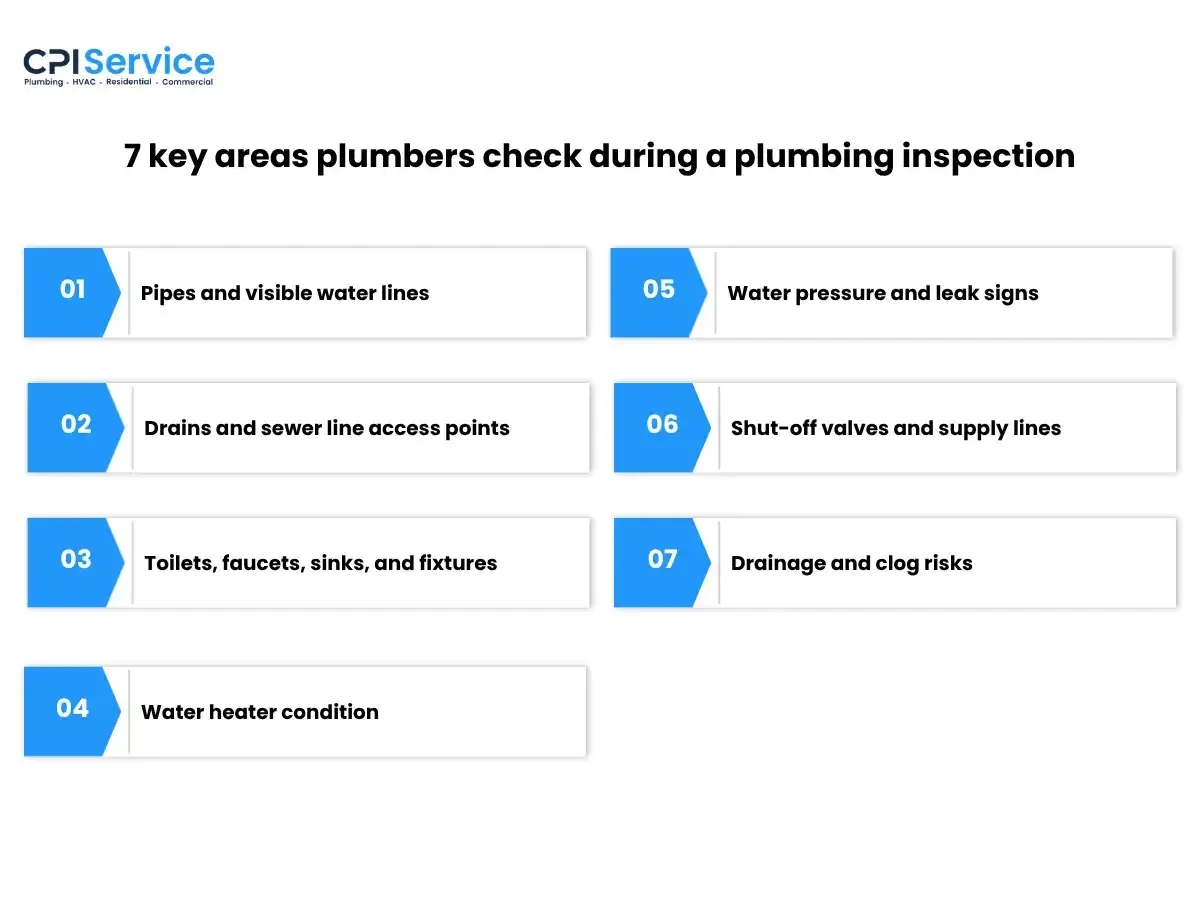
Seven areas, and what the plumber most often finds in each:
- Pipes and visible water lines: green oxidation on copper, rust on galvanized steel, sweating or cracked plastic pipe. Common findings: pinhole leaks, loose fittings and outdated materials such as polybutylene.
- Drains and sewer access: whether the cleanouts are accessible and clear, and how well wastewater flows. Common findings: grease buildup, roots, standing water and a partly blocked main line.
- Toilets, faucets, sinks and fixtures: flushing, water levels, seals and drips. Common findings: worn flappers, loose connections, slow sinks and leaking faucet cartridges.
- Water heater: age, connections, the temperature and pressure relief valve, heating performance and sediment. Common findings: sediment, rust at fittings, a faulty relief valve and missing earthquake straps.
- Water pressure and leak signs: a gauge reading (40 to 80 psi is typical; the California Plumbing Code requires a regulator above 80 psi) and a meter test for hidden leaks. Common findings: high pressure, concealed leaks and moisture behind walls or under sinks.
- Shutoff valves and supply lines: the main and fixture shutoffs are turned, and flexible supply lines are checked for corrosion, kinks and fraying. Common findings: seized valves, corroded lines and aging braided hoses.
- Drainage and clog risks: how fast sinks, tubs, showers and laundry drains empty, and whether they’re vented. Common findings: slow drains, repeat clogs, venting problems and buildup from grease, soap and hair.
For the full item-by-item list, see the plumbing inspection checklist.
Does the Cost Include a Written Report?
Often, but not always, so ask before booking. A full or pre-purchase inspection should come with written findings: the condition of the system, leak risks, pressure readings and repair recommendations, ideally with photos. A basic visual inspection may come with verbal findings only. A paid sewer camera inspection should include the video and the location and depth of any problems. If you need the report for a purchase or an insurer, say so up front.
Does the Cost Include a Sewer Line Inspection?
Not always. Many standard inspections cover only the visible pipes, drains and fixtures. A sewer line inspection takes a camera, a monitor and a locator to find roots, cracks, blockages and sags (bellies) in the lateral, so it’s usually priced separately: $300 to $600 on its own, or about $450 to $900 together with a whole-home inspection.
Does the Cost Include a Water Heater Inspection?
Yes. A plumbing inspection checks the water heater’s age, relief valve, connections, venting, sediment and signs of leaks. A tank flush, a deeper diagnosis or a repair is extra; CPI’s Platinum membership plan includes an annual water heater flush.
What Factors Affect Plumbing Inspection Costs?
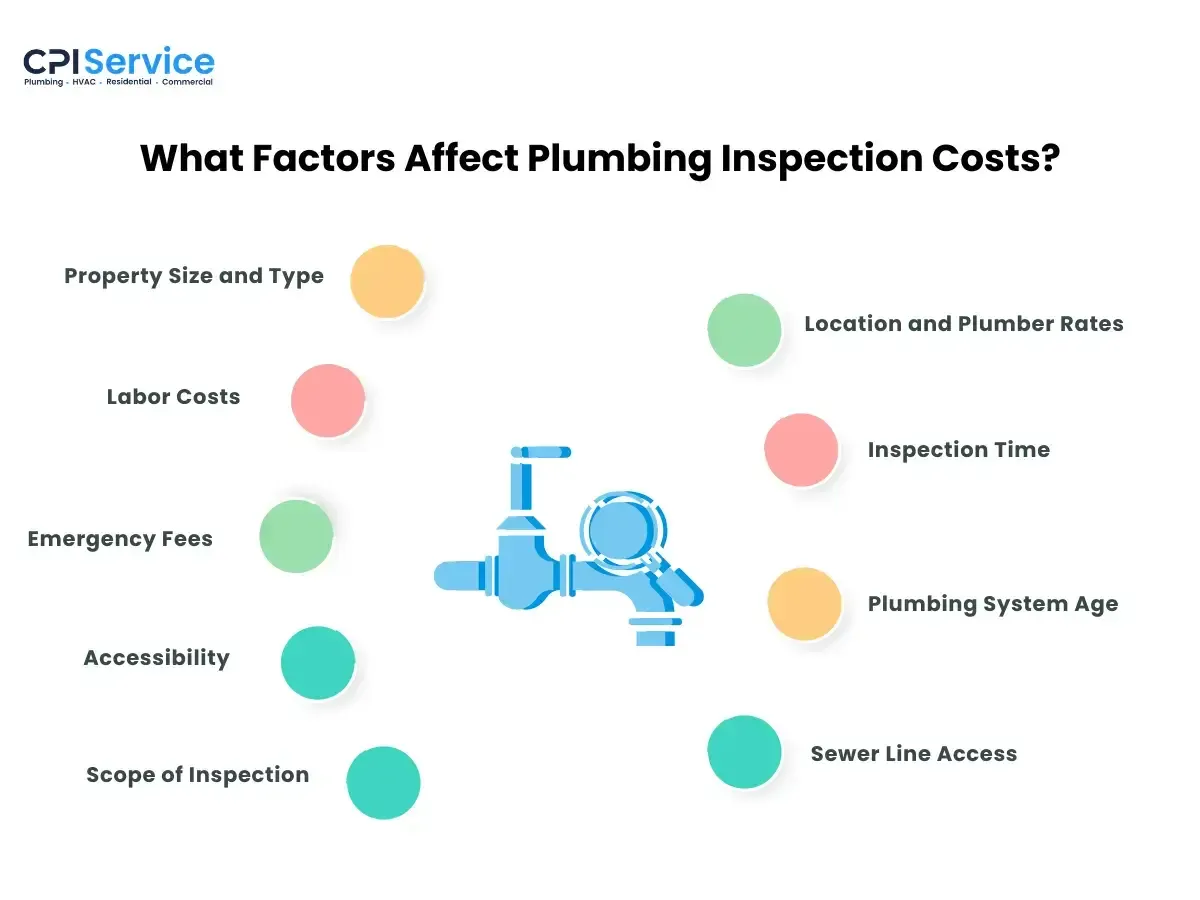
Nine things set where an inspection falls in the range: property size and type, labor, emergency timing, access, scope, location, time on site, the age of the system, and sewer line access. Most of them come down to how many hours and how much equipment the inspection takes.
Property Size and Type
More bathrooms, kitchens and laundry areas mean more fixtures, pipe and drains to check. A small single-story home is at the low end of the range; a large or multi-story home, an older property with several remodels, or a multi-unit building costs more.
Labor
Labor is most of the price. Many plumbers bill by the hour; CPI quotes inspections and repairs as a fixed price before work starts, typically based on $150 to $250 per hour plus parts and drive time. Experience matters too: a plumber who does inspections regularly reads a system faster and more accurately.
Emergency Timing
An inspection booked for nights, weekends or holidays costs more. CPI’s after-hours work is quoted the same way, as a fixed price, typically based on $200 to $300 per hour plus parts and drive time, with a minimum charge. Burst pipes, sewer backups, major leaks and flooding are the usual reasons for an urgent visit; a routine inspection is best booked during business hours. See emergency plumber cost.
Accessibility
Plumbing behind finished walls, under slabs, in tight crawl spaces or in a hard-to-reach sewer line takes longer to inspect and may need extra equipment such as a thermal camera, a line locator or leak detection gear. Removing a toilet to reach the drain, or clearing boxes from a crawl space hatch, adds time as well.
Scope of the Inspection
A visual inspection is the least expensive. Adding a sewer camera, a pressure test, leak detection or an underground drain evaluation adds equipment and time, which is why a whole-home inspection with a sewer camera runs about $450 to $900 rather than $150 to $400.
Location
Prices follow local labor costs, operating costs and demand. Angi’s national data shows the spread: a plumbing inspection averages about $530 in New York, New York, compared with about $350 in Billings, Montana. San Jose is a high-cost area, so national averages understate what a South Bay inspection costs.
Inspection Time
A whole-home inspection of a typical San Jose home takes about one to two hours, plus about an hour for a sewer camera inspection. Larger homes, hard-to-reach pipe and complicated systems take longer, and longer inspections cost more. (Angi’s national guide gives about two to three hours for a typical one- or two-story home.)
Age of the Plumbing System
Older homes take longer. Homes built before about 1970 often have galvanized steel supply pipe, cast-iron drains or clay laterals, and some later homes have polybutylene, all of which are more prone to corrosion and leaks. Past remodels and non-standard layouts add time, and older systems are more likely to need a camera or leak detection to see what’s going on.
Sewer Line Access
An accessible outdoor cleanout makes a camera inspection quicker and less expensive. A buried, blocked or damaged cleanout, or no cleanout at all, means going in through a toilet or roof vent, using a locator, or clearing the line first, all of which add time. Adding a cleanout is sometimes worth it on its own.
Common Repair Costs After an Inspection
What a repair costs depends on what the inspection finds, how hard it is to reach and the materials needed. These are CPI’s typical San Jose prices for the repairs an inspection most often leads to.
| Repair | Typical San Jose cost | Common reasons |
|---|---|---|
| Leak detection | $150–$1,500 ($150–$600 for a typical accessible leak) | Hidden leaks, slab leaks, a moving water meter |
| Drain cleaning (snaking) | $250–$600 | Clogs, grease buildup, slow drains |
| Hydro jetting | $400–$700 branch line; $1,500–$2,500 main sewer line | Heavy grease, scale, roots |
| Sewer spot repair | $2,000–$5,000 | One cracked or offset section |
| Sewer lateral replacement | $6,000–$15,000 typical; $15,000–$20,000+ for long, deep or street work | Root-filled, collapsed or bellied laterals |
| Whole-house repipe (PEX, typical home) | $8,000–$18,000 | Corroded galvanized or polybutylene pipe |
| Tank water heater replacement, installed | $1,200–$2,000+ | Leaking tank, age, failed parts |
| Toilet repair | $150–$600 | Running toilets, seal leaks, flushing problems |
| Faucet, fixture or water heater repair | Fixed price after diagnosis | Drips, worn cartridges, failed valves |
| Pressure regulator replacement | Fixed price after diagnosis | Pressure above 80 psi, a failed regulator |
When Should You Schedule a Plumbing Inspection?
Book one as yearly maintenance, before buying a home, before the rainy season, when problems appear, or when an older system or sewer line raises the odds of leaks and backups. Each of these is a point where finding a problem early costs much less than finding it late.
How Often Should You Schedule a Plumbing Inspection?
Once a year is a good rule for most South Bay homes, and especially for older ones. Angi suggests every two years in general and yearly for homes 40 or more years old, which describes much of San Jose’s housing. Homes with repeat problems or aging pipe benefit from the yearly check. CPI’s Gold Plumbing and Platinum membership plans include an annual plumbing inspection of the water heater and exposed piping, crawl space plumbing, toilets, faucets and drains.
Should You Schedule One Before Buying a House?
Yes. Sewer line damage, corroded pipe, slab leaks and pressure problems can mean expensive repairs right after closing, and a general home inspection doesn’t go far enough to find them. A pre-purchase plumbing inspection with a sewer camera lets you see the condition of the system, negotiate repairs or price, and plan instead of being surprised.
Should You Schedule One for Insurance?
It can help, particularly with an older home. Some insurers ask about the age and type of the plumbing, the water heater or known problem materials such as polybutylene when writing or renewing a policy, and a written inspection report answers those questions. More importantly, fixing what the inspection finds lowers the chance of the leak or backup that leads to a claim.
Should You Schedule One Before the Rainy Season?
In San Jose, freezing pipes are rare; heavy winter rain is the bigger seasonal risk. A fall inspection, before the rains start, is a good time to camera the sewer lateral (roots and cracked joints let groundwater in and cause backups when the ground is saturated), check the sump pump if you have one, and make sure downspouts and grading carry water away from the foundation. Spring is the time to check for anything the storms damaged.
Should You Schedule One for an Older Home?
Yes. Older systems are more likely to have corroded pipe, outdated materials, hidden leaks and worn sewer laterals. Homes built before about 1970 may have galvanized steel, cast iron or clay pipe, and some later homes have polybutylene; all of them deserve a detailed look before they cause water damage or a backup.
Should You Schedule One for Tree Root Risks?
Yes, if large trees grow near the sewer line. Roots find their way into laterals through small cracks and joints, causing slow drains, blockages and eventually broken pipe. A sewer camera inspection shows root intrusion early, while it can still be cleared and repaired rather than dug up. See how to get rid of roots in a sewer line.
DIY Checks vs. a Professional Inspection
You can watch for drips, slow drains, running toilets and rising water bills, and do a meter test, which catches many small problems early. A professional inspection adds pressure testing, a trained look at pipe materials and code issues, leak detection equipment, and a camera inside the sewer line, which is where the costliest problems hide. A DIY check costs nothing, but it can’t see hidden leaks, underground pipe or the cause of a recurring failure.
How Do You Hire a Plumbing Inspector?
Check the license, the experience and what’s included before you book:
- License and insurance: in California, plumbing work is done under a C-36 plumbing contractor license from the Contractors State License Board; check the license online and ask for proof of insurance. Home inspectors carry different credentials (such as InterNACHI or ASHI membership) and do a broader, lighter check.
- Residential experience: look for a company that inspects and repairs homes every day, including older homes with galvanized pipe and clay laterals, rather than one focused on commercial construction.
- Sewer camera experience: if the home has an older lateral or big trees nearby, choose a plumber who runs sewer cameras regularly and owns the equipment, so the camera isn’t a subcontracted add-on.
- A sample report: ask what the report looks like. A good one has photos, clear descriptions and repairs in order of priority.
- The price before the work: ask for a written, fixed-price quote, so you know the total before the inspection starts and what would change it.
- Questions to ask: how the inspection is done, whether a camera is included, after-hours pricing, how soon you’ll get the findings, and whether a written report is part of the price.
Plumbing Inspections in San Jose
- Older laterals. Clay and cast-iron sewer laterals under mature trees are common in 1950s to 1970s neighborhoods.
- Galvanized pipe. Many older homes still have galvanized supply lines that corrode from the inside.
- Home purchases. In a competitive market, a sewer camera inspection before closing can save thousands.
For what an inspection is and the types, see what is a plumbing inspection. CPI Service inspects and repairs plumbing throughout San Jose and the South Bay. Request a free estimate or call (408) 978-3093.
Frequently Asked Questions
Is a plumbing inspection worth it before buying a house?
Yes, especially for older South Bay homes. A general home inspection looks at plumbing only briefly and usually doesn't include a sewer camera inspection, which is where some of the most expensive surprises (root-filled or broken laterals) are found.
How long does a plumbing inspection take?
About one to two hours for a typical home, plus about an hour for a sewer camera inspection.
Do I get a written report?
Ask before booking. A good inspection includes written findings with photos, and a sewer camera inspection should include the video and the location and depth of any problems.
How often should plumbing be inspected?
Once a year is a good rule, plus before buying a home and after a major leak. CPI's Gold Plumbing and Platinum membership plans include an annual plumbing inspection.
Does a plumbing inspection include the sewer line?
Not always. A standard inspection covers the water supply, fixtures, visible pipes, drains and water heater; a sewer camera inspection of the main line is usually a separate line item. In San Jose the two together typically cost about $450 to $900.
Luis came to my house to look at a toilet that had been frequently backing up. He was very thorough in his diagnosis, taking out the toilet and using the outdoor cleanouts to capture videos of the pipes. He found and removed the blockage, and the toilet has been flushing great since. Thanks CPI for a job well done
Brian W., Google review
Read more reviews →Serving San Jose and the South Bay
CPI Service is based at 2880 Aiello Dr in San Jose and serves homes and businesses across the South Bay and the Peninsula. See all the areas we serve.